Lendormin
Italy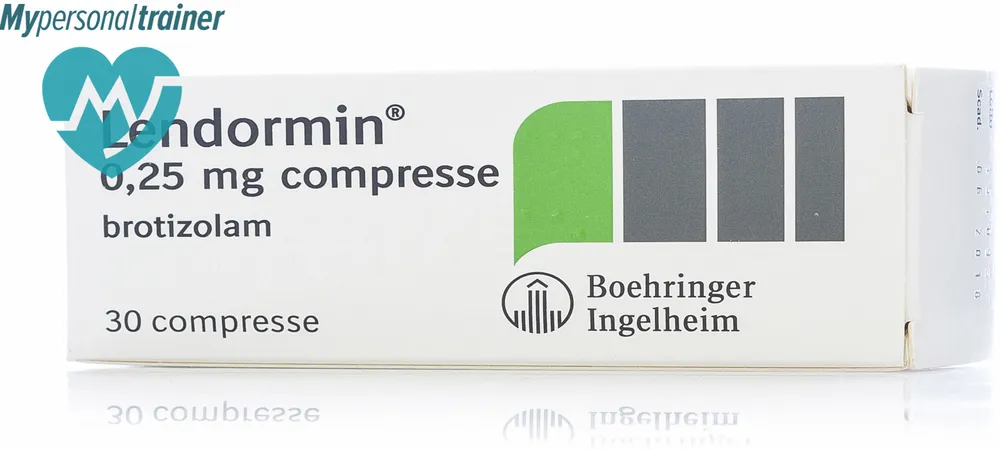
Table of Contents
Package leaflet: Information for the patient
Lendormin 0.25 mg tablets
Brotizolam
Please read this leaflet carefully before taking this medicine because it contains
important information for you.
- Keep this leaflet. You may need to read it again.
- If you have any questions, ask your doctor or pharmacist.
- This medicine has been prescribed for you only. Do not give it to others, even if they have the same symptoms as yours, because it could be harmful.
- If you experience any side effects, including those not listed in this leaflet, consult your doctor or pharmacist. See section 4.
Contents of this leaflet:
- What Lendormin is and what it is used for
- What you need to know before taking Lendormin
- How to take Lendormin
- Possible side effects
- How to store Lendormin
- Contents of the pack and other information
1. What Lendormin is and what it is used for
Lendormin contains the active substance brotizolam, which belongs to a class of medicines called benzodiazepines, that induce sedation (physical and mental relaxation) and sleep.
Lendormin is used for the short-term treatment of insomnia (difficulty falling asleep and/or frequent or prolonged awakenings during the night) in adults aged 18 years and over.
Benzodiazepines are indicated only when insomnia is severe, disabling (i.e. impairs the ability to perform normal daily activities) and causes marked distress.
Talk to your doctor if you do not feel better or if you feel worse.
2. What you need to know before taking Lendormin
Do not take Lendormin
- If you are allergic to brotizolam or to any of the other ingredients of this medicine (listed in section 6) or to other benzodiazepines
- if you suffer from muscle weakness (severe myasthenia gravis)
- if you have severe respiratory insufficiency (severe respiratory disease that develops rapidly and suddenly, leading to inadequate oxygen and/or carbon dioxide levels in the blood)
- if you suffer from sleep apnoea syndrome (when, during nighttime sleep, breathing stops repeatedly for short periods – apnoea – which may cause significant and unnatural daytime drowsiness)
- if you have severe liver disease (severe hepatic insufficiency) (see section “Warnings and precautions”)
- if you are under 18 years of age, as the tablets are suitable only for adults and no studies are available in children
- if you have rare hereditary conditions that may be incompatible with one of the components of this medicine (see also section “Lendormin contains lactose”).
Warnings and precautions
Talk to your doctor or pharmacist before taking Lendormin.
Warnings for specific population groups:
- If you are elderly or have reduced liver function
If you are elderly or have reduced liver function, your doctor may reduce the dose of this medicine (see section 3 “How to take Lendormin”). Benzodiazepines are not recommended in patients with severe hepatic insufficiency, as these medicines may cause encephalopathy (a brain disorder causing confusion, disturbances in consciousness, personality changes, memory loss, tremors, and coma, due to toxic substances accumulating in the blood as a result of liver malfunction) (see section “Do not take Lendormin”). - If you suffer from chronic respiratory disorders (chronic respiratory insufficiency)
If you have chronic respiratory insufficiency (a long-term respiratory disease causing inadequate oxygen and/or carbon dioxide levels in the blood) associated with increased levels of carbon dioxide in the blood (hypercapnia), your doctor may reduce the dose of this medicine, as it may increase the risk of reduced respiratory activity (respiratory depression), especially during the night. - If you suffer from mental disorders (psychosis)
Lendormin is not recommended for the treatment of psychosis unless used in combination with other medicines. - If you suffer from depression or anxiety associated with depression
The use of this class of medicines may unmask underlying depression. Lendormin must not be used to treat depression or anxiety associated with depression unless combined with other medicines, as it may worsen self-harming behaviours that could lead to death. Always follow your doctor’s instructions. - If you have a history of drug abuse
This medicine must not be used if you have a history of drug abuse. - If you have a history of alcohol abuse
This medicine must not be used if you have a history of alcohol abuse (see section “Lendormin with alcohol”).
Tolerance
After repeated use for several weeks, a certain reduction in the effects of benzodiazepines may occur.
Dependence
- The use of this class of medicines may lead to physical and psychological dependence. This risk increases with dose and duration of treatment, and is higher if you have previously abused alcohol or drugs: in such cases, you must not take Lendormin.
- After stopping treatment, a transient withdrawal syndrome may occur, consisting of a worsening reappearance of the symptoms that led to the use of this medicine: one of the first signs of dependence, which may be accompanied by other reactions such as mood changes, anxiety, restlessness, or sleep disturbances.
- If you have developed physical dependence, consult your doctor before stopping treatment with this medicine, as abrupt discontinuation may lead to withdrawal symptoms of varying severity, from mild symptoms such as headache and muscle pain, to severe psychiatric symptoms such as anxiety, extreme tension, restlessness, confusion, and irritability. In severe cases, the following symptoms may occur: a distorted perception of the external world and reality (derealization), a feeling of detachment from the external world and from oneself (depersonalization), hearing disturbances causing increased sensitivity and intolerance to sounds (hyperacusis), numbness and tingling in arms and legs, increased sensitivity to light, noise, or physical contact, perception of non-existent things (hallucinations), or epileptic seizures. See sections “Possible side effects” and “If you stop taking Lendormin”. Moreover, if you are taking a high dose of this medicine, withdrawal symptoms may also occur between doses.
Amnesia (memory disturbance)
Benzodiazepines may cause memory disturbance characterized by an inability to memorize new information (anterograde amnesia), which may occur even at recommended doses; the risk increases at higher doses.
Effects related to anterograde amnesia may be associated with behavioural disturbances.
This condition most commonly occurs several hours after taking the medicine; therefore, to reduce this risk, ensure you can have an uninterrupted period of sufficient sleep, generally 7–8 hours, before taking this medicine (see sections 4 “Possible side effects” and 3 “How to take Lendormin”).
Psychiatric and paradoxical reactions (behavioural disturbances)
During the use of benzodiazepines, restlessness, agitation, irritability, aggression, mental confusion (delirium), anger, nightmares, perception of non-existent things (hallucinations), mental disorders (psychosis), inappropriate behaviour, and other adverse behavioural effects may occur. If this happens, contact your doctor to discontinue the medicine (see section 4 “Possible side effects” and section “If you stop taking Lendormin”).
Children and adolescents
The tablets are suitable only for adults, and no studies are available in children; therefore, Lendormin is contraindicated in children and adolescents under 18 years of age.
Other medicines and Lendormin
Tell your doctor or pharmacist if you are taking, have recently taken, or might take any other medicines.
- The effect of Lendormin may be increased if taken together with other medicines that reduce central nervous system activity, thereby enhancing its effects. The concomitant use of Lendormin and opioids (strong painkillers, medicines for addiction therapy, and some cough medicines) increases the risk of drowsiness, breathing difficulties (respiratory depression), coma, and may be life-threatening. Therefore, concomitant use should only be considered when no other treatment options are possible. However, if your doctor prescribes Lendormin together with opioids, the dose and duration of concomitant treatment must be limited by your doctor. Inform your doctor about all opioid medicines you are taking and carefully follow the doctor’s dosage recommendations. It may be helpful to inform friends or family members to watch for the symptoms listed above. Contact your doctor if you experience such symptoms. This may occur with a variety of medicines including:
- antipsychotics (neuroleptics, medicines for mental disorders)
- hypnotics (sleep medicines)
- anxiolytics (medicines for anxiety)
- sedatives (medicines causing physical and mental relaxation)
- antidepressants (medicines for depression)
- narcotic analgesics (medicines reducing pain by acting on the central nervous system). In the case of narcotic analgesics, increased euphoria may lead to increased psychological dependence (a strong urge to take the medicine)
- antiepileptics (medicines for epilepsy)
- anaesthetics (medicines causing temporary loss of sensation, pain, and in some cases consciousness, associated with muscle relaxation)
- sedative antihistamines (allergy medicines that also cause physical and mental relaxation on the central nervous system).
- The effect of Lendormin may be altered by medicines that affect liver metabolism (i.e. how the liver functions):
- when Lendormin is taken together with medicines that stimulate liver metabolism, such as rifampicin (an antibiotic), the effect of Lendormin may decrease
- when Lendormin is taken together with medicines that reduce liver metabolism, such as ketoconazole (a medicine for fungal skin infections), the effect of Lendormin may increase and become harmful.
Lendormin with alcohol
When Lendormin is used together with alcohol, sedation (physical and mental relaxation), fatigue, and reduced concentration may increase; therefore, concomitant use with alcohol is not recommended.
Moreover, the increased sedative effect when the medicine is taken with alcohol may impair your ability to drive or operate machinery (see section “Driving and use of machinery”).
Taking an excessive dose of Lendormin together with alcohol may be life-threatening (see section “If you take more Lendormin than you should”).
Pregnancy, breastfeeding, and fertility
If you are pregnant, think you may be pregnant, are planning a pregnancy, or are breastfeeding, consult your doctor or pharmacist before using this medicine.
Pregnancy and breastfeeding
There are insufficient data on Lendormin to assess its safety during pregnancy and breastfeeding. Therefore, the use of Lendormin is not recommended during pregnancy and breastfeeding.
If you are planning a pregnancy or suspect you are pregnant while taking this medicine, contact your doctor to discontinue its use (see section “If you stop taking Lendormin”).
Although not recommended, if your doctor prescribes this medicine in late pregnancy or during labour, effects on the newborn may include reduced body temperature (hypothermia), impaired muscle tone sometimes associated with muscle weakness (hypotonia), and moderate reduction in respiratory activity (moderate respiratory depression), caused by the medicine’s action.
Furthermore, babies born to mothers who took benzodiazepines (i.e. medicines of the same class as Lendormin) chronically during the last stages of pregnancy may develop physical dependence and be at risk of developing withdrawal symptoms in the postnatal period (see section 4 “Possible side effects”).
Since benzodiazepines are excreted in breast milk, the use of this medicine is not recommended for breastfeeding mothers.
Fertility
There are no data available on the effect of this medicine on fertility. Studies conducted with brotizolam, the active substance of Lendormin, have not shown negative effects on fertility.
Driving and use of machinery
No studies have been conducted on the effect of the medicine on the ability to drive and operate machinery.
However, during treatment, side effects such as sedation (physical and mental relaxation), memory disturbance (amnesia), and reduced mental and physical abilities may occur (see section “Possible side effects”).
Impaired mental and physical abilities may increase the risk of falls and road accidents.
Concomitant intake of alcohol and/or medicines that reduce central nervous system activity may worsen this impairment.
If sleep duration is insufficient, the likelihood of reduced alertness is increased.
Therefore, caution is advised when driving or operating machinery.
If you experience any of the above-mentioned effects, you should avoid potentially dangerous activities such as driving or operating machinery.
Lendormin contains lactose and sodium
If your doctor has diagnosed you with an intolerance to certain sugars, contact them before taking this medicine.
This medicine contains less than 1 mmol (23 mg) of sodium per dose, i.e. essentially sodium-free.
3. How to take Lendormin
Take this medicine exactly as directed by your doctor or pharmacist. If you have any doubts, consult your doctor or pharmacist.
Adults aged 18 years and older
Dosage
The following doses are recommended:
Adults: The recommended dose is 0.25 mg (1 tablet) taken in the evening before going to bed.
Elderly patients: The recommended dose is 0.125 mg (half a tablet) to 0.25 mg (1 tablet) taken in the evening before going to bed.
The tablets may be divided into two equal halves.
Treatment should be initiated at the lowest recommended dose.
The dose of 0.25 mg (1 tablet) must not be exceeded due to the increased risk of central nervous system-related adverse effects (see section 4 “Possible side effects”).
If your doctor prescribes a higher dosage, withdrawal symptoms may occur between doses (see section 4 “Possible side effects”).
Since the risk of withdrawal or rebound symptoms is greater with abrupt discontinuation of treatment, your doctor will gradually reduce the dosage before stopping treatment completely (see section “If you stop taking Lendormin”).
How to take
This medicine should be taken with a small amount of liquid just before going to bed.
After taking this medicine, you should allow a period of 6–7 hours for rest or sleep.
If you have impaired liver function
If you have impaired liver function, the dose should be reduced as prescribed by your doctor.
If you suffer from chronic respiratory disorders (chronic respiratory failure)
If you suffer from chronic respiratory failure (a long-term respiratory disease causing inadequate oxygen and/or carbon dioxide levels in the blood), associated with increased carbon dioxide levels in the blood (hypercapnia), your doctor may reduce the dose of this medicine, as it may increase the risk of reduced breathing activity (respiratory depression), especially during the night.
If you have impaired kidney function
Available data show that dose adjustment is not necessary in patients with impaired kidney function. Take this medicine as prescribed by your doctor.
Treatment duration
Treatment should be as short as possible. The duration of treatment usually ranges from a few days to a maximum of 2 weeks. Your doctor will individually tailor a gradual dose reduction plan. Therefore, at the beginning of treatment, your doctor will inform you that treatment will be of limited duration and will explain exactly how you should progressively reduce the dosage.
In certain cases, after a general reassessment of your condition, your doctor may decide to extend therapy beyond the maximum treatment period (i.e., beyond 2 weeks).
Use in children and adolescents
The tablets are suitable only for adults. There are no studies available in children. Therefore, Lendormin is contraindicated in children and adolescents under 18 years of age.
If you take more Lendormin than you should
In case of accidental ingestion/overdose of Lendormin, contact your doctor immediately or go to the nearest hospital.
Symptoms
Accidental overdose of Lendormin usually results in varying degrees of central nervous system depression. In mild cases, symptoms may include temporary loss of sensory and intellectual abilities associated with disorientation (obnubilation), confusion, and lethargy (a state of deep sleep with reduced responsiveness to normal stimuli). In more severe cases, symptoms may include progressive loss of muscle coordination (ataxia), reduced muscle tone sometimes associated with muscle weakness (hypotonia), low blood pressure (hypotension), reduced breathing activity (respiratory depression), rarely coma, and very rarely death.
As with other benzodiazepines, accidental overdose is unlikely to be life-threatening unless other substances that depress central nervous system activity—including alcohol—are taken concomitantly (see section “Lendormin with alcohol”).
Treatment
In case of accidental oral overdose of benzodiazepines, if you are conscious, your doctor may induce vomiting (within 1 hour of the overdose).
If you have lost consciousness, gastric lavage will be performed (in hospital by trained medical staff).
If emptying the stomach (either by vomiting or gastric lavage) is not beneficial, your doctor may administer activated charcoal, a substance used to reduce absorption. Heart and respiratory functions will be closely monitored in hospital, typically in an intensive care unit.
If necessary, your doctor may use flumazenil as an antidote (a substance capable of blocking the sedative effects of benzodiazepines, i.e., physical and mental relaxation at the central nervous system level).
If you forget to take Lendormin
Do not take a double dose to make up for the missed dose.
If you stop taking Lendormin
- If you have developed physical dependence on this medicine (see section “Warnings and precautions”), consult your doctor before stopping treatment, as abrupt discontinuation may cause:
- withdrawal symptoms (such as headache, muscle pain, anxiety and extreme tension, restlessness, confusion, or irritability)
- rebound symptoms (when symptoms present at the beginning of treatment reappear in a more severe form and may cause additional reactions including mood changes, anxiety, and restlessness)
Therefore, since the risk of withdrawal or rebound symptoms is greater with abrupt discontinuation of treatment, your doctor will gradually reduce the dosage.
-
During treatment with benzodiazepines, behavioral disturbances may occur: restlessness, agitation, irritability, aggression, confusion (delirium), anger, nightmares, perception of things not present in reality (hallucinations), mental disorder (psychosis), inappropriate behavior, and other undesirable behavioral effects (see section 4 “Possible side effects”). If this occurs, contact your doctor immediately to discontinue the medicine.
-
If you are planning to become pregnant or suspect you are pregnant while taking this medicine, you must contact your doctor to discontinue the medicine (see section “Pregnancy, breastfeeding and fertility”).
If you have any doubts about how to use this medicine, consult your doctor or pharmacist.
4. Possible side effects
Like all medicines, this medicine can cause side effects, although not everyone gets them.
Most of the side effects observed so far are related to the mechanism of action of the medicine. These effects mostly occur at the beginning of treatment and usually decrease during the course of therapy.
The risk of dependence increases with the duration of treatment with this medicine, which must not exceed two weeks.
Symptoms of dependence may include:
- rebound effect (a condition that may occur if you have developed physical dependence on the medicine, in which symptoms present at the beginning of treatment reappear in a more severe form following abrupt discontinuation of therapy)
- mood changes
- anxiety
- restlessness
Common (may affect up to 1 in 10 people)
- drowsiness
- headache (cephalalgia)
- stomach and intestinal disorders (gastrointestinal disturbances)
Uncommon (may affect up to 1 in 100 people)
- nightmares, drug dependence, depression, mood alteration, anxiety, emotional disturbances, behavioural disturbances, agitation, alteration of sexual desire (libido disorder)
- dizziness, physical and mental relaxation (sedation), progressive loss of muscle coordination (ataxia), memory disorder characterised by inability to store new information (anterograde amnesia)
- dementia, mental disorders, reduction in mental and physical abilities; these side effects are characteristic of benzodiazepines
- double vision (diplopia), dry mouth, liver disorders, yellowing of the skin and whites of the eyes (jaundice), skin reactions, muscle weakness
- withdrawal syndrome (a condition that may occur if you have developed physical dependence on the medicine and abruptly stop treatment). Symptoms include, for example: headache, muscle pain, anxiety and extreme tension, restlessness, confusion or irritability (see section “If you stop taking Lendormin”)
- rebound effects (a condition that may occur if you have developed physical dependence on the medicine, in which symptoms present at the beginning of treatment reappear in a more severe form following abrupt discontinuation of therapy). This condition may cause additional reactions including mood changes, anxiety and restlessness (see section “If you stop taking Lendormin”)
- unexpected mental and behavioural disorders (paradoxical reactions), irritability, feeling of fatigue
- abnormalities in liver function tests
Rare (may affect up to 1 in 1,000 people)
Confusional state, restlessness, reduced levels of consciousness
Other possible side effects for which frequency is unknown
Trauma
Road traffic accidents, falls; these side effects are characteristic of benzodiazepines.
Dependence
Use (even at therapeutic doses) may lead to the development of physical dependence: stopping treatment may cause withdrawal or rebound phenomena (see sections “Warnings and precautions” and “If you stop taking Lendormin”). Psychological dependence may also occur. Cases of benzodiazepine abuse have been reported.
Reporting of side effects
If you experience any side effect, including those not listed in this leaflet, talk to your doctor or pharmacist. You can also report side effects directly via the national reporting system at the website https://www.aifa.gov.it/content/segnalazioni-reazioni-avverse .
By reporting side effects, you can help provide more information on the safety of this medicine.
5. How to store Lendormin
Keep this medicine out of the sight and reach of children.
Store below 25°C.
Do not use this medicine after the expiry date stated on the carton after EXP. The expiry date refers to the last day of that month.
The expiry date indicated refers to the product in its original, unopened packaging, correctly stored.
Do not dispose of any medicine via wastewater or household waste. Ask your pharmacist how to dispose of medicines no longer in use. This will help protect the environment.
6. Package contents and other information
What Lendormin contains
- The active substance is: brotizolam 0.25 mg.
- The other components are: lactose, maize starch, sodium starch glycolate, microcrystalline cellulose, magnesium stearate.
Description of the appearance of Lendormin and pack contents
Lendormin 0.25 mg tablets are packaged in opaque blisters, in a carton box containing 30 tablets.
Marketing Authorization Holder
Boehringer Ingelheim Italia S.p.A.
Via Lorenzini, 8
20139 Milan
Manufacturer
Delpharm Reims S.A.S.
10 Rue Colonel Charbonneaux
51100 Reims (France)