Lantus
Italy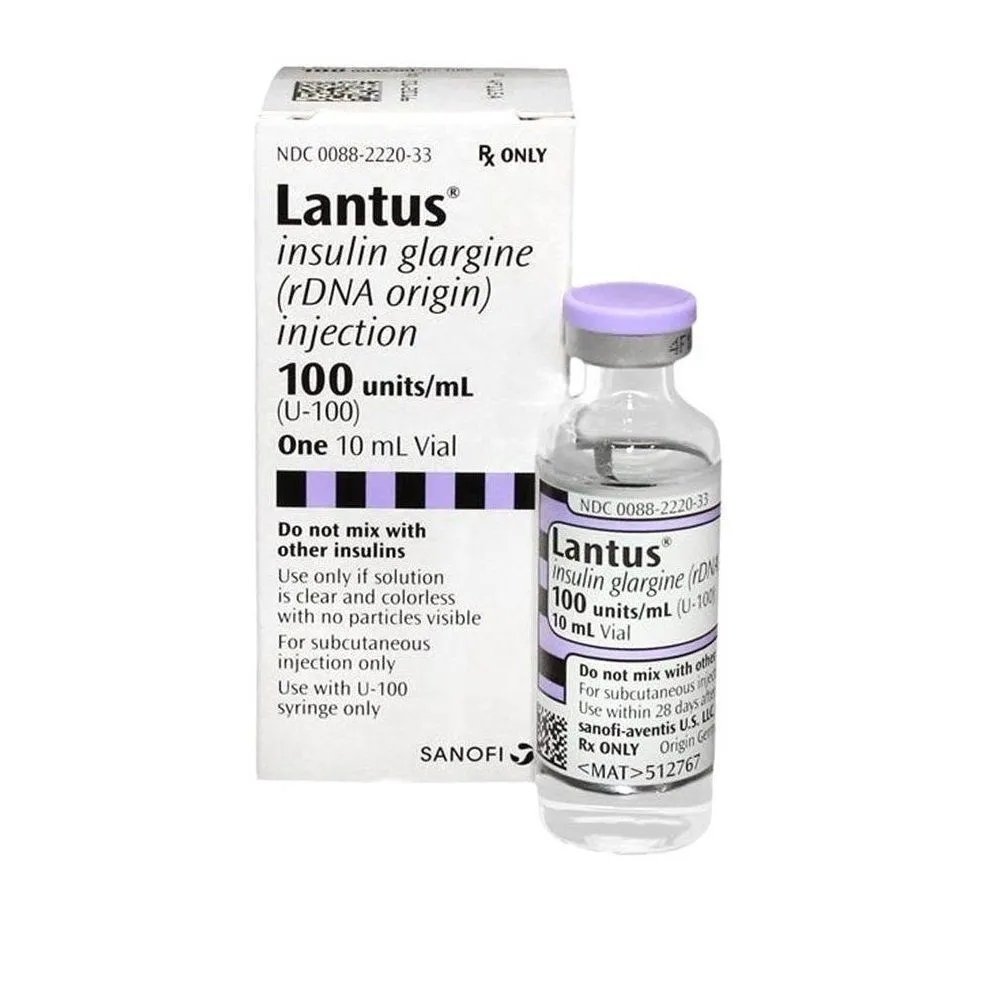
Table of Contents
- PACKAGE LEAFLET: Information for the user
- Lantus 100 units/ml solution for injection in a vial
- 1. What Lantus is and what it is used for
- 2. What you need to know before using Lantus
- 3. How to use Lantus
- 4. Possible side effects
- 5. How to store Lantus
- 6. Package contents and other information
- PACKAGE LEAFLET: information for the user
- Lantus 100 units/ml solution for injection in a cartridge
- 1. What Lantus is and what it is used for
- 2. What you need to know before using Lantus
- 3. How to use Lantus
- 4. Possible side effects
- 5. How to store Lantus
- 6. Package contents and other information
- INSTRUCTIONS FOR USE: information for the user
- Lantus SoloStar 100 units/ml solution for injection in a pre-filled pen
- 1. What Lantus is and what it is used for
- 2. What you need to know before using Lantus
- 3. How to use Lantus
- 4. Possible side effects
- 5. How to store Lantus
- 6. Package contents and other information
PACKAGE LEAFLET: Information for the user
Lantus 100 units/ml solution for injection in a vial
insulin glargine
Read this leaflet carefully before using this medicine because it contains important information for you.
- Keep this leaflet. You may need to read it again.
- If you have any questions, ask your doctor, pharmacist or nurse.
- This medicine has been prescribed for you only. Never give it to other people, even if their symptoms are the same as yours, because it could be harmful.
- If you experience any side effect, including those not listed in this leaflet, talk to your doctor or pharmacist. See section 4.
Contents of this leaflet:
- What Lantus is and what it is used for
- What you need to know before using Lantus
- How to use Lantus
- Possible side effects
- How to store Lantus
- Contents of the pack and other information
1. What Lantus is and what it is used for
Lantus contains insulin glargine. This is a modified insulin that is very similar to human insulin.
Lantus is used to treat diabetes mellitus in adults, adolescents, and children from the age of 2 years.
Diabetes mellitus is a disease in which the body does not produce enough insulin to control blood sugar levels. Insulin glargine has a constant and prolonged action and lowers elevated blood sugar levels.
2. What you need to know before using Lantus
Do not use Lantus
If you are allergic to insulin glargine or to any of the other ingredients of this medicine
(listed in section 6).
Warnings and precautions
Talk to your doctor, pharmacist, or nurse before using Lantus.
Carefully follow the instructions your doctor has given you regarding dosage, monitoring tests
(blood and urine tests), diet, and physical activity (work and exercise).
If your blood sugar level is too low (hypoglycaemia), follow the guidance for hypoglycaemia
(see box at the end of this leaflet).
Skin changes at the injection site:
You must rotate your injection sites to prevent skin changes such as the development of lumps under the skin. Insulin may not work as effectively if you inject into an area with lumps (see section "How to use Lantus"). If you are currently injecting into an area with lumps, consult your doctor before switching to another injection site. Your doctor may advise you to monitor your blood glucose more closely and may adjust your insulin dose or that of other antidiabetic medicines.
Travel
Before travelling, consult your doctor. You may need to discuss the following:
- availability of insulin at your destination,
- sufficient supply of insulin, syringes, etc.,
- proper storage of insulin during travel,
- timing of meals and insulin administration during travel,
- possible effects of time zone changes,
- risk of contracting new illnesses in the countries visited,
- what to do in emergency situations if you feel unwell or become ill.
Illness and injury
In the following situations, diabetes control may require special attention (e.g., adjustment of insulin dose, blood and urine tests):
- If you are ill or have serious injuries, your blood sugar level may rise (hyperglycaemia).
- If you are not eating enough, your blood sugar level may drop (hypoglycaemia). In most cases, medical attention is required. Contact your doctor promptly. Additionally, if you have type 1 diabetes (insulin-dependent diabetes mellitus), do not stop your insulin treatment or your intake of carbohydrates. Also, make sure people close to you are aware of your need for insulin.
Treatment with insulin may lead to the formation of anti-insulin antibodies (substances that act against insulin). However, very rarely, this necessitates an adjustment of the insulin dose.
Some patients with long-standing type 2 diabetes and heart disease or a history of stroke, treated with pioglitazone (an oral antidiabetic medicine used for the treatment of type 2 diabetes mellitus) and insulin, have developed heart failure. Inform your doctor as soon as possible if you experience signs of heart failure such as unusually shortness of breath, rapid weight gain, or localized swelling (oedema).
Children
There is no experience with the use of Lantus in children under 2 years of age.
Other medicines and Lantus
Some medicines can cause changes in blood sugar levels (either lowering or raising, or both, depending on the situation). In any case, insulin dosage may need to be optimised to avoid blood sugar levels that are too low or too high. Be cautious when starting or stopping another medicine. Inform your doctor or pharmacist if you are taking, have recently taken, or might take any other medicines. Before taking a medicine, ask your doctor whether, and how, it may affect your blood sugar levels and whether you need to take any precautions.
Medicines that may lower blood sugar levels (hypoglycaemia) include:
- all other medicines used to treat diabetes,
- angiotensin-converting enzyme (ACE) inhibitors (used to treat certain heart conditions or high blood pressure),
- disopyramide (used to treat certain heart conditions),
- fluoxetine (used to treat depression),
- fibrates (used to lower high levels of fats in the blood),
- monoamine oxidase inhibitors (MAO inhibitors) (used to treat depression),
- pentoxifylline, propoxyphene, salicylates (such as acetylsalicylic acid, used to relieve pain and reduce fever),
- sulfonamide antibiotics.
Medicines that may raise blood sugar levels (hyperglycaemia) include:
- corticosteroids (such as "cortisone", used to treat inflammation),
- danazol (a medicine that affects ovulation),
- diazoxide (used to treat high blood pressure),
- diuretics (used to treat high blood pressure or excessive fluid retention),
- glucagon (a pancreatic hormone used to treat severe hypoglycaemia),
- isoniazid (used to treat tuberculosis),
- oestrogens and progestogens (such as in oral contraceptives used for birth control),
- phenothiazine derivatives (used to treat psychiatric disorders),
- somatropin (growth hormone),
- sympathomimetic medicines (such as epinephrine [adrenaline], salbutamol, terbutaline, used to treat asthma),
- thyroid hormones (used to treat thyroid disorders),
- atypical antipsychotics (such as clozapine, olanzapine),
- protease inhibitors (used to treat HIV).
Your blood sugar levels may decrease or increase if you take:
- beta-blockers (used to treat high blood pressure),
- clonidine (used to treat high blood pressure),
- lithium salts (used to treat psychiatric disorders).
Pentamidine (used to treat certain infections caused by parasites) may cause hypoglycaemia, sometimes followed by hyperglycaemia.
Beta-blockers, as well as other sympatholytic medicines (such as clonidine, guanethidine, and reserpine), may reduce or completely mask the warning signs that help you recognize hypoglycaemia.
If you are unsure whether you are taking any of these medicines, ask your doctor or pharmacist.
Lantus and alcohol
Your blood sugar levels may decrease or increase if you drink alcohol.
Pregnancy and breastfeeding
If you are pregnant, think you may be pregnant, are planning to become pregnant, or are breastfeeding, ask your doctor or pharmacist for advice before taking this medicine.
Inform your doctor if you are planning a pregnancy or if you are already pregnant. You may need to adjust your insulin dose during pregnancy and after delivery. It is important to carefully control your diabetes and prevent hypoglycaemia for the health of your baby.
If you are breastfeeding, consult your doctor, as adjustments to your insulin dose and diet may be necessary.
Driving and using machines
Your ability to concentrate or react may be reduced if you have:
- hypoglycaemia (low blood sugar levels),
- hyperglycaemia (high blood sugar levels),
- vision problems.
Bear in mind the possibility that this may occur in any situation where it could pose a risk to yourself or others (such as when driving a car or operating machinery). Consult your doctor for advice on whether it is safe for you to drive if:
- you have frequent episodes of hypoglycaemia,
- the typical warning signs that help you identify hypoglycaemia are reduced or absent.
Important information about some ingredients of Lantus
This medicine contains less than 1 mmol (23 mg) of sodium per dose, i.e., essentially "sodium-free".
3. How to use Lantus
Use this medicine exactly as prescribed by your doctor. If you have any doubts, consult your doctor or pharmacist.
Although Lantus contains the same active substance as Toujeo (insulin glargine 300 units/ml), these medicines are not interchangeable. Switching from one insulin therapy to another requires a medical prescription, medical supervision, and monitoring of blood sugar levels. Consult your doctor for further information.
Dose
Based on your lifestyle, blood sugar test results (glycaemia), and previous insulin use, your doctor will:
- determine the daily dose of Lantus you need and the time of day to take it,
- inform you when to check your blood sugar levels and whether urine tests are necessary,
- advise you whether you need a lower or higher dose of Lantus.
Lantus is a long-acting insulin. Your doctor will advise whether you need to use it in combination with a short-acting insulin or with tablets used to treat high blood sugar levels.
Many factors can affect your blood sugar levels. It is important that you are aware of these factors so that you can respond appropriately to changes in blood sugar levels and thus avoid them becoming too high or too low. For further information, see the box at the end of this leaflet.
Use in children and adolescents
Lantus can be used in adolescents and children aged 2 years and older. Take this medicine exactly as directed by your doctor.
Frequency of administration
One injection of Lantus is required every day, at the same time each day.
Method of administration
Lantus is injected under the skin. Lantus must NOT be injected into a vein, as this route of administration would alter its action and could lead to hypoglycaemia.
Your doctor will indicate where on the skin you should inject Lantus. For each injection, rotate the injection site within the chosen skin area.
How to use the vials
Carefully inspect the vial before use. Use only if the solution is clear, colourless, water-like, and free from visible particles. Do not shake or mix before use.
Ensure that neither alcohol nor other disinfectants or other substances contaminate the insulin. Do not mix Lantus with any other insulin or medicine, and do not dilute it, as these procedures could alter the action of Lantus.
Switching between insulins
Always check the insulin label before each injection to avoid accidentally using a different insulin instead of Lantus.
Always use a new vial if you notice that your blood sugar control has unexpectedly worsened. This may be because the insulin has lost some of its effectiveness. If you suspect a problem with Lantus, have it checked by your doctor or pharmacist.
If you use more Lantus than you should
- If you have injected too high a dose of Lantus, your blood sugar levels may become too low (hypoglycaemia). Check your blood sugar frequently. In general, to prevent hypoglycaemia, you may need to eat more substantial meals and monitor your blood sugar. For information on treating hypoglycaemia, see the box at the end of this leaflet.
If you forget to use Lantus
- If you have missed a dose of Lantus or did not inject enough insulin, your blood sugar levels may become too high (hyperglycaemia). Check your blood sugar frequently. For information on treating hyperglycaemia, see the box at the end of this leaflet.
- Do not take a double dose to make up for a forgotten dose.
If you stop using Lantus
This may lead to severe hyperglycaemia (very high blood sugar levels) and ketoacidosis (build-up of acid in the blood due to the body metabolising fat instead of sugar). Do not stop using Lantus without consulting your doctor, who will advise you on what steps to take.
If you have any questions about how to use this medicine, consult your doctor, pharmacist, or nurse.
4. Possible side effects
Like all medicines, this medicine can cause side effects, although not everyone experiences them.
If you notice that your blood sugar levels are too low (hypoglycaemia), act immediately to raise your blood sugar levels (see the box at the end of this leaflet). Hypoglycaemia (low blood sugar levels) can be very serious and is very common with insulin treatment (may affect more than 1 in 10 people). Low blood sugar means there is not enough sugar in the blood. If blood sugar levels drop too low, you may faint (lose consciousness). Severe hypoglycaemic episodes can cause brain damage and may be life-threatening. For more information, see the box at the end of this leaflet.
Severe allergic reactions (rare, may affect up to 1 in 1,000 patients): signs may include widespread skin reactions (rashes and itching over the entire body), severe swelling of the skin or mucous membranes (angioedema), shortness of breath, low blood pressure with rapid heartbeat and sweating. A severe allergic reaction to insulin may be life-threatening. Inform your doctor immediately if you notice signs of severe allergic reactions.
- Skin changes at the injection site: If you inject insulin too often in the same spot, the skin may become thinner (lipoatrophy, may affect up to 1 in 100 people) or thicker (lipohypertrophy, may affect up to 1 in 10 people). Lumps under the skin may also be caused by the buildup of a protein called amyloid (cutaneous amyloidosis, frequency is unknown). Insulin may not work well if you inject into an area with lumps. Change the injection site with each injection to prevent these skin changes. Commonly reported side effects (may affect up to 1 in 10 patients)
- Skin and allergic reactions at the injection site: Signs may include redness, unusually severe pain during injection, itching, hives, swelling, and inflammation. These reactions may spread to the area surrounding the injection site. Most minor reactions to insulin usually disappear within a few days or weeks. Rarely reported side effects (may affect up to 1 in 1,000 patients)
- Eye-related reactions: A marked change (improvement or worsening) in blood sugar levels may temporarily affect vision. If you have proliferative retinopathy (a diabetes-related eye disease), severe hypoglycaemic episodes may cause temporary loss of vision.
- Systemic disorders
In rare cases, insulin treatment may lead to a temporary increase in fluid retention in the body, causing swelling in the calves and ankles.
Very rarely reported side effects (may affect up to 1 in 10,000 patients)
In very rare cases, dysgeusia (altered taste) and myalgia (muscle pain) may occur.
Use in children and adolescents
In general, side effects in children and adolescents aged 18 years or younger are similar to those observed in adults.
Reports of injection site reactions (injection site pain, injection site reaction) and skin reactions (redness, hives) have been relatively more frequent in children and adolescents aged 18 years or younger compared to adults.
There is no experience in children under 2 years of age.
Reporting of side effects
If you experience any side effect, including those not listed in this leaflet, talk to your doctor or pharmacist. You can also report side effects directly via the national reporting system listed in Annex V. By reporting side effects, you can help provide more information on the safety of this medicine.
5. How to store Lantus
Keep this medicine out of the sight and reach of children.
Do not use this medicine after the expiry date stated on the packaging and label of the
vial after “Exp”. The expiry date refers to the last day of that month.
Unopened vials
Store in a refrigerator (2°C–8°C). Do not freeze or place in direct contact with the freezer or
with cooling packs. Keep the vial in its outer packaging to protect the medicine from light.
Opened vials
Once in use, the 5 ml vial may be stored for up to 4 weeks in the original packaging at a temperature not exceeding 25°C, away from direct heat or direct light.
Once in use, the 10 ml vial may be stored for up to 4 weeks in the original packaging at a temperature not exceeding 30°C, away from direct heat or direct light.
Do not use after this period. It is recommended to note on the label the date when the vial was first used.
Do not use Lantus if you observe particles inside. Use Lantus only if the solution is clear, colourless, and looks like water.
Do not dispose of medicines via wastewater or household waste. Ask your pharmacist how to dispose of medicines you no longer use. This will help protect the environment.
6. Package contents and other information
What Lantus contains
The active substance is insulin glargine. Each ml of solution contains 100 units of insulin glargine
(equivalent to 3.64 mg).
The other components are: zinc chloride, metacresol, glycerol, sodium hydroxide (see section 2
"Important information on some components of Lantus"), hydrochloric acid (for pH adjustment), polysorbate 20 (only in the 10 ml vial), and water for injections.
Description of the appearance of Lantus and contents of the pack
Lantus 100 units/ml solution for injection in a vial is a clear, colourless, aqueous-appearing solution.
Each vial contains 5 ml of injectable solution (equivalent to 500 units) or 10 ml of injectable solution (equivalent to 1000 units).
Packages containing 1, 2, 5 and 10 vials of 5 ml or 1 vial of 10 ml.
Not all pack sizes may be marketed.
Marketing Authorisation Holder and Manufacturer
Sanofi-Aventis Deutschland GmbH, D-65926 Frankfurt am Main, Germany.
For further information on this medicinal product, please contact the local representative of the Marketing Authorisation Holder.
België/Belgique/Belgien Lietuva
Sanofi Belgium Swixx Biopharma UAB
Tél/Tel: +32 (0)2 710 54 00 Tel: +370 5 23691
България Luxembourg/Luxemburg
Swixx Biopharma EOOD Sanofi Belgium
Тел.: +359 (0) 2 4942 480 Tél/Tel: +32 (0)2 710 54 00 (Belgique/Belgien)
Česká republika Magyarország
sanofi-aventis, s.r.o. SANOFI-AVENTIS Zrt.
Tel: +420 233 086 111 Tel.: +36 1 505 0050
Danmark Malta
Sanofi A/S Sanofi S.r.l.
Tlf: +45 45 16 70 00 Tel: +39 02 39394275
Deutschland Nederland
Sanofi-Aventis Deutschland GmbH Genzyme Europe B.V.
Tel: 0800 52 52 010 Tel: +31 20 245 4000
Tel. from abroad: +49 69 305 21 131
Eesti Norge
Swixx Biopharma OÜ sanofi-aventis Norge AS
Tel: +372 640 10 30 Tlf: +47 67 10 71 00
Ελλάδα Österreich
sanofi-aventis AEBE sanofi-aventis GmbH
Τηλ: +30 210 900 16 00 Tel: +43 1 80 185 – 0
España Polska
sanofi-aventis, S.A. sanofi-aventis Sp. z o.o.
Tel: +34 93 485 94 00 Tel.: +48 22 280 00 00
France Portugal
sanofi-aventis France Sanofi - Produtos Farmacêuticos, Lda
Tél: 0 800 222 555 Tel: +351 21 35 89 400
Appel depuis l’étranger : +33 1 57 63 23 23
Hrvatska România
Swixx Biopharma d.o.o. Sanofi Romania SRL
Tel: +385 1 2078 500
Tel: +40 (0) 21 317 31 36
Ireland Slovenija
sanofi-aventis Ireland Ltd. T/A SANOFI Swixx Biopharma d.o.o
Tel: +353 (0) 1 403 56 00 Tel: +386 1 235 51 00
Ísland Slovenská republika
Vistor hf. Swixx Biopharma s.r.o.
Sími: +354 535 7000 Tel: +421 2 208 33 600
Italia Suomi/Finland
Sanofi S.r.l. Sanofi Oy
Tel: 800 13 12 12 (technical enquiries) Puh/Tel: +358 (0) 201 200 300
800 53 63 89 (other enquiries)
Κύπρος Sverige
C.A. Papaellinas Ltd. Sanofi AB
Τηλ: +357 22 741741
Tel: +46 (0)8 634 50 00
Latvija United Kingdom (Northern Ireland)
Swixx Biopharma SIA sanofi-aventis Ireland Ltd. T/A SANOFI
Tel: +371 6 616 47 50 Tel: +44 (0) 800 035 2525
Further sources of information
More detailed information on this medicinal product is available on the website of the European Medicines Agency: http://www.ema.europa.eu/
HYPERGLYCAEMIA AND HYPOGLYCAEMIA
Always carry some sugar with you (at least 20 grams).
Carry identification indicating that you are diabetic.
HYPERGLYCAEMIA (high blood sugar levels)
If your blood sugar levels are too high (hyperglycaemia), you may not have injected enough insulin.
Why does hyperglycaemia occur?
Examples include:
- you have not injected insulin, or have injected too little, or insulin has become less effective, for example due to improper storage,
- you are doing less physical exercise than usual, or are under particular stress (emotional or physical), or in case of injury, surgery, infection or fever,
- you are taking or have taken certain other medicines (see section 2 “Lantus and other medicines”).
Warning symptoms of hyperglycaemia
Thirst, increased need to urinate, weakness, dry skin, facial flushing, loss of appetite, low blood pressure, tachycardia, and presence of glucose or ketone bodies in urine. Abdominal pain, deep and rapid breathing, drowsiness or even loss of consciousness may indicate a serious condition (ketoacidosis) due to insulin deficiency.
What you should do in case of hyperglycaemia
Check your blood sugar and, if any of the above symptoms occur, test for ketone bodies in your urine as soon as possible. Severe hyperglycaemia or ketoacidosis must always be treated by a doctor, usually in a hospital setting.
HYPOGLYCAEMIA (low blood sugar levels)
If your blood sugar levels drop too low, you may lose consciousness. Severe hypoglycaemic episodes can cause heart attack or brain damage and may be life-threatening. Usually, you should be able to recognise when your blood sugar levels are dropping too low, so that you can take appropriate precautions.
Why does hypoglycaemia occur?
Examples include:
- you have injected too much insulin,
- you have skipped or delayed meals,
- you are not eating enough, or your food contains fewer carbohydrates than usual (carbohydrates are sugars and sugar-like substances; however, artificial sweeteners are NOT carbohydrates),
- you have lost carbohydrates due to vomiting or diarrhoea,
- you drink alcoholic beverages, particularly if you are eating little,
- you are doing more physical exercise than usual, or a different type of physical activity,
- you are recovering from injury, surgery or stress,
- you are recovering from illness or fever,
- you are taking or have taken certain other medicines (see section 2 “Lantus and other medicines”).
Hypoglycaemia may also occur more easily if
- you have just started insulin treatment or have switched to a different type of insulin (when switching from a previous basal insulin to Lantus, if hypoglycaemia occurs, it is more likely to occur in the morning than at night),
- your blood sugar levels are close to normal or show fluctuations,
- you have changed the injection site on your skin (e.g. from the thigh to the upper arm),
- you suffer from severe kidney or liver disease, or other conditions such as hypothyroidism.
Warning symptoms of hypoglycaemia
-
In the body
Examples of symptoms indicating that blood sugar levels are dropping too low or too quickly: sweating, moist skin, anxiety, tachycardia, hypertension, palpitations and irregular heartbeat. These symptoms often develop before those indicating reduced brain sugar levels. -
In the brain
Examples of symptoms indicating reduced brain sugar levels: headache, insatiable hunger, nausea, vomiting, fatigue, drowsiness, sleep disturbances, restlessness, aggression, difficulty concentrating, reduced reaction capacity, depressed mood, confusion, difficulty speaking (sometimes aphasia), visual disturbances, tremor, paralysis, sensory disturbances (paraesthesia), tingling and numbness sensations around the mouth, dizziness, loss of self-control, inability to care for oneself, seizures, loss of consciousness.
The characteristic early symptoms of hypoglycaemia ("warning symptoms") may vary, may be less pronounced, or even completely absent
- if you are elderly, have had diabetes for a long time, or suffer from a certain type of neurological disease (diabetic autonomic neuropathy),
- after a recent hypoglycaemic episode (e.g. the previous day) or if hypoglycaemia develops slowly,
- if blood glucose levels are nearly normal or at least significantly improved,
- if you have recently switched from animal insulin to a human insulin such as Lantus,
- if you are taking or have taken certain other medicines (see section 2 “Lantus and other medicines”).
In these cases, severe hypoglycaemia (even with fainting) may develop without timely recognition. Therefore, learn to recognise the warning symptoms of hypoglycaemia. If necessary, more frequent blood glucose checks may help identify mild hypoglycaemic episodes that might otherwise go unnoticed. If you are unable to recognise the warning symptoms of hypoglycaemia, avoid situations (such as driving a car) that could be dangerous for you and others due to hypoglycaemia.
What you should do in case of hypoglycaemia?
- Do not inject insulin. Immediately take 10 to 20 g of sugar, such as glucose, sugar cubes, or a sugar-sweetened drink. Caution: artificial sweeteners and foods containing artificial sweeteners (such as diet drinks) do not help treat hypoglycaemia.
- Then eat food that will cause a prolonged release of sugar into the blood (such as bread or pasta). Your doctor or nurse should previously have discussed such measures with you. Normalisation after hypoglycaemia may be delayed because Lantus has a long duration of action.
- If another hypoglycaemic episode occurs, take another 10 to 20 g of sugar.
- Talk to your doctor as soon as you notice that you are unable to control hypoglycaemia or if it recurs. Inform your relatives, friends and close colleagues that:
If you are unable to swallow or lose consciousness, treatment with an injection of glucose or glucagon (a medicine that raises blood sugar levels) is required. Such injections are justified even if you are not certain that a hypoglycaemic event has occurred. It is advisable to check blood glucose immediately after taking sugar to confirm that a hypoglycaemic episode was indeed occurring.
PACKAGE LEAFLET: information for the user
Lantus 100 units/ml solution for injection in a cartridge
insulin glargine
Please read this leaflet carefully before using this medicine
because it contains important information for you. The instructions for using the insulin pen are provided with the
insulin pen. Refer to these before using the medicine.
- Keep this leaflet. You may need to read it again.
- If you have any questions, ask your doctor, pharmacist, or nurse.
- This medicine has been prescribed for you only. Never give it to other people, even if their symptoms are the same as yours, because it may be harmful.
- If you experience any side effects, including those not listed in this leaflet, contact your doctor or pharmacist. See section 4.
Contents of this leaflet:
- What Lantus is and what it is used for
- What you need to know before using Lantus
- How to use Lantus
- Possible side effects
- How to store Lantus
- Contents of the pack and other information
1. What Lantus is and what it is used for
Lantus contains insulin glargine. This is a modified insulin that is very similar to human insulin.
Lantus is used to treat diabetes mellitus in adults, adolescents, and children from the age of 2 years.
Diabetes mellitus is a condition in which the body does not produce enough insulin to control blood sugar levels. Insulin glargine has a constant and prolonged action and lowers elevated blood sugar levels.
2. What you need to know before using Lantus
Do not use Lantus
If you are allergic to insulin glargine or to any of the other ingredients of this medicine
(listed in section 6).
Warnings and precautions
Lantus in cartridges is suitable only for subcutaneous injection with a reusable pen (see also
section 3). Speak with your doctor if you need to inject insulin by another method.
Talk to your doctor, pharmacist, or nurse before using Lantus.
Carefully follow the instructions provided by your doctor regarding dosage, monitoring (blood and urine tests), diet, and physical activity (work and exercise).
If your blood sugar level is too low (hypoglycaemia), follow the guidance for hypoglycaemia
(see box at the end of this leaflet).
Changes in the skin at the injection site:
Injection sites should be rotated to prevent skin changes, such as the formation of lumps under the skin. Insulin may not work as effectively if you inject into an area with lumps (see section "How to use Lantus"). If you currently inject into an area with lumps, consult your doctor before starting to inject in another area. Your doctor may advise you to monitor your blood glucose more closely and adjust your insulin dose or that of other antidiabetic medicines.
Travel
Before starting a journey, consult your doctor. You may need to discuss the following:
- availability of insulin in your destination country,
- sufficient supplies of insulin, needles, etc.,
- proper storage of insulin during travel,
- intervals between meals and insulin administration during travel,
- possible effects of time zone changes,
- possible risks of contracting new illnesses in the countries visited,
- what to do in emergency situations if you feel unwell or become ill.
Illness and injury
In the following situations, diabetes control may require special attention (e.g., adjustment of insulin dose, blood and urine tests):
- If you are ill or have serious injuries, there is a risk that your blood sugar level may rise (hyperglycaemia).
- If you do not eat enough, there is a risk that your blood sugar level may fall (hypoglycaemia). In most cases, medical intervention is required. Contact your doctor promptly. Additionally, if you have type 1 diabetes (insulin-dependent diabetes mellitus), do not stop insulin treatment or carbohydrate intake. You should also ensure that people close to you are aware of your need for insulin. Treatment with insulin may lead to the formation of anti-insulin antibodies (substances acting against insulin). However, very rarely, this necessitates an adjustment of the insulin dose. Some patients with long-standing type 2 diabetes mellitus and heart disease or a history of stroke, treated with pioglitazone (an oral antidiabetic medicine used for the treatment of type 2 diabetes mellitus) and insulin, have developed heart failure. Inform your doctor as soon as possible if you experience signs of heart failure such as unusually shortness of breath, rapid weight gain, or localized swelling (oedema).
Children
There is no experience with the use of Lantus in children under 2 years of age.
Other medicines and Lantus
Some medicines may cause changes in blood sugar levels (either lowering or raising, or both, depending on the situation). In any case, insulin dosage may need to be adjusted to avoid blood sugar levels that are too low or too high. Be cautious when starting or stopping another medicine.
Tell your doctor or pharmacist if you are taking, have recently taken, or might take any other medicines. Before taking any medicine, ask your doctor whether, and how, it may affect your blood glucose and whether you need to take any precautions.
Medicines that may cause a decrease in blood sugar levels (hypoglycaemia) include:
- all other medicines used to treat diabetes,
- angiotensin-converting enzyme (ACE) inhibitors (used to treat certain heart conditions or high blood pressure),
- disopyramide (used to treat certain heart conditions),
- fluoxetine (used to treat depression),
- fibrates (used to lower high levels of fats in the blood),
- monoamine oxidase inhibitors (MAOIs) (used to treat depression),
- pentoxifylline, propoxyphene, salicylates (such as acetylsalicylic acid, used to relieve pain and reduce fever),
- sulfonamide antibiotics.
Medicines that may cause an increase in blood sugar levels (hyperglycaemia) include:
- corticosteroids (such as "cortisone", used to treat inflammation),
- danazol (a medicine affecting ovulation),
- diazoxide (used to treat high blood pressure),
- diuretics (used to treat high blood pressure or excessive fluid retention),
- glucagon (a pancreatic hormone used to treat severe hypoglycaemia),
- isoniazid (used to treat tuberculosis),
- estrogens and progestogens (as in oral contraceptives used for birth control),
- phenothiazine derivatives (used to treat psychiatric disorders),
- somatropin (growth hormone),
- sympathomimetic medicines (such as epinephrine [adrenaline], salbutamol, terbutaline, used to treat asthma),
- thyroid hormones (used to treat thyroid disorders),
- atypical antipsychotics (such as clozapine, olanzapine),
- protease inhibitors (used to treat HIV).
Blood sugar levels may decrease or increase if you take:
- beta-blockers (used to treat high blood pressure),
- clonidine (used to treat high blood pressure),
- lithium salts (used to treat psychiatric disorders).
Pentamidine (used to treat certain parasitic infections) may cause hypoglycaemia, sometimes followed by hyperglycaemia.
Beta-blockers, as well as other sympatholytic medicines (such as clonidine, guanethidine, and reserpine), may reduce or completely mask the warning signs that help you recognize hypoglycaemia.
If you are unsure whether you are taking any of these medicines, ask your doctor or pharmacist.
Lantus and alcohol
Your blood sugar levels may decrease or increase if you drink alcohol.
Pregnancy and breastfeeding
If you are pregnant, think you may be pregnant, are planning to become pregnant, or are breastfeeding, ask your doctor or pharmacist for advice before taking this medicine.
Inform your doctor if you are planning a pregnancy or if you are already pregnant. Your insulin dose may need to be adjusted during pregnancy and after delivery. It is important to carefully control your diabetes and prevent hypoglycaemia for the health of your baby.
If you are breastfeeding, consult your doctor, as adjustments to your insulin dose and diet may be necessary.
Driving and using machines
Your ability to concentrate or react may be reduced if you have:
- hypoglycaemia (low blood sugar levels),
- hyperglycaemia (high blood sugar levels),
- vision problems.
Consider the possibility that this may occur in situations where it could pose a risk to yourself and others (such as when driving a car or operating machinery). Consult your doctor for advice on whether it is safe for you to drive if:
- you have frequent episodes of hypoglycaemia,
- the typical warning signs helping you recognize hypoglycaemia are reduced or absent.
Important information on some ingredients of Lantus
This medicine contains less than 1 mmol (23 mg) of sodium per dose, i.e., essentially "sodium-free".
3. How to use Lantus
Use this medicine exactly as your doctor has told you. If you have any doubts, consult your doctor or pharmacist.
Although Lantus contains the same active substance as Toujeo (insulin glargine 300 units/ml), these medicines are not interchangeable. Switching from one insulin therapy to another requires a medical prescription, medical supervision, and monitoring of blood sugar levels. Consult your doctor for further information.
Dose
Based on your lifestyle, blood sugar test results (glycaemia), and previous use of insulin, your doctor will:
- determine the daily dose of Lantus you need and the time of day it should be taken,
- inform you when you should check your blood sugar levels and whether urine tests are necessary,
- advise you whether you need a lower or higher dose of Lantus.
Lantus is a long-acting insulin. Your doctor will advise you whether it needs to be used in combination with a short-acting insulin or with tablets used to treat high blood sugar levels.
Many factors can affect blood sugar levels. It is important that you are aware of these factors so that you can respond appropriately to changes in blood sugar levels and thereby avoid them becoming too high or too low. For further information, see the section at the end of this leaflet.
Use in children and adolescents
Lantus can be used in adolescents and children from the age of 2 years. Take this medicine exactly as your doctor has instructed.
Frequency of administration
One injection of Lantus is required every day, at the same time each day.
Method of administration
Lantus is injected under the skin. Lantus must NOT be injected into a vein, as this route of administration would alter its action and could lead to hypoglycaemia.
Your doctor will tell you where on the skin to inject Lantus. For each injection, change the injection site within the chosen skin area.
How to use cartridges
Lantus cartridges are intended only for subcutaneous injections using a reusable pen. Speak with your doctor if you need to inject insulin using another method. To ensure the correct dose is administered, Lantus cartridges must only be used with the following pens:
- JuniorStar, for administering Lantus in dose increments of 0.5 units
- ClikSTAR, Tactipen, Autopen 24, AllStar or AllStar PRO, for administering Lantus in dose increments of 1 unit.
Not all of these pens may be available in your country.
The pens must be used in accordance with the recommendations provided by the device manufacturer.
Carefully follow the manufacturer's instructions for using the pen, including loading the cartridge, attaching the needle, and administering the insulin injection.
It is recommended to keep the cartridge at room temperature for 1–2 hours before inserting it into the pen.
Carefully inspect the cartridge before use. Use it only if the solution appears clear, colourless, water-like, and free from visible particles. Do not shake or mix before use.
Always use a new cartridge if you notice that your blood sugar control has unexpectedly worsened. This is because the insulin may have lost some of its effectiveness. If you suspect a problem with Lantus, consult your doctor or pharmacist.
Special precautions before injection
Before use, remove all air bubbles (see the pen user instructions).
Ensure that neither alcohol nor other disinfectants or substances contaminate the insulin. Do not refill or reuse empty cartridges. Do not add any other types of insulin to the cartridges. Do not mix Lantus with any other insulin or medicine, and do not dilute it, as these procedures could alter the action of Lantus.
Problems with the insulin pen?
Refer to the manufacturer's instructions for using the pen.
If the insulin pen is damaged or not functioning properly (due to mechanical defects), it must be discarded and a new insulin pen must be used.
Switching between insulins
Always check the insulin label before each injection to avoid accidentally using the wrong medicine instead of Lantus.
If you use more Lantus than you should
- If you have injected too high a dose of Lantus, your blood sugar levels may become too low (hypoglycaemia). Check your blood sugar frequently. In general, to prevent hypoglycaemia, you should eat more substantial meals and monitor your blood sugar. For information on treating hypoglycaemia, see the section at the end of this leaflet.
If you forget to use Lantus
- If you have forgotten a dose of Lantus or have not injected enough insulin, your blood sugar levels may become too high (hyperglycaemia). Check your blood sugar frequently. For information on treating hyperglycaemia, see the section at the end of this leaflet.
- Do not take a double dose to make up for a missed dose.
If you stop using Lantus
This may lead to severe hyperglycaemia (very high blood sugar levels) and ketoacidosis (build-up of acid in the blood due to the body metabolising fat instead of sugar). Do not stop using Lantus without consulting your doctor, who will advise you on what steps to take.
If you have any questions about the use of this medicine, consult your doctor, pharmacist, or nurse.
4. Possible side effects
Like all medicines, this medicine can cause side effects, although not everybody gets them.
If you notice that your blood sugar levels are too low (hypoglycaemia), act immediately to raise your blood sugar levels (see the boxed information at the end of this leaflet). Hypoglycaemia (low blood sugar levels) can be very serious and is very common with insulin treatment (may affect more than 1 in 10 people). Low blood sugar means there is not enough sugar in the blood. If blood sugar levels drop too low, you may faint (lose consciousness). Severe hypoglycaemic episodes can cause brain damage and may be life-threatening. For more information, see the boxed information at the end of this leaflet.
Severe allergic reactions (rare, may affect up to 1 in 1,000 people): signs may include widespread skin reactions (rashes and itching all over the body), severe swelling of the skin or mucous membranes (angioedema), shortness of breath, low blood pressure with rapid heartbeat and sweating. A severe allergic reaction to insulin may be life-threatening. Contact your doctor immediately if you notice signs of severe allergic reactions.
- Skin changes at the injection site: If you inject insulin too often in the same spot, the skin may become thinner (lipoatrophy, may affect up to 1 in 100 people) or thicker (lipo-hypertrophy, may affect up to 1 in 10 people). Lumps under the skin may also be caused by the build-up of a protein called amyloid (cutaneous amyloidosis, frequency not known). Insulin may not work properly if you inject into an area with lumps. Change the injection site with each injection to prevent these skin changes.
Commonly reported side effects (may affect up to 1 in 10 patients) - Skin and allergic reactions at the injection site: Signs may include redness, unusually strong pain during injection, itching, hives, swelling, and inflammation. These reactions may spread to the area around the injection site. Most minor reactions to insulin usually disappear within a few days or weeks.
Rarely reported side effects (may affect up to 1 in 1,000 patients) - Eye reactions: A marked change (improvement or worsening) in blood sugar levels may temporarily affect vision. If you have proliferative retinopathy (a diabetes-related eye disease), severe hypoglycaemic episodes may cause temporary loss of vision.
- Systemic disorders: In rare cases, insulin treatment may lead to temporary fluid retention in the body, causing swelling of the calves and ankles.
Very rarely reported side effects (may affect up to 1 in 10,000 patients)
In very rare cases, dysgeusia (altered taste) and myalgia (muscle pain) may occur.
Use in children and adolescents
In general, side effects in children and adolescents aged 18 years or younger are similar to those observed in adults. Reports of injection site reactions (injection site pain, injection site reaction) and skin reactions (redness, hives) have been relatively more frequent in children and adolescents aged 18 years or younger compared to adults. There is no experience in children under 2 years of age.
Reporting of side effects
If you experience any side effects, including those not listed in this leaflet, please inform your doctor or pharmacist. You can also report side effects directly via the national reporting system listed in Annex V. By reporting side effects, you can help provide more information on the safety of this medicine.
5. How to store Lantus
Keep this medicine out of the sight and reach of children.
Do not use this medicine after the expiry date stated on the packaging and on the cartridge label after "Exp". The expiry date refers to the last day of that month.
Unopened cartridges
Store in a refrigerator (2°C–8°C). Do not freeze or place in direct contact with the freezer or with cooling packs. Keep the cartridge in its outer packaging to protect the medicine from light.
Cartridges in use
Cartridges in use (in the insulin pen) or kept as "backup" may be stored for up to 4 weeks at a temperature not exceeding 30°C, away from direct heat or direct light. The cartridge in use must not be stored in the refrigerator. Do not use it after this period.
Do not use Lantus if you see particles inside. Use Lantus only if the solution is clear, colourless, and watery in appearance.
Do not dispose of any medicine via wastewater or household waste. Ask your pharmacist how to dispose of medicines no longer in use. This will help protect the environment.
6. Package contents and other information
What Lantus contains
- The active substance is insulin glargine. Each ml of solution contains 100 units of insulin glargine (equivalent to 3.64 mg).
- The other components are: zinc chloride, metacresol, glycerol, sodium hydroxide (see section 2 “Important information about some components of Lantus”), hydrochloric acid (for pH adjustment), and water for injections.
Description of the appearance of Lantus and contents of the pack
Lantus 100 units/ml solution for injection in a cartridge is a clear, colourless solution. Lantus is supplied in specially designed cartridges intended for use only with the following pens: ClikSTAR, Tactipen, Autopen 24, AllStar, AllStar PRO or JuniorSTAR. Each cartridge contains 3 ml of injectable solution (equivalent to 300 units) of insulin. Packs of 1, 3, 4, 5, 6, 8, 9 and 10 cartridges. Not all pack sizes may be marketed.
Marketing Authorisation Holder and Manufacturer
Sanofi-Aventis Deutschland GmbH, D-65926 Frankfurt am Main, Germany. For further information about this medicinal product, please contact the local representative of the Marketing Authorisation Holder.
België/Belgique/Belgien Lietuva
Sanofi Belgium Swixx Biopharma UAB
Tel: +370 5 236 91 40
Tél/Tel: +32 (0)2 710 54 00
България Luxembourg/Luxemburg
Swixx Biopharma EOOD Sanofi Belgium
Тел.: +359 (0) 2 4942 480
Tél/Tel: +32 (0)2 710 54 00 (Belgique/Belgien)
Česká republika Magyarország
sanofi-aventis, s.r.o. SANOFI-AVENTIS Zrt.
Tel: +420 233 086 111 Tel.: +36 1 505 0050
Danmark Malta
Sanofi A/S Sanofi S.r.l.
Tlf: +45 45 16 70 00 Tel: +39 02 39394275
Deutschland Nederland
Sanofi-Aventis Deutschland GmbH Genzyme Europe B.V.
Tel: 0800 52 52 010 Tel: +31 20 245 4000
Tel. aus dem Ausland: +49 69 305 21 131
Eesti Norge
Swixx Biopharma OÜ sanofi-aventis Norge AS
Tel: +372 640 10 30
Tlf: +47 67 10 71 00
Ελλάδα Österreich
sanofi-aventis AEBE sanofi-aventis GmbH
Τηλ: +30 210 900 16 00 Tel: +43 1 80 185 – 0
España Polska
sanofi-aventis, S.A. sanofi-aventis Sp. z o.o.
Tel: +34 93 485 94 00 Tel.: +48 22 280 00 00
France Portugal
sanofi-aventis France Sanofi - Produtos Farmacêuticos, Lda
Tél: 0 800 222 555 Tel: +351 21 35 89 400
Appel depuis l’étranger : +33 1 57 63 23 23
Hrvatska România
Swixx Biopharma d.o.o. Sanofi Romania SRL
Tel: +385 1 2078 500
Tel: +40 (0) 21 317 31 36
Ireland Slovenija
sanofi-aventis Ireland Ltd. T/A SANOFI Swixx Biopharma d.o.o.
Tel: +386 1 235 51 00
Tel: +353 (0) 1 403 56 00
Ísland Slovenská republika
Vistor hf. Swixx Biopharma s.r.o.
Tel: +421 2 208 33 600
Sími: +354 535 7000
Italia Suomi/Finland
Sanofi S.r.l. Sanofi Oy
Tel: 800 13 12 12 (technical enquiries) Puh/Tel: +358 (0) 201 200 300
800 53 63 89 (other enquiries)
Κύπρος Sverige
C.A. Papaellinas Ltd. Sanofi AB
Τηλ: +357 22 741741
Tel: +46 (0)8 634 50 00
Latvija United Kingdom (Northern Ireland)
Swixx Biopharma SIA sanofi-aventis Ireland Ltd. T/A SANOFI
Tel: +371 6 616 47 50
Tel: +44 (0) 800 035 2525
Other sources of information
More detailed information on this medicinal product is available on the website of the European Medicines Agency: http://www.ema.europa.eu/
HYPERGLYCAEMIA AND HYPOGLYCAEMIA
Always carry some sugar with you (at least 20 grams).
Carry identification indicating that you are diabetic.
HYPERGLYCAEMIA (high blood sugar levels)
If your blood sugar levels are too high (hyperglycaemia), you may not have injected enough insulin.
Why does hyperglycaemia occur?
Examples include:
- you did not inject insulin, injected an insufficient amount, or the insulin has become less effective, for example due to improper storage,
- the insulin pen is not working properly,
- you are doing less physical activity than usual, or are under particular stress (emotional or physical), or in case of injury, surgery, infection or fever,
- you are taking or have taken certain other medicines (see section 2 “Lantus and other medicines”).
Warning symptoms of hyperglycaemia
Thirst, increased need to urinate, weakness, dry skin, flushed face, loss of appetite, low blood pressure, rapid heartbeat, and presence of glucose or ketones in the urine. Abdominal pain, deep and rapid breathing, drowsiness or even loss of consciousness may indicate a serious condition (ketoacidosis) due to insulin deficiency.
What should you do in case of hyperglycaemia?
Check your blood sugar and, if any of the above symptoms occur, test your urine for ketones as soon as possible. Severe hyperglycaemia or ketoacidosis must always be treated by a doctor, usually in a hospital setting.
HYPOGLYCAEMIA (low blood sugar levels)
If your blood sugar levels drop too low, you may lose consciousness. Severe hypoglycaemic episodes can cause heart attack or brain damage and may be life-threatening. Generally, you should be able to recognise when your blood sugar levels are dropping too low, so that you can take appropriate precautions.
Why does hypoglycaemia occur?
Examples include:
- you injected too much insulin,
- you skipped or delayed meals,
- you are not eating enough, or your food contains fewer carbohydrates than usual (carbohydrates are sugars and sugar-like substances; however, artificial sweeteners are NOT carbohydrates),
- you have lost carbohydrates due to vomiting or diarrhoea,
- you drink alcoholic beverages, especially if you are eating little,
- you are doing more physical activity than usual, or a different type of physical activity,
- you are recovering from injury, surgery or stress,
- you are recovering from illness or fever,
- you are taking or have taken certain other medicines (see section 2 “Lantus and other medicines”).
Hypoglycaemia may also occur more easily if
- you have just started insulin treatment or have switched to a different type of insulin (when switching from a previous basal insulin to Lantus, if hypoglycaemia occurs, it is more likely to happen in the morning than at night),
- your blood sugar levels are close to normal or show fluctuations,
- you have changed the injection site on your skin (e.g. from the thigh to the upper arm),
- you suffer from severe kidney or liver disease, or other conditions such as hypothyroidism.
Warning symptoms of hypoglycaemia
-
In the body
Examples of symptoms indicating that blood sugar levels are dropping too low or too quickly: sweating, moist skin, anxiety, rapid heartbeat, high blood pressure, palpitations and irregular heartbeat. These symptoms often develop before those indicating reduced brain sugar levels. -
In the brain
Examples of symptoms indicating reduced brain sugar levels: headache, intense hunger, nausea, vomiting, fatigue, drowsiness, sleep disturbances, restlessness, aggression, difficulty concentrating, reduced reaction capacity, depressed mood, confusion, speech difficulties (sometimes aphasia), vision disturbances, tremor, paralysis, sensory disturbances (paraesthesia), tingling and numbness sensations around the mouth, dizziness, loss of self-control, inability to care for oneself, seizures, loss of consciousness.
The characteristic early symptoms of hypoglycaemia ("warning symptoms") may vary, may be less evident, or even completely absent
- if you are elderly, have had diabetes for a long time, or suffer from a certain type of neurological disease (diabetic autonomic neuropathy),
- after a recent hypoglycaemic episode (e.g. the day before) or if hypoglycaemia develops slowly,
- if blood glucose levels are nearly normal or significantly improved,
- if you have recently switched from animal insulin to a human insulin such as Lantus,
- if you are taking or have taken certain other medicines (see section 2 “Lantus and other medicines”).
In these cases, severe hypoglycaemia (even leading to unconsciousness) may develop without timely recognition. Therefore, learn to recognise the warning symptoms of hypoglycaemia. If necessary, more frequent blood glucose checks may help identify mild hypoglycaemic episodes that might otherwise go unnoticed. If you are unable to recognise the warning symptoms of hypoglycaemia, avoid situations (such as driving) that could be dangerous for you and others due to hypoglycaemia.
What should you do in case of hypoglycaemia?
- Do not inject insulin. Immediately take 10 to 20 g of sugar, such as glucose tablets, sugar cubes, or a sugary drink. Caution: artificial sweeteners and foods containing artificial sweeteners (such as diet drinks) do not help treat hypoglycaemia.
- Then eat food that provides a prolonged release of sugar into the blood (such as bread or pasta). Your doctor or nurse should have previously discussed these measures with you. Normalisation after hypoglycaemia may be delayed because Lantus has a long duration of action.
- If another hypoglycaemic episode occurs, take again 10 to 20 g of sugar.
- Talk to your doctor as soon as you notice that you cannot control hypoglycaemia or if it recurs.
Inform your relatives, friends and close colleagues that:
If you are unable to swallow or lose consciousness, treatment must be given with an injection of glucose or glucagon (a medicine that raises blood sugar levels). These injections are justified even if it is not certain that a hypoglycaemic event has occurred. It is advisable to check blood glucose immediately after sugar intake to confirm that a hypoglycaemic episode was indeed occurring.
INSTRUCTIONS FOR USE: information for the user
Lantus SoloStar 100 units/ml solution for injection in a pre-filled pen
insulin glargine
Please read this entire leaflet carefully, including the Instructions for Use of Lantus SoloStar pre-filled pen, before using this medicine as it contains important information for you.
- Keep this leaflet. You may need to read it again.
- If you have any questions, ask your doctor, pharmacist, or nurse.
- This medicine has been prescribed for you only. Never give it to other people, even if they have the same symptoms as yours, as it may be harmful.
- If you experience any side effect, including those not listed in this leaflet, talk to your doctor or pharmacist. See section 4.
Contents of this leaflet:
- What Lantus is and what it is used for
- What you need to know before using Lantus
- How to use Lantus
- Possible side effects
- How to store Lantus
- Contents of the pack and other information
1. What Lantus is and what it is used for
Lantus contains insulin glargine. This is a modified insulin that is very similar to human insulin.
Lantus is used to treat diabetes mellitus in adults, adolescents, and children from the age of 2 years.
Diabetes mellitus is a disease in which the body does not produce enough insulin to control blood sugar levels. Insulin glargine has a constant and prolonged action and lowers elevated blood sugar levels.
2. What you need to know before using Lantus
Do not use Lantus
If you are allergic to insulin glargine or to any of the other ingredients of this medicine
(listed in section 6).
Warnings and precautions
Lantus in the pre-filled pen is suitable only for subcutaneous injections (see also section 3).
Talk to your doctor if you need to inject insulin by another method.
Consult your doctor, pharmacist, or nurse before using Lantus.
Follow carefully the instructions provided by your doctor regarding dosage, monitoring tests
(blood and urine tests), diet, and physical activity (work and exercise).
If your blood sugar level is too low (hypoglycaemia), follow the guidance for hypoglycaemia
(see box at the end of this leaflet).
Skin changes at the injection site:
Injection sites should be rotated to prevent skin changes such as the formation of lumps under the skin.
Insulin may not work as effectively if you inject into an area with lumps (see section "How to use Lantus").
If you currently inject into an area with lumps, consult your doctor before switching to another injection site.
Your doctor may advise you to monitor your blood glucose more closely and possibly adjust your insulin dose or that of other antidiabetic medicines.
Travel
Before starting a journey, consult your doctor. You may need to discuss the following:
- availability of insulin at your destination,
- sufficient supplies of insulin, needles, etc.,
- proper storage of insulin during travel,
- intervals between meals and insulin administration during travel,
- possible effects of time zone changes,
- possible risk of contracting new illnesses in the countries visited,
- what to do in emergency situations if you feel unwell or become ill.
Illness and injury
In the following situations, diabetes control may require special attention (e.g. adjustment of insulin dose, blood and urine tests):
- If you are ill or have serious injuries, your blood sugar level may rise (hyperglycaemia).
- If you do not eat enough, your blood sugar level may drop (hypoglycaemia).
In most cases, medical advice is necessary. Contact your doctor promptly.
Additionally, if you have type 1 diabetes (insulin-dependent diabetes mellitus), do not stop insulin treatment or carbohydrate intake. It is also important to inform people close to you about your need for insulin.
Treatment with insulin may lead to the formation of anti-insulin antibodies (substances that act against insulin). However, very rarely, this may require an adjustment of the insulin dose.
Some patients with long-standing type 2 diabetes and heart disease or a history of stroke, treated with pioglitazone (an oral antidiabetic medicine used for the treatment of type 2 diabetes mellitus) and insulin, have developed heart failure. Inform your doctor as soon as possible if you experience signs of heart failure such as unusually shortness of breath, rapid weight gain, or localized swelling (oedema).
Children
There is no experience with the use of Lantus in children under 2 years of age.
Other medicines and Lantus
Some medicines may cause changes in blood sugar levels (either lowering or raising them, depending on the situation). In any case, insulin dosage may need to be adjusted to avoid blood sugar levels that are too low or too high. Be cautious when starting or stopping another medicine.
Inform your doctor or pharmacist if you are taking, have recently taken, or might take any other medicines. Before taking any medicine, ask your doctor whether, and how, it may affect your blood glucose and whether you need to take any precautions.
Medicines that may cause a decrease in blood sugar levels (hypoglycaemia)
include:
- all other medicines used to treat diabetes,
- angiotensin-converting enzyme (ACE) inhibitors (used to treat certain heart conditions or high blood pressure),
- disopyramide (used to treat certain heart conditions),
- fluoxetine (used to treat depression),
- fibrates (used to lower high levels of fats in the blood),
- monoamine oxidase inhibitors (MAO inhibitors) (used to treat depression),
- pentoxifylline, propoxyphene, salicylates (such as acetylsalicylic acid, used to relieve pain and reduce fever),
- sulfonamide antibiotics.
Medicines that may cause an increase in blood sugar levels (hyperglycaemia)
include:
- corticosteroids (such as "cortisone", used to treat inflammation),
- danazol (a medicine that affects ovulation),
- diazoxide (used to treat high blood pressure),
- diuretics (used to treat high blood pressure or excessive fluid retention),
- glucagon (a pancreatic hormone used to treat severe hypoglycaemia),
- isoniazid (used to treat tuberculosis),
- oestrogens and progestogens (such as in oral contraceptives used for birth control),
- phenothiazine derivatives (used to treat psychiatric disorders),
- somatropin (growth hormone),
- sympathomimetic medicines (such as epinephrine [adrenaline], salbutamol, terbutaline used to treat asthma),
- thyroid hormones (used to treat thyroid disorders),
- atypical antipsychotics (such as clozapine, olanzapine),
- protease inhibitors (used to treat HIV).
Blood sugar levels may decrease or increase if you take:
- beta-blockers (used to treat high blood pressure),
- clonidine (used to treat high blood pressure),
- lithium salts (used to treat psychiatric disorders).
Pentamidine (used to treat certain parasitic infections) may cause hypoglycaemia, sometimes followed by hyperglycaemia.
Beta-blockers, as well as other sympatholytic medicines (such as clonidine, guanethidine, and reserpine), may reduce or completely mask the warning signs that help you recognize hypoglycaemia.
If you are unsure whether you are taking any of these medicines, ask your doctor or pharmacist.
Lantus and alcohol
Blood sugar levels may decrease or increase if you drink alcohol.
Pregnancy and breastfeeding
If you are pregnant, think you might be pregnant, are planning to become pregnant, or are breastfeeding, consult your doctor or pharmacist before taking this medicine.
Inform your doctor if you are planning a pregnancy or are already pregnant. Your insulin dose may need to be adjusted during pregnancy and after delivery. It is important to control diabetes carefully and prevent hypoglycaemia for the health of your baby.
If you are breastfeeding, consult your doctor, as adjustments to your insulin dose and diet may be necessary.
Driving and using machines
Your ability to concentrate or react may be impaired if you have:
- hypoglycaemia (low blood sugar levels),
- hyperglycaemia (high blood sugar levels),
- vision problems.
Bear in mind that this could happen in situations where it might pose a risk to yourself or others (such as when driving a car or operating machinery). Consult your doctor for advice on whether it is safe for you to drive if:
- you have frequent hypoglycaemic episodes,
- the typical warning signs that help you identify hypoglycaemia are reduced or absent.
Important information on some ingredients of Lantus
This medicine contains less than 1 mmol (23 mg) of sodium per dose, i.e. it is essentially sodium-free.
3. How to use Lantus
Use this medicine exactly as your doctor has told you. If you have any doubts, consult your doctor or pharmacist.
Although Lantus contains the same active substance as Toujeo (insulin glargine 300 units/ml), these medicines are not interchangeable. Switching from one insulin therapy to another requires a medical prescription, medical supervision, and monitoring of blood sugar levels. Consult your doctor for further information.
Dose
Based on your lifestyle, blood sugar test results (glycaemia), and previous insulin use, your doctor will:
- determine the daily dose of Lantus you need and the time of day it should be taken,
- inform you when you should check your blood sugar levels and whether urine tests are necessary,
- advise you whether you need a lower or higher dose of Lantus.
Lantus is a long-acting insulin. Your doctor will advise you whether you need to use it together with a short-acting insulin or with tablets used to treat high blood sugar levels.
Many factors can affect your blood sugar levels. It is important that you are aware of these factors so that you can take appropriate action if these levels change, thus avoiding them becoming too high or too low. For further information, see the section at the end of this leaflet.
Use in children and adolescents
Lantus can be used in adolescents and children from the age of 2 years. Take this medicine exactly as your doctor has told you.
Frequency of administration
One injection of Lantus is required every day, at the same time each day.
Method of administration
Lantus is injected under the skin. Lantus must NOT be injected into a vein, as this would alter its action and could lead to hypoglycaemia.
Your doctor will tell you where on your skin to inject Lantus.
For each injection, change the injection site within the chosen skin area.
How to use SoloStar
SoloStar is a disposable pre-filled pen containing insulin glargine. The pre-filled pen formulation of Lantus is suitable only for subcutaneous injections. Speak with your doctor if you need to inject insulin using another method.
Read carefully the "Instructions for use of SoloStar" included in this package leaflet.
You must use the pen exactly as described in these Instructions for use.
A new needle must be attached before each use. Use only needles compatible with SoloStar (see "Instructions for use of SoloStar").
A safety test must be performed before each injection.
Check the cartridge before using the pen. Do not use SoloStar if you see particles inside. Use SoloStar only if the solution appears clear, colourless, and like water. Do not shake or mix before use.
To prevent possible transmission of disease, do not share your pen with anyone else. This pen is for personal use only. Be careful that alcohol, other disinfectants, or other substances do not contaminate the insulin.
Always use a new pen if you notice that your blood sugar control has unexpectedly worsened. If you think you have a problem with SoloStar, please contact your doctor, pharmacist, or nurse.
Empty pens must not be refilled and must be disposed of properly.
Do not use SoloStar if it is damaged or not functioning properly. It should be discarded and a new SoloStar used.
Switching between insulins
Always check the insulin label before each injection to avoid accidentally using the wrong medicine, such as confusing Lantus with other insulins.
If you use more Lantus than you should
- If you have injected too high a dose of Lantus, your blood sugar levels may become too low (hypoglycaemia). Check your blood sugar frequently. In general, to prevent hypoglycaemia, you should eat more substantial meals and monitor your blood sugar. For information on treating hypoglycaemia, see the section at the end of this leaflet.
If you forget to use Lantus
- If you have forgotten a dose of Lantus or have not injected enough insulin, your blood sugar levels may become too high (hyperglycaemia). Check your blood sugar frequently. For information on treating hyperglycaemia, see the section at the end of this leaflet.
- Do not take a double dose to make up for a forgotten dose.
If you stop using Lantus
This may lead to severe hyperglycaemia (very high blood sugar levels) and ketoacidosis (build-up of acid in the blood due to the body metabolising fat instead of sugar). Do not stop using Lantus without consulting a doctor, who will advise you on what steps to take.
If you have any questions about the use of this medicine, consult your doctor, pharmacist, or nurse.
4. Possible side effects
Like all medicines, this medicine can cause side effects, although not everybody gets them.
If you notice that your blood sugar levels are too low (hypoglycaemia), act immediately to raise your blood sugar levels (see the boxed information at the end of this leaflet). Hypoglycaemia (low blood sugar levels) can be very serious and is very common with insulin treatment (may affect more than 1 in 10 people). Low blood sugar means there is not enough sugar in the blood. If blood sugar levels drop too low, you may faint (lose consciousness). Severe hypoglycaemic episodes can cause brain damage and may be life-threatening. For more information, see the boxed information at the end of this leaflet.
Severe allergic reactions (rare – may affect up to 1 in 1,000 people): signs may include widespread skin reactions (rash and itching over the whole body), severe swelling of the skin or mucous membranes (angioedema), shortness of breath, low blood pressure with rapid heartbeat and sweating. A severe allergic reaction to insulin may be life-threatening. Contact your doctor immediately if you notice signs of a severe allergic reaction.
- Skin changes at the injection site:
If you inject insulin too often in the same spot, the skin may become thinner (lipoatrophy, may affect up to 1 in 100 people) or thicker (lipohypertrophy, may affect up to 1 in 10 people). Lumps under the skin may also be caused by the build-up of a protein called amyloid (cutaneous amyloidosis, frequency not known). Insulin may not work as well if you inject into an area with lumps. Change the injection site with each injection to prevent these skin changes.
Commonly reported side effects (may affect up to 1 in 10 people)
- Skin and allergic reactions at the injection site Signs may include redness, unusually severe pain when injecting, itching, hives, swelling, and inflammation. These reactions may spread to the area surrounding the injection site. Most minor reactions to insulin usually go away within a few days or weeks. Rarely reported side effects (may affect up to 1 in 1,000 people)
- Eye reactions A marked change (improvement or worsening) in blood sugar levels may temporarily affect vision. If you have proliferative retinopathy (a diabetes-related eye disease), severe hypoglycaemic episodes may cause temporary loss of vision.
- Systemic disorders In rare cases, insulin treatment may lead to a temporary increase in fluid retention in the body, causing swelling of the calves and ankles. Very rarely reported side effects (may affect up to 1 in 10,000 people) In very rare cases, dysgeusia (altered taste) and myalgia (muscle pain) may occur. Use in children and adolescents In general, side effects in children and adolescents aged 18 years and younger are similar to those seen in adults. Reports of injection site reactions (injection site pain, injection site reaction) and skin reactions (redness, hives) have been relatively more frequent in children and adolescents aged 18 years and younger compared to adults. There is no experience in children under 2 years of age. Reporting of side effects If you get any side effects, including those not listed in this leaflet, talk to your doctor or pharmacist. You can also report side effects directly via the national reporting system listed in Annex V. By reporting side effects, you can help provide more information on the safety of this medicine.
5. How to store Lantus
Keep this medicine out of the sight and reach of children.
Do not use this medicine after the expiry date stated on the pack and on the label of the pen after “Exp”.
Unused pens
Store in a refrigerator (2°C-8°C). Do not freeze or place in direct contact with the freezer or with cooling elements.
Keep the pre-filled pen in its outer packaging to protect the medicine from light.
Pens in use
Pens in use or kept as “reserve” may be stored for up to 4 weeks at a temperature not exceeding 30°C, away from direct heat or direct light. The pen in use must not be stored in the refrigerator. Do not use it after this period.
Do not dispose of any medicine via wastewater or household waste. Ask your pharmacist how to dispose of medicines no longer used. This will help protect the environment.
6. Package contents and other information
What Lantus contains
- The active substance is insulin glargine. Each ml of solution contains 100 units of insulin glargine (equivalent to 3.64 mg).
- The other components are: zinc chloride, metacresol, glycerol, sodium hydroxide (see section 2 “Important information on some components of Lantus”), hydrochloric acid (for pH adjustment), and water for injections.
Description of the appearance of Lantus and contents of the pack
Lantus SoloStar 100 units/ml solution for injection in a pre-filled pen is a clear, colourless solution. Each pen contains 3 ml of injectable solution (equivalent to 300 units). Pack sizes of 1, 3, 4, 5, 6, 8, 9 and 10 pre-filled pens. Not all pack sizes may be marketed.
Marketing Authorisation Holder and Manufacturer
Marketing Authorisation Holder
Sanofi-Aventis Deutschland GmbH, D-65926 Frankfurt am Main, Germany.
Manufacturer
Sanofi-Aventis Deutschland GmbH, D-65926 Frankfurt am Main, Germany
For further information about this medicinal product, please contact the local representative of the Marketing Authorisation Holder.
België/Belgique/Belgien Lietuva
Sanofi Belgium Swixx Biopharma UAB
Tel: +370 5 236 91 40
Tél/Tel: +32 (0)2 710 54 00
България Luxembourg/Luxemburg
Swixx Biopharma EOOD Sanofi Belgium
Тел.: +359 (0) 2 4942 480
Tél/Tel: +32 (0)2 710 54 00 (Belgique/Belgien)
Česká republika Magyarország
sanofi-aventis, s.r.o. SANOFI-AVENTIS Zrt.
Tel: +420 233 086 111 Tel.: +36 1 505 0050
Danmark Malta
Sanofi A/S Sanofi S.r.l.
Tlf: +45 45 16 70 00 Tel: +39 02 39394275
Deutschland Nederland
Sanofi-Aventis Deutschland GmbH Genzyme Europe B.V.
Tel: 0800 52 52 010 Tel: +31 20 245 4000
Tel.aus dem Ausland: + 49 69 305 21 131
Eesti Norge
Swixx Biopharma OÜ sanofi-aventis Norge AS
Tel: +372 640 10 30
Tlf: +47 67 10 71 00
Ελλάδα Österreich
sanofi-aventis AEBE sanofi-aventis GmbH
Τηλ: +30 210 900 16 00 Tel: +43 1 80 185 – 0
España Polska
sanofi-aventis, S.A. sanofi-aventis Sp. z o.o.
Tel: +34 93 485 94 00 Tel.: +48 22 280 00 00
France Portugal
sanofi-aventis France Sanofi - Produtos Farmacêuticos, Lda
Tél: 0 800 222 555 Tel: +351 21 35 89 400
Appel depuis l’étranger : +33 1 57 63 23 23
Hrvatska România
Swixx Biopharma d.o.o. Sanofi Romania SRL
Tel: +385 1 2078 500
Tel: +40 (0) 21 317 31 36
Ireland Slovenija
sanofi-aventis Ireland Ltd. T/A SANOFI Swixx Biopharma d.o.o.
Tel: +386 1 235 51 00
Tel: +353 (0) 1 403 56 00
Ísland Slovenská republika
Vistor hf. Swixx Biopharma s.r.o.
Tel: +421 2 208 33 600
Sími: +354 535 7000
Italia Suomi/Finland
Sanofi S.r.l. Sanofi Oy
Tel: 800 13 12 12 (technical questions) Puh/Tel: +358 (0) 201 200 300
800 53 63 89 (other questions)
Κύπρος Sverige
C.A. Papaellinas Ltd. Sanofi AB
Τηλ: +357 22 741741
Tel: +46 (0)8 634 50 00
Latvija United Kingdom (Northern Ireland)
Swixx Biopharma SIA sanofi-aventis Ireland Ltd. T/A SANOFI
Tel: +371 6 616 47 50 Tel: +44 (0) 800 035 2525
Other sources of information
More detailed information on this medicinal product is available on the website of the European Medicines Agency: http://www.ema.europa.eu/
HYPERGLYCAEMIA AND HYPOGLYCAEMIA
Always carry some sugar with you (at least 20 grams).
Carry identification indicating that you are diabetic.
HYPERGLYCAEMIA (high blood sugar levels)
If your blood sugar levels are too high (hyperglycaemia), you may not have injected enough insulin.
Why does hyperglycaemia occur?
Examples include:
- you did not inject insulin, injected insufficient insulin, or your insulin has become less effective, for example because it was stored incorrectly,
- the insulin pen is not working properly,
- you are doing less physical activity than usual, or are under particular stress (emotional or physical), or in case of injury, surgery, infection or fever,
- you are taking or have taken certain other medicines (see section 2 “Lantus and other medicines”).
Warning symptoms of hyperglycaemia
Thirst, increased need to urinate, weakness, dry skin, flushed face, loss of appetite, low blood pressure, rapid heartbeat, and presence of glucose or ketone bodies in the urine. Abdominal pain, deep and rapid breathing, drowsiness or even loss of consciousness may indicate a serious condition (ketoacidosis) due to insulin deficiency.
What you should do in case of hyperglycaemia?
Check your blood sugar and the possible presence of ketone bodies in your urine as soon as possible if any of the above symptoms occur.
Severe hyperglycaemia or ketoacidosis must always be treated by a doctor, usually in a hospital setting.
HYPOGLYCAEMIA (low blood sugar levels)
If your blood sugar levels drop too low, you may lose consciousness. Severe hypoglycaemic episodes can cause heart attack or brain damage and may be life-threatening. Generally, you should be able to recognise when your blood sugar levels are dropping too low, so that you can take appropriate precautions.
Why does hypoglycaemia occur?
Examples include:
- you injected too much insulin,
- you skipped or delayed meals,
- you are not eating enough, or the food consumed contains fewer carbohydrates than normally ingested (carbohydrates are sugar and sugar-like substances; however, artificial sweeteners are NOT carbohydrates),
- you lost carbohydrates due to vomiting or diarrhoea,
- you drink alcoholic beverages, especially if you are eating little,
- you are doing more physical activity than usual, or a different type of physical activity,
- you are recovering from injury, surgery or stress,
- you are recovering from illness or fever,
- you are taking or have taken certain other medicines (see section 2 “Lantus and other medicines”).
Hypoglycaemia may also occur more easily if
- you have just started insulin treatment or have switched to a different type of insulin (when switching from a previous basal insulin to Lantus, if hypoglycaemia occurs, it is more likely to occur in the morning than at night),
- your blood sugar levels are close to normal or show fluctuations,
- you have changed the area of skin where you inject insulin (e.g. from the thigh to the upper arm),
- you suffer from severe kidney or liver disease, or other conditions such as hypothyroidism.
Warning symptoms of hypoglycaemia
In the body
Examples of symptoms indicating that blood sugar levels are dropping too low or too quickly: sweating, moist skin, anxiety, rapid heartbeat, high blood pressure, palpitations and irregular heartbeat. These symptoms often develop before those indicating reduced brain sugar levels.
In the brain
Examples of symptoms indicating reduced brain sugar levels: headache, intense hunger, nausea, vomiting, fatigue, drowsiness, sleep disturbances, restlessness, aggression, difficulty concentrating, reduced reaction capacity, depressed mood, confusion, speech difficulties (sometimes aphasia), vision disturbances, tremor, paralysis, sensory disturbances (paraesthesia), tingling and numbness sensations around the mouth, dizziness, loss of self-control, inability to care for oneself, seizures, loss of consciousness.
The characteristic early symptoms of hypoglycaemia ("warning symptoms") may vary, be less evident or even completely absent
- if you are elderly, have had diabetes for a long time, or suffer from a certain type of neurological disease (diabetic autonomic neuropathy),
- after a recent hypoglycaemic episode (e.g. the day before) or if hypoglycaemia develops slowly,
- if blood glucose levels are nearly normal or at least significantly improved,
- if you have recently switched from animal insulin to a human insulin such as Lantus,
- if you are taking or have taken certain other medicines (see section 2 “Lantus and other medicines”).
In these cases, severe hypoglycaemia (even with fainting) may develop without timely recognition. Therefore, learn to recognise the warning symptoms of hypoglycaemia. If necessary, more frequent blood glucose checks may help identify mild hypoglycaemic episodes that might otherwise go unnoticed. If you are unable to recognise the warning symptoms of hypoglycaemia, avoid situations (such as driving a car) that could be dangerous for you and others due to hypoglycaemia.
What you should do in case of hypoglycaemia?
- Do not inject insulin. Immediately take 10 to 20 g of sugar, such as glucose, sugar cubes, or a sugar-sweetened beverage. Caution: artificial sweeteners and foods containing artificial sweeteners (such as diet drinks) do not help treat hypoglycaemia.
- Then consume food that can cause a prolonged release of sugar into the blood (such as bread or pasta). Your doctor or nurse should previously discuss such measures with you. Normalisation of hypoglycaemia may be delayed because Lantus has a long duration of action.
- If another hypoglycaemic episode occurs, take again 10 to 20 g of sugar.
- Talk to your doctor as soon as you notice you are unable to control hypoglycaemia or if it occurs again. Inform your relatives, friends and colleagues close to you that: If you are unable to swallow or lose consciousness, intervention with an injection of glucose or glucagon (a medicine that increases blood sugar levels) is required. These injections are justified even if it is not certain that a hypoglycaemic event has occurred. It is advisable to check blood glucose immediately after taking sugar to confirm that a hypoglycaemic episode was occurring.
Lantus SoloStar solution for injection in a pre-filled pen. INSTRUCTIONS FOR USE.
SoloStar is a pre-filled pen for insulin injection. Your doctor has determined that SoloStar is suitable for you based on your ability to use SoloStar. Talk to your doctor, pharmacist or nurse about the correct injection technique before using SoloStar.
Read these instructions carefully and in full before using SoloStar. If you are unable to use SoloStar or to follow all instructions entirely on your own, you must use SoloStar only if you can receive help from a person able to fully follow the instructions. Hold the pen as shown in this leaflet. To ensure correct dose reading, hold the pen horizontally, with the needle on the left and the dose selector on the right, as shown in the figures below.
Doses from 1 to 80 units can be selected in 1-unit increments. Each pen contains multiple doses.
Keep this instruction leaflet for future reference.
If you have any doubts about SoloStar or diabetes, contact your doctor, pharmacist or nurse or call the local representative number shown on the front of this leaflet.

Schematic illustration of the pen
Important information for the use of SoloStar:
- Always attach a new needle before each use. Use only needles compatible with SoloStar.
- Do not select a dose and/or press the injection button without a needle attached.
- Always perform the safety test before each injection (see step 3).
- This pen is for personal use only. Do not lend it to anyone else.
- If another person administers the injection, that person must pay particular attention to avoid accidental needle injuries and transmission of infections.
- Never use SoloStar if it is damaged or if you are unsure about its proper functioning.
- Always keep a spare SoloStar available in case your SoloStar is damaged or lost.
Step 1. Checking the insulin
A. Check the label on the SoloStar to make sure you have the correct insulin. Lantus SoloStar is grey with a purple injection button.
B. Remove the pen cap.
C. Check the appearance of the insulin. Lantus is a clear insulin. Do not use SoloStar if the insulin is cloudy, discoloured or contains particles.
Step 2. Attaching the needle
Always use a new sterile needle for each injection. This helps prevent contamination and potential needle blockages.
A. Remove the protective tab from the packaging of a new needle.
B. Align the needle with the pen and keep it straight while attaching it to the pen (screw on or press on, depending on needle type).
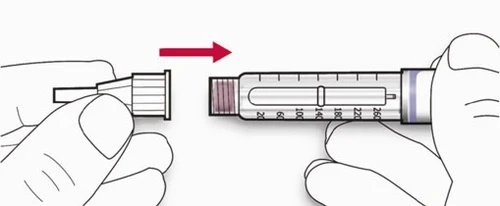
- If the needle is not kept straight during attachment, the rubber seal may be damaged causing leaks, or the needle may break.
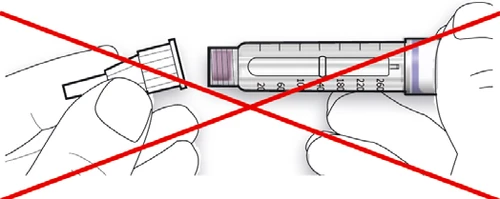
Step 3. Performing the safety test
Always perform the safety test before each injection. This ensures correct dose delivery because it:
- ensures the pen and needle are working properly,
- removes air bubbles.
A. Select a dose of 2 units by rotating the dose selector.
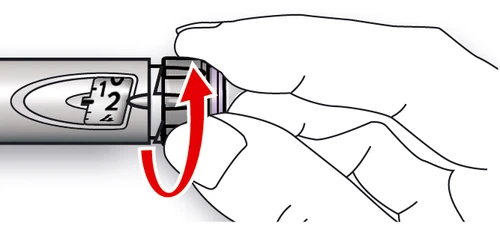
B. Remove the outer needle cap and keep it to remove the used needle after injection. Remove the inner needle cap and discard it.
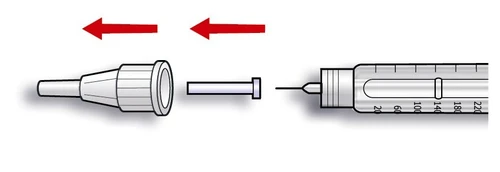
C. Hold the pen vertically with the needle pointing upwards.
D. Tap the insulin reservoir gently with your finger so that any air bubbles rise towards the needle.
E. Press the injection button fully. Check that insulin comes out of the needle tip.
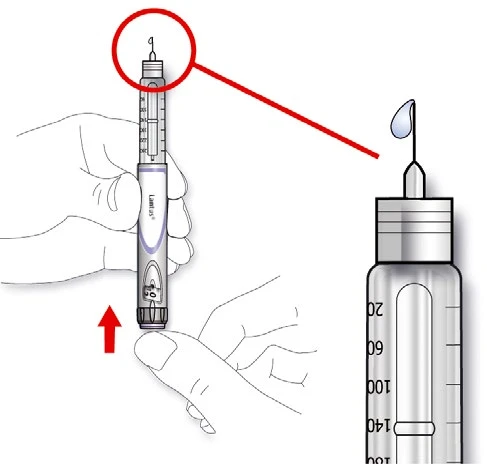
The safety test may need to be repeated several times before insulin appears.
- If insulin does not come out, check for air bubbles and repeat the safety test two or more times to remove them.
- If insulin still does not come out, the needle may be blocked. Change the needle and try again.
- If insulin still does not come out after changing the needle, the SoloStar may be damaged. Do not use this SoloStar.
Step 4. Selecting the dose
The dose can be selected in 1-unit increments, from a minimum of 1 unit up to a maximum of 80 units. If a dose greater than 80 units is required, it must be administered via two or more injections.
A. Check that the dose display window shows “0” at the end of the safety test.
B. Select the required dose (in the example below, the selected dose is 30 units). If a higher dose has been selected, the dose selector can be turned backwards.
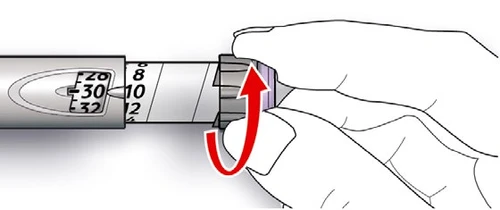
- Do not press the injection button while turning, as insulin will be released.
- The dose selector cannot be rotated beyond the number of units remaining in the pen. Do not force the dose selector further. In this case, inject the remaining insulin in the pen and complete the dose with a new SoloStar, or use a new SoloStar for the entire dose.
Step 5. Injecting the dose
A. Use the injection technique as instructed by your doctor, pharmacist or nurse.
B. Insert the needle into the skin.
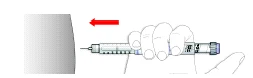
C. Administer the dose by pressing the injection button fully. The number in the dose display window will return to “0” during injection.
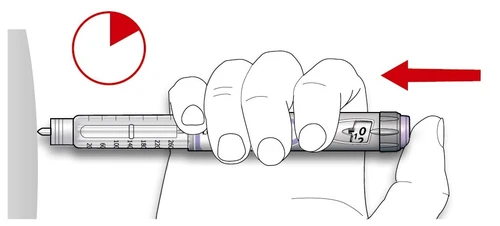
D. Keep the injection button fully pressed. Count slowly to 10 before removing the needle from the skin. This ensures the full insulin dose has been injected.
The pen’s plunger moves with each dose. The plunger reaches the end of the cartridge when a total of 300 units of insulin have been used.
Step 6. Removing and disposing of the needle
Always remove the needle after each injection and store SoloStar without the needle attached. This helps prevent:
- contamination and/or infection,
- air entering the insulin reservoir and insulin leakage, which may lead to inaccurate dosing.
A. Replace the outer needle cap and use it to unscrew the needle from the pen. To reduce the risk of accidental needle injury, never re-sheath the inner needle cap.
- If another person administers the injection, or if you are administering the injection to another person, particular attention must be paid during needle removal and disposal. Follow recommended safety measures for needle removal and disposal (ask your doctor, pharmacist or nurse) to reduce the risk of accidental needle injury and transmission of infectious diseases.
B. Dispose of the needle safely, following instructions from your doctor, pharmacist or nurse.
C. Always replace the pen cap, then store the pen until the next injection.
Storage instructions
See the back of this leaflet (insulin) for instructions on how to store SoloStar. If SoloStar is stored in the refrigerator, remove it 1-2 hours before injection so it can warm to room temperature. Injecting cold insulin is more painful. Dispose of used SoloStar according to local legal requirements.
Maintenance
SoloStar must be protected from dust and dirt. The exterior of SoloStar may be cleaned with a damp cloth. Do not immerse, wash or lubricate the pen as this may damage it. It must be handled with care. Avoid situations where SoloStar could be damaged. If you are concerned that SoloStar may be damaged, use a new one.