Lantanon
Italy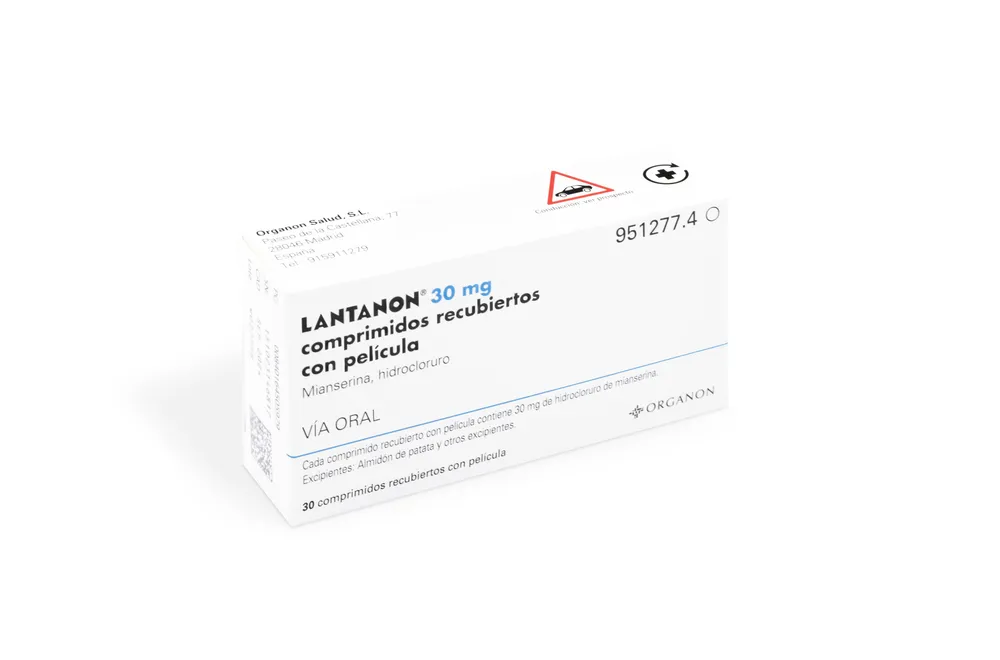
Table of Contents
Package leaflet: Information for the patient
LANTANON 30 mg film-coated tablets
mianserine
Please read all of this leaflet carefully before taking this medicine because it contains
important information for you.
- Keep this leaflet. You may need to read it again.
- If you have any questions, ask your doctor or pharmacist.
- This medicine has been prescribed for you only. Do not give it to other people, even if they have the same symptoms as you, because it could be harmful.
- If you experience any side effects, including those not listed in this leaflet, tell your doctor or pharmacist. See section 4.
Contents of this leaflet:
- What Lantanon is and what it is used for
- What you need to know before taking Lantanon
- How to take Lantanon
- Possible side effects
- How to store Lantanon
- Contents of the pack and other information
1. What Lantanon is and what it is used for
Lantanon contains the active substance mianserin and is used for the treatment of depressive disorders in adults, particularly in the following clinical forms:
- depression occurring without an apparent triggering factor and having biological and genetic causes (endogenous depression);
- depression triggered by an unpleasant event or disappointment (reactive depression);
- depression associated with a state of agitation and anxiety (anxious depression);
- depression occurring during ageing, in women after menopause and in men after andropause (involutional melancholia);
- depression accompanied by physical symptoms such as fatigue, palpitations, cramps, dizziness (depression associated with somatic disorders).
2. What you should know before taking Lantanon
Do not take Lantanon
- if you are allergic to mianserin or any of the other ingredients of this medicine (listed in section 6);
- if you have a mood disorder characterized by euphoria, excitability, and obsessive thoughts (mania);
- if you have severe liver disease;
- if you are currently taking or have recently taken other medicines used to treat depression known as monoamine oxidase inhibitors (MAOIs) (see section “Other medicines and Lantanon”);
- if you are pregnant or breastfeeding (see section “Pregnancy and breastfeeding”).
This medicine must not be administered to children and adolescents under 18 years of age
(see “Children and adolescents”).
Warnings and precautions
Talk to your doctor or pharmacist before taking Lantanon. If you experience any unusual signs or symptoms while being treated with
Lantanon, contact your doctor or pharmacist immediately.
Inform your doctor before using this medicine if you have one or more of the following symptoms:
- if you have suicidal thoughts. Depression is associated with an increased risk of suicidal ideation, self-harming behaviour (self-injury), and suicide. Since improvement may not occur during the first few weeks of treatment or immediately thereafter, you will be closely monitored by your doctor until improvement occurs. Clinical experience generally indicates that the risk of suicide may increase in the early stages of treatment. Other psychiatric disorders for which Lantanon is prescribed may also increase the risk of suicidal behaviour and clinically significant depressive disorder (major depressive disorder). When treating patients with major depressive disorder, your doctor will follow the same precautions as those used in treating patients with other psychiatric disorders. You are more likely to experience suicidal thoughts if:
- you have previously considered taking your own life;
- you are a young adult. Indeed, data from clinical studies have shown an increased risk of suicidal behaviour in adults under 25 years of age treated with antidepressants. If you are at high risk, your doctor will closely monitor you, particularly during the initial phases of treatment and after any dose adjustments. You (or the person caring for you) will be informed of the need to monitor and immediately report to the doctor any worsening of clinical condition, the onset of suicidal thoughts or behaviour, or changes in behaviour.
- if you develop symptoms of infection such as fever, inflammation of the mucous membranes in the mouth (stomatitis), sore throat, or other inflammatory phenomena, your doctor will instruct you to stop treatment with Lantanon and undergo a complete blood count (full blood count). These adverse effects have been observed in patients of all ages but are more commonly seen in elderly patients. If you are elderly, your doctor will limit the use of Lantanon if you have the following conditions:
- an eye disease caused by increased pressure within the eye (glaucoma);
- enlarged prostate (prostatic hypertrophy);
- severe heart disease. During the use of Lantanon, cases of impaired bone marrow function (myelosuppression) have been reported, associated with a reduced platelet count (thrombocytopenia) and mild to severe reduction in circulating white blood cells (agranulocytosis or granulocytopenia). These reactions mostly occurred after 4–6 months of treatment and resolved spontaneously upon discontinuation of treatment. For this reason, especially during the first three months of treatment, you must undergo periodic blood tests. If you are starting treatment for the first time, you should have blood tests once a week for the first two months.
- if you have a predisposition to mood instability, with alternating depressive and abnormally elevated mood episodes (bipolar disorder). Lantanon, like other antidepressant medicines, could worsen an abnormally elevated mood state (hypomanic state). Stop treatment and contact your doctor.
- if you have severe liver disease. Stop taking Lantanon and contact your doctor if you develop yellowing of the skin (jaundice), even if mild.
- if you suffer from severe kidney disease.
- if you suffer from severe heart disease, especially if you have recently had a myocardial infarction or cardiac block.
- if you have risk factors associated with abnormalities in heart rhythm conduction (QT prolongation and ventricular arrhythmias, including torsades de pointes and congenital long QT syndrome), if you are over 65 years old, if you are female, if you have heart valve dysfunction (structural heart disease/left ventricular dysfunction), if you have kidney or liver disease, if you are taking medicines that inhibit the metabolism of Lantanon or other drugs that prolong the QT interval (see section “Other medicines and Lantanon”). Lantanon must be used with caution, as since its initial marketing, abnormalities in cardiac conduction (QT prolongation and ventricular arrhythmias, including torsades de pointes) have been reported (see section “Undesirable effects”). Before starting treatment with Lantanon, any potassium or magnesium deficiency in the blood (hypokalaemia and hypomagnesaemia) should be corrected. If your QT interval exceeds 500 ms or increases by more than 60 ms, your doctor will consider stopping or reducing the dose of Lantanon.
- if you have diabetes. Changes in blood sugar levels have been observed in patients with unstable diabetes mellitus during treatment with Lantanon. Your doctor will advise you to perform regular blood glucose monitoring.
- if you have epilepsy, your doctor will monitor you closely. If you experience involuntary muscle contractions (seizures), stop taking Lantanon and contact your doctor.
During treatment with Lantanon, your doctor will advise you to undergo periodic blood tests and assessments of liver, kidney, and cardiovascular function, and will monitor the dosage of any concomitant therapies.
Children and adolescents
Lantanon should normally not be used in children and adolescents under 18 years of age.
It is important to know that, when taking this class of medicines, patients under 18 years of age have a higher risk of experiencing adverse effects such as suicide attempts, suicidal thoughts, and hostility (particularly aggression, hostility, and anger). In addition, the long-term safety of Lantanon in this age group with regard to growth, maturation, and cognitive and behavioural development has not yet been established.
If, due to medical necessity, treatment is initiated, the patient must be carefully monitored for the emergence of suicidal symptoms. Inform your doctor if any of the symptoms described above appear or worsen in patients under 18 years of age being treated with Lantanon.
Other medicines and Lantanon
Inform your doctor or pharmacist if you are taking, have recently taken, or might take any other medicines.
Do not take Lantanon together with the following medicines:
- monoamine oxidase inhibitors (MAOIs), such as moclobemide, tranylcypromine, and linezolid. Also, do not take Lantanon within two weeks after stopping treatment with monoamine oxidase inhibitors (MAOIs). Likewise, if you stop taking Lantanon, do not take monoamine oxidase inhibitors (MAOIs) within two weeks afterwards (see section “Do not take Lantanon”).
You should exercise particular caution when taking Lantanon together with the following medicines:
-
antihypertensive medicines used to treat high blood pressure, such as betanidine, guanethidine, clonidine, methyldopa, propranolol alone or combined with hydralazine. Lantanon does not interfere with these medicines, but periodic monitoring of blood pressure is recommended in patients receiving concomitant antihypertensive therapy;
-
medicines for the treatment of epilepsy, such as phenytoin and carbamazepine. When taken in combination with Lantanon, these medicines may reduce the blood levels of
mianserin. Dosage adjustments should be considered when starting or
discontinuing concomitant treatment with these medicines; -
medicines that prevent blood clotting, belonging to the class of coumarin derivatives such as warfarin. In this case, your doctor will monitor you closely;
-
other psychotropic medicines. Concomitant use with Lantanon requires special caution and attention from your doctor to avoid undesirable drug interactions;
-
medicines that prolong the QT interval (medicines used to treat cardiac conduction abnormalities), for example certain antipsychotics and antibiotics. The concomitant use of these medicines with Lantanon may increase the risk of QT prolongation and/or ventricular arrhythmias (e.g. torsades de pointes). Check the package leaflet of other concomitantly administered medicines for information about their effects on the QT interval.
Lantanon with food and drink
Lantanon may enhance the depressant effect of alcohol on central nervous system functions; therefore, do not consume alcoholic beverages during treatment with Lantanon.
Pregnancy and breastfeeding
If you are pregnant, think you may be pregnant, are planning to become pregnant, or are breastfeeding, consult your doctor or pharmacist before using this medicine.
Do not use Lantanon if you are definitely or possibly pregnant or during breastfeeding. If taking Lantanon is considered essential, your doctor will advise you to stop breastfeeding.
Driving and using machines
Lantanon may reduce psychomotor performance during the first days of treatment. In general, if you are being treated with antidepressants, you should refrain from engaging in any potentially dangerous activities, such as driving vehicles or operating machinery.
3. How to take Lantanon
Take this medicine exactly as directed by your doctor or pharmacist. If you have any doubts, consult your doctor or pharmacist. The optimal dose must be determined by your doctor according to your individual needs.
Your doctor will advise you to start treatment with a daily dose of 30 mg and will gradually adjust the dose until an optimal response is achieved.
The recommended dose in adults is 30–90 mg per day. In most cases, a daily dose of 60 mg is sufficient; however, doses up to 120 mg per day are generally well tolerated.
Your doctor will instruct you on how to take the recommended daily dose: it may be divided into appropriate fractional doses throughout the day or, preferably, taken as a single dose in the evening, up to a maximum of 60 mg, at bedtime (due to its beneficial effect on sleep).
Swallow the Lantanon tablet whole, without chewing, and if necessary, with a little liquid.
You will usually start to notice improvement within 2–4 weeks after starting treatment. If this does not occur, your doctor may prescribe a higher dose. If no optimal response is achieved within the following 2–4 weeks, treatment should be discontinued.
Treatment should continue for several months after the initial clinical improvement, as advised by your doctor.
Elderly patients
The dose and frequency of administration of Lantanon in elderly patients must be carefully determined by the doctor, who will consider whether a reduction of the above-mentioned dose is necessary based on individual requirements. A lower dose than that usually recommended for adults may be sufficient to achieve a satisfactory clinical response in elderly patients.
Use in children and adolescents
Lantanon must not be used in children and adolescents under 18 years of age (see section “Special warnings”).
If you take more Lantanon than you should
If you accidentally take too much Lantanon, contact your doctor or pharmacist immediately or go to the nearest hospital.
Symptoms of acute overdose generally include prolonged sedation. Rarely, irregular heartbeats (cardiac arrhythmias), involuntary muscle contractions (seizures), severe drop in blood pressure (severe hypotension), and breathing difficulties may occur. Cases of abnormalities in heart rhythm conduction (QT prolongation on electrocardiogram and torsades de pointes) have also been reported.
Management in case of overdose
In case of overdose, the patient must be monitored by electrocardiographic examination (ECG). There is no specific antidote to counteract the effects of Lantanon overdose. In the event of accidental or intentional ingestion of an excessive dose of Lantanon, immediate gastric lavage should be performed, and appropriate supportive therapy should be administered to maintain vital functions.
If you forget to take Lantanon
Do not take a double dose to make up for a missed dose.
If you stop taking Lantanon
Do not stop taking Lantanon without first consulting your doctor. If you stop treatment with Lantanon abruptly, symptoms related to discontinuation may occur.
If you have any questions about the use of Lantanon, consult your doctor or pharmacist.
4. Possible side effects
Like all medicines, this medicine can cause side effects, although not everybody will experience them.
Patients with depression may have symptoms related to the disease itself, such as dry mouth, prolonged inability to evacuate (persistent constipation), and disturbances in the eye's ability to focus on objects (accommodation disorders). Therefore, it is sometimes difficult to determine which symptoms are due to the disease and which are due to treatment with Lantanon.
Flu-like syndrome, changes in liver function parameters, and abnormal breast development in men (gynaecomastia) have been reported.
The following side effects are listed by frequency:
Not known (frequency cannot be estimated from the available data):
- blood disorder (haematological dyscrasia), usually manifesting as a decrease in platelet count (thrombocytopenia), mild or severe reduction in circulating white blood cells (granulocytopenia or agranulocytosis) (see section “Warnings and precautions”);
- weight gain;
- euphoria or emotional excitement (hypomania);
- sedation occurring at the beginning of treatment and decreasing during treatment. Dose reduction usually does not reduce sedation but may compromise the antidepressant efficacy of Lantanon;
- involuntary muscle contractions (convulsions);
- involuntary, uncoordinated, and localized motor activity (hyperkinesia);
- neuroleptic malignant syndrome, characterized by muscle rigidity, increased body temperature, delirium, and elevated serum creatine phosphokinase (an enzyme present in the blood);
- slowing of the heartbeat (bradycardia) after the initial dose;
- abnormalities in the heart's electrical conduction detectable on electrocardiogram (QT prolongation, torsade de pointes);
- decrease in blood pressure (hypotension);
- elevated liver enzyme levels (hepatic transaminases);
- yellowish discoloration of the skin and eyes (jaundice);
- inflammation of the liver (hepatitis);
- liver function disorders;
- skin rash with pustules, blisters, and vesicles (exanthema);
- joint pain (arthralgia);
- fluid accumulation in body tissues (oedema).
Rare (occurs in at least 1 in 10,000 and less than 1 in 1,000 patients treated):
- suicidal thoughts/behaviour (see section “Warnings and precautions”).
Reporting of side effects
If you experience any side effect, including those not listed in this leaflet, talk to your doctor or pharmacist. You can also report side effects directly via the national reporting system at www.agenziafarmaco.gov.it/it/responsabili.
By reporting side effects, you can help provide more information on the safety of this medicine.
5. How to store Lantanon
Keep this medicine out of the sight and reach of children.
Do not use this medicine after the expiry date stated on the carton and blister after "Exp.". The expiry date refers to the last day of that month.
The stated expiry date applies to the medicine stored in its original intact packaging and kept under the recommended storage conditions.
Do not store above 30°C. Store in the original packaging to protect the medicine from light and moisture.
Do not dispose of medicines via wastewater or household waste. Ask your pharmacist how to dispose of medicines you no longer use. This will help protect the environment.
6. Package contents and other information
What Lantanon contains
- The active substance is mianserin. Each Lantanon 30 mg film-coated tablet contains 30 mg of mianserin HCl.
- The other components are tablet core: potato starch, precipitated silica, magnesium stearate, methylcellulose, dibasic calcium phosphate; tablet coating: hypromellose, polyethylene glycol 8,000, titanium dioxide.
Description of the appearance of Lantanon and package contents
Lantanon is presented as film-coated tablets. The tablets are packaged in PVC/aluminum blisters.
Each box contains 30 tablets.
Marketing Authorization Holder and Manufacturer
Marketing Authorization Holder
Organon Italia S.r.l.
Piazza Carlo Magno, 21
00162 Rome, Italy
Manufacturer
Schering-Plough Labo NV
Industriepark 30
Heist-op-den-Berg, 2220, Belgium