Langiprav
Italy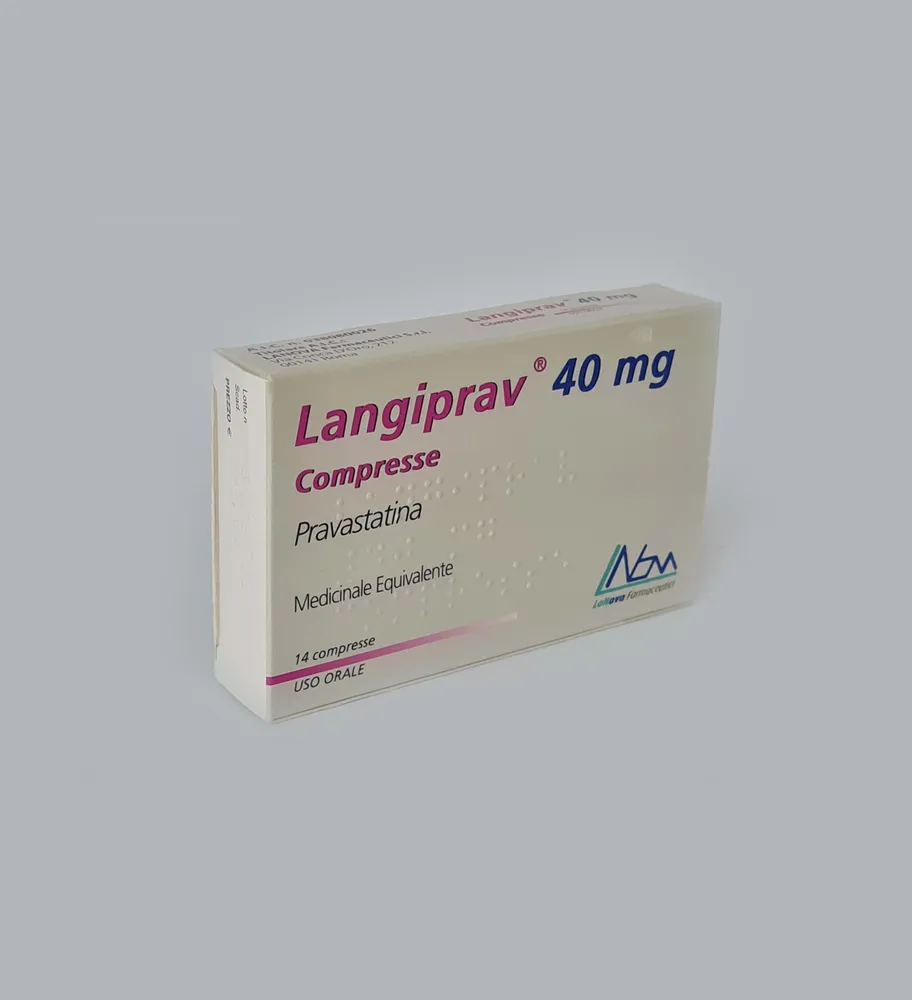
Table of Contents
Patient Information Leaflet
LANGIPRAV 20 mg tablets, 40 mg tablets
Sodium pravastatin
Generic medicine
Please read this leaflet carefully before taking this medicine because it contains important information for you.
- Keep this leaflet. You may need to read it again.
- If you have any questions, ask your doctor or pharmacist.
- This medicine has been prescribed for you only. Do not give it to other people, even if their symptoms are the same as yours, as it may be harmful.
- If you experience any side effects, including those not listed in this leaflet, talk to your doctor or pharmacist. See section 4.
Contents of this leaflet:
- What LANGIPRAV is and what it is used for
- What you need to know before taking LANGIPRAV
- How to take LANGIPRAV
- Possible side effects
- How to store LANGIPRAV
- Contents of the pack and other information
1. What LANGIPRAV is and what it is used for
Pravastatin, the active substance in LANGIPRAV, belongs to a group of medicines called statins, which act by lowering high levels of cholesterol and triglycerides in the blood.
LANGIPRAV is indicated:
- to reduce high levels of fats in the blood (primary hypercholesterolaemia or mixed dyslipidaemia) when response to diet, increased physical exercise, weight reduction, etc., is insufficient;
- if you are at increased risk of developing heart disease due to high blood cholesterol levels, as an addition to diet;
- to reduce the likelihood of having another heart attack if you have already had one, or if you suffer from episodes of chest pain (unstable angina pectoris), and have normal or high cholesterol levels, in addition to correcting other risk factors;
- to reduce the amount of fatty substances (lipids) in the blood, if you are undergoing immunosuppressive therapy following organ transplantation.
2. What you should know before taking LANGIPRAV
Do not take LANGIPRAV:
- if you are allergic to pravastatin or to any of the other ingredients of this medicine (listed in section 6);
- if you have active liver disease, including a severe increase in transaminase levels;
- if you are pregnant or breastfeeding.
Warnings and precautions
Talk to your doctor or pharmacist before taking LANGIPRAV:
- if you have kidney failure;
- if your thyroid gland function is reduced (hypothyroidism);
- if you have experienced muscle problems during previous treatment with statins or other medicines called fibrates, used to lower blood lipids;
- if you or any member of your immediate family has a hereditary muscle disorder;
- if you have previously suffered from liver disease;
- if you consume large amounts of alcohol;
- if you are simultaneously taking other medicines (fibrates) to reduce blood lipids;
- if you are taking or have taken within the last 7 days an oral or injectable medicine called fusidic acid (a medicine used to treat bacterial infections). The combination of fusidic acid and LANGIPRAV may cause serious muscle problems (rhabdomyolysis). Contact your doctor immediately if, during treatment, you experience muscle pain, tenderness, cramps, or weakness. Rarely, muscle problems can be severe and may include muscle tissue damage (rhabdomyolysis), leading to kidney damage.
While you are being treated with this medicine, your doctor will carefully monitor whether you have diabetes or are at risk of developing diabetes. You are at increased risk of developing diabetes if you have high levels of sugar and fat in your blood, are overweight, or have high blood pressure.
Your doctor will perform a blood test before you start taking LANGIPRAV and if you develop any symptoms related to liver problems while taking LANGIPRAV. This is to check how well your liver is functioning.
Your doctor may also ask you to have blood tests to monitor liver function after you have started taking LANGIPRAV.
Your doctor will also monitor your transaminase levels and must discontinue treatment if certain values become too high.
In addition, inform your doctor or pharmacist if you have persistent muscle weakness. Further tests and treatments may be needed to diagnose and manage this condition.
Your doctor will check the levels of certain muscle enzymes in your blood (creatine kinase) before starting treatment and periodically during therapy to rule out muscle damage.
Children
In children before puberty, the risk-benefit ratio of treatment with LANGIPRAV must be carefully evaluated by the doctor before starting therapy.
Elderly
Before starting treatment in people over 70 years of age, it is necessary to carefully assess the presence of predisposing factors (see 'Warnings and Precautions').
Other medicines and LANGIPRAV
If you are taking a medicine used to treat and prevent blood clots known as a “vitamin K antagonist”, inform your doctor before taking LANGIPRAV, because using vitamin K antagonists together with LANGIPRAV may increase the results of blood tests used to monitor treatment with vitamin K antagonists.
Inform your doctor if you are taking, have recently taken, or might take any other medicines.
It is particularly important to inform your doctor if you are taking any of the following medicines:
-
Fibrates, used to reduce triglyceride levels in the blood (e.g. gemfibrozil, fenofibrate). Concomitant use with pravastatin may lead to muscle disorders, sometimes severe.
-
Cholestyramine/colestipol (used to lower cholesterol). Taking these medicines at the same time reduces the effect of pravastatin.
-
Cyclosporine (a medicine used to suppress the immune system). The effect of pravastatin is significantly increased when both medicines are used together.
-
Erythromycin and clarithromycin. These antibiotics increase the effect of pravastatin.
-
Fusidic acid. If oral fusidic acid treatment for a bacterial infection is considered necessary, LANGIPRAV therapy should be temporarily discontinued. Your doctor will inform you when it is appropriate to resume taking LANGIPRAV. Concomitant use of LANGIPRAV and fusidic acid may rarely cause muscle weakness, tenderness, or muscle pain (rhabdomyolysis). For further information on rhabdomyolysis, see section 4.
-
Colchicine (used to treat gout).
-
Nicotinic acid (used to treat high cholesterol levels in the blood).
-
Rifampicin (used to treat an infection called tuberculosis).
-
Lenalidomide (used to treat a type of blood cancer called multiple myeloma).
Pregnancy and breastfeeding
Do not use LANGIPRAV if you are pregnant, suspect you may be pregnant, are planning to become pregnant, or are breastfeeding.
If you are a woman of childbearing potential, you may only use this medicine if you are using an adequate method of contraception. If you discover you are pregnant while taking LANGIPRAV, stop treatment immediately and contact your doctor without delay.
Do not use LANGIPRAV while breastfeeding.
Ask your doctor or pharmacist for advice before taking any medicine.
Driving and using machines
LANGIPRAV has no effect or has a negligible effect on the ability to drive and use machines.
However, dizziness, blurred vision, or double vision have been reported after taking LANGIPRAV.
LANGIPRAV contains lactose
LANGIPRAV tablets contain a sugar called lactose. If your doctor has diagnosed you with an intolerance to certain sugars, contact him/her before taking this medicine.
LANGIPRAV contains sodium
LANGIPRAV contains 60 mg of sodium (the main component of table salt) per 40 mg dose.
This corresponds to 3% of the maximum recommended daily dietary intake for an adult.
3. How to take LANGIPRAV
Take this medicine exactly as your doctor has told you. If you are unsure, consult your doctor or pharmacist.
Take LANGIPRAV once daily, preferably in the evening, with or without food.
Patients with high cholesterol must follow a standard cholesterol-lowering diet and should continue this diet during treatment with LANGIPRAV.
Unless otherwise prescribed by your doctor, the usual dosage is as follows:
To reduce elevated blood cholesterol levels
The recommended dose of LANGIPRAV is 10–40 mg daily. Your doctor will monitor your condition periodically and adjust the prescribed dose accordingly.
To prevent cardiovascular disease
The recommended dose of LANGIPRAV is 40 mg daily.
After organ transplantation
The recommended starting dose of LANGIPRAV is 20 mg once daily in the evening if you are receiving immunosuppressive therapy. Your doctor may decide to increase the dose up to 40 mg.
Children and adolescents with inherited high blood cholesterol (heterozygous familial hypercholesterolemia)
The recommended dose is 10–20 mg once daily for children aged 8 to 13 years, and 10–40 mg once daily for those aged 14 to 18 years.
Elderly patients
No dosage adjustment is necessary for this patient group, unless predisposing risk factors are present (see "Warnings and Precautions").
Dosage adjustment in case of renal or hepatic impairment
Initial dose of 10 mg pravastatin once daily; the dose may be adjusted if necessary.
Concomitant use of other medicines
If your doctor has prescribed LANGIPRAV together with another cholesterol-lowering medicine containing a bile acid sequestrant (e.g. cholestyramine, colestipol), you must take LANGIPRAV at least 1 hour before or 4 hours after taking the bile acid sequestrant medicine.
If you are taking cyclosporine, with or without other immunosuppressive drugs, treatment should start with 20 mg pravastatin once daily. Your doctor may gradually increase the dose up to a maximum of 40 mg.
If you take more LANGIPRAV than you should
If you take more LANGIPRAV than prescribed, contact your doctor immediately or go to the nearest hospital.
If you forget to take LANGIPRAV
Do not take a double dose to make up for the missed dose. Simply continue taking the medicine as prescribed by your doctor.
If you have any questions about the use of this medicine, consult your doctor or pharmacist.
4. Possible side effects
Like all medicines, this medicine can cause side effects, although not everyone gets them.
Uncommon side effects (may affect up to 1 in 100 people)
- Dizziness
- Headache
- Sleep disorders, including insomnia and nightmares
- Vision disturbances (including blurred vision and double vision)
- Digestive disorders/heartburn
- Abdominal pain
- Nausea/vomiting
- Constipation
- Diarrhoea
- Flatulence (increased intestinal gas)
- Itching
- Acne
- Rash
- Hives (urticaria)
- Scalp/hair abnormalities (including hair loss)
- Urinary disorders (difficulty urinating, frequent need to urinate at night, changes in frequency of urination)
- Sexual difficulties
- Fatigue
- Tendon disorders, sometimes complicated by rupture.
The following side effects are rare and may affect fewer than 1 in 1,000 people:
- Increased skin sensitivity to sunlight.
Very rare side effects (may affect up to 1 in 10,000 people):
- Peripheral nerve disorders, particularly if the medicine is used for a prolonged period
- Paresthesia (tingling, prickling, itching sensations)
- Hypersensitivity reactions:
- Anaphylaxis (a severe, rapidly occurring allergic reaction)
- Rapid swelling of the face, mouth, tongue, and throat (angioedema)
- Lupus-like syndrome
- Inflammation of the pancreas (pancreatitis)
- Yellowing of the skin, whites of the eyes, and mucous membranes (jaundice)
- Inflammation of the liver (hepatitis)
- Liver cell death (fulminant hepatic necrosis)
- Severe, potentially fatal muscle disease, which may occur at any time during treatment and is characterized by massive muscle breakdown (rhabdomyolysis), possibly associated with acute severe kidney failure
- Muscle disorders (myopathy, myositis, polymyositis)
- Dermatomyositis (a condition characterized by inflammation of the muscles and skin).
Frequency not known (cannot be estimated from the available data):
- Persistent muscle weakness
- Liver failure
- Skin rash, including lichenoid eruption.
Additional reported side effects:
- Musculoskeletal pain, arthralgia (joint pain), muscle cramps, muscle pain, muscle weakness, and elevated levels of CK (creatine kinase)
- Increased serum transaminase levels.
The following side effects have been reported with some statins:
- Nightmares
- Memory loss
- Depression
- Rare cases of respiratory problems, including persistent cough and/or shortness of breath or fever (interstitial lung disease), particularly with long-term therapy
- Diabetes. This is more likely if you have high levels of sugar and fats in your blood, are overweight, and have high blood pressure. Your doctor will monitor you while you are taking this medicine.
Reporting of side effects
If you experience any side effect, including those not listed in this leaflet, talk to your doctor or pharmacist.
You can also report side effects directly via the national reporting system at the following website:
http://www.agenziafarmaco.gov.it/content/come-segnalare-una-sospetta-reazione-avversa
By reporting side effects, you can help provide more information on the safety of this medicine.
5. How to store LANGIPRAV
Keep this medicine out of the sight and reach of children.
Do not use this medicine after the expiry date stated on the carton after "Exp.:". The expiry date refers to the last day of that month.
Store below 30°C. Keep in the original container.
Do not dispose of any medicine via wastewater or household waste. Ask your pharmacist how to dispose of medicines you no longer use. This will help protect the environment.
6. Package contents and other information
What LANGIPRAV contains
-
The active substance is pravastatin sodium. One 20 mg tablet contains 20 mg of pravastatin sodium.
One 40 mg tablet contains 40 mg of pravastatin sodium. -
The other components are: lactose monohydrate; microcrystalline cellulose; povidone; sodium croscarmellose; magnesium stearate; yellow iron oxide (E172); magnesium oxide.
Description of the appearance of LANGIPRAV and package contents
LANGIPRAV 20 mg tablets (blister pack containing 10 tablets of 20 mg)
LANGIPRAV 40 mg tablets (blister pack containing 14 tablets of 40 mg)
Marketing Authorization Holder and Manufacturer
Marketing Authorization Holder:
LANOVA Farmaceutici S.r.l. – Via Conca D’Oro, 212 – 00141 Rome, Italy
Manufacturer:
Doppel Farmaceutici S.r.l., Via Volturno 48 - Quinto De Stampi (Rozzano) – Milan, Italy
LA.FA.RE S.r.l. - Via Sacerdote Benedetto Cozzolino, 77 - 80056 Ercolano (Naples), Italy