Lampard
Italy
Table of Contents
- Package leaflet: Information for the user
- LAMPARD 10,000 IU/ml oral drops, solution
- 1. What LAMPARD is and what it is used for
- 2. What you need to know before taking LAMPARD
- 3. How to take LAMPARD
- 4. Possible side effects
- 5. How to store LAMPARD
- 6. Package contents and other information
- Package leaflet: information for the user
- LAMPARD 25,000 IU/2.5 ml oral solution, 25,000 IU/2.5 ml oral solution in single-dose container
- 1. What LAMPARD is and what it is used for
- 2. What you need to know before taking LAMPARD
- 3. How to take LAMPARD
- 4. Possible side effects
- 5. How to store LAMPARD
- 6. Package contents and other information
- Package leaflet: Information for the user
- LAMPARD 50,000 IU/5 ml oral solution in single-dose container
- 1. What LAMPARD is and what it is used for
- 2. What you should know before taking LAMPARD
- 3. How to take LAMPARD
- 4. Possible side effects
- 5. How to store LAMPARD
- 6. Contents of the pack and other information
Package leaflet: Information for the user
LAMPARD 10,000 IU/ml oral drops, solution
colecalciferol
Read this leaflet carefully before taking this medicine because it contains important information for you.
- Keep this leaflet. You may need to read it again.
- If you have any questions, ask your doctor or pharmacist.
- This medicine has been prescribed for you only. Do not give it to other people, even if their symptoms are the same as yours, because it could be harmful.
- If you experience any side effects, including those not listed in this leaflet, contact your doctor or pharmacist. See section 4.
Contents of this leaflet:
- What LAMPARD is and what it is used for
- What you need to know before taking LAMPARD
- How to take LAMPARD
- Possible side effects
- How to store LAMPARD
- Contents of the pack and other information
1. What LAMPARD is and what it is used for
LAMPARD contains colecalciferol (Vitamin D).
LAMPARD is used to prevent and treat deficiency (low levels in the body) of colecalciferol (vitamin D).
2. What you need to know before taking LAMPARD
Do not take LAMPARD
- if you are allergic to vitamin D or to any of the other ingredients of this medicine (listed in section 6);
- if you have high levels of calcium in your blood (hypercalcemia) or in your urine (hypercalciuria);
- if you suffer from kidney stones;
- if you have high levels of vitamin D in your blood (hypervitaminosis D);
- if you have poor kidney function (severe renal insufficiency) (see also “Warnings and precautions”).
Warnings and precautions
Talk to your doctor or pharmacist before taking LAMPARD.
Your doctor may recommend taking LAMPARD for prevention of vitamin D deficiency:
- in newborns (especially premature infants) and infants;
- during the last trimester of pregnancy;
- in breastfeeding women at the end of winter and in spring;
- in the elderly;
- in case of insufficient sun exposure, particularly in children and adolescents;
- in case of unbalanced diet (e.g. low in calcium, vegetarian diet);
- in case of dark skin pigmentation;
- in case of extensive skin diseases, infectious diseases (such as tuberculosis, leprosy), gastrointestinal disorders or liver diseases (hepatic insufficiency);
- in patients being treated with antiepileptic drugs or long-term therapy with certain anti-inflammatory drugs.
Your doctor may prescribe different doses than those indicated in the section “How to take LAMPARD” in the following cases:
- if you are being treated with anticonvulsant or barbiturate medicines (see also “Other medicines and LAMPARD”);
- if you are being treated with medicines containing corticosteroid hormones (see also “Other medicines and LAMPARD”);
- if you are being treated with lipid-lowering medicines (such as colestipol, cholestyramine and orlistat) (see also “Other medicines and LAMPARD”);
- if you are being treated with aluminium-containing antacids (see also “Other medicines and LAMPARD”);
- if you are overweight;
- if you suffer from gastrointestinal diseases (intestinal malabsorption (such as Crohn’s disease, chronic inflammatory bowel disease, celiac disease), cystic fibrosis or mucoviscidosis, bariatric surgery);
- if you suffer from impaired liver function;
- if you suffer from chronic alcoholism or if you or your child are taking other products containing vitamin D, vitamin D-fortified foods, or using vitamin D-enriched milk (see also “LAMPARD with food, beverages or alcohol”).
Your doctor may prescribe periodic tests to monitor vitamin D or calcium levels in your blood and urine in the following cases:
- if you need to take LAMPARD for a prolonged period;
- if you are an elderly person being treated with heart medications containing digitalis or diuretic medicines;
- if you have sarcoidosis (a disease affecting connective tissues).
If your vitamin D or calcium levels are elevated, your doctor will reduce the dose or stop treatment with LAMPARD.
In general, you should not take LAMPARD if you have poor kidney function (see “Do not take LAMPARD”); however, if your doctor considers treatment with LAMPARD absolutely necessary, periodic tests must be performed to monitor calcium levels in your blood. If your calcium levels are elevated, your doctor will reduce the dose or stop treatment with LAMPARD.
Other medicines and LAMPARD
Tell your doctor or pharmacist if you are taking, have recently taken or might take any other medicines, including those not requiring a prescription.
Specifically inform your doctor if you are taking:
- anticonvulsant medicines such as phenytoin, carbamazepine and barbiturates (medicines used to treat epilepsy), because when taken together with LAMPARD, they may reduce its effect;
- diuretic medicines (medicines used to treat high blood pressure), because they reduce calcium elimination from the body. In this case, your doctor may request blood and urine tests to monitor calcium levels;
- medicines containing corticosteroids (medicines used to treat inflammation), because when taken together with LAMPARD, they may reduce its effect;
- medicines containing digitalis (e.g. digoxin) and other cardiac glycosides used for certain heart conditions: the toxicity of these medicines may increase when taken together with LAMPARD;
- antacid medicines containing aluminium, because when taken together with LAMPARD, they may reduce its effect;
- medicines containing magnesium, because when taken together with LAMPARD, high levels of magnesium in the blood (hypermagnesemia) may occur;
- warfarin (an anticoagulant medicine used to prevent blood clots), because when taken together with LAMPARD, its anticoagulant effect may increase, leading to bleeding;
- laxatives;
- cholestyramine, colestipol and orlistat (medicines used to treat high cholesterol), because when taken together with LAMPARD, they may reduce its effect;
- antibacterial agents such as rifampicin and isoniazid;
- cytotoxic agents such as actinomycin and other antifungal agents such as ketoconazole.
LAMPARD with food, beverages and alcohol
Inform your doctor in the following cases:
- if you suffer from chronic alcoholism;
- if you or your child are taking other products containing vitamin D, vitamin D-fortified foods, or using vitamin D-enriched milk.
Pregnancy, breastfeeding and fertility
If you are pregnant, think you may be pregnant, planning a pregnancy, or breastfeeding, ask your doctor or pharmacist for advice before taking this medicine.
During the first 6 months of pregnancy, vitamin D should be taken with caution due to the risk of fetal malformations (teratogenic effects) (see also “If you take more LAMPARD than you should”). Your doctor will prescribe this medicine only if strictly necessary.
When needed, vitamin D may be taken during the last trimester of pregnancy and during breastfeeding. This does not replace the administration of vitamin D3 to the newborn.
Fertility
There are no data on the effect of this product on fertility.
Driving and using machines
There are no data available on the effects of LAMPARD on the ability to drive. However, an effect on this ability is unlikely. Nevertheless, since drowsiness may occur as an adverse effect of treatment with LAMPARD, take this into account if you need to drive or operate machinery.
3. How to take LAMPARD
Take this medicine exactly as directed by your doctor. If you have any doubts, consult your doctor or pharmacist.
It is recommended to take LAMPARD with meals.
The recommended doses are listed below; however, your doctor will adjust them according to the nature and severity of your vitamin D deficiency (see also "Warnings and precautions"). Your doctor will advise you when to stop taking the medicine.
Paediatric population (< 18 years)
Newborns (0–1 year)
Prevention: 1–2 drops (equivalent to 250–500 IU of vitamin D3) daily.
Treatment: Your doctor will determine the appropriate dose and may subsequently prescribe a lower dose. The daily dose must not exceed 4 drops (equivalent to 1,000 IU of vitamin D3).
Children (1–11 years)
Prevention: 1–2 drops (equivalent to 250–500 IU of vitamin D3) daily. From the second year of life, in the presence of multiple risk factors for vitamin D deficiency and according to the doctor's judgment, the dosage may be increased up to 3 drops daily (equivalent to 750 IU of vitamin D3).
Treatment: Your doctor will determine the appropriate dose and may subsequently prescribe a lower dose. The daily dose must not exceed 8 drops (equivalent to 2,000 IU of vitamin D3).
Adolescents (12–17 years)
Prevention: 2–4 drops daily (equivalent to 500–1,000 IU of vitamin D3).
Treatment: 4–16 drops daily (equivalent to 1,000–4,000 IU of vitamin D3). Your doctor will determine the appropriate dose and may subsequently prescribe a lower dose. The daily dose must not exceed 16 drops (equivalent to 4,000 IU of vitamin D3).
Pregnant women
The recommended dose is 3–4 drops daily (equivalent to 750–1,000 IU of vitamin D3) during the last trimester. However, in women considered to be vitamin D deficient, a higher dose may be required (up to 2,000 IU daily – 8 drops).
Adults and elderly
Prevention: The recommended dose is 3–4 drops daily (equivalent to 750–1,000 IU of vitamin D3). In the presence of multiple risk factors for vitamin D deficiency, according to the doctor's judgment, the dosage may be increased up to 8 drops daily (equivalent to 2,000 IU of vitamin D3).
Treatment: 4 drops (equivalent to 1,000 IU of vitamin D3) daily. Your doctor will determine the appropriate dose and may subsequently prescribe a lower dose. Higher doses should be adjusted according to serum levels of 25-hydroxycholecalciferol (25(OH)D), the severity of the disease, and the patient's response to treatment. The daily dose must not exceed 16 drops (equivalent to 4,000 IU of vitamin D3).
Instructions for using the dropper bottle
- Shake the bottle before use.
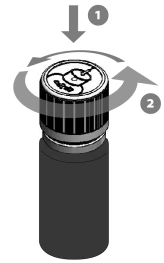
- Unscrew the child-resistant safety cap by pressing downwards and turning anticlockwise at the same time.
- Count the drops into a spoon and administer directly into the mouth.
- Close the bottle by screwing on the cap and turning firmly clockwise, then return it to the packaging.
If you take more LAMPARD than you should
Taking too much LAMPARD may cause very high levels of calcium in the blood (hypercalcemia) and in the urine (hypercalciuria), with symptoms such as nausea, vomiting, thirst, excessive thirst (polydipsia), increased urine volume (polyuria), constipation, dehydration, anorexia (loss of appetite), abdominal pain, muscle weakness, fatigue, mental disturbances, bone pain, a kidney condition called nephrocalcinosis, kidney stones, and in severe cases, cardiac arrhythmia. Extreme hypercalcemia can lead to coma and death.
Prolonged high calcium levels may cause calcium deposits in arteries, veins, and organs, and irreversible kidney damage.
Taking vitamin D during the first 6 months of pregnancy may cause high calcium levels in the mother's blood, which may lead to fetal malformations (delayed physical and mental development of the child, narrowing of the aortic opening near the heart, retinal damage, problems with parathyroid gland function at birth leading to low calcium levels in the newborn, causing involuntary muscle contractions and seizures).
In case of accidental ingestion or overdose of LAMPARD, contact your doctor immediately or go to the nearest hospital.
If you forget to take a dose of LAMPARD
Do not take a double dose to make up for the missed dose.
4. Possible side effects
Like all medicines, this medicine can cause side effects, although not everybody gets them.
The frequency of possible side effects is defined according to the following convention:
- very common: may affect more than 1 in 10 people
- common: may affect up to 1 in 10 people
- uncommon: may affect up to 1 in 100 people
- rare: may affect up to 1 in 1,000 people
- very rare: may affect up to 1 in 10,000 people
- not known: frequency cannot be estimated from the available data.
If you experience any of the following side effects, stop taking the medicine and seek immediate
medical advice from your doctor or the nearest emergency department:
- Severe allergic reactions (rare: may affect up to 1 in 1,000 people): swelling of the face, tongue and/or throat, difficulty swallowing, hives.
Other possible side effects are:
Uncommon (may affect up to 1 in 100 people)
- Hypercalcaemia (excess calcium levels in the blood)
- Hypercalciuria (excess calcium levels in the urine)
Rare (may affect up to 1 in 1,000 people) - Confusional state
- Anorexia (loss of appetite)
- Drowsiness
- Thirst
- Itching
- Skin rashes
- Hives
- Constipation
- Flatulence
- Nausea
- Abdominal pain
- Diarrhoea
Other side effects (frequency not known) - Renal failure (poor kidney function)
- Kidney stones
- Polyuria (urine output higher than normal)
- Polydipsia (excessive thirst)
- Headache
- Vomiting
- Dysgeusia
- Dry mouth
- Asthenia
- Dizziness
- Cardiac arrhythmias.
Following the instructions provided in this leaflet reduces the risk of side effects.
Reporting of side effects
If you get any side effects, including those not listed in this leaflet, talk to your doctor or pharmacist.
You can also report side effects directly via the national reporting system at http://www.aifa.gov.it/content/segnalazioni-reazioni-avverse.
By reporting side effects, you can help provide more information on the safety of this medicine.
5. How to store LAMPARD
Keep this medicine out of the sight and reach of children.
Do not use this medicine after the expiry date stated on the packaging. The expiry date refers to the last day of the month and applies to the medicine kept in its original, unopened packaging and stored correctly.
Store this medicine at a temperature below 30°C. Do not freeze.
Keep this medicine in its original packaging to protect it from light.
After the first opening of the bottle of LAMPARD 10,000 U.I./ml oral drops, solution, the medicine remains valid for 5 months (please record the date of first opening in the designated space on the carton). After this period, dispose of any remaining medicine.
Do not dispose of any medicine via wastewater or household waste. Ask your pharmacist how to dispose of medicines no longer required. This will help protect the environment.
6. Package contents and other information
What LAMPARD 10,000 IU/ml oral drops, solution contains
- The active substance is colecalciferol (vitamin D). Each ml of solution contains 0.25 mg, equivalent to 10,000 IU of active substance. 1 drop contains 250 IU of vitamin D.
- The other ingredient is refined olive oil.
Description of the appearance of LAMPARD and the contents of the pack
Amber glass dropper bottle containing 10 ml of solution, closed with a child-resistant polyethylene cap.
Marketing Authorization Holder
Mylan S.p.A. - Via Vittor Pisani, 20 - 20124 Milan - Italy
Manufacturer
Savio Industrial s.r.l., Via Emilia, 21 – 27100 Pavia
Package leaflet: information for the user
LAMPARD 25,000 IU/2.5 ml oral solution, 25,000 IU/2.5 ml oral solution in single-dose container
colecalciferol
Please read this leaflet carefully before taking this medicine because it contains important information for you.
- Keep this leaflet. You may need to read it again.
- If you have any questions, ask your doctor or pharmacist.
- This medicine has been prescribed for you only. Do not give it to others, even if their symptoms are the same as yours, as it may be harmful.
- If you experience any adverse reactions, including those not listed in this leaflet, consult your doctor or pharmacist. See section 4.
Contents of this leaflet:
- What LAMPARD is and what it is used for
- What you need to know before taking LAMPARD
- How to take LAMPARD
- Possible adverse effects
- How to store LAMPARD
- Contents of the pack and other information
1. What LAMPARD is and what it is used for
LAMPARD contains cholecalciferol (Vitamin D).
LAMPARD is indicated for:
- the prevention of vitamin D deficiency in adults, solely in cases where therapeutic adherence cannot be achieved with daily administration of low doses of cholecalciferol;
- the treatment of vitamin D deficiency in adults (age over 18 years).
2. What you need to know before taking LAMPARD
Do not take LAMPARD
- if you are allergic to vitamin D or to any of the other ingredients of this medicine (listed in section 6);
- if you have high levels of calcium in your blood (hypercalcemia) or in your urine (hypercalciuria);
- if you have high levels of vitamin D in your blood (hypervitaminosis D);
- if you suffer from kidney stones;
- if you have poor kidney function (severe renal insufficiency) (see also “Warnings and precautions”).
Warnings and precautions
Talk to your doctor or pharmacist before taking LAMPARD.
Your doctor may recommend taking LAMPARD as prevention of vitamin D deficiency:
- in the elderly,
- in case of insufficient sun exposure,
- in case of unbalanced diet (e.g. low in calcium, vegetarian diet),
- in case of dark skin pigmentation,
- in case of extensive skin diseases, infectious diseases (such as tuberculosis, leprosy), gastrointestinal disorders or liver diseases (hepatic insufficiency),
- in patients being treated with antiepileptic drugs or long-term therapy with certain anti-inflammatory drugs.
Your doctor may prescribe different doses than those reported in “How to take LAMPARD” in the following cases:
- if you are undergoing treatment with anticonvulsant or barbiturate medicines (see also “Other medicines and LAMPARD”);
- if you are undergoing treatment with medicines containing corticosteroid hormones (see also “Other medicines and LAMPARD”);
- if you are undergoing treatment with medicines that lower blood fat levels (such as colestipol, cholestyramine and orlistat) (see also “Other medicines and LAMPARD”);
- if you are undergoing treatment with aluminium-containing antacid medicines (see also “Other medicines and LAMPARD”);
- if you are overweight;
- if you suffer from gastrointestinal diseases (intestinal malabsorption (such as Crohn’s disease, chronic inflammatory bowel disease, celiac disease, cystic fibrosis or mucoviscidosis, bariatric surgery);
- if you suffer from impaired liver function;
- if you suffer from chronic alcoholism or if you take other products containing vitamin D, vitamin D-fortified foods, or if you consume vitamin D-enriched milk (see also “LAMPARD with food, drink or alcohol”).
Your doctor may prescribe periodic tests to monitor vitamin D or calcium levels in your blood and urine in the following cases:
- if you need to take LAMPARD for a long period;
- if you are an elderly person being treated with heart medications containing digitalis or with diuretic drugs;
- if you suffer from sarcoidosis (a disease affecting connective tissues).
If your vitamin D or calcium levels are elevated, your doctor will reduce the dose or discontinue treatment with LAMPARD.
In general, you should not take LAMPARD if you have poor kidney function (see “Do not take LAMPARD”); however, if your doctor considers treatment with LAMPARD absolutely necessary, periodic tests will be required to monitor calcium levels in your blood. If your calcium levels are elevated, your doctor will reduce the dose or discontinue treatment with LAMPARD.
Children and adolescents
LAMPARD 25,000 IU oral solution is not recommended in children and adolescents aged between 0 and 18 years.
Other medicines and LAMPARD
Inform your doctor or pharmacist if you are taking, have recently taken or might take any other medicines, including those not requiring a prescription.
Specifically inform your doctor if you are taking:
- anticonvulsant medicines such as phenytoin, carbamazepine and barbiturates (medicines used to treat epilepsy), because when taken together with LAMPARD they may reduce its effect;
- diuretic medicines (medicines used to treat high blood pressure), because they reduce calcium elimination from the body. In this case, your doctor may request blood and urine tests to monitor calcium levels;
- medicines containing corticosteroids (medicines used to treat inflammation), because when taken together with LAMPARD they may reduce its effect;
- medicines containing digitalis (e.g. digoxin) and other cardiac glycosides used for certain heart conditions: the toxicity of these medicines may increase when taken together with LAMPARD;
- antacid medicines containing aluminium, because when taken together with LAMPARD they may reduce its effect;
- medicines containing magnesium, because when taken together with LAMPARD they may cause high levels of magnesium in the blood (hypermagnesemia);
- warfarin (an anticoagulant medicine used to prevent blood clots), because when taken together with LAMPARD its anticoagulant effect may increase, causing bleeding;
- laxatives;
- cholestyramine, colestipol and orlistat (medicines used to treat high cholesterol), because when taken together with LAMPARD they may reduce its effect;
- antibacterial agents such as rifampicin and isoniazid;
- cytotoxic agents such as actinomycin and other antifungal agents such as ketoconazole.
LAMPARD with food, drink and alcohol
Inform your doctor in the following cases:
- if you suffer from chronic alcoholism;
- if you take other products containing vitamin D, vitamin D-fortified foods, or if you consume vitamin D-enriched milk.
Pregnancy, breastfeeding and fertility
If you are pregnant, suspect you may be pregnant, planning to become pregnant, or breastfeeding, consult your doctor or pharmacist before taking this medicine.
Pregnancy
During the first 6 months of pregnancy, your doctor will prescribe vitamin D only if strictly necessary due to the risk of harmful effects on the fetus (see section 3 “If you take more LAMPARD than you should”).
LAMPARD 25,000 IU oral solution is not recommended during pregnancy.
However, since vitamin D deficiency is harmful to both mother and fetus, your doctor may prescribe vitamin D during pregnancy at lower doses when necessary.
Breastfeeding
LAMPARD 25,000 IU oral solution is not recommended during breastfeeding.
When necessary, your doctor may prescribe vitamin D during breastfeeding at lower doses. This does not replace administration of vitamin D to the newborn. Vitamin D and its metabolites are present in breast milk. This should be taken into account when administering additional vitamin D to the infant.
Fertility
There are no data on the effect of this product on fertility.
Driving and using machines
There are no data available on the effects of LAMPARD on the ability to drive. However, an effect on this ability is unlikely. Nevertheless, since drowsiness may occur as an adverse effect of treatment with LAMPARD, take this into account if you need to drive or operate machinery.
3. How to take LAMPARD
Take this medicine exactly as instructed by your doctor. If you have any doubts, consult your doctor or pharmacist.
It is recommended to take LAMPARD with meals.
The recommended doses are listed below; your doctor will adjust them according to the nature and severity of your vitamin D deficiency (see also "Warnings and precautions"). Your doctor will inform you when you can stop taking this medicine.
LAMPARD 25,000 IU/2.5 ml oral solution in single-dose container
Adults and Elderly
Prevention: 1 single-dose container (equivalent to 25,000 IU of vitamin D) once a month.
Treatment: 1 single-dose container (equivalent to 25,000 IU of vitamin D) once a week for 8–12 weeks. Your doctor will determine the appropriate dose for you and may subsequently prescribe a lower dose.
Paediatric population
The use of LAMPARD 25,000 IU oral solution is not recommended in neonates, children, and adolescents under 18 years of age.
Pregnant women
The use of LAMPARD 25,000 IU oral solution is not recommended during pregnancy.
LAMPARD 25,000 IU/2.5 ml oral solution in multi-dose bottle with dosing syringe
Adults and Elderly
Prevention: 1 dose of 25,000 IU once a month.
Treatment: 1 dose of 25,000 IU once a week for 8–12 weeks. Your doctor will determine the appropriate dose for you and may subsequently prescribe a lower dose.
Paediatric population
The use of LAMPARD 25,000 IU oral solution is not recommended in neonates, children, and adolescents under 18 years of age.
Pregnant women
The use of LAMPARD 25,000 IU oral solution is not recommended during pregnancy.
Instructions for using the dosing syringe
One dose drawn with the dosing syringe supplied with the pack, by drawing up the solution from the bottle to the mark, corresponds to 2.5 ml (equivalent to 25,000 IU of vitamin D). Each bottle allows for 4 withdrawals, corresponding to 4 doses.
- Shake the bottle well before use.
- Open the child-resistant safety cap by pressing down from the top and turning counterclockwise at the same time.
- Insert the clean and dry dosing syringe into the bottle opening so that it fits securely and fully into the syringe adapter (Figure A).
- To fill the dosing syringe without creating air bubbles, slowly turn the bottle upside down while holding the syringe firmly, then slowly pull the plunger down until it reaches the mark (Figure B).
- If air bubbles are visible or if you have drawn up more than the required amount (beyond the mark), push the plunger upward to return part or all of the solution into the bottle and repeat the withdrawal.
- If more than one dose has been prescribed, withdraw the prescribed number of doses by filling the dosing syringe multiple times.
- Return the bottle to an upright position with the dosing syringe still in place, then carefully remove the dosing syringe from the bottle opening by gently rotating and pulling it out simultaneously.
- The contents of the dosing syringe can be emptied directly into the mouth or poured into a spoon. If emptying directly into the mouth, the patient must be sitting fully upright. Preferably, the syringe should be emptied slowly against the inside of the cheek. To avoid choking, the emptying of the syringe should be adapted to the patient’s swallowing rate.
- Close the bottle with its cap by screwing on the closure and turning it fully clockwise. Store the bottle in its original packaging.
- The dosing syringe must be thoroughly washed and dried before reuse for a subsequent withdrawal.
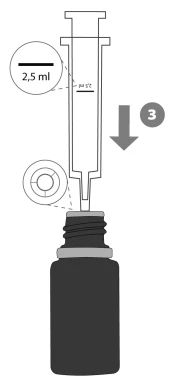
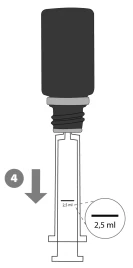
(Figure A) (Figure B)
If you take more LAMPARD than you should
Excessive doses of LAMPARD may cause very high levels of calcium in the blood (hypercalcaemia) and in the urine (hypercalciuria), with symptoms such as nausea, vomiting, thirst, excessive thirst (polydipsia), increased urine output (polyuria), constipation, dehydration, anorexia (loss of appetite), abdominal pain, muscle weakness, fatigue, mental disturbances, bone pain, a kidney condition called nephrocalcinosis, kidney stones, and in severe cases, cardiac arrhythmia. Extreme hypercalcaemia may lead to coma and death.
Persistently elevated calcium levels over long periods may lead to calcium deposition in arteries, veins, and organs, and irreversible kidney damage.
Taking vitamin D during the first 6 months of pregnancy may cause high calcium levels in the mother’s blood, which may result in fetal malformations (delayed physical and mental development of the child, narrowing of the aortic opening near the heart, retinal damage, dysfunction of the parathyroid glands at birth leading to low calcium levels in the newborn’s blood, causing involuntary muscle contractions and convulsions).
In case of accidental ingestion/overdose of LAMPARD, contact your doctor immediately or go to the nearest hospital.
If you have any doubts about the use of this medicine, consult your doctor or pharmacist.
If you forget to take a dose of LAMPARD
Do not take a double dose to make up for the missed dose.
4. Possible side effects
Like all medicines, this medicine can cause side effects, although not everybody gets them.
The frequency of possible side effects is defined according to the following convention:
- very common: may affect more than 1 in 10 people
- common: may affect up to 1 in 10 people
- uncommon: may affect up to 1 in 100 people
- rare: may affect up to 1 in 1,000 people
- very rare: may affect up to 1 in 10,000 people
- not known: frequency cannot be estimated from the available data.
If you experience any of the following side effects, stop taking the medicine and contact your doctor or go to the nearest emergency room immediately:
- Severe allergic reactions (rare: may affect up to 1 in 1,000 people): swelling of the face, tongue and/or throat, difficulty swallowing, hives.
Other possible side effects are:
Uncommon (may affect up to 1 in 100 people)
- Hypercalcaemia (excess calcium levels in the blood)
- Hypercalciuria (excess calcium levels in the urine)
Rare (may affect up to 1 in 1,000 people)
- Confusional state
- Anorexia (loss of appetite)
- Drowsiness
- Thirst
- Itching
- Skin rashes
- Hives
- Constipation
- Flatulence
- Nausea
- Abdominal pain
- Diarrhoea
Other side effects (frequency not known)
- Renal failure (poor kidney function)
- Kidney stones
- Polyuria (urine output higher than normal)
- Polydipsia (excessive thirst)
- Headache
- Vomiting
- Dysgeusia
- Dry mouth
- Asthenia
- Dizziness
- Cardiac arrhythmias
Following the instructions provided in this leaflet reduces the risk of side effects.
Reporting of side effects
If you get any side effects, including ones not listed in this leaflet, talk to your doctor or pharmacist. You can also report side effects directly via the national reporting system at http://www.aifa.gov.it/content/segnalazioni-reazioni-avverse. By reporting side effects, you can help provide more information on the safety of this medicine.
5. How to store LAMPARD
Keep this medicine out of the sight and reach of children.
Do not use this medicine after the expiry date stated on the packaging. The expiry date refers to the last day of the month and applies to the medicine kept in its original, unopened packaging and stored correctly.
Store this medicine at a temperature not exceeding 30°C. Do not freeze.
Keep this medicine in its original packaging to protect it from light.
After the first opening of the LAMPARD 25,000 IU/2.5 ml oral solution multi-dose container of 10 ml with dosing syringe, the medicine remains valid for 6 months (please record the date of first opening in the designated space on the carton). After this period, dispose of any remaining medicine.
Do not dispose of any medicine via wastewater or household waste. Ask your pharmacist how to dispose of medicines you no longer use. This will help protect the environment.
6. Package contents and other information
What LAMPARD 25,000 IU/2.5 ml oral solution in single-dose container contains
- The active substance is colecalciferol (vitamin D). Each single-dose container contains 0.625 mg, equivalent to 25,000 IU of active substance.
- The other component is refined olive oil.
What LAMPARD 25,000 IU/2.5 ml oral solution in multidose container of 10 ml with oral dosing syringe contains
- The active substance is colecalciferol (vitamin D). Each dose delivered by the oral dosing syringe contains 0.625 mg, equivalent to 25,000 IU of active substance.
- The other component is refined olive oil.
Description of the appearance of LAMPARD and contents of the pack
LAMPARD 25,000 IU/2.5 ml oral solution in single-dose container: amber glass single-dose container containing 2.5 ml of solution, closed with a polyethylene cap. Packs of 1, 2 or 4 single-dose containers.
LAMPARD 25,000 IU/2.5 ml oral solution in multidose bottle with dosing syringe: amber glass container containing 10 ml of solution, closed with a child-resistant polyethylene cap. The pack includes an oral dosing syringe.
Marketing Authorisation Holder
Mylan S.p.A. – Via Vittor Pisani, 20 – 20124 Milano – Italy
Manufacturer
Savio Industrial s.r.l. Via Emilia, 21 – 27100 Pavia
Package leaflet: Information for the user
LAMPARD 50,000 IU/5 ml oral solution in single-dose container
colecalciferol
Please read this leaflet carefully before taking this medicine because it contains important information for you.
- Keep this leaflet. You may need to read it again.
- If you have any questions, ask your doctor or pharmacist.
- This medicine has been prescribed for you only. Do not give it to other people, even if their symptoms are the same as yours, as it may be harmful.
- If you experience any side effect, including those not listed in this leaflet, contact your doctor or pharmacist. See section 4.
Contents of this leaflet:
- What LAMPARD is and what it is used for
- What you need to know before taking LAMPARD
- How to take LAMPARD
- Possible side effects
- How to store LAMPARD
- Contents of the pack and other information
1. What LAMPARD is and what it is used for
LAMPARD contains cholecalciferol (Vitamin D).
LAMPARD is indicated for the treatment of vitamin D deficiency in adults (over 18 years of age).
2. What you should know before taking LAMPARD
Do not take LAMPARD
- if you are allergic to vitamin D or to any of the other ingredients of this medicine (listed in section 6);
- if you have high levels of calcium in your blood (hypercalcemia) or in your urine (hypercalciuria);
- if you have high levels of vitamin D in your blood (hypervitaminosis D);
- if you suffer from kidney stones;
- if you have poor kidney function (severe renal insufficiency) (see also “Warnings and precautions”).
Warnings and precautions
Talk to your doctor or pharmacist before taking LAMPARD.
Your doctor may prescribe different doses than those indicated in “How to take LAMPARD” in the following cases:
- if you are being treated with anticonvulsant or barbiturate medicines (see also “Other medicines and LAMPARD”);
- if you are being treated with medicines containing corticosteroid hormones (see also “Other medicines and LAMPARD”);
- if you are being treated with lipid-lowering medicines (such as cholestyramine, colestipol, or orlistat) (see also “Other medicines and LAMPARD”);
- if you are being treated with aluminium-containing antacid medicines (see also “Other medicines and LAMPARD”);
- if you are overweight;
- if you suffer from digestive disorders (intestinal malabsorption (such as Crohn's disease, chronic inflammatory bowel disease, celiac disease), cystic fibrosis or mucoviscidosis, or have undergone bariatric surgery);
- if you suffer from poor liver function;
- if you suffer from chronic alcoholism or if you are taking other products containing vitamin D, vitamin D-fortified foods, or using vitamin D-enriched milk (see also “LAMPARD with food, drink or alcohol”).
Your doctor may prescribe periodic tests to monitor vitamin D or calcium levels in your blood and urine in the following cases:
- if you need to take LAMPARD for a long period;
- if you are an elderly person taking heart medications containing digitalis or diuretic medicines;
- if you suffer from sarcoidosis (a disease affecting connective tissues).
If your vitamin D or calcium levels are elevated, your doctor will reduce the dose or stop treatment with LAMPARD.
In general, you should not take LAMPARD if you have poor kidney function (see “Do not take LAMPARD”); however, if your doctor considers treatment with LAMPARD absolutely necessary, periodic tests to monitor calcium levels in your blood will be required. If your calcium levels are elevated, your doctor will reduce the dose or stop treatment with LAMPARD.
Children and adolescents
LAMPARD 50,000 IU oral solution in single-dose container is not recommended for children and adolescents aged 0 to 18 years.
Other medicines and LAMPARD
Inform your doctor or pharmacist if you are taking, have recently taken, or might take any other medicines, including those not requiring a prescription.
Specifically inform your doctor if you are taking:
- anticonvulsant medicines such as phenytoin, carbamazepine, and barbiturates (medicines used to treat epilepsy), as they may reduce the effect of LAMPARD when taken concurrently;
- diuretic medicines (medicines used to treat high blood pressure), as they reduce calcium elimination from the body. In this case, your doctor may request blood and urine tests to monitor calcium levels;
- medicines containing corticosteroids (medicines used to treat inflammation), as they may reduce the effect of LAMPARD when taken concurrently;
- medicines containing digitalis (e.g., digoxin) and other cardiac glycosides used for certain heart conditions: the toxicity of these medicines may increase when taken together with LAMPARD;
- aluminium-containing antacids, as they may reduce the effect of LAMPARD when taken concurrently;
- magnesium-containing medicines, as they may lead to high magnesium levels in the blood (hypermagnesemia) when taken concurrently with LAMPARD;
- warfarin (an anticoagulant medicine used to prevent blood clots), as its anticoagulant effect may increase when taken concurrently with LAMPARD, potentially causing bleeding;
- laxatives;
- cholestyramine, colestipol, and orlistat (medicines used to treat high cholesterol), as they may reduce the effect of LAMPARD when taken concurrently;
- antibacterial agents such as rifampicin and isoniazid;
- cytotoxic agents such as actinomycin, and antifungal agents such as ketoconazole.
LAMPARD with food, drink and alcohol
Inform your doctor in the following cases:
- if you suffer from chronic alcoholism;
- if you are taking other products containing vitamin D, vitamin D-fortified foods, or using vitamin D-enriched milk.
Pregnancy, breastfeeding and fertility
If you are pregnant, think you might be pregnant, planning to become pregnant, or breastfeeding, consult your doctor or pharmacist before taking this medicine.
Pregnancy
During the first 6 months of pregnancy, your doctor will prescribe vitamin D only if strictly necessary due to the risk of harmful effects on the fetus (see section 3 “If you take more LAMPARD than you should”).
LAMPARD 50,000 IU oral solution in single-dose container is not recommended during pregnancy.
However, since vitamin D deficiency is harmful to both mother and fetus, your doctor may prescribe vitamin D during pregnancy at lower doses when necessary.
Breastfeeding
LAMPARD 50,000 IU oral solution in single-dose container is not recommended during breastfeeding.
When necessary, your doctor may prescribe vitamin D during breastfeeding at lower doses. This does not replace vitamin D supplementation in the newborn. Vitamin D and its metabolites are present in breast milk. This should be taken into account when administering additional vitamin D to the infant.
Fertility
There are no data on the effect of this product on fertility.
Driving and using machines
There are no data available on the effects of LAMPARD on the ability to drive. However, an effect on this ability is unlikely. Nevertheless, since drowsiness may occur as an adverse effect of treatment with LAMPARD, take this into account if you need to drive or operate machinery.
3. How to take LAMPARD
Take this medicine exactly as directed by your doctor. If you have any doubts, consult your doctor or pharmacist.
It is recommended to take LAMPARD with meals.
The recommended doses are listed below; your doctor will adjust them according to the nature and severity of your vitamin D deficiency (see also "Warnings and precautions"). Your doctor will inform you when you can stop taking the medicine.
Adults and Elderly
Treatment:
1 single-dose container (equivalent to 50,000 IU of vitamin D) once weekly for up to 6 weeks. Your doctor will determine the appropriate dose for you and may subsequently prescribe a lower maintenance dose.
Paediatric population
The use of LAMPARD 50,000 IU oral solution in single-dose containers is not recommended in neonates, children, and adolescents under 18 years of age.
Pregnant women
The use of LAMPARD 50,000 IU oral solution in single-dose containers is not recommended during pregnancy.
If you take more LAMPARD than you should
Excessive doses of LAMPARD can cause very high levels of calcium in the blood (hypercalcaemia) and in the urine (hypercalciuria), with symptoms such as nausea, vomiting, thirst, excessive thirst (polydipsia), increased urine volume (polyuria), constipation, dehydration, anorexia (loss of appetite), abdominal pain, muscle weakness, fatigue, mental disturbances, bone pain, a kidney condition called nephrocalcinosis, kidney stones, and in severe cases, cardiac arrhythmias. Extreme hypercalcaemia may lead to coma and death.
Persistently elevated calcium levels over long periods may result in calcium deposits in arteries, veins, and organs, and irreversible kidney damage.
Vitamin D intake during the first 6 months of pregnancy may cause high calcium levels in the mother’s blood, which may lead to fetal malformations (delayed physical and mental development of the child, narrowing of the aortic opening near the heart, retinal damage, problems with parathyroid gland function at birth leading to low calcium levels in the newborn, causing involuntary muscle contractions and seizures).
In case of accidental ingestion of an excessive dose of LAMPARD, contact your doctor immediately or go to the nearest hospital.
If you forget to take a dose of LAMPARD
Do not take a double dose to make up for the missed dose.
If you have any doubts about how to use this medicine, consult your doctor or pharmacist.
4. Possible side effects
Like all medicines, this medicine can cause side effects, although not everybody will experience them.
The frequency of possible side effects is defined according to the following convention:
- very common: may affect more than 1 in 10 people
- common: may affect up to 1 in 10 people
- uncommon: may affect up to 1 in 100 people
- rare: may affect up to 1 in 1,000 people
- very rare: may affect up to 1 in 10,000 people
- not known: frequency cannot be estimated from the available data.
If you experience any of the following side effects, stop taking the medicine and contact your doctor or go to the nearest emergency room immediately:
- Severe allergic reactions (rare: may affect up to 1 in 1,000 people): swelling of the face, tongue and/or throat, difficulty swallowing, hives.
Other possible side effects are:
Uncommon (may affect up to 1 in 100 people)
- Hypercalcaemia (excess calcium levels in the blood)
- Hypercalciuria (excess calcium levels in the urine)
Rare (may affect up to 1 in 1,000 people)
- Confusion
- Anorexia (loss of appetite)
- Drowsiness
- Thirst
- Itching
- Skin rashes
- Hives
- Constipation
- Flatulence
- Nausea
- Abdominal pain
- Diarrhoea
Other side effects (frequency not known)
- Renal failure (poor kidney function)
- Kidney stones
- Polyuria (urine output higher than normal)
- Polidipsia (excessive thirst)
- Headache
- Vomiting
- Dysgeusia
- Dry mouth
- Asthenia
- Dizziness
- Cardiac arrhythmias
Following the instructions provided in the leaflet reduces the risk of side effects.
Reporting of side effects
If you experience any side effect, including those not listed in this leaflet, please contact your doctor or pharmacist. You can also report side effects directly via the national reporting system at http://www.aifa.gov.it/content/segnalazioni-reazioni-avverse. By reporting side effects, you can help provide more information on the safety of this medicine.
5. How to store LAMPARD
Keep this medicine out of the sight and reach of children.
Do not use this medicine after the expiry date stated on the packaging. The expiry date refers to the last day of the month and applies to the medicine kept in its original intact packaging and stored correctly.
Store this medicine below 30°C. Do not freeze.
Keep this medicine in the original packaging to protect it from light.
Do not dispose of any medicine via wastewater or household waste. Ask your pharmacist how to dispose of medicines you no longer use. This will help protect the environment.
6. Contents of the pack and other information
What LAMPARD 50,000 IU/5 ml oral solution in single-dose container contains
- The active substance is colecalciferol (vitamin D). Each single-dose container contains 1.25 mg, equivalent to 50,000 IU of active substance.
- The other component is refined olive oil.
Description of the appearance of LAMPARD and contents of the pack
LAMPARD 50,000 IU/5 ml oral solution in single-dose container: single-dose amber glass container containing 5 ml of solution, closed with a polyethylene cap. Packs containing 1, 2 or 4 single-dose containers.
Marketing Authorisation Holder
Mylan S.p.A. - Via Vittor Pisani, 20 - 20124 Milano - Italy
Manufacturer
Savio Industrial s.r.l. Via Emilia, 21 – 27100 Pavia