Lamivudine Mylan Pharma
Italy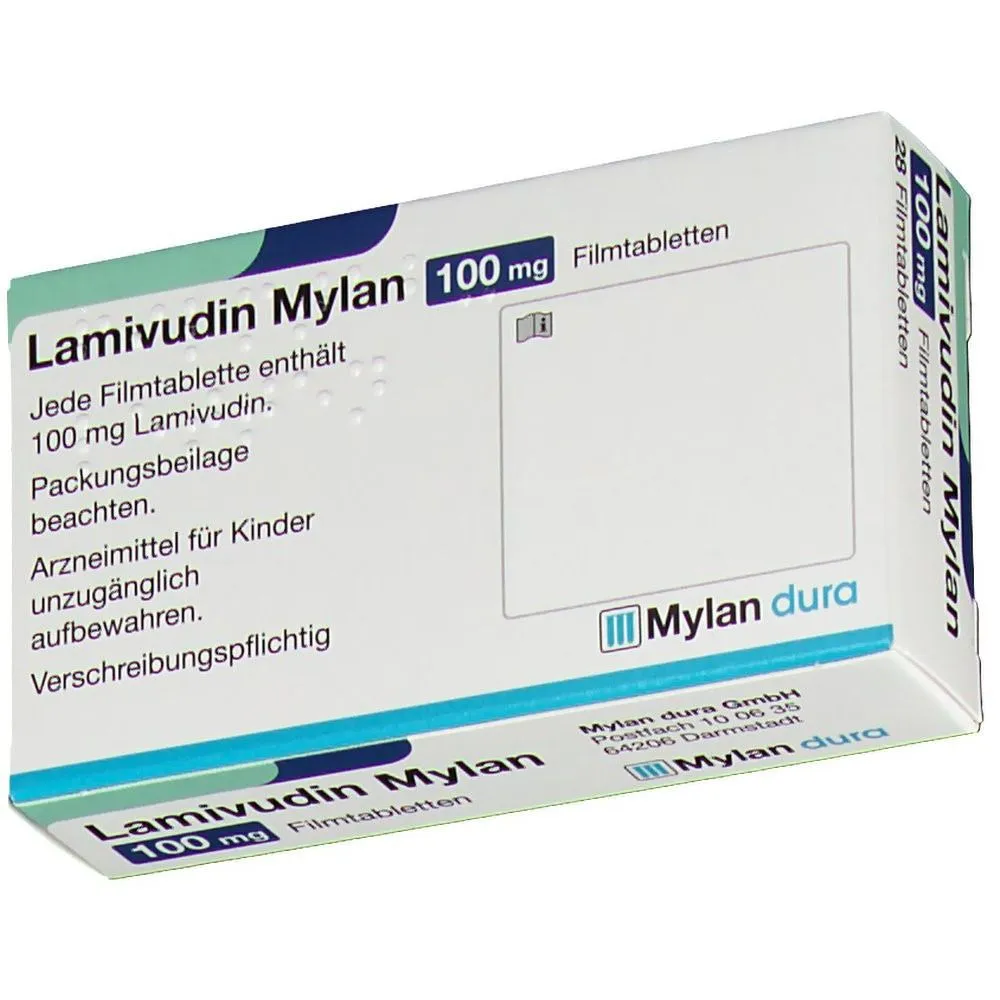
Table of Contents
- Package leaflet: Information for the patient
- Lamivudine Mylan Pharma 100 mg film-coated tablets
- 1. What Lamivudina Mylan Pharma is and what it is used for
- 2. What you need to know before taking Lamivudine Mylan Pharma
- 3. How to take Lamivudina Mylan Pharma
- 4. Possible side effects
- 5. How to store Lamivudina Mylan Pharma
- 6. Package contents and other information
Package leaflet: Information for the patient
Lamivudine Mylan Pharma 100 mg film-coated tablets
Lamivudine
Generic medicine
Please read all of this leaflet carefully before you take this medicine because it contains
important information for you.
- Keep this leaflet. You may need to read it again.
- If you have any questions, ask your doctor or pharmacist.
- This medicine has been prescribed for you only. Do not give it to other people, even if they have the same symptoms as you, because it may be harmful.
- If you experience any side effects, including those not listed in this leaflet, talk to your doctor or pharmacist. See section 4.
Contents of this leaflet:
- What Lamivudine Mylan Pharma is and what it is used for
- What you need to know before taking Lamivudine Mylan Pharma
- How to take Lamivudine Mylan Pharma
- Possible side effects
- How to store Lamivudine Mylan Pharma
- Contents of the pack and other information
1. What Lamivudina Mylan Pharma is and what it is used for
Lamivudina Mylan Pharma is used for the long-term (chronic) treatment of hepatitis B infection in adults.
The active substance in Lamivudina Mylan Pharma is lamivudine. Lamivudina Mylan Pharma is an antiviral medicine that suppresses the hepatitis B virus and belongs to a group of medicines known as nucleoside reverse transcriptase inhibitors (NRTIs).
Hepatitis B is caused by a virus that infects the liver, causes a long-term (chronic) infection, and can lead to liver damage. Lamivudine may be used in people whose liver is damaged but still functions normally (compensated liver disease) and in combination with other medicines in people whose liver is damaged and does not function normally (decompensated liver disease).
Treatment with lamivudine can reduce the amount of hepatitis B virus in the body. This should lead to a reduction in liver damage and improvement in liver function. However, people respond to treatment with lamivudine differently. Your doctor will monitor the effectiveness of your treatment with regular blood tests.
2. What you need to know before taking Lamivudine Mylan Pharma
Do not take Lamivudine Mylan Pharma
- if you are allergic to lamivudine or to any of the other ingredients of this medicine (listed in section 6).
Consult your doctor if you think this applies to you.
Warnings and precautions
Talk to your doctor or pharmacist before taking Lamivudine Mylan Pharma.
Some people taking lamivudine or similar medicines are at higher risk of serious side effects. You should be aware of these additional risks:
- if you have had other types of liver disease, such as hepatitis C
- if you are severely overweight (especially if you are a woman)
Inform your doctor if any of these situations apply to you. You may need additional monitoring, including blood tests, while taking this medicine. See section 4 for further information about these risks.
Do not stop taking lamivudine without medical advice, as there is a risk of worsening hepatitis. If you discontinue lamivudine, your doctor will monitor you for at least four months to check for any problems. This will involve blood sampling to monitor for any increase in liver enzymes, which may indicate liver damage. See section 3 for further information on how to take this medicine.
Protecting other people
Hepatitis B infection spreads through sexual contact with infected individuals or through transfer of infected blood (e.g., by sharing injecting needles). Lamivudine will not prevent transmission of hepatitis B infection to others. To protect others from hepatitis B infection:
- use a condom during oral or penetrative sex.
- avoid exposure to blood – for example, do not share needles.
Other medicines and Lamivudine Mylan Pharma
Inform your doctor or pharmacist if you are taking, have recently taken, or might take any other medicines, including herbal medicines or other medicines obtained without a prescription.
Remember to inform your doctor or pharmacist if you start taking a new medicine while being treated with Lamivudine Mylan Pharma.
The following medicines must not be taken with Lamivudine Mylan Pharma:
- medicines (usually liquids) containing sorbitol and other sweeteners (such as xylitol, mannitol, lactitol or maltitol), if taken regularly
- other medicines containing lamivudine, used to treat HIV infection (sometimes called AIDS virus)
- emtricitabine, used to treat HIV or hepatitis B infection
- cladribine, used to treat hairy cell leukemia. Inform your doctor if you are being treated with any of these medicines.
Pregnancy and breastfeeding
Pregnancy
If you are pregnant, think you may be pregnant, or are planning to become pregnant:
Talk to your doctor about the risks and benefits of taking lamivudine during pregnancy.
Do not stop treatment with lamivudine without consulting your doctor.
Breastfeeding
Lamivudine may pass into breast milk. If you are breastfeeding or planning to breastfeed:
Consult your doctor before taking Lamivudine Mylan Pharma.
Driving and using machines
Lamivudine may make you feel tired, which could affect your ability to drive or operate machinery.
Do not drive or operate machinery unless you are sure you are not affected.
Lamivudine Mylan Pharma contains sodium
This medicine contains less than 1 mmol of sodium (23 mg) per tablet, i.e., essentially “sodium-free”.
3. How to take Lamivudina Mylan Pharma
Take this medicine exactly as your doctor has told you. If you are unsure, consult your doctor or pharmacist.
Stay in regular contact with your doctor.
Lamivudina helps control hepatitis B infection. You must take it every day to control the infection and prevent the disease from worsening.
Stay in contact with your doctor and do not stop taking Lamivudina Mylan Pharma without your doctor's advice.
Dosage
The recommended dose of Lamivudina Mylan Pharma is one tablet (100 mg of lamivudine) once daily.
Your doctor may prescribe a lower dose if you have kidney problems. An oral solution of lamivudine is available for people who require a lower than usual dose or who cannot take tablets.
Talk to your doctor if this applies to you.
If you are already taking another medicine containing lamivudine for HIV infection, your doctor will continue treating you with the higher dose (usually 150 mg twice daily), since the lamivudine dose in Lamivudina Mylan Pharma (100 mg) is not sufficient to treat HIV infection. If you are planning to change your HIV treatment, speak to your doctor first about this change.
Swallow the tablet whole with some water. Lamivudina Mylan Pharma may be taken with or without food.
If you take more Lamivudina Mylan Pharma than you should
Accidentally taking too much Lamivudina Mylan Pharma is unlikely to cause serious problems. However, if you do take an excessive amount, inform your doctor or pharmacist, or contact the Emergency Department of your nearest hospital for further advice.
If you forget to take Lamivudina Mylan Pharma
If you forget to take a dose, take it as soon as you remember. Then continue with your regular dosing schedule. Do not take a double dose to make up for the missed dose.
If you stop taking Lamivudina Mylan Pharma
Do not stop taking Lamivudina Mylan Pharma without consulting your doctor. There is a risk that hepatitis may worsen (see “Warnings and precautions” in section 2).
When you stop taking this medicine, your doctor will monitor you for at least four months to check for any problems. This will involve blood tests to monitor for any increases in liver enzyme levels, which may indicate liver damage.
If you have any questions about how to use this medicine, ask your doctor or pharmacist.
4. Possible side effects
Like all medicines, this medicine can cause side effects, although not everybody will experience them.
The side effects commonly reported in clinical studies with lamivudine have been
fatigue, respiratory tract infections, sore throat, headache, stomach discomfort and pain,
nausea, vomiting, diarrhoea, increases in liver enzymes and in enzymes produced in muscles (see below).
If you notice any of the following side effects, stop taking lamivudine and contact your doctor immediately:
Rare (may affect up to 1 in 1,000 people):
- swelling of the eyelids, face, mouth, lips, tongue or throat causing difficulty in breathing or swallowing (angioedema), and sudden breathlessness, chest pain or tightness (allergic reaction).
Very rare (may affect up to 1 in 10,000 people):
- difficult, deep, rapid breathing, drowsiness, numbness or weakness in the limbs, feeling unwell (nausea), malaise (vomiting), and stomach pain. These may be signs of excess lactic acid in the blood (lactic acidosis).
Not known (frequency cannot be estimated from the available data):
- breakdown of muscle tissue with symptoms that may include muscle pain, vomiting and confusion (rhabdomyolysis)
- worsening of liver disease after stopping lamivudine or during treatment, if the hepatitis B virus becomes resistant to lamivudine. This may be fatal in some people.
- a reduction in the number of cells involved in blood clotting (thrombocytopenia), resulting in unexplained bruising or bleeding lasting longer than usual, which may be detected by blood tests.
Other side effects:
Very common (may affect more than 1 in 10 people):
- an increase in the level of certain liver enzymes (transaminases), which may be detected by blood tests and may indicate liver inflammation or damage.
Common (may affect up to 1 in 10 people):
- muscle cramps and pain
- skin rash or hives anywhere on the body
- an increase in the level of an enzyme produced in muscles (creatine phosphokinase), which may be detected by blood tests and may indicate tissue damage.
If you experience any side effects, inform your doctor or pharmacist. This includes any
possible side effect not listed in this leaflet.
Reporting of side effects
If you experience any side effect, including those not listed in this leaflet, talk to your doctor or pharmacist.
You can also report side effects directly via the national reporting system at www.aifa.gov.it/content/segnalazioni-reazioni-avverse.
By reporting side effects, you can help provide more information on the safety of this medicine.
5. How to store Lamivudina Mylan Pharma
Keep this medicine out of the sight and reach of children.
Do not use this medicine after the expiry date stated on the carton and on the blister/ bottle.
The expiry date refers to the last day of that month.
This medicine does not require any special storage conditions.
For bottles only: use within 100 days of first opening.
Do not dispose of medicines via wastewater or household waste. Ask your pharmacist how to dispose of medicines you no longer use. This will help protect the environment.
6. Package contents and other information
What Lamivudina Mylan Pharma contains
The active substance is lamivudine. Each film-coated tablet contains 100 mg of lamivudine.
The other components are: microcrystalline cellulose, sodium starch glycolate, magnesium stearate,
hypromellose, titanium dioxide (E171), propylene glycol, yellow iron oxide (E172) and red iron oxide (E172).
Description of the appearance of Lamivudina Mylan Pharma and package contents
Lamivudina Mylan Pharma 100 mg film-coated tablets are peach-colored, film-coated, capsule-shaped, biconvex tablets with bevelled edges, marked “LN1” on one side and “M” on the other.
Lamivudina Mylan Pharma 100 mg film-coated tablets are available in blisters containing 28 or 84 tablets and in bottles containing 84 tablets.
Not all pack sizes may be marketed.
Marketing Authorization Holder
Mylan S.p.A., Via Vittor Pisani 20, 20124 Milano, Italy
Manufacturer
McDermott Laboratories Limited t/a Gerard Laboratories, 35/36 Baldoyle Industrial Estate, Grange Road, Dublin 13, Ireland
Mylan Hungary Kft, Mylan utca 1, 2900 Komárom, Hungary
This medicinal product is authorized in the European Economic Area countries under the following names:
Germany: Lamivudin Mylan 100 mg Filmtabletten
Italy: Lamivudina Mylan Pharma 100 mg compresse rivestite con film
Poland: Lamivudine Mylan
United Kingdom: Lamivudine 100 mg Film-coated Tablets