Krazati
Italy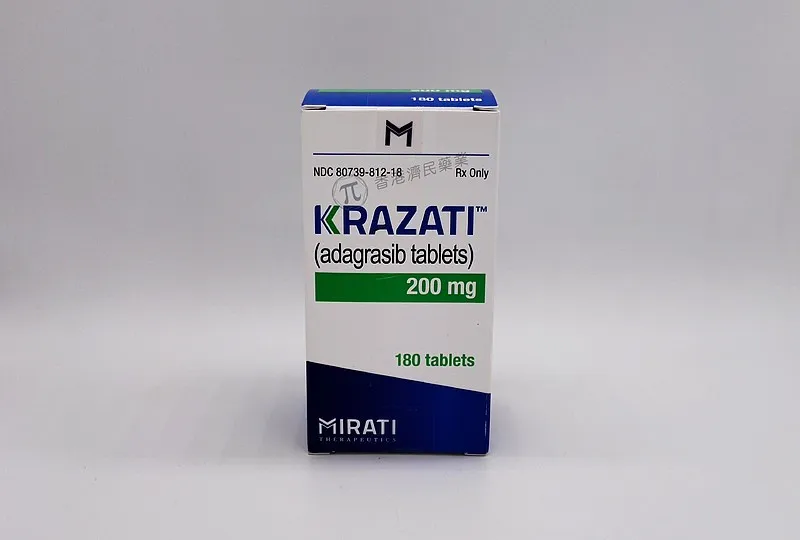
Table of Contents
Package leaflet: Information for the patient
KRAZATI 200 mg film-coated tablets
adagrasib
This medicinal product is subject to additional monitoring. This will allow for rapid identification of new safety information. You can help by reporting any side effects you experience while taking this medicine. See the end of section 4 for information on how to report side effects.
Please read all of this leaflet carefully before you start taking this medicine, as it contains important information for you.
- Keep this leaflet. You may need to read it again.
- If you have any questions, ask your doctor, pharmacist or nurse.
- This medicine has been prescribed for you only. Do not give it to others, even if they have the same symptoms as you, because it may be harmful.
- If you experience any side effect, including those not listed in this leaflet, talk to your doctor, pharmacist or nurse. See section 4.
Contents of this leaflet
- What KRAZATI is and what it is used for
- What you need to know before taking KRAZATI
- How to take KRAZATI
- Possible side effects
- How to store KRAZATI
- Contents of the pack and other information
1. What KRAZATI is and what it is used for
KRAZATI contains the active substance adagrasib and belongs to a group of medicines known as
antineoplastic agents, anticancer medicines.
KRAZATI is used to treat adults with a type of lung cancer called non-small cell lung cancer (NSCLC), when the cancer is advanced or has spread to other parts of the body.
KRAZATI is used when previous treatments have not been effective in stopping the cancer growth and when tumour cells have mutations (changes) that cause them to produce an abnormal form of a protein called KRAS G12C. Your doctor will perform a preliminary test to check for the presence of this mutation in your tumour cells and to confirm that KRAZATI is suitable for you.
How does KRAZATI work?
The abnormal KRAS G12C protein causes uncontrolled growth of tumour cells. The active substance in KRAZATI, adagrasib, binds to this abnormal protein and blocks its activity, thereby potentially slowing down or stopping cancer growth.
If you have any questions about how this medicine works or why it has been prescribed for you, please consult your doctor, pharmacist, or nurse.
2. What you need to know before taking KRAZATI
Do not take KRAZATI
- if you are allergic to adagrasib or any of the other ingredients of this medicine (listed in section 6).
- if you are taking any of the following medicines, as they may cause serious and/or life-threatening side effects:
- alfuzosin (used in the treatment of benign prostatic hyperplasia)
- amiodarone (used to treat heart problems)
- cisapride (used to treat symptoms of nighttime heartburn and other gastrointestinal disorders)
- pimozide, quetiapine (antipsychotic medicines)
- quinidine (used to treat heart problems)
- ergotamine, dihydroergotamine (used to treat migraines)
- lovastatin, simvastatin (used to lower cholesterol levels)
- sildenafil (for the treatment of pulmonary arterial hypertension)
- triazolam (used to treat insomnia)
- sirolimus, tacrolimus (used to prevent rejection of transplanted organs)
- ticagrelor (used to prevent heart attacks and strokes)
Warnings and precautions
Talk to your doctor, pharmacist, or nurse before taking KRAZATI.
KRAZATI may damage the liver. Your doctor may perform certain blood tests before you start taking KRAZATI, once a month for the first 3 months of treatment, and whenever considered necessary. Depending on the results of these tests, the dose of KRAZATI may be reduced, temporarily stopped, or permanently discontinued.
Talk to your doctor before taking KRAZATI if:
- you have heart or circulatory problems,
- you have developed or have a history of abnormal electrical activity of the heart affecting its rhythm, or
- you are taking heart medications that carry a risk of heart rhythm problems; see “Other medicines and KRAZATI”.
Your doctor will decide whether this medicine is suitable for you and may monitor your heart with an electrocardiogram (ECG; a test that measures the electrical activity of the heart) and adjust the dose of KRAZATI accordingly.
Talk to your doctor during treatment if:
- you develop problems such as diarrhea, nausea, or vomiting. Your doctor may decide to reduce or suspend the dose or discontinue treatment with KRAZATI.
- you feel dizzy or develop heart problems such as a fast or irregular heartbeat.
Severe and potentially fatal skin reactions (such as Stevens-Johnson syndrome, toxic epidermal necrolysis, and drug reaction with eosinophilia and systemic symptoms) have been reported with KRAZATI.
Stop taking KRAZATI and contact your doctor immediately if you notice any symptoms related to these serious skin reactions (which may include flat, non-itchy red spots on the trunk, often target-shaped or circular, sometimes with central blisters, skin peeling, mouth, throat, nose, genital, or eye ulcers, widespread rash, and swollen lymph nodes). These severe rashes may be preceded by fever and flu-like symptoms.
Children and adolescents
KRAZATI has not been studied in children and adolescents. Treatment with KRAZATI is not recommended for individuals under 18 years of age.
Other medicines and KRAZATI
Tell your doctor or pharmacist if you are taking, have recently taken, or might take any other medicines. This includes herbal supplements and over-the-counter medicines. This is because KRAZATI may affect the action of certain other medicines, and some other medicines may affect the action of KRAZATI.
See “Do not take KRAZATI” if you are taking medicines that may interact with KRAZATI.
Some medicines and herbal supplements may reduce the effectiveness of KRAZATI by decreasing the amount of KRAZATI in the blood. These medicines include:
- rifampicin (used to treat tuberculosis and other infections)
- carbamazepine, phenobarbital, phenytoin (used to treat epilepsy)
- St. John’s wort (Hypericum perforatum; available as a medicine or herbal supplement and used to treat depression)
Some medicines may increase the risk of side effects from KRAZATI by increasing the levels of KRAZATI in the blood. These medicines include:
- itraconazole, ketoconazole, posaconazole, or voriconazole (used to treat fungal infections)
- clarithromycin, telithromycin, or troleandomycin (used to treat bacterial infections)
- ritonavir (used with other medicines to treat HIV infection)
KRAZATI may increase the side effects of certain medicines by increasing their levels in the blood. Examples of such medicines include:
- warfarin (used to treat blood clots). Your doctor may need to monitor how long it takes your blood to clot (prothrombin time or INR test).
Some medicines may cause disturbances in the heart's electrical conduction, especially when taken with KRAZATI. Examples include:
- certain medicines for heart rhythm disorders (e.g. amiodarone, disopyramide, dofetilide, dronedarone, flecainide, hydroquinidine, ibutilide, nifekalant, procainamide, quinidine, sotalol)
- certain medicines for bacterial or fungal infections (e.g. azithromycin, ciprofloxacin, clarithromycin, erythromycin, levofloxacin, moxifloxacin, roxithromycin, fluconazole) or for malaria (e.g. chloroquine, halofantrine, hydroxychloroquine)
- certain medicines used to treat gastrointestinal disorders (e.g. chlorpromazine, domperidone, droperidol, and ondansetron for nausea; loperamide for diarrhea)
- certain medicines used to treat schizophrenia and mood disorders (e.g. chlorprothixene, citalopram, escitalopram, haloperidol, sulpiride)
- others (e.g. anagrelide and cilostazol to prevent blood clots; bepridil for high blood pressure; donepezil for Alzheimer’s disease; methadone for pain and opioid dependence; pimozide for tics associated with Tourette’s disorder; terfenadine for allergic rhinitis; terodiline for urinary incontinence)
Talk to your doctor if you are taking any of these or other medicines.
KRAZATI with food and drink
Drinking large amounts of certain brands of grapefruit juice at the start of KRAZATI treatment may increase the risk of side effects by increasing KRAZATI levels in the blood.
Pregnancy
If you are pregnant, think you may be pregnant, are planning to become pregnant, or are breastfeeding, consult your doctor or pharmacist before taking this medicine.
Do not take KRAZATI if you are pregnant or suspect you are pregnant, unless advised by your doctor. The effects of KRAZATI in pregnant women are unknown.
Contraception
Women of childbearing potential must use an effective method of contraception to avoid pregnancy during treatment with KRAZATI and for at least 5 days after the last dose. Talk to your doctor about the most suitable contraceptive method for you.
Breast-feeding
Do not breastfeed during treatment with KRAZATI. It is not known whether the medicine passes into breast milk.
Driving and using machines
KRAZATI has a minor influence on the ability to drive or use machines. If you experience dizziness, lightheadedness, or fatigue, do not drive, operate machinery, or engage in any activity that could put you or others at risk.
3. How to take KRAZATI
This medicine is prescribed by a doctor experienced in the use of anticancer medicines.
Always take this medicine exactly as instructed by your doctor or pharmacist. If you have any doubts, consult your doctor or pharmacist.
Dosage
The recommended dose is three 200 mg tablets (600 mg in total) twice daily.
Do not change the dose unless instructed by your doctor or pharmacist.
Your doctor may reduce the dose or temporarily interrupt treatment depending on your tolerance.
How to take it
Take the medicine at the same time each day.
KRAZATI may be taken with or without food.
Swallow the tablets whole with some water.
If you are unable to swallow the tablets whole:
- Place the dose of KRAZATI in a glass containing half a glass (no less than 120 mL) of room temperature plain drinking water, without crushing the tablets. Do not use any other liquids, including acidic beverages (e.g. fruit juices).
- Gently mix until the mixture appears milky with small pieces of tablet visible. Do not chew the tablet fragments.
- Drink this mixture immediately.
- Rinse the glass with another half glass of water and drink it immediately to ensure the full dose of KRAZATI has been taken.
If you take more KRAZATI than you should
Contact your doctor, pharmacist, or nurse immediately if you take more tablets than recommended.
If you vomit after taking KRAZATI
If you vomit after taking a dose, do not take another dose. Take the next dose at the scheduled time.
If you forget to take KRAZATI
If you miss a dose, take it as soon as possible. If more than 4 hours have passed since the missed dose, skip the dose and take the next dose at the regularly scheduled time. Do not take a double dose to make up for a forgotten dose.
If you stop taking KRAZATI
Do not stop taking this medicine without first consulting your doctor. It is important to take the medicine every day for the entire duration prescribed by your doctor.
If you have any questions about the use of this medicine, consult your doctor, pharmacist, or nurse.
4. Possible side effects
Like all medicines, this medicine can cause side effects, although not everybody gets them.
Very common and serious possible side effects of KRAZATI (may affect more than 1 in 10 people) are:
- QT prolongation, an abnormality in heart conduction that may lead to a life-threatening irregular heartbeat
Contact your doctor immediately if you experience:
- chest pain
- shortness of breath
- rapid or irregular heartbeat.
Your doctor may monitor your heart with an ECG (electrocardiogram) and may decide to reduce the dose of KRAZATI or stop treatment (see section 2).
- Increased levels of certain liver enzymes (ALT, AST) and bilirubin (a substance in the liver that may cause yellowing of the skin and eyes) are signs of liver problems. Your doctor will perform blood tests to check your liver function and may decide to reduce or interrupt the dose or discontinue treatment with KRAZATI (see section 2).
Other possible side effects of KRAZATI include:
Very common (may affect more than 1 in 10 people)
- low red blood cell count (anaemia), which may cause fatigue and paleness
- low sodium levels in the blood, which may cause headache, fatigue, seizures, and coma
- loss of appetite
- dizziness, feeling lightheaded
- sign of worsening kidney problems (increase in creatinine)
- nausea
- diarrhoea
- vomiting
- abnormal blood test results indicating high levels of lipase and/or amylase in the blood
- fatigue, weakness
- swelling, especially in the ankles and feet, due to fluid retention
Common (may affect up to 1 in 10 people)
- inflammation of the lungs, which may cause shortness of breath and cough (pneumonitis)
- low lymphocyte levels (a type of white blood cell; lymphopenia)
Reporting of side effects
If you experience any side effect, including those not listed in this leaflet, talk to your doctor, pharmacist, or nurse. You can also report side effects directly via the national reporting system listed in Annex V. By reporting side effects, you can help provide more information on the safety of this medicine.
5. How to store KRAZATI
Keep this medicine out of the sight and reach of children.
Do not use this medicine after the expiry date stated on the vial label and the carton after Exp. The expiry date refers to the last day of that month.
This medicine does not require any special storage temperature. Store in the original packaging to protect the medicine from moisture. Keep the vial tightly closed.
Do not dispose of any medicine via wastewater or household waste. Ask your pharmacist how to dispose of medicines you no longer use. This will help protect the environment.
6. Package contents and other information
What KRAZATI contains
- The active substance is adagrasib. Each film-coated tablet contains 200 mg of adagrasib.
- The other components are:
Tablet core: Microcrystalline cellulose (E 460), mannitol (E 421), crospovidone, colloidal anhydrous silica (E 551), magnesium stearate (vegetable).
Film coating: Hypromellose, titanium dioxide (E 171), polydextrose (E 1200), talc (E 553b), maltodextrin, medium-chain triglycerides (vegetable).
Description of the appearance of KRAZATI and contents of the pack
KRAZATI film-coated tablets are white or almost white, oval-shaped, with a stylized "M" on one side and the number "200" on the other side.
The medicine is supplied in opaque white plastic bottles with a white child-resistant cap and a thermal induction seal. Each bottle contains two sachets of silica gel desiccant, which must remain in the bottle to protect the tablets from moisture. These desiccant sachets must not be ingested.
Pack sizes are bottles containing 120 or 180 film-coated tablets.
Not all pack sizes may be marketed.
Marketing Authorization Holder
Bristol-Myers Squibb Pharma EEIG
Plaza 254
Blanchardstown Corporate Park 2
Dublin 15, D15 T867
Ireland
Manufacturer
Swords Laboratories Unlimited Company T/A Bristol-Myers Squibb Pharmaceutical Operations
External Manufacturing
Plaza 254
Blanchardstown Corporate Park 2
Dublin 15, D15 T867
Ireland
For further information about this medicine, please contact the local representative of the Marketing Authorization Holder:
Belgique/België/Belgien
N.V. Bristol-Myers Squibb Belgium S.A.
Tél/Tel: + 32 2 352 76 11
[email protected]
България (Bulgaria)
Swixx Biopharma EOOD
Teл.: + 359 2 4942 480
[email protected]
Česká republika (Czech Republic)
Bristol-Myers Squibb spol. s r.o.
Tel: + 420 221 016 111
[email protected]
Danmark (Denmark)
Bristol-Myers Squibb Denmark
Tlf: + 45 45 93 05 06
[email protected]
Deutschland (Germany)
Bristol-Myers Squibb GmbH & Co. KGaA
Tel: 0800 0752002 (+ 49 89 121 42 350)
[email protected]
Eesti (Estonia)
Swixx Biopharma OÜ
Tel: + 372 640 1030
[email protected]
Ελλάδα (Greece)
Bristol-Myers Squibb A.E.
Τηλ: + 30 210 6074300
[email protected]
España (Spain)
Bristol-Myers Squibb, S.A.
Tel: + 34 91 456 53 00
[email protected]
France (France)
Bristol-Myers Squibb SAS
Tél: + 33 (0)1 58 83 84 96
[email protected]
Hrvatska (Croatia)
Swixx Biopharma d.o.o.
Tel: + 385 1 2078 500
[email protected]
Ireland (Ireland)
Bristol-Myers Squibb Pharmaceuticals uc
Tel: 1 800 749 749 (+ 353 (0)1 483 3625)
[email protected]
Ísland (Iceland)
Vistor ehf.
Sími: + 354 535 7000
[email protected]
Italia (Italy)
Bristol-Myers Squibb S.r.l.
Tel: + 39 06 50 39 61
[email protected]
Κύπρος (Cyprus)
Bristol-Myers Squibb A.E.
Τηλ: 800 92666 (+ 30 210 6074300)
[email protected]
Latvija (Latvia)
Swixx Biopharma SIA
Tel: + 371 66164750
[email protected]
Lietuva (Lithuania)
Swixx Biopharma UAB
Tel: + 370 52 369140
[email protected]
Luxembourg/Luxemburg (Luxembourg)
N.V. Bristol-Myers Squibb Belgium S.A.
Tél/Tel: + 32 2 352 76 11
[email protected]
Magyarország (Hungary)
Bristol-Myers Squibb Kft.
Tel.: + 36 1 301 9797
[email protected]
Malta (Malta)
A.M. Mangion Ltd
Tel: + 356 23976333
[email protected]
Nederland (Netherlands)
Bristol-Myers Squibb B.V.
Tel: + 31 (0)30 300 2222
[email protected]
Norge (Norway)
Bristol-Myers Squibb Norway AS
Tlf: + 47 67 55 53 50
[email protected]
Österreich (Austria)
Bristol-Myers Squibb GesmbH
Tel: + 43 1 60 14 30
[email protected]
Polska (Poland)
Bristol-Myers Squibb Polska Sp. z o.o.
Tel.: + 48 22 2606400
[email protected]
Portugal (Portugal)
Bristol-Myers Squibb Farmacêutica Portuguesa, S.A.
Tel: + 351 21 440 70 00
[email protected]
România (Romania)
Bristol-Myers Squibb Marketing Services S.R.L.
Tel: + 40 (0)21 272 16 19
[email protected]
Slovenija (Slovenia)
Swixx Biopharma d.o.o.
Tel: + 386 1 2355 100
[email protected]
Slovenská republika (Slovakia)
Swixx Biopharma s.r.o.
Tel: + 421 2 20833 600
[email protected]
Suomi/Finland (Finland)
Oy Bristol-Myers Squibb (Finland) Ab
Puh/Tel: + 358 9 251 21 230
[email protected]
Sverige (Sweden)
Bristol-Myers Squibb Aktiebolag
Tel: + 46 8 704 71 00
[email protected]
This medicine has been granted a marketing authorization under “conditional approval”. This means that additional data on this medicine are still required.
The European Medicines Agency will review new information on this medicine at least annually, and this patient information leaflet will be updated as necessary.
Further information
More detailed information on this medicine is available on the website of the European Medicines Agency: https://www.ema.europa.eu/ .
This leaflet is available in all languages of the European Union/European Economic Area on the European Medicines Agency website.