Kovaltry
Italy
Table of Contents
- Package leaflet: Information for the user
- Kovaltry 250 IU powder and solvent for solution for injection, 500 IU powder and solvent for solution for injection, 1000 IU powder and solvent for solution for injection, 2000 IU powder and solvent for solution for injection, 3000 IU powder and solvent for solution for injection
- 1. What Kovaltry is and what it is used for
- 2. What you need to know before using Kovaltry
- 3. How to use Kovaltry
- 4. Possible side effects
- 5. How to store Kovaltry
- 6. Package contents and other information
Package leaflet: Information for the user
Kovaltry 250 IU powder and solvent for solution for injection, 500 IU powder and solvent for solution for injection, 1000 IU powder and solvent for solution for injection, 2000 IU powder and solvent for solution for injection, 3000 IU powder and solvent for solution for injection
octocog alfa (recombinant human coagulation factor VIII)
Please read all of this leaflet carefully before you start using this medicine because it contains important information for you.
- Keep this leaflet. You may need to read it again.
- If you have any questions, ask your doctor or pharmacist.
- This medicine has been prescribed for you only. Do not pass it on to other people, even if their symptoms are the same as yours, as it may be harmful.
- If you experience any adverse reactions, including those not listed in this leaflet, contact your doctor or pharmacist. See section 4.
Contents of this leaflet:
- What Kovaltry is and what it is used for
- What you need to know before you use Kovaltry
- How to use Kovaltry
- Possible side effects
- How to store Kovaltry
- Contents of the pack and other information
1. What Kovaltry is and what it is used for
Kovaltry contains as its active substance recombinant human factor VIII, also known as octocog
alfa. Kovaltry is produced using recombinant DNA technology, without the addition of any human or
animal-derived proteins during the manufacturing process. Factor VIII is a natural protein in the blood
that helps with blood clotting.
Kovaltry is used to treat and prevent bleeding in adults, adolescents, and children of all ages
with haemophilia A (hereditary factor VIII deficiency).
2. What you need to know before using Kovaltry
Do not use Kovaltry if you are
- allergic to octocog alfa or to any of the other ingredients of this medicine (listed in section 6).
- allergic to murine or hamster proteins.
Warnings and precautions
Contact your doctor or pharmacist if you have:
- chest tightness, dizziness (including when standing up from a sitting or lying position), itchy rash, wheezing, malaise, or a feeling of weakness. These could be symptoms of a rare and severe allergic reaction to Kovaltry. Immediately stop administering the medicine and consult a doctor if this occurs.
- bleeding that is not controlled with the usual dose of Kovaltry. The development of inhibitors (antibodies) is a known complication that may occur during treatment with all factor VIII medicines. Inhibitors, especially at high levels, prevent the treatment from working properly; patients receiving Kovaltry will be closely monitored for the development of such inhibitors. If Kovaltry fails to control the bleeding in you or your child, inform your doctor immediately.
- previously developed inhibitors against factor VIII with other medicines. If you switch to other factor VIII medicines, the inhibitor may reappear.
- confirmed heart disease or are at risk of developing heart disease.
- need to use a central venous access device for administration of Kovaltry. You may be at risk of device-related complications at the catheter site, including:
- local infections
- presence of bacteria in the blood
- blood clot in the blood vessel.
Children and adolescents
The warnings and precautions listed above apply to patients of any age, both adults and children.
Other medicines and Kovaltry
Inform your doctor or pharmacist if you are taking, have recently taken, or might take any other medicines.
Pregnancy and breastfeeding
If you are pregnant, suspect you may be pregnant, planning a pregnancy, or are breastfeeding, consult your doctor before using this medicine.
It is unlikely that Kovaltry will impair fertility in male or female patients, as the active substance is naturally present in the body.
Driving and using machines
If you experience dizziness or other symptoms that may affect your ability to concentrate and react, do not drive or operate machinery until these symptoms have resolved.
Kovaltry contains sodium
This medicine contains less than 1 mmol (23 mg) of sodium per dose, i.e., essentially 'sodium-free'.
3. How to use Kovaltry
Treatment with Kovaltry will be initiated by a doctor experienced in the management of patients
with haemophilia A. Always use this medicine exactly as instructed by your doctor. If you have any doubts, consult
your doctor.
The number of factor VIII units is expressed in International Units (IU).
Treatment of bleeding
To treat bleeding episodes, your doctor will calculate and adjust your dose and frequency of
administration based on several factors, such as:
- your body weight
- the severity of haemophilia A
- the location and severity of the bleed
- whether you have developed factor VIII inhibitors and at what level
- the required factor VIII levels.
Prevention of bleeding
If you are using Kovaltry to prevent bleeding, your doctor will determine your dose. This is
typically in the range of 20 to 40 IU of octocog alfa per kg of body weight, administered
two or three times per week. However, in some cases, especially in younger patients, shorter intervals between doses or higher doses may be required.
Laboratory tests
Regular laboratory tests help ensure that factor VIII levels remain adequate. In particular, during major surgical procedures, coagulation must be closely monitored.
Use in children and adolescents
Kovaltry can be used in children of any age. In children under 12 years of age, higher doses or more frequent infusions may be required compared to those prescribed for adults.
Patients with inhibitors
If your doctor has informed you that you have developed inhibitors against factor VIII, you may require a higher dose of Kovaltry to control bleeding. If this dose is not sufficient to control the bleed, your doctor may consider administering a different product.
Ask your doctor if you would like further information on this topic.
Do not increase the dose of Kovaltry to control bleeding without first consulting your doctor.
Duration of treatment
Typically, treatment with Kovaltry for haemophilia is required for life.
How Kovaltry is administered
Kovaltry is administered by intravenous injection over 2–5 minutes, depending on the total volume and patient comfort, and must be used within 3 hours after reconstitution.
How Kovaltry is prepared for administration
Use only the components supplied with each package of this medicine (the vial adapter, the pre-filled syringe containing the solvent, and the intravenous administration set). Contact your doctor if these components cannot be used. Do not use any component of the package if it is open or damaged.
The reconstituted medicine must be filtered using the vial adapter before administration to remove any particulate matter that may be present in the solution.
Do not use the infusion set to draw blood, as it contains an in-line filter.
This medicine must not be mixed with other infusion solutions. Do not use solutions containing visible particles or that appear cloudy. Follow the instructions for use provided by your doctor and provided at the end of this leaflet.
If you use more Kovaltry than you should
Inform your doctor if this occurs. Cases of overdose have not been reported.
If you forget to use Kovaltry
Administer the next dose as soon as possible and continue at regular intervals as advised by your doctor.
Do not use a double dose to make up for a forgotten dose.
If you stop using Kovaltry
Do not stop treatment with this medicine without consulting your doctor.
If you have any questions about how to use this medicine, consult your doctor.
4. Possible side effects
Like all medicines, this medicine can cause side effects, although not everybody gets them.
The most serious side effects are allergic reactions, which may be severe. If you experience these
reactions, stop the Kovaltry infusion immediately and speak to your doctor. The following symptoms
may be early signs of such reactions:
- tightness in the chest/general feeling of illness
- dizziness
- feeling of weakness when standing up, indicating a drop in blood pressure
- feeling unwell (nausea)
In previously untreated children receiving Factor VIII-containing medicines, inhibitors may develop very commonly (in more than 1 out of 10 patients) (see section 2). In patients who have previously received Factor VIII treatment (more than 150 days of treatment), inhibitory antibodies may develop uncommonly (less than 1 in 100 patients) (see section 2). If this occurs, the medicine may no longer work properly and you may experience persistent bleeding. If this happens, contact your doctor immediately.
Other possible side effects:
Common (may affect up to 1 in 10 users):
- stomach pain or discomfort
- digestive disturbances
- fever
- local reactions at the injection site (e.g. bleeding under the skin, intense itching, swelling, burning sensation, temporary redness)
- headache
- difficulty sleeping
- hives
- rash/itchy rash
Uncommon (may affect up to 1 in 100 users):
- swollen lymph nodes (swelling under the skin at the back of the neck, armpits, or groin)
- palpitations (sensation of strong, rapid, or irregular heartbeat)
- fast heartbeat (tachycardia)
- dysgeusia (altered taste)
- flushing (reddening of the face)
Reporting of side effects
If you experience any side effect, including those not listed in this leaflet, talk to your doctor. You can also report side effects directly via the national reporting system listed in Annex V. By reporting side effects, you can help provide more information on the safety of this medicine.
5. How to store Kovaltry
Keep this medicine out of the sight and reach of children.
Do not use this medicine after the expiry date stated on the label and carton. The expiry date refers to the last day of the month.
Store in a refrigerator (2 °C – 8 °C). Do not freeze.
Keep the medicine in its original packaging to protect it from light.
This medicine may be stored at room temperature (up to 25 °C) for up to 12 months if kept in the outer packaging. If stored at room temperature, the medicine will remain valid for 12 months or until the original expiry date, whichever comes first.
The new expiry date should therefore be recorded on the packaging once the medicine is removed from the refrigerator.
Do not refrigerate the solution after reconstitution. The reconstituted solution must be used within 3 hours. This product is for single use only; any unused solution must be discarded.
Do not use this medicine if you see visible particles in the solution or if the solution is cloudy.
Do not dispose of any medicine via wastewater or household waste. Ask your pharmacist how to dispose of medicines no longer required. This will help protect the environment.
6. Package contents and other information
What Kovaltry contains
The active substance is octocog alfa (human coagulation factor VIII). Each vial of
Kovaltry contains nominally 250, 500, 1,000, 2,000 or 3,000 IU of octocog alfa.
The other components are sucrose, histidine, glycine (E 640), sodium chloride, calcium chloride dihydrate
(E 509), polysorbate 80 (E 433), glacial acetic acid (E 260) and water for injections.
Description of the appearance of Kovaltry and contents of the pack
Kovaltry is supplied as a powder and solvent for injectable solution. The powder is dry and ranges in colour from white to pale yellow. The solvent is a clear liquid.
Each single pack of Kovaltry contains:
- one glass vial containing the powder
- one pre-filled syringe with solvent
- one separate plunger
- one vial adapter
- one intravenous infusion set.
Kovaltry is available as:
- 1 single pack
- 1 multiple pack containing 30 single packs
Not all pack sizes may be marketed.
Marketing Authorisation Holder
Bayer AG
51368 Leverkusen
Germany
Manufacturer
Bayer AG
Kaiser-Wilhelm-Allee
51368 Leverkusen
Germany
For further information on this medicinal product, please contact the local representative of the Marketing Authorisation Holder:
België/Belgique/Belgien Lietuva
Bayer SA-NV UAB Bayer
Tél/Tel: +32-(0)2-535 63 11 Tel. +37 05 23 36 868
България Luxembourg/Luxemburg
Байер България ЕООД Bayer SA-NV
Tел.: +359-(0)2-424 72 80 Tél/Tel: +32-(0)2-535 63 11
Česká republika Magyarország
Bayer s.r.o. Bayer Hungária KFT
Tel: +420 266 101 111 Tel:+36 14 87-41 00
Danmark Malta
Bayer A/S Alfred Gera and Sons Ltd.
Tlf: +45 45 23 50 00 Tel: +35 621 44 62 05
Deutschland Nederland
Bayer Vital GmbH Bayer B.V.
Tel: +49 (0)214-30 513 48 Tel: +31-(0)297-28 06 66
Eesti Norge
Bayer OÜ Bayer AS
Tel: +372 655 8565 Tlf: +47 23 13 05 00
Ελλάδα Österreich
Bayer Ελλάς ΑΒΕΕ Bayer Austria Ges.m.b.H.
Τηλ: +30-210-61 87 500 Tel: +43-(0)1-711 46-0
España Polska
Bayer Hispania S.L. Bayer Sp. z o.o.
Tel: +34-93-495 65 00 Tel: +48 22 572 35 00
France Portugal
Bayer HealthCare Bayer Portugal, Lda.
Tél (N° vert): +33-(0)800 87 54 54 Tel: +351 21 416 42 00
Hrvatska România
Bayer d.o.o. SC Bayer SRL
Tel: +385-(0)1-6599 900 Tel: +40 21 529 59 00
Ireland Slovenija
Bayer Limited Bayer d. o. o.
Tel: +353 1 216 3300 Tel: +386 (0)1 58 14 400
Ísland Slovenská republika
Icepharma hf. Bayer spol. s r.o.
Sími: +354 540 8000 Tel. +421 2 59 21 31 11
Italia Suomi/Finland
Bayer S.p.A. Bayer Oy
Tel: +39 02 397 81 Puh/Tel: +358- 20 785 21
Κύπρος Sverige
NOVAGEM Limited Bayer AB
Tηλ: +357 22 48 38 58 Tel: +46 (0) 8 580 223 00
Latvija United Kingdom (Northern Ireland)
SIA Bayer Bayer AG
Tel: +371 67 84 55 63 Tel: +44-(0)118 206 3000
More detailed information on this medicinal product is available on the European Medicines Agency website: http://www.ema.europa.eu
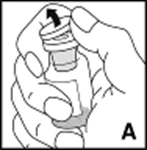
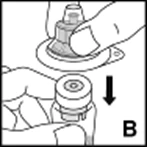
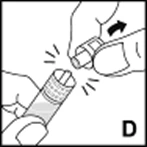
Detailed instructions for reconstitution and administration of Kovaltry
You will need alcohol swabs, dry swabs, adhesive bandages and a tourniquet. These materials are not included in the Kovaltry pack.
| |
 | |
|  |
| |
|  |
|  |
|  |
|  |
| |
|  |
| |
|  |
| |
| |
| |
 | |
| |
| |
| |
| |
| |