Konakion
Italy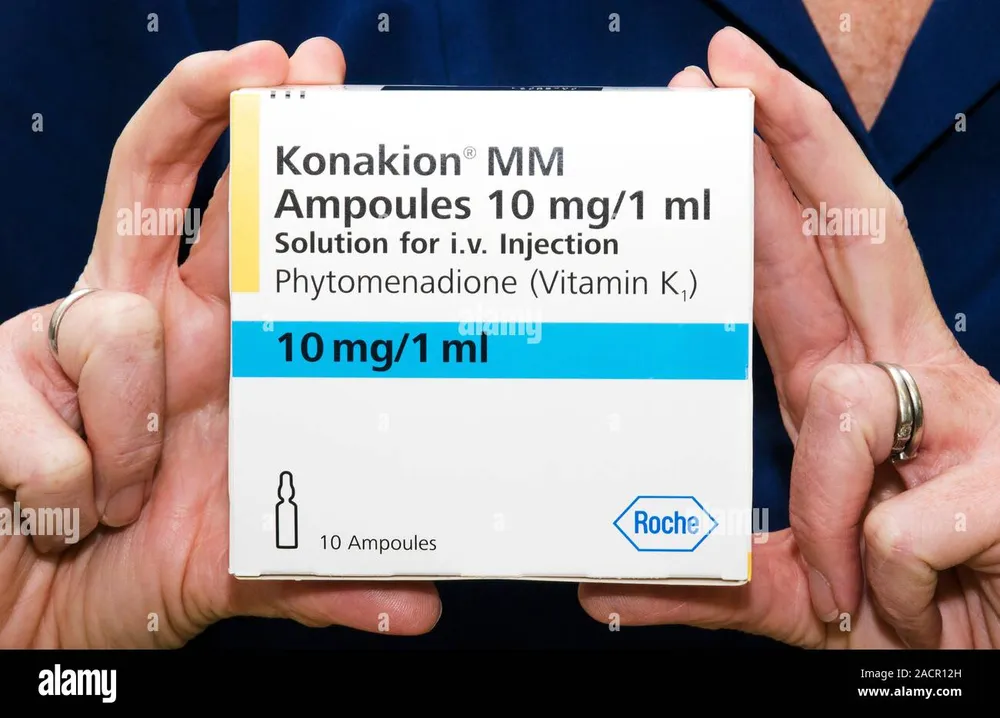
Table of Contents
- Package leaflet: Information for the patient
- Konakion 10 mg/ml oral and injectable solution for intravenous use
- 1. What Konakion is and what it is used for
- 2. What you should know before taking/administering Konakion to the child or before being administered Konakion
- 3. How to take/administer Konakion to the child/How Konakion will be administered to the child
- 4. Possible side effects
- 5. How to store Konakion
- 6. Package contents and other information
- The following information is intended for healthcare professionals only:
- Patient Information Leaflet
- Konakion prima infanzia 2 mg/0.2 mL oral and injectable solution
- 1. What Konakion prima infanzia is and what it is used for
- 2. What you need to know before using Konakion infancy
- 3. How to use Konakion prima infanzia
- 4. Possible side effects
- 5. How to store Konakion Monoprim
- 6. Package contents and other information
Package leaflet: Information for the patient
Konakion 10 mg/ml oral and injectable solution for intravenous use
phytomenadione (synthetic vitamin K)
Please read this leaflet carefully before taking/administering the medicine to your child or before
it is administered to you, as it contains important information for you.
- Keep this leaflet. You may need to read it again.
- If you have any questions, consult your doctor, pharmacist, or nurse.
- This medicine has been prescribed for you/for your child only. Do not pass it on to other people, even if their symptoms appear identical to yours/your child's, as it may be harmful.
- If any adverse reaction occurs, including any not listed in this leaflet, consult your doctor, pharmacist, or nurse. See section 4.
Contents of this leaflet:
- What Konakion is and what it is used for
- What you need to know before taking/administering Konakion to your child or before it is administered to you
- How to take/administer Konakion to your child/How Konakion will be administered to you
- Possible side effects
- How to store Konakion
- Contents of the pack and other information
1. What Konakion is and what it is used for
Konakion contains the active substance phytonadione (synthetic vitamin K), a haemostatic medicine that prevents and treats bleeding from blood vessels.
Blood has mechanisms to stop this type of bleeding, involving platelets (a type of blood cell) and proteins (fibrinogen and fibrin).
Konakion is indicated in adults and children from the age of 1 year for the treatment of:
- Bleeding or risk of bleeding due to prothrombin deficiency (caused by a deficiency of coagulation factors II, VII, IX and X) resulting from:
- excessive dosage of anticoagulants, medicines used to make the blood less fluid,
- combination of anticoagulants with phenylbutazone, a medicine used to treat inflammation,
- other conditions in which there is poor production of vitamin K (vitamin K deficiency), a vitamin involved in the body's processes to stop bleeding. Poor vitamin K production may occur, for example, in case of obstruction of a duct through which bile flows—a substance important for digestive processes (obstructive jaundice)—which causes yellowing of the skin and whites of the eyes, liver and intestinal diseases, and after prolonged treatment with antibiotics and sulfonamides (medicines for treating infections) or salicylates (medicines for treating inflammation) (see section Other medicines and Konakion).
Talk to your doctor if you/your child does not feel better or if you/your child feels worse.
2. What you should know before taking/administering Konakion to the child or before being administered Konakion
Do not take/do not administer to the child/you will not be administered Konakion
- if you/the child is allergic to phytomenadione or to any of the other ingredients of this medicine (listed in section 6). If you are an adult, Konakion will not be administered by intramuscular injection.
Warnings and precautions
Talk to your doctor, pharmacist, or nurse before taking/administering to the child or before being administered Konakion.
In particular, inform your doctor:
- if you/the child suffer from severe liver disease. Therefore, your doctor will carry out blood tests to monitor blood clotting.
Children
Do not administer Konakion to children under 1 year of age.
Other medicines and Konakion
Inform your doctor or pharmacist if you/the child are taking, have recently taken, or might take any other medicines.
Inform your doctor if you/the child are taking:
- anticoagulants, medicines to thin the blood (coumarin derivatives);
- anticonvulsants, medicines used to treat uncontrollable body movements;
- salicylates, medicines used to treat inflammation, and antibiotics, medicines used to treat infections, especially at high doses and for prolonged periods.
Pregnancy and breastfeeding
If you are pregnant, think you might be pregnant, planning to become pregnant, or are breastfeeding, consult your doctor or pharmacist before taking/being administered this medicine.
Pregnancy
You should take/be administered Konakion only if clearly needed, under direct medical supervision, and only if the expected benefit to you outweighs the potential risk to the fetus.
Breastfeeding
Only a small amount of administered vitamin K passes into breast milk. Therefore, you may take/be administered Konakion at the prescribed doses during breastfeeding.
Driving and using machines
Konakion does not affect the ability to drive or use machinery.
Konakion contains sodium and soya
This medicine contains sodium.
This medicine contains less than 1 mmol (23 mg) of sodium per dose, i.e. it is practically 'sodium-free'.
This medicine contains soya.
If you are allergic to peanuts or soya, do not use this medicine.
3. How to take/administer Konakion to the child/How Konakion will be administered to the child
Take/administer this medicine to the child exactly as instructed by your doctor, pharmacist, or nurse. If you have any doubts, consult your doctor, pharmacist, or nurse.
This medicine can be taken/administered orally to the child or administered by intravenous injection.
HOW
Oral administration of Konakion
After breaking the ampoule, draw up the amount of liquid prescribed by the doctor using a syringe with a needle (not supplied in the package). Remove the needle and administer the contents of the syringe directly into the child's mouth. Swallow/administer the contents of the syringe with a liquid.
Intravenous administration of Konakion
This medicine will be administered to you/the child by intravenous injection by healthcare professionals. If you have any doubts, consult your doctor.
HOW MUCH
The dose will be determined by the doctor based on age and health status.
If you are elderly, your doctor will prescribe the appropriate dosage.
Use in children and adolescents
The dose will be determined by the doctor based on the child's age, weight, and health status.
In newborns and children under one year of age, Konakion prima infanzia 2 mg/0.2 ml oral and injectable solution should be used.
If you take/administer to the child/are administered more Konakion than you/they should
In case of accidental overdose, contact your doctor immediately or go to the nearest hospital.
If you forget to take/administer Konakion to the child
Do not take/give the child a double dose to make up for a missed dose.
If you stop treatment with Konakion
If you have any doubts about using this medicine, consult your doctor, pharmacist, or nurse.
4. Possible side effects
Like all medicines, this medicine can cause side effects, although not everyone gets them.
During or after intravenous administration of Konakion, you/your child may experience the following serious side effects:
- narrowing of the bronchi making breathing difficult (bronchospasm),
- skin turning blue (cyanosis),
- increased heart rate (tachycardia),
- drop in blood pressure (hypotension),
- altered taste,
- hot flushes,
- excessive sweating.
Additional possible side effects that have occurred after intravenous administration of Konakion are listed below by frequency or by affected body part:
Very rare (may affect up to 1 in 10,000 people)
- Allergic reactions (including anaphylactic shock),
- irritation or inflammation of a vein (phlebitis).
Effects observed in laboratory tests
- Retention of bromosulfophthalein, a test to assess liver function;
- prolonged prothrombin time, an indicator of blood fluidity. These effects have been reported in adults receiving high doses.
Additional side effects in children
Allergic reactions
- Allergic reactions may occur in predisposed individuals.
Reporting of side effects
If you and/or the child experience any side effect, including those not listed in this leaflet, please contact your doctor, pharmacist or nurse. You can also report side effects directly via the national reporting system at the website www.agenziafarmaco.gov.it/it/responsabili.
By reporting side effects, you can help provide more information on the safety of this medicine.
5. How to store Konakion
Do not store above 25°C. Do not freeze.
Keep in the original packaging to protect the medicine from light.
Unused contents of opened vials cannot be reused and must be discarded.
Keep this medicine out of the sight and reach of children.
Do not use this medicine after the expiry date stated on the carton after "Exp". The expiry date refers to the last day of that month.
Do not use this medicine if you notice that the solution has changed from clear to cloudy.
Do not dispose of any medicine via wastewater or household waste. Ask your pharmacist how to dispose of medicines you no longer use. This will help protect the environment.
6. Package contents and other information
What Konakion contains
- The active substance is phytomenadione (vitamin K ) 10 mg.
- The other components are glycolic acid, sodium hydroxide, soybean lecithin ( see section 2. Konakion contains sodium and soy ), hydrochloric acid, water for injections.
Description of the appearance of Konakion and package contents
Konakion is a clear solution.
It is available in packs of 3 vials and 5 vials of 1 ml each.
The solution is contained in an amber glass vial.
Marketing Authorization Holder and Manufacturer
CHEPLAPHARM Arzneimittel GmbH
Ziegelhof 24
17489 Greifswald
Germany
M a n u f a c t u r e r
CHEPLAPHARM Arzneimittel GmbH
Ziegelhof 23-24
17489 Greifswald
Germany
The following information is intended for healthcare professionals only:
Standard dosage
Life-threatening or major bleeding due to vitamin K antagonist anticoagulants
Discontinue the anticoagulant and administer a slow intravenous injection (over at least 30 seconds) of Konakion at a dose of 5–10 mg, together with fresh frozen plasma (FFP) or prothrombin complex concentrate (PCC). If necessary, vitamin K administration may be repeated.
Recommended doses of vitamin K according to the level of INR in patients with major bleeding, minor bleeding, or no bleeding:
| Clinical Condition | INR Value | Oral Vitamin K1 | Intravenous Vitamin K1 |
| Severe or life-threatening bleeding, such as during anticoagulant therapy | Any INR value |
| 5.0 to 10.0 mg |
High INR, >5 and <9 from 1.0 to 2.5 mg for initial correction
asymptomatic with or without mild bleeding
rapid correction
(add 1.0 to 2.0 mg if INR remains elevated after 24 hours)
High INR, >9 from 2.5 to 5.0 mg
asymptomatic with or without mild bleeding
For lower doses, one or more vials of Konakion prima infanzia 2 mg/0.2 ml oral and injectable solution may be used.
In general, the Quick value returns to the therapeutic level of 15–25% within 3–5 hours after injection, and bleeding caused by dicoumarol-like anticoagulants ceases. If circumstances require, vitamin K treatment may be supplemented by blood transfusion. If a patient treated with dicoumarol-like anticoagulants needs surgery, the inhibition of coagulation can be neutralized with Konakion, unless the procedure requires anticoagulant protection.
If the patient is referred to another physician, inform the latter about the previous prescription of Konakion doses.
Special dosage instructions
Elderly: use the lowest dose within the recommended range due to increased sensitivity of elderly patients to vitamin K activity. It has been shown that intravenous or oral administration of small doses of 0.5–1 mg of vitamin K effectively reduces INR to <5.0 within 24 hours.
Children over 1 year of age: the treating physician must determine the optimal dose based on indication and body weight. In healthy children, administration of one-tenth of the full adult intravenous dose has been shown to effectively reduce an elevated but asymptomatic INR (>8).
Method of administration
At the time of administration, the liquid must be clear and transparent. Due to improper storage (exposure to sunlight or temperatures higher than recommended), the solution may become cloudy. In such cases, the medication must not be administered (see section 5. How to store Konakion).
Konakion 10 mg/ml oral and injectable solution for intravenous use must not be diluted or mixed with other intravenous solutions, but may be injected through the side port of an infusion set during continuous infusion of 0.9% sodium chloride or 5% dextrose.
Slow intravenous injection is indicated only in cases of life-threatening bleeding due to dicoumarol-type anticoagulants.
The injectable solution must not be diluted or mixed with other solutions intended for intravenous or intramuscular administration.
Intravenous injection must be administered very slowly.
In adults, Konakion vials must not be administered intramuscularly because this route causes depot effect and prolonged release of vitamin K, which could complicate the resumption of anticoagulant therapy. Moreover, intramuscular injection in patients on anticoagulant therapy is associated with risk of hematoma formation.
Pregnancy
Since vitamin K crosses the placental barrier slowly, Konakion is not recommended for use in pregnant women for prophylaxis of neonatal hemorrhagic syndrome.
Lactation
It is recommended not to use Konakion in breastfeeding women for prophylaxis of neonatal hemorrhagic syndrome.
Overdose
There are no available data on Konakion overdose in humans. Phytomenadione is not toxic in animals, even when administered in high quantities. If required, subsequent anticoagulant treatment following vitamin K overdose should be achieved with heparin.
Management of suspected overdose should be symptomatic.
Patient Information Leaflet
Konakion prima infanzia 2 mg/0.2 mL oral and injectable solution
phytomenadione (synthetic vitamin K)
Please read this leaflet carefully before using this medicine because it contains important information for you.
- Keep this leaflet. You may need to read it again.
- If you have any questions, ask your doctor, pharmacist, or nurse.
- This medicine has been prescribed only for the child. Do not give it to others, even if their symptoms are the same, as it could be harmful.
- If you experience any side effects, including those not listed in this leaflet, contact your doctor, pharmacist, or nurse. See section 4.
Contents of this leaflet:
- What Konakion prima infanzia is and what it is used for
- What you need to know before using Konakion prima infanzia
- How to use Konakion prima infanzia
- Possible side effects
- How to store Konakion prima infanzia
- Contents of the pack and other information
1. What Konakion prima infanzia is and what it is used for
Konakion prima infanzia contains the active substance phytomenadione (synthetic vitamin K1), a haemostatic medicinal product that prevents and treats bleeding from blood vessels.
Konakion is indicated in children under 1 year of age for the prevention and treatment of haemorrhagic disease of the newborn (deficiency of coagulation factors II, VII, IX and X), a condition caused by vitamin K deficiency and characterized by bleeding, which usually appears two or three days after birth and may include, for example, blood in vomit and stools, gastric bleeding or bleeding from the umbilical cord.
Consult your doctor if the child does not feel better or feels worse.
2. What you need to know before using Konakion infancy
Do not use Konakion infancy
- if the child is allergic to phytomenadione or to any of the other ingredients of this medicine (listed in section 6).
Warnings and precautions
Talk to the doctor, pharmacist or nurse before using Konakion infancy.
In particular, inform the doctor:
- if the child suffers from a severe liver disease. The doctor will carry out frequent blood tests to monitor blood fluidity;
- if the child was born prematurely and weighed less than 2.5 kg, as yellowing of the skin and eyes (jaundice) may occur after intravenous or intramuscular administration of Konakion infancy.
DO NOT use the medicine if the solution appears cloudy, not transparent, or not uniformly mixed (changes which may occur if the medicine has not been stored correctly).
Other medicines and Konakion infancy
Inform the doctor, pharmacist or nurse if the child is taking, has recently taken or might take any other medicines.
Inform the doctor if the child is taking:
- coumarin anticoagulants, medicines used to make the blood less thick;
- anticonvulsants, medicines used to treat uncontrolled body movements;
- salicylates, medicines used to treat inflammation, and antibiotics, medicines used to treat infections, especially at high doses and for prolonged periods.
Konakion infancy contains sodium and soybean lecithin
This medicine contains sodium.
This medicine contains less than 1 mmol (23 mg) of sodium per dose, i.e. it is practically "sodium-free".
This medicine contains soy.
If you are allergic to peanuts or soy, do not use this medicine.
3. How to use Konakion prima infanzia
Use this medicine exactly as stated in this leaflet or as instructed by your doctor or nurse. If you have any doubts, consult your doctor or nurse.
This medicine can be administered orally or by intravenous or intramuscular injection in newborns and children under one year of age.
HOW
Oral administration of Konakion prima infanzia
After breaking the ampoule, insert the oral dosing syringe (supplied in the package) vertically into the ampoule. Draw the liquid from the ampoule into the syringe up to the mark corresponding to the prescribed dose on the syringe. Administer the contents of the syringe directly into the child’s mouth.
If the oral dosing syringe is not available, you may alternatively use a standard syringe with a needle (not supplied in the package). In this case, after breaking the ampoule, draw up the prescribed amount of liquid with the syringe. Remove the needle and administer the contents of the syringe directly into the child’s mouth.
Administration of Konakion prima infanzia by intravenous or intramuscular injection
If administration by intravenous or intramuscular injection is required, it will be performed exclusively by healthcare professionals (doctor or nurse).
Konakion prima infanzia must not be diluted or mixed with other solutions at the time of administration. If you have any doubts, consult your doctor.
HOW MUCH
The dose will be determined by the doctor based on the child’s health status, age, and body weight.
If you use more Konakion prima infanzia than you should
If an excessive dose of Konakion prima infanzia is accidentally administered, inform your doctor immediately or go to the nearest hospital.
The following adverse effects related to overdosage have been reported during use of Konakion prima infanzia in newborns and children:
- yellowing of the skin and eyes (jaundice),
- increased test values indicating liver function (hyperbilirubinemia, elevated levels of GOT and GGT),
- abdominal pain,
- constipation,
- loose stools,
- malaise,
- restlessness,
- skin rash.
Most of these adverse effects were considered non-serious and resolved without any treatment.
If you forget to use Konakion prima infanzia
Do not use a double dose to make up for the forgotten dose.
If you stop using Konakion prima infanzia
Do not stop using this medicine without first consulting your doctor.
If you have any questions about the use of this medicine, consult your doctor, pharmacist, or nurse.
4. Possible side effects
Like all medicines, this medicine can cause side effects, although not all children will experience them.
During or after intravenous administration of Konakion, the child may experience the following serious side effects:
- narrowing of the airways making breathing difficult (bronchospasm),
- skin turning blue (cyanosis),
- increased heart rate (tachycardia),
- low blood pressure (hypotension),
- hot flushes,
- altered taste,
- excessive sweating.
Additional possible side effects that have occurred after intravenous administration of Konakion Neo in infancy are listed below according to frequency:
Very rare (may affect up to 1 in 10,000 people)
- Anaphylactoid reactions (allergic reactions),
- irritation or inflammation of a vein (phlebitis).
Side effects that have occurred after intramuscular administration of Konakion Neo in infancy
- Anaphylactoid reactions (allergic reactions),
- local irritation at the injection site (this side effect is unlikely due to the small volume of liquid).
Other effects related to the liver
- Increased bilirubin (a substance causing yellowing of the skin and eyes) in the blood during the first days of life. This side effect occurs following administration of excessive doses of phytomenadione in newborns, particularly in premature infants.
Reporting of side effects
If the child experiences any side effect, including those not listed in this leaflet, please contact your doctor, pharmacist, or nurse. You may also report side effects directly through the national reporting system at the following website:
http://www.agenziafarmaco.gov.it/content/come-segnalare-una-sospetta-reazione-avversa .
By reporting side effects, you can help provide more information on the safety of this medicine.
5. How to store Konakion Monoprim
Keep this medicine out of the sight and reach of children.
Store below 25°C. Do not freeze.
Keep in the original packaging to protect from light.
Unused contents of opened vials must not be reused and should be discarded.
Do not use this medicine after the expiry date stated on the carton after "Exp.".
The expiry date refers to the last day of that month.
Do not use this medicine if you notice that the solution has changed from clear to cloudy.
Do not dispose of any medicine via wastewater or household waste. Ask your pharmacist how to
dispose of medicines no longer in use. This will help protect the environment.
6. Package contents and other information
What Konakion Neo contains
- The active substance is phytomenadione (vitamin K1) 2 mg.
- The other components are glycocholic acid, sodium hydroxide, soybean lecithin (see section 2 “Konakion Neo contains sodium and soy”), hydrochloric acid, water for injections.
Description of the appearance of Konakion Neo and package contents
Konakion is a clear solution.
It is available in packs of 5 vials containing 0.2 mL each, with an oral dosing syringe.
Marketing Authorisation Holder and Manufacturer
CHEPLAPHARM Arzneimittel GmbH
Ziegelhof 24
17489 Greifswald
Germany
Manufacturer
CHEPLAPHARM Arzneimittel GmbH
Ziegelhof 23-24
17489 Greifswald
Germany
The following information is intended exclusively for physicians or healthcare professionals:
Dosage and administration
Prophylaxis
Healthy newborns from 36 weeks of gestation or more
Alternatively:
1 mg administered by intramuscular injection at birth or immediately after birth or
2 mg orally at birth or immediately after birth.
The oral dose should be followed by an additional 2 mg dose at 4–7 days of age. A further oral dose of 2 mg should be administered 1 month after birth. The third oral dose may be omitted in infants fed with formula milk.
Preterm newborns less than 36 weeks of gestation weighing 2.5 kg or more, and full-term infants at particular risk (e.g. preterm infants, neonatal asphyxia, obstructive jaundice, inability to swallow, or born to mothers who have used anticoagulants or antiepileptics):
1 mg by intramuscular or intravenous route at birth or immediately after birth. Subsequent doses and their frequency should be determined based on monitoring of coagulation parameters.
Preterm newborns less than 36 weeks of gestation and weighing less than 2.5 kg:
0.4 mg/kg (equivalent to 0.04 mL/kg) by intramuscular or intravenous route at birth or immediately after birth. This parenteral dose must not be exceeded. Subsequent doses and their frequency should be determined based on monitoring of coagulation parameters.
THERE IS EVIDENCE THAT ORAL PROPHYLAXIS IS INADEQUATE IN PATIENTS WITH CONCOMITANT HEPATIC CHOLESTATIC DISEASE AND MALABSORPTION (see section 5.1 of the Summary of Product Characteristics).
WARNING: Care must be taken when calculating and measuring the dose according to the infant's body weight (errors of up to 10-fold the required dose are common).
Dosage information for premature infants at birth for prevention of bleeding due to vitamin K deficiency.
| Child's weight | Vitamin K dose at birth | Injection volume |
| 1 kg | 0.4 mg | 0.04 ml |
| 1.5 kg | 0.6 mg | 0.06 ml |
| 2 kg | 0.8 mg | 0.08 ml |
| 2.5 kg | 1 mg | 0.1 ml |
| Above 2.5 kg | 1 mg | 0.1 ml |
Additional oral doses are recommended in breastfed neonates, but safety and efficacy data for these additional doses are limited (see section 5.1 of the Summary of Product Characteristics).
Treatment
1 mg intravenously as initial dose. Subsequent doses should be determined based on the clinical condition and monitoring of coagulation parameters. It may be necessary to supplement therapy with Konakion prima infanzia 2 mg/0.2 ml oral and injectable solution with a treatment having a more immediate effect, such as transfusions of whole blood or coagulation factors, to compensate for significant hemorrhages and the delayed response time to vitamin K1.
Oral administration of Konakion prima infanzia 2 mg/0.2 ml oral and injectable solution:
After breaking the ampoule, place the oral dosing syringe (supplied with the pack) vertically into the ampoule. Draw up the liquid from the ampoule until the syringe plunger reaches the appropriate mark. Administer the contents of the syringe directly into the child's mouth.
If the oral dosing syringe is not available, a standard syringe may be used as an alternative. In this case, after breaking the ampoule, draw up the required amount of liquid using a syringe with a needle (not supplied in the pack). Remove the needle and administer the contents of the syringe directly into the child's mouth.
Special warnings and precautions for use
Prothrombin formation may be inadequate in patients with severe liver dysfunction. Therefore, careful monitoring of the INR value is necessary after administration of phytomenadione in patients with severe hepatic impairment.
At the time of administration, the micellar solution contained in the ampoule must be clear and transparent. Due to improper storage (exposure to sunlight or temperatures higher than recommended), the solution may become cloudy or phase separation may occur. In such cases, the ampoule must not be used (see section 6.4 of the Summary of Product Characteristics). The injectable solution must not be diluted or mixed with other intravenous solutions, but it may be injected through the side port of an infusion set (see section 6.2 of the Summary of Product Characteristics).
Parenteral administration of Konakion prima infanzia 2 mg/0.2 ml oral and injectable solution is associated with a potential risk of jaundice in premature infants weighing less than 2.5 kg.
Overdose
There are no available data regarding overdose of Konakion in humans. No clinical syndrome attributable to hypervitaminosis K has been reported. Effects on the reintroduction of anticoagulant therapy are possible. Phytomenadione is not toxic in animals, even when administered in high doses. If anticoagulant therapy is required following vitamin K1 overdose, heparin should be used.
Management of suspected overdose should be directed towards alleviating symptoms.
P r e c a u t i o n s f o r s t o r a g e
This medicinal product must not be used after the expiry date (EXP) stated on the packaging.
Konakion oral and injectable solution must be protected from light and stored at a temperature not exceeding 25°C. Do not freeze.
For reasons of stability, any unused contents of opened ampoules must not be reused and should be discarded. Storage under conditions other than those specified may cause clouding of the solution. In such cases, the product must not be used.