Komorebi
ItalyTable of Contents
Package leaflet: Information for the user
Komorebi 5 mg/ml eye drops, solution
ketorolac trometamol
Please read all of this leaflet carefully before you start using this medicine because it contains important information for you.
- Keep this leaflet. You may need to read it again.
- If you have any questions, ask your doctor or pharmacist.
- This medicine has been prescribed for you only. Do not give it to other people, even if their symptoms are the same as yours, as it may be harmful.
- If you experience any side effects, including those not listed in this leaflet, tell your doctor or pharmacist. See section 4.
Contents of this leaflet
- What Komorebi is and what it is used for
- What you need to know before using Komorebi
- How to use Komorebi
- Possible side effects
- How to store Komorebi
- Contents of the pack and other information
1. What Komorebi is and what it is used for
Komorebi is a medicinal product administered by ocular route.
Komorebi is indicated for:
- the treatment of pain and inflammation following cataract surgery;
- the inhibition of intraoperative miosis during catarid surgery;
- short-term relief of allergic conjunctivitis.
2. What you need to know before using Komorebi
Do not use Komorebi
- if you are allergic (hypersensitive) to ketorolac tromethamine or to any of the other ingredients of this medicine (listed in section 6);
- if you are allergic (hypersensitive) to acetylsalicylic acid or other non-steroidal anti-inflammatory drugs (NSAIDs), such as ibuprofen.
Warnings and precautions
Talk to your doctor or pharmacist before using Komorebi:
- if you have a tendency to bleed easily. Contact lens wearers should use glasses during treatment with Komorebi.
As with other non-steroidal anti-inflammatory drugs, ketorolac tromethamine may delay healing of corneal wounds, and its use should therefore be carefully considered by your doctor if you have a predisposition to persistent epithelial defects, corneal denervation, diabetes mellitus, or severe dry eye.
Prolonged use of non-steroidal anti-inflammatory drugs may lead to thinning, erosion, ulceration, or perforation of the cornea.
Topical NSAIDs should be used with caution in patients who have undergone complicated ocular surgery, who have corneal denervation, corneal epithelial defects, diabetes mellitus, ocular surface diseases (e.g. dry eye syndrome), rheumatoid arthritis, or who have undergone repeated eye surgeries within a short period of time, as these patients may be at increased risk of corneal adverse reactions that could compromise vision.
Post-marketing experience with topical NSAIDs also indicates that use beyond 24 hours before surgery, or beyond 14 days after surgery, may increase the risk and severity of corneal adverse events.
Concomitant use of ketorolac and topical corticosteroids should be closely monitored by the doctor in patients predisposed to corneal epithelial breakdown, due to the potential for delayed healing.
Other medicines and Komorebi
Tell your doctor or pharmacist if you are taking, have recently taken, or might take any other medicines.
Although ketorolac is generally well tolerated when used in combination with other ophthalmic or systemic medicines such as antibiotics, sedatives, hyaluronidase and/or other local anesthetics, beta-blockers, carbonic anhydrase inhibitors, miotics, mydriatics, and cycloplegics, inform your doctor if you are taking the following medicines:
- other ophthalmic medicines;
- medicines that reduce blood clotting ability, such as warfarin.
Concomitant use of non-steroidal anti-inflammatory drugs and topical corticosteroids may increase the risk of healing problems (see Warnings and precautions).
Pregnancy and breastfeeding
If you are pregnant, think you may be pregnant, are planning to become pregnant, or are breastfeeding, consult your doctor or pharmacist before using this medicine.
Pregnancy
The safety of this medicine in pregnant women has not been established. There are no recent controlled studies on the use of ketorolac tromethamine in pregnant women. Therefore, the use of this medicine during pregnancy should only be considered if the benefits clearly outweigh the risks. Due to the known risks associated with the use of non-steroidal anti-inflammatory drugs during the third trimester of pregnancy, ketorolac tromethamine must not be used during this period.
Breastfeeding
Komorebi is not recommended for use in women who are breastfeeding.
Driving and using machines
Avoid driving or operating machinery if you experience visual disturbances such as blurred vision.
Komorebi contains benzalkonium chloride:
Each ml of this medicine contains 0.05 mg of benzalkonium chloride.
Benzalkonium chloride may be absorbed by soft contact lenses and may cause discoloration. Remove contact lenses before using this medicine and wait 15 minutes before reinserting them. Benzalkonium chloride may also cause eye irritation, especially if you have dry eye or corneal disorders (the transparent outermost layer of the eye). If you experience unusual sensations in the eye, such as burning or pain after using this medicine, speak with your doctor.
3. How to use Komorebi
Use this medicine exactly as directed by your doctor. If you have any doubts, consult your
doctor or pharmacist.
Treatment of pain and inflammation following cataract surgery:
The recommended dose is 1 drop 4 times a day for 2–4 weeks.
Inhibition of intraoperative miosis during cataract surgery:
The recommended dose is 1 drop every 30 minutes, starting administration 2 hours before surgery,
for a total of 4 drops. The last drop should be administered 30 minutes before surgical preparation.
Short-term relief of allergic conjunctivitis:
The recommended dose is 1 drop 4 times a day for 1–2 weeks.
Use in children
The recommended dose is the same as that recommended for adults.
Komorebi must not be used in children under 14 years of age.
How to use Komorebi
- Wash your hands and sit or assume a comfortable position.
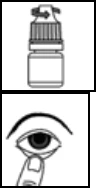
- Unscrew and remove the cap from the bottle by applying gentle pressure.
- Gently pull down with your finger the lower eyelid of the eye to be treated.

- Position the dropper tip close to the eye, but without touching it.
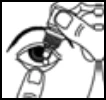
- Gently squeeze the bottle to instill a single drop of eye drops into the eye, then release the lower eyelid.

- With a finger, press the corner of the treated eye near the nose. Hold pressure for 2 or 3 minutes, keeping the eye closed, to minimize the risk of the medicine being absorbed through the nasal mucosa.
- Repeat the procedure for the other eye if your doctor has instructed you to do so.

- Replace the cap on the bottle. Do not exceed the dose prescribed by your doctor.
If you use more Komorebi than you should
Overdose situations have not been reported with ophthalmic administration of this medicine.
However, if you accidentally ingest any amount of Komorebi, contact your doctor immediately or go to the nearest hospital. Take the medicine container with you.
If you forget to use Komorebi
Do not use a double dose to make up for a forgotten dose. If you forget to use a dose, use it as soon as you remember, and then continue your treatment as usual from that point onward.
However, if it is almost time for your next dose, skip the missed dose and continue with your regular dosing schedule.
If you have any questions about the use of this medicine, consult your doctor or pharmacist.
4. Possible side effects
Like all medicines, this medicine can cause side effects, although not everyone experiences them.
The side effects are listed by system organ class and frequency. Frequencies are defined as: very common (≥1/10), common (from ≥1/100 to <1/10), uncommon (from ≥1/1000 to <1/100), rare (from ≥1/10,000 to <1/1000), very rare (<1/10,000), not known (frequency cannot be estimated from the available data).
| Organ system class | Frequency | Adverse reactions |
| Immune system disorders | Common | Allergic reactions |
| Eye disorders | Very common | Ocular irritation (including burning sensation) Ocular pain (including stinging pain) |
| Common | Superficial corneal inflammation (keratitis) Swelling (edema) of the eye and/or eyelids Itching of the eyes Increased blood flow in the conjunctiva (conjunctival hyperemia) Ocular infection Eye inflammation | |
| Uncommon | Corneal ulcer Corneal infiltrates Blurred and/or reduced vision Dry eye Inflammation of the iris (iritis) | |
| Not known | Thinning of the cornea Corneal erosion Epithelial breakdown Corneal perforation |
Due to the possibility of systemic absorption of ketorolac trometamine administered topically,
adverse effects reported with systemic use may occur, although rarely, such as headache,
influenza-like symptoms, nausea, vomiting, bleeding, and peptic ulcer.
Reporting of adverse reactions
If you experience any adverse reaction, including those not listed in this leaflet, consult your
doctor or pharmacist. You may also report adverse reactions directly through the national reporting system at https://www.aifa.gov.it/content/segnalazioni-reazioni-avverse .
By reporting adverse reactions, you can help provide more information on the safety of this medicine.
5. How to store Komorebi
Do not store above 25°C.
Keep the bottle tightly closed.
Keep the bottle in the outer packaging to protect the medicine from light and moisture.
Use Komorebi within 28 days after first opening the bottle.
Keep this medicine out of the sight and reach of children.
Do not use this medicine after the expiry date stated on the label and carton after “Exp.”. The expiry date refers to the last day of the month indicated.
Do not dispose of medicines via wastewater or household waste. Ask your pharmacist how to dispose of medicines you no longer use. This will help protect the environment.
6. Package contents and other information
What Komorebi contains
The active substance is ketorolac trometamol.
The other components are: sodium chloride, edetate disodium, benzalkonium chloride, water for injectable preparations, and hydrochloric acid and/or sodium hydroxide for pH adjustment.
Description of the appearance of Komorebi and the contents of the pack
Komorebi is supplied as an ophthalmic solution in sterile 10 ml dropper bottles.
Marketing Authorization Holder and Manufacturer
Marketing Authorization Holder
Fidia Farmaceutici S.p.A.
Via Ponte della Fabbrica, 3/A
35031 Abano Terme (PD)
Italy
Manufacturer
Laboratório Edol - Produtos Farmacêuticos, S.A.
Rua Quinta do Salrego 22-22A, Portela de Carnaxide, 2790-144 Carnaxide - Portugal
Rua Casal do Canas 6-6A, 2790-204 Carnaxide - Portugal
This medicinal product is authorized in the European Economic Area countries under the following names:
Italy – Komorebi 5 mg/ml eye drops, solution
Portugal – Hebe 5 mg/ml eye drops, solution