Kisqali
Italy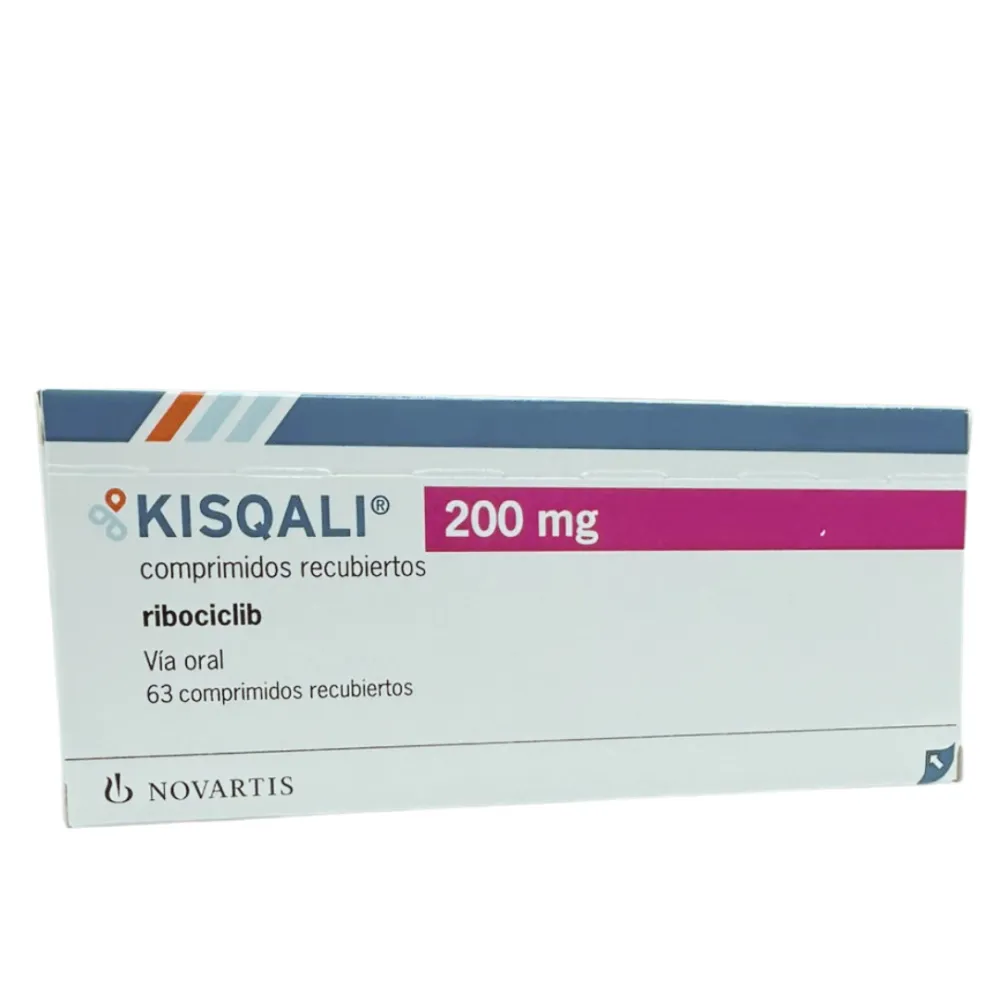
Table of Contents
Package leaflet: Information for the patient
Kisqali 200 mg film-coated tablets
ribociclib
Please read all of this leaflet carefully before you start taking this medicine because it contains important information for you.
- Keep this leaflet. You may need to read it again.
- If you have any questions, ask your doctor, pharmacist, or nurse.
- This medicine has been prescribed for you only. Do not give it to other people, even if they have the same symptoms as yours, as it may be harmful.
- If you experience any adverse reactions, including those not listed in this leaflet, talk to your doctor, pharmacist, or nurse. See section 4.
Contents of this leaflet
- What Kisqali is and what it is used for
- What you need to know before taking Kisqali
- How to take Kisqali
- Possible side effects
- How to store Kisqali
- Contents of the pack and other information
1. What Kisqali is and what it is used for
What Kisqali is
Kisqali contains the active substance ribociclib, which belongs to a group of medicines called selective cyclin-dependent kinase (CDK) 4 and 6 inhibitors.
What Kisqali is used for
Kisqali is used in patients with a type of breast cancer known as hormone receptor-positive, human epidermal growth factor receptor 2-negative (HER2-negative) breast cancer that is:
-
Localized to the breast or may have spread to the lymph nodes in the breast area, without detectable spread to other parts of the body, has been surgically removed, and has certain features that increase the risk of cancer recurrence. It is used in combination with an aromatase inhibitor, used as hormonal anticancer therapy (early-stage breast cancer). Women who have not reached menopause and men will also be treated with a medicine called a luteinizing hormone-releasing hormone (LHRH) agonist, which blocks the production of certain hormones.
-
Or is advanced or metastatic. This means that the cancer has grown beyond the breast and has spread to the lymph nodes in the breast (locally advanced) or has spread to other parts of the body (metastatic). Kisqali is used in combination with either an aromatase inhibitor or fulvestrant, which are used as hormonal anticancer therapies. Women who have not reached menopause will also be treated with a luteinizing hormone-releasing hormone (LHRH) agonist, which blocks the production of certain hormones.
How Kisqali works
Kisqali works by blocking growth signals transmitted by CDK 4 and 6 proteins, thereby stopping the growth and spread of cancer cells. In early-stage breast cancer, it may help prevent cancer recurrence after surgery (treatment after surgery is called adjuvant therapy). In advanced or metastatic breast cancer, it may slow down cancer progression.
If you have any questions about how Kisqali works or why it has been prescribed for you, please consult your doctor, pharmacist, or nurse.
2. What you should know before taking Kisqali
Carefully follow all instructions provided by your doctor. These may differ from the general information
contained in this patient leaflet.
Do not take Kisqali
- if you are allergic to ribociclib, peanuts, soy, or any of the other ingredients of this medicine (listed in section 6). If you think you may be allergic, consult your doctor for advice.
Warnings and precautions
Talk to your doctor, pharmacist, or nurse before taking Kisqali.
If any of the following apply to you before taking Kisqali, inform your doctor or pharmacist:
- If you have fever, sore throat, or mouth ulcers due to infections (signs of low white blood cell count).
- If you have liver problems or have previously had any liver disease.
- If you have or have had heart conditions or irregular heart rhythms, such as irregular heartbeat, including a condition called QT prolongation (prolonged QT interval), or low levels of potassium, magnesium, calcium, or phosphorus in the blood.
If any of the following apply to you during treatment with Kisqali, inform your doctor or
pharmacist:
- If you develop a combination of any of the following symptoms: rash, skin redness, blistering of the lips, eyes, or mouth, skin peeling, high fever, flu-like symptoms, and swollen lymph nodes (these may be signs of a severe skin reaction). In case of a severe skin reaction, your doctor will instruct you to stop treatment with Kisqali immediately.
- Difficulty breathing, cough, or shortness of breath (these may be signs of lung or respiratory problems). If necessary, your doctor may interrupt or reduce the dose of Kisqali or decide to permanently discontinue treatment with Kisqali.
Monitoring during treatment with Kisqali
You will need regular blood tests before and during treatment with Kisqali to monitor liver function, blood cell counts (white blood cells, red blood cells, and platelets), and electrolyte levels (blood salts such as potassium, calcium, magnesium, and phosphate) in your body. Your heart activity will also be monitored before and during treatment with Kisqali using a test called an electrocardiogram (ECG). Additional tests to assess kidney function may also be performed during treatment with Kisqali, if necessary. If needed, your doctor may reduce the dose of Kisqali or temporarily interrupt treatment to allow recovery of liver, kidney, blood cell counts, electrolyte levels, or heart function. Your doctor may also decide to permanently discontinue treatment with Kisqali.
Children and adolescents
Kisqali must not be used in children and adolescents under 18 years of age.
Other medicines and Kisqali
Before taking Kisqali, inform your doctor or pharmacist if you are taking, have recently taken, or might take any other medicines, including over-the-counter medicines, herbal remedies, or supplements, as these may affect the action of Kisqali. Always inform your doctor if you have been prescribed a new medicine after starting treatment with Kisqali.
This includes in particular:
- Tamoxifen, another medicine used to treat breast cancer.
- Certain antifungal medicines, such as ketoconazole, itraconazole, voriconazole, or posaconazole.
- Certain medicines used to treat HIV/AIDS, such as ritonavir, saquinavir, indinavir, lopinavir, nelfinavir, telaprevir, and efavirenz.
- Certain antiepileptic medicines used to treat seizures or convulsions, such as carbamazepine and phenytoin.
- St. John’s wort (also known as Hypericum perforatum) – a herbal product used to treat depression and other conditions.
- Certain medicines used to treat heart rhythm problems or high blood pressure, such as amiodarone, disopyramide, procainamide, quinidine, sotalol, and verapamil.
- Antimalarial medicines such as chloroquine.
- Antibiotics such as clarithromycin, telithromycin, moxifloxacin, rifampicin, ciprofloxacin, levofloxacin, and azithromycin.
- Certain sedatives or anesthetics such as midazolam.
- Certain antipsychotic medicines such as haloperidol.
- Medicines used to treat angina, such as bepridil.
- Methadone, used to treat pain or opioid dependence.
- Medicines such as intravenous ondansetron, used to prevent nausea and vomiting caused by chemotherapy (cancer drug treatment).
Kisqali may increase or decrease blood levels of certain medicines. This includes in particular:
- Medicines used to treat symptoms of benign prostatic hyperplasia, such as alfuzosin.
- Tamoxifen, another medicine used to treat breast cancer.
- Antiarrhythmics such as amiodarone or quinidine.
- Antipsychotics such as pimozide or quetiapine.
- Medicines used to improve blood lipid levels, such as simvastatin or lovastatin, pitavastatin, pravastatin, or rosuvastatin.
- Medicines used to treat high blood sugar levels (e.g., diabetes), such as metformin.
- Medicines used to treat heart conditions, such as digoxin.
- Medicines used to treat pulmonary arterial hypertension and erectile dysfunction, such as sildenafil.
- Medicines used to treat low blood pressure or migraine, such as dihydroergotamine.
- Certain medicines used to treat seizures or used as sedatives or anesthetics, such as midazolam.
- Medicines used to treat sleep disorders, such as triazolam.
- Analgesics such as alfentanil and fentanyl.
- Medicines used to treat gastrointestinal disorders, such as cisapride.
- Medicines used to prevent organ transplant rejection, such as tacrolimus, sirolimus, and cyclosporine (also used to treat inflammation in rheumatoid arthritis and psoriasis).
- Everolimus, used for various types of cancer and tuberous sclerosis (also used to prevent organ transplant rejection).
Ask your doctor or pharmacist if you are unsure whether your medicine is included in the list above.
Kisqali with food and drinks
Do not eat grapefruit or food containing grapefruit or drink grapefruit juice
during treatment with Kisqali. These can alter how Kisqali is processed in the body and may increase the amount of Kisqali in the blood.
Pregnancy and breastfeeding
If you are pregnant, breastfeeding, suspect you may be pregnant, or are planning to become pregnant, consult your doctor before taking this medicine.
Your doctor will discuss with you the potential risks associated with taking Kisqali during pregnancy.
Pregnancy and women of childbearing potential
Kisqali must not be taken during pregnancy as it may harm the unborn child.
If you are a woman of childbearing potential, a negative pregnancy test must be confirmed before starting treatment with Kisqali. You must use effective contraception (e.g., double-barrier contraception such as condom and diaphragm) during treatment with Kisqali and for at least 21 days after the last dose. Ask your doctor about available methods of effective contraception.
Breastfeeding
You must not breastfeed during treatment with Kisqali and for at least 21 days after the last dose.
Driving and using machines
Treatment with Kisqali may cause fatigue, dizziness, or a sensation of dizziness. Caution is advised when driving or operating machinery during treatment with Kisqali.
Kisqali contains soy lecithin
Do not use this medicine if you are allergic to peanuts or soy.
3. How to take Kisqali
Take this medicine exactly as instructed by your doctor, pharmacist, or nurse. Your doctor, pharmacist, or nurse will tell you exactly how many tablets to take and on which days. If you have any doubts, consult your doctor, pharmacist, or nurse. Do not change the dose or timing of Kisqali without consulting your doctor.
Do not exceed the recommended dose prescribed by your doctor.
Amount of Kisqali to take
| Recommended starting dose of Kisqali | Number of tablets | |
| Early breast cancer | 400 mg once daily | 2 tablets of 200 mg |
| Advanced or metastatic breast cancer | 600 mg once daily | 3 tablets of 200 mg |
| Note: A treatment cycle lasts 28 days. Take Kisqali once daily only from day 1 to day 21 of a 28-day cycle. Do not take Kisqali from day 22 to day 28 of the cycle. | ||
The outer packaging of Kisqali features a "calendar" that allows you to keep track of your daily dose of Kisqali by blackening a circle for each tablet taken during the 28-day treatment cycle.
Your doctor will tell you exactly how many Kisqali tablets you need to take. In some cases (for example, if you have liver or kidney problems), your doctor may instruct you to take a lower dose of Kisqali.
It is very important to follow your doctor's instructions. If you experience any side effects, your doctor may ask you to take a lower dose, to temporarily stop treatment with Kisqali, or to stop it permanently.
When to take Kisqali
Take Kisqali once daily at the same time each day, preferably in the morning. This will help you remember to take the medicine and allow you to notice any side effects promptly so you can contact your doctor immediately.
How to take Kisqali
Kisqali tablets must be swallowed whole (the tablets must not be chewed, crushed, or opened before swallowing). Do not take a tablet that is broken, chipped, or otherwise damaged.
Kisqali with food and drink
Take Kisqali once daily every day at the same time, preferably in the morning. You may take it with or without food.
How long to take Kisqali
Take Kisqali once daily from Day 1 to Day 21 of a 28-day cycle. Continue treatment with Kisqali for as long as your doctor has instructed.
In early-stage breast cancer, a maximum treatment duration of 3 years is recommended. In advanced or metastatic breast cancer, this is a long-term treatment. Your doctor will regularly monitor your condition to ensure the treatment is having the desired effect.
If you take more Kisqali than you should
If you take too many tablets, or if someone else takes your medicine, contact your doctor or a hospital immediately for advice. Show the Kisqali packaging. Medical treatment may be necessary.
If you forget to take a dose of Kisqali
If you vomit after taking your dose or forget to take a dose, skip the missed dose for that day. Take your next dose at the usual time the following day.
Do not take a double dose to make up for the missed dose. Instead, wait until it is time for your next scheduled dose, and take your usual dose.
If you stop taking Kisqali
If you think the dose is too high or too low, contact your doctor. Do not stop taking Kisqali unless your doctor tells you to do so. Stopping treatment with Kisqali may cause your cancer to worsen.
If you have any questions about the use of this medicine, consult your doctor, pharmacist, or nurse.
4. Possible side effects
Like all medicines, this medicine can cause side effects, although not everybody gets them. Read this section carefully. The side effects that can be serious are listed first (“Some side effects can be serious”), followed by all other side effects (“Other possible side effects”) in decreasing order of frequency.
Early breast cancer
Some side effects can be serious.
Your doctor may ask you to take a lower dose, temporarily suspend treatment with Kisqali, or permanently stop taking it. Immediately inform your doctor if any of the following symptoms occur during treatment with Kisqali:
- Fever, sweating, or chills, cough, flu-like symptoms, weight loss, shortness of breath, blood in sputum, sores on the body, warm or painful areas of the body, diarrhoea or stomach pain, or feeling extremely tired (signs or symptoms of infections). Very common (may affect more than 1 in 10 people).
- Fever, chills, weakness, and frequent infections with symptoms such as sore throat or mouth ulcers. These may be signs of low white blood cell count (very common, may affect more than 1 in 10 people) or low lymphocyte count, which are a specific type of white blood cell (common, may affect up to 1 in 10 people).
- Abnormal blood test results indicating liver health (abnormal liver function tests). Very common (may affect more than 1 in 10 people).
- Spontaneous bleeding or bruising (signs of low platelet count). Common (may affect up to 1 in 10 people).
- Low potassium levels in the blood, which may lead to heart rhythm disturbances. Common (may affect up to 1 in 10 people).
- Chest pain or discomfort, changes in heartbeat (fast or slow), palpitations, mild confusion, fainting, dizziness, bluish lips, shortness of breath, swelling (oedema) of the lower limbs or skin (these may be signs of heart problems). Common (may affect up to 1 in 10 people).
- Tiredness, yellowing and itchy skin or yellowing of the whites of the eyes, nausea or vomiting, loss of appetite, pain in the upper right abdomen, dark or brown urine, bleeding or bruising more than normal (these may be signs of a liver problem). Common (may affect up to 1 in 10 people).
- Inflammation of the lungs, which may cause dry cough, chest pain, fever, shortness of breath, and breathing difficulties (these may be signs of interstitial lung disease/pneumonitis, which, if severe, can be life-threatening). Common (may affect up to 1 in 10 people).
- Sore throat or mouth ulcers with a single episode of fever of at least 38.3°C or fever above 38°C for more than one hour and/or infection (febrile neutropenia). Uncommon (may affect up to 1 in 100 people).
Other possible side effects
Other possible side effects include those listed below. If these side effects become severe, talk to your doctor, pharmacist, or nurse.
Very common (may affect more than 1 in 10 people)
- Sore throat, runny nose, fever (signs of a respiratory tract infection)
- Painful and frequent urination (signs of a urinary tract infection)
- Nausea (feeling unwell)
- Headache
- Fatigue (tiredness)
- Asthenia (weakness)
- Alopecia (hair loss or thinning)
- Diarrhoea
- Constipation
- Cough
- Abdominal pain (stomach)
- Pyrexia (fever)
Common (may affect up to 1 in 10 people)
- Rash
- Dizziness or mild confusion
- Tiredness, pale skin (possible sign of low red blood cell count, anaemia)
- Vomiting
- Pruritus (itching)
- Peripheral oedema (swollen hands, ankles or feet)
- Dyspnoea (shortness of breath, breathing difficulties)
- Stomatitis (mouth ulcers with inflamed gums)
- Oropharyngeal pain (sore throat)
- Low calcium levels in the blood, which may sometimes cause cramps
- Reduced appetite
- Abnormal renal function tests (high blood creatinine levels)
Advanced or metastatic breast cancer
Some side effects can be serious
Your doctor may ask you to take a lower dose, temporarily suspend treatment with Kisqali, or permanently stop taking it. Immediately inform your doctor if any of the following symptoms occur during treatment with Kisqali:
- Fever, sweating, or chills, cough, flu-like symptoms, weight loss, shortness of breath, blood in sputum, sores on the body, warm or painful areas of the body, diarrhoea or stomach pain, or feeling extremely tired (signs or symptoms of infections). Very common (may affect more than 1 in 10 people).
- Fever, chills, weakness, and frequent infections with symptoms such as sore throat or mouth ulcers (signs of low white blood cell or lymphocyte count, which are types of white blood cells). Very common (may affect more than 1 in 10 people).
- Abnormal blood test results indicating liver health (abnormal liver function tests). Very common (may affect more than 1 in 10 people).
- Spontaneous bleeding or bruising (signs of low platelet count). Common (may affect up to 1 in 10 people).
- Sore throat or mouth ulcers with a single episode of fever of at least 38.3°C or fever above 38°C for more than one hour and/or infection (febrile neutropenia). Common (may affect up to 1 in 10 people).
- Tiredness, yellowing and itchy skin or yellowing of the whites of the eyes, nausea or vomiting, loss of appetite, pain in the upper right abdomen, dark or brown urine, bleeding or bruising more than normal (these may be signs of a liver problem). Common (may affect up to 1 in 10 people).
- Low potassium levels in the blood, which may lead to heart rhythm disturbances. Common (may affect up to 1 in 10 people).
- Chest pain or discomfort, changes in heartbeat (fast or slow), palpitations, mild confusion, fainting, dizziness, bluish lips, shortness of breath, swelling (oedema) of the lower limbs or skin (these may be signs of heart problems). Common (may affect up to 1 in 10 people).
- Inflammation of the lungs, which may cause dry cough, chest pain, fever, shortness of breath, and breathing difficulties (these may be signs of interstitial lung disease/pneumonitis, which, if severe, can be life-threatening). Common (may affect up to 1 in 10 people).
- Severe infection with increased heart rate, shortness of breath or rapid breathing, fever, and chills (these may be signs of sepsis, which is a blood infection that can be life-threatening). Uncommon (may affect up to 1 in 100 people).
- Severe skin reaction that may include a combination of the following symptoms: rash, red skin, blisters on lips, eyes or mouth, skin peeling, high fever, flu-like symptoms, swollen lymph nodes (toxic epidermal necrolysis [TEN]). Frequency not known (frequency cannot be estimated from the available data).
Other possible side effects
Other possible side effects include those listed below. If these side effects become severe, talk to your doctor, pharmacist, or nurse.
Very common (may affect more than 1 in 10 people)
- Tiredness, pale skin (possible sign of low red blood cell count, anaemia)
- Sore throat, runny nose, fever (signs of a respiratory tract infection)
- Painful and frequent urination (signs of a urinary tract infection)
- Reduced appetite
- Headache
- Dizziness or mild confusion
- Dyspnoea (shortness of breath, breathing difficulties)
- Cough
- Nausea (feeling unwell)
- Diarrhoea
- Vomiting
- Constipation
- Abdominal pain (stomach)
- Stomatitis (mouth ulcers with inflamed gums)
- Dyspepsia (stomach discomfort, indigestion, heartburn)
- Alopecia (hair loss or thinning)
- Rash
- Pruritus (itching)
- Back pain
- Fatigue (tiredness)
- Peripheral oedema (swollen hands, ankles or feet)
- Pyrexia (fever)
- Asthenia (weakness)
Common (may affect up to 1 in 10 people)
- Abdominal pain, nausea, vomiting, and diarrhoea (signs of gastroenteritis, which is an infection of the gastrointestinal tract)
- Low calcium levels in the blood, which may sometimes cause cramps
- Reduced phosphate levels in the blood
- Vertigo (dizziness)
- Watery eyes
- Dry eyes
- Reduced potassium levels in the blood, which may lead to heart rhythm disturbances
- Dysgeusia (altered taste)
- Dry skin
- Erythema (redness of the skin)
- Vitiligo (patchy skin due to loss of pigment)
- Oropharyngeal pain (sore throat)
- Dry mouth
- Abnormal renal function tests (high blood creatinine levels)
Rare (may affect up to 1 in 1,000 people)
- Skin reaction causing red spots or patches on the skin, which may look like a “target” or “iris” lesion, with a dark red centre surrounded by lighter red rings (erythema multiforme).
Reporting of side effects
If you get any side effects, including any not listed in this leaflet, talk to your doctor, pharmacist, or nurse. You can also report side effects directly via the national reporting system listed in Annex V. By reporting side effects, you can help provide more information on the safety of this medicine.
5. How to store Kisqali
Keep this medicine out of the sight and reach of children.
Do not use this medicine after the expiry date stated on the carton after "Exp" and on the
blister after "EXP". The expiry date refers to the last day of that month.
Store in the original packaging to protect the medicine from moisture.
This medicine does not require any special storage temperature.
Do not take this medicine if you notice any damage to the packaging or signs of tampering.
Do not dispose of medicines via wastewater or household waste. Ask your pharmacist how to
dispose of medicines you no longer use. This will help protect the environment.
6. Package contents and other information
What Kisqali contains
- The active substance is ribociclib. Each film-coated tablet contains ribociclib succinate equivalent to 200 mg of ribociclib.
- The other excipients are: Tablet core: microcrystalline cellulose; crospovidone type A; low-substituted hydroxypropylcellulose; magnesium stearate; anhydrous colloidal silica. Coating material: black iron oxide (E172); red iron oxide (E172); talc; soy lecithin (E322) (see “Kisqali contains soy lecithin” in section 2); polyvinyl (partially hydrolysed); titanium dioxide (E171); xanthan gum.
Description of the appearance of Kisqali and contents of the pack
Kisqali is supplied as film-coated tablets in blisters.
The film-coated tablets are light greyish-purple in colour, non-divisible, round, with “RIC” engraved on one side and “NVR” on the other.
The following pack sizes are available: packs containing 21, 42 or 63 film-coated tablets and multiple packs containing 63 (3 packs of 21), 126 (3 packs of 42) or 189 (3 packs of 63) film-coated tablets.
Kisqali packs containing 63 tablets are intended for use by patients who are to take the daily dose of 600 mg ribociclib (3 tablets once daily).
Kisqali packs containing 42 tablets are intended for use by patients who are to take the daily dose of 400 mg ribociclib (2 tablets once daily).
Kisqali packs containing 21 tablets are intended for use by patients who are to take the lowest daily dose of 200 mg ribociclib (1 tablet once daily).
Not all pack sizes may be marketed.
Marketing Authorisation Holder
Novartis Europharm Limited
Vista Building
Elm Park, Merrion Road
Dublin 4
Ireland
Manufacturer
Novartis Pharma GmbH
Roonstrasse 25
90429 Nuremberg
Germany
Lek Pharmaceuticals d.d.
Verovškova Ulica 57
1526 Ljubljana
Slovenia
Novartis Pharmaceutical Manufacturing LLC
Verovškova Ulica 57
1000 Ljubljana
Slovenia
Novartis Pharma GmbH
Sophie-Germain-Strasse 10
90443 Nuremberg
Germany
For further information on this medicinal product, please contact the local representative of the Marketing Authorisation Holder:
België/Belgique/Belgien Lietuva
Novartis Pharma N.V. SIA Novartis Baltics Lietuvos filialas
Tél/Tel: +32 2 246 16 11 Tel: +370 5 269 16 50
България Luxembourg/Luxemburg
Novartis Bulgaria EOOD Novartis Pharma N.V.
Тел: +359 2 489 98 28 Tél/Tel: +32 2 246 16 11
Česká republika Magyarország
Novartis s.r.o. Novartis Hungária Kft.
Tel: +420 225 775 111 Tel.: +36 1 457 65 00
Danmark Malta
Novartis Healthcare A/S Novartis Pharma Services Inc.
Tlf.: +45 39 16 84 00 Tel: +356 2122 2872
Deutschland Nederland
Novartis Pharma GmbH Novartis Pharma B.V.
Tel: +49 911 273 0 Tel: +31 88 04 52 111
Eesti Norge
SIA Novartis Baltics Eesti filiaal Novartis Norge AS
Tel: +372 66 30 810 Tlf: +47 23 05 20 00
Ελλάδα Österreich
Novartis (Hellas) A.E.B.E. Novartis Pharma GmbH
Τηλ: +30 210 281 17 12 Tel: +43 1 86 6570
España Polska
Novartis Farmacéutica, S.A. Novartis Poland Sp. z o.o.
Tel: +34 93 306 42 00 Tel.: +48 22 375 4888
France Portugal
Novartis Pharma S.A.S. Novartis Farma - Produtos Farmacêuticos, S.A.
Tél: +33 1 55 47 66 00 Tel: +351 21 000 8600
Hrvatska România
Novartis Hrvatska d.o.o. Novartis Pharma Services Romania SRL
Tel. +385 1 6274 220 Tel: +40 21 31299 01
Ireland Slovenija
Novartis Ireland Limited Novartis Pharma Services Inc.
Tel: +353 1 260 12 55 Tel: +386 1 300 75 50
Ísland Slovenská republika
Vistor hf. Novartis Slovakia s.r.o.
Sími: +354 535 7000 Tel: +421 2 5542 5439
Italia Suomi/Finland
Novartis Farma S.p.A. Novartis Finland Oy
Tel: +39 02 96 54 1 Puh/Tel: +358 (0)10 6133 200
Κύπρος Sverige
Novartis Pharma Services Inc. Novartis Sverige AB
Τηλ: +357 22 690 690 Tel: +46 8 732 32 00
Latvija
SIA Novartis Baltics
Tel: +371 67 887 070
Other sources of information
More detailed information on this medicinal product is available on the website of the European Medicines Agency: https://www.ema.europa.eu
ANNEX IV
SCIENTIFIC CONCLUSIONS AND REASONS FOR THE VARIATION OF THE TERMS
OF THE MARKETING AUTHORISATION
Scientific conclusions
Taking into account the assessment by the Pharmacovigilance Risk Assessment Committee (PRAC) of the Periodic Safety Update Report (PSUR) for ribociclib, the scientific conclusions of the PRAC are as follows:
Based on available data on autoimmune hepatitis from clinical studies, literature, and spontaneous reports, which in some cases include a close temporal relationship and a positive response upon drug discontinuation, the PRAC considers that a causal relationship between ribociclib and autoimmune hepatitis is at least a reasonable possibility. The PRAC concluded that the product information for medicinal products containing ribociclib should therefore be amended accordingly.
Having reviewed the PRAC recommendation, the Committee for Medicinal Products for Human Use (CHMP) agrees with the general conclusions and the rationale of the recommendation.
Reasons for the variation of the terms of the marketing authorisation
Based on the scientific conclusions on ribociclib, the CHMP considers that the benefit-risk balance of the medicinal product containing ribociclib remains favourable, subject to the proposed amendments to the product information.
The CHMP recommends a variation to the terms of the marketing authorisation.