Ketirix
ItalyTable of Contents
- Package leaflet: Information for the user
- Ketirix 0.25 mg/ml eye drops, solution, 0.25 mg/ml eye drops, solution in single-dose container
- 2. What you need to know before using Ketirix
- 3. How to use Ketirix
- Instructions for use
- Ketirix - Multi-dose bottle
- 4. Possible side effects
- 5. How to store Ketirix
- 6. Package contents and other information
Package leaflet: Information for the user
Ketirix 0.25 mg/ml eye drops, solution, 0.25 mg/ml eye drops, solution in single-dose container
Ketotifene
Generic medicine
Please read all of this leaflet carefully before you start using this medicine because it contains important information for you.
Always take this medicine exactly as described in this leaflet or as your doctor or pharmacist has instructed you.
- Keep this leaflet. You may need to read it again.
- If you need more information or advice, consult your pharmacist.
- If you experience any side effects, including those not listed in this leaflet, tell your doctor or pharmacist. See section 4.
- Consult your doctor if you do not notice any improvement within 7 days or if your symptoms worsen (see section 2).
Contents of this leaflet:
-
What Ketirix is and what it is used for
-
What you need to know before using Ketirix
-
How to use Ketirix
-
Possible side effects
-
How to store Ketirix
-
Contents of the pack and other information
-
What Ketirix is and what it is used for
Ketirix is an eye drop solution containing ketotifene, an antiallergic substance. Ketirix is used for the treatment of symptoms of seasonal allergic conjunctivitis. The most common symptoms of seasonal allergic conjunctivitis are intense itching of both eyes associated with redness, swelling, excessive tearing, and light sensitivity. Symptoms are recurrent and triggered by the start of pollen season. Seasonal allergic conjunctivitis may also be associated with other symptoms such as rhinitis. Consult your doctor if you do not feel better within 7 days or if you feel worse (see section 2).
2. What you need to know before using Ketirix
Do not use Ketirix
If you are allergic (hypersensitive) to ketotifen (the active substance), or to any of the other ingredients of this
medicine (listed in section 6).
Warnings and precautions
Ask your doctor, pharmacist or nurse before using Ketirix.
Talk to a doctor if you do not feel better within 7 days or if your symptoms worsen.
The following signs and symptoms are not typical of seasonal allergic conjunctivitis:
- discharge of pus,
- visual disturbances,
- morning crusting, difficulty opening the eyelids in the morning,
- swollen lymph nodes near the ears,
- persistent symptoms,
- unilateral symptoms.
If you experience any of these signs or symptoms, you may have another eye condition rather than
seasonal allergic conjunctivitis. Consult a doctor.
Children
Do not administer to children under 3 years of age.
Other medicines and Ketirix
Inform your doctor or pharmacist if you are currently using, have recently used, or might use any other
medicines.
This is particularly important for medicinal products used to treat:
- depression, anxiety, sleep disorders
- allergies (e.g. antihistamines). If you need to apply any other eye drops in addition to Ketirix, wait at least 5 minutes between administrations.
Ketirix with food, drink and alcohol
Ketirix may enhance the effect of alcohol.
Pregnancy and breastfeeding
If you are pregnant, think you may be pregnant, are planning a pregnancy, or are breastfeeding,
please consult your doctor or pharmacist before using this medicine.
Pregnancy
Do not use Ketirix during pregnancy, if you think you might be pregnant, or if you are planning a pregnancy, unless your doctor considers it strictly necessary.
Breastfeeding
Ketirix may be used during breastfeeding.
Driving and using machines
Ketirix may cause blurred vision or drowsiness.
If this occurs, wait until your vision returns to normal before driving or operating machinery.
Ketirix eye drops in multidose container contains benzalkonium chloride
Ketirix eye drops in multidose container contains 0.05 mg/ml of benzalkonium chloride.
Benzalkonium chloride may be absorbed by soft contact lenses and may cause a change in their color. Remove your contact lenses before using this medicine and wait 15 minutes before reinserting them.
Benzalkonium chloride may also cause eye irritation, especially if you have dry eye or corneal disorders (the transparent outermost layer of the eye). If you experience any unusual sensation in the eye, burning or pain after using this medicine, speak with your doctor.
3. How to use Ketirix
Use this medicine exactly as stated in this leaflet or as prescribed by your doctor or pharmacist. If you have any doubts, consult your doctor or pharmacist.
Dosage
Adults, elderly and children over 3 years of age
The recommended dose is one drop into the affected eye twice daily (morning and evening).
Method of administration
Do not inject, do not swallow.
This medicine is intended for ocular administration (ophthalmic use).
Instructions for use
Ketirix - Multi-dose bottle
- Wash your hands thoroughly before using the product.
- To avoid contaminating the eyes, do not touch the eye, eyelids, or any other surface with the tip of the dropper bottle.
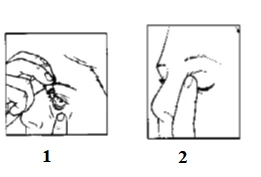
- Instill one drop into the eye by looking upward and gently pulling down the lower eyelid to form a "pocket" between the eyelid and the eye (Figure 1).
- Close the eyelids and gently press with the index finger at the inner corner of the eye (the point where the eye meets the nose) for 1–2 minutes. This helps prevent the medicine from spreading into the rest of the body (Figure 2).
- Close the bottle after use.
Ketirix - Single-dose container
- Wash your hands thoroughly before using the product and sit or stand in a comfortable position. Then open the aluminum pouch containing a strip (strip) of 5 single-dose containers.
- Separate one single-dose container from the strip by applying slight pressure on the side opposite to the vial's opening (Figure 1).
- To open the container, rotate the cap completely by making a full 360° turn (Figure 2).
- Tilt your head backward and gently pull down the lower eyelid with one finger to create a pocket between your eyelid and the eye.
- Position the tip of the single-dose container near the eye, without touching it; gently squeeze the body of the container to apply one drop of solution onto the affected ocular surface (Figure 3).
- After using the product, close the eye and press with the index finger at the inner corner of the eye (the point where the eye meets the nose), holding pressure for 1–2 minutes (Figure 4). This helps prevent the medicine from spreading into the rest of the body.
- If the eye drops need to be used in both eyes, wash your hands before repeating the procedure for the second eye.
Ketirix single-dose does not contain preservatives; after opening, discard it after use, even if only partially used.

If a drop does not enter the eye, repeat the procedure.
If you find that the effects of Ketirix are too strong or too weak, or if unexpected reactions occur, contact your doctor or pharmacist.
Use in children
Ketirix must not be used in children under 3 years of age.
If you use more Ketirix than you should
There is no danger if you accidentally swallow a few drops of Ketirix. Likewise, do not worry if more than one drop is accidentally instilled into the eye. Overdose effects have not been reported to date.
If you forget to use Ketirix
Apply a drop as soon as possible, then return to your regular dosing schedule. Make sure the drop enters the eye.
Do not take a double dose to make up for a missed one.
If you have any doubts about how to use this medicine, consult your doctor or pharmacist.
4. Possible side effects
Like all medicines, this medicine can cause side effects, although not everyone experiences them.
If you experience allergic reactions, including rash, swelling of the face, lips, tongue and/or throat,
which may cause difficulty in breathing or swallowing, or if you experience other serious side effects, stop taking Ketirix and contact your doctor or the nearest hospital emergency department immediately.
The following side effects have been reported:
- Common (affects less than 1 in 10 people): Eye irritation or pain, eye inflammation.
- Uncommon (affects less than 1 in 100 people):
- Blurred vision,
- Dry eye,
- Eyelid disorder,
- Conjunctivitis (inflammation of the eye surface),
- Increased sensitivity of the eyes to light,
- Visible bleeding in the white of the eye,
- Headache,
- Drowsiness,
- Rash (which may also cause itching),
- Eczema (itching, redness, burning of the rash),
- Dry mouth.
- Not known: Frequency cannot be established based on available data
- Allergic reactions (including swelling of the face and eyelids) and worsening of pre-existing allergic conditions such as asthma and eczema,
- Dizziness.
Reporting of side effects
If you experience any side effect, including those not listed in this leaflet, consult your doctor or pharmacist. You may also report side effects directly via the national reporting system at www.aifa.gov.it/content/segnalazioni-reazioni-avverse.
By reporting side effects, you can help provide more information on the safety of this medicine.
5. How to store Ketirix
There are no special storage conditions.
Ketirix - Multi-dose bottle
After first opening, the bottle must be used within 28 days; after this period, any remaining medicine must be discarded.
Ketirix - Single-dose containers
After first opening the aluminium pouch: use within 28 days; after this period, any remaining containers must be discarded.
The single-dose container must be used immediately after opening; any remaining medicine must be discarded.
Keep this medicine out of the sight and reach of children.
Do not use this medicine after the expiry date stated on the carton after “Expiry”.
The expiry date refers to the last day of that month.
Do not dispose of medicines via wastewater or household waste. Ask your pharmacist how to dispose of medicines you no longer use. This will help protect the environment.
6. Package contents and other information
What Ketirix contains
Ketirix 0.25 mg/ml eye drops, solution (5 ml bottle)
Each ml of solution contains 0.345 mg of the active substance ketotifen hydrogen fumarate, equivalent to 0.25 mg of ketotifen.
The other ingredients are: glycerol, benzalkonium chloride, sodium hydroxide (to adjust pH), water for injections.
Ketirix 0.25 mg/ml eye drops, solution (single-dose containers of 0.50 ml)
Each ml of solution contains 0.345 mg of the active substance ketotifen hydrogen fumarate, equivalent to 0.25 mg of ketotifen.
The other ingredients are: glycerol, sodium hydroxide (to adjust pH), water for injections.
Description of the appearance of Ketirix and contents of the pack
Ketirix is an eye drop solution for ophthalmic use.
Ketirix 0.25 mg/ml eye drops, solution (5 ml bottle)
Pack containing 1 bottle of 5 ml.
Ketirix 0.25 mg/ml eye drops, solution (single-dose containers of 0.50 ml)
5 single-dose containers of 0.50 ml of eye drop solution contained in an aluminum sachet.
Pack containing 25 single-dose containers.
Marketing Authorization Holder
Genetic S.p.A. Via G. Della Monica, 26 - 84083 Castel San Giorgio (SA), Italy
Manufacturer:
Genetic S.p.A. Contrada Canfora - 84084 Fisciano (SA), Italy