Kanjinti
Italy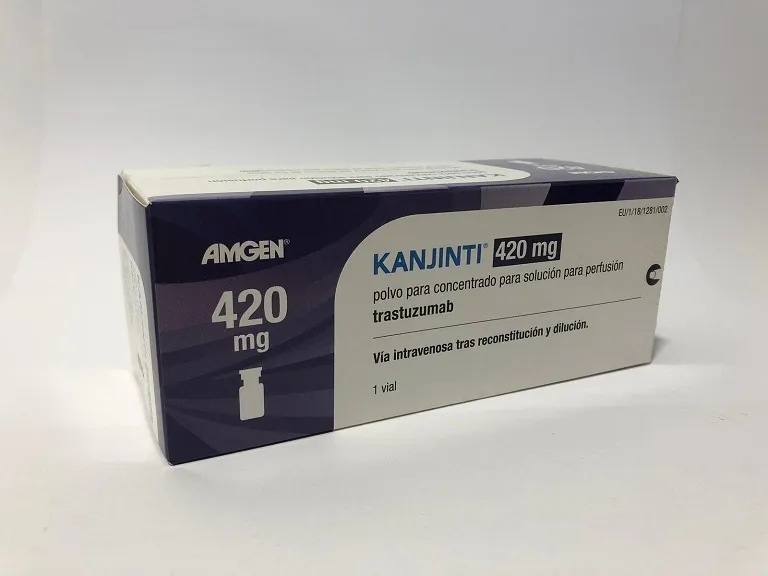
Table of Contents
- Package leaflet: Information for the user
- KANJINTI 150 mg powder for concentrate for solution for infusion, 420 mg powder for concentrate for solution for infusion
- 1. What KANJINTI is and what it is used for
- 2. What you should know before using KANJINTI
- 3. How to use KANJINTI
- 4. Possible side effects
- 5. How to store KANJINTI
- 6. Package contents and other information
- The following information is intended exclusively for physicians or healthcare professionals
Package leaflet: Information for the user
KANJINTI 150 mg powder for concentrate for solution for infusion, 420 mg powder for concentrate for solution for infusion
trastuzumab
Read all of this leaflet carefully before using this medicine because it contains important information for you.
- Keep this leaflet. You may need to read it again.
- If you have any questions, ask your doctor or pharmacist.
- If you get any side effects, talk to your doctor, pharmacist or nurse. This includes any side effects not listed in this leaflet. See section 4.
Contents of this leaflet:
- What KANJINTI is and what it is used for
- What you need to know before using KANJINTI
- How to use KANJINTI
- Possible side effects
- How to store KANJINTI
- Contents of the pack and other information
1. What KANJINTI is and what it is used for
KANJINTI contains the active substance trastuzumab, which is a monoclonal antibody. Monoclonal antibodies bind to specific proteins or antigens. Trastuzumab is designed to selectively bind to an antigen called human epidermal growth factor receptor 2 (HER2). HER2 is present in large amounts on the surface of certain tumor cells and stimulates their growth. When trastuzumab binds to HER2, it blocks the growth of these cells and causes their death.
Your doctor may prescribe KANJINTI for the treatment of breast and gastric cancer if:
- you have early-stage breast cancer with high levels of a protein called HER2.
- you have metastatic breast cancer (breast cancer that has spread away from the primary tumor) with high HER2 levels. KANJINTI may be prescribed in combination with the chemotherapeutic agents paclitaxel or docetaxel as first treatment for metastatic breast cancer, or it may be prescribed alone when other treatments have proven ineffective. It is also used in combination with medicines called aromatase inhibitors for the treatment of patients with high HER2 levels and metastatic breast cancer with hormone receptor-positive tumors (cancer that is sensitive to female sex hormones).
- you have metastatic gastric cancer with high HER2 levels, in combination with other anticancer medicines, capecitabine or 5-fluorouracil and cisplatin.
2. What you should know before using KANJINTI
Do not use KANJINTI if:
- you are allergic to trastuzumab, murine (mouse) proteins, or to any of the excipients of this medicine (listed in section 6).
- you have severe respiratory problems at rest due to tumour or require oxygen therapy.
Warnings and precautions
Your doctor will closely monitor you during treatment.
Heart checks
Treatment with KANJINTI, administered alone or in combination with a taxane, may affect the heart,
especially if you have previously received an anthracycline (taxanes and anthracyclines are two other
types of medicines used to treat tumours). These effects may range from moderate to severe and may
lead to death. Heart function will therefore be monitored before, during (every three months), and after
(up to two to five years) treatment with KANJINTI. If you develop signs of heart failure (i.e. the heart's
inability to pump blood adequately), you may require more frequent heart function monitoring (every
six to eight weeks), may need treatment for heart failure, or may have to stop treatment with KANJINTI.
Speak with your doctor, pharmacist, or nurse before receiving KANJINTI if:
- you have had heart failure, coronary artery disease, heart valve disease (heart murmurs), high blood pressure, or if you have taken or are currently taking any medicine for high blood pressure.
- you have taken or are currently taking a medicine called doxorubicin or epirubicin (medicines used to treat tumours). These medicines (or any other anthracycline) can damage heart muscle and increase the risk of heart problems when taking KANJINTI.
- you suffer from shortness of breath, especially if you are currently receiving a taxane. KANJINTI can cause breathing difficulties, particularly the first time it is administered. This may be more serious if you already have breathing problems. Very rarely, patients with severe breathing difficulties before treatment have died after receiving trastuzumab.
- you have received other cancer treatments.
If you are receiving KANJINTI in combination with any other medicine used to treat cancer, such as paclitaxel, docetaxel, an aromatase inhibitor, capecitabine, 5-fluorouracil, or cisplatin, you should also read the package leaflet for these medicines.
Children and adolescents
KANJINTI is not recommended for patients under 18 years of age.
Other medicines and KANJINTI
Inform your doctor, pharmacist, or nurse if you are taking, have recently taken, or might take any other medicines.
It may take up to 7 months for KANJINTI to be eliminated from the body. Therefore, you must inform your doctor, pharmacist, or nurse that you have received KANJINTI if you start taking any new medicine within 7 months after stopping treatment.
Pregnancy
- If you are pregnant, suspect you may be pregnant, or are planning to become pregnant, consult your doctor, pharmacist, or nurse before taking this medicine.
- You must use effective contraception during treatment with KANJINTI and for at least 7 months after the end of treatment.
- Your doctor will discuss with you the risks and benefits of taking KANJINTI during pregnancy. In rare cases, reduced amniotic fluid (the fluid surrounding the developing baby in the womb) has been observed in pregnant women treated with trastuzumab. This condition may be harmful to the unborn baby and has been associated with incomplete lung development, which has led to fetal death.
Breast-feeding
Do not breast-feed during treatment with KANJINTI and for 7 months after the last dose, as KANJINTI may pass into breast milk.
Ask your doctor or pharmacist for advice before taking any medicine.
Driving and using machines
KANJINTI may affect your ability to drive or use machinery. If you develop symptoms such as dizziness, drowsiness, chills, or fever during treatment, do not drive or operate machinery until these symptoms resolve.
Sodium
This medicine contains less than 1 mmol (23 mg) of sodium per dose, i.e. essentially 'sodium-free'.
3. How to use KANJINTI
Before starting treatment, your doctor will determine the amount of HER2 in the tumour. Only
patients with high levels of HER2 will be treated with KANJINTI. KANJINTI must be
administered only by a doctor or nurse. Your doctor will prescribe the dose and treatment schedule
appropriate for you. The dose of KANJINTI depends on your body weight.
It is important to check the medicine label to ensure that the correct formulation is administered as
prescribed. The intravenous formulation of KANJINTI is not intended for subcutaneous administration and must be administered solely by intravenous infusion.
The intravenous formulation of KANJINTI is given as an intravenous infusion (“drip”) directly into the veins. The first dose of treatment is administered over a period of 90 minutes, and you will be monitored by a healthcare professional during the infusion in case you experience any adverse effects. If the first dose is well tolerated, subsequent doses may be administered over a period of 30 minutes (see section 2 “Warnings and precautions”). The number of infusions you will receive depends on your response to treatment. Your doctor will discuss this with you.
To avoid medication errors, it is important to check the vial labels to ensure that the medicine being prepared and administered is KANJINTI (trastuzumab) and not another trastuzumab-containing medicine (e.g. trastuzumab emtansine or trastuzumab deruxtecan).
In patients with early breast cancer, metastatic breast cancer, and metastatic gastric cancer, KANJINTI is administered every 3 weeks. KANJINTI may also be administered once weekly for the treatment of metastatic breast cancer.
If you interrupt treatment with KANJINTI
Do not stop taking this medicine without first talking to your doctor. All doses must be taken at the correct time each week or every three weeks (depending on your dosing schedule). This helps the medicine work as effectively as possible.
It may take up to 7 months for KANJINTI to be eliminated from the body. Therefore, your doctor may decide to continue monitoring heart function even after treatment has ended.
If you have any doubts about how to use this medicine, consult your doctor, pharmacist, or nurse.
4. Possible side effects
Like all medicines, KANJINTI can cause side effects, although not everybody gets them. Some of these side effects can be serious and may require hospitalisation.
During KANJINTI infusion, reactions such as chills, fever and other flu-like symptoms may occur. These effects are very common (may affect more than 1 in 10 people).
Other infusion-related symptoms include: nausea, vomiting, pain, increased muscle tension and tremors, headache, dizziness, difficulty breathing, high or low blood pressure, heart rhythm disorders (palpitations, rapid or irregular heartbeat), facial or lip swelling, skin rashes and feeling of fatigue. Some of these symptoms may be severe and some patients have died (see section 2 “Warnings and precautions”).
These effects occur mainly with the first intravenous infusion (“drip” into the vein) and during the first hours after the start of the infusion. They are usually temporary. You will be monitored by a healthcare professional during the infusion and for at least six hours after the start of the first infusion and for two hours after the start of subsequent infusions. If you experience a reaction, the infusion will be slowed down or stopped and you may be given treatment to counteract the side effects. The infusion may be resumed once symptoms have improved.
Occasionally, symptoms begin more than six hours after the start of the infusion. If this happens to you, contact your doctor immediately. Sometimes, symptoms may improve and then worsen later.
Serious side effects
Other serious side effects may occur at any time during treatment with trastuzumab, not only in relation to an infusion. Inform your doctor or nurse immediately if
you notice any of the following side effects:
- Heart problems, which may sometimes be serious, may occur during treatment and occasionally after treatment has been stopped. These include weakening of the heart muscle which may lead to heart failure, inflammation of the lining of the heart and heart rhythm disorders. These may cause symptoms such as shortness of breath (including at night), cough, fluid retention (swelling) in the legs or arms and palpitations (fast or irregular heartbeat) (see section 2 Cardiac monitoring).
Your doctor will monitor your heart regularly during and after treatment, but you must inform your doctor immediately if you notice any of the symptoms listed above.
- Tumour lysis syndrome (a group of metabolic complications occurring after anti-tumour treatment, characterised by high levels of potassium and phosphate in the blood and low levels of calcium in the blood). Symptoms may include kidney problems (weakness, shortness of breath, fatigue and confusion), heart problems (fast or slow heartbeat), seizures, vomiting or diarrhoea, and tingling around the mouth, hands or feet.
If you experience any of the above symptoms after completing treatment with KANJINTI, you must see a doctor and inform them about your previous treatment with KANJINTI.
Other side effects
Very common side effects (may affect more than 1 in 10 people):
- infections
- diarrhoea
- constipation
- chest burning (dyspepsia)
- fatigue
- skin rash
- chest pain
- abdominal pain
- joint pain
- low red and white blood cell counts (which help fight infections), sometimes associated with fever
- muscle pain
- conjunctivitis
- excessive tearing
- nosebleeds
- runny nose
- hair loss
- tremor
- hot flushes
- dizziness
- nail problems
- weight loss
- loss of appetite
- inability to sleep (insomnia)
- altered taste
- low platelet count
- bruising
- numbness or tingling in the fingers and toes of the hands and feet, which occasionally may extend to the rest of the limb
- redness, swelling or blisters in the mouth and/or throat
- pain, swelling, redness or numbness in the hands and/or feet
- shortness of breath
- headache
- cough
- vomiting
- nausea
Common side effects (may affect up to 1 in 10 people):
- allergic reactions • dry mouth and dry skin
- throat infections • dry eyes
- bladder and skin infections • sweating
- sinus inflammation • fatigue and malaise
- liver inflammation • anxiety
- kidney disorders • depression
- increased muscle tone or tension • asthma (hypertonia) • lung infection
- pain in arms and/or legs • lung disorders
- itchy skin rash • back pain
- drowsiness • neck pain
- haemorrhoids • bone pain
- itching • acne
- leg cramps
Uncommon side effects (may affect up to 1 in 100 people):
- deafness
- skin rash with hives
- wheezing
- inflammation or scarring in the lungs (fibrosis)
Rare side effects (may affect up to 1 in 1,000 people):
- jaundice
- anaphylactic reactions
Side effects with unknown frequency (frequency cannot be estimated from the available data):
- blood clotting abnormalities or changes
- high levels of potassium
- swelling or bleeding behind the eyes
- shock
- abnormal heart rhythm
- respiratory distress
- respiratory failure
- acute accumulation of fluid in the lungs
- acute narrowing of the airways
- abnormally low levels of oxygen in the blood
- difficulty breathing when lying down
- liver damage
- swelling of the face, lips and throat
- kidney failure
- abnormally low levels of amniotic fluid around the unborn child
- inadequate development of the unborn child’s lungs
- abnormal development of the unborn child’s kidneys
Some of the side effects that occur may be due to the cancer itself. If you are receiving KANJINTI in combination with chemotherapy, some of these side effects may also be due to the chemotherapy.
If you experience any of the side effects, inform your doctor, pharmacist or nurse.
Reporting of side effects
If you experience any side effect, including those not listed in this leaflet, talk to your doctor, pharmacist or nurse. You can also report side effects directly via the national reporting system referred to in Annex V. By reporting side effects, you can help provide more information on the safety of this medicine.
5. How to store KANJINTI
KANJINTI must be stored by healthcare professionals in a hospital or care facility.
Keep this medicine out of the sight and reach of children.
Do not use this medicine after the expiry date stated on the carton and on the label of the vial after “Exp.” The expiry date refers to the last day of that month.
Store in a refrigerator (2°C - 8°C). Do not freeze the reconstituted solution. Keep the vial in the original packaging to protect the medicine from light.
Infusion solutions should be used immediately after dilution. If not used immediately, the storage time and conditions prior to use are the responsibility of the user and should normally not exceed 24 hours at 2°C - 8°C. Do not use KANJINTI if you notice any particles or change in colour before administration.
Do not dispose of any medicine via wastewater or household waste. Ask your pharmacist how to dispose of medicines no longer in use. This will help protect the environment.
6. Package contents and other information
What KANJINTI contains
- The active substance is trastuzumab. Each vial contains either:
- 150 mg of trastuzumab to be dissolved in 7.2 mL of water for injections, or
- 420 mg of trastuzumab to be dissolved in 20 mL of water for injections.
- The resulting solution contains approximately 21 mg/mL of trastuzumab.
- The other components are histidine, monohydrochloride histidine, dithiothreitol, polysorbate 20.
Description of the appearance of KANJINTI and contents of the pack
KANJINTI is a powder for concentrate for solution for infusion, supplied in a glass vial sealed with a rubber stopper containing either 150 mg or 420 mg of trastuzumab. The powder is a white to pale yellow pellet. Each pack contains 1 vial of powder.
Marketing Authorisation Holder and Manufacturer
Marketing Authorisation Holder:
Amgen Europe B.V.
Minervum 7061
NL-4817 ZK Breda
The Netherlands
Manufacturer
Amgen NV
Telecomlaan 5-7
1831 Diegem
Belgium
For further information on this medicinal product, please contact the local representative of the Marketing Authorisation Holder:
Belgium/Belgique/Belgien Lithuania
s.a. Amgen n.v. Amgen Switzerland AG Vilnius branch
Tel/Tél: +32 (0)2 7752711 Tel: +370 5 219 7474
Bulgaria Luxembourg/Luxemburg
Amgen Bulgaria EOOD s.a. Amgen
Tel.: +359 (0)2 424 7440 Belgique/Belgien
Tel/Tél: +32 (0)2 7752711
Czech Republic Hungary
Amgen s.r.o. Amgen Kft.
Tel: +420 221 773 500 Tel.: +36 1 35 44 700
Denmark Malta
Amgen, subsidiary of Amgen AB, Sweden Amgen S.r.l.
Tlf: +45 39617500 Tel: +39 02 6241121
Germany Netherlands
Amgen GmbH Amgen B.V.
Tel.: +49 89 1490960 Tel: +31 (0)76 5732500
Estonia Norway
Amgen Switzerland AG Vilnius branch Amgen AB
Tel: +372 586 09553 Tel: +47 23308000
Greece Austria
Amgen Hellas Pharmaceutical E.P.E. Amgen GmbH
Tel.: +30 210 3447000 Tel: +43 (0)1 50 217
Spain Poland
Amgen S.A. Amgen Biotechnologia Sp. z o.o.
Tel: +34 93 600 18 60 Tel.: +48 22 581 3000
France Portugal
Amgen S.A.S. Amgen Biofarmacêutica, Lda.
Tél: +33 (0)9 69 363 363 Tel: +351 21 4220606
Croatia Romania
Amgen d.o.o. Amgen România SRL
Tel: +385 (0)1 562 57 20 Tel: +4021 527 3000
Ireland Slovenia
Amgen Ireland Limited AMGEN zdravila d.o.o.
Tel: +353 1 8527400 Tel: +386 (0)1 585 1767
Iceland Slovakia
Vistor hf. Amgen Slovakia s.r.o.
Sími: +354 535 7000 Tel: +421 2 321 114 49
Italy Finland
Amgen S.r.l. Amgen AB, branch in Finland
Tel: +39 02 6241121 Puh/Tel: +358 (0)9 54900500
Cyprus Sweden
C.A. Papaellinas Ltd Amgen AB
Tel.: +357 22741 741 Tel: +46 (0)8 6951100
Latvia United Kingdom (Northern Ireland)
Amgen Switzerland AG Riga branch Amgen Limited
Tel: +371 257 25888 Tel: +44 (0)1223 420305
Further information
More detailed information on this medicinal product is available on the website of the European Medicines Agency, http://www.ema.europa.eu/.
This leaflet is available in all languages of the European Union/European Economic Area on the website of the European Medicines Agency.
The following information is intended exclusively for physicians or healthcare professionals
To avoid medication administration errors and to ensure that the drug being prepared and administered is KANJINTI (trastuzumab) and not another product containing trastuzumab (e.g., trastuzumab emtansine or trastuzumab deruxtecan), it is essential to check the vial label.
Always store the medicinal product in its original closed packaging at a temperature of 2°C - 8°C in a refrigerator.
Follow appropriate aseptic techniques during reconstitution and dilution procedures. Care must be taken to ensure sterility of the prepared solutions. The medicinal product does not contain antimicrobial preservatives or bacteriostatic agents; therefore, aseptic techniques must be employed.
A KANJINTI vial aseptically reconstituted with sterile water for injections (not supplied) remains chemically and physically stable for 48 hours at 2°C - 8°C after reconstitution and must not be frozen.
After aseptic dilution into polyvinyl chloride, polyethylene, or polypropylene infusion bags containing 9 mg/mL (0.9%) sodium chloride injection solution, the chemical stability and physical stability of KANJINTI have been demonstrated for up to 30 days at 2°C - 8°C, followed by 24 hours at a temperature not exceeding 30°C.
From a microbiological standpoint, the reconstituted solution and the KANJINTI infusion solution should be used immediately. If the product is not used immediately, the duration and storage conditions prior to and during use are the responsibility of the user and should normally not exceed 24 hours at 2°C - 8°C, unless dilution has been performed under controlled and validated aseptic conditions.
Aseptic preparation, handling, and storage
Aseptic handling of the medicinal product must be ensured during infusion preparation.
Preparation must:
- Be carried out under aseptic conditions by trained personnel in accordance with good manufacturing practices, particularly observing aseptic techniques for parenteral medicinal products.
- Be performed within laminar flow hoods or biologically safe environments, adopting standard precautions for the safe handling of intravenous agents.
- Be followed by appropriate storage of the intravenous infusion solution, ensuring maintenance of aseptic conditions.
KANJINTI 150 mg powder for concentrate for solution for infusion
Each 150 mg KANJINTI vial is reconstituted with 7.2 mL of sterile water for injections (not supplied). Avoid using other solvents for reconstitution. This yields 7.4 mL of solution for single dose, containing approximately 21 mg/mL of trastuzumab. A 4% overfill volume ensures withdrawal of the intended 150 mg dose from the vial.
KANJINTI 420 mg powder for concentrate for solution for infusion
Each 420 mg KANJINTI vial is reconstituted with 20 mL of sterile water for injections (not supplied). Avoid using other solvents for reconstitution. This yields 21 mL of solution for single dose, containing approximately 21 mg/mL of trastuzumab. A 5% overfill volume ensures withdrawal of the intended 420 mg dose from the vial.
| KANJINTI vial | Volume of sterile water for injectable preparations | Final concentration | ||
| 150 mg vial | + | 7.2 mL | = | 21 mg/mL |
| 420 mg vial | + | 20 mL | = | 21 mg/mL |
Aseptic reconstitution instructions
KANJINTI must be handled carefully during the reconstitution process.
Excessive foaming during reconstitution or agitation of the reconstituted solution may cause difficulties in accurately withdrawing the required amount of KANJINTI from the vial.
- Using a sterile syringe, slowly inject the appropriate volume (as indicated above) of sterile water for injections into the vial containing the KANJINTI lyophilisate, directing the stream onto the lyophilised material.
- Gently rotate the vial to facilitate reconstitution. DO NOT SHAKE.
Slight foaming during reconstitution is not unusual. Allow the vial to stand undisturbed in an upright position for approximately 5 minutes. Once reconstituted, KANJINTI appears as a clear, colourless to pale yellow solution, free from visible particles.
Aseptic dilution instructions for the reconstituted solution
Determine the volume of solution required:
- based on a loading dose of 4 mg trastuzumab/kg body weight, or a subsequent weekly dose of 2 mg trastuzumab/kg body weight:
- based on a loading dose of 8 mg trastuzumab/kg body weight, or a subsequent dose of 6 mg trastuzumab/kg body weight every 3 weeks:
Withdraw the required amount of solution from the vial using a sterile needle and syringe, and transfer it into an infusion bag made of polyvinyl chloride, polyethylene, or polypropylene containing 250 mL of sodium chloride 9 mg/mL (0.9%) solution for injection. Do not use glucose-containing solutions. The infusion bag should be gently inverted to mix the solution, avoiding foaming. Parenteral solutions should be visually inspected for presence of particulate matter or discoloration prior to administration.