Jinarc
Italy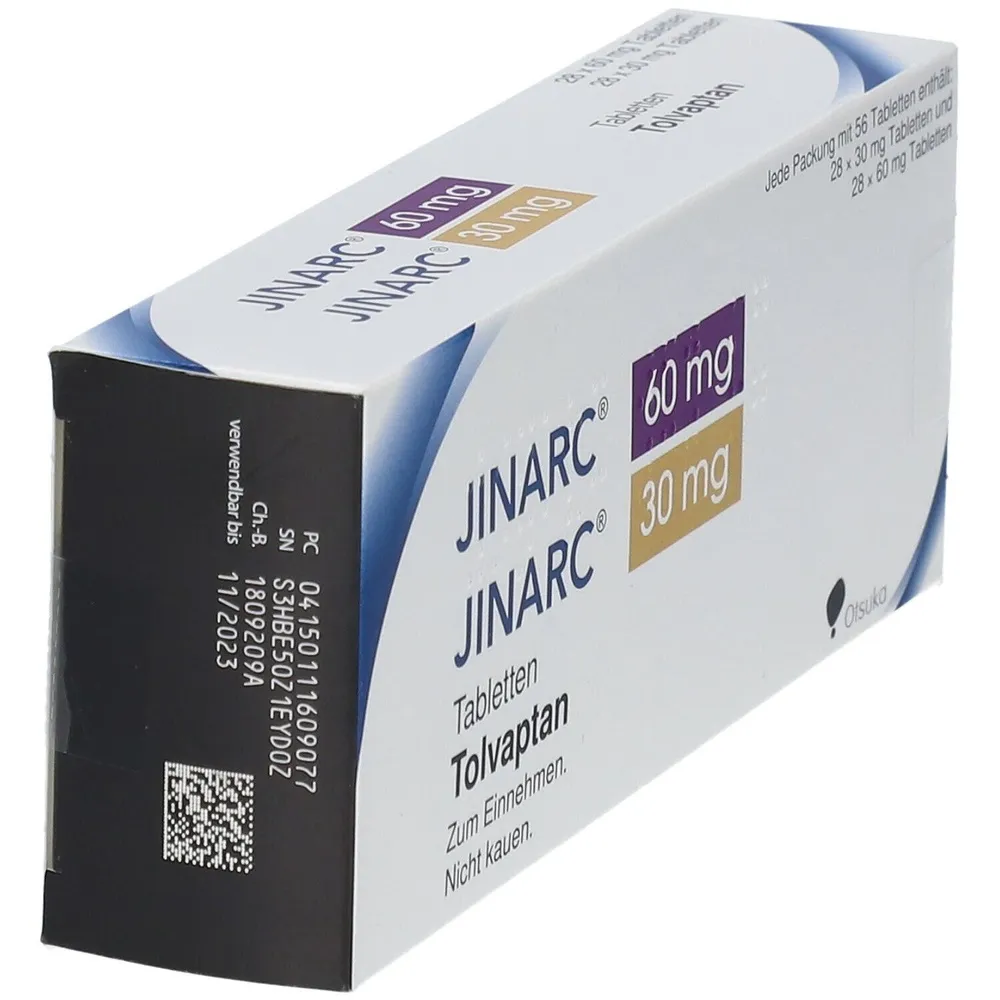
Table of Contents
- Package leaflet: Information for the patient
- Jinarc 15 mg tablets, 30 mg tablets, 45 mg tablets, 60 mg tablets, 90 mg tablets
- 1. What Jinarc is and what it is used for
- 2. What you need to know before taking Jinarc
- 3. How to take Jinarc
- 4. Possible side effects
- 5. How to store Jinarc
- 6. Package Contents and Other Information
Package leaflet: Information for the patient
Jinarc 15 mg tablets, 30 mg tablets, 45 mg tablets, 60 mg tablets, 90 mg tablets
Tolvaptan
This medicinal product is subject to additional monitoring. This will allow for rapid identification of new safety information. You can help by reporting any side effects you experience while taking this medicine. See the end of section 4 for information on how to report side effects.
Please read this leaflet carefully before taking this medicine because it contains important information for you.
- Keep this leaflet. You may need to read it again.
- If you have any questions, ask your doctor or pharmacist.
- This medicine has been prescribed for you only. Do not give it to others, even if their symptoms are the same as yours, as it may be harmful.
- If you experience any side effect, including those not listed in this leaflet, tell your doctor or pharmacist. See section 4.
Contents of this leaflet:
- What Jinarc is and what it is used for
- What you need to know before taking Jinarc
- How to take Jinarc
- Possible side effects
- How to store Jinarc
- Contents of the pack and other information
1. What Jinarc is and what it is used for
Jinarc contains the active substance tolvaptan, which blocks the effect of vasopressin, a hormone involved in the formation of kidney cysts in patients with ADPKD. By blocking the effect of vasopressin, Jinarc slows the development of kidney cysts in patients with ADPKD, reduces disease symptoms, and increases urine production.
Jinarc is a medicine used to treat a disease called "autosomal dominant polycystic kidney disease" (ADPKD). This disease causes the formation of fluid-filled cysts in the kidneys, which exert pressure on surrounding tissues and reduce kidney function, potentially leading to kidney failure. Jinarc is used to treat ADPKD in adults with chronic kidney disease (CKD) stage 1 to 4, who have evidence of rapidly progressive disease.
2. What you need to know before taking Jinarc
Do not take Jinarc
- if you are allergic to tolvaptan or to any of the other ingredients of this medicine (listed in section 6), or if you are allergic to benzazepine or benzazepine derivatives (e.g. benazepril, conivaptan, fenoldopam mesilate, or mirtazapine).
- if you have been told that you have increased liver enzyme levels in the blood that preclude treatment with tolvaptan.
- if your kidneys do not work (do not produce urine).
- if you have a disease associated with a severe reduction in blood volume (e.g. severe dehydration or bleeding).
- if you have a disease that increases sodium levels in the blood.
- if you do not feel thirsty.
- if you are pregnant.
- if you are breastfeeding.
Warnings and precautions
Talk to your doctor before taking Jinarc:
- if you have liver disease.
- if you are unable to drink enough water (see the section below "Drink an adequate amount of water") or if you need to limit fluid intake.
- if you have difficulty urinating (e.g. enlarged prostate).
- if you have too high or too low sodium levels in the blood.
- if you have previously had an allergic reaction to benzazepine, tolvaptan, or other benzazepine derivatives (e.g. benazepril, conivaptan, fenoldopam mesilate, or mirtazapine) or to any of the other ingredients of this medicine (listed in section 6).
- if you have diabetes.
- if you have been told that you have high levels in the blood of a chemical called uric acid (which may cause gout attacks).
- if you have advanced kidney disease.
This medicine may impair liver function. Therefore, inform your doctor immediately if you
develop signs that may indicate potential liver problems, such as:
- nausea
- vomiting
- fever
- fatigue
- loss of appetite
- abdominal pain
- dark urine
- jaundice (yellowing of the skin or eyes)
- skin itching
- flu-like symptoms (joint and muscle pain associated with fever).
During treatment with this medicine, your doctor will prescribe monthly blood tests to monitor
any changes in liver function.
Drink an adequate amount of water
This medicine causes fluid loss because it increases urine production. This fluid loss may cause side effects such as dry mouth and thirst, but also more serious side effects such as kidney problems (see section 4). It is therefore important that water is readily available to you and that you drink sufficient amounts when you feel thirsty. Before going to bed, you should drink 1 or 2 glasses of water even if you are not thirsty, and you should also drink water after urinating during the night. You should be especially careful if you have a condition that reduces your ability to take in fluids properly, or if you are at increased risk of fluid loss, for example due to vomiting or diarrhoea. Because of the increased urine production, it is also important that you always have access to a toilet.
Children and adolescents
Do not give this medicine to children and adolescents (under 18 years of age) as it has not been studied in these age groups.
Other medicines and Jinarc
Tell your doctor or pharmacist if you are taking, have recently taken, or might take any other medicines, including those not requiring a prescription.
The following medicines may increase the effect of Jinarc:
- Amprenavir, atazanavir, darunavir/ritonavir, and fosamprenavir (used to treat HIV/AIDS),
- Aprepitant (used to prevent nausea and vomiting during chemotherapy),
- Crizotinib and imatinib (used to treat cancer),
- Ketoconazole, fluconazole, or itraconazole (used to treat fungal infections),
- Macrolide antibiotics such as erythromycin or clarithromycin,
- Verapamil (used to treat heart conditions and high blood pressure),
- Ciprofloxacin (an antibiotic),
- Diltiazem (used to treat high blood pressure and chest pain).
The following medicines may reduce the effect of Jinarc:
- Phenytoin or carbamazepine (used to treat epilepsy),
- Rifampicin, rifabutin, or rifapentine (used to treat tuberculosis),
- St. John’s wort (a herbal remedy used to improve mild depression or mild anxiety).
Jinarc may increase the effect of the following medicines:
- Digoxin (used to treat irregular heartbeat and heart failure),
- Dabigatran (used to thin the blood),
- Sulfasalazine (used to treat inflammatory bowel disease or rheumatoid arthritis),
- Metformin (used to treat diabetes).
Jinarc may reduce the effect of the following medicines:
- Vasopressin analogues such as desmopressin (used to increase blood clotting factors or to control urine production or involuntary urination during sleep).
The following medicines may interact with Jinarc or be affected by it:
- Diuretics (used to increase urine production). If taken together with Jinarc, they may increase the risk of side effects caused by fluid loss or may cause kidney problems.
- Diuretics or other medicines for high blood pressure. If taken together with Jinarc, they may increase the risk of low blood pressure when standing up from a sitting or lying position.
- Medicines that increase sodium levels in the blood or contain large amounts of salt (e.g. effervescent tablets and remedies for indigestion). These may enhance the effect of Jinarc. There is a risk that this could lead to excessive sodium levels in the blood.
You may still be allowed to take these medicines together with Jinarc. Your doctor will decide what is suitable for you.
Jinarc with food and drink
Do not drink grapefruit juice during treatment with this medicine.
Pregnancy and breastfeeding
Do not take this medicine if you are pregnant or breastfeeding.
Women of childbearing potential must use reliable contraceptive measures during treatment with this medicine.
If you are pregnant, suspect you may be pregnant, plan to become pregnant, or are breastfeeding, consult your doctor or pharmacist before taking this medicine.
Driving and using machines
Some people may experience dizziness, weakness, or fatigue after taking Jinarc. If this happens to you, do not drive or operate tools or machinery.
Jinarc contains lactose
If your doctor has diagnosed you with an intolerance to certain sugars, contact your doctor before taking this medicine.
3. How to take Jinarc
Jinarc may only be prescribed by physicians specialized in the treatment of ADPKD. Take this medicine exactly as instructed by your doctor. If you have any doubts, consult your doctor or pharmacist.
Dosage
The daily amount of Jinarc is divided into two doses, one higher than the other. The higher dose should be taken in the morning upon waking, at least 30 minutes before breakfast. The lower dose should be taken 8 hours later.
The dose combinations are:
45 mg + 15 mg
60 mg + 30 mg
90 mg + 30 mg
Treatment usually starts with a dose of 45 mg in the morning and 15 mg after 8 hours. Your doctor will then gradually increase the dose up to a maximum combination of 90 mg in the morning and 30 mg after 8 hours. To determine the optimal dose, your doctor will regularly assess your tolerance to the prescribed dose. You must always take the highest dose combination that is tolerated and prescribed by your doctor.
If you are taking other medicines that may increase the effects of Jinarc, you may be given lower doses. In this case, your doctor may prescribe Jinarc tablets containing 30 mg or 15 mg of tolvaptan to be taken once daily in the morning.
Method of administration
Swallow the tablets whole, without chewing, with a glass of water.
The morning dose must be taken at least 30 minutes before breakfast. The second daily dose may be taken with or without food.
If you take more Jinarc than you should
If you have taken more tablets than prescribed, drink plenty of water and contact your doctor or the local hospital immediately. Remember to bring the medicine package with you so that doctors know exactly what you have taken. If you take the higher dose very late in the day, you may need to go to the bathroom more frequently during the night.
If you forget to take Jinarc
If you forget to take your medicine, take the missed dose as soon as you remember on the same day. If you miss a dose for one day, take your usual dose the next day. DO NOT take a double dose to make up for a missed dose.
If you stop taking Jinarc
If you stop treatment with this medicine, your kidney cysts may grow at the same rate as before starting treatment with Jinarc. Therefore, stop treatment with this medicine only if you experience side effects requiring urgent medical attention (see section 4) or if your doctor tells you to do so.
If you have any questions about how to use this medicine, consult your doctor or pharmacist.
4. Possible side effects
Like all medicines, this medicine can cause side effects, although not everybody gets them.
Serious side effects
If you experience any of the following side effects, you may need urgent medical treatment.
Stop taking Jinarc and contact your doctor immediately or go to the nearest hospital if you:
- Have difficulty urinating.
- Notice swelling of the face, lips, or tongue, itching, widespread rash, severe wheezing, or breathing difficulties (symptoms of an allergic reaction).
Jinarc may impair liver function.
Consult your doctor if you experience symptoms such as nausea, vomiting, fever, fatigue, loss of appetite, abdominal pain, dark urine, jaundice (yellowing of the skin or eyes), skin itching, or joint and muscle pain associated with fever.
Other side effects:
Very common (may affect more than 1 in 10 people)
- Thirst (leading to excessive fluid intake)
- Headache
- Dizziness
- Diarrhea
- Dry mouth
- Increased need to urinate, nighttime urination, or more frequent urination
- Fatigue.
Common (may affect up to 1 in 10 people)
- Dehydration
- Elevated levels of sodium, uric acid, and blood sugar
- Reduced appetite
- Taste disturbances
- Gout
- Sleep difficulties
- Fainting
- Palpitations
- Shortness of breath
- Stomach ache
- Feeling of fullness, bloating, or discomfort in the stomach
- Constipation
- Heartburn
- Abnormal liver function
- Dry skin
- Rash
- Itching
- Hives
- Joint pain
- Muscle spasms
- Muscle pain
- General weakness
- Increased liver enzymes in blood
- Weight loss
- Weight gain.
Uncommon (may affect up to 1 in 100 people)
- Increased bilirubin (a substance that may cause yellowing of the skin or eyes) in the blood.
Not known (frequency cannot be estimated from the available data)
- Allergic reactions (see above)
- Generalized rash
- Acute liver failure (ALF)
- Increased creatine phosphokinase (an enzyme indicating muscle and heart function) in the blood.
Reporting of side effects
If you experience any side effect, including those not listed in this leaflet, please inform your doctor or pharmacist. You can also report side effects directly via the national reporting system listed in Annex V. By reporting side effects, you can help provide more information on the safety of this medicine.
5. How to store Jinarc
Keep this medicine out of the sight and reach of children.
Do not use this medicine after the expiry date stated on the carton, the wallet pack, and the blister after "Exp". The expiry date refers to the last day of that month.
Store in the original packaging to protect the medicine from light and moisture.
Do not dispose of any medicine via wastewater or household waste. Ask your pharmacist how to dispose of medicines you no longer use. This will help protect the environment.
6. Package Contents and Other Information
What Jinarc Contains
- The active substance is tolvaptan. Each 15 mg tablet of Jinarc contains 15 mg of tolvaptan. Each 30 mg tablet of Jinarc contains 30 mg of tolvaptan. Each 45 mg tablet of Jinarc contains 45 mg of tolvaptan. Each 60 mg tablet of Jinarc contains 60 mg of tolvaptan. Each 90 mg tablet of Jinarc contains 90 mg of tolvaptan.
- The other components are monohydrate lactose (see section 2), maize starch, microcrystalline cellulose, hydroxypropylcellulose, magnesium stearate, and aluminium lake containing indigo carmine.
Description of the Appearance of Jinarc and Contents of the Pack
The different dosage strengths of Jinarc tablets have different shapes and different imprints:
- 15 mg tablet: blue, triangular, imprinted with "OTSUKA" and "15" on one side.
- 30 mg tablet: blue, round, imprinted with "OTSUKA" and "30" on one side.
- 45 mg tablet: blue, square, imprinted with "OTSUKA" and "45" on one side.
- 60 mg tablet: blue, modified rectangular shape, imprinted with "OTSUKA" and "60" on one side.
- 90 mg tablet: blue, pentagonal, imprinted with "OTSUKA" and "90" on one side.
The medicine is available in the following pack sizes:
- Jinarc 15 mg tablets: packs containing 7 tablets or 28 tablets
- Jinarc 30 mg tablets: packs containing 7 tablets or 28 tablets
- Jinarc 45 mg tablets + Jinarc 15 mg tablets: packs (blister with or without wallet packaging) containing
14 tablets (7 high-dose tablets + 7 low-dose tablets),
28 tablets (14 high-dose tablets + 14 low-dose tablets), or
56 tablets (28 high-dose tablets + 28 low-dose tablets). - Jinarc 60 mg tablets + Jinarc 30 mg tablets: packs (blister with or without wallet packaging) containing
14 tablets (7 high-dose tablets + 7 low-dose tablets),
28 tablets (14 high-dose tablets + 14 low-dose tablets), or
56 tablets (28 high-dose tablets + 28 low-dose tablets). - Jinarc 90 mg tablets + Jinarc 30 mg tablets: packs (blister with or without wallet packaging) containing
14 tablets (7 high-dose tablets + 7 low-dose tablets),
28 tablets (14 high-dose tablets + 14 low-dose tablets), or
56 tablets (28 high-dose tablets + 28 low-dose tablets).
Not all pack sizes may be marketed.
Marketing Authorization Holder
Otsuka Pharmaceutical Netherlands B.V.
Herikerbergweg 292
1101 CT, Amsterdam
The Netherlands
Manufacturer
Almac Pharma Service (Ireland) Limited
Finnabair Industrial Estate, Dundalk, Co. Louth - A91 P9KD
Ireland
Millmount Healthcare Limited
Block-7, City North Business Campus, Stamullen, Co. Meath, K32 YD60
Ireland
For further information about this medicine, contact the local representative of the marketing authorization holder:
België/Belgique/Belgien Lietuva
Otsuka Pharmaceutical Netherlands B.V. Otsuka Pharmaceutical Netherlands B.V.
Tél/Tel: +31 (0) 20 85 46 555 Tel: +31 (0) 20 85 46 555
България Luxembourg/Luxemburg
Otsuka Pharmaceutical Netherlands B.V. Otsuka Pharmaceutical Netherlands B.V.
Teл: +31 (0) 20 85 46 555 Tél/Tel: +31 (0) 20 85 46 555
Česká republika Magyarország
Otsuka Pharmaceutical Netherlands B.V. Otsuka Pharmaceutical Netherlands B.V.
Tel: +31 (0) 20 85 46 555 Tel: +31 (0) 20 85 46 555
Danmark Malta
Otsuka Pharma Scandinavia AB Otsuka Pharmaceutical Netherlands B.V.
Tlf: +4685 452 8660 Tel: +31 (0) 20 85 46 555
Deutschland Nederland
Otsuka Pharma GmbH Otsuka Pharmaceutical Netherlands B.V.
Tel: +49691 700 860 Tel: +31 (0) 20 85 46 555
Eesti Norge
Otsuka Pharmaceutical Netherlands B.V. Otsuka Pharma Scandinavia AB
Tel: +31 (0) 20 85 46 555 Tlf: +46854 528 660
Ελλάδα Österreich
Otsuka Pharmaceutical Netherlands B.V. Otsuka Pharmaceutical Netherlands B.V.
Thλ: +31 (0) 20 85 46 555 Tel: +31 (0) 20 85 46 555
España Polska
Otsuka Pharmaceutical S.A Otsuka Pharmaceutical Netherlands B.V.
Tel: +3493 2081 020 Tel: +31 (0) 20 85 46 555
France Portugal
Otsuka Pharmaceutical France SAS Otsuka Pharmaceutical Netherlands B.V.
Tél: +33147 080 000 Tel: +31 (0) 20 85 46 555
Hrvatska România
Otsuka Pharmaceutical Netherlands B.V. Otsuka Pharmaceutical Netherlands B.V.
Tel: +31 (0) 20 85 46 555 Tel: +31 (0) 20 85 46 555
Ireland Slovenija
Otsuka Pharmaceutical Netherlands B.V. Otsuka Pharmaceutical Netherlands B.V.
Tel: +31 (0) 20 85 46 555 Tel: +31 (0) 20 85 46 555
Ísland Slovenská republika
Otsuka Pharma Scandinavia AB Otsuka Pharmaceutical Netherlands B.V.
Sími: +46854 528 660 Tel: +31 (0) 20 85 46 555
Italia Suomi/Finland
Otsuka Pharmaceutical Italy S.r.l. Otsuka Pharma Scandinavia AB
Tel: +39 02 00 63 27 10 Puh/Tel: +46854 528 660
Κύπρος Sverige
Otsuka Pharmaceutical Netherlands B.V. Otsuka Pharma Scandinavia AB
Thλ: +31 (0) 20 85 46 555 Tel: +46854 528 660
Latvija United Kingdom (Northern Ireland)
Otsuka Pharmaceutical Netherlands B.V. Otsuka Pharmaceutical Netherlands B.V.
Tel: +31 (0) 20 85 46 555 Tel: +31 (0) 20 85 46 555
Additional Sources of Information
More detailed information on this medicine is available on the website of the European Medicines Agency: http://www.ema.europa.eu.
ANNEX IV
SCIENTIFIC CONCLUSIONS AND REASONS FOR THE VARIATION OF THE TERMS OF THE MARKETING AUTHORISATIONS
Scientific Conclusions
Taking into account the assessment by the Pharmacovigilance and Risk Assessment Committee (PRAC) of the Periodic Safety Update Reports (PSURs) for tolvaptan (indicated for adults with autosomal dominant polycystic kidney disease (ADPKD)), the scientific conclusions of the PRAC are as follows:
In light of available literature data on the risk of increased creatine phosphokinase (CPK), spontaneous reports including in some cases a close temporal relationship, and a positive de-challenge, the PRAC considers that a causal relationship between tolvaptan (indicated for adults with autosomal dominant polycystic kidney disease (ADPKD)) and increased CPK is at least a reasonable possibility. The PRAC concluded that the product information for medicinal products containing tolvaptan (indicated for adults with ADPKD) should be amended accordingly.
Having reviewed the PRAC's recommendation, the Committee for Human Medicinal Products (CHMP) agrees with the overall conclusions and the rationale of the recommendation.
Reasons for the Variation of the Terms of the Marketing Authorisations
Based on the scientific conclusions for tolvaptan (indicated for adults with autosomal dominant polycystic kidney disease (ADPKD)), the CHMP considers that the benefit-risk balance of medicinal products containing tolvaptan (indicated for adults with autosomal dominant polycystic kidney disease (ADPKD)) remains unchanged, subject to the proposed amendments to the product information.
The CHMP recommends the variation of the terms of the marketing authorisations.