Iverscab
Italy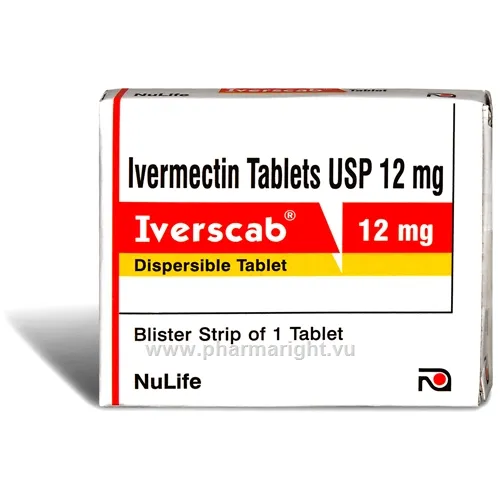
Table of Contents
Patient Information Leaflet
Iverscab 3 mg tablets
Ivermectin
Equivalent medicine
Please read this leaflet carefully before taking this medicine, as it contains important information for you.
- Keep this leaflet. You may need to read it again.
- If you have any questions, ask your doctor or pharmacist.
- This medicine has been prescribed for you only. Do not give it to others, even if their symptoms are the same as yours, as it could be harmful.
- If you experience any adverse reaction, including those not listed in this leaflet, consult your doctor or pharmacist. See section 4.
Contents of this leaflet:
- What Iverscab is and what it is used for
- What you need to know before taking Iverscab
- How to take Iverscab
- Possible side effects
- How to store Iverscab
- Contents of the pack and other information
1. What Iverscab is and what it is used for
Iverscab contains the active substance ivermectin. This is a type of medicine used to treat infections caused by certain parasites.
It is used to treat:
- an intestinal infection called intestinal strongyloidiasis (threadworm infection), caused by a type of roundworm called "Strongyloides stercoralis"
- a blood infection called microfilaraemia caused by lymphatic filariasis. This is caused by an immature worm called "Wuchereria bancrofti". Iverscab does not act against adult worms, but only against immature worms.
- skin mites (scabies). This occurs when tiny mites burrow under the skin and can cause severe itching. Iverscab should only be taken when your doctor is certain or suspects that you have scabies. Iverscab does not prevent any of these infections. It does not act against adult worms. Iverscab should only be taken on medical advice when a parasitic infection is certain or suspected.
2. What you need to know before taking Iverscab
Do not take Iverscab:
- if you are allergic to ivermectin or to any of the other ingredients of this medicine (listed in section 6);
In general, if unusual symptoms occur suddenly after taking any medicine,
such as skin rashes, hives, or fever, you may be allergic to that medicine.
Do not take Iverscab if this applies to you. If you are unsure, consult your doctor or
pharmacist before taking Iverscab.
Warnings and precautions
Talk to your doctor or pharmacist before taking Iverscab.
Before starting treatment with Iverscab, inform your doctor about your medical history.
Consult your doctor:
- if you have a weakened immune system (immune disorder)
- if you live or have lived in areas of Africa where there are cases of human filarial worm infection with Loa loa, also known as eye worm
- if you currently live or have lived in areas of Africa.
The combined use of diethylcarbamazine citrate (DEC) to treat a co-infection with Onchocerca
volvulus may increase the risk of side effects, sometimes potentially severe.
If you fall into any of these categories (or if you are unsure), consult your doctor or pharmacist before
taking Iverscab.
Iverscab is not intended to prevent tropical parasitic infestations. It does not act against adult parasitic worms and should only be used under a doctor's advice when parasitic infestation is certain or strongly suspected.
Children
The safety of Iverscab has not been evaluated in pediatric patients weighing less than 15 kg.
Elderly patients
Clinical studies with ivermectin have not included a sufficient number of subjects aged 65 years or
older to determine whether their response differs from younger patients. Other reported clinical experience has not identified differences in responses between elderly and younger patients. In general, treatment of elderly patients should be cautious, considering the higher frequency of impaired hepatic, renal, or cardiac function, concomitant diseases, or ongoing pharmacological therapies.
Other medicines and Iverscab
Inform your doctor or pharmacist if you are taking, have recently taken, or might take any other medicines.
In general, you should consult your doctor or pharmacist before taking any medicine.
Pregnancy, breastfeeding, and fertility
If you are pregnant, suspect you may be pregnant, planning a pregnancy, or breastfeeding, consult your doctor or pharmacist before taking this medicine.
Pregnancy
If you are pregnant, do not take Iverscab unless prescribed by your doctor.
Breastfeeding
Iverscab is excreted in breast milk.
If you are breastfeeding, inform your doctor and do not undergo this treatment unless prescribed by
your doctor.
Ask your doctor or pharmacist for advice before taking any medicine.
Fertility
Ivermectin has not shown adverse effects on fertility in rats at doses up to 3 times the maximum recommended human dose of 200 μg/kg (mg/m²/day).
Driving and using machines
The effect of Iverscab on the ability to drive vehicles and operate machinery has not been studied.
It cannot be ruled out that some patients may experience adverse reactions such as dizziness, somnolence, vertigo, and tremor, which could affect the ability to drive vehicles and use machinery.
If you experience such symptoms, avoid driving vehicles or operating machinery.
3. How to take Iverscab
Take this medicine exactly as directed by your doctor or pharmacist. If
you have any doubts, consult your doctor or pharmacist.
Dosage
Treatment of gastrointestinal strongyloidiasis (threadworm infection)
The recommended dose is 200 μg of ivermectin per kg of body weight, taken orally
as a single administration.
As a guide, the dose according to the patient's body weight is as follows:
| WEIGHT (kg) | DOSE (number of 3 mg tablets) |
| 15 - 24 | 1 |
| 25 - 35 | 2 |
| 36 - 50 | 3 |
| 51 - 65 | 4 |
| 66 - 79 | 5 |
| ≥ 80 | 6 |
Treatment of microfilaria due to Wuchereria bancrofti (lymphatic filariasis)
The recommended dose for mass treatment campaigns of microfilaria due to
Wuchereria bancrofti (lymphatic filariasis) is approximately 150–200 μg of ivermectin / kg body
weight, administered orally as a single dose every 6 months.
In endemic areas where treatment can only be administered once every 12 months, to maintain adequate
suppression of microfilaria in treated patients, the recommended dose is 300–400 μg / kg body weight.
As a guide, the dose according to patient weight is as follows:
| BODY WEIGHT (kg) | DOSE when taken once every 6 months (number of 3 mg tablets) | DOSE when taken once every 12 months (number of 3 mg tablets) |
| 15 - 25 | 1 | 2 |
| 26 - 44 | 2 | 4 |
| 45 - 64 | 3 | 6 |
| 65 - 84 | 4 | 8 |
Alternatively, and if weight is not available, the dose of ivermectin to be used in mass treatment campaigns may be determined by the patient's height as follows:
| HEIGHT (cm) | DOSE when administered once every 6 months (number of 3 mg tablets) | DOSE when administered once every 12 months (number of 3 mg tablets) |
| 90 - 119 | 1 | 2 |
| 120 - 140 | 2 | 4 |
| 141 - 158 | 3 | 6 |
| > 158 | 4 | 8 |
Treatment of human scabies
- Take a dose of 200 micrograms per kilogram of body weight.
- You will not know whether the treatment has been successful before 4 weeks.
- Your doctor may decide to prescribe a second single dose within 8–15 days.
What you should do when being treated for scabies
People who have been in contact with you, especially family members and sexual partners, should seek medical advice as soon as possible. Your doctor will decide whether these people also need treatment.
If infected individuals who have been in contact with you are not promptly treated, there is a risk that they may re-infect you.
Hygienic measures should be followed to prevent re-infection (e.g. keeping fingernails short and clean), and appropriate recommendations regarding cleaning of clothing and bed linen should be observed.
If you feel that the effect of Iverscab is too strong or too weak, consult your doctor or pharmacist.
Method of administration
Tablets for oral use.
Always follow the dosage prescribed by your doctor. In case of doubt, consult your doctor or pharmacist.
In children under 6 years of age, the tablets must be crushed before swallowing.
Treatment consists of a single administration. The prescribed number of tablets should be taken at the same time, in one single dose. The tablets should be taken with water on an empty stomach. No food should be taken two hours before or two hours after administration, as the influence of food on the absorption of the medicine in the body is unknown.
If you take more Iverscab than you should
Contact your doctor or pharmacist immediately.
If you forget to take Iverscab
Always follow your doctor's instructions. Do not take a double dose to make up for a missed dose.
If you have any doubts about the use of this medicine, consult your doctor or pharmacist.
4. Possible side effects
Like all medicines, this medicine can cause side effects, although not everyone experiences them.
Side effects are usually not serious and do not last long. They may be more likely in people infected with multiple parasites. This especially occurs in cases of infection caused by the worm "Loa loa".
After taking this medicine, the following side effects may occur:
Allergic reactions
If you experience an allergic reaction, consult a doctor immediately. Signs may include:
- sudden fever
- sudden skin reactions (such as rash or itching) or other serious skin reactions
- difficulty breathing
If you notice any of the above side effects, consult a doctor immediately.
Other side effects:
- liver disease (acute hepatitis)
- changes in certain laboratory tests (increased liver enzymes, increased blood bilirubin, increased eosinophils)
- blood in the urine
The side effects listed below depend on the reason for which Iverscab is being taken. They also depend on other ongoing infections.
People with intestinal strongyloidiasis (threadworm infection) may experience the following side effects:
- unusual feeling of weakness
- loss of appetite, stomach pain, constipation or diarrhoea
- nausea or vomiting
- drowsiness or dizziness
- agitation or tremors
- decrease in the number of white blood cells (leucopenia)
- decrease in the number of red blood cells or haemoglobin in the blood (anaemia)
In addition, in cases of intestinal strongyloidiasis (threadworm infection), adult roundworms may be found in the faeces.
People with microfilaraemia due to lymphatic filariasis caused by Wuchereria bancrofti may experience the following side effects:
- sweating or fever
- headache
- unusual feeling of weakness
- muscle and joint pain, and generalized body pain
- loss of appetite, nausea
- stomach pain (abdominal and epigastric pain)
- cough or sore throat
- discomfort during breathing
- low blood pressure when standing up or standing – you may feel dizzy or lightheaded
- chills
- dizziness
- pain or discomfort in the testicles
People with scabies may experience the following side effects:
- itching, which may worsen at the beginning of treatment. This is usually short-lived.
People with a severe infection with the worm " Loa loa " may experience the following side effects:
- abnormal brain function
- neck or back pain
- bleeding in the white of the eye (also known as red eye)
- shortness of breath
- loss of bladder or bowel control
- difficulty standing or walking
- altered mental status
- feeling drowsy or confused
- unresponsiveness to stimuli or coma
People infected with the worm " Onchocerca volvulus ", which causes river blindness, may experience the following side effects:
- itching or skin rash
- joint or muscle pain
- fever
- nausea or vomiting
- swelling of lymph nodes
- swelling, particularly in the hands, ankles or feet
- diarrhoea
- dizziness
- low blood pressure (hypotension). You may feel dizzy or lightheaded when standing
- rapid heart rate
- headache or feeling of tiredness
- vision changes and other eye problems such as infection, redness or unusual sensations
- bleeding in the white of the eye or swelling of the eyelids
- worsening of asthma
Reporting of side effects
If you experience any side effect, including those not listed in this leaflet, talk to your doctor or pharmacist. You can also report side effects directly via the national reporting system at https://www.aifa.gov.it/content/segnalazioni-reazioni-avverse.
By reporting side effects, you can help provide more information on the safety of this medicine.
5. How to store Iverscab
Keep this medicine out of the sight and reach of children.
Do not use this medicine after the expiry date stated on the blister and on the carton after
Exp. The expiry date refers to the last day of that month.
Store below 25°C.
Keep in the original packaging to protect the medicine from light.
Do not dispose of any medicine via wastewater or household waste. Ask your pharmacist how to
dispose of medicines you no longer use. This will help protect the environment.
6. Package contents and other information
What Iverscab contains
- The active substance is ivermectin. One tablet contains 3 mg of ivermectin.
- The other components are: Microcrystalline cellulose (E460), pregelatinized corn starch, butylhydroxyanisole (E320), magnesium stearate (E470b)
Description of the appearance of Iverscab and package contents
This medicine is presented as round, white or almost white, flat, bevelled tablets.
Pack sizes: 4, 8, 10, 12, 16 and 20 tablets.
Not all pack sizes may be marketed.
Marketing Authorization Holder and Manufacturer
Marketing Authorization Holder
SUBSTIPHARM
24 rue Erlanger
75016 PARIS – France
Manufacturer
EUROPEENNE DE PHARMACOTECHNIE - EUROPHARTECH
Rue Henri Matisse
63370 Lempdes - France
This medicinal product is authorized in the European Economic Area countries under the following names:
Netherlands: Iverscab
Italy: Iverscab