Itragerm
Italy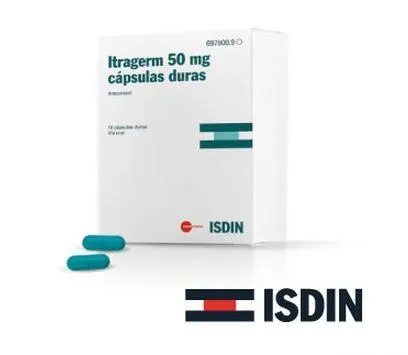
Table of Contents
Package leaflet: Information for the user
Itragerm 50 mg hard capsules
Itraconazole
Please read this leaflet carefully before taking this medicine because it contains
important information for you.
- Keep this leaflet. You may need to read it again.
- If you have any questions, ask your doctor or pharmacist.
- This medicine has been prescribed for you only. Do not give it to other people, even if their symptoms are the same as yours, as it may be harmful.
- If you experience any side effects, including those not listed in this leaflet, inform your doctor or pharmacist. See section 4.
Contents of this leaflet:
1 What Itragerm is and what it is used for
2 What you need to know before taking Itragerm
3 How to take Itragerm
4 Possible side effects
5 How to store Itragerm
6 Contents of the pack and other information
1. What Itragerm is and what it is used for
Itragerm belongs to a group of medicines known as systemic antifungal agents,
also called antifungal medicines.
Itragerm is used to treat fungal infections, including those caused by yeasts.
These infections may affect:
- the skin
- the nails
2. What you need to know before taking Itragerm
Do not take Itragerm if:
- you are allergic (hypersensitive) to itraconazole or to any of the other ingredients of this medicine (listed in section 6).
- you are pregnant, think you may be pregnant, or could become pregnant (see section "Pregnancy").
- you have a serious heart condition called heart failure (also known as congestive heart failure or CHF), unless your doctor has specifically instructed you to do so (see section "Warnings and precautions" below).
Do not use this medicine if any of the above conditions apply to you. If in doubt, consult your doctor or pharmacist before using Itragerm.
Before using Itragerm, inform your doctor if you are taking any other medicine.
Do not use Itragerm if you are taking any of the following medicines, or within 2 weeks after stopping Itragerm treatment.
Medicines used to treat heart, blood or circulation problems
- aliskiren, eplerenone, lercanidipine or nisoldipine (for high blood pressure)
- bepridil, ivabradine or ranolazine (for angina)
- dabigatran or ticagrelor (for blood clots)
- disopyramide, dofetilide, dronedarone or quinidine (for irregular heart rhythms)
- finerenone (used to treat kidney problems in patients with type 2 diabetes)
- lomitapide, lovastatin or simvastatin (to lower cholesterol)
- sildenafil (for pulmonary arterial hypertension)
Medicines used to treat stomach problems or constipation
- cisapride (for stomach disorders)
- domperidone (for nausea and vomiting)
- naloxegol (for constipation caused by opioid painkillers)
Medicines to treat headache, sleep or mental health problems
- dihydroergotamine or ergotamine (ergot alkaloids used for migraine)
- midazolam (taken orally) or triazolam (for sedation or to help you sleep)
- lurasidone, pimozide, quetiapine or sertindole (for schizophrenia, bipolar disorder or other mental health problems)
Medicines to treat urinary problems
- darifenacin (for urinary incontinence)
- fesoterodine or solifenacin (for overactive bladder) when used in patients with certain kidney or liver problems
Medicines to treat allergies
- astemizole, mizolastine or terfenadine (for allergies)
Medicines to treat erectile dysfunction and ejaculation problems
- avanafil (for erectile dysfunction)
- dapoxetine (for premature ejaculation)
- vardenafil (for erectile dysfunction) when used in men over 75 years of age
Other medicines containing:
- colchicine (for gout) when used in patients with kidney or liver problems
- ergometrine (ergonovine) or methylergometrine (methylergonovine) – ergot alkaloids used after childbirth
- eliglustat (for Gaucher disease) if used in patients unable to metabolize certain drugs in the body
- halofantrine (for malaria)
- irinotecan (for cancer)
- isavuconazole (for fungal infections)
- ombitasvir, paritaprevir, ritonavir with or without dasabuvir – (for treating hepatitis C)
- venetoclax (for chronic lymphocytic leukemia) when starting treatment with venetoclax or during dose escalation at the beginning of treatment.
Remember: After completing treatment with Itragerm capsules, do not take any of the medicines listed above for 2 weeks.
Warnings and precautions
Tell your doctor before starting Itragerm:
- if you have or have had liver problems. If your doctor decides to prescribe Itragerm, your dose may be adjusted. Your doctor will also monitor you for symptoms that may occur during treatment with Itragerm. Read section 4, "Possible side effects" for further information. If you take Itragerm continuously for more than one month, your doctor may ask you to have regular blood tests.
- if you have or have had heart problems. If your doctor decides to prescribe Itragerm, they will monitor you for symptoms that may occur during treatment. For further information, read section 4, "Possible side effects".
- if you have or have had kidney problems. If your doctor decides to prescribe Itragerm, your dose may be adjusted.
- if you are HIV-positive, have acquired immunodeficiency syndrome (AIDS), or any condition indicating that your immune system is not working properly.
- if you have ever had an allergic reaction to any other antifungal medicine.
- if you experience any numbness or muscle weakness.
- if you have cystic fibrosis, consult your doctor before taking this medicine.
Very rarely, Itragerm may cause hearing loss, which can be permanent, but usually improves when treatment is stopped.
Other medicines and Itragerm
Tell your doctor or pharmacist before taking Itragerm if you are taking, have recently taken, or might take any other medicine, including herbal medicines or non-prescription medicines.
Do not take Itragerm if you are taking any of the following medicines:
Examples of these medicines include:
Medicines used to treat heart, blood or circulation problems
- apixaban, edoxaban, rivaroxaban or vorapaxar (for blood clots)
- atorvastatin (to lower cholesterol)
- felodipine (for high blood pressure)
- riociguat or tadalafil (for pulmonary hypertension)
Medicines to treat epilepsy, headache or mental health problems
- phenytoin, carbamazepine or phenobarbital (antiepileptics)
- eletriptan (for migraine headache)
- St. John’s wort (Hypericum perforatum) (a herbal medicine used for mental health problems)
Medicines to treat urinary problems
- tamsulosin (for male urinary incontinence)
- tolterodine (for overactive bladder)
Medicines to treat cancer
- axitinib, bosutinib, cabazitaxel, cabozantinib, ceritinib, cobimetinib, crizotinib, dabrafenib, dasatinib, docetaxel, entrectinib, glasdegib, ibrutinib, lapatinib, nilotinib, olaparib, pazopanib, regorafenib, sunitinib, talazoparib, trabectedin, trastuzumab emtansine, venetoclax (when taking a stable dose of venetoclax for chronic lymphocytic leukemia or at any time during treatment for acute myeloid leukemia), or vinca alkaloids (e.g. vinflunine, vinorelbine)
Medicines to treat tuberculosis
- bedaquiline, isoniazid, rifabutin or rifampicin (for tuberculosis)
Medicines to treat human immunodeficiency virus (HIV) or hepatitis
- efavirenz or nevirapine (for HIV/AIDS)
- elbasvir/grazoprevir, tenofovir alafenamide fumarate (TAF), tenofovir disoproxil fumarate (TDF) (for HIV or hepatitis)
Medicines used after organ transplantation
- everolimus, rapamycin (also known as sirolimus), temsirolimus
Medicines for the treatment of benign prostatic hyperplasia
- alfuzosin, silodosin
Medicines to treat lung problems or allergies
- ciclesonide (for inflammation, asthma and allergies)
- ebastine (for allergies)
- salmeterol (for asthma or chronic obstructive pulmonary disease - COPD)
Medicines to treat erectile dysfunction and ejaculation problems
- tadalafil or vardenafil (if used in men aged 75 years or younger) (for erectile dysfunction)
Other medicines containing:
- colchicine (for gout)
- fentanyl (for pain)
- lumacaftor/ivacaftor (for cystic fibrosis)
Remember: After completing treatment with Itragerm, do not take any of the medicines listed above for 2 weeks.
This is not a complete list, so inform your doctor if you are taking or plan to take any of these medicines or any other medicine.
You need to be careful when using Itragerm with certain other medicines.
You may be more likely to experience side effects, or it may be necessary to adjust the dose of Itragerm capsules or the other medicine. Examples of such medicines include:
Medicines used to treat heart, blood or circulation problems
- bosentan (for pulmonary hypertension)
- calcium antagonists such as dihydropyridines like amlodipine, isradipine, nifedipine, nimodipine or diltiazem (for hypertension)
- or verapamil (for high blood pressure)
- cilostazol (for circulation problems)
- “coumarins” such as warfarin (for blood clots)
- digoxin (for atrial fibrillation)
- nadolol (for pulmonary hypertension or angina)
Medicines to treat stomach problems or diarrhoea
- aprepitant or netupitant (for nausea and vomiting during cancer treatments)
- loperamide (for diarrhoea)
- proton pump inhibitors such as lansoprazole, omeprazole, rabeprazole (to treat stomach acid problems)
Medicines to treat sleep or mental health problems
- alprazolam, brotizolam, buspirone, or midazolam (when injected intravenously) (for anxiety or to help you sleep)
- zopiclone (to help you sleep)
- reboxetine or venlafaxine (for depression and anxiety)
- aripiprazole, cariprazine, haloperidol or risperidone (for schizophrenia, bipolar disorder or other mental health problems)
- galantamine (for Alzheimer’s disease)
- guanfacine (for attention deficit hyperactivity disorder)
Medicines to treat urinary problems
- imidafenacin, fesoterodine, oxybutynin, solifenacin (for overactive bladder)
Medicines to treat cancer
- bortezomib, brentuximab vedotin, busulfan, erlotinib, gefitinib, idelalisib, imatinib, nintedanib, panobinostat, pemigatinib, ponatinib, ruxolitinib, sonidegib or oral tretinoin
Medicines to treat infections
- ciprofloxacin, clarithromycin, or erythromycin (for bacterial infections)
- delamanid (for tuberculosis)
- lumefantrine-artemether or quinine (to treat malaria)
- praziquantel (for trematodes and tapeworms)
Medicines to treat human immunodeficiency virus (HIV) or hepatitis
- cobicistat, elvitegravir boosted with ritonavir, maraviroc, ritonavir, darunavir boosted, fosamprenavir boosted with ritonavir, saquinavir boosted with ritonavir or indinavir (for HIV)
- glecaprevir/pibrentasvir (for hepatitis)
Medicines used after organ transplantation
- ciclosporin or tacrolimus
Medicines for the treatment of benign prostatic hyperplasia
- dutasteride
Medicines to treat lung problems, allergies or inflammatory conditions
- bilastine or rupatadine (for allergies)
- methylprednisolone or dexamethasone (medicines taken orally or by injection for asthma, allergies or inflammatory conditions)
- budesonide or fluticasone (for asthma, allergies)
Medicines to treat erectile dysfunction
- sildenafil (for erectile dysfunction)
Medicines to treat pain
- alfentanil, buprenorphine, oxycodone or sufentanil (for pain)
- meloxicam (for inflammation and joint pain)
Other medicines containing:
- alitretinoin (oral) (for eczema)
- cabergoline (for Parkinson’s disease)
- cannabis-based products including medicines (for nausea and vomiting or muscle spasms in patients with multiple sclerosis)
- cinacalcet (for overactive parathyroid)
- dienogest or ulipristal (contraceptives)
- eliglustat (for Gaucher disease) if used in patients unable to metabolize certain drugs in the body
- ivacaftor (for cystic fibrosis)
- methadone (for treating drug addiction)
- repaglinide or saxagliptin (for diabetes)
This is not a complete list, so inform your doctor if you are taking or plan to take any of these medicines or any other medicine. It may be necessary to adjust the dose of Itragerm capsules or of other medicines.
Itragerm with food and drink
Itragerm capsules can be taken with or without food (although you may previously have been advised to take other antifungal medicines after a full meal).
Pregnancy and breastfeeding
Do not take Itragerm if you are pregnant.
Tell your doctor and do not take Itragerm capsules if you are pregnant, think you may be pregnant, or are planning a pregnancy.
If you could become pregnant, use reliable contraceptive methods (birth control) while taking Itragerm. After completing treatment with Itragerm capsules, continue using reliable contraception until after your next menstrual period.
If you are breastfeeding
Ask your doctor before taking Itragerm. Small amounts of the medicine may pass into breast milk.
Children and elderly patients
Itragerm is not recommended for children or elderly patients unless the potential benefits outweigh the risks.
Driving and using machines
Taking Itragerm capsules normally does not affect your ability to drive or use machines. However, very rarely, Itragerm may cause dizziness, ringing in the ears (tinnitus), and hearing loss. Do not drive or operate machinery if you do not feel well.
3. How to take Itragerm
Take this medicine exactly as your doctor has told you. If you have
any doubts, consult your doctor or pharmacist.
Swallow the capsules with water. Itragerm capsules may be taken with or without food.
How much to take
The capsules of Itragerm are specially designed to provide higher blood levels of the active substance
compared to other itraconazole capsule formulations. One capsule of Itragerm capsules delivers to your body an amount of medicine similar to one 100 mg capsule of conventional itraconazole, with the same therapeutic efficacy. Take only the number of Itragerm capsules prescribed for you, and if in doubt, ask your doctor or pharmacist.
The recommended dose of Itragerm capsules depends on the type of fungal infection you have:
For nail infections, depending on your specific needs, your doctor may prescribe a treatment in cycles:
| Indication | Dosage | Observations |
| Fungal infection (mycosis) of fingernails | 2 treatment cycles | Treatment cycles are separated by 3 weeks of no treatment |
| Fungal infection (mycosis) of toenails | 3 treatment cycles |
| Type of Infection | Week 1 | Weeks 2, 3 and 4 | Week 5 | Weeks 6, 7 and 8 | Week 9 | Week 10 |
| Fingernails only | 2 capsules in the morning 2 capsules in the evening | No itraconazole | 2 capsules in the morning 2 capsules in the evening | Discontinue treatment | ||
| Toenails with or without fingernail infection | 2 capsules in the morning 2 capsules in the evening | No itraconazole | 2 capsules in the morning 2 capsules in the evening | No itraconazole | 2 capsules in the morning 2 capsules in the evening | Discontinue treatment |
The doctor may prescribe different doses for different time periods, depending on your condition. It is important to complete the full course of treatment prescribed by your doctor.
What to expect from treatment with Itragerm capsules
Do not be concerned if you do not see immediate improvement after starting your treatment.
- With skin infections, skin lesions (spots or marks) usually disappear several weeks after completing the treatment course. Although the medicine kills the fungus, visible signs will not disappear until new skin has regrown.
- With nail infections, nail changes may take 6 to 9 months to disappear, as the new part of the nail needs time to grow. Consult your doctor or pharmacist if you are unsure whether the treatment is working.
If you take more Itragerm capsules than you should
Contact the nearest Emergency Room or your doctor immediately:
- if you (or someone else) have swallowed too many Itragerm capsules,
- if you think that a child has swallowed Itragerm capsules.
Take this leaflet, any remaining capsules, and the packaging with you to the hospital or doctor, so they will know which medicine has been ingested.
If you forget to take Itragerm
If you forget to take a dose, take the next dose at the usual time. Then continue your treatment until all capsules have been used.
Do not take a double dose to make up for the missed dose.
If you stop taking Itragerm capsules
If you stop taking Itragerm capsules before completing the full course of treatment, your infection may not be completely cured and could return. Do not stop until you have completed the entire treatment course, even if you feel better.
4. Possible side effects
Like all medicines, Itragerm capsules may cause side effects, although not everyone experiences them. If you feel that any of the side effects you experience are severe, or if you notice any side effect not listed in this leaflet, please inform your doctor or pharmacist.
Adverse reactions have been classified according to frequency using the following convention:
- Very common: may affect more than 1 in 10 people
- Common: may affect from 1 to 10 in 100 people
- Uncommon: may affect from 1 to 10 in 1,000 people
- Rare: may affect from 1 to 10 in 10,000 people
- Very rare: may affect fewer than 1 in 10,000 people
- Not known: frequency cannot be estimated based on available data.
Infections and infestations
Uncommon: sinusitis (irritation and swelling of the nasal sinuses), upper respiratory tract infection, rhinitis (inflammation of the nasal lining with watery mucus discharge and frequent sneezing).
Blood and lymphatic system disorders
Rare: leucopenia
Immune system disorders
Uncommon: hypersensitivity and excessive allergic reaction
Rare: anaphylactic (allergic) reaction, serum sickness (an allergic reaction occurring after injection of certain sera, characterized by hives, fluid accumulation, joint pain, fever, and extreme exhaustion), angioneurotic edema (swelling due to fluid accumulation, which may affect the mouth and upper respiratory tract).
Metabolism and nutrition disorders
Rare: increased triglycerides.
Nervous system disorders
Common: headache
Rare: tremor, tingling sensation in the extremities (paresthesia), reduced sensitivity (hypoesthesia), unpleasant taste (bad taste in the mouth).
Eye disorders
Rare: visual disturbances (including blurred vision and double vision)
Ear and labyrinth disorders
Rare: temporary or permanent hearing loss, subjective sensation of noise in the ear (tinnitus).
Cardiac disorders
Rare: congestive heart failure.
Respiratory, thoracic and mediastinal disorders
Rare: shortness of breath, difficulty breathing (dyspnea)
Gastrointestinal disorders
Common: abdominal pain, nausea
Uncommon: vomiting, food-related discomfort, diarrhea and constipation, intestinal gas accumulation (flatulence).
Rare: inflammation of the pancreas.
Hepatobiliary disorders
Uncommon: abnormal liver function
Rare: elevated levels of bilirubin in the blood (hyperbilirubinemia), severe hepatotoxicity (including some cases of fatal acute liver failure).
Skin and subcutaneous tissue disorders
Uncommon: urticaria, skin rash, pruritus (itching).
Rare: toxic epidermal necrolysis (a severe skin disease characterized by rash, blisters, and peeling), Stevens-Johnson syndrome (severe erythema of the skin, mucous membranes, and eyes), a severe skin disease (generalized rash with skin peeling and blisters in the mouth, eyes, and genital area, or rash with small pustules or blisters), erythema multiforme (a skin disease characterized by the appearance of vesicles, blisters, etc.), exfoliative dermatitis (a skin disease characterized by peeling), leukocytoclastic vasculitis (inflammation of blood vessel walls), alopecia (hair loss), photosensitivity (exaggerated skin response to sunlight).
Renal and urinary disorders
Rare: increased frequency of urination.
Reproductive system and breast disorders
Uncommon: menstrual disorders
Rare: erectile dysfunction
Investigations
Rare: increased creatine phosphokinase in the blood (a parameter measuring liver function).
Description of some adverse effects
The following adverse effects have been reported in patients taking other conventional formulations of itraconazole (oral solution or IV):
- Blood and lymphatic system disorders: granulocytopenia, thrombocytopenia (decrease in certain blood cells).
- Immune system disorders: anaphylactoid reactions
- Metabolism and nutrition disorders: hyperglycemia (high blood sugar levels), hyperkalemia (high blood potassium levels), hypokalemia (low blood potassium levels), hypomagnesemia (low blood magnesium levels)
- Psychiatric disorders: confusion or disorientation
- Nervous system disorders: peripheral neuropathy (involvement of peripheral nerves causing tingling, numbness, or weakness in the extremities), dizziness, somnolence (drowsiness)
- Cardiac disorders: heart failure, left ventricular failure, tachycardia (rapid heartbeat)
- Vascular disorders: high blood pressure (hypertension), low blood pressure (hypotension)
- Respiratory, thoracic and mediastinal disorders: pulmonary edema, hoarseness, cough
- Gastrointestinal disorders: gastrointestinal disturbances
- Hepatobiliary disorders: liver failure, hepatitis, jaundice (yellowing of the skin and eyes, mucous membranes, and secretions)
- Skin and subcutaneous tissue disorders: red skin rash (erythematous rash), excessive sweating
- Musculoskeletal and connective tissue disorders: muscle pain or weakness (myalgia), joint pain (arthralgia)
- Renal and urinary disorders: renal failure, urinary incontinence (involuntary urine leakage)
- Systemic disorders and administration site conditions: excessive fluid accumulation in body tissues (generalized edema), fluid accumulation in the face (facial edema), chest pain, fever, pain, fatigue, chills
- Investigations: increased alanine aminotransferase, increased aspartate aminotransferase, increased alkaline phosphatase in the blood, increased lactate dehydrogenase in the blood, increased blood urea, increased gamma-glutamyl transferase, abnormal increase in liver enzymes, urine analysis abnormalities.
Reporting of adverse effects
If you experience any adverse effect, including those not listed in this leaflet, please contact your doctor or pharmacist. You may also report adverse effects directly via the national reporting system at the website
https://www.aifa.gov.it/content/segnalazioni-reazioni-avverse. By reporting adverse effects, you can help provide more information on the safety of this medicine.
5. How to store Itragerm
Keep this medicine out of the sight and reach of children.
HDPE bottles and soft tempered aluminium blisters:
This medicine does not require any special storage temperature.
Keep the bottle or blister in the outer packaging to protect the medicine from light and
moisture.
Triplex blisters:
Store below 25°C.
Keep the blister in the outer packaging to protect the medicine from light and moisture.
Do not use this medicine after the expiry date stated on the packaging after "EXP".
The expiry date refers to the last day of that month.
Do not dispose of medicines via wastewater or household waste. Ask your pharmacist
how to dispose of medicines you no longer use. This will help protect the environment.
6. Package contents and other information
What Itragerm capsules contain
The active substance is itraconazole.
Each hard capsule contains 50 mg of itraconazole.
The other components are: hypromellose phthalate, sodium glycolate starch (type A), anhydrous colloidal silica, magnesium stearate.
The capsule shell is made of gelatin and contains the colourings FD&C Blue No. 2 (E133), titanium dioxide (E171).
The capsule is printed with black ink (SW-9008), consisting of shellac, potassium hydroxide, iron oxide black (E172) and purified water.
Description of the appearance of Itragerm and the contents of the pack
Itragerm 50 mg hard capsules are light blue gelatin hard capsules (size 1) marked with "i-50" in black ink.
Itragerm is available in blister packs containing 4, 6, 7, 8, 14, 15, 18, 28, 30 and 60 capsules.
Itragerm is also available in bottles containing 15, 30, 60 and 90 capsules.
Marketing Authorization Holder and Manufacturer
Marketing Authorization Holder
ISDIN S.r.l.
Via Statuto, 4
20121 Milan
Italy
Manufacturer
Medicofarma S.A.
Tarnobrzeska, 13
26-613 Radom
Poland
This medicinal product is authorized in the European Economic Area Member States under the following names:
Germany: ITRAISDIN
Spain, Italy: ITRAGERM
Austria: MYTRA
More detailed information on this medicinal product is available on the website