Irbesartan and hydrochlorothiazide Teva
Italy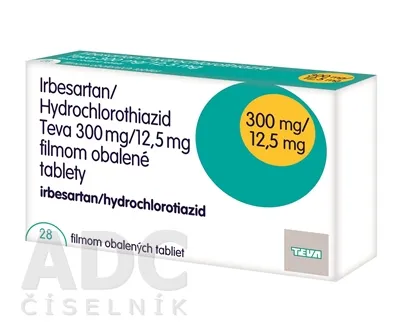
Table of Contents
- Patient Information Leaflet
- Irbesartan/Hydrochlorothiazide Teva 150 mg/12.5 mg film-coated tablets
- 1. What is Irbesartan/Hydrochlorothiazide Teva and what is it used for?
- 2. What you need to know before taking Irbesartan/Hydrochlorothiazide Teva
- 3. How to take Irbesartan/Hydrochlorothiazide Teva
- 4. Possible side effects
- 5. How to store Irbesartan/Hydrochlorothiazide Teva
- 6. Package contents and other information
- Patient Information Leaflet
- Irbesartan/Hydrochlorothiazide Teva 300 mg/12.5 mg film-coated tablets
- 1. What is Irbesartan/Hydrochlorothiazide Teva and what is it used for?
- 2. What you should know before taking Irbesartan/Hydrochlorothiazide Teva
- 3. How to take Irbesartan/Hydrochlorothiazide Teva
- 4. Possible side effects
- 5. How to store Irbesartan/Hydrochlorothiazide Teva
- 6. Package contents and other information
- Patient information leaflet
- Irbesartan/Hydrochlorothiazide Teva 300 mg/25 mg film-coated tablets
- 1. What Irbesartan/Hydrochlorothiazide Teva is and what it is used for
- 2. What you need to know before taking Irbesartan/Hydrochlorothiazide Teva
- 3. How to take Irbesartan/Hydrochlorothiazide Teva
- 4. Possible side effects
- 5. How to store Irbesartan/Hydrochlorothiazide Teva
- 6. Package contents and other information
Patient Information Leaflet
Irbesartan/Hydrochlorothiazide Teva 150 mg/12.5 mg film-coated tablets
irbesartan/hydrochlorothiazide
Please read all of this leaflet carefully before you start taking this medicine because it contains important information for you.
- Keep this leaflet. You may need to read it again.
- If you have any questions, ask your doctor or pharmacist.
- This medicine has been prescribed for you only. Do not give it to other people. It may be harmful to them, even if their symptoms are the same as yours.
- If you experience any side effect, including those not listed in this leaflet, tell your doctor or pharmacist. See section 4.
Contents of this leaflet:
- What Irbesartan/Hydrochlorothiazide Teva is and what it is used for
- What you need to know before taking Irbesartan/Hydrochlorothiazide Teva
- How to take Irbesartan/Hydrochlorothiazide Teva
- Possible side effects
- How to store Irbesartan/Hydrochlorothiazide Teva
- Contents of the pack and other information
1. What is Irbesartan/Hydrochlorothiazide Teva and what is it used for?
Irbesartan/Hydrochlorothiazide Teva is a combination of two active substances: irbesartan and hydrochlorothiazide.
Irbesartan belongs to a group of medicines known as angiotensin-II receptor antagonists. Angiotensin-II is a substance produced in the body that binds to its receptors located in blood vessels, causing them to narrow. This leads to an increase in blood pressure. Irbesartan prevents angiotensin-II from binding to these receptors, resulting in relaxation of the blood vessels and a reduction in blood pressure.
Hydrochlorothiazide belongs to a group of medicines (so-called thiazide diuretics) that increase urine production, thereby lowering blood pressure.
The two active ingredients in Irbesartan/Hydrochlorothiazide Teva work together to lower blood pressure to a greater extent than either medicine given alone.
Irbesartan/Hydrochlorothiazide Teva is used to treat high blood pressure (essential hypertension) when treatment with irbesartan or hydrochlorothiazide alone has not adequately controlled your blood pressure.
2. What you need to know before taking Irbesartan/Hydrochlorothiazide Teva
Do not take Irbesartan/Hydrochlorothiazide Teva
- if you are allergic to irbesartan or to any of the other ingredients of this medicine (listed in section 6)
- if you are allergic to hydrochlorothiazide or to any medicines derived from sulfonamides
- if you are more than 3 months pregnant (it is better to avoid Irbesartan/Hydrochlorothiazide Teva even in early pregnancy – see Pregnancy section)
- if you have severe liver or kidney problems
- if you have difficulty urinating
- if you have a condition associated with persistently high calcium levels or low potassium levels in the blood
- if you have diabetes or impaired kidney function and are being treated with a blood pressure-lowering medicine containing aliskiren.
Warnings and precautions
Consult your doctor if you are in any of the following situations:
- If you have excessive vomiting or diarrhoea
- If you have kidney disorders, including kidney transplant
- If you have heart problems
- If you have liver disorders
- If you have diabetes
- if you develop low blood sugar levels (symptoms may include sweating, weakness, hunger, dizziness, tremor, headache, flushing or pallor, numbness, rapid and pounding heartbeat), especially if you are being treated for diabetes
- If you have systemic lupus erythematosus (also known as lupus or SLE)
- If you have primary hyperaldosteronism (a condition involving excessive production of the hormone aldosterone, leading to sodium retention and subsequently increased blood pressure)
- If you are taking any of the following medicines used to treat high blood pressure:
- an "ACE inhibitor” (e.g. enalapril, lisinopril, ramipril), particularly if you have kidney problems related to diabetes
- aliskiren.
- If you have previously had skin cancer or are developing an unexpected skin lesion during treatment. Treatment with hydrochlorothiazide, particularly long-term use with high doses, may increase the risk of certain types of skin and lip cancer (non-melanoma skin cancer). Protect your skin from exposure to sunlight and UV rays while taking Irbesartan/Hydrochlorothiazide Teva.
- If you have previously experienced breathing or lung problems (including inflammation or fluid in the lungs) after taking hydrochlorothiazide. If shortness of breath or severe breathing difficulties occur after taking Irbesartan/Hydrochlorothiazide Teva, consult a doctor immediately.
Your doctor may check your kidney function, blood pressure, and levels of electrolytes
(e.g. potassium) in your blood at regular intervals.
See also the section "Do not take Irbesartan/Hydrochlorothiazide Teva"
Consult your doctor if, after taking Irbesartan/Hydrochlorothiazide Teva, you experience abdominal pain,
nausea, vomiting or diarrhoea. Your doctor will decide whether treatment should continue. Do not
stop taking Irbesartan/Hydrochlorothiazide Teva on your own.
You must inform your doctor if you think you may be pregnant (or if there is a possibility of becoming
pregnant). Irbesartan/Hydrochlorothiazide Teva is not recommended during early pregnancy and
must not be taken if you are more than 3 months pregnant, as it may cause severe harm to the unborn child if taken during this period (see section Pregnancy).
In addition, inform your doctor:
- if you are on a low-salt diet
- if you have symptoms such as excessive thirst, dry mouth, general weakness, drowsiness, muscle pain or cramps, nausea, vomiting, or a very rapid heartbeat, which may indicate an excessive effect of hydrochlorothiazide (contained in Irbesartan/Hydrochlorothiazide Teva)
- if you have noticed an unusually fast increase in skin sensitivity to sunlight, with symptoms of sunburn (such as redness, itching, swelling, rash)
- if you are scheduled for surgery or will be receiving anaesthetics
- if you experience changes in vision or pain in one or both eyes while taking Irbesartan/Hydrochlorothiazide Teva. This may be a sign of fluid accumulation in the vascular layer of the eye (choroidal effusion) or of developing glaucoma,
increased eye pressure. You should stop taking Irbesartan/Hydrochlorothiazide Teva and
consult your doctor.
Hydrochlorothiazide, contained in this medicine, may cause positive results in anti-doping tests.
Children and adolescents
Irbesartan/Hydrochlorothiazide Teva must not be given to children and adolescents (under
18 years of age). If a child swallows any tablets, contact a doctor immediately.
Other medicines and Irbesartan/Hydrochlorothiazide Teva
Inform your doctor or pharmacist if you are taking, have recently taken or might take any other
medicines.
Your doctor may consider it necessary to adjust the dose and/or take additional precautions:
If you are taking an ACE inhibitor or aliskiren (see also the sections: "Do not take
Irbesartan/Hydrochlorothiazide Teva" and "Warnings and precautions").
Diuretics such as hydrochlorothiazide contained in Irbesartan/Hydrochlorothiazide Teva may interact
with other medicines. Preparations containing lithium must not be taken together with
Irbesartan/Hydrochlorothiazide Teva unless under strict medical supervision.
You may need blood tests if you are taking:
- Potassium supplements
- Salt substitutes containing potassium
- Potassium-sparing agents or other diuretics
- Certain laxatives
- Medicines for the treatment of gout
- Vitamin D supplements
- Medicines to control heart rhythm
- Medicines for diabetes (oral antidiabetic agents such as repaglinide or insulin)
- Carbamazepine (a medicine used to treat epilepsy)
It is also important to inform your doctor if you are taking other medicines to lower blood pressure, steroids, cancer-treatment medicines, painkillers, medicines for arthritis, or colestyramine and colestipol to lower cholesterol levels in the blood.
Irbesartan/Hydrochlorothiazide Teva and alcohol
Due to the hydrochlorothiazide contained in Irbesartan/Hydrochlorothiazide Teva, if you drink alcohol while taking this medicine, you may feel more dizzy when standing up, especially when moving from a sitting to a standing position.
Pregnancy and breastfeeding
Pregnancy
You must inform your doctor if you think you may be pregnant (or if there is a possibility of becoming pregnant). Your doctor will usually advise you to stop taking Irbesartan/Hydrochlorothiazide Teva before becoming pregnant or as soon as you know you are pregnant, and will recommend another medicine instead of Irbesartan/Hydrochlorothiazide Teva. Irbesartan/Hydrochlorothiazide Teva is not recommended during pregnancy, and must not be taken if you are more than three months pregnant, as it may cause severe harm to the unborn child if taken after the third month of pregnancy.
Breastfeeding
Inform your doctor if you are breastfeeding or planning to breastfeed. Irbesartan/Hydrochlorothiazide Teva is not recommended for women who are breastfeeding, and your doctor may choose another treatment for you if you wish to breastfeed, especially if your baby is a newborn or was born prematurely.
Driving and using machines
It is unlikely that Irbesartan/Hydrochlorothiazide Teva will affect your ability to drive or use machines. However, dizziness or fatigue may occasionally occur during treatment for high blood pressure. If this happens to you, talk to your doctor before driving or operating machinery.
Irbesartan/Hydrochlorothiazide Teva contains sodium
This medicine contains less than 1 mmol (23 mg) of sodium per film-coated tablet, i.e. essentially 'sodium-free'.
3. How to take Irbesartan/Hydrochlorothiazide Teva
Take this medicine exactly as your doctor has told you. If you are unsure, consult your doctor or pharmacist.
Dosage
The recommended dose of Irbesartan/Hydrochlorothiazide Teva is one or two tablets daily.
Irbesartan/Hydrochlorothiazide Teva will be prescribed by your doctor if your previous antihypertensive treatment has not provided adequate blood pressure reduction. Your doctor will advise you on how to switch from your previous treatment to Irbesartan/Hydrochlorothiazide Teva.
Method of administration
Irbesartan/Hydrochlorothiazide Teva is for oral use. Swallow the tablets with a sufficient amount of liquid (for example, a glass of water). You may take Irbesartan/Hydrochlorothiazide Teva with or without food. Try to take the medicine at the same time each day. It is important to continue treatment with Irbesartan/Hydrochlorothiazide Teva unless otherwise instructed by your doctor.
Maximum blood pressure lowering effect is achieved within 6–8 weeks after starting treatment.
If you take more Irbesartan/Hydrochlorothiazide Teva than you should
If you accidentally take too many tablets, contact your doctor immediately.
If you forget to take Irbesartan/Hydrochlorothiazide Teva
If you forget to take a dose, take the next dose as scheduled. Do not take a double dose to make up for the missed dose.
If you have any doubts about how to use this medicine, consult your doctor or pharmacist.
4. Possible side effects
Like all medicines, this medicine can cause side effects, although not everyone gets them. Some of these side effects can be serious and may require medical attention.
Rare cases of skin allergic reactions (rash, urticaria) as well as localized swelling of the face, lips and/or tongue have been reported in patients treated with irbesartan. If you experience any of these symptoms or have difficulty breathing, stop taking Irbesartan/Hydrochlorothiazide Teva and contact your doctor immediately.
The side effects reported in clinical studies in patients treated with the combination of irbesartan and hydrochlorothiazide were:
Common side effects (may affect up to 1 in 10 people):
- nausea/vomiting
- urinary disorders
- fatigue
- dizziness (also when moving from a sitting or lying position to standing)
- blood tests may show increased levels of an enzyme measuring muscle and heart function (creatine kinase) or increased levels of substances measuring kidney function (blood urea nitrogen, creatinine). Inform your doctor if any of these side effects cause you problems.
Uncommon side effects (may affect up to 1 in 100 people):
- diarrhoea
- hypotension
- weakness
- rapid heartbeat
- flushing, swelling
- sexual dysfunction (problems with sexual performance)
- blood tests may show decreased levels of potassium and sodium in the blood. Inform your doctor if any of these side effects cause you problems.
Some side effects have been reported after marketing of the combination of irbesartan and hydrochlorothiazide. Side effects for which frequency is not known include: headache, tinnitus, cough, taste disturbances, indigestion, joint and muscle pain, liver function abnormalities and kidney dysfunction, elevated blood potassium levels, and allergic reactions (rash, urticaria, localized swelling of the face, lips, mouth, tongue or throat). Uncommon cases of jaundice (yellowing of the skin and/or whites of the eyes) have also been reported.
As with any combination of two active substances, side effects associated with each component cannot be excluded.
Side effects associated with irbesartan alone:
In addition to the side effects listed above, chest pain, severe allergic reactions (anaphylactic shock), reduced number of red blood cells (anaemia – symptoms may include tiredness, headache, shortness of breath during physical activity, dizziness and pale appearance), reduced number of platelets (blood cells essential for blood clotting), and low blood sugar levels have also been reported.
Rare side effects (may affect up to 1 in 1,000 people): Intestinal angioedema: swelling in the intestine presenting with symptoms such as abdominal pain, nausea, vomiting and diarrhoea.
Side effects associated with hydrochlorothiazide when used alone (monotherapy): loss of appetite; stomach irritation; stomach cramps; constipation; jaundice detected as yellowing of the skin and/or whites of the eyes; inflammation of the pancreas characterised by severe pain in the upper stomach, often with nausea and vomiting; sleep disorders; depression; blurred vision; decreased vision or eye pain due to increased pressure (possible signs of fluid accumulation in the vascular layer of the eye (choroidal effusion) or acute angle-closure glaucoma); lack of white blood cells, which may lead to frequent infections and fever; reduced number of platelets (a component essential for blood clotting), reduced number of red blood cells (anaemia) characterised by fatigue, headache, shortness of breath during exercise, dizziness and pale appearance; kidney problems; lung problems including pneumonia or fluid accumulation in the lungs; increased sensitivity of the skin to sunlight; inflammation of blood vessels; a skin disorder characterised by skin peeling over the whole body; lupus erythematosus, identified by a rash that may appear on the face, neck and scalp; allergic reactions; weakness and muscle spasms; irregular heartbeat; drop in blood pressure upon changing body position; swelling of the salivary glands; elevated blood sugar levels; sugar in the urine; increases in certain types of blood fats; elevated levels of uric acid in the blood which may cause gout.
Very rare side effects (may affect up to 1 in 10,000 people): acute breathing difficulty (signs include severe shortness of breath, fever, weakness and confusion).
Frequency not known: skin and lip cancer (non-melanoma skin cancer).
It is known that side effects associated with hydrochlorothiazide may increase with higher doses of hydrochlorothiazide.
Reporting of side effects
If you get any side effects, including those not listed in this patient information leaflet, talk to your doctor or pharmacist.
You can also report side effects directly via the national reporting system listed in Annex V.
By reporting side effects, you can help provide more information on the safety of this medicine.
5. How to store Irbesartan/Hydrochlorothiazide Teva
Keep this medicine out of the sight and reach of children.
Do not use this medicine after the expiry date which is stated on the packaging and on the blister after
Exp. The expiry date refers to the last day of the month.
For Irbesartan/Hydrochlorothiazide Teva packed in white opaque PVC-PVdC-aluminium blisters:
do not store above 30 °C.
For Irbesartan/Hydrochlorothiazide Teva packed in aluminium-aluminium blisters: this medicine
requires no special storage conditions.
Do not dispose of any medicine via wastewater or household waste. Ask your pharmacist how to
dispose of medicines no longer used. This will help protect the environment.
6. Package contents and other information
What Irbesartan/Hydrochlorothiazide Teva contains
- The active substances are irbesartan and hydrochlorothiazide. Each film-coated tablet of Irbesartan/Hydrochlorothiazide Teva 150 mg/12.5 mg contains 150 mg of irbesartan and 12.5 mg of hydrochlorothiazide.
- The other ingredients (excipients) are:
Tablet core: povidone, pregelatinized maize starch, poloxamer 188, microcrystalline cellulose, sodium croscarmellose, anhydrous colloidal silica, and magnesium stearate.
Film coating for the 150 mg/12.5 mg strength: hypromellose, titanium dioxide, polyethylene glycol 6000 (macrogol), polyethylene glycol 400 (macrogol), red iron oxide, yellow iron oxide, and black iron oxide.
Description of the appearance of Irbesartan/Hydrochlorothiazide Teva and contents of the pack
Irbesartan/Hydrochlorothiazide Teva 150 mg/12.5 mg film-coated tablets are film-coated, capsule-shaped tablets ranging in colour from light pink to pink. One side of the tablet is marked with the number "93", the other side with the number "7238".
Irbesartan/Hydrochlorothiazide Teva is available in packs of 7, 14, 15, 20, 28, 30, 56, 60, 84, 90, 98, and 100 film-coated tablets in non-perforated blisters; packs of 50 x 1 film-coated tablets in unit dose blisters; and calendar blister packs containing 28 film-coated tablets.
Not all pack sizes may be marketed.
Marketing Authorisation Holder
Teva B.V.
Swensweg 5
2031 GA Haarlem
The Netherlands
Manufacturers:
Teva Operations Poland Sp.z.o.o
ul. Mogilska 80
31-546 Kraków
Poland
Teva Pharmaceutical Works Private Limited Company
Pallagi út 13
Debrecen H-4042
Hungary
Pharmachemie B.V.
Swensweg 5
2031 GA Haarlem
The Netherlands
For further information about this medicine, please contact the local representative of the Marketing Authorisation Holder:
België/Belgique/Belgien
Teva Pharma Belgium N.V./S.A./AG
Tél/Tel: +32 38207373
България
Тева Фарма ЕАД
Teл.: +359 24899585
Česká republika
Teva Pharmaceuticals CR, s.r.o.
Tel: +420 251007111
Danmark
Teva Denmark A/S
Tlf.: +45 44985511
Deutschland
TEVA GmbH
Tel: +49 73140208
Eesti
UAB Teva Baltics Eesti filiaal
Tel: +372 6610801
Ελλάδα
TEVA HELLAS Α.Ε.
Τηλ: +30 2118805000
España
Teva Pharma, S.L.U.
Tel: +34 915359180
France
Teva Santé
Tél: +33 155917800
Hrvatska
Pliva Hrvatska d.o.o.
Tel: +385 13720000
Ireland
Teva Pharmaceuticals Ireland
Tel: +44 2075407117
Ísland
Teva Pharma Iceland ehf.
Sími: +354 5503300
Italia
Teva Italia S.r.l.
Tel: +39 028917981
Κύπρος
TEVA HELLAS Α.Ε.
Ελλάδα
Τηλ: +30 2118805000
Latvija
UAB Teva Baltics filiāle Latvijā
Tel: +371 67323666
Lietuva
UAB Teva Baltics
Tel: +370 52660203
Luxembourg/Luxemburg
Teva Pharma Belgium N.V./S.A./AG
Belgique/Belgien
Tél/Tel: +32 38207373
Magyarország
Teva Gyógyszergyár Zrt.
Tel.: +36 12886400
Malta
TEVA HELLAS Α.Ε.
il-Greċja
Tel: +30 2118805000
Nederland
Teva Nederland B.V.
Tel: +31 8000228400
Norge
Teva Norway AS
Tlf: +47 66775590
Österreich
ratiopharm Arzneimittel Vertriebs-GmbH
Tel: +43 1970070
Polska
Teva Pharmaceuticals Polska Sp. z o.o.
Tel.: +48 223459300
Portugal
Teva Pharma - Produtos Farmacêuticos, Lda.
Tel: +351 214767550
România
Teva Pharmaceuticals S.R.L.
Tel: +40 212306524
Slovenija
Pliva Ljubljana d.o.o.
Tel: +386 15890390
Slovenská republika
TEVA Pharmaceuticals Slovakia s.r.o.
Tel: +421 257267911
Suomi/Finland
Teva Finland Oy
Puh/Tel: +358 201805900
Sverige
Teva Sweden AB
Tel: +46 42121100
More detailed information on this medicine is available on the European Medicines Agency (EMA) website: https://www.ema.europa.eu/
Patient Information Leaflet
Irbesartan/Hydrochlorothiazide Teva 300 mg/12.5 mg film-coated tablets
irbesartan/hydrochlorothiazide
Please read this leaflet carefully before taking this medicine because it contains
important information for you.
- Keep this leaflet. You may need to read it again.
- If you have any questions, ask your doctor or pharmacist.
- This medicine has been prescribed for you only. Do not give it to others. It may be harmful to them, even if their symptoms are the same as yours.
- If you experience any side effect, including those not listed in this leaflet, contact your doctor or pharmacist. See section 4.
Contents of this leaflet:
- What Irbesartan/Hydrochlorothiazide Teva is and what it is used for
- What you need to know before taking Irbesartan/Hydrochlorothiazide Teva
- How to take Irbesartan/Hydrochlorothiazide Teva
- Possible side effects
- How to store Irbesartan/Hydrochlorothiazide Teva
- Contents of the pack and other information
1. What is Irbesartan/Hydrochlorothiazide Teva and what is it used for?
Irbesartan/Hydrochlorothiazide Teva is a combination of two active substances: irbesartan and hydrochlorothiazide.
Irbesartan belongs to a group of medicines known as angiotensin-II receptor antagonists. Angiotensin-II is a substance produced in the body that binds to its receptors located in blood vessels, causing them to narrow. This leads to an increase in blood pressure. Irbesartan prevents angiotensin-II from binding to these receptors, resulting in relaxation of the blood vessels and a reduction in blood pressure.
Hydrochlorothiazide belongs to a group of medicines (so-called thiazide diuretics) that increase urine production, thereby lowering blood pressure.
The two active ingredients in Irbesartan/Hydrochlorothiazide Teva work together to lower blood pressure to a greater extent than either medicine alone.
Irbesartan/Hydrochlorothiazide Teva is used to treat high blood pressure when treatment with irbesartan or hydrochlorothiazide alone has not adequately controlled your blood pressure.
2. What you should know before taking Irbesartan/Hydrochlorothiazide Teva
Do not take Irbesartan/Hydrochlorothiazide Teva
- if you are allergic to irbesartan or to any of the other ingredients of this medicine (listed in section 6)
- if you are allergic to hydrochlorothiazide or to any other sulfonamide-related medicines
- if you are more than 3 months pregnant (it is best to avoid Irbesartan/Hydrochlorothiazide Teva even in early pregnancy – see section Pregnancy)
- if you have severe liver or kidney problems
- if you have difficulty urinating
- if you have a condition associated with persistently high calcium levels or low potassium levels in the blood
- if you have diabetes or impaired kidney function and are being treated with a blood pressure-lowering medicine containing aliskiren.
Warnings and precautions
Talk to your doctor before taking Irbesartan/Hydrochlorothiazide Teva if you are in any of the
following conditions:
- if you have excessive vomiting or diarrhoea
- if you have kidney problems, including kidney transplant
- if you have heart problems
- if you have liver problems
- if you have diabetes
- if you develop low blood sugar levels (symptoms may include sweating, weakness, hunger, dizziness, trembling, headache, flushing or paleness, numbness, rapid and pounding heartbeat), especially if you are being treated for diabetes
- if you have lupus erythematosus (also known as lupus or SLE)
- if you have primary hyperaldosteronism (a condition involving excessive production of the hormone aldosterone, leading to sodium retention and subsequent increase in blood pressure)
- if you are taking any of the following medicines used to treat high blood pressure:
- an "ACE inhibitor" (e.g. enalapril, lisinopril, ramipril), particularly if you have kidney problems related to diabetes
- aliskiren
- if you have previously had skin cancer or develop an unexpected skin lesion during treatment. Treatment with hydrochlorothiazide, especially long-term use at high doses, may increase the risk of certain types of skin and lip cancer (non-melanoma skin cancer). Protect your skin from exposure to sunlight and UV rays while taking Irbesartan/Hydrochlorothiazide Teva.
- if you have previously experienced breathing or lung problems (including inflammation or fluid accumulation in the lungs) after taking hydrochlorothiazide. If you develop shortness of breath or severe breathing difficulties after taking Irbesartan/Hydrochlorothiazide Teva, contact a doctor immediately.
Your doctor may check your kidney function, blood pressure, and levels of electrolytes
(e.g. potassium) in your blood at regular intervals.
See also the section "Do not take Irbesartan/Hydrochlorothiazide Teva".
Contact your doctor if, after taking Irbesartan/Hydrochlorothiazide Teva, you experience abdominal pain,
nausea, vomiting or diarrhoea. Your doctor will decide whether treatment should continue. Do not
stop taking Irbesartan/Hydrochlorothiazide Teva on your own.
You must inform your doctor if you think you might be pregnant (or if there is a possibility of becoming
pregnant). Irbesartan/Hydrochlorothiazide Teva is not recommended during early pregnancy and
must not be taken if you are more than 3 months pregnant, as it may cause serious harm to the unborn
child if taken during this period (see section Pregnancy).
Also, inform your doctor:
-
if you are on a low-salt diet
-
if you have symptoms such as excessive thirst, dry mouth, general weakness, drowsiness, muscle pain or cramps, nausea, vomiting, or a very fast heartbeat, which may indicate an excessive effect of hydrochlorothiazide (contained in Irbesartan/Hydrochlorothiazide Teva)
-
if you have noticed an unusually rapid increase in skin sensitivity to sunlight, with symptoms of sunburn (such as redness, itching, swelling, rash)
-
if you are scheduled for surgery or need anaesthetics
-
if you experience changes in vision or pain in one or both eyes while taking Irbesartan/Hydrochlorothiazide Teva. This could be a sign of fluid accumulation in the vascular layer of the eye (choroidal effusion) or the development of glaucoma,
increased eye pressure. You should stop taking Irbesartan/Hydrochlorothiazide Teva and
consult your doctor.
Hydrochlorothiazide, contained in this medicine, may lead to positive results in doping tests.
Children and adolescents
Irbesartan/Hydrochlorothiazide Teva must not be given to children and adolescents (under
18 years of age). If a child swallows any tablets, contact a doctor immediately.
Other medicines and Irbesartan/Hydrochlorothiazide Teva
Inform your doctor or pharmacist if you are taking, have recently taken, or might take any other
medicines.
Your doctor may consider it necessary to adjust the dose and/or take additional precautions:
If you are taking an ACE inhibitor or aliskiren (see also sections: "Do not take
Irbesartan/Hydrochlorothiazide Teva" and "Warnings and precautions")
Diuretics such as hydrochlorothiazide contained in Irbesartan/Hydrochlorothiazide Teva may interact
with other medicines. Preparations containing lithium must not be taken together with
Irbesartan/Hydrochlorothiazide Teva unless under strict medical supervision.
You may need blood tests if you are taking: -
Potassium supplements
-
Salt substitutes containing potassium
-
Potassium-sparing agents or other diuretics
-
Certain laxatives
-
Medicines for gout
-
Vitamin D supplements
-
Medicines to control heart rhythm
-
Medicines for diabetes (oral antidiabetics such as repaglinide or insulin)
-
carbamazepine (a medicine used to treat epilepsy)
It is also important to inform your doctor if you are taking other medicines to lower blood pressure, steroids, cancer treatments, painkillers, arthritis medicines, or colestyramine and colestipol to lower cholesterol levels in the blood.
Irbesartan/Hydrochlorothiazide Teva and alcohol
Due to the hydrochlorothiazide contained in Irbesartan/Hydrochlorothiazide Teva, drinking alcohol during
treatment with this medicine may increase the risk of dizziness, especially when standing up from a
sitting or lying position.
Pregnancy and breastfeeding
Pregnancy
Inform your doctor if you think you may be pregnant (or if there is a possibility of becoming pregnant).
Your doctor will usually advise you to stop taking Irbesartan/Hydrochlorothiazide Teva before becoming
pregnant or as soon as you know you are pregnant, and will recommend an alternative medicine instead
of Irbesartan/Hydrochlorothiazide Teva. Irbesartan/Hydrochlorothiazide Teva is not recommended
during pregnancy, and must not be taken if you are more than three months pregnant, as it may cause
serious harm to the unborn child if taken after the third month of pregnancy.
Breastfeeding
Inform your doctor if you are breastfeeding or planning to breastfeed. Irbesartan/Hydrochlorothiazide
Teva is not recommended for women who are breastfeeding, and your doctor may choose another
treatment for you if you wish to breastfeed, especially if your baby is a newborn or was born prematurely.
Driving and using machines
Irbesartan/Hydrochlorothiazide Teva is unlikely to affect your ability to drive or operate machinery.
However, dizziness or tiredness may occasionally occur during treatment for high blood pressure. If
this happens to you, talk to your doctor before driving or operating machinery.
Irbesartan/Hydrochlorothiazide Teva contains sodium
This medicine contains less than 1 mmol (23 mg) of sodium per film-coated tablet, i.e. essentially ‘sodium-free’.
3. How to take Irbesartan/Hydrochlorothiazide Teva
Take this medicine exactly as your doctor has told you. If you are unsure, consult your doctor or pharmacist.
Dosage
The recommended dose of Irbesartan/Hydrochlorothiazide Teva is one tablet daily.
Irbesartan/Hydrochlorothiazide Teva will be prescribed by your doctor if your previous antihypertensive therapy has not provided adequate blood pressure reduction. Your doctor will advise you on how to switch from your previous treatment to Irbesartan/Hydrochlorothiazide Teva.
Method of administration
Irbesartan/Hydrochlorothiazide Teva is for oral use. Swallow the tablets with a sufficient amount of liquid (for example, a glass of water). You may take Irbesartan/Hydrochlorothiazide Teva with or without food. Try to take the medicine at the same time every day. It is important to continue treatment with Irbesartan/Hydrochlorothiazide Teva unless otherwise instructed by your doctor.
Maximum blood pressure-lowering effect is achieved within 6–8 weeks after starting treatment.
If you take more Irbesartan/Hydrochlorothiazide Teva than you should
If you accidentally take too many tablets, contact your doctor immediately.
If you forget to take Irbesartan/Hydrochlorothiazide Teva
If you forget to take a dose, continue your treatment as usual. Do not take a double dose to make up for the missed dose.
If you have any doubts about how to use this medicine, consult your doctor or pharmacist.
4. Possible side effects
Like all medicines, this medicine can cause side effects, although not everyone experiences them. Some of these side effects may be serious and may require medical attention.
Rare cases of skin allergic reactions (rash, urticaria) as well as localized swelling of the face, lips and/or tongue have been reported in patients treated with irbesartan. If you experience any of these symptoms or have difficulty breathing, stop taking Irbesartan/ Hydrochlorothiazide Teva and contact your doctor immediately.
The side effects reported in clinical studies in patients treated with the combination of irbesartan and hydrochlorothiazide were:
Common side effects (may affect up to 1 in 10 people):
- nausea/vomiting,
- urinary disorders,
- fatigue,
- dizziness (also when moving from a sitting or lying position to standing)
- blood tests may show increased levels of an enzyme measuring muscle and heart function (creatine kinase) or increased levels of substances measuring kidney function (azotemia, creatinine). Inform your doctor if any of these side effects cause you problems.
Uncommon side effects (may affect up to 1 in 100 people):
- diarrhoea
- hypotension
- weakness
- rapid heartbeat
- hot flushes
- swelling
- sexual dysfunction (problems with sexual performance)
- blood tests may show decreased levels of potassium and sodium in the blood. Inform your doctor if any of these side effects cause you problems.
Some side effects have been reported after marketing of the combination of irbesartan and hydrochlorothiazide. Side effects where frequency is not known include headache, tinnitus, cough, taste disturbances, indigestion, joint and muscle pain, liver function abnormalities and renal dysfunction, elevated blood potassium levels, and allergic reactions such as rash, urticaria, and localized swelling of the face, lips, mouth, tongue or throat. Uncommon cases of jaundice (yellowing of the skin and/or whites of the eyes) have also been reported.
As with any combination of two active substances, side effects associated with each component cannot be excluded.
Side effects associated with irbesartan alone:
In addition to the side effects listed above, chest pain, severe allergic reactions (anaphylactic shock), reduced number of red blood cells (anaemia – symptoms may include fatigue, headache, shortness of breath during physical activity, dizziness and pale appearance), reduced number of platelets (blood cells essential for blood clotting), and low blood sugar levels have been reported.
Rare side effects (may affect up to 1 in 1,000 people): Intestinal angioedema: swelling in the intestine presenting with symptoms such as abdominal pain, nausea, vomiting and diarrhoea.
Side effects associated with hydrochlorothiazide in monotherapy include: loss of appetite; stomach irritation; stomach cramps; constipation; jaundice detected as yellowing of the skin and/or whites of the eyes; inflammation of the pancreas characterised by severe pain in the upper stomach, often with nausea and vomiting; sleep disturbances; depression; blurred vision; decreased vision or eye pain due to increased pressure (possible signs of fluid accumulation in the vascular layer of the eye (choroidal effusion) or acute angle-closure glaucoma); absence of white blood cells, which may lead to frequent infections and fever; reduced number of platelets (an essential component for blood clotting), reduced number of red blood cells (anaemia) characterised by fatigue, headache, shortness of breath during exercise, dizziness and pale appearance; kidney problems; lung problems including pneumonia or fluid accumulation in the lungs; increased sensitivity of the skin to sunlight; inflammation of blood vessels; a skin disorder characterised by skin peeling over the whole body; lupus erythematosus, identified by a rash that may appear on the face, neck and scalp; allergic reactions; muscle weakness and spasms; irregular heartbeat; drop in blood pressure upon changing body position; swelling of the salivary glands; elevated blood sugar levels; sugar in the urine; increases in certain types of blood fats; elevated levels of uric acid in the blood which may cause gout.
Very rare side effects (may affect up to 1 in 10,000 people): acute breathing difficulty (signs include severe shortness of breath, fever, weakness and confusion).
Frequency not known: skin and lip cancer (non-melanoma skin cancer).
It is known that side effects associated with hydrochlorothiazide may increase with higher doses of hydrochlorothiazide.
Reporting of side effects
If you experience any side effect, including those not listed in this patient information leaflet, talk to your doctor or pharmacist.
You can also report side effects directly via the national reporting system listed in Annex V.
By reporting side effects, you can help provide more information on the safety of this medicine.
5. How to store Irbesartan/Hydrochlorothiazide Teva
Keep this medicine out of the sight and reach of children.
Do not use this medicine after the expiry date stated on the carton and blister after
Exp. The expiry date refers to the last day of the month.
For Irbesartan/Hydrochlorothiazide Teva packed in opaque white PVC-PVdC-aluminium blisters:
do not store above 30 °C.
For Irbesartan/Hydrochlorothiazide Teva packed in aluminium-aluminium blisters: this medicine
requires no special storage conditions.
Do not dispose of any medicine via wastewater or household waste. Ask your pharmacist how to
dispose of medicines you no longer use. This will help protect the environment.
6. Package contents and other information
What Irbesartan/Hydrochlorothiazide Teva contains
- The active substances are irbesartan and hydrochlorothiazide. Each 300 mg/12.5 mg film-coated tablet of Irbesartan/Hydrochlorothiazide Teva contains 300 mg of irbesartan and 12.5 mg of hydrochlorothiazide.
- The excipients are: Tablet core: povidone, pregelatinized starch (maize), poloxamer 188, microcrystalline cellulose, croscarmellose sodium, anhydrous colloidal silica and magnesium stearate. Film coating for the 300 mg/12.5 mg strength: hypromellose, titanium dioxide, polyethylene glycol 6000 (macrogol), polyethylene glycol 400 (macrogol), red iron oxide, yellow iron oxide and black iron oxide.
Description of the appearance of Irbesartan/Hydrochlorothiazide Teva and contents of the pack
Irbesartan/Hydrochlorothiazide Teva 300 mg/12.5 mg film-coated tablets are film-coated, round, light pink to pink in colour. One side of the tablet is marked with the number "2", the other side is smooth.
Irbesartan/Hydrochlorothiazide Teva is available in packs of 7, 14, 15, 20, 28, 30, 56, 60, 84, 90, 98 and 100 film-coated tablets, and in perforated unit-dose blister packs of 50 x 1 film-coated tablets in non-perforated blisters; packs of 50 x 1 film-coated tablet in unit-dose blisters and pack of 28 film-coated tablets in non-perforated blister.
Not all pack sizes may be marketed.
Marketing Authorisation Holder
Teva B.V.
Swensweg 5
2031 GA Haarlem
The Netherlands
Manufacturers:
Teva Operations Poland Sp.z.o.o
ul. Mogilska 80
31-546 Kraków
Poland
Teva Pharmaceutical Works Private Limited Company
Pallagi út 13
Debrecen H-4042
Hungary
Pharmachemie B.V.
Swensweg 5
2031 GA Haarlem
The Netherlands
For further information about this medicinal product, please contact the local representative of the Marketing Authorisation Holder:
België/Belgique/Belgien Lietuva
Teva Pharma Belgium N.V./S.A./AG UAB Teva Baltics
Tél/Tel: +32 38207373 Tel: +370 52660203
България Luxembourg/Luxemburg
Тева Фарма ЕАД Teva Pharma Belgium N.V./S.A./AG
Teл.: +359 24899585 Belgique/Belgien
Tél/Tel: +32 38207373
Česká republika Magyarország
Teva Pharmaceuticals CR, s.r.o. Teva Gyógyszergyár Zrt.
Tel: +420 251007111 Tel.: +36 12886400
Danmark Malta
Teva Denmark A/S TEVA HELLAS Α.Ε.
Tlf.: +45 44985511 il-Greċja
Tel: +30 2118805000
Deutschland Nederland
TEVA GmbH Teva Nederland B.V.
Tel: +49 73140208 Tel: +31 8000228400
Eesti Norge
UAB Teva Baltics Eesti filiaal Teva Norway AS
Tel: +372 6610801 Tlf: +47 66775590
Ελλάδα Österreich
TEVA HELLAS Α.Ε. ratiopharm Arzneimittel Vertriebs-GmbH
Τηλ: +30 2118805000 Tel: +43 1970070
España Polska
Teva Pharma, S.L.U. Teva Pharmaceuticals Polska Sp. z o.o.
Tel: +34 915359180 Tel.: +48 223459300
France Portugal
Teva Santé Teva Pharma - Produtos Farmacêuticos, Lda.
Tél: +33 155917800 Tel: +351 214767550
Hrvatska România
Pliva Hrvatska d.o.o. Teva Pharmaceuticals S.R.L.
Tel: +385 13720000 Tel: +40 212306524
Ireland Slovenija
Teva Pharmaceuticals Ireland Pliva Ljubljana d.o.o.
Tel: +44 2075407117 Tel: +386 15890390
Ísland Slovenská republika
Teva Pharma Iceland ehf. TEVA Pharmaceuticals Slovakia s.r.o.
Sími: +354 5503300 Tel: +421 257267911
Italia Suomi/Finland
Teva Italia S.r.l. Teva Finland Oy
Tel: +39 028917981 Puh/Tel: +358 201805900
Κύπρος Sverige
TEVA HELLAS Α.Ε. Teva Sweden AB
Ελλάδα Tel: +46 42121100
Τηλ: +30 2118805000
Latvija
UAB Teva Baltics filiāle Latvijā
Tel: +371 67323666
More detailed information on this medicinal product is available on the website of the European Medicines Agency (EMA): https://www.ema.europa.eu/
Patient information leaflet
Irbesartan/Hydrochlorothiazide Teva 300 mg/25 mg film-coated tablets
irbesartan/hydrochlorothiazide
Please read this leaflet carefully before taking this medicine because it contains important information for you.
- Keep this leaflet. You may need to read it again.
- If you have any questions, ask your doctor or pharmacist.
- This medicine has been prescribed for you only. Do not give it to others. This medicine may be harmful to them, even if their symptoms are the same as yours.
- If you experience any adverse reaction, including those not listed in this leaflet, consult your doctor or pharmacist. See section 4.
Contents of this leaflet:
- What Irbesartan/Hydrochlorothiazide Teva is and what it is used for
- What you need to know before taking Irbesartan/Hydrochlorothiazide Teva
- How to take Irbesartan/Hydrochlorothiazide Teva
- Possible side effects
- How to store Irbesartan/Hydrochlorothiazide Teva
- Contents of the pack and other information
1. What Irbesartan/Hydrochlorothiazide Teva is and what it is used for
Irbesartan/Hydrochlorothiazide Teva is a combination medicine containing two active substances: irbesartan and hydrochlorothiazide.
Irbesartan belongs to a group of medicines known as angiotensin-II receptor antagonists. Angiotensin II is a substance produced in the body that binds to its receptors located on blood vessels, causing them to narrow. This leads to an increase in blood pressure. Irbesartan prevents angiotensin II from binding to these receptors, resulting in relaxation of the blood vessels and a reduction in blood pressure.
Hydrochlorothiazide belongs to a group of medicines (so-called thiazide diuretics) that increase urine production, thereby lowering blood pressure.
The two active ingredients in Irbesartan/Hydrochlorothiazide Teva work together to reduce blood pressure to a greater extent than either medicine given alone.
Irbesartan/Hydrochlorothiazide Teva is used to treat high blood pressure (essential hypertension) when treatment with irbesartan or hydrochlorothiazide alone has not adequately controlled your blood pressure.
2. What you need to know before taking Irbesartan/Hydrochlorothiazide Teva
Do not take Irbesartan/Hydrochlorothiazide Teva
- if you are allergic to irbesartan or to any of the other ingredients of this medicine (listed in section 6)
- if you are allergic to hydrochlorothiazide or to any medicines derived from sulfonamides (ask your doctor or pharmacist for further clarification)
- if you are more than 3 months pregnant (it is better to avoid Irbesartan/Hydrochlorothiazide Teva even in the early stages of pregnancy – see section Pregnancy)
- if you have severe liver or kidney problems
- if you have difficulty urinating
- if you have a condition associated with persistently high calcium levels or low potassium levels in the blood
- if you have diabetes or impaired kidney function and are being treated with a blood pressure-lowering medicine containing aliskiren.
Warnings and precautions
Talk to your doctor before taking Irbesartan/Hydrochlorothiazide Teva if you are in any of the following situations:
- if you have excessive vomiting or diarrhoea
- if you have kidney disorders, including kidney transplant
- if you have heart disorders
- if you have liver disorders
- if you have diabetes
- if you develop low blood sugar levels (symptoms may include sweating, weakness, hunger, dizziness, tremor, headache, flushing or paleness, numbness, rapid and pounding heartbeat), especially if you are being treated for diabetes
- if you have systemic lupus erythematosus (also known as lupus or SLE)
- if you have primary hyperaldosteronism (a condition involving excessive production of the hormone aldosterone, causing sodium retention and subsequent increase in blood pressure)
- if you are taking one of the following medicines for high blood pressure:
- an "ACE inhibitor" (e.g. enalapril, lisinopril, ramipril), particularly if you have kidney problems related to diabetes
- aliskiren
- if you have previously had skin cancer or develop an unexpected skin lesion during treatment. Treatment with hydrochlorothiazide, particularly long-term use at high doses, may increase the risk of certain types of non-melanoma skin cancer and lip cancer. Protect your skin from exposure to sunlight and UV rays while taking Irbesartan/Hydrochlorothiazide Teva.
- if you have previously experienced respiratory or lung problems (including inflammation or fluid in the lungs) after taking hydrochlorothiazide. If you develop severe shortness of breath or difficulty breathing after taking Irbesartan/Hydrochlorothiazide Teva, consult a doctor immediately.
Your doctor may check your kidney function, blood pressure, and levels of electrolytes (such as potassium) in your blood at regular intervals.
See also the section "Do not take Irbesartan/Hydrochlorothiazide Teva".
Talk to your doctor if you experience abdominal pain, nausea, vomiting, or diarrhoea after taking Irbesartan/Hydrochlorothiazide Teva. Your doctor will decide whether treatment should continue. Do not stop taking Irbesartan/Hydrochlorothiazide Teva on your own.
You must inform your doctor if you think you may be pregnant (or if there is a possibility of becoming pregnant). Irbesartan/Hydrochlorothiazide Teva is not recommended during early pregnancy and must not be taken if you are more than 3 months pregnant, as it may cause serious harm to the unborn child if taken during this period (see section Pregnancy).
Also, inform your doctor:
- if you are on a low-salt diet
- if you have symptoms such as excessive thirst, dry mouth, general weakness, drowsiness, muscle pain or cramps, nausea, vomiting, or an abnormally fast heartbeat, which may indicate an excessive effect of hydrochlorothiazide (contained in Irbesartan/Hydrochlorothiazide Teva)
- if you have noticed an unusually rapid increase in skin sensitivity to sunlight, with symptoms of sunburn (such as redness, itching, swelling, rash)
- if you are scheduled for surgery or need anaesthetics
- if you experience changes in vision or pain in one or both eyes while taking Irbesartan/Hydrochlorothiazide Teva. This could be a sign of fluid accumulation in the vascular layer of the eye (choroidal effusion) or the development of glaucoma, increased pressure in the eye. You should stop taking Irbesartan/Hydrochlorothiazide Teva and consult your doctor immediately.
Hydrochlorothiazide, contained in this medicine, may cause a positive result in anti-doping tests.
Children and adolescents
Irbesartan/Hydrochlorothiazide Teva must not be given to children and adolescents (under 18 years of age). If a child accidentally swallows any tablets, contact a doctor immediately.
Other medicines and Irbesartan/Hydrochlorothiazide Teva
Tell your doctor or pharmacist if you are taking, have recently taken, or might take any other medicines.
Your doctor may need to adjust your dose and/or take additional precautions if you are taking an ACE inhibitor or aliskiren (see also sections "Do not take Irbesartan/Hydrochlorothiazide Teva" and "Warnings and precautions").
Diuretics such as hydrochlorothiazide contained in Irbesartan/Hydrochlorothiazide Teva may interact with other medicines. Preparations containing lithium should not be taken together with Irbesartan/Hydrochlorothiazide Teva unless under strict medical supervision.
You may need blood tests if you are taking:
- potassium supplements
- salt substitutes containing potassium
- potassium-sparing agents or other diuretics
- certain laxatives
- medicines for gout
- vitamin D supplements
- medicines to control heart rhythm
- medicines for diabetes (oral antidiabetics such as repaglinide or insulin)
- carbamazepine (a medicine used to treat epilepsy)
It is also important to inform your doctor if you are taking other medicines to lower blood pressure, steroids, cancer treatments, pain medicines, medicines for arthritis, or colestyramine and colestipol to lower cholesterol levels in the blood.
Irbesartan/Hydrochlorothiazide Teva with food and drink
Due to the hydrochlorothiazide contained in Irbesartan/Hydrochlorothiazide Teva, drinking alcohol during treatment with this medicine may increase the likelihood of dizziness, especially when standing up from a sitting or lying position.
Pregnancy and breastfeeding
Pregnancy
Inform your doctor if you think you may be pregnant (or if there is a possibility of becoming pregnant). Your doctor will usually advise you to stop taking Irbesartan/Hydrochlorothiazide Teva before becoming pregnant or as soon as you know you are pregnant, and will recommend an alternative medicine. Irbesartan/Hydrochlorothiazide Teva is not recommended during pregnancy, and must not be taken if you are more than three months pregnant, as it may cause serious harm to the unborn child if taken after the third month of pregnancy.
Breast-feeding
Inform your doctor if you are breast-feeding or planning to breast-feed. Irbesartan/Hydrochlorothiazide Teva is not recommended for women who are breast-feeding, and your doctor may choose an alternative treatment if you wish to breast-feed, especially if your baby is a newborn or was born prematurely.
Driving and using machines
It is unlikely that Irbesartan/Hydrochlorothiazide Teva will affect your ability to drive or use machines. However, dizziness or fatigue may occasionally occur during treatment for high blood pressure. If this happens, talk to your doctor before driving or operating machinery.
Irbesartan/Hydrochlorothiazide Teva contains sodium
This medicine contains less than 1 mmol (23 mg) of sodium per film-coated tablet, i.e. essentially 'sodium-free'.
3. How to take Irbesartan/Hydrochlorothiazide Teva
Always take Irbesartan/Hydrochlorothiazide Teva exactly as prescribed by your doctor. If you have
any doubts, consult your doctor or pharmacist.
Dosage
The recommended dose of Irbesartan/Hydrochlorothiazide Teva is one tablet per day.
Irbesartan/Hydrochlorothiazide Teva will be prescribed by your doctor if your previous antihypertensive
treatment has not provided adequate blood pressure reduction. Your doctor will advise you on how to
switch from your previous treatment to Irbesartan/Hydrochlorothiazide Teva.
Method of administration
Irbesartan/Hydrochlorothiazide Teva is for oral use. Swallow the tablets with a sufficient amount of
liquid (for example, a glass of water). You may take Irbesartan/Hydrochlorothiazide Teva with or without
food. Try to take the medicine at the same time every day. It is important to continue treatment with
Irbesartan/Hydrochlorothiazide Teva unless otherwise instructed by your doctor.
Maximum blood pressure lowering effect is achieved within 6–8 weeks after starting treatment.
If you take more Irbesartan/Hydrochlorothiazide Teva than you should
If you accidentally take too many tablets, contact your doctor immediately.
If you forget to take Irbesartan/Hydrochlorothiazide Teva
If you forget to take a dose, simply take your next dose at the usual time. Do not take a double dose to
make up for the missed dose.
If you have any doubts about how to use this medicine, consult your doctor or pharmacist.
4. Possible side effects
Like all medicines, this medicine can cause side effects, although not everybody gets them. Some of these side effects can be serious and may require medical attention.
Rare cases of skin allergic reactions (rash, urticaria) as well as localized swelling of the face, lips and/or tongue have been reported in patients treated with irbesartan. If you experience any of these symptoms or have difficulty breathing, stop taking Irbesartan/ Hydrochlorothiazide Teva and contact your doctor immediately.
The side effects reported in clinical studies in patients treated with the combination of irbesartan and hydrochlorothiazide are:
Common side effects (may occur in up to 1 in 10 patients):
- nausea/vomiting
- urinary disorders
- fatigue
- dizziness (also when moving from a sitting or lying position to standing)
- blood tests may show increased levels of an enzyme measuring muscle and heart function (creatine kinase) or increased levels of substances measuring kidney function (azotemia, creatinine).
Inform your doctor if any of these side effects cause you problems.
Uncommon side effects (may occur in up to 1 in 100 patients):
- Diarrhea
- hypotension
- weakness
- rapid heartbeat
- hot flushes
- swelling
- sexual dysfunction (problems with sexual activity)
- blood tests may show decreased levels of potassium and sodium in the blood. Inform your doctor if any of these side effects cause you problems.
Some side effects have been reported after the marketing of the combination of irbesartan and hydrochlorothiazide. Side effects for which frequency is not known. These side effects are: headache, tinnitus, cough, taste disturbances, indigestion, joint and muscle pain, liver function abnormalities and renal dysfunction, elevated potassium levels in the blood and allergic reactions (rash, urticaria, localized swelling of the face, lips, mouth, tongue or throat). Uncommon cases of jaundice (yellowing of the skin and/or whites of the eyes) have also been reported.
As with any combination of two active substances, side effects associated with each component cannot be excluded.
Side effects with irbesartan alone:
In addition to the side effects listed above, chest pain, severe allergic reactions (anaphylactic shock), decreased number of red blood cells (anaemia – symptoms may include tiredness, headache, shortness of breath during physical activity, dizziness and pale appearance), decreased number of platelets (blood cells essential for blood clotting) and low blood sugar levels have also been reported.
Rare side effects (may affect up to 1 in 1,000 people): Intestinal angioedema: swelling in the intestine presenting with symptoms such as abdominal pain, nausea, vomiting and diarrhoea.
Side effects associated with hydrochlorothiazide in monotherapy are:
Loss of appetite; stomach irritation; stomach cramps; constipation; jaundice detected as yellowing of the skin and/or whites of the eyes; inflammation of the pancreas characterized by severe pain in the upper stomach, often with nausea and vomiting; sleep disturbances; depression; blurred vision; decreased vision or eye pain due to high pressure (possible signs of fluid accumulation in the vascular layer of the eye (choroidal effusion) or acute angle-closure glaucoma); lack of white blood cells, which may lead to frequent infections, fever; decreased number of platelets (an essential component for blood clotting), decreased number of red blood cells (anaemia) characterized by fatigue, headache, shortness of breath during physical exertion, dizziness and pale appearance; kidney problems; lung problems including pneumonia or fluid accumulation in the lungs; increased sensitivity of the skin to sunlight; inflammation of blood vessels; a skin disorder characterized by peeling of the skin over the entire body; lupus erythematosus, identified by a rash that may appear on the face, neck and scalp; allergic reactions; weakness and muscle cramps; irregular heartbeat; drop in blood pressure upon changing body position; swelling of the salivary glands; elevated blood sugar levels; sugar in urine; increases in certain types of fat in the blood; elevated levels of uric acid in the blood which may cause gout.
Very rare side effects (may affect up to 1 in 10,000 people): acute respiratory distress (signs include severe shortness of breath, fever, weakness and confusion).
Frequency “not known”: non-melanoma skin and lip cancer.
It is known that side effects associated with hydrochlorothiazide may increase with higher doses of hydrochlorothiazide.
Reporting of side effects
If you experience any side effect, including those not listed in this leaflet, talk to your doctor or pharmacist.
You can also report side effects directly via the national reporting system listed in Annex V.
By reporting side effects, you can help provide more information on the safety of this medicine.
5. How to store Irbesartan/Hydrochlorothiazide Teva
Keep this medicine out of the sight and reach of children.
Do not use this medicine after the expiry date stated on the packaging and blister after
Exp. The expiry date refers to the last day of the month.
For Irbesartan/Hydrochlorothiazide Teva packed in white opaque PVC-PVdC-aluminium blisters:
do not store above 30 °C.
For Irbesartan/Hydrochlorothiazide Teva packed in aluminium-aluminium blisters: this medicine
requires no special storage conditions.
Do not dispose of medicines via wastewater or household waste. Ask your pharmacist how to
dispose of medicines no longer required. This will help protect the environment.
6. Package contents and other information
What Irbesartan/Hydrochlorothiazide Teva contains
- The active substances are irbesartan and hydrochlorothiazide. Each film-coated tablet of Irbesartan/Hydrochlorothiazide Teva 300 mg/25 mg contains 300 mg of irbesartan and 25 mg of hydrochlorothiazide.
- The excipients are: Tablet core: povidone, pregelatinized maize starch, poloxamer 188, microcrystalline cellulose, sodium croscarmellose, anhydrous colloidal silica and magnesium stearate. Film coating for the 300 mg/25 mg strength: hypromellose, titanium dioxide, polyethylene glycol 6000 (macrogol), polyethylene glycol 400 (macrogol), iron oxide red, indigotin (aluminium lake indigo carmine FD&C Blue No.2) and iron oxide black.
Description of the appearance of Irbesartan/Hydrochlorothiazide Teva and contents of the pack
Irbesartan/Hydrochlorothiazide Teva 300 mg/25 mg film-coated tablets are film-coated, round, pink to dark pink tablets. One tablet face is engraved with the number "3", the other face is smooth.
Irbesartan/Hydrochlorothiazide Teva is available in packs of 7, 14, 15, 20, 28, 30, 56, 60, 84, 90, 98 and 100 film-coated tablets in non-perforated blister packs; packs of 50 x 1 film-coated tablet in unit dose blister packs; and a pack of 28 film-coated tablets in non-perforated calendar blister packs.
Not all pack sizes may be marketed.
Marketing Authorization Holder
Teva B.V.
Swensweg 5
2031 GA Haarlem
The Netherlands
Manufacturers:
Teva Operations Poland Sp.z.o.o
ul. Mogilska 80
31-546 Kraków
Poland
Teva Pharmaceutical Works Private Limited Company
Pallagi út 13
Debrecen H-4042
Hungary
Pharmachemie B.V.
Swensweg 5
2031 GA Haarlem
The Netherlands
For further information about this medicinal product, please contact the local representative of the Marketing Authorization Holder:
België/Belgique/Belgien Lietuva
Teva Pharma Belgium N.V./S.A./AG UAB Teva Baltics
Tél/Tel: +32 38207373 Tel: +370 52660203
България Luxembourg/Luxemburg
Тева Фарма ЕАД Teva Pharma Belgium N.V./S.A./AG
Teл.: +359 24899585 Belgique/Belgien
Tél/Tel: +32 38207373
Česká republika Magyarország
Teva Pharmaceuticals CR, s.r.o. Teva Gyógyszergyár Zrt.
Tel: +420 251007111 Tel.: +36 12886400
Danmark Malta
Teva Denmark A/S TEVA HELLAS Α.Ε.
Tlf.: +45 44985511 il-Greċja
Tel: +30 2118805000
Deutschland Nederland
TEVA GmbH Teva Nederland B.V.
Tel: +49 73140208 Tel: +31 8000228400
Eesti Norge
UAB Teva Baltics Eesti filiaal Teva Norway AS
Tel: +372 6610801 Tlf: +47 66775590
Ελλάδα Österreich
TEVA HELLAS Α.Ε. ratiopharm Arzneimittel Vertriebs-GmbH
Τηλ: +30 2118805000 Tel: +43 1970070
España Polska
Teva Pharma, S.L.U. Teva Pharmaceuticals Polska Sp. z o.o.
Tel: +34 915359180 Tel.: +48 223459300
France Portugal
Teva Santé Teva Pharma - Produtos Farmacêuticos, Lda.
Tél: +33 155917800 Tel: +351 214767550
Hrvatska România
Pliva Hrvatska d.o.o. Teva Pharmaceuticals S.R.L.
Tel: +385 13720000 Tel: +40 212306524
Ireland Slovenija
Teva Pharmaceuticals Ireland Pliva Ljubljana d.o.o.
Tel: +44 2075407117 Tel: +386 15890390
Ísland Slovenská republika
Teva Pharma Iceland ehf. TEVA Pharmaceuticals Slovakia s.r.o.
Sími: +354 5503300 Tel: +421 257267911
Italia Suomi/Finland
Teva Italia S.r.l. Teva Finland Oy
Tel: +39 028917981 Puh/Tel: +358 201805900
Κύπρος Sverige
TEVA HELLAS Α.Ε. Teva Sweden AB
Ελλάδα Tel: +46 42121100
Τηλ: +30 2118805000
Latvija
UAB Teva Baltics filiāle Latvijā
Tel: +371 67323666
More detailed information on this medicinal product is available on the website of the European Medicines Agency (EMA): https://www.ema.europa.eu/