Iomeron
Italy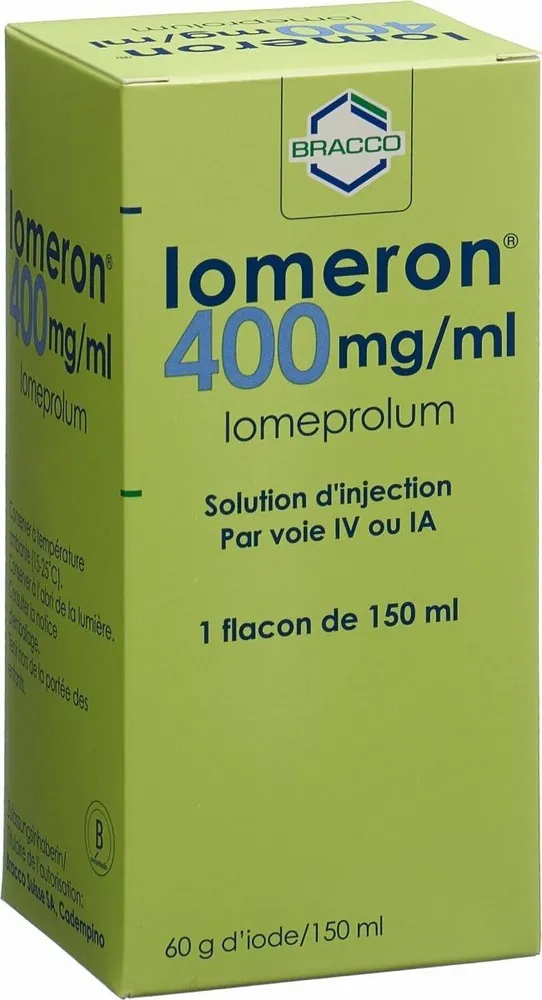
Table of Contents
- Package leaflet: Information for the patient
- IOMERON 150 mg/ml solution for injection, 200 mg/ml solution for injection, 250 mg/ml solution for injection, 300 mg/ml solution for injection, 350 mg/ml solution for injection, 400 mg/ml solution for injection
- 1. What I is and what it is used for
- 2. What you should know before being given IOMERON
- 3. How IOMERON will be administered to you
- 4. Possible side effects
- 5. How to store IOMERON
- 6. Package Contents and Other Information
Package leaflet: Information for the patient
IOMERON 150 mg/ml solution for injection, 200 mg/ml solution for injection, 250 mg/ml solution for injection, 300 mg/ml solution for injection, 350 mg/ml solution for injection, 400 mg/ml solution for injection
Iomeprol
Please read this leaflet carefully before you are given this medicine because it contains important information for you.
- Keep this leaflet. You may need to read it again.
- If you have any questions, ask your doctor.
- If you get any side effects, including those not listed in this leaflet, tell your doctor. See section 4.
Contents of this leaflet:
- What IOMERON is and what it is used for
- What you need to know before you are given IOMERON
- How IOMERON will be given to you
- Possible side effects
- How to store IOMERON
- Contents of the pack and other information
1. What I is and what it is used for
IOMERON contains the active substance iomeprol, which belongs to a group of medicines called contrast media.
I is used for diagnostic purposes during a radiological examination, as it absorbs X-rays, enabling the physician to better visualize blood vessels, joints, the spinal canal, and the organs undergoing radiological examination, and to more clearly identify both normal structures and any pathological processes present (see the end of this package leaflet for specific indications).
2. What you should know before being given IOMERON
You must not be given IOMERON if
- you are allergic to iomeprol or to any of the other ingredients of this medicine (listed in section 6).
- you are pregnant or suspect you may be pregnant, or you have genital inflammation and the radiological examination is intended to visualize the uterus (see section 2. Pregnancy and breastfeeding).
- you have recently undergone a radiological examination with iodine administered into the intrathecal space (the space around the spinal cord), since repeated administration of iodine may cause undesirable effects due to excessive dosing.
Warnings and precautions
Talk to your doctor before being given IOMERON.
Due to the possibility of serious adverse effects, the use of iodinated contrast agents should be limited to cases where a contrast-enhanced imaging examination is clearly indicated. The need for a contrast examination must be determined based on your health status, with particular attention to cardiovascular, kidney, liver, and biliary tract diseases.
Inform the radiologist and/or healthcare professionals if you suffer from bone marrow disease (Waldenström's macroglobulinemia, multiple myeloma), or severe kidney or liver disease.
Similarly, radiographic examination of the female genital organs is contraindicated if you are pregnant or think you may be pregnant, or if you have acute inflammation of the genital organs (see section 2. Pregnancy and breastfeeding).
If you are elderly, you may be particularly susceptible to developing adverse effects. Your doctor will pay special attention to the dosage to be used.
During or shortly after the imaging procedure, a brief-duration brain disorder called encephalopathy may occur. Inform your doctor immediately if you notice any of the symptoms related to this condition described in Section 4.
Talk to your doctor before being given IOMERON if you have:
- Allergy (hypersensitivity) to iodinated contrast agents;
- Allergies (e.g. hay fever, urticaria, food allergies), asthma;
- Thyroid diseases (neck gland);
- Reduced kidney (renal insufficiency) or liver function;
- Diabetes (see section 2. Other medicines and IOMERON);
- Sickle cell anemia (an abnormality of red blood cells, a type of blood cell);
- Myasthenia gravis (a disease characterized by muscle weakness that may lead to paralysis);
- Severe heart and blood vessel diseases, including heart failure (poor heart function), coronary artery disease, myocardial infarction;
- Pheochromocytoma, a condition characterized by excessive production of hormones causing severe arterial hypertension;
- Neurological disorders such as transient ischemic attacks, blockage of blood vessels preventing blood flow to the brain (acute cerebral stroke), sudden bleeding from brain vessels (acute intracranial hemorrhage), fluid accumulation causing brain swelling (cerebral edema);
- Brain tumors or brain metastases;
- A condition characterized by uncontrolled movements and possible loss of consciousness (epilepsy), recent cerebral stroke (blockage of blood vessels preventing blood flow to the brain);
- Restlessness, anxiety, or pain;
- Alcoholism;
- Drug addiction.
During or shortly after the imaging procedure, a brief-duration brain disorder called encephalopathy may occur. Inform your doctor immediately if you notice any of the symptoms related to this condition described in Section 4.
After intravenous administration of IOMERON, your doctor will monitor you for at least 30 minutes.
Allergies – If you have a predisposition to allergies, are known to be allergic to iodine-containing contrast agents and/or suffer from asthma, it may be helpful to administer medications to prevent allergic reactions, such as antihistamines and/or corticosteroids.
Anxiety – If you suffer from anxiety, administration of a sedative, a medicine to reduce your discomfort and/or excitement, may be helpful.
Repeated procedures – If you have kidney disease, your doctor will ask you to undergo specific blood tests to evaluate your kidney function before the examination.
In general, a contrast examination should not be repeated within 5–7 days.
Children
Infants under one year of age, and especially newborns, are particularly sensitive to developing adverse effects. Your doctor will pay special attention to the dosage, the procedure technique, and the patient's condition.
Thyroid disorders may occur in newborns and premature infants following a diagnostic procedure performed either on the mother during pregnancy or on the newborn. Monitoring of thyroid function is recommended.
See the end of this leaflet for specific warnings.
Other medicines and IOMERON
Inform your doctor if you are taking, have recently taken, or might take any other medicines.
Taking IOMERON together with certain other medicines may lead to adverse effects.
Inform your doctor if you are taking:
- Medicines for psychiatric disorders (neuroleptics or antidepressants), stimulant medicines, anti-nausea medicines or phenothiazine derivatives; anticonvulsant medicines must not be discontinued;
- Medicines for diabetes such as metformin. If you have moderate renal insufficiency, treatment must be discontinued 48 hours before IOMERON administration. After blood tests, your doctor may allow you to resume treatment only after 48 hours;
- Medicines for heart disease and/or high blood pressure (beta-blockers);
- Medicines to modify the immune system response, such as interleukin-2. If you need to undergo thyroid or gallbladder examination (via cholecystography) or laboratory tests within two weeks after contrast agent administration, discuss this with your doctor, as test results may be altered.
IOMERON with food, drinks, and alcohol
Unless otherwise instructed by your doctor, on the day of the examination you may follow a normal diet with adequate fluid intake. However, you should not eat food within two hours before the examination.
Inform your doctor if you consume large amounts of alcohol before undergoing the IOMERON examination.
Pregnancy, breastfeeding, and fertility
If you are pregnant, suspect you may be pregnant, are planning pregnancy, or are breastfeeding, inform your doctor or nurse before being given this medicine.
Pregnancy
Where possible, radiation exposure should be avoided during pregnancy, and therefore your doctor will carefully assess whether a radiological examination, with or without contrast agent, is necessary.
If you are pregnant or suspect you may be pregnant, you must not undergo radiological examinations to visualize the uterus (see section 2. You must not be given IOMERON).
If you were pregnant and received Iomeron during pregnancy, monitoring of the newborn's thyroid function after birth is recommended.
Breastfeeding
Iomeprol passes into human milk, but harmful effects on the infant are not expected. However, unless otherwise instructed by your doctor, suspend breastfeeding for 24 hours after contrast agent administration.
Fertility
Your doctor will take special precautions when performing the examination if you are a woman of childbearing age.
Driving and using machines
Before driving or operating machinery, check whether you are experiencing any adverse effects such as hypotension (low blood pressure), dizziness, confusion, or dyspnea (difficulty breathing).
3. How IOMERON will be administered to you
IOMERON will be administered by the radiologist and/or healthcare professionals. It can be
injected into a vein, an artery, into a body cavity, or into the intrathecal space, i.e. the
space around the spinal cord.
The injected dose may vary depending on the type of examination, the technique used, as well as on your age, body weight, and general health condition. The dose to be administered is strictly determined by the physician and/or radiology technician.
See the end of this leaflet for specific dosage information.
Use in children
In children, dosing is also based on age.
If you are given more IOMERON than you should
It is highly unlikely that you will be given more IOMERON than required, as your doctor will closely monitor the procedure during the examination.
Excessive administration may cause serious adverse effects on the heart, blood circulation, and lungs. Your doctor will promptly administer appropriate therapy to prevent any potential harm.
Iomeprol can be removed from the body by blood filtration and purification (haemodialysis).
4. Possible side effects
Like all medicines, this product can cause side effects, although not everyone experiences them.
Contact your doctor immediately if you experience a severe skin reaction: a red, scaly rash with formation of pustules and blisters (exanthematous pustulosis).
Most allergic reactions occur within the first few minutes after administration of iodinated contrast media, but sometimes they may also occur up to 24 hours later.
Symptoms of allergic reactions mainly include:
- Generalized sensation of warmth, sweating, dizziness, tearing, runny nose, palpitations, paresthesia, itching, ear pulsation, throat pain and tightness, dysphagia, cough, sneezing;
- Skin reactions such as erythema, itching, urticaria;
- Diffuse fluid accumulation or in the lungs (pulmonary edema), breathing difficulty (bronchospasm);
- Swelling of the face or mucous membranes (angioedema), low blood pressure (hypotension).
Severe anaphylactic reactions affecting the cardiovascular system are characterized by peripheral vasodilation with marked hypotension, reflex tachycardia, dyspnea, agitation, cyanosis, and loss of consciousness; following respiratory and/or cardiac arrest, these may lead to death.
These events can arise rapidly and require cardiopulmonary resuscitation maneuvers.
Administration of the contrast medium must be immediately stopped and, if necessary, appropriate and specific treatment must be urgently initiated intravenously.
Primary cardiovascular collapse may present as the sole and/or initial manifestation without respiratory symptoms or any of the other signs or symptoms listed above.
The following adverse reactions have been reported with iomeprol, listed below according to their frequency:
Common (may affect up to 1 in 10 people)
- Pallor and sensation of warmth
Uncommon (may affect up to 1 in 100 people) - Dizziness, headache
- High blood pressure (hypertension)
- Breathing difficulty (dyspnea), nasal congestion (nasal congestion)
- Vomiting, nausea
- Erythema, urticaria, blisters, and itching
- Involuntary muscle contractions (muscle spasms)
- Chest pain, pain and warmth at the injection site
Rare (may affect up to 1 in 1,000 people) - Sensation of loss of consciousness (presyncope)
- Heartbeat too slow and/or too fast (bradycardia and tachycardia), abnormal heart contractions (extrasystoles)
- Low blood pressure (hypotension)
- Skin rash
- Back pain
- Kidney damage (renal dysfunction), reduced daily urine output (oliguria), abnormal amount of protein in urine (proteinuria)
- Weakness (asthenia), muscle stiffness, fever
- Increased levels of a marker of kidney function (creatinine) in blood
Not known (frequency cannot be estimated from available data)
- Red, scaly skin rash with formation of pustules and blisters (exanthematous pustulosis)
- Reduced platelet production (thrombocytopenia)
- Hemolytic anemia (damage to red blood cells which may cause fatigue, increased heart rate, and shortness of breath)
- Anaphylactoid reactions (characterized by cardiovascular, respiratory, and skin symptoms) / anaphylactic reactions
- Anaphylactoid/anaphylactic reactions causing widespread pustular rash with fever or swelling of the face or throat, cold sweating
- Decreased appetite (anorexia)
- Anxiety, confusion, coma
- Loss/weakness of motor function in a muscle area (paralysis/paresis)
- Memory disturbance (amnesia)
- Temporary lack of blood flow to an area of the brain (transient ischemic attack), disorders of blood vessels in the head
- Brain disorders (encephalopathy) with symptoms including headache, vision difficulties, loss of vision, confusion, seizures, loss of coordination, loss of movement on one side of the body, speech problems, and loss of consciousness
- Fluid accumulation in the brain causing swelling (cerebral edema), transient loss of consciousness (syncope)
- Seizures, loss of consciousness, speech difficulties (dysarthria), limb numbness (paresthesia), drowsiness, taste disturbances
- Impaired sense of smell (parosmia), tremor, impaired language ability (aphasia)
- Transient loss of vision, visual disturbances, conjunctivitis, increased tearing, sensation of seeing lights and flashes (photopsia)
- Cardiac arrest, heart attack, reduced heart function (heart failure), chest pain due to temporary reduction in blood flow to the heart (angina pectoris)
- Irregular heart rhythm (arrhythmias, atrial or ventricular fibrillation, atrioventricular block)
- Bluish/violet discoloration of skin and mucous membranes (cyanosis), reduced blood supply to the body (circulatory collapse or shock)
- Vasodilation, flushing
- Respiratory arrest, acute respiratory failure caused by various conditions (acute respiratory distress syndrome), fluid retention in the lungs (pulmonary edema), swelling of the pharynx or larynx (pharyngeal or laryngeal edema), bronchospasm, asthma
- Oxygen deficiency (hypoxia), noisy breathing (stridor), cough
- Disorders of the pharynx or larynx, rhinitis, voice disorder (dysphonia)
- Diarrhea, abdominal pain, increased salivary secretion, difficulty swallowing (dysphagia), enlargement of the salivary glands
- Acute swelling of the skin or mucous membranes (angioedema), increased sweating, various skin eruption disorders (Stevens-Johnson syndrome, toxic epidermal necrolysis, erythema multiforme)
- Reduced kidney function (renal failure and acute renal failure)
- Reaction at injection site, malaise, localized sensation of cold, swelling (edema)
- Abnormal electrocardiogram, altered liver function tests, increased blood urea
- Brain disorders (encephalopathy) with symptoms including headache, visual difficulties, loss of vision, confusion, seizures, loss of coordination, loss of movement on one side of the body, speech difficulties, and loss of consciousness.
In the case of intrathecal administration (i.e., into the space around the spinal cord), the following adverse reactions may occur with different frequencies:
- Very common: headache
- Common: dizziness, hypertension, nausea, vomiting, back and limb pain, reaction at injection site
- Rare: loss of consciousness, inability to move arms and/or legs (paraparesis), numbness (paresthesia), reduced sensitivity to stimuli (hypoesthesia), drowsiness, hypotension, flushing, increased sweating, itching, muscle stiffness, neck pain, sensation of warmth, and fever.
- Not known: allergic reactions, epilepsy, skin rashes, brain disorders (encephalopathy) with symptoms including headache, visual difficulties, loss of vision, confusion, seizures, loss of coordination, loss of movement on one side of the body, speech difficulties, and loss of consciousness.
Additionally, after administration into a body cavity (intracavitary), the following adverse effects may occur, for which frequency cannot be estimated:
- A slight increase in levels of enzymes involved in sugar metabolism (amylase) is common following procedures to visualize the biliary and pancreatic ducts. Rare cases of pancreatitis have been reported.
- Allergic reactions, predominantly affecting the skin.
- Lower abdominal pain and malaise
Additional adverse effects in children
In children, the same adverse effects as those observed in adults may occur.
A transient thyroid disorder may occur in newborns, especially in preterm or low-birth-weight infants.
No adverse effects have been reported after administration into the space containing the fluid surrounding the spinal cord (intrathecal).
Reporting of adverse effects
If you experience any adverse effects, including those not listed in this leaflet, consult your doctor. You can also report adverse effects directly via the national reporting system at the website: www.agenziafarmaco.gov.it/content/come-segnalare-una-sospetta-reazione-avversa.
By reporting adverse effects, you can help provide more information on the safety of this medicine.
5. How to store IOMERON
This medicinal product does not require any special storage temperature.
Keep the vial in the outer packaging to protect the medicinal product from light.
Store the product protected from ionizing radiation.
Keep this medicine out of the sight and reach of children.
Do not use this medicinal product after the expiry date stated on the carton after "Exp".
The expiry date refers to the last day of that month.
Do not use this medicinal product if the solution has changed colour or if there are suspended particles present.
Do not dispose of any medicinal product via wastewater or household waste. Ask your pharmacist how to dispose of medicines no longer used. This will help protect the environment.
6. Package Contents and Other Information
What IOMERON Contains
IOMERON 150 mg/ml injection solution
- The active substance is iomeprol. 100 ml of solution contain 30.62 g of iomeprol
- Other components: trometamol, hydrochloric acid, water for injection
IOMERON 200 mg/ml injection solution
- The active substance is iomeprol. 100 ml of solution contain 40.82 g of iomeprol
- Other components: trometamol, hydrochloric acid, water for injection
IOMERON 250 mg/ml injection solution
- The active substance is iomeprol. 100 ml of solution contain 51.03 g of iomeprol
- Other components: trometamol, hydrochloric acid, water for injection
IOMERON 300 mg/ml injection solution
- The active substance is iomeprol. 100 ml of solution contain 61.24 g of iomeprol
- Other components: trometamol, hydrochloric acid, water for injection
IOMERON 350 mg/ml injection solution
- The active substance is iomeprol. 100 ml of solution contain 71.44 g of iomeprol
- Other components: trometamol, hydrochloric acid, water for injection
IOMERON 400 mg/ml injection solution
- The active substance is iomeprol. 100 ml of solution contain 81.65 g of iomeprol
- Other components: trometamol, hydrochloric acid, water for injection
Description of the Appearance of IOMERON and Contents of the Package
IOMERON is a clear, colourless to slightly yellow injection solution.
IOMERON 150 mg/ml injection solution
Available in 50 ml and 100 ml vials.
IOMERON 200 mg/ml injection solution
Available in 50 ml, 75 ml, 100 ml, 150 ml, 200 ml vials.
IOMERON 250 mg/ml injection solution
Available in 50 ml, 100 ml, 150 ml, 200 ml, 250 ml vials.
IOMERON 300 mg/ml injection solution
Available in pre-filled syringes of 90 ml and 125 ml, and in vials of 50 ml, 75 ml, 100 ml, 150 ml, 200 ml, 500 ml.
IOMERON 350 mg/ml injection solution
Available in pre-filled syringes of 125 ml and in vials of 50 ml, 100 ml, 150 ml, 200 ml, 250 ml, 500 ml.
IOMERON 400 mg/ml injection solution
Available in pre-filled syringes of 90 ml and 125 ml, and in vials of 50 ml, 75 ml, 100 ml, 150 ml, 200 ml, 250 ml, 500 ml.
Not all pack sizes may be marketed.
Marketing Authorization Holder and Manufacturer
Bracco Imaging S.p.A.
Via E. Folli, 50
20134 Milano
Manufacturer
Patheon Italia S.p.A.
2° Trav. SX, Via Morolense 5
03013 Ferentino (FR)
BIPSO GmbH
Robert-Gerwig-Strasse 4
78224 Singen
Germany
Bracco Imaging S.p.A. - Bioindustry Park
Via Ribes, 5
10010 Colleretto Giacosa (TO) (Italy)
The following information is intended exclusively for physicians or healthcare professionals:
Therapeutic Indications
IOMERON 150 mg/ml injection solution
Intravenous urography, digital subtraction phlebography, computed tomography (CT) of head and body, cavernosography, intravenous and intra-arterial digital subtraction angiography (DSA), endoscopic retrograde cholangiopancreatography (ERCP), micturating cystourethrography (MCU) in adults and paediatric patients.
IOMERON 200 mg/ml injection solution
Peripheral phlebography and digital subtraction phlebography, CT (head and body), cavernosography, intravenous and intra-arterial DSA, ERCP, arthrography, hysterosalpingography, cholangiography, urethrography and retrograde pyeloureterography, myelography.
IOMERON 250 mg/ml injection solution
Intravenous urography, peripheral phlebography, CT (head and body), intravenous and intra-arterial DSA, myelography.
IOMERON 300 mg/ml injection solution
Intravenous urography (in adults and paediatric patients), peripheral phlebography, CT (head and body), cavernosography, intravenous DSA, conventional angiography, intra-arterial DSA, cardioangiography (in adults and paediatric patients), selective conventional coronary angiography, interventional coronary angiography, ERCP, arthrography, hysterosalpingography, fistulography, discography, galactography, cholangiography, dacryocystography, sialography, retrograde urethrography and pyeloureterography, myelography.
IOMERON 350 mg/ml injection solution
Intravenous urography (in adults and paediatric patients), CT (body), intravenous DSA, conventional angiography, intra-arterial DSA, cardioangiography (in adults and paediatric patients), selective conventional coronary angiography, interventional coronary angiography, arthrography, hysterosalpingography, fistulography, galactography, retrograde cholangiography, dacryocystography, sialography.
IOMERON 400 mg/ml injection solution
Intravenous urography (adults, including those with renal insufficiency or diabetes), CT (body), conventional angiography, intravenous DSA, cardioangiography (in adults and paediatric patients), selective conventional coronary angiography, interventional coronary angiography, fistulography, galactography, dacryocystography, sialography.
WARNINGS AND PRECAUTIONS
Common to All Routes of Administration
Diagnostic procedures involving any radiopaque agent must be performed under the supervision of personnel with specific training and knowledge of the particular procedure to be carried out.
Adequate facilities must be available for the management of any complications arising from the procedure and for emergency treatment of severe reactions to the contrast medium. These include resuscitation equipment and personnel trained in resuscitation and anaphylaxis management. After parenteral administration of the radiopaque agent, such personnel should remain available for at least 30 minutes after completion of the examination to manage any complications or acute or delayed severe reactions to the contrast medium.
Due to the potential for serious adverse effects, the use of organo-iodinated contrast media should be limited to cases where there is a clear clinical indication for contrast imaging, which must be evaluated in relation to the patient's clinical condition, particularly in the presence of known cardiovascular, urinary, or hepatobiliary disorders.
The risk associated with specific diagnostic procedures may increase in conditions such as severe atherosclerosis, hypertension, infarction, severe systemic diseases, and cerebrovascular disorders.
The use of products for cardioangiographic investigations should only be performed in clinics, hospitals, or healthcare facilities where immediate access to necessary resuscitation equipment and competent personnel is ensured.
Vital signs and electrocardiographic monitoring of the patient should be routinely performed during the procedure.
Contrast Medium-Induced Encephalopathy
Encephalopathy has been reported with the use of iomeprol (see section 4.8).
Contrast medium-induced encephalopathy may present with symptoms and signs of neurological dysfunction such as headache, visual disturbances, cortical blindness, confusion, seizures, loss of coordination, hemiparesis, aphasia, unconsciousness, coma, and cerebral oedema, occurring within minutes or hours after iomeprol administration, and usually resolving within a few days.
The medicinal product must be used with caution in patients with conditions that impair the integrity of the blood-brain barrier (BBB), which may increase the permeability of the contrast medium through the BBB and increase the risk of encephalopathy.
If contrast medium-induced encephalopathy is suspected, administration of iomeprol must be discontinued and appropriate medical treatment initiated.
Special Populations
Paediatric Population – Infants under one year of age, and especially neonates, are particularly susceptible to electrolyte imbalances and haemodynamic alterations. Care must be taken with dosage, procedural technique, and patient condition.
Transient suppression of thyroid function or hypothyroidism has been observed in children following exposure to iodinated contrast media. This has been observed more frequently in neonates and premature infants, and also following procedures involving higher doses. Neonates may also be exposed via maternal exposure. In neonates, especially premature infants, who have been exposed to iomeprol either through maternal exposure during pregnancy or in the neonatal period, thyroid function should be monitored. If hypothyroidism is detected, treatment should be considered and thyroid function monitored until normalization.
Elderly – Elderly patients are at increased risk of reactions due to excessive contrast medium dosage. The frequent coexistence of neurological disorders and severe vasculopathies constitutes a particular aggravating factor.
Hypersensitivity to Iodinated Contrast Media – Hypersensitivity or previous reactions to iodinated contrast media increase the risk of recurrence of a reaction, even with non-ionic contrast media.
Allergic Predisposition – Adverse reactions to iodinated contrast media are more common in patients with a history of allergies, such as hay fever, urticaria, or food allergies.
Asthmatic Patients – Patients taking beta-blockers, particularly asthmatic patients, may have a lower threshold for bronchospasm and may be less responsive to treatment with beta-agonists and adrenaline, which may necessitate higher doses.
Therefore, particular attention must be paid to these patients.
Thyroid Function and Thyroid Function Tests – Iodinated contrast media may contain traces of inorganic iodide that can interfere with thyroid function, especially in patients with latent or overt hyperthyroidism or goitre associated with thyrotoxicosis. Thyrotoxic crises have been reported with ionic contrast media. Therefore, particular attention must be paid to these patients.
Intra-arterial and Intravenous Administration
Renal Impairment – In patients with impaired renal function, administration of contrast media may cause episodes of renal failure. Preventive measures include: identifying high-risk patients; ensuring adequate hydration before contrast administration, preferably by maintaining intravenous infusion before and during the procedure until the contrast medium has been eliminated by the kidneys; avoiding, if possible, administration of nephrotoxic drugs or major surgical interventions or procedures such as renal angioplasty until the contrast medium has been completely eliminated; delaying a new contrast examination until renal function returns to pre-examination levels.
Patients undergoing dialysis may receive dialysable contrast media such as iomeprol without difficulty.
Diabetes Mellitus – Diabetic nephropathy may predispose to renal failure following intravascular administration of contrast media. Intravascular administration of contrast media may induce lactic acidosis in patients receiving biguanides (metformin) and with moderate renal impairment.
(See section 4.5. Interaction with other medicinal products and other forms of interaction.)
Phaeochromocytoma – These patients may develop severe hypertensive crises (rarely uncontrollable) during procedures with contrast media.
Therefore, premedication with alpha- and beta-blockers is recommended in these patients.
Myasthenia Gravis – Administration of organo-iodinated contrast media may worsen signs and symptoms of myasthenia.
Cardiovascular Diseases and Pulmonary Hypertension – There is a high risk of severe reactions in individuals with serious cardiovascular disease, particularly those with heart failure and coronary artery disease.
Intravascular injection of contrast media may cause pulmonary oedema in patients with overt or incipient heart failure, while the presence of pulmonary hypertension and valvular heart disease may favour marked haemodynamic alterations.
Neurological Symptoms – Particular attention must be paid to patients with acute cerebral infarction or haemorrhage, or when there is damage to the blood-brain barrier, cerebral oedema, or acute demyelination. The presence of primary or secondary intracranial tumours and previous episodes of epilepsy increases the likelihood of convulsive seizures.
Anticonvulsant therapy must not be interrupted and should be ensured at optimal dosage.
Neurological symptoms due to degenerative, ischaemic, inflammatory, or neoplastic cerebrovascular diseases may be exacerbated by administration of contrast media. These patients are at increased risk of transient neurological complications.
Vasospasm and subsequent cerebral ischaemia episodes may be caused by intravascular injection of contrast medium.
Alcoholism – Both experimentally and clinically, acute or chronic alcoholism has been shown to increase the permeability of the blood-brain barrier. This facilitates the passage of iodinated agents into brain tissue, potentially causing central nervous system (CNS) disturbances. A possible lowering of the epileptogenic threshold should be considered.
Drug Addiction – In drug-addicted patients, the permeability of the blood-brain barrier is also increased. This facilitates the passage of iodinated agents into brain tissue, potentially causing CNS disturbances. A possible lowering of the epileptogenic threshold should be considered.
Precautions for Use
Regarding the Patient
Hydration – Adequate hydration of the patient is necessary, and any hydro-electrolyte imbalance should be corrected before and after administration of the contrast medium. In particular, patients with severe hepatic or renal insufficiency, myeloma or other paraproteinaemias, sickle cell anaemia, diabetes mellitus, polyuria, oliguria, hyperuricaemia, as well as neonates, children, and elderly patients, must not be exposed to dehydration.
Particular attention must be paid to hydration in patients with conditions that may worsen due to fluid overload, such as congestive heart failure.
Dietary Advice – Unless otherwise specified by the treating physician, a normal diet may be followed on the day of the examination.
However, the patient should refrain from eating for two hours prior to the examination. Adequate fluid intake should be ensured before and after vascular administration of iodinated contrast media.
Hypersensitivity – In patients with a predisposition to allergies, known hypersensitivity to iodinated contrast media, and/or a positive history of asthma, premedication with antihistamines and/or corticosteroids may be considered to prevent anaphylactoid-type reactions.
Anxiety – Obvious states of excitement, anxiety, and discomfort may cause adverse effects or may intensify reactions related to the contrast medium. In such cases, a sedative may be administered.
Repeated Procedures
In patients with moderate or severe renal impairment, renal function values should be carefully assessed before contrast examination.
In general, contrast examination should not be repeated within 5–7 days.
Patient Observation
Intravascular administration of contrast media should be performed, if possible, with the patient in a supine position. The patient should be observed for at least 30 minutes after administration.
Intrathecal Administration
After completion of examinations in the cervical or cervico-lumbar regions:
- Elevate the end of the table at an angle of approximately 45° for about 2 minutes to allow caudal drainage of the contrast medium
- Elevate the head end of the stretcher to at least 30° before placing the patient on it
- Avoid excessive or particularly active movements or stretching of the patient
- Keep the patient under close observation, calm, and with the head elevated, especially in the first few hours after the examination
- The patient must remain supine and bedridden during this period
- Encourage oral fluid intake and diet, if tolerated
Regarding the Procedure
Coagulation, Catheterization Techniques – A property of non-ionic contrast media is their low interference with normal physiological functions.
Non-ionic contrast media therefore have lower in vitro anticoagulant activity compared to ionic contrast media.
Medical and paramedical personnel performing vascular catheterization procedures should be aware of this and pay particular attention to angiographic technique and catheter flushing with saline solution (if necessary with added heparin) to reduce the risk of thromboembolic events related to the procedure.
Sensitivity Testing – There are no sensitivity tests with predictive value for adverse reactions to contrast media.
Risk of Inflammation and Extravasation – Extreme care must be taken during injection of the contrast medium to avoid extravasation. This is particularly important in patients with severe arteriovenous disorders.
Intrathecal Administration – Iomeprol should be administered with caution in patients with increased intracranial pressure or suspected intracranial tumours, abscesses, or haematomas.
Anticonvulsant therapy should be maintained before and after myelographic procedures in patients with a history of convulsive episodes.
INTERACTIONS
Consider interrupting treatment with drugs that lower the seizure threshold for up to 24 hours after intrathecal use and in patients with blood-brain barrier disorders (see CNS disorders in section 4.4 of the SmPC).
Similarly, allergic-like reactions are more frequent and may manifest as delayed reactions in patients treated with immunomodulators such as Interleukin-2 (IL-2).
Thyroid Function Tests – After administration of iodinated contrast media, the thyroid tissue's ability to uptake radioisotopes for diagnosis of thyroid diseases is reduced for periods up to two weeks or longer.
Thyroid function tests using "protein-bound iodine" and "radioactive iodine uptake" may not reflect true thyroid function in the two weeks following administration of iodinated contrast media. In such cases, it is advisable to use thyroid function tests such as "resin T3" and "total or free thyroxine (T4)".
Any test that could be influenced by the contrast medium should be performed before its administration.
Oral Cholecystographic Agents – Recent studies have not shown interactions between renally excreted contrast media and oral cholecystographic agents.
Laboratory Tests – High concentrations of contrast media in serum and urine may alter laboratory test results for bilirubin, proteins, and inorganic substances (e.g., iron, copper, calcium, phosphates).
Metformin – Intravascular administration of contrast media may induce lactic acidosis in patients receiving metformin (see also section 4.4).
The presence of renal impairment in diabetic patients represents one of the risk factors predisposing to renal failure following contrast medium administration. Renal impairment may lead to lactic acidosis in diabetic patients treated with biguanides (metformin).
To prevent lactic acidosis in these patients, it is recommended to discontinue metformin 48 hours before contrast examination and not resume until 48 hours after the examination, and only after confirming that renal function (creatinine values) has returned to pre-examination levels.
In emergency situations or when renal function is impaired or unknown, a careful benefit-risk assessment is required. If contrast medium administration is considered essential, precautions must be taken. Metformin must be discontinued during contrast medium administration. After the diagnostic procedure, the patient must be monitored for signs of lactic acidosis. Metformin may be restarted 48 hours after contrast medium administration if serum creatinine/eGFR has returned to pre-examination levels.
Patients with normal renal function may continue taking metformin regularly.
DOSAGE, METHOD AND TIME OF ADMINISTRATION
Dosage and rate of administration may vary depending on the clinical question, technique, area to be visualized, type of equipment, as well as the patient's age, weight, cardiac output, and general condition.
IOMERON is available in various strengths and pack sizes to allow healthcare professionals to select the most appropriate product for the diagnostic procedure.
| Indication | Formulation mg (iodine)/ml | Recommended dosages |
| Intravenous urography | 250, 300, 350, 400 | Adults: 50 - 150 ml Neonates: 3 - 4.8 ml/kg Children: <1 year: 2.5 - 4 ml/kg >1 year: 1 - 2.5 ml/kg |
| Infusion urography | 150 | Adults: 250 ml Children: according to body weight and age |
| Peripheral venography | 200, 250, 300 | Adults: 10 - 100 ml, repeat if necessary; normally do not exceed 250 ml total. The volume of each single injection depends on the area to be examined (10 - 50 ml for upper limbs; 50 - 100 ml for lower limbs) |
| DS venography | 150, 200 | |
| CT head | 150, 200, 250, 300 | Adults: 50 - 200 ml Children: according to body weight and age |
| CT body | 150, 200, 250, 300, 350, 400 | Adults: 100 - 200 ml; Children: according to body weight and age |
| Cavernosography | 150, 200, 300 | Adults: up to 100 ml |
| Intravenous DSA | 250, 300, 350, 400 | Adults: 100 - 250 ml; Children: according to body weight and age |
| CONVENTIONAL ANGIOGRAPHY | ||
| Upper limb arteriography | 300, 350 | Adults: normally do not exceed 250 ml. The volume of each single injection depends on the area to be examined |
| Pelvic and lower limb arteriography | 300, 350, 400 | |
| Abdominal arteriography | 300, 350, 400 | |
| Descending aorta arteriography | 300, 350 | |
| Pulmonary angiography | 300, 350, 400 | Adults: up to 170 ml |
| Cerebral angiography | 300, 350 | Adults: up to 100 ml |
| Pediatric arteriography | 300 | Up to 130 ml, according to body weight and age |
| Interventional angiography | 300, 350, 400 | Adults: normally do not exceed 250 ml. The volume of each single injection depends on the area to be examined; Children: according to body weight and age |
| INTRA-ARTERIAL DSA | ||
| Cerebral | 150, 200, 300, 350 | Adults: 30 - 60 ml for panoramic injections, 5 - 10 ml for selective injections; Children: according to body weight and age |
| Thoracic | 200, 300 | Adults: 20-25 ml (aorta), repeat if necessary, 20 ml (bronchial arteries) |
| Aortic arch | 150, 200, 300, 350 | Adults: normally do not exceed 350 ml Adults: normally do not exceed 250 ml |
| Abdomen | 150, 200, 250, 300 | |
| Aortography | 150, 200, 300, 350 | |
| Translumbar aortography | 150, 200, 300 | |
| Peripheral arteriography | 150, 200, 250, 300 | Adults: 5-10 ml for selective injections up to a total of 250 ml; Children: according to body weight and age |
| Interventional DSA | 150, 200, 300 | Adults: 10-30 ml for selective injections up to a total of 250 ml Children: according to body weight and age |
| Cardioangiography | 300, 350, 400 | Adults: normally do not exceed 250 ml. The |
| volume of each single injection depends on the area to be examined; Children: 3-5 ml/kg |
||
| Selective conventional coronary angiography | 300, 350, 400 | Adults: 4-10 ml per artery, repeat if necessary |
| Interventional coronary angiography | 300, 350, 400 | |
| OTHER ROUTES OF ADMINISTRATION | ||
| ERCP | 150, 200, 300 | Adults: up to 100 ml |
| Arthrography | 200, 300, 350 | Adults: up to 10 ml per injection |
| Hysterosalpingography | 200, 300, 350 | Adults: up to 35 ml |
| Fistulography | 300, 350, 400 | Adults: up to 100 ml total |
| Discography | 300 | Adults: up to 4 ml |
| Galactography | 300, 350, 400 | Adults: 0.15 - 1.2 ml per injection |
| Dacryocystography | 300, 350, 400 | Adults: 2.5 - 8 ml per injection |
| Sialography | 300, 350, 400 | Adults: 1 - 3 ml per injection |
| Voiding cystourethrography | 150 | Adults: 100 - 250 ml |
| Pediatric voiding cystourethrography | 150 | 40 - 210 ml, according to body weight and age |
| Cholangiography | 200, 300 | Adults: up to 60 ml |
| Retrograde cholangiography | 350 | Adults: up to 60 ml |
| Retrograde urethrography | 200, 300 | Adults: 20 - 100 ml |
| Retrograde pyelography | 200, 300 | Adults: 10 - 20 ml per injection |
| Myelography | 200 250 300 | Adults: 13 - 22 ml 10 - 18 ml 8 - 15 ml |
Instructions for use
The contrast medium solution for intravascular use must be warmed to body temperature.
Before use, examine the product to ensure that the container and closure have not been damaged. The contrast medium solution must be withdrawn from the vial under aseptic conditions using sterile syringes.
Intravascular administration and/or use of catheters and guidewires must be performed under maximum aseptic conditions.
If single-use devices are not used, particular care must be taken to avoid residual contamination with traces of cleaning agents.
Follow the general recommendations for intravascular administration indicated above.
Multiple doses must not be withdrawn from a single contrast medium container. The rubber stopper should never be punctured more than once. A dedicated piercing needle set is recommended for piercing the stopper and aspirating the contrast medium. The contrast medium must be drawn into the syringe immediately before use and must not be diluted. Any unused residual amount remaining after an examination must be discarded together with the connecting tubing.
For the use of 500 ml vials, the following guidelines are recommended. The contrast medium solution must be administered using an automatic injector. The tubing connecting the injector to the patient (patient tubing) must be replaced after each examination, as it may be contaminated with blood. Unused contrast medium solution remaining in the vial, connecting tubes, and any part of the injector must be discarded at the end of the examination day.
In addition, follow any further instructions provided by the manufacturer of the injection system or equipment.
OVERDOSE
Overdose may lead to serious adverse reactions, primarily affecting the cardiovascular and pulmonary systems. Treatment of overdose is aimed at maintaining all vital functions and includes prompt initiation of symptomatic therapy. Iomeprol does not bind to plasma or serum proteins and is therefore dialyzable.
If necessary, iomeprol can be removed by hemodialysis.
In case of overdose of contrast medium administered intravascularly, hydration and electrolyte status of the patient should be monitored so that appropriate interventions can be made if necessary. In this situation, renal function should be monitored for at least three days.
In case of overdose of contrast medium administered intrathecally, the patient should be carefully monitored for at least 24 hours for the onset of central nervous system (CNS) disturbances. Such signs may include hyperreflexia or tonic-clonic spasms, hyperthermia, stupor, and respiratory depression.
In case of contrast medium passage into the intracranial compartment, prophylactic anticonvulsant treatment with diazepam or barbiturates administered orally for 24–48 hours is recommended.
STORAGE
Do not use this medicinal product if you notice any change in colour or the presence of suspended particles.
Although iomeprol has low sensitivity to X-rays, it is advisable to store it protected from ionizing radiation.