Intrarosa
Italy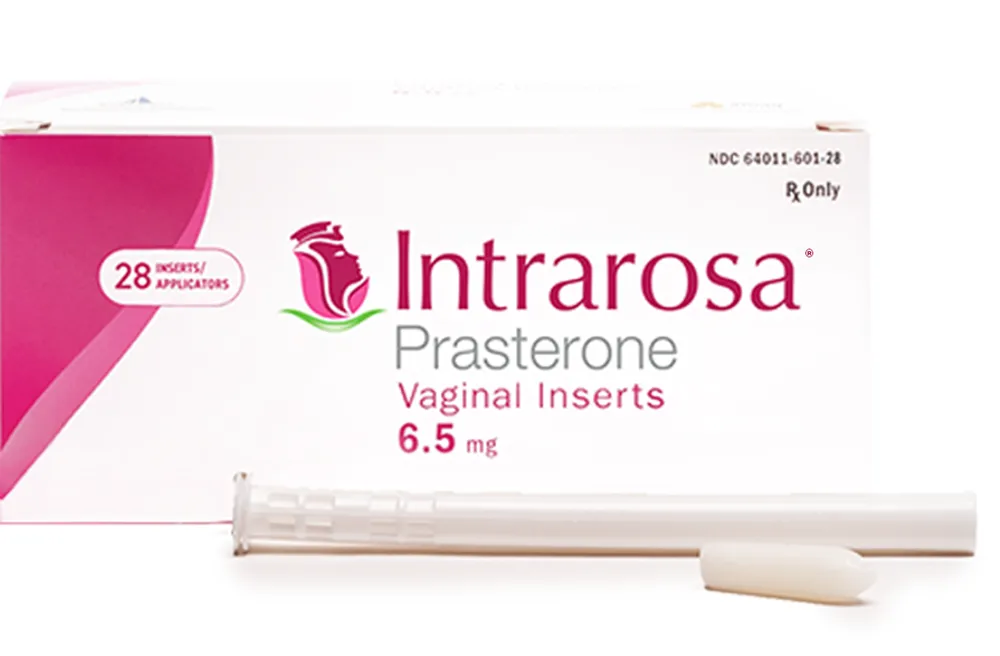
Table of Contents
- Package leaflet: Information for the user
- Intrarosa 6.5 mg vaginal suppositories
- 1. What Intrarosa is and what it is used for
- 2. What you should know before using Intrarosa
- 3. How to use Intrarosa
- 4. Possible side effects
- 5. How to store Intrarosa
- 6. Package contents and other information
- Instructions for the use of Intrarosa
Package leaflet: Information for the user
Intrarosa 6.5 mg vaginal suppositories
prasterone
Read this entire leaflet carefully before using this medicine because it contains important information for you.
- Keep this leaflet. You may need to read it again.
- If you have any questions, ask your doctor or pharmacist.
- This medicine has been prescribed for you only. Do not give it to others, even if they have the same symptoms as yours, as it may be harmful.
- If you experience any side effects, including those not listed in this leaflet, talk to your doctor or pharmacist. See section 4.
Contents of this leaflet
- What Intrarosa is and what it is used for
- What you need to know before using Intrarosa
- How to use Intrarosa
- Possible side effects
- How to store Intrarosa
- Contents of the pack and other information
1. What Intrarosa is and what it is used for
Intrarosa contains the active substance prasterone.
What Intrarosa is used for
Intrarosa is used to treat postmenopausal women who have moderate to severe symptoms of vulvovaginal atrophy. It is used to relieve menopausal symptoms in the vagina, such as dryness or irritation, caused by the decline in estrogen levels in the body. This is a natural phenomenon after menopause.
How Intrarosa works
Prasterone corrects the symptoms and signs of vulvovaginal atrophy by replacing the estrogens that are normally produced by the ovaries in women before menopause. It is inserted into the vagina, so that it is released where needed. This may relieve vaginal discomfort.
2. What you should know before using Intrarosa
The use of hormone replacement therapy (HRT) involves risks that must be considered when deciding whether to start or continue treatment.
Experience with treatment in women with premature menopause (due to ovarian failure or surgical intervention) is limited. In cases of premature menopause, the risks of HRT may differ. Consult your doctor.
Before starting (or resuming) HRT, your doctor will ask you about your personal and family medical history. Your doctor may decide to perform a clinical examination, which may include a breast and/or internal examination, if necessary.
Once you have started treatment with Intrarosa, consult your doctor for periodic check-ups (at least every 6 months). During these visits, discuss with your doctor the benefits and risks of continuing treatment with Intrarosa.
Undergo regular breast screening, according to your doctor’s recommendations.
Do not use Intrarosa
if any of the following apply to you. If you are unsure about any of the points listed below, speak with your doctor before starting treatment with Intrarosa.
- If you have or have previously had, or if it is suspected that you have breast cancer.
- If you have or it is suspected that you have an estrogen-sensitive cancer, such as cancer of the uterine lining (endometrium).
- If you have unexplained vaginal bleeding.
- If you have untreated excessive thickening of the uterine lining (endometrial hyperplasia).
- If you have or have previously had a blood clot in a vein (thrombosis), for example in the legs (deep vein thrombosis) or in the lungs (pulmonary embolism).
- If you have a blood clotting disorder (such as deficiency of protein C, protein S or antithrombin).
- If you have or have recently had an arterial disease caused by blood clots, such as heart attack, stroke or angina.
- If you have or have previously had liver disease and liver function tests have not returned to normal.
- If you have a rare inherited blood disorder called “porphyria”.
- If you are allergic to prasterone or to any of the other ingredients of this medicine (listed in section 6 “Contents in the pack and other information”).
If any of the above conditions occur for the first time while using Intrarosa, stop using it immediately and consult your doctor without delay.
Warnings and precautions
When to be particularly careful with Intrarosa
Inform your doctor if you have ever had any of the following conditions before starting treatment, as they may recur or worsen during treatment with Intrarosa. If so, consult your doctor more frequently for check-ups:
- Fibroids within the uterus;
- Growth of the uterine lining outside the uterus (endometriosis) or history of excessive thickening of the uterine lining (endometrial hyperplasia);
- Increased risk of developing blood clots [see “Blood clots in a vein (thrombosis)”];
- Increased risk of developing an estrogen-sensitive cancer (such as having a mother, sister or grandmother who had breast cancer);
- Hypertension;
- A liver disorder, such as benign liver tumour;
- Diabetes;
- Gallstones;
- Migraine or severe headaches;
- An autoimmune disease affecting multiple organs (systemic lupus erythematosus, SLE);
- Epilepsy;
- Asthma;
- A condition affecting the eardrum and hearing (otosclerosis);
- Very high levels of fats in the blood (triglycerides);
- Fluid retention due to heart or kidney problems.
Stop treatment with Intrarosa and consult your doctor immediately
if you experience any of the following conditions during treatment with HRT:
- Any of the conditions listed under “Do not use Intrarosa”;
- Yellowing of the skin or whites of the eyes (jaundice). These may be signs of liver disease;
- If you become pregnant;
- A sudden, marked increase in blood pressure (symptoms may include headache, fatigue, dizziness);
- New-onset headaches resembling migraines;
- Symptoms suggesting blood clot formation, such as:
- Painful swelling and redness in the legs;
- Sudden chest pain;
- Difficulty breathing. For further information, see section “Blood clots in a vein (thrombosis)”.
NB: Intrarosa is not a contraceptive. If less than 12 months have passed since your last menstrual period, or if you are under 50 years of age, you may need to use a contraceptive method to prevent pregnancy. Ask your doctor for advice.
HRT and cancer
Intrarosa has not been studied in women with current or previous history of cancer.
Excessive thickening of the uterine lining (endometrial hyperplasia) and cancer of the uterine lining (endometrial cancer)
Long-term treatment with estrogen-only HRT may increase the risk of developing cancer of the uterine lining (endometrium). Intrarosa does not stimulate the endometrium, as demonstrated by atrophy of the uterine lining in all women treated with Intrarosa for one year in clinical studies.
It is not certain whether there is a risk associated with long-term use of Intrarosa (more than one year). However, Intrarosa has been shown to have very low systemic absorption into the bloodstream; therefore, the addition of a progestogen is not required.
The occurrence of bleeding or dark vaginal discharge is generally not a cause for concern; however, you should make an appointment with your doctor. It could indicate thickening of the endometrium.
The following risks apply to systemic HRT medications circulating in the blood. However, Intrarosa is intended for local vaginal use and has very low systemic absorption. It is less likely that the conditions listed below will worsen or recur during treatment with Intrarosa, but you should contact your doctor if you have any concerns.
Breast cancer
Evidence suggests that taking combined estrogen-progestogen HRT, and possibly estrogen-only HRT, increases the risk of breast cancer. The additional risk depends on the duration of HRT use. The increased risk becomes apparent after a few years, but returns to normal levels within a few years (at most 5) after stopping treatment.
Perform regular breast examinations. Consult your doctor if you notice any changes, such as:
- Dimpling of the skin (peau d’orange);
- Changes in the nipple;
- Visible or palpable lumps.
In addition, you are advised to participate in mammographic screening programs when offered.
Ovarian cancer
Ovarian cancer is rare, much rarer than breast cancer. The use of estrogen-only HRT has been associated with a slight increase in the risk of ovarian cancer.
The risk of ovarian cancer varies with age. For example, among women aged 50 to 54 years not using HRT, about 2 out of 2,000 will be diagnosed with ovarian cancer over a 5-year period. Among women using HRT for 5 years, there will be about 3 cases per 2,000 women treated (i.e., about 1 additional case).
Cases of ovarian and breast cancer have been reported in women treated with 6.5 mg of prasterone for 52 weeks.
Effect of HRT on the heart and circulation
Intrarosa has not been studied in women with a history of thromboembolic disorders, uncontrolled hypertension, or heart disease.
Blood clots in a vein (thrombosis)
The risk of developing blood clots in veins is 1.3 to 3 times higher in women taking HRT compared to those not using it, especially during the first year of treatment.
Blood clots can be serious, and if one travels to the lungs, it can cause chest pain, breathlessness, fainting, or even death.
The likelihood of developing a venous blood clot increases with age and in the presence of any of the following conditions. Inform your doctor if any of these apply to you:
- If you are unable to walk for long periods due to major surgery, injury, or illness (see also section 3 “If you are scheduled for surgery”);
- If you are severely overweight (Body Mass Index > 30 kg/m²);
- If you have a blood clotting disorder requiring long-term treatment with medication to prevent clot formation;
- If a close relative has previously had a blood clot in the leg, lung, or another organ;
- If you have systemic lupus erythematosus (SLE);
- If you have cancer.
For signs of a blood clot, see “Stop treatment with Intrarosa and consult your doctor immediately”.
In clinical studies, deep vein thrombosis was not observed with the use of intravaginal prasterone, while one case of pulmonary embolism was reported, corresponding to a lower incidence with Intrarosa compared to the placebo group (a substance with no pharmacological effect).
Comparison
Among women around the age of 50 not using HRT, it is expected that, on average, 4 to 7 out of 1,000 will develop a venous blood clot over 5 years.
Heart disease (heart attack)/hypertension
No increased risk of heart disease has been observed in women taking estrogen-only HRT.
Stroke
The risk of stroke is approximately 1.5 times higher in women taking HRT compared to those not using it. The number of additional stroke cases due to HRT use increases with age.
No cases of stroke were observed with Intrarosa during clinical studies.
Comparison
Among women around the age of 50 not using HRT, it is expected that, on average, 8 out of 1,000 will have a stroke over 5 years. Among women around the age of 50 using HRT, there will be 11 cases per 1,000 users over 5 years (i.e., 3 additional cases).
Other clinical conditions
- HRT does not prevent memory loss. There is some evidence of an increased risk of memory loss in women who start HRT after the age of 65. Ask your doctor for advice.
- You may experience vaginal discharge caused by the melting of the “solid fatty base,” in addition to increased vaginal secretions due to treatment. If vaginal discharge occurs, it is not necessary to discontinue Intrarosa.
- Intrarosa may weaken latex condoms, diaphragms, or cervical caps.
- If you have a vaginal infection, you should receive antibiotic treatment before starting Intrarosa.
Children and adolescents
Intrarosa is intended only for use in adult women.
Other medicines and Intrarosa
Inform your doctor or pharmacist if you are taking, have recently taken, or might take any other medicines.
There are no data on efficacy and safety in women currently receiving hormonal therapy, such as androgens, HRT (estrogen-only or estrogen-progestogen), or vaginal estrogens.
The use of Intrarosa in combination with HRT (estrogen-only, combined estrogen-progestogen, or androgens) or with vaginal estrogens is not recommended.
Pregnancy, breastfeeding and fertility
Pregnancy and breastfeeding
Intrarosa is intended exclusively for use in postmenopausal women. If you become pregnant, stop treatment with Intrarosa and consult your doctor.
Fertility
Intrarosa is not indicated for use in women who may still be fertile. It is not yet known whether this medicine affects fertility.
Driving and using machines
Intrarosa does not affect the ability to drive or operate machinery.
3. How to use Intrarosa
Use this medicine exactly as instructed by your doctor or pharmacist. If
you have any doubts, consult your doctor or pharmacist.
Your doctor will prescribe the lowest effective dose for treating your symptoms for the shortest duration
necessary. Speak with your doctor if you feel this dose is too strong or not strong enough.
What dose to use
Apply one suppository once daily, at bedtime.
Instructions for use
Insert the suppository into the vagina with your finger or by using the applicator provided in the package.
Read carefully the instructions for using Intrarosa reported at the end of this leaflet before using this
medicine.
Duration of treatment
After the initial phase, consult your doctor at least every 6 months to review whether continued use of
Intrarosa is necessary.
If you use more Intrarosa than you should
A vaginal douche is recommended.
If you forget to use Intrarosa
If you forget to insert a suppository, do so as soon as you remember. However, if less than
8 hours remain before your next scheduled dose, do not take the missed dose.
Do not use two suppositories to make up for the forgotten dose.
If you need to undergo surgery
If you are scheduled for surgery, inform your doctor that you are taking Intrarosa. It may be necessary
to stop taking Intrarosa 4 to 6 weeks before surgery to reduce the risk of
blood clots (see section 2 “Blood clots in a vein (thrombosis)”). Ask your doctor when you can
start using Intrarosa again.
4. Possible side effects
Like all medicines, this medicine can cause side effects, although not everyone gets them.
The following conditions have been reported more frequently in women receiving systemic oestrogen therapy (TOS) in forms that circulate in the blood, compared to women not using TOS. These risks are lower with oestrogen treatments administered vaginally:
- breast cancer;
- ovarian cancer;
- blood clots in the veins of the legs or lungs (venous thromboembolism);
- stroke;
- possible memory loss if TOS is started at age 65 or older. For more information on these side effects, see section 2.
The most frequently reported side effect in clinical studies was vaginal discharge. This is likely due to the melting of the "solid fatty base" and is associated with an expected increase in vaginal secretions caused by treatment. Vaginal discharge does not require discontinuation of Intrarosa.
The following side effects have also been reported:
- Common (may affect up to 1 in 10 people): abnormal Pap test (mainly ASCUS or LGSIL), weight fluctuations (increase or decrease);
- Uncommon (may affect up to 1 in 100 people): benign cervical or uterine polyp, benign breast nodules.
The following side effects have been reported during clinical studies with TOS containing oestrogens, but not with Intrarosa:
- gallbladder disease;
- various skin disorders;
- skin pigmentation changes, particularly on the face or neck, known as "pregnancy mask" (chloasma);
- painful red nodules on the skin (erythema nodosum);
- skin rash with redness or target-shaped lesions (erythema multiforme).
Reporting of side effects
If you experience any side effect, including those not listed in this leaflet, please inform your doctor or pharmacist. You can also report side effects directly through the national reporting system listed in Annex V. By reporting side effects, you can help provide more information on the safety of this medicine.
5. How to store Intrarosa
Keep this medicine out of the sight and reach of children.
Do not use this medicine after the expiry date which is stated on the carton after "Exp" and on the blister after "EXP". The expiry date refers to the last day of that month.
Store below 30 °C.
Do not freeze.
Do not dispose of any medicine via wastewater or household waste. Ask your pharmacist how to dispose of medicines you no longer use. This will help protect the environment.
6. Package contents and other information
What Intrarosa contains
- The active substance is prasterone. Each suppository contains 6.5 mg of prasterone.
- The only other ingredient is solid fat: semisynthetic solid glycerides (adeps solidus).
Description of the appearance of Intrarosa and pack contents
Intrarosa is a white/whitish, oval-shaped suppository, approximately 28 mm in length and 9 mm in diameter at the widest end.
The applicator is made of LDPE and contains 1% colouring agent (titanium dioxide).
It is available in blisters containing 28 suppositories with 6 applicators.
Marketing Authorisation Holder
Endoceutics S.A.
Rue Belliard 40
1040 Brussels
Belgium
Manufacturer
Basic Pharma Manufacturing B.V.
Burgemeester Lemmensstraat 352
6163 JT Geleen
The Netherlands
For further information about this medicinal product, please contact the local representative of the Marketing Authorisation Holder:
België/Belgique/Belgien, Luxembourg/Luxemburg, Nederland
Theramex Belgium BVBA
Tél/Tel: + 32 (0) 28088080
[email protected]
Deutschland, Österreich
Theramex Germany GmbH
Tel: + 49 (0) 32 2122 490 37
[email protected]
España
Theramex Ireland Limited
Tel: + 34 911 143 487
France
Theramex France S.A.S.
Tél: + 33 (0) 800 100 350
[email protected]
Italia
Theramex Italy S.r.l.
Tel: + 39 02 81480024
[email protected]
Polska
Theramex Poland sp. z o.o.
Tel.: + 48 (0) 22 30 77 166
[email protected]
Portugal
Tecnimede - Sociedade Técnico-Medicinal, S.A.
Tel: + 351 210 414 100
[email protected]
United Kingdom (Northern Ireland), Ireland, Malta
Theramex UK Limited
Tel: + 44 (0) 3330096795
[email protected]
Danmark, Ísland, Norge, Suomi/Finland, Sverige
Avia Pharma AB
Sverige/Svíþjóð/Ruosti
Tlf/Sími/Tlf/Puh/Tel: + 46 (0) 8 544 900 22
България, Česká republika, Eesti, Ελλάδα, Hrvatska, Κύπρος, Latvija, Lietuva, Magyarország, România, Slovenija, Slovenská republika
Theramex Ireland Limited
Tel/Teл./Τηλ: + 353 (0) 15138855
[email protected]
Other sources of information
More detailed information on this medicinal product is available on the European Medicines Agency website: http://www.ema.europa.eu.
Instructions for the use of Intrarosa
How to use Intrarosa
- Insert one prasterone suppository into the vagina once daily at bedtime, using an applicator or your finger. Before starting
- Empty your bladder and wash your hands before touching the suppository or applicator.
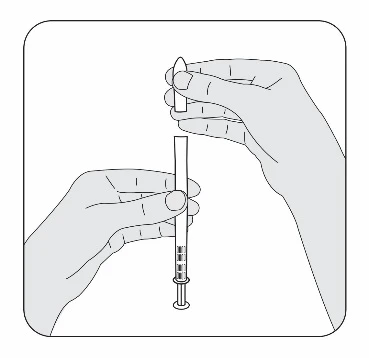
- Remove one suppository from the strip of 7 suppositories. A. If using the applicator STEP 1 STEP 5
- 1A. Take 1 applicator from the • Choose the most comfortable APPLICATOR package. position for inserting the suppository.
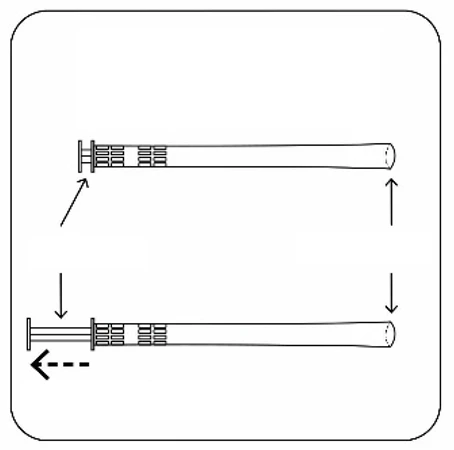
- 1B. Pull back the plunger until it stops to activate the applicator. The applicator must be activated before use. Place the applicator on a clean surface.
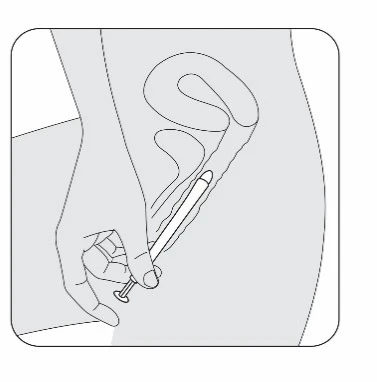
STEP 2 5a. Lying down position
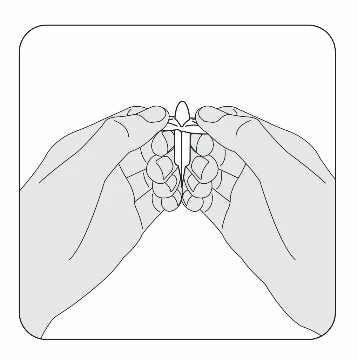
- Gently separate the plastic wrappers enclosing the suppository, holding the suppository firmly between your fingers.
- Carefully remove the suppository from its plastic compartment.
- If a suppository falls onto a non-clean surface, replace it with another one.
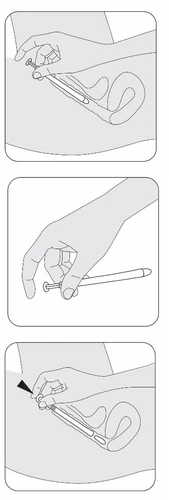
STEP 6
STEP 3
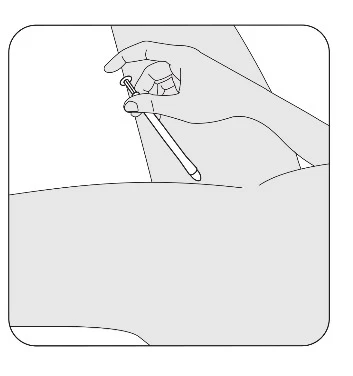
- Place the flat end of the • Gently push the applicator suppository into the open end with the suppository into the of the activated applicator, as vagina as deeply as possible. illustrated in the figure. Now insert the suppository into the vagina as deeply as possible. Do not force.
STEP 4 STEP 7
- Hold the applicator between • Press the plunger of the thumb and middle finger. the applicator with your index
- Keep your index finger free to finger to release the suppository. press the plunger of the • Remove the applicator. Wash or applicator after inserting it into discard it after one week of use (two additional applicators are the vagina. provided).
- To clean the applicator:
- Disassemble it into parts;
- Rinse both parts under running water for 30 seconds;
- Dry with a paper towel and reassemble. Store it in a clean place.
B. If using your finger
Follow the instructions described in Step 2, then insert the suppository into the vagina with your finger as deeply as possible. Do not force.
ANNEX IV
SCIENTIFIC CONCLUSIONS AND REASONS FOR THE VARIATION OF THE TERMS
OF THE MARKETING AUTHORISATION
Scientific conclusions
Taking into account the assessment of the Pharmacovigilance Risk Assessment Committee (PRAC) for the final report of the imposed non-interventional PASS study for the above-mentioned medicinal product(s), the scientific conclusions of the Committee for Medicinal Products for Human Use (CHMP) are as follows:
Intrarosa (prasterone) has been removed from the additional monitoring list, as the condition for marketing authorisation has been fulfilled. This refers to the non-interventional PASS – Drug Utilization Study (DUS), designed to describe baseline characteristics and usage patterns in postmenopausal women in the EU initiating treatment with Intrarosa, and to assess whether EU prescribers comply with the contraindications stated in the EU Summary of Product Characteristics (SmPC).
Therefore, the statement indicating that this medicinal product is subject to additional monitoring, and that this will allow rapid identification of new safety information, preceded by an inverted black equilateral triangle, will be removed from the Summary of Product Characteristics and the Package Leaflet.
In addition, the marketing authorisation holder has taken the opportunity to introduce a change to the list of local representatives.
The CHMP agrees with the scientific conclusions of the PRAC.
Reasons for the variation of the terms of the marketing authorisation
Based on the scientific conclusions regarding the results of the study on the above-mentioned medicinal products, the CHMP considers that the benefit-risk balance of these medicinal products remains unchanged, subject to the proposed modifications to the product information.
The CHMP is of the opinion that the terms of the marketing authorisation of the above-mentioned medicinal product should be varied.