Intelence
Italy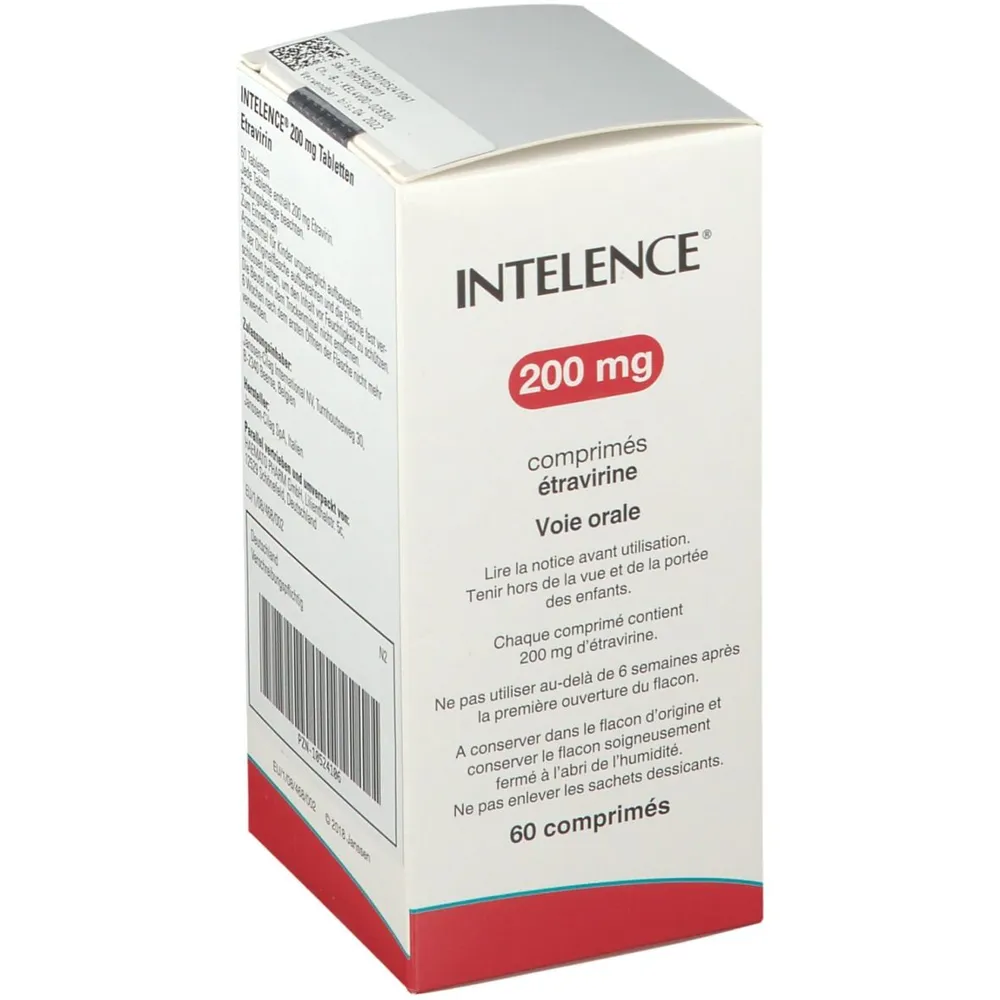
Instructions for Use
Table of Contents
- INTELENCE 25 mg tablets
- 1. What INTELENCE is and what it is used for
- 2. What you should know before taking INTELENCE
- 3. How to take INTELENCE
- 4. Possible side effects
- 5. How to store INTELENCE
- 6. Package contents and other information
- Package leaflet: Information for the user
- INTELENCE 100 mg tablets
- 1. What INTELENCE is and what it is used for
- 2. What you should know before taking INTELENCE
- 3. How to take INTELENCE
- 4. Possible side effects
- 5. How to store INTELENCE
- 6. Package contents and other information
- Package leaflet: information for the user
- INTELENCE 200 mg tablets
- 1. What INTELENCE is and what it is used for
- 2. What you need to know before taking INTELENCE
- 3. How to take INTELENCE
- 4. Possible side effects
- 5. How to store INTELENCE
- 6. Package contents and other information
Package leaflet: Information for the user
INTELENCE 25 mg tablets
etravirine
Please read all of this leaflet carefully before taking this medicine because it contains important information for you.
- Keep this leaflet. You may need to read it again.
- If you have any questions, ask your doctor or pharmacist.
- This medicine has been prescribed for you only. Do not give it to others, even if their symptoms are the same as yours, as it may be harmful.
- If you experience any adverse reactions, including those not listed in this leaflet, contact your doctor or pharmacist. See section 4.
Contents of this leaflet:
- What INTELENCE is and what it is used for
- What you need to know before taking INTELENCE
- How to take INTELENCE
- Possible side effects
- How to store INTELENCE
- Contents of the pack and other information
1. What INTELENCE is and what it is used for
INTELENCE contains the active substance etravirine. INTELENCE belongs to a group of
anti-HIV medicines called non-nucleoside reverse transcriptase inhibitors (NNRTIs).
INTELENCE is a medicine used to treat human immunodeficiency virus (HIV) infection.
INTELENCE works by reducing the amount of HIV virus in your body. This helps your immune
system improve, thereby reducing the risk of developing HIV-related illnesses.
INTELENCE is used in combination with other anti-HIV medicines to treat adult patients and
children from 2 years of age and older who are infected with HIV and who have previously been
treated with other anti-HIV medicines.
Your doctor will discuss with you the best combination of medicines for your treatment.
2. What you should know before taking INTELENCE
Do not take INTELENCE
- if you are allergic to etravirine or any of the excipients of this medicine (listed in section 6).
- if you are taking elbasvir/grazoprevir (a medicine used to treat hepatitis C infection).
Warnings and precautions
Talk to your doctor before taking INTELENCE.
INTELENCE is not a cure for HIV infection. It is part of a treatment regimen that reduces the amount of virus in the blood.
Elderly patients
INTELENCE has been used in only a limited number of patients aged 65 years and older. If you belong to this age group, discuss the use of INTELENCE with your doctor.
Weight gain and increased blood levels of lipids and glucose
During HIV therapy, weight gain and increased blood levels of lipids and glucose may occur. This is partly related to improved health status and lifestyle, and, in the case of blood lipids, sometimes to the HIV medicines themselves. Your doctor will order tests to monitor for these changes.
Bone problems
Some patients taking combination antiretroviral therapy may develop a bone disease called osteonecrosis (bone tissue death due to reduced blood supply to the bone). Factors that may increase the risk include long-term combination antiretroviral therapy, corticosteroid use, alcohol consumption, severe immunosuppression, high body mass index, and possibly other factors. Signs of osteonecrosis include joint stiffness, aches, and pain (especially in the hips, knees, and shoulders) and difficulty moving. If you experience any of these symptoms, inform your doctor.
Inform your doctor about your medical condition
Make sure to review the following points and inform your doctor if any of them apply to you.
- Inform your doctor if you develop a skin rash. If a rash occurs, it usually appears shortly after starting anti-HIV therapy with INTELENCE and often resolves within 1–2 weeks, even while continuing the medicine. Rarely, severe skin reactions such as blistering or peeling of the skin, particularly around the mouth or eyes, or a hypersensitivity reaction (allergic reaction including rash and fever, as well as swelling of the face, tongue, or throat, difficulty breathing or swallowing) may occur during treatment with INTELENCE, which could be potentially life-threatening. Contact your doctor immediately if you experience these symptoms. Your doctor will advise you on how to manage the symptoms and whether to discontinue INTELENCE. If you have stopped treatment due to a hypersensitivity reaction, you must not restart INTELENCE.
- Inform your doctor if you have or have had liver problems, including hepatitis B and/or C. Your doctor may assess the severity of your liver disease before deciding whether you can take INTELENCE.
- Inform your doctor immediately if you notice any signs of infection. In some patients with advanced HIV infection and a history of opportunistic infections, signs and symptoms of inflammation from previous infections may occur shortly after starting anti-HIV treatment. These are believed to result from improved immune response, enabling the body to fight infections that were previously present without noticeable symptoms.
- In addition to opportunistic infections, autoimmune disorders (a condition in which the immune system attacks healthy body tissue) may also occur after starting treatment for HIV infection. Autoimmune disorders may appear several months after starting treatment. If you notice any signs of infection or other symptoms such as muscle weakness, initial weakness in hands and feet progressing toward the trunk, palpitations, tremors, or hyperactivity, contact your doctor immediately to receive necessary treatment.
Children and adolescents
Do not give this medicine to children under 2 years of age or weighing less than 10 kg, as the potential benefits and risks have not been established.
Other medicines and INTELENCE
INTELENCE may interact with other medicines. Inform your doctor or pharmacist if you are taking, have recently taken, or might take any other medicines.
In most cases, INTELENCE can be combined with anti-HIV medicines from another therapeutic class. However, some combinations are not recommended. In other cases, closer monitoring and/or dose adjustments may be required. Therefore, always inform your doctor about any other anti-HIV medicines you are taking. It is also important to read carefully the package leaflets provided with these medicines. Follow your doctor’s instructions carefully regarding which medicines can be used together.
It is not recommended to combine INTELENCE with any of the following medicines:
- tipranavir/ritonavir, efavirenz, nevirapine, rilpivirine, indinavir, atazanavir/cobicistat, darunavir/cobicistat (anti-HIV medicines)
- carbamazepine, phenobarbital, phenytoin (medicines used to prevent epileptic seizures)
- rifampicin, because it is contraindicated with boosted protease inhibitors, and rifapentine (medicines used to treat certain infections, such as tuberculosis)
- products containing St. John’s wort (Hypericum perforatum) (a herbal product used for the treatment of depression)
- daclatasvir (a medicine used to treat hepatitis C infection).
If you are taking any of these medicines, consult your doctor for advice.
The effect of INTELENCE or other medicines may be altered if you take INTELENCE together with any of the following medicines. Dose adjustments may be necessary, as the therapeutic effect or side effects of these medicines may be affected when used with INTELENCE. Inform your doctor if you are taking:
- dolutegravir, maraviroc, amprenavir/ritonavir, and fosamprenavir/ritonavir (anti-HIV medicines)
- amiodarone, bepridil, digoxin, disopyramide, flecainide, lidocaine, mexiletine, propafenone, and quinidine (medicines used to treat certain heart conditions, e.g., abnormal heart rhythm)
- warfarin (a medicine used to reduce blood clotting). Your doctor may need to perform a blood test
- fluconazole, itraconazole, ketoconazole, posaconazole, voriconazole (medicines used to treat fungal infections)
- clarithromycin, rifabutin (antibiotics)
- artemether/lumefantrine (a medicine used to treat malaria)
- diazepam (medicines used to treat sleep disorders and/or anxiety)
- dexamethasone (a corticosteroid used in various conditions, such as inflammation and allergic reactions)
- atorvastatin, fluvastatin, lovastatin, rosuvastatin, simvastatin (medicines used to lower cholesterol levels)
- ciclosporin, sirolimus, tacrolimus (immunosuppressants, i.e., medicines used to suppress the immune system)
- sildenafil, vardenafil, tadalafil (medicines used to treat erectile dysfunction and/or pulmonary arterial hypertension)
- clopidogrel (a medicine used to prevent blood clots).
Pregnancy and breastfeeding
Inform your doctor immediately if you are pregnant: Pregnant women should not take INTELENCE unless specifically instructed by their doctor.
Women taking INTELENCE are advised not to breastfeed due to potential adverse effects in infants.
Breastfeeding is not recommended for HIV-positive women because HIV infection can be transmitted to the infant through breast milk. If you are breastfeeding or considering breastfeeding, discuss this with your doctor as soon as possible.
Driving and using machines
Do not drive or operate machinery if you feel drowsy or dizzy after taking this medicine.
INTELENCE contains lactose
INTELENCE tablets contain lactose. If your doctor has diagnosed you with an intolerance to certain sugars (lactose), contact your doctor before taking this medicine.
INTELENCE contains sodium
This medicine contains less than 1 mmol (23 mg) of sodium per tablet, i.e., it is essentially ‘sodium-free’.
3. How to take INTELENCE
Take this medicine exactly as instructed by your doctor or pharmacist. If you have any doubts, consult your doctor or pharmacist.
Use in adults
Other formulations of this medicine may be more suitable for adults.
The recommended dose of INTELENCE is 200 mg twice daily.
In the morning, take two 100-milligram INTELENCE tablets after a meal.
In the evening, take two 100-milligram INTELENCE tablets after a meal.
Use in children and adolescents aged 2 years and older with a body weight of at least 10 kg
Your doctor will calculate the correct dose based on the child's body weight.
Your doctor will inform you exactly how much INTELENCE the child should take.
Instructions on how to take INTELENCE for all patients
It is important to take INTELENCE after a meal. If taken on an empty stomach, only half of the INTELENCE dose is absorbed. You may take INTELENCE with food after consulting your doctor about the type of food.
Swallow the INTELENCE tablets whole with a glass of water. Do not chew the tablets. The tablets may be divided into two equal doses.
- If you are unable to swallow the INTELENCE tablets whole, you may do the following:
- place the tablets in 5 ml of water (1 teaspoon) or in a sufficient amount of liquid to cover the medicine,
- mix well for about 1 minute until the water appears milky,
- if desired, add up to 30 ml (2 tablespoons) or more of water, or alternatively orange juice or milk (do not place the tablets directly into orange juice or milk),
- drink immediately, then rinse the glass several times with water, orange juice, or milk, drinking each rinse completely to ensure the full dose is taken.
If you dissolve INTELENCE tablet(s) in a liquid, take it before any other liquid anti-HIV medicines you need to take at the same time.
Contact your doctor if you are unable to swallow the entire dose when dissolved in a liquid.
If your child needs to take INTELENCE tablets mixed with a liquid, it is very important that the entire dose is taken so that the correct amount of medicine enters the body. If the full dose is not taken, there is a higher risk that the virus may develop resistance. Speak to your doctor if your child is unable to ingest the entire dose when mixed with a liquid, as they may consider administering another medicine for your child's treatment.
Do not use hot beverages (40°C or above) or carbonated drinks when taking INTELENCE tablets.
Removing the child-resistant cap.

The plastic bottle is equipped with a child-resistant cap and must be opened as follows:
- Push down on the plastic cap and turn it counterclockwise.
- Remove the unscrewed cap.
If you take more INTELENCE than you should
Contact your doctor or pharmacist immediately. The most common side effects of INTELENCE are rash, diarrhea, nausea, and headache (see section “4. Possible side effects”).
If you forget to take INTELENCE
If you realize within 6 hours of the usual time you take INTELENCE, take the tablets as soon as possible. Always take the tablets after a meal. Then take the next dose at the usual time. If you realize after 6 hours, skip the missed dose and take the next dose at the usual time. Do not take a double dose to make up for a forgotten dose.
If you vomit within 4 hours after taking INTELENCE, take another dose after a meal. If you vomit more than 4 hours after taking INTELENCE, do not take another dose until the next scheduled dose.
If you have any doubts about what to do if you missed a dose or vomited, speak to your doctor.
Do not stop taking INTELENCE without first talking to your doctor
HIV treatment may improve your sense of well-being. Even if you feel better, do not stop taking INTELENCE or other anti-HIV medicines. Doing so may increase the risk that the virus develops resistance. Discuss this with your doctor first.
If you have any questions about using this medicine, consult your doctor or pharmacist.
4. Possible side effects
Like all medicines, this medicine can cause side effects, although not everybody gets them.
The frequency rate of side effects associated with INTELENCE is listed below.
Very common side effects (may occur in more than 1 in 10 people)
- Rash. These rashes are usually mild or moderate in severity. In rare cases, a life-threatening rash has been reported. It is therefore important that you contact your doctor immediately if you develop a rash. Your doctor will advise you on how to manage the symptoms or whether INTELENCE should be discontinued;
- Headache;
- Diarrhoea, nausea.
Common side effects (may occur in less than 1 in 10 people)
- Allergic reactions (hypersensitivity);
- Diabetes, decreased appetite;
- Anxiety, drowsiness, insomnia, sleep disorders;
- Tingling or pain in hands or feet, numbness, loss of skin sensation, memory loss, fatigue;
- Blurred vision;
- Kidney failure, high blood pressure, heart attack, shortness of breath during physical exertion;
- Vomiting, heartburn, abdominal pain, abdominal distension, inflammation of the stomach, flatulence (intestinal gas), constipation, inflammation of the mouth, dry mouth;
- Night sweats, itching sensation, dry skin;
- Changes in certain blood cell counts or blood and/or urine chemical parameters, which may be detected through blood and/or urine tests. Your doctor will explain the meaning of these changes to you. An example is a reduction in the number of red blood cells.
Uncommon side effects (may occur in less than 1 in 100 people)
- Decrease in the number of white blood cells;
- Symptoms of infection (e.g. swollen lymph nodes and fever);
- Abnormal dreams, confusion, disorientation, restlessness, nightmares;
- Drowsiness, tremors, fainting, seizures, attention disturbance;
- Dizziness, lethargy;
- Angina, irregular heartbeat;
- Difficulty breathing;
- Nausea, inflammation of the pancreas, vomiting blood;
- Liver problems such as hepatitis, enlarged liver;
- Excessive sweating, swelling of the face and/or throat;
- Breast enlargement in men.
Rare side effects (may occur in up to 1 in 1,000 people)
- Stroke;
- Severe skin reaction with blisters or peeling of the skin, particularly around the mouth or eyes; this may occur more frequently in children and adolescents than in adults.
Very rare side effects (may occur in up to 1 in 10,000 people)
- Severe hypersensitivity reaction characterised by rash accompanied by fever and inflammation of organs such as the liver.
Reporting of side effects
If you experience any side effect, including those not listed in this leaflet, talk to your doctor or pharmacist. You can also report side effects directly via the national reporting system listed in Annex V.
By reporting side effects, you can help provide more information on the safety of this medicine.
5. How to store INTELENCE
Keep this medicine out of the sight and reach of children.
Do not use this medicine after the expiry date stated on the carton and on the bottle after the word "Exp". The expiry date refers to the last day of the month.
Do not use this medicine after 8 weeks from opening the bottle.
INTELENCE tablets must be stored in the original bottle and the bottle must be kept tightly closed to protect the medicine from moisture. The bottle contains 2 small sachets (desiccant) to keep the tablets dry. These sachets must always remain in the bottle and must not be eaten.
Do not dispose of medicines via wastewater or household waste. Ask your pharmacist how to dispose of medicines you no longer use. This will help protect the environment.
6. Package contents and other information
What INTELENCE contains
- The active substance is etravirine. Each INTELENCE tablet contains 25 mg of etravirine.
- The other components are hypromellose, microcrystalline cellulose, anhydrous colloidal silica, sodium croscarmellose, magnesium stearate and monohydrate lactose.
Description of the appearance of INTELENCE and contents of the pack
This medicine is supplied as a white to off-white, oval-shaped tablet marked with "TMC". The tablet can be divided into two equal doses.
A plastic bottle containing 120 tablets and 2 desiccant sachets to keep the tablets dry.
Marketing Authorisation Holder
Janssen-Cilag International NV, Turnhoutseweg 30, B-2340 Beerse, Belgium
Manufacturer
Janssen-Cilag SpA, Via C. Janssen, 04100 Borgo San Michele, Latina, Italy
For further information about this medicine, please contact the local representative of the Marketing Authorisation Holder:
België/Belgique/Belgien Lietuva
Janssen-Cilag NV UAB "JOHNSON & JOHNSON"
Tel/Tél: +32 14 64 94 11 Tel: +370 5 278 68 88
[email protected] [email protected]
България Luxembourg/Luxemburg
„Джонсън & Джонсън България” ЕООД Janssen-Cilag NV
Тел.: +359 2 489 94 00 Tél/Tel: +32 14 64 94 11
[email protected] [email protected]
Česká republika Magyarország
Janssen-Cilag s.r.o. Janssen-Cilag Kft.
Tel: +420 227 012 227 Tel.: +36 1 884 2858
[email protected]
Danmark Malta
Janssen-Cilag A/S AM MANGION LTD.
Tlf: +45 4594 8282 Tel: +356 2397 6000
[email protected]
Deutschland Nederland
Janssen-Cilag GmbH Janssen-Cilag B.V.
Tel: +49 2137 955 955 Tel: +31 76 711 1111
[email protected] [email protected]
Eesti Norge
UAB "JOHNSON & JOHNSON" Eesti filiaal Janssen-Cilag AS
Tel: +372 617 7410 Tlf: +47 24 12 65 00
[email protected] [email protected]
Ελλάδα Österreich
Janssen-Cilag Φαρμακευτική Α.Ε.Β.Ε. Janssen-Cilag Pharma GmbH
Tηλ: +30 210 80 90 000 Tel: +43 1 610 300
España Polska
Janssen-Cilag, S.A. Janssen-Cilag Polska Sp. z o.o.
Tel: +34 91 722 81 00 Tel.: +48 22 237 60 00
[email protected]
France Portugal
Janssen-Cilag Janssen-Cilag Farmacêutica, Lda.
Tél: 0 800 25 50 75 / +33 1 55 00 40 03 Tel: +351 214 368 600
[email protected]
Hrvatska România
Johnson & Johnson S.E. d.o.o. Johnson & Johnson România SRL
Tel: +385 1 6610 700 Tel: +40 21 207 1800
[email protected]
Ireland Slovenija
Janssen Sciences Ireland UC Johnson & Johnson d.o.o.
Tel: +353 1 800 709 122 Tel: +386 1 401 18 00
[email protected]
Ísland Slovenská republika
Janssen-Cilag AB Johnson & Johnson s.r.o.
c/o Vistor hf. Tel: +421 232 408 400
Sími: +354 535 7000
[email protected]
Italia Suomi/Finland
Janssen-Cilag SpA Janssen-Cilag Oy
Tel: 800.688.777 / +39 02 2510 1 Puh/Tel: +358 207 531 300
[email protected] [email protected]
Κύπρος Sverige
Βαρνάβας Χατζηπαναγής Λτδ Janssen-Cilag AB
Τηλ: +357 22 207 700 Tfn: +46 8 626 50 00
[email protected]
Latvija United Kingdom (Northern Ireland)
UAB "JOHNSON & JOHNSON" filiāle Latvijā Janssen Sciences Ireland UC
Tel: +371 678 93561 Tel: +44 1 494 567 444
[email protected]
More detailed information on this medicine is available on the website of the European Medicines Agency: http://www.ema.europa.eu/.
Package leaflet: Information for the user
INTELENCE 100 mg tablets
etravirine
Please read this leaflet carefully before taking this medicine because it contains
important information for you.
- Keep this leaflet. You may need to read it again.
- If you have any questions, ask your doctor or pharmacist.
- This medicine has been prescribed for you only. Do not give it to other people, even if their symptoms are the same as yours, as it may be harmful.
- If you experience any adverse reaction, including those not listed in this leaflet, contact your doctor or pharmacist. See section 4.
Contents of this leaflet:
- What INTELENCE is and what it is used for
- What you need to know before taking INTELENCE
- How to take INTELENCE
- Possible side effects
- How to store INTELENCE
- Contents of the pack and other information
1. What INTELENCE is and what it is used for
INTELENCE contains the active substance etravirine. INTELENCE belongs to a group of
anti-HIV medicines called non-nucleoside reverse transcriptase inhibitors (NNRTIs).
INTELENCE is a medicine used to treat human immunodeficiency virus (HIV) infection. INTELENCE works by reducing the amount of HIV virus in your body. This helps your immune system improve, thereby reducing the risk of developing HIV-related illnesses.
INTELENCE is used in combination with other anti-HIV medicines to treat adult patients and children from 2 years of age and older infected with HIV who have previously been treated with other anti-HIV medicines.
Your doctor will discuss with you the best combination of medicines suitable for your condition.
2. What you should know before taking INTELENCE
Do not take INTELENCE
- if you are allergic to etravirine or any of the excipients of this medicine (listed in section 6)
- if you are taking elbasvir/grazoprevir (a medicine used to treat hepatitis C infection).
Warnings and precautions
Talk to your doctor before taking INTELENCE.
INTELENCE is not a cure for HIV infection. It is part of a treatment regimen that reduces the amount of virus in the blood.
Elderly
INTELENCE has been used in only a limited number of patients aged 65 years or older. If you belong to this age group, discuss the use of INTELENCE with your doctor.
Weight gain and increased blood levels of lipids and glucose
During HIV treatment, weight gain and increased blood levels of lipids and glucose may occur. This is partly related to improved health and lifestyle, and, in the case of blood lipids, sometimes to the HIV medicines themselves. Your doctor will order tests to monitor for these changes.
Bone problems
Some patients taking combination antiretroviral therapy may develop a bone disease called osteonecrosis (death of bone tissue due to reduced blood supply to the bone). Risk factors may include duration of combination antiretroviral therapy, use of corticosteroids, alcohol consumption, severe immunosuppression, high body mass index, and other factors. Signs of osteonecrosis include joint stiffness, aches, pain (especially in the hips, knees, and shoulders), and difficulty moving. If you experience any of these symptoms, inform your doctor.
Inform your doctor about your medical condition
Please review the following points and inform your doctor if any of them apply to you.
- Inform your doctor if you develop a skin rash. If a rash occurs, it usually appears soon after starting anti-HIV therapy with INTELENCE and often resolves within 1–2 weeks, even while continuing the medicine. Rarely, severe skin reactions with blisters or skin peeling, particularly around the mouth or eyes, or a hypersensitivity reaction (allergic reaction including rash and fever, as well as swelling of the face, tongue, or throat, difficulty breathing or swallowing) may occur during treatment with INTELENCE, which could potentially be life-threatening. Contact your doctor immediately if you experience any of these symptoms. Your doctor will advise you on how to manage the symptoms and whether to discontinue INTELENCE. If you have stopped treatment due to a hypersensitivity reaction, you must not restart therapy with INTELENCE.
- Inform your doctor if you have or have had liver problems, including hepatitis B and/or C. Your doctor may assess the severity of your liver disease before deciding whether you can take INTELENCE.
- Inform your doctor immediately if you notice any signs of infection. In some patients with advanced HIV infection and a history of opportunistic infections, signs and symptoms of inflammation from previous infections may occur shortly after starting anti-HIV treatment. These symptoms are believed to result from improved immune response, enabling the body to fight infections that may have been present without obvious symptoms.
- In addition to opportunistic infections, autoimmune disorders (a condition in which the immune system attacks healthy body tissue) may also occur after starting medicines for HIV infection. Autoimmune disorders may occur several months after starting treatment. If you notice any signs of infection or other symptoms such as muscle weakness, initial weakness in hands and feet progressing toward the trunk, palpitations, tremors, or hyperactivity, inform your doctor immediately to receive necessary treatment.
Children and adolescents
Do not give this medicine to children under 2 years of age and weighing less than 10 kg, as the potential benefits and risks have not been established.
Other medicines and INTELENCE
INTELENCE may interact with other medicines. Inform your doctor or pharmacist if you are taking, have recently taken, or might take any other medicines.
In most cases, INTELENCE can be used together with anti-HIV medicines from another therapeutic class. However, some combinations are not recommended. In other cases, closer monitoring and/or dose adjustments may be required. Therefore, always inform your doctor about which other anti-HIV medicines you are taking. It is also important to carefully read the package leaflets provided with these medicines. Follow your doctor’s instructions carefully regarding which medicines can be used together.
It is not recommended to combine INTELENCE with any of the following medicines:
- tipranavir/ritonavir, efavirenz, nevirapine, rilpivirine, indinavir, atazanavir/cobicistat, darunavir/cobicistat (anti-HIV medicines)
- carbamazepine, phenobarbital, phenytoin (medicines to prevent epileptic seizures)
- rifampicin, because it is contraindicated with boosted protease inhibitors, and rifapentine (medicines used to treat certain infections, such as tuberculosis)
- products containing St John’s wort (Hypericum perforatum) (a herbal product used to treat depression)
- daclatasvir (a medicine used to treat hepatitis C infection).
If you are taking any of these medicines, consult your doctor for advice.
The effect of INTELENCE or other medicines may be affected if you take INTELENCE together with any of the following medicines. Dose adjustments may be necessary, as their therapeutic effect or side effects may be altered when used with INTELENCE. Inform your doctor if you are taking:
- dolutegravir, maraviroc, amprenavir/ritonavir, and fosamprenavir/ritonavir (anti-HIV medicines)
- amiodarone, bepridil, digoxin, disopyramide, flecainide, lidocaine, mexiletine, propafenone, and quinidine (medicines used to treat certain heart conditions, e.g., abnormal heart rhythm)
- warfarin (a medicine used to reduce blood clotting). Your doctor may need to perform a blood test
- fluconazole, itraconazole, ketoconazole, posaconazole, voriconazole (medicines used to treat fungal infections)
- clarithromycin, rifabutin (antibiotics)
- artemether/lumefantrine (a medicine used to treat malaria)
- diazepam (medicines used to treat sleep disorders and/or anxiety)
- dexamethasone (a corticosteroid used in many conditions, such as inflammation and allergic reactions)
- atorvastatin, fluvastatin, lovastatin, rosuvastatin, simvastatin (medicines used to lower cholesterol levels)
- cyclosporine, sirolimus, tacrolimus (immunosuppressants, i.e., medicines used to suppress the immune system)
- sildenafil, vardenafil, tadalafil (medicines used to treat erectile dysfunction and/or pulmonary arterial hypertension)
- clopidogrel (a medicine used to prevent blood clots).
Pregnancy and breastfeeding
Inform your doctor immediately if you are pregnant: Pregnant women should not take INTELENCE unless specifically instructed by their doctor.
Women taking INTELENCE are advised not to breastfeed due to potential adverse effects in infants.
Breastfeeding is not recommended for HIV-positive women because HIV infection can be transmitted to the infant through breast milk. If you are breastfeeding or considering breastfeeding, discuss this with your doctor as soon as possible.
Driving and using machines
Do not drive or operate machinery if you feel drowsy or dizzy after taking this medicine.
INTELENCE contains lactose
INTELENCE tablets contain lactose. If your doctor has diagnosed you with an intolerance to certain sugars (lactose), contact your doctor before taking this medicine.
INTELENCE contains sodium
This medicine contains less than 1 mmol (23 mg) of sodium per tablet, i.e., it is essentially ‘sodium-free’.
3. How to take INTELENCE
Take this medicine exactly as directed by your doctor or pharmacist. If you have any doubts, consult your doctor or pharmacist.
Use in adults
The recommended dose of INTELENCE is two tablets twice daily.
In the morning, take two 100 milligram INTELENCE tablets after a meal.
In the evening, take two 100 milligram INTELENCE tablets after a meal.
Use in children and adolescents aged 2 years and older with a body weight of at least 10 kg
Your doctor will calculate the correct dose based on the child's body weight.
Your doctor will inform you exactly how much INTELENCE the child should take.
Instructions on how to take INTELENCE for all patients
It is important to take INTELENCE after a meal. If taken on an empty stomach, only half of the dose of INTELENCE is absorbed. You may take INTELENCE with food, but consult your doctor about the type of food.
Swallow the INTELENCE tablets whole with a glass of water. Do not chew the tablets.
- If you are unable to swallow the INTELENCE tablets whole, you may do the following:
- Place the tablets in 5 ml of water (1 teaspoon) or in a sufficient amount of liquid to cover the medicine,
- Stir well for about 1 minute, until the water appears milky,
- If desired, add up to 30 ml (2 tablespoons) or more of water, or alternatively orange juice or milk (do not place the tablets directly into orange juice or milk),
- Drink immediately, then rinse the glass several times with water, orange juice, or milk, drinking each rinse completely, to ensure the entire dose is taken.
If you dissolve INTELENCE tablet(s) in a liquid, take it before any other liquid anti-HIV medicines you are taking concomitantly.
Contact your doctor if you are unable to swallow the entire dose when dissolved in a liquid.
If your child needs to take INTELENCE tablets mixed with a liquid, it is very important that the entire dose is taken so that the correct amount of medicine enters the body. If the full dose is not taken, there is a greater risk that the virus may develop resistance. Speak to your doctor if your child is unable to ingest the entire dose when mixed with a liquid, as your doctor may consider administering a different medicine for your child’s treatment.
Do not use hot (40°C or above) or carbonated beverages when taking INTELENCE tablets.
Child-resistant cap removal

The plastic bottle is equipped with a child-resistant cap and must be opened as follows:
- Press down on the plastic cap and turn it counterclockwise.
- Remove the unscrewed cap.
If you take more INTELENCE than you should
Contact your doctor or pharmacist immediately. The most common side effects of INTELENCE are rash, diarrhea, nausea, and headache (see section “4. Possible side effects”).
If you forget to take INTELENCE
If you remember within 6 hours of the time you usually take INTELENCE, take the tablets as soon as possible. Always take the tablets after a meal. Then take the next dose at your usual time. If you remember more than 6 hours later, skip the missed dose and take the next dose at your usual time. Do not take a double dose to make up for the forgotten dose.
If vomiting occurs within 4 hours after taking INTELENCE, take another dose after a meal. If vomiting occurs more than 4 hours after taking INTELENCE, do not take another dose until your next scheduled dose.
If you have any doubts about what to do if you miss a dose or vomit, consult your doctor.
Do not stop taking INTELENCE without first talking to your doctor
HIV treatment may improve your sense of well-being. Even if you feel better, do not stop taking INTELENCE or other anti-HIV medicines. Doing so may increase the risk that the virus develops resistance. Discuss this with your doctor first.
If you have any questions about the use of this medicine, consult your doctor or pharmacist.
4. Possible side effects
Like all medicines, this medicine can cause side effects, although not everyone experiences them.
The frequency rates of side effects associated with INTELENCE are listed below.
Very common side effects (may occur in more than 1 person out of 10)
- Rash. These rashes are usually mild or moderate in severity. In rare cases, life-threatening rashes have been reported. It is therefore important that you contact your doctor immediately if you develop a rash. Your doctor will advise you on how to manage symptoms or whether INTELENCE should be discontinued.
- Headache;
- Diarrhoea, nausea.
Common side effects (may occur in less than 1 person out of 10)
- Allergic reactions (hypersensitivity);
- Diabetes, decreased appetite;
- Anxiety, drowsiness, insomnia, sleep disorders;
- Tingling or pain in hands or feet, numbness, loss of skin sensation, memory loss, fatigue;
- Blurred vision;
- Kidney failure, high blood pressure, heart attack, shortness of breath during physical exertion;
- Vomiting, heartburn, abdominal pain, abdominal distension, inflammation of the stomach, flatulence (intestinal gas), constipation, inflammation of the mouth, dry mouth;
- Night sweats, itching sensation, dry skin;
- Changes in certain blood cell counts or blood chemical parameters, which may be revealed by blood and/or urine tests. Your doctor will explain the significance of these changes. One example is a reduction in the number of red blood cells.
Uncommon side effects (may occur in less than 1 person out of 100)
- Reduction in the number of white blood cells;
- Symptoms of infection (e.g. swollen lymph nodes and fever);
- Abnormal dreams, confusion, disorientation, restlessness, nightmares;
- Drowsiness, tremors, fainting, seizures, attention disturbances;
- Dizziness, lethargy.
Rare side effects (may occur in up to 1 person out of 1,000)
- Angina, irregular heart rhythm;
- Difficulty breathing;
- Nausea, inflammation of the pancreas, vomiting blood;
- Liver problems such as hepatitis, enlarged liver;
- Excessive sweating, swelling of the face and/or throat;
- Breast enlargement in men.
Very rare side effects (may occur in up to 1 person out of 10,000)
- Stroke;
- Severe skin reaction with blisters or skin peeling, particularly around the mouth or eyes; this may occur more frequently in children and adolescents than in adults.
Hypersensitivity reaction
Severe hypersensitivity reaction characterised by rash accompanied by fever and inflammation of organs such as the liver.
Reporting of side effects
If you experience any side effects, including those not listed in this leaflet, talk to your doctor or pharmacist. You can also report side effects directly via the national reporting system detailed in Annex V.
By reporting side effects, you can help provide more information on the safety of this medicine.
5. How to store INTELENCE
Keep this medicine out of the sight and reach of children.
Do not use this medicine after the expiry date stated on the carton and on the bottle following the
word "Exp". The expiry date refers to the last day of that month.
INTELENCE tablets must be stored in the original bottle and the bottle must be kept tightly closed to
protect the medicine from moisture. The bottle contains 3 small sachets (desiccant) to keep the tablets dry.
These sachets must always remain in the bottle and must not be eaten.
Do not dispose of medicines via wastewater or household waste. Ask your pharmacist how to dispose of
medicines no longer required. This will help protect the environment.
6. Package contents and other information
What INTELENCE contains
- The active substance is etravirine. Each INTELENCE tablet contains 100 mg of etravirine.
- The other ingredients are hypromellose, microcrystalline cellulose, anhydrous colloidal silica, sodium croscarmellose, magnesium stearate and monohydrate lactose.
Description of the appearance of INTELENCE and contents of the pack
This medicinal product is a white to off-white, oval-shaped tablet, marked with "T125" on one side and "100" on the other.
A plastic bottle containing 120 tablets and 3 sachets to keep the tablets dry.
Marketing Authorisation Holder
Janssen-Cilag International NV, Turnhoutseweg 30, B-2340 Beerse, Belgium
Manufacturer
Janssen-Cilag SpA, Via C. Janssen, 04100 Borgo San Michele, Latina, Italy
For further information about this medicinal product, please contact the local representative of the Marketing Authorisation Holder:
België/Belgique/Belgien Lietuva
Janssen-Cilag NV UAB "JOHNSON & JOHNSON"
Tel/Tél: +32 14 64 94 11 Tel: +370 5 278 68 88
[email protected] [email protected]
България Luxembourg/Luxemburg
„Джонсън & Джонсън България” ЕООД Janssen-Cilag NV
Тел.: +359 2 489 94 00 Tél/Tel: +32 14 64 94 11
[email protected] [email protected]
Česká republika Magyarország
Janssen-Cilag s.r.o. Janssen-Cilag Kft.
Tel: +420 227 012 227 Tel.: +36 1 884 2858
[email protected]
Danmark Malta
Janssen-Cilag A/S AM MANGION LTD.
Tlf: +45 4594 8282 Tel: +356 2397 6000
[email protected]
Deutschland Nederland
Janssen-Cilag GmbH Janssen-Cilag B.V.
Tel: +49 2137 955 955 Tel: +31 76 711 1111
[email protected] [email protected]
Eesti Norge
UAB "JOHNSON & JOHNSON" Eesti filiaal Janssen-Cilag AS
Tel: +372 617 7410 Tlf: +47 24 12 65 00
[email protected] [email protected]
Ελλάδα Österreich
Janssen-Cilag Φαρμακευτική Α.Ε.Β.Ε. Janssen-Cilag Pharma GmbH
Tηλ: +30 210 80 90 000 Tel: +43 1 610 300
España Polska
Janssen-Cilag, S.A. Janssen-Cilag Polska Sp. z o.o.
Tel: +34 91 722 81 00 Tel.: +48 22 237 60 00
[email protected]
France Portugal
Janssen-Cilag Janssen-Cilag Farmacêutica, Lda.
Tél: 0 800 25 50 75 / +33 1 55 00 40 03 Tel: +351 214 368 600
[email protected]
Hrvatska România
Johnson & Johnson S.E. d.o.o. Johnson & Johnson România SRL
Tel: +385 1 6610 700 Tel: +40 21 207 1800
[email protected]
Ireland Slovenija
Janssen Sciences Ireland UC Johnson & Johnson d.o.o.
Tel: +353 1 800 709 122 Tel: +386 1 401 18 00
[email protected]
Ísland Slovenská republika
Janssen-Cilag AB Johnson & Johnson s.r.o.
c/o Vistor hf. Tel: +421 232 408 400
Sími: +354 535 7000
[email protected]
Italia Suomi/Finland
Janssen-Cilag SpA Janssen-Cilag Oy
Tel: 800.688.777 / +39 02 2510 1 Puh/Tel: +358 207 531 300
[email protected] [email protected]
Κύπρος Sverige
Βαρνάβας Χατζηπαναγής Λτδ Janssen-Cilag AB
Τηλ: +357 22 207 700 Tfn: +46 8 626 50 00
[email protected]
Latvija United Kingdom (Northern Ireland)
UAB "JOHNSON & JOHNSON" filiāle Latvijā Janssen Sciences Ireland UC
Tel: +371 678 93561 Tel: +44 1 494 567 444
[email protected]
More detailed information on this medicinal product is available on the European Medicines Agency website: http://www.ema.europa.eu/.
Package leaflet: information for the user
INTELENCE 200 mg tablets
etravirine
Please read this leaflet carefully before taking this medicine because it contains
important information for you.
- Keep this leaflet. You may need to read it again.
- If you have any questions, ask your doctor or pharmacist.
- This medicine has been prescribed for you only. Do not give it to other people, even if they have the same symptoms as you, because it could be harmful.
- If you experience any side effects, including those not listed in this leaflet, contact your doctor or pharmacist. See section 4.
Contents of this leaflet:
- What INTELENCE is and what it is used for
- What you need to know before taking INTELENCE
- How to take INTELENCE
- Possible side effects
- How to store INTELENCE
- Contents of the pack and other information
1. What INTELENCE is and what it is used for
INTELENCE contains the active substance etravirine. INTELENCE belongs to a group of
anti-HIV medicines called non-nucleoside reverse transcriptase inhibitors (NNRTIs).
INTELENCE is a medicine used to treat human immunodeficiency virus (HIV) infection. INTELENCE works by reducing the amount of HIV virus in your body. This helps your immune system improve, thereby reducing the risk of developing HIV-related illnesses.
INTELENCE is used in combination with other anti-HIV medicines to treat adult patients and children from 2 years of age onwards who are infected with HIV and who have previously been treated with other anti-HIV medicines.
Your doctor will discuss with you the best combination of medicines for your treatment.
2. What you need to know before taking INTELENCE
Do not take INTELENCE
- if you are allergic to etravirine or any of the excipients of this medicine (listed in section 6)
- if you are taking elbasvir/grazoprevir (a medicine used to treat hepatitis C infection).
Warnings and precautions
Talk to your doctor before taking INTELENCE.
INTELENCE is not a cure for HIV infection. It is part of a treatment regimen that reduces the amount
of virus in the blood.
Elderly patients
INTELENCE has been used in only a limited number of patients aged 65 years or older. If you are in
this age group, discuss the use of INTELENCE with your doctor.
Weight gain and increased blood lipid and glucose levels
During HIV treatment, weight gain and increased blood levels of lipids and glucose may occur.
This is partly due to improved health and lifestyle, and, in the case of blood lipids, sometimes due to
HIV medicines themselves. Your doctor will order tests to monitor for these changes.
Bone problems
Some patients taking combination antiretroviral therapy may develop a bone disease called osteonecrosis (death of bone tissue caused by reduced blood supply to the bone). Duration of combination antiretroviral therapy, use of corticosteroids, alcohol consumption, severe immunosuppression, high body mass index, and other factors may increase the risk of developing this condition. Signs of osteonecrosis include joint stiffness, pain, and difficulty moving (especially in the hips, knees, and shoulders). If you notice any of these symptoms, inform your doctor.
Inform your doctor about your medical history
Please review the following points and inform your doctor if any apply to you.
- Inform your doctor if you develop a skin rash. Skin rash usually appears soon after starting anti-HIV therapy with INTELENCE and often resolves within 1–2 weeks, even if you continue taking the medicine. Rarely, severe skin reactions may occur during treatment with INTELENCE, including blistering or peeling of the skin, particularly around the mouth or eyes, or a hypersensitivity reaction (an allergic reaction including rash and fever, and possibly swelling of the face, tongue, or throat, difficulty breathing or swallowing), which may be potentially life-threatening. Contact your doctor immediately if you experience these symptoms. Your doctor will advise you on how to manage the symptoms and whether you need to stop taking INTELENCE. If you have stopped treatment due to a hypersensitivity reaction, you must not restart therapy with INTELENCE.
- Inform your doctor if you have or have had liver problems, including hepatitis B and/or C. Your doctor may assess the severity of your liver disease before deciding whether you can take INTELENCE.
- Inform your doctor immediately if you notice any signs of infection. In some patients with advanced HIV infection and a history of opportunistic infections, inflammatory signs and symptoms from previous infections may occur shortly after starting anti-HIV treatment. These are believed to result from improved immune response, allowing the body to fight infections that may have been present without obvious symptoms.
- In addition to opportunistic infections, autoimmune disorders (a condition in which the immune system attacks healthy body tissue) may also occur after starting treatment for HIV infection. Autoimmune disorders may occur several months after starting treatment. If you notice any signs of infection or other symptoms such as muscle weakness, initial weakness in hands and feet progressing toward the trunk, palpitations, tremor, or hyperactivity, inform your doctor immediately to receive appropriate treatment.
Children and adolescents
Do not give this medicine to children under 2 years of age or weighing less than 10 kg, as the potential benefits and risks have not been established.
Other medicines and INTELENCE
INTELENCE may interact with other medicines. Inform your doctor or pharmacist if you are taking, have recently taken, or might take any other medicines.
In most cases, INTELENCE can be used in combination with anti-HIV medicines from another therapeutic class. However, some combinations are not recommended. In other cases, closer monitoring and/or dose adjustments may be necessary. Therefore, always inform your doctor about any other anti-HIV medicines you are taking. It is also important to carefully read the patient information leaflets provided with these medicines. Follow your doctor’s instructions carefully regarding which medicines can be used together.
It is not recommended to take INTELENCE with any of the following medicines:
- tipranavir/ritonavir, efavirenz, nevirapine, rilpivirine, indinavir, atazanavir/cobicistat, darunavir/cobicistat (anti-HIV medicines)
- carbamazepine, phenobarbital, phenytoin (medicines used to prevent epileptic seizures)
- rifampicin (contraindicated with boosted protease inhibitors) and rifapentine (medicines used to treat certain infections such as tuberculosis)
- products containing St. John’s wort (Hypericum perforatum) (a herbal product used for the treatment of depression)
- daclatasvir (a medicine used to treat hepatitis C infection).
If you are taking any of these medicines, consult your doctor for advice.
The effect of INTELENCE or other medicines may be affected if you take INTELENCE together with any of the following medicines. Dose adjustments may be necessary, as their therapeutic effect or side effects may be altered when taken with INTELENCE. Inform your doctor if you are taking:
- dolutegravir, maraviroc, amprenavir/ritonavir, and fosamprenavir/ritonavir (anti-HIV medicines)
- amiodarone, bepridil, digoxin, disopyramide, flecainide, lidocaine, mexiletine, propafenone, and quinidine (medicines used to treat certain heart conditions, e.g., abnormal heart rhythm)
- warfarin (a medicine used to reduce blood clotting). Your doctor may need to perform a blood test
- fluconazole, itraconazole, ketoconazole, posaconazole, voriconazole (medicines for fungal infections)
- clarithromycin, rifabutin (antibiotics)
- artemether/lumefantrine (a medicine for the treatment of malaria)
- diazepam (medicines used to treat sleep or anxiety disorders)
- dexamethasone (a corticosteroid used in various conditions such as inflammation and allergic reactions)
- atorvastatin, fluvastatin, lovastatin, rosuvastatin, simvastatin (medicines to lower cholesterol levels)
- ciclosporin, sirolimus, tacrolimus (immunosuppressants, i.e., medicines used to suppress the immune system)
- sildenafil, vardenafil, tadalafil (medicines for erectile dysfunction and/or pulmonary arterial hypertension)
- clopidogrel (a medicine used to prevent blood clots).
Pregnancy and breastfeeding
Inform your doctor immediately if you are pregnant: Pregnant women should not take INTELENCE unless specifically instructed by their doctor.
Women taking INTELENCE are advised not to breastfeed due to potential adverse effects in infants.
Breastfeeding is not recommended for HIV-positive women, as HIV infection can be transmitted to the infant through breast milk. If you are breastfeeding or considering breastfeeding, discuss this with your doctor as soon as possible.
Driving and using machines
Do not drive or operate machinery if you feel drowsy or dizzy after taking this medicine.
INTELENCE contains sodium
This medicine contains less than 1 mmol (23 mg) of sodium per tablet, i.e., essentially ‘sodium-free’.
3. How to take INTELENCE
Take this medicine exactly as instructed by your doctor or pharmacist. If you have any doubts, consult your doctor or pharmacist.
Use in adults
The recommended dose of INTELENCE is one tablet twice daily.
In the morning, take one 200 milligram INTELENCE tablet after a meal.
In the evening, take one 200 milligram INTELENCE tablet after a meal.
Use in children and adolescents aged 2 years and older with a body weight of at least 10 kg
Your doctor will calculate the correct dose based on the child's body weight.
Your doctor will inform you exactly how much INTELENCE the child should take.
Instructions on how to take INTELENCE for all patients
It is important to take INTELENCE after a meal. If taken on an empty stomach, only half of the dose of INTELENCE is absorbed. You may take INTELENCE with food, but consult your doctor about the type of food.
Swallow the INTELENCE tablet whole with a glass of water. Do not chew the tablet.
- If you are unable to swallow the INTELENCE tablets whole, you may do the following:
- place the tablets in 5 ml of water (1 teaspoon) or in a sufficient amount of liquid to cover the medicine,
- mix well for about 1 minute until the water appears milky,
- if desired, add up to 30 ml (2 tablespoons) or more of water, or alternatively orange juice or milk (do not place the tablets directly into orange juice or milk),
- drink immediately, then rinse the glass several times with water, orange juice, or milk, drinking all rinse water each time to ensure the entire dose is taken.
If you dissolve INTELENCE tablet(s) in a liquid, take it before other liquid anti-HIV medicines you need to take at the same time.
Contact your doctor if you are unable to swallow the full dose when dissolved in liquid.
If your child needs to take INTELENCE tablets mixed with a liquid, it is very important that the entire dose is taken so that the correct amount of medicine enters the body. If the full dose is not taken, there is a higher risk that the virus may develop resistance. Speak to your doctor if your child is unable to ingest the full dose when mixed with a liquid, as your doctor may consider administering another medicine for your child's treatment.
Do not use hot beverages (40°C or above) or carbonated drinks when taking INTELENCE tablets.
Removing the child-resistant cap

The plastic bottle comes with a child-resistant cap and must be opened as follows:
- Press down on the plastic cap and turn it counterclockwise.
- Remove the unscrewed cap.
If you take more INTELENCE than you should
Contact your doctor or pharmacist immediately. The most common side effects of INTELENCE are rash, diarrhoea, nausea, and headache (see section “4. Possible side effects”).
If you forget to take INTELENCE
If you remember within 6 hours of your usual INTELENCE dose time, take the tablet as soon as possible. Always take the tablet after a meal. Then take your next dose at the usual time. If you remember after 6 hours, skip the missed dose and take the next dose at the usual time. Do not take a double dose to make up for a forgotten dose.
If you vomit within 4 hours after taking INTELENCE, take another dose after a meal. If you vomit more than 4 hours after taking INTELENCE, do not take any further dose until your next scheduled dose.
If you have any doubts about what to do if you miss a dose or vomit, consult your doctor.
Do not stop taking INTELENCE without first talking to your doctor
HIV treatment may improve your sense of well-being. Even if you feel better, do not stop taking INTELENCE or other anti-HIV medicines. Doing so may increase the risk that the virus develops resistance. Discuss this first with your doctor.
If you have any questions about the use of this medicine, consult your doctor or pharmacist.
4. Possible side effects
Like all medicines, this medicine can cause side effects, although not everybody gets them.
The frequency rates of adverse reactions associated with INTELENCE are listed below.
Very common side effects (may occur in more than 1 out of 10 people)
- Rash. These rashes are usually mild or moderate in severity. Rarely, life-threatening rashes have been reported. It is therefore important that you contact your doctor immediately if you develop a rash. Your doctor will advise you on how to manage the symptoms or whether INTELENCE should be discontinued;
- Headache;
- Diarrhoea, nausea.
Common side effects (may occur in less than 1 out of 10 people)
- Allergic reactions (hypersensitivity);
- Diabetes, decreased appetite;
- Anxiety, drowsiness, insomnia, sleep disorders;
- Tingling or pain in hands or feet, numbness, loss of skin sensitivity, memory loss, fatigue;
- Blurred vision;
- Kidney failure, high blood pressure, heart attack, shortness of breath during physical exertion;
- Vomiting, heartburn, abdominal pain, abdominal distension, inflammation of the stomach, flatulence (intestinal gas), constipation, inflammation of the mouth, dry mouth;
- Night sweats, itching sensation, dry skin;
- Changes in certain blood cell counts or blood chemical parameters, which may be revealed by blood and/or urine tests. Your doctor will explain the significance of these changes. One example is a reduction in the number of red blood cells.
Uncommon side effects (may occur in less than 1 out of 100 people)
- Reduction in the number of white blood cells;
- Signs of infection (e.g. swollen lymph nodes and fever);
- Abnormal dreams, confusion, disorientation, nervousness, nightmares;
- Drowsiness, tremors, fainting, seizures, attention disturbances;
- Dizziness, lethargy;
- Angina, irregular heartbeat;
- Difficulty breathing;
- Nausea, inflammation of the pancreas, vomiting blood;
- Liver problems such as hepatitis, enlarged liver;
- Excessive sweating, swelling of the face and/or throat;
- Breast enlargement in men.
Rare side effects (may occur in up to 1 out of 1,000 people)
- Stroke;
- Severe skin reaction with blisters or peeling of the skin, particularly around the mouth or eyes; this may occur more frequently in children and adolescents than in adults.
Very rare side effects (may occur in up to 1 out of 10,000 people)
- Severe hypersensitivity reaction characterized by rash accompanied by fever and inflammation of organs such as the liver.
Reporting of side effects
If you experience any side effect, including those not listed in this leaflet, talk to your doctor or pharmacist. You can also report side effects directly through the national reporting system detailed in Annex V.
By reporting side effects, you can help provide more information on the safety of this medicine.
5. How to store INTELENCE
Keep this medicine out of the sight and reach of children.
Do not use this medicine after the expiry date stated on the carton and on the bottle after the word "Exp". The expiry date refers to the last day of the month.
Do not use this medicine more than 6 weeks after opening the bottle.
INTELENCE tablets must be stored in the original bottle and the bottle must be kept tightly closed to protect the medicine from moisture. The bottle contains 3 small sachets (desiccants) to keep the tablets dry. These sachets must remain in the bottle at all times and must not be eaten.
Do not dispose of medicines via wastewater or household waste. Ask your pharmacist how to dispose of medicines no longer required. This will help protect the environment.
6. Package contents and other information
What INTELENCE contains
- The active substance is etravirine. Each INTELENCE tablet contains 200 mg of etravirine.
- The other ingredients are hypromellose, silicified microcrystalline cellulose, microcrystalline cellulose, anhydrous colloidal silica, sodium croscarmellose and magnesium stearate.
Description of the appearance of INTELENCE and contents of the pack
This medicinal product is a white to off-white, biconvex, oblong tablet marked with "T200" on one side.
A plastic bottle containing 60 tablets and 3 sachets to keep the tablets dry.
Marketing Authorisation Holder
Janssen-Cilag International NV, Turnhoutseweg 30, B-2340 Beerse, Belgium
Manufacturer
Janssen-Cilag SpA, Via C. Janssen, 04100 Borgo San Michele, Latina, Italy
For further information about this medicinal product, please contact the local representative of the Marketing Authorisation Holder:
België/Belgique/Belgien Lietuva
Janssen-Cilag NV UAB "JOHNSON & JOHNSON"
Tel/Tél: +32 14 64 94 11 Tel: +370 5 278 68 88
[email protected] [email protected]
България Luxembourg/Luxemburg
„Джонсън & Джонсън България” ЕООД Janssen-Cilag NV
Тел.: +359 2 489 94 00 Tél/Tel: +32 14 64 94 11
[email protected] [email protected]
Česká republika Magyarország
Janssen-Cilag s.r.o. Janssen-Cilag Kft.
Tel: +420 227 012 227 Tel.: +36 1 884 2858
[email protected]
Danmark Malta
Janssen-Cilag A/S AM MANGION LTD.
Tlf: +45 4594 8282 Tel: +356 2397 6000
[email protected]
Deutschland Nederland
Janssen-Cilag GmbH Janssen-Cilag B.V.
Tel: +49 2137 955 955 Tel: +31 76 711 1111
[email protected] [email protected]
Eesti Norge
UAB "JOHNSON & JOHNSON" Eesti filiaal Janssen-Cilag AS
Tel: +372 617 7410 Tlf: +47 24 12 65 00
[email protected] [email protected]
Ελλάδα Österreich
Janssen-Cilag Φαρμακευτική Α.Ε.Β.Ε. Janssen-Cilag Pharma GmbH
Tηλ: +30 210 80 90 000 Tel: +43 1 610 300
España Polska
Janssen-Cilag, S.A. Janssen-Cilag Polska Sp. z o.o.
Tel: +34 91 722 81 00 Tel.: +48 22 237 60 00
[email protected]
France Portugal
Janssen-Cilag Janssen-Cilag Farmacêutica, Lda.
Tél: 0 800 25 50 75 / +33 1 55 00 40 03 Tel: +351 214 368 600
[email protected]
Hrvatska România
Johnson & Johnson S.E. d.o.o. Johnson & Johnson România SRL
Tel: +385 1 6610 700 Tel: +40 21 207 1800
[email protected]
Ireland Slovenija
Janssen Sciences Ireland UC Johnson & Johnson d.o.o.
Tel: +353 1 800 709 122 Tel: +386 1 401 18 00
[email protected]
Ísland Slovenská republika
Janssen-Cilag AB Johnson & Johnson s.r.o.
c/o Vistor hf. Tel: +421 232 408 400
Sími: +354 535 7000
[email protected]
Italia Suomi/Finland
Janssen-Cilag SpA Janssen-Cilag Oy
Tel: 800.688.777 / +39 02 2510 1 Puh/Tel: +358 207 531 300
[email protected] [email protected]
Κύπρος Sverige
Βαρνάβας Χατζηπαναγής Λτδ Janssen-Cilag AB
Τηλ: +357 22 207 700 Tfn: +46 8 626 50 00
[email protected]
Latvija United Kingdom (Northern Ireland)
UAB "JOHNSON & JOHNSON" filiāle Latvijā Janssen Sciences Ireland UC
Tel: +371 678 93561 Tel: +44 1 494 567 444
[email protected]
More detailed information on this medicinal product is available on the European Medicines Agency website: http://www.ema.europa.eu/.
This page has been machine-translated and may contain inaccuracies. The original data is available in the manufacturing country's language.
Last data check: May 11, 2026 · Data source: Agenzia Italiana del Farmaco (AIFA)