Indoxen
Italy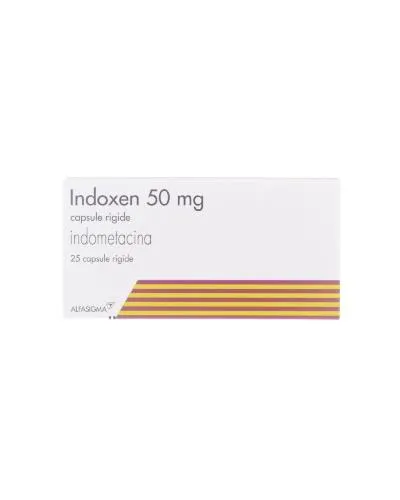
Table of Contents
- Package leaflet: Information for the patient
- Indoxen 25 mg capsules, 50 mg capsules
- 1. What Indoxen is and what it is used for
- 2. What you need to know before taking Indoxen
- 3. How to take Indoxen
- 4. Possible side effects
- 5. How to store Indoxen
- 6. Package contents and other information
- Patient information leaflet
- Indoxen 50 mg suppositories, 100 mg suppositories
- 1. What Indoxen is and what it is used for
- 2. What you need to know before using Indoxen
- 3. How to use Indoxen
- 4. Possible side effects
- 5. How to store Indoxen
- 6. Package contents and other information
Package leaflet: Information for the patient
Indoxen 25 mg capsules, 50 mg capsules
indometacin
Please read this leaflet carefully before taking this medicine because it contains important information for you.
- Keep this leaflet. You may need to read it again.
- If you have any questions, ask your doctor or pharmacist.
- This medicine has been prescribed for you only. Do not give it to others, even if their symptoms are the same as yours, as it may be harmful.
- If you experience any adverse reactions, including those not listed in this leaflet, talk to your doctor or pharmacist. See section 4.
Contents of this leaflet:
- What Indoxen is and what it is used for
- What you need to know before taking Indoxen
- How to take Indoxen
- Possible side effects
- How to store Indoxen
- Contents of the pack and other information
1. What Indoxen is and what it is used for
Indoxen contains the active substance indometacin, which belongs to the class of non-steroidal anti-inflammatory drugs (NSAIDs).
Indoxen is indicated for the treatment of various inflammatory and non-inflammatory disorders of the musculoskeletal system, including:
- rheumatoid arthritis (a rheumatic disease)
- osteoarthritis (a chronic degenerative joint disease occurring mainly in older age)
- gout (inflammation of the joints).
2. What you need to know before taking Indoxen
Do not take Indoxen
- if you are allergic to indometacin, acetylsalicylic acid, or any of the other ingredients of this medicine (listed in section 6)
- if you are under 14 years of age
- if you have previously experienced gastrointestinal bleeding or perforation (gastrointestinal hemorrhage) following treatment with other medicines
- if you have had in the past gastrointestinal bleeding or lesions (ulceration) such as two or more distinct episodes of proven ulceration or bleeding
- if you have severe heart disease where the heart cannot pump enough blood to meet the body's needs (severe heart failure)
- if you have unusual, excessive, and/or severe non-allergic reactions to various substances such as medicines, foods, etc. (idiosyncratic reactions)
- if you have psychiatric disorders
- if you have epilepsy
- if you have Parkinson’s disease
- if you are in the third trimester of pregnancy (see section “Pregnancy, breastfeeding, and fertility”)
- if you are breastfeeding.
Warnings and precautions
Talk to your doctor or pharmacist before taking Indoxen.
Immediately inform your doctor if, during treatment with Indoxen:
- you develop widespread and severe skin reactions, especially in the first weeks of treatment, as very rare but serious and potentially fatal skin reactions have been reported (e.g., exfoliative dermatitis, Stevens-Johnson syndrome, and toxic epidermal necrolysis). Indoxen must be discontinued at the first appearance of a skin rash, mucosal lesions, or any other sign of hypersensitivity.
Stop treatment and consult your doctor if you experience any of the following reactions:
- any unusual symptoms affecting your stomach or intestines, particularly at the beginning of treatment with this medicine;
- eye problems, as Indoxen may cause eye disorders. If long-term treatment is required, your doctor will arrange regular eye examinations;
- fluid retention and swelling due to fluid accumulation (edema);
- headache (cephalalgia), sometimes accompanied by dizziness or vertigo, especially if this occurs during the initial phase of treatment with Indoxen. If these effects are severe enough to require discontinuation, treatment should be stopped; if headache persists despite dose reduction, therapy with Indoxen should be discontinued.
You should consult your doctor before taking Indoxen:
- if you are elderly, as you may be at increased risk of adverse effects, particularly gastrointestinal bleeding and perforation, which can be fatal (see section “Elderly patients”);
- if you have or have had upper gastrointestinal disorders, as Indoxen may not be suitable for you (see section “Do not take Indoxen”);
- if you are taking medicines that may increase the risk of bleeding or ulceration, such as: medicines that reduce platelet aggregation (e.g., aspirin), corticosteroids (steroidal anti-inflammatory drugs taken orally), anticoagulants (medicines that delay blood clotting) such as warfarin, or antidepressants (selective serotonin reuptake inhibitors) (see section “Other medicines and Indoxen”);
- if you have inflammatory bowel diseases such as ulcerative colitis or Crohn’s disease, as these conditions may worsen;
- if you currently have an infection;
- if you are not adequately hydrated;
- if you have kidney problems;
- if you have liver problems;
- if you have or have had high blood pressure (hypertension);
- if you have had cerebrovascular circulation problems (e.g., stroke);
- if you have heart problems (congestive heart failure);
- if you are at risk of heart, brain, or blood vessel problems (e.g., if you have high blood pressure, diabetes, high cholesterol, or if you smoke, etc.);
- if you are a woman planning pregnancy (see section “Pregnancy, breastfeeding, and fertility”);
- if you are a woman with fertility problems or undergoing fertility investigations, as you should discontinue treatment with Indoxen (see section “Pregnancy, breastfeeding, and fertility”).
Take special care:
- avoid using Indoxen together with other NSAIDs, including selective cyclooxygenase-2 (COX-2) inhibitors, as this increases the risk of adverse effects;
- adverse effects can be minimized by using the lowest effective dose for the shortest possible duration (see section 3 “How to take Indoxen”);
- Indoxen may mask signs of infection;
- at any time during treatment with NSAIDs, including Indoxen, gastrointestinal bleeding (in stomach and intestine), ulceration (lesions), or perforation may occur, which can be fatal.
Children and adolescents
Indoxen must not be used in patients under 14 years of age.
Elderly
Elderly patients have a higher risk of experiencing adverse effects, particularly gastrointestinal bleeding and perforation, which are usually more severe and can be fatal.
If you are elderly, your doctor will prescribe a low dose of Indoxen.
As a precaution, your doctor may monitor your kidney and liver function and prescribe additional medicines to protect the gastrointestinal mucosa, such as misoprostol or proton pump inhibitors.
Inform your doctor of any unusual gastrointestinal symptoms, especially at the beginning of treatment with this medicine.
Other medicines and Indoxen
Tell your doctor or pharmacist if you are currently using, have recently used, or might use any other medicines.
Inform your doctor if you are taking or need to take:
- probenecid (a medicine for gout)
- furosemide (a medicine that increases urine production)
- corticosteroids (steroidal anti-inflammatory medicines)
- anticoagulants (medicines that delay blood clotting), e.g., warfarin
- medicines that reduce platelet aggregation, e.g., aspirin
- antidepressants (selective serotonin reuptake inhibitors)
- medicines to lower blood pressure, especially when used in combination: diuretics, angiotensin-converting enzyme inhibitors, angiotensin II receptor antagonists.
Pregnancy, breastfeeding, and fertility
If you are pregnant, think you may be pregnant, are planning to become pregnant, or are breastfeeding, consult your doctor or pharmacist before taking this medicine.
Conception, first and second trimesters of pregnancy
Do not take Indoxen if you are planning a pregnancy or are in the first or second trimester of pregnancy without first consulting your doctor. Your doctor will assess whether the benefits to you clearly outweigh the risks to the embryo or fetus.
Third trimester of pregnancy
Do not take Indoxen during the third trimester of pregnancy, as it may harm the fetus or cause complications during childbirth. It may cause kidney and heart problems in the fetus. It may affect your and your baby’s tendency to bleed and may delay or prolong labor more than expected. You should not take Indoxen during the first 6 months of pregnancy unless absolutely necessary and under medical advice. If treatment is required during this period or during attempts to conceive, the lowest possible dose for the shortest possible time should be used.
From week 20 of pregnancy, Indoxen may cause kidney problems in the fetus if taken for more than a few days, thereby reducing the levels of amniotic fluid surrounding the baby (oligohydramnios), or may cause narrowing of a blood vessel (ductus arteriosus) in the baby’s heart. If treatment is required for more than a few days, your doctor may recommend additional monitoring.
Breastfeeding
Do not use Indoxen while breastfeeding.
Driving and using machines
Indoxen may cause dizziness, which could affect your ability to drive or operate machinery.
If you experience these symptoms, avoid driving or operating machinery.
Indoxen contains lactose
If your doctor has diagnosed you with an intolerance to certain sugars, contact them before taking this medicine.
3. How to take Indoxen
Take this medicine exactly as instructed by your doctor or pharmacist. If you have
any doubts, consult your doctor or pharmacist.
Your doctor will determine the most appropriate dose for you based on your response to treatment and tolerance to the medicine, starting with a low dose of Indoxen equal to 75 mg daily. If necessary, your doctor will gradually increase your dose.
The recommended dose is 100–150 mg daily. The maximum dose is 200 mg daily:
- 1–2 25 mg capsules 2–4 times daily, or
- 1 50 mg capsule 2–4 times daily
Take the capsules whole, preferably with food.
Use in children and adolescents
Indoxen must not be used in patients under 14 years of age.
Use in elderly patients
If you are elderly, your doctor will tell you exactly which dose of Indoxen is suitable for you and will consider whether a reduction of the doses indicated above is necessary.
Use in patients with liver or kidney disease
Indoxen must be used with particular caution in these patients.
If you take more Indoxen than you should
Follow your doctor's instructions exactly.
In case of accidental ingestion of an excessive dose of Indoxen, inform your doctor immediately or go to the nearest hospital.
If you forget to take Indoxen
Do not take a double dose to make up for the forgotten dose.
If you stop taking Indoxen
If you have any doubts about how to use this medicine, consult your doctor or pharmacist.
4. Possible side effects
Like all medicines, this medicine can cause side effects, although not everybody will experience them.
The side effects are:
headache
dizziness
drowsiness
mental confusion
syncope (fainting)
somnolence
seizures
coma
depression
feelings of unreality (psychiatric disorder)
blood clot formation leading to heart attack or stroke
oedema (fluid retention)
high blood pressure (hypertension)
heart problems (heart failure)
peptic ulcer (stomach lesion)
gastrointestinal perforation (of the stomach or intestine)
gastrointestinal bleeding (bleeding from the stomach or intestine)
nausea
vomiting
diarrhoea
flatulence (gas production in the abdomen)
constipation
dyspepsia (indigestion)
abdominal pain
melena (blood in the stools)
haematemesis (vomiting blood)
ulcerative stomatitis (mouth sores)
exacerbation of colitis and Crohn's disease (worsening of inflammatory bowel diseases)
gastritis (inflammation of the stomach)
jaundice (yellowing of the skin and eyes)
hepatitis (liver inflammation)
pruritus
urticaria (skin rash)
skin disease characterized by nodule formation (erythema nodosum)
inflammation of blood vessels (angiitis)
skin swelling (angioneurotic oedema)
skin redness (erythema)
severe skin reactions (Stevens-Johnson Syndrome and Toxic Epidermal Necrolysis)
hair loss
dyspnoea (difficulty breathing)
asthma
leucopenia (reduced number of white blood cells)
purpura (red spots on the skin)
aplastic anaemia (inadequate production of blood cells by the bone marrow)
haemolytic anaemia (destruction of red blood cells)
thrombocytopenia (reduced number of platelets)
agranulocytosis (reduced number of a type of white blood cells)
bone marrow suppression
secondary anaemia and gastrointestinal bleeding, overt or occult
blurred vision
orbital and periorbital pain (eye pain)
visual disturbances (corneal deposits, retinal and macular abnormalities)
tinnitus
deafness
vaginal bleeding
hyperglycaemia (increased blood sugar levels)
glycosuria (presence of glucose in urine)
ulcerative stomatitis (mouth sores)
epistaxis (nosebleed)
Reporting of side effects
If you experience any side effect, including those not listed in this leaflet, talk to your doctor or pharmacist.
You can also report side effects directly via the national reporting system at https://www.aifa.gov.it/content/segnalazioni-reazioni-avverse.
By reporting side effects, you can help provide more information on the safety of this medicine.
5. How to store Indoxen
Keep this medicine out of the sight and reach of children.
Do not use this medicine after the expiry date which is stated on the packaging after "Exp.". The expiry date refers to the last day of that month.
Do not dispose of any medicine via wastewater or household waste. Ask your pharmacist how to dispose of medicines you no longer use. This will help protect the environment.
6. Package contents and other information
What Indoxen contains
- The active substance is indometacin. Each capsule contains 25 mg or 50 mg of indometacin.
- The other components are lactose, lecithin, silica, magnesium stearate.
- The capsule components are gelatin, titanium dioxide, black iron oxide (only for 25 mg capsules), indigotine, yellow iron oxide (only for 50 mg capsules).
Description of the appearance of Indoxen and package contents
Each pack contains 25 capsules of 25 mg or 25 capsules of 50 mg.
Marketing Authorisation Holder and Manufacturer
Marketing Authorisation Holder
Alfasigma S.p.A. - Via Ragazzi del '99, n. 5 - 40133 Bologna (BO)
Manufacturer
Alfasigma S.p.A. - Via Pontina km 30,400 - 00071 Pomezia (RM)
Patient information leaflet
Indoxen 50 mg suppositories, 100 mg suppositories
indometacin
Please read this leaflet carefully before using this medicine because it contains important information for you.
- Keep this leaflet. You may need to read it again.
- If you have any questions, ask your doctor or pharmacist.
- This medicine has been prescribed for you only. Do not give it to others, even if their symptoms are the same as yours, because it could be harmful.
- If you experience any adverse reaction, including those not listed in this leaflet, contact your doctor or pharmacist. See section 4.
Contents of this leaflet:
- What Indoxen is and what it is used for
- What you need to know before using Indoxen
- How to use Indoxen
- Possible side effects
- How to store Indoxen
- Contents of the pack and other information
1. What Indoxen is and what it is used for
Indoxen contains the active substance indometacin, which belongs to the class of non-steroidal anti-inflammatory drugs (NSAIDs).
Indoxen is indicated for the treatment of numerous inflammatory and non-inflammatory disorders of the musculoskeletal system, including:
- rheumatoid arthritis (a rheumatic disease)
- osteoar游戏副本
2. What you need to know before using Indoxen
Do not use Indoxen
- if you are allergic to indometacin, acetylsalicylic acid, or any of the other ingredients of this medicine (listed in section 6)
- if you are under 14 years of age
- if you have previously experienced bleeding of the stomach or intestine (gastrointestinal haemorrhage) or perforation following earlier treatment with medicines
- if you have previously had bleeding or lesions (ulcer) in the stomach (two or more distinct episodes of proven ulceration or bleeding)
- if you have severe heart disease in which the heart is unable to pump enough blood to meet the body's needs (severe heart failure)
- if you have unusual, excessive and/or severe non-allergic reactions to various substances, for example medicines, foods, etc. (idiosyncratic reactions)
- if you have psychiatric disorders
- if you have epilepsy
- if you have Parkinson's disease
- if you are in the third trimester of pregnancy (see section “Pregnancy, breastfeeding and fertility”)
- if you are breastfeeding
- inflammatory disease of the anus and rectum (proctitis).
Warnings and precautions
Talk to your doctor or pharmacist before using Indoxen.
Inform your doctor immediately if, during treatment with Indoxen:
- you develop severe and extensive skin reactions, particularly during the first weeks of treatment, because very rare but serious and potentially fatal skin reactions have been reported (e.g. exfoliative dermatitis, Stevens-Johnson syndrome, and toxic epidermal necrolysis). Indoxen must be discontinued at the first appearance of a skin rash, mucosal lesions, or any other sign of hypersensitivity.
Stop treatment and contact your doctor if you experience any of the following reactions:
- you experience any unusual symptoms affecting the stomach or intestine, especially at the beginning of treatment with this medicine;
- you develop eye problems, as Indoxen may cause eye disorders. If long-term treatment is required, your doctor will arrange regular eye examinations;
- you develop fluid retention and swelling due to fluid accumulation (oedema);
- you experience headache (cephalalgia), sometimes accompanied by dizziness or vertigo, particularly if this occurs during the initial phase of treatment with Indoxen. The severity of these effects may require discontinuation of treatment; however, if headache persists despite dose reduction, treatment with Indoxen should be stopped. You should consult your doctor before using Indoxen:
- if you are elderly, as you may be at increased risk of adverse effects, particularly gastrointestinal bleeding and perforation, which can be fatal (see section “Elderly patients”);
- if you have or have had problems affecting the upper gastrointestinal tract, as Indoxen may not be suitable for you (see section “Do not use Indoxen”);
- if you are taking medicines that may increase the risk of bleeding or ulceration, such as: medicines that reduce platelet aggregation (e.g. aspirin), corticosteroids (steroidal anti-inflammatory drugs taken by mouth), anticoagulants (medicines that delay blood clotting) (e.g. warfarin), or antidepressants (selective serotonin reuptake inhibitors) (see section “Other medicines and Indoxen”);
- if you have inflammatory bowel diseases such as ulcerative colitis or Crohn's disease, as these conditions may worsen;
- if you have an active infection;
- if you are not adequately hydrated;
- if you have kidney problems;
- if you have liver problems;
- if you have or have had high blood pressure (hypertension);
- if you have previously experienced circulatory problems affecting the brain (e.g. stroke);
- if you have heart problems (congestive heart failure);
- if you are at risk of heart, brain, or blood vessel problems (e.g. if you have high blood pressure, diabetes, high cholesterol, or if you smoke, etc.);
- if you are a woman planning a pregnancy (see section “Pregnancy, breastfeeding and fertility”);
- if you are a woman with fertility problems or undergoing fertility investigations, as you should discontinue treatment with Indoxen (see section “Pregnancy, breastfeeding and fertility”).
Take special care:
- avoid using Indoxen together with other NSAIDs, including selective cyclooxygenase-2 (COX-2) inhibitors, as this increases the risk of adverse effects;
- adverse effects can be minimized by using the lowest effective dose for the shortest possible duration (see section 3 “How to use Indoxen”);
- Indoxen may mask the signs of infection;
- at any time during treatment with NSAIDs, including Indoxen, gastrointestinal tract bleeding (stomach and intestine), ulceration (lesions), or perforation may occur, which can be fatal.
Children and adolescents
Indoxen must not be used in patients under 14 years of age.
Elderly
Elderly patients have a higher risk of experiencing adverse effects, particularly bleeding and perforation of the stomach or intestine, which are usually more severe and may be fatal.
If you are elderly, your doctor will prescribe a low dose of Indoxen.
As a precaution, your doctor may monitor your kidney and liver function and may prescribe additional medicines to protect the gastrointestinal mucosa, such as misoprostol or proton pump inhibitors.
Inform your doctor of any unusual symptoms affecting the stomach or intestine, particularly at the beginning of treatment with this medicine.
Other medicines and Indoxen
Inform your doctor or pharmacist if you are currently taking, have recently taken, or might take any other medicines.
Inform your doctor if you are taking or need to take:
- probenecid (a medicine used for gout)
- furosemide (a medicine that increases urine production)
- corticosteroids (steroidal anti-inflammatory medicines)
- anticoagulants (medicines that delay blood clotting), e.g. warfarin
- antiplatelet medicines, e.g. aspirin
- antidepressants (selective serotonin reuptake inhibitors)
- medicines to lower blood pressure, particularly when used in combination: diuretics, angiotensin-converting enzyme inhibitors, angiotensin II receptor antagonists.
Pregnancy, breastfeeding and fertility
If you are pregnant, suspect you may be pregnant, planning to become pregnant, or breastfeeding, consult your doctor or pharmacist before using this medicine.
Conception, first and second trimesters of pregnancy
Do not use Indoxen if you are planning a pregnancy or are in the first or second trimester of pregnancy without first consulting your doctor. Your doctor will assess whether the benefits to you clearly outweigh the risks to the embryo or fetus.
Third trimester of pregnancy
Do not use Indoxen during the third trimester of pregnancy, as it may harm the fetus or cause complications during childbirth. It may cause kidney and heart problems in the fetus. It may affect your and your baby's tendency to bleed and may delay or prolong labour beyond the expected duration. You should not take Indoxen during the first 6 months of pregnancy unless absolutely necessary and under medical advice. If treatment is required during this period or during attempts to conceive, the lowest possible dose for the shortest possible time should be used. From week 20 of pregnancy, Indoxen may cause kidney problems in the fetus if taken for more than a few days, thereby reducing the levels of amniotic fluid surrounding the baby (oligohydramnios) or causing constriction of a blood vessel (ductus arteriosus) in the baby's heart. If treatment is required for more than a few days, your doctor may recommend additional monitoring.
Breastfeeding
Do not use Indoxen while breastfeeding.
Driving and using machines
Indoxen may cause dizziness, which may affect your ability to drive or operate machinery.
If you experience these symptoms, avoid driving or operating machinery.
Indoxen contains lactose
If your doctor has diagnosed you with an intolerance to certain sugars, contact him or her before taking this medicine.
3. How to use Indoxen
Use this medicine exactly as directed by your doctor or pharmacist. If you have any doubts, consult your doctor or pharmacist.
Your doctor will determine the most appropriate dose for you based on your response to treatment and tolerance to the medicine, starting with a low dose of Indoxen of 75 mg daily. If necessary, your doctor will gradually increase your dose.
The recommended dose is 100–150 mg daily. The maximum dose is 200 mg:
- 1 suppository of 50 mg 2–4 times daily, or
- 1 suppository of 100 mg 1–2 times daily
Use in children and adolescents
Indoxen must not be used in patients under 14 years of age.
Use in elderly patients
If you are elderly, your doctor will tell you exactly which dose of Indoxen is suitable for you and may consider reducing the doses indicated above.
Use in patients with liver or kidney disease
Indoxen must be used with particular caution in these patients.
If you use more Indoxen than you should
Follow your doctor's instructions exactly.
In case of accidental ingestion of an excessive dose of Indoxen, contact your doctor immediately or go to the nearest hospital.
If you forget to use Indoxen
Do not use a double dose to make up for the missed dose.
If you stop using Indoxen
If you have any doubts about how to use this medicine, consult your doctor or pharmacist.
4. Possible side effects
Like all medicines, this medicine can cause side effects, although not everybody gets them.
The side effects are:
headache
dizziness
drowsiness
mental confusion
syncope (fainting)
sleepiness
seizures
coma
depression
feelings of unreality (psychiatric disorder)
blood clot formation leading to heart attack or stroke
edema (fluid retention)
high blood pressure (hypertension)
heart problems (heart failure)
peptic ulcer (stomach lesion)
gastrointestinal perforation (of the stomach or intestine)
gastrointestinal bleeding (bleeding from the stomach or intestine)
nausea
vomiting
diarrhea
flatulence (excessive gas in the abdomen)
constipation
dyspepsia (indigestion)
abdominal pain
melena (blood in the stool)
hematemesis (vomiting blood)
ulcerative stomatitis (mouth sores)
exacerbation of colitis and Crohn's disease (worsening of inflammatory bowel diseases)
gastritis (inflammation of the stomach)
jaundice (yellowing of the skin and eyes)
hepatitis (liver inflammation)
itching
urticaria (hives)
skin disease characterized by nodule formation (erythema nodosum)
inflammation of blood vessels (vasculitis)
skin swelling (angioneurotic edema)
skin redness (erythema)
severe skin reactions (Stevens-Johnson Syndrome and Toxic Epidermal Necrolysis)
hair loss
dyspnea (difficulty breathing)
asthma
leukopenia (reduced white blood cell count)
purpura (red spots on the skin)
aplastic anemia (inadequate production of blood cells by the bone marrow)
hemolytic anemia (destruction of red blood cells)
thrombocytopenia (reduced platelet count)
agranulocytosis (reduced number of a type of white blood cells)
bone marrow suppression
secondary anemia and overt or occult gastrointestinal bleeding
blurred vision
orbital and periorbital pain (eye pain)
visual disturbances (corneal deposits, retinal and macular changes)
tinnitus
hearing loss
vaginal bleeding
hyperglycemia (increased blood sugar levels)
glycosuria (presence of glucose in urine)
ulcerative stomatitis (mouth sores)
epistaxis (nosebleed)
Reporting of side effects
If you experience any side effect, including those not listed in this leaflet, talk to your doctor or pharmacist.
You can also report side effects directly via the national reporting system at https://www.aifa.gov.it/content/segnalazioni-reazioni-avverse.
By reporting side effects, you can help provide more information on the safety of this medicine.
5. How to store Indoxen
Do not store above 30°C.
Keep this medicine out of the sight and reach of children.
Do not use this medicine after the expiry date stated on the packaging after "Exp.". The expiry date refers to the last day of that month.
Do not dispose of any medicine via wastewater or household waste. Ask your pharmacist how to dispose of medicines you no longer use. This will help protect the environment.
6. Package contents and other information
What Indoxen contains
- The active substance is indometacin. Each suppository contains 50 mg or 100 mg of indometacin.
- The other components are edetic acid, -tocopherol, and solid semisynthetic glycerides.
Description of the appearance of Indoxen and contents of the package
Each package contains 10 suppositories of 50 mg or 10 suppositories of 100 mg.
Marketing Authorization Holder and Manufacturer
Marketing Authorization Holder
Alfasigma S.p.A. - Via Ragazzi del '99, n. 5 - 40133 Bologna (BO)
Manufacturer
Alfasigma S.p.A. - Via Pontina km 30,400 - 00071 Pomezia (RM)