Impetex
Italy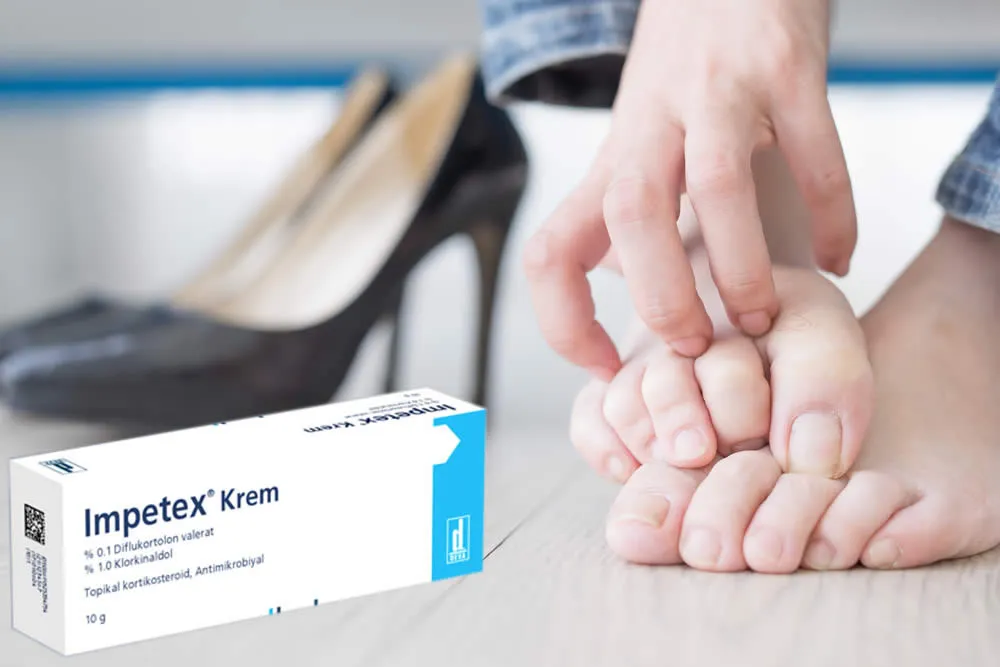
Table of Contents
Package leaflet: Information for the patient
IMPETEX 10 mg/g + 1 mg/g cream
Chlorquinaldol + Diflucortolone
Please read this leaflet carefully before using/giving this medicine to your child, as it contains
important information for you.
- Keep this leaflet. You may need to read it again.
- If you have any questions, consult your doctor or pharmacist.
- This medicine has been prescribed for you and/or your child only. Do not give it to other people, even if their symptoms are the same as yours, as it could be harmful.
- If you and/or your child experience any adverse reactions, including those not listed in this leaflet, consult your doctor or pharmacist. See section 4.
Contents of this leaflet:
- What Impetex is and what it is used for
- What you need to know before using/giving Impetex to your child
- How to use/give Impetex to your child
- Possible side effects
- How to store Impetex
- Contents of the pack and other information
1. What Impetex is and what it is used for
Impetex is a topical cream containing two active substances: chlorquinaldol and diflucortolone valerate.
Chlorquinaldol is an antiseptic capable of inhibiting or reducing the growth of bacteria and/or fungi.
Diflucortolone valerate is a corticosteroid used to reduce inflammatory symptoms.
- Impetex is indicated in adults, infants, and children for the treatment or prevention of all inflammatory and allergic skin diseases associated with bacterial and/or fungal infections:
- Eczema (skin inflammation associated with itching, non-contagious) in the following forms: nummular eczema, contact eczema, common eczema (acute and chronic phases), seborrheic eczema, varicose eczema (not directly on the lesion), infantile eczema, anal eczema, dyshidrosis and dyshidrotic eczema, eczematid
- Contact dermatitis (skin irritation of inflammatory or allergic origin)
- Psoriasis (chronic skin inflammation not always associated with itching, non-infectious and non-contagious)
- Microbides (skin alterations caused by allergic reactions to infectious agents and their toxins, substances produced by bacteria that are harmful to the body)
- Skin infections caused by bacteria and characterized by marked inflammation: pyoderma (skin inflammation with pus formation), folliculitis (superficial infections of the hair follicle, the structure surrounding the hair root)
- Impetigo (contagious skin infection presenting with blisters, pustules, and crusts on the skin)
- Dermatomycoses (skin diseases caused by fungal infections) associated with acute inflammation or secondary inflammation: tinea (superficial infection of hairless skin areas), candidiasis (fungal infection caused by fungi of the genus Candida, primarily at vaginal level but also on other body surfaces), pityriasis versicolor (infection characterized by skin pigmentation changes)
The formulation of Impetex is particularly suitable for the treatment of skin infections that produce exudate and in moist skin areas, such as the anal region and armpits, where it is advisable to use a vehicle with a high water content. Impetex allows fluid drainage and promotes rapid evaporation and drying of the skin. The preparation leaves no greasy residue on the skin and is therefore also suitable for application on the face and exposed skin areas.
Consult your doctor if you do not feel better or if you feel worse.
2. What you need to know before using Impetex
Do not use Impetex
- if you are allergic to clioquinol or diflucortolone, or to any of the other ingredients of this medicine (listed in section 6)
- if the area of skin to be treated is affected by tuberculosis (an infectious disease)
- if the area of skin to be treated is affected by viral infections (e.g. herpes, chickenpox, etc.)
- if the area of skin to be treated is affected by rosacea (redness and scaling affecting certain areas of the face)
- if you have lesions and/or wounds on the area of skin to be treated (cutaneous ulcers).
Do not use Impetex in the eyes.
Warnings and precautions
Talk to your doctor or pharmacist before using Impetex or giving it to your child.
During treatment, your doctor will monitor your condition to detect early any signs and symptoms that could arise due to excessive use of corticosteroids (anti-inflammatory agents) caused by prolonged treatment and/or high doses (see section 4 “Possible side effects”).
Contact your doctor if blurred vision or other visual disturbances occur.
If you use Impetex for a long period of time and/or on large areas of the body, the following effects may occur:
- allergic reactions (see section 4 “Possible side effects”). The use, especially if prolonged, of topical products such as Impetex may lead to this effect
- systemic reactions following absorption: Cushing's syndrome (a disease characterized by a rounded "moon face", weight gain, fluid retention, reduced glucose tolerance and increased risk of diabetes, leg swelling, headache, etc.) and hormonal disturbances
- development of bacteria and/or fungi against which this medicine is not effective. In such cases, the doctor will initiate appropriate therapy.
Occlusive dressing (dressing with gauze or other material to keep locally applied medicines on the skin)
Do not apply an occlusive dressing during treatment with Impetex, as the above-mentioned effects (Cushing's syndrome and hormonal disturbances) occur more frequently when occlusive dressings are used.
However, if your doctor considers an occlusive dressing necessary, avoid using plastic wrap (household plastic film) for the dressing, as it may cause allergic reactions.
Children and adolescents
In infants and children under 4 years of age, the doctor will generally not continue treatment beyond 3 weeks, especially if the areas to be treated are covered by diapers or plastic underwear, as skin folds and diapers may act as occlusive dressings (see section “Warnings and precautions”).
In children, the occurrence of systemic side effects (Cushing's syndrome and hormonal disturbances) due to local application of the corticosteroid contained in this medicine on large areas of skin and/or for prolonged periods is more frequent than in adults, especially when occlusive dressings are used.
Other medicines and Impetex
Tell your doctor or pharmacist if you are currently using, have recently used, or might use any other medicines.
No interactions with other medicines are known.
Pregnancy and breastfeeding
If you are pregnant, think you may be pregnant, are planning a pregnancy, or are breastfeeding, consult your doctor or pharmacist before using this medicine.
Pregnancy
Generally, during pregnancy, use this medicine only if clearly needed and under direct medical supervision.
During the first three months of pregnancy, you should not use large amounts and/or prolonged treatment with topical corticosteroid medicines.
Breastfeeding
If you are breastfeeding, use this medicine only under direct medical supervision.
Driving and using machines
Impetex does not affect the ability to drive vehicles or operate machinery.
Impetex contains stearyl alcohol
It may cause localized skin reactions (e.g. contact dermatitis).
3. How to use/Impetex
Use this medicine exactly as stated in this leaflet or as directed by your doctor or pharmacist. If you have any doubts, consult your doctor or pharmacist.
The recommended dose will be determined by your doctor.
Generally, during the initial phase of treatment, the cream should be applied 2–3 times daily, spread in a thin layer. Depending on the doctor's assessment, treatment may continue with a single daily application.
In treating conditions requiring prolonged therapy, the doctor will evaluate how to reduce the dose and frequency of application to the minimum necessary to control your symptoms and prevent their recurrence, and will discontinue the use of this medicine as soon as possible.
When applying to the face, avoid contact with the eyes (see section “Do not use/give Impetex to your child”).
Use in children
In infants and children under 4 years of age, the doctor will generally not continue treatment beyond 3 weeks, especially if the treated areas are covered by diapers or plastic pants, as skin folds and diapers may act as occlusive dressings (see section “Warnings and precautions”).
Duration of treatment
The duration of treatment will be determined by your doctor.
In all cases, the doctor will limit the use of this medicine to short periods of time.
If you use more Impetex than you should
There are no known cases of overdose with this medicine.
If you forget to use Impetex
Do not apply a double dose to make up for a missed dose.
If you stop using Impetex
If you have any doubts about how to use this medicine, consult your doctor or pharmacist.
4. Possible side effects
Like all medicines, this medicine can cause side effects, although not everyone experiences them.
If you experience any of the following side effects during treatment with Impetex, consult your doctor immediately, who will DISCONTINUE treatment with Impetex:
- allergic reactions which may present with the following symptoms:
- local redness
- edema (swelling)
- desquamation
- itching. These side effects occur especially after prolonged use of this medicine. In such cases, after stopping treatment with Impetex, the doctor will initiate appropriate therapy.
Blurred vision may occur with an unknown frequency (cannot be estimated based on available data).
Additionally, the following side effects may occur, for which frequency has not been established.
Effects on the skin
- increased hair growth (hypertrichosis)
- acne, pustular eruptions (acneiform rash)
- cutaneous atrophy (skin becomes thin and less elastic)
- areas of lighter skin (hypopigmentation)
- red streaks on the skin (striae)
- red spots on the skin (purpura)
- skin inflammation with pustules, especially on the face, which may appear after stopping treatment (rebound pustular dermatitis). This side effect occurs after prolonged treatment.
Effects on the heart and blood vessels
- permanent dilation of capillaries (telangiectasias)
- fragility of blood vessels.
The following effects may occur due to excessive use of corticosteroids (such as diflucortolone valerate contained in Impetex) resulting from long-term treatment and/or high doses:
- high blood pressure (arterial hypertension)
- heart rhythm disturbances.
Effects on the whole body
- weakness, even severe (asthenia and adynamia). These effects may occur due to excessive use of corticosteroids (anti-inflammatory agents such as diflucortolone valerate) resulting from long-term treatment and/or high doses.
Effects on metabolism and nutrition
- decreased potassium levels in the blood
- decreased acid levels in the blood (metabolic alkalosis). These effects may occur due to excessive use of corticosteroids (anti-inflammatory agents such as diflucortolone valerate) resulting from long-term treatment and/or high doses.
Reporting of side effects
If you experience any side effect, including those not listed in this leaflet, talk to your doctor or pharmacist. You can also report side effects directly via the national reporting system at www.aifa.gov.it/content/segnalazioni-reazioni-avverse.
By reporting side effects, you can help provide more information on the safety of this medicine.
5. How to store Impetex
Keep this medicine out of the sight and reach of children.
This medicine does not require any special storage conditions.
Do not use this medicine after the expiry date stated on the package after EXP. The expiry date refers to the last day of that month.
Do not use this medicine if you notice that the tube is damaged.
Do not dispose of any medicine via wastewater or household waste. Ask your pharmacist how to dispose of medicines you no longer use. This will help protect the environment.
6. Package contents and other information
What Impetex contains
- The active substances are: chlorquinaldol and diflucortolone valerate (100 g of cream contain respectively 1 g of chlorquinaldol and 0.1 g of diflucortolone valerate).
- The other components are: polyethylene glycol monostearate, stearyl alcohol (see section “Impetex contains stearyl alcohol”), liquid paraffin, white vaseline, sodium edetate, carbomer, sodium hydroxide, purified water.
Description of the appearance of Impetex and contents of the pack
Impetex is a slightly yellow cream for topical use, supplied in a 30 g tube.
Marketing Authorization Holder
TEOFARMA S.r.l. – Via F.lli Cervi, 8 – 27010 Valle Salimbene (PV)
Manufacturer
TEOFARMA S.r.l. – Viale Certosa, 8/A – 27100 Pavia