Immunorho
Italy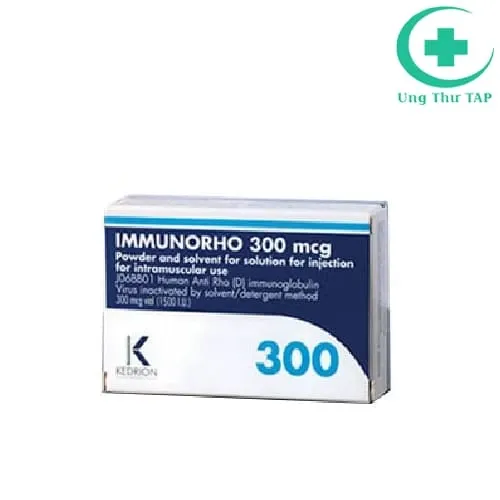
Table of Contents
- Package leaflet: Information for the user
- IMMUNORHO 200 micrograms (1000 IU) Powder and solvent for solution for injection for
- 1. What IMMUNORHO is and what it is used for
- 2. What you should know before using IMMUNORHO
- 3. How to use IMMUNORHO
- 4. Possible side effects
- 5. How to store IMMUNORHO
- 6. Package contents and other information
- Package leaflet: Information for the user
- IMMUNORHO 300 micrograms (1500 IU) Injectable solution for intramuscular use
- 2. What IMMUNORHO is and what it is used for
- 2. What you need to know before using IMMUNORHO
- 3. How to use IMMUNORHO
- 4. Possible side effects
- 5. How to store IMMUNORHO
- 6. Package contents and other information
Package leaflet: Information for the user
IMMUNORHO 200 micrograms (1000 IU) Powder and solvent for solution for injection for
intramuscular use
IMMUNORHO 300 micrograms (1500 IU) Powder and solvent for solution for injection for
intramuscular use
Human anti-D immunoglobulin
Please read all of this leaflet carefully before you start using this medicine because it contains important information for you.
- Keep this leaflet. You may need to read it again.
- If you have any questions, ask your doctor or pharmacist.
- This medicine has been prescribed for you only. Do not give it to other people, even if they have the same symptoms as yours, because it may be harmful.
- If you experience any side effects, including those not listed in this leaflet, tell your doctor or pharmacist. See section 4.
Contents of this leaflet:
- What IMMUNORHO is and what it is used for
- What you need to know before using IMMUNORHO
- How to use IMMUNORHO
- Possible side effects
- How to store IMMUNORHO
- Contents of the pack and other information
1. What IMMUNORHO is and what it is used for
What IMMUNORHO is
IMMUNORHO is a solution of human anti-D immunoglobulin, an antibody produced in humans by the immune system that inhibits the Rhesus factor of type D.
The Rhesus factor of type D is a specific characteristic of red blood cells found in human blood: individuals carrying the Rhesus factor of type D are referred to as Rh(D)-positive; individuals who do not carry it are defined as Rh(D)-negative.
How IMMUNORHO works
When an Rh(D)-negative individual comes into contact with Rh(D)-positive blood, such as when in a pregnant woman the Rh(D)-negative maternal blood comes into contact with the Rh(D)-positive fetal blood, the immune system of the Rh(D)-negative person (mother) recognizes the Rh(D)-positive red blood cells (fetus) as foreign and produces antibodies specifically directed against the Rhesus factor of type D.
This phenomenon, called immunization, takes approximately 2–3 weeks; for this reason, Rh(D)-positive red blood cells are not destroyed upon first exposure, and no signs or symptoms manifest. Only when the same Rh(D)-negative individual comes into contact with Rh(D)-positive blood a second time will the previously formed antibodies destroy the Rh(D)-positive fetal red blood cells, causing harm to the fetus.
If human anti-D immunoglobulin is administered to an Rh(D)-negative subject, immunization against the Rhesus factor of type D can be prevented, thereby blocking the formation of antibodies directed against Rh(D)-positive red blood cells in that individual. This can be achieved by initiating treatment with IMMUNORHO either before or shortly after the first exposure to Rh(D)-positive red blood cells.
IMMUNORHO
This medicinal product is used for the treatment of:
- Rh(D)-negative women of childbearing age during pregnancy when the fetus is Rh(D)-positive, in the following cases:
- Planned antepartum prophylaxis
- Antepartum prophylaxis following complications of pregnancy including: Abortion/threatened abortion, ectopic pregnancy or formation of masses within the uterus (hydatidiform mole), passage of fetal blood into the maternal circulation normally separated, intrauterine fetal death, transplacental hemorrhage following antepartum bleeding, such as during amniocentesis (amniotic fluid sampling with a syringe), chorionic villus biopsy, obstetric manipulative procedures such as external cephalic version (manual rotation of the fetus into correct position within the uterus), invasive procedures, fetal blood sampling from the umbilical vein (cordocentesis), blunt abdominal trauma, or therapeutic interventions on the fetus within the uterus
- Birth of an Rh(D)-positive infant (D, D , D )
- Rh(D)-negative women of childbearing age who have accidentally received incompatible transfusions of Rh(D)-positive blood or other blood products containing red blood cells, e.g. platelet concentrates.
2. What you should know before using IMMUNORHO
Do not use IMMUNORHO
If you are allergic (hypersensitive) to human immunoglobulins, especially if you have developed anti-IgA antibodies,
or to any of the other ingredients of this medicine (listed in section 6).
Warnings and precautions
Talk to your doctor or nurse before using IMMUNORHO.
- IMMUNORHO must not be administered intravascularly due to the risk of shock.
- In postpartum use, the product must be administered to the mother. It must not be administered to the newborn.
- True hypersensitivity reactions are rare, but allergic-type responses to human anti-D immunoglobulin may occur (see section 4 “Possible side effects”). IMMUNORHO contains small amounts of IgA. Although anti-D immunoglobulin has been successfully used in selected IgA-deficient individuals, if you have low IgA levels you may develop anti-IgA antibodies and experience anaphylactic reactions following administration of plasma-derived products containing IgA. In such cases, your doctor must therefore evaluate the benefit of treatment with IMMUNORHO against the potential risk of hypersensitivity reactions.
- Rarely, human anti-D immunoglobulins may cause a reduction in blood pressure with anaphylactic reaction (see section 4 “Possible side effects”); even if you have previously tolerated immunoglobulin treatments, you may experience a drop in blood pressure values.
- Contact your doctor immediately if you experience allergic or anaphylactic reactions. In such cases, your doctor will immediately stop administration of the medicine and initiate appropriate treatment depending on the type and severity of the reaction.
- If you are receiving very high doses of anti-D immunoglobulin due to incompatible transfusions, you should be aware that you may experience a hemolytic reaction (destruction of red blood cells). For this reason, your doctor will closely monitor you and assess the need for specific blood tests.
- If you have thrombotic episodes.
IMMUNORHO
If symptoms such as difficulty breathing, pain and swelling in the limbs, loss of movement or sensation in part of the body (focal neurological deficits), or chest pain occur, contact your doctor immediately, as you may be experiencing a thrombotic event.
Viral safety
When medicines are prepared from human blood or plasma, certain measures are taken to prevent transmission of infections to patients. These measures include:
- careful selection of blood and plasma donors to ensure potentially infected donors are excluded;
- testing of each donation and plasma pool (a mixture of multiple donations) for signs of infection/viruses;
- inclusion of manufacturing steps capable of inactivating or removing viruses.
Despite these measures, when medicinal products prepared from human blood or plasma are administered, the possibility of transmitting infectious agents cannot be completely ruled out. This also applies to emerging or unknown viruses or other infectious agents.
The measures taken are considered effective against enveloped viruses such as human immunodeficiency virus (HIV), hepatitis B virus (HBV), hepatitis C virus (HCV), and against the non-enveloped hepatitis A virus (HAV).
The measures taken have limited effectiveness against the non-enveloped parvovirus B19.
Treatment with immunoglobulins has not been associated with transmission of hepatitis A or parvovirus B19 infections, probably because the antibodies present are protective against these infections.
It is strongly recommended that each time you receive a dose of IMMUNORHO, the name and batch number of the product be recorded, in order to ensure traceability of the batch used.
Blood tests
Inform your doctor that you have been treated with IMMUNORHO if you or your newborn require blood tests (serological tests).
After administration of this medicine, results of certain blood tests may be falsely positive due to a transient increase in antibodies against red blood cell antigens, e.g., A, B, and D, passively transferred into your blood.
If you are a mother who received this medicine before delivery, blood test results in your newborn may be altered due to anti-red blood cell antibodies, for example, the antiglobulin test (Coombs test).
Children
No specific measures or monitoring are required.
Other medicines and IMMUNORHO
Inform your doctor or pharmacist if you are taking, have recently taken, or might take any other medicines.
Children
Although no specific interaction studies have been conducted in the pediatric population, no differences compared to adult patients are expected.
Vaccination
IMMUNORHO may reduce the effectiveness of vaccination with live attenuated virus vaccines, such as those for measles, rubella, and mumps. A period of 3 months should elapse after administration of IMMUNORHO before administering live attenuated virus vaccines.
Before treatment, inform your doctor if you have received any vaccination within the last 2–4 weeks. Human anti-D immunoglobulins should be administered 2 or 4 weeks after vaccination with live virus vaccines; if administration of human anti-D immunoglobulins
IMMUNORHO
is required within 2–4 weeks after vaccination with live virus vaccines, the effectiveness of such vaccination may be reduced. Therefore, your doctor will need to plan monitoring of the effectiveness of the vaccinations you have received.
Pregnancy, breastfeeding, and fertility
IMMUNORHO is intended for use during pregnancy and may be used during breastfeeding. Immunoglobulins are excreted in breast milk.
No fertility studies have been conducted with IMMUNORHO.
Clinical experience with human anti-D immunoglobulins suggests that harmful effects on fertility are not expected.
Driving and using machines
IMMUNORHO has no effect on the ability to drive or use machinery.
IMMUNORHO contains sodium
This medicine contains up to a maximum of 7.8 mg of sodium (a main component of table salt) per 2 ml vial.
This is equivalent to 0.38% of the maximum daily dietary intake recommended for an adult.
3. How to use IMMUNORHO
Use this medicine exactly as directed by your doctor. If you have any doubts, consult your doctor or pharmacist.
Your doctor will determine the appropriate dose for you and the duration of treatment.
Further dosing information is provided at the end of this leaflet, in the section intended for doctors and healthcare professionals.
If you are administering the product yourself, always use IMMUNORHO exactly as described in the section “Instructions for correct use”.
Method of administration
IMMUNORHO must be administered by intramuscular injection.
If a large volume is required (> 2 ml in children or > 5 ml in adults), administration of the medicine in divided doses at different injection sites is recommended.
If intramuscular administration is contraindicated (e.g. coagulation disorders), an alternative medicine for intravenous use must be used.
Overweight patients
In overweight or obese patients, the use of an intravenous anti-D product should be considered.
Use in children
The safety and efficacy of IMMUNORHO in children have not yet been established. The appropriate dosage must be determined in consultation with a specialist in transfusion medicine.
Instructions for correct use
IMMUNORHO must not be mixed with other medicinal products.
The product should be brought to room temperature before use.
- Remove the central protective cap from the rubber stopper of the vial containing the lyophilisate.
- Draw up the contents of the solvent ampoule into a syringe. IMMUNORHO
- Inject the liquid into the vial containing the lyophilisate. During this step, take care not to damage the rubber stopper of the vial to avoid contamination of the reconstituted solution.
- Gently swirl and draw up the resulting solution into the syringe; replace the needle and inject.
Incomplete dissolution may result in loss of activity.
Complete reconstitution is achieved on average within 5 minutes.
After reconstitution, the product appears as a solution ranging from colourless to pale yellow.
Reconstituted solutions should be inspected visually for the presence of particulate matter or abnormal discolouration prior to administration.
Do not use solutions that are cloudy or contain deposits.
The lyophilised product must be used immediately after reconstitution with the solvent.
Unused medicines and waste materials derived from them must be disposed of in accordance with local regulations.
If you use more IMMUNORHO than you should
The consequences of overdose are unknown.
4. Possible side effects
Like all medicines, this medicine can cause side effects, although not everybody gets them. The side effects that may occur with human anti-D immunoglobulin products for intramuscular use are listed below.
If you experience any of these side effects, contact your doctor or healthcare professional immediately:
- allergic reaction (hypersensitivity);
- anaphylactic shock.
Other side effects:
- headache;
- rapid heartbeat (tachycardia);
- low blood pressure (hypotension);
- nausea, vomiting;
- skin reactions such as redness of the skin (erythema), itching sensation, pruritus;
- joint pain (arthralgia);
- fever, malaise, chills;
- injection site reactions such as swelling, pain, redness of the skin (erythema), hardening, warmth, itching, rash, itching sensation.
Additional side effects in children
Specific data in the paediatric population are not available.
Reporting of side effects
If you experience any side effect, including those not listed in this leaflet, talk to your doctor or pharmacist. You can also report side effects directly via the national reporting system at: https://www.aifa.gov.it/content/segnalazioni-reazioni-avverse .
By reporting side effects, you can help provide more information on the safety of this medicine.
IMMUNORHO
For the risk related to transmissible agents, see section 2 “What you need to know before using IMMUNORHO”.
5. How to store IMMUNORHO
Keep this medicine out of the sight and reach of children.
Do not use this medicine after the expiry date stated on the carton after "Exp".
The expiry date refers to the last day of that month.
The expiry date applies to the product in its original intact packaging, stored correctly.
Store below 25°C.
Do not freeze.
Keep in the original packaging to protect the medicine from light.
The reconstituted product must be used immediately.
Do not use this medicine if you notice that the solution is cloudy or contains deposits.
Do not dispose of any medicine via wastewater or household waste. Ask your pharmacist how to dispose of medicines you no longer use. This will help protect the environment.
6. Package contents and other information
What IMMUNORHO contains
The active substance is human anti-D immunoglobulin.
1 ml of reconstituted injectable solution obtained by dissolving the lyophilisate with the solvent and 1 ml of injectable solution contains:
| IMMUNORHO 300 micrograms (1500 IU) Vial | IMMUNORHO 200 micrograms (1000 IU) Vial | |
| Human proteins | 25 - 180 g/l | 25 - 180 g/l |
| of which IgG not less than | 90% | 90% |
| antibodies against D antigen not less than | 750 IU | 500 IU |
The activity is determined using the method of the European Pharmacopoeia. The equivalence in International Units of the International Reference Preparation is defined by the World Health Organization.
Distribution of IgG subclasses:
IgG 66.0%
IgG 30.0%
IgG 2.5%
IgG 1.5%
Maximum IgA content: 300 micrograms/ml.
IMMUNORHO
Produced from plasma of human donors.
Other components are: glycine, sodium chloride, and water for injections.
Description of the appearance of IMMUNORHO and contents of the package
IMMUNORHO 200 micrograms (1000 IU) Powder and solvent for injectable solution for intramuscular use.
Contains: one vial of powder containing 200 micrograms and one ampoule of solvent containing 2 ml.
IMMUNORHO 300 micrograms (1500 IU) Powder and solvent for injectable solution for intramuscular use.
Contains: one vial of powder containing 300 micrograms and one ampoule of solvent containing 2 ml.
The lyophilized preparation appears as a white or slightly yellowish hygroscopic powder or as a friable solid mass.
Marketing Authorization Holder
Kedrion S.p.A. - Loc. Ai Conti, 55051 Castelvecchio Pascoli, Barga (Lucca).
Manufacturer
Kedrion S.p.A. - S.S. 7 bis Km 19.5, S. Antimo (Naples).
The following information is intended exclusively for physicians or healthcare professionals (see
section 3 "How to use IMMUNORHO").
Dosage
The dose of anti-D immunoglobulin must be determined based on the level of exposure to Rh(D)-positive red blood cells, and the fact that 0.5 ml of Rh(D)-positive red cell concentrates or 1 ml of Rh(D)-positive whole blood is neutralized by approximately 10 micrograms (50 IU) of anti-D immunoglobulin.
Consideration should also be given to dosing and dosage regimens for human anti-D immunoglobulins for intramuscular use recommended in other official guidelines or by Member States.
Prevention of Rh(D) immunization in Rh(D)-negative women:
- Antenatal prophylaxis. According to general recommendations, currently administered doses range from 50 to 330 micrograms or from 250 to 1650 IU.
- Scheduled antenatal prophylaxis: A single dose between the 28th and 30th week of pregnancy or two doses at weeks 28 and 34.
- Antenatal prophylaxis following pregnancy complications: A single dose should be administered as soon as possible and within 72 hours, and if necessary, repeated at intervals of 6–12 weeks throughout the duration of the pregnancy.
- Postnatal prophylaxis. According to general recommendations, currently administered doses range from 100 to 300 micrograms or from 500 to 1500 IU. If the lower dose (100 micrograms or 500 IU) is administered, a test should be performed to determine the extent of fetomaternal hemorrhage.
IMMUNORHO
In postnatal use, the product should be administered to the mother as soon as possible within 72 hours after delivery of an Rh-positive newborn (D, D , D ). If more than 72 hours have passed since delivery, the product should still be administered as soon as possible.
The postnatal dose should be administered regardless of whether antenatal prophylaxis has already been performed, even if residual antenatal prophylactic activity is still present in maternal serum.
If massive fetomaternal hemorrhage is suspected [> 4 ml (0.7–0.8% of women)], for example in cases of fetal/neonatal anemia or intrauterine fetal death, the extent should be determined by an appropriate method, e.g., the acid elution test of Kleihauer-Betke to determine fetal Hb (fetal hemoglobin) levels, or flow cytometry that selectively identifies Rh(D)-positive cells.
Additional doses of anti-D immunoglobulin should be administered accordingly (10 micrograms or 50 IU for every 0.5 ml of fetal red blood cells).
Incompatible red blood cell transfusions
The recommended dose is 20 micrograms (100 IU) of anti-D immunoglobulin for every 2 ml of transfused Rh(D)-positive blood or every 1 ml of red blood cell concentrate.
Consultation with a transfusion medicine specialist is recommended to evaluate the applicability of an erythrocyte exchange procedure to reduce the load of circulating D-positive red blood cells and to determine the required dose of anti-D immunoglobulin to suppress immunization. Follow-up tests for Rh(D)-positive red blood cells should be performed every 48 hours, and additional anti-D immunoglobulin should be administered until Rh(D)-positive red blood cells have completely disappeared from the bloodstream. In any case, due to a potential risk of hemolysis, it is recommended not to exceed a maximum dose of 3000 micrograms (15000 IU).
Use of an alternative intravenous product is recommended, as it allows immediate achievement of adequate plasma levels. In the absence of an intravenous product, very high doses should be administered intramuscularly over several days.
Thromboembolism
Arterial and venous thromboembolic events such as myocardial infarction, stroke, deep vein thrombosis, and pulmonary embolism have been associated with the use of immunoglobulins. Although thromboembolic events have not been observed in patients treated with IMMUNORHO, these patients should be adequately hydrated prior to immunoglobulin administration.
Caution is recommended in patients with pre-existing risk factors for thrombotic events (such as hypertension, diabetes mellitus, history of vascular disease or thrombotic episodes, patients with hereditary or acquired thrombophilic disorders, patients immobilized for prolonged periods, severely hypovolemic patients, or patients with conditions increasing blood viscosity), especially when high doses of IMMUNORHO are prescribed.
Patients should be informed about early signs of thromboembolic events such as dyspnea, pain and swelling in limbs, focal neurological deficits, and chest pain, and should be advised to contact their physician immediately if such symptoms occur.
IMMUNORHO
Package leaflet: Information for the user
IMMUNORHO 300 micrograms (1500 IU) Injectable solution for intramuscular use
Human anti-D immunoglobulin
Please read this leaflet carefully before using this medicine because it contains important information for you.
- Keep this leaflet. You may need to read it again.
- If you have any questions, ask your doctor or pharmacist.
- This medicine has been prescribed for you only. Do not give it to others, even if their symptoms are the same as yours, as it could be harmful.
- If you experience any side effects, including those not listed in this leaflet, contact your doctor or pharmacist. See section 4.
Contents of this leaflet:
- What IMMUNORHO is and what it is used for
- What you need to know before using IMMUNORHO
- How to use IMMUNORHO
- Possible side effects
- How to store IMMUNORHO
- Package contents and other information
2. What IMMUNORHO is and what it is used for
What IMMUNORHO is
IMMUNORHO is a solution of human anti-D immunoglobulin, an antibody produced in humans by the immune system that neutralizes the Rhesus factor of type D.
The Rhesus factor of type D is a specific characteristic of red blood cells present in human blood: individuals carrying the Rhesus factor of type D are referred to as Rh(D)-positive; individuals who do not carry it are defined as Rh(D)-negative.
How IMMUNORHO works
When an Rh(D)-negative individual comes into contact with Rh(D)-positive blood, such as when the blood of an Rh(D)-negative pregnant woman comes into contact with that of an Rh(D)-positive fetus, the immune system of the Rh(D)-negative person (mother) recognizes the Rh(D)-positive red blood cells (fetus) as foreign and produces antibodies specifically directed against the Rhesus factor of type D.
This phenomenon, known as immunization, takes approximately 2–3 weeks. For this reason, Rh(D)-positive red blood cells are not destroyed during the first exposure, and no signs or symptoms occur. Only when the same Rh(D)-negative individual is exposed a second time to Rh(D)-positive blood do the previously produced antibodies destroy the Rh(D)-positive fetal red blood cells, causing harm to the fetus.
If human anti-D immunoglobulin is administered to an Rh(D)-negative individual, immunization against the Rhesus factor of type D can be prevented, thereby blocking the production of antibodies directed against Rh(D)-positive red blood cells. To achieve this effect, treatment with IMMUNORHO must be initiated before or shortly after the first exposure to Rh(D)-positive red blood cells.
This medicine is used for:
- Rh(D)-negative women of childbearing age during pregnancy when the fetus is Rh(D)-positive, for:
IMMUNORHO
- Routine antenatal prophylaxis
- Antenatal prophylaxis following pregnancy complications including: abortion/threatened abortion, ectopic pregnancy or formation of masses within the uterus (hydatidiform mole), passage of fetal blood into the maternal circulation (normally separated), intrauterine fetal death, transplacental hemorrhage following antepartum bleeding, such as during amniocentesis (amniotic fluid sampling with a syringe), chorionic villus biopsy, obstetric manipulative procedures such as external cephalic version (manual rotation of the fetus into correct position within the uterus), invasive procedures, fetal blood sampling from the umbilical vein (cordocentesis), blunt abdominal trauma, or therapeutic interventions on the fetus in utero
- Birth of an Rh(D)-positive infant (D, D , D )
- Rh(D)-negative women of childbearing age who have accidentally received transfusions of incompatible Rh(D)-positive blood or other blood products containing Rh(D)-positive red blood cells (e.g. platelet concentrates).
2. What you need to know before using IMMUNORHO
Do not use IMMUNORHO
If you are allergic (hypersensitive) to human immunoglobulins, especially if you have developed anti-IgA antibodies,
or to any of the other ingredients of this medicine (listed in section 6).
Warnings and precautions
Talk to your doctor or nurse before using IMMUNORHO.
- IMMUNORHO must not be administered intravascularly due to the risk of shock.
- In postpartum use, the product must be administered to the mother. It must not be administered to the newborn.
- True hypersensitivity reactions are rare, but allergic-type responses to human anti-D immunoglobulin may occur (see section 4 “Possible side effects”). IMMUNORHO contains small amounts of IgA. Although anti-D immunoglobulin has been successfully used in selected IgA-deficient individuals, if you have low IgA levels, you may develop anti-IgA antibodies and experience anaphylactic reactions after administration of plasma-derived products containing IgA. In such cases, your doctor must therefore evaluate the benefit of treatment with IMMUNORHO against the potential risk of hypersensitivity reactions.
- Rarely, human anti-D immunoglobulins may induce a reduction in blood pressure with anaphylactic reaction (see section 4 “Possible side effects”); even if you have previously tolerated immunoglobulin treatments, you may experience a drop in blood pressure values.
- Contact your doctor immediately in case of allergic or anaphylactic reactions. In such cases, your doctor will immediately stop administration of the medicine and initiate the necessary treatment, depending on the type and severity of the reaction.
- If you are receiving very high doses of anti-D immunoglobulin due to incompatible transfusions, be aware that you may experience a hemolytic reaction (destruction of red blood cells). For this reason, your doctor will closely monitor you and assess the need for specific blood tests.
- If you suffer from thrombotic episodes. Should symptoms such as difficulty breathing, pain and swelling in limbs, loss of movement or sensation in part of the body (focal neurological deficits), or chest pain occur, contact your doctor immediately, as you may be experiencing a thrombotic event.
Viral safety
IMMUNORHO
When medicines are prepared from human blood or plasma, certain measures are taken to prevent transmission of infections to patients. These measures include:
- careful selection of blood and plasma donors to ensure potentially infected donors are excluded;
- testing of each donation and plasma pool (a mixture of multiple donations) to detect possible infections/viruses;
- inclusion of manufacturing steps capable of inactivating or removing viruses.
Despite these measures, when administering medicinal products prepared from human blood or plasma, the possibility of transmitting infectious agents cannot be completely ruled out. This also applies to emerging or unknown viruses or other types of infectious agents.
The measures taken are considered effective against enveloped viruses such as human immunodeficiency virus (HIV), hepatitis B virus (HBV), hepatitis C virus (HCV), and also against the non-enveloped hepatitis A virus (HAV).
The measures taken have limited effectiveness against the non-enveloped parvovirus B19.
Treatment with immunoglobulins has not been associated with transmission of hepatitis A or parvovirus B19 infections, probably because the antibodies present are protective against these infections.
It is strongly recommended that each time you receive a dose of IMMUNORHO, the name and batch number of the product are recorded, in order to maintain traceability of the batch used.
Blood tests
Inform your doctor that you have been treated with IMMUNORHO if you or your newborn require blood tests (serological testing).
After administration of this medicine, results of certain blood tests may yield false positive results due to transient increase in antibodies against red blood cell antigens, e.g., A, B, and D, passively transferred into your bloodstream.
If you are a mother who received this medicine before delivery, certain blood test results in your newborn may be altered due to red blood cell antibodies, for example, the antiglobulin test (Coombs test).
Children
No specific measures or monitoring are required.
Other medicines and IMMUNORHO
Inform your doctor or pharmacist if you are taking, have recently taken, or might take any other medicines.
Children
Although no specific interaction studies have been conducted in the pediatric population, no differences compared to adult patients are expected.
Vaccination
IMMUNORHO may reduce the effectiveness of vaccination with live attenuated virus vaccines, such as those for measles, rubella, and mumps. A minimum interval of 3 months should elapse after administration of IMMUNORHO before vaccination with live attenuated virus vaccines.
Before treatment, inform your doctor if you have received any vaccination within the past 2–4 weeks. Human anti-D immunoglobulins should be administered 2 to 4 weeks after vaccination with live virus vaccines; if administration of human anti-D immunoglobulins is required within 2–4 weeks after vaccination with live virus vaccines, the effectiveness of such vaccination may be reduced, and therefore your doctor will need to plan monitoring of the immune response to the vaccinations you have received.
Pregnancy, breastfeeding and fertility
IMMUNORHO
IMMUNORHO is intended for use during pregnancy and may be used during breastfeeding. Immunoglobulins are excreted in breast milk.
No studies on fertility have been conducted with IMMUNORHO.
Clinical experience with human anti-D immunoglobulins suggests that no harmful effects on fertility are expected.
Driving and using machines
IMMUNORHO has no effect on the ability to drive or use machinery.
IMMUNORHO contains sodium
This medicine contains up to a maximum of 7.8 mg of sodium (a main component of table salt) per 2 ml pre-filled syringe.
This corresponds to 0.38% of the maximum daily recommended dietary intake of sodium for an adult.
3. How to use IMMUNORHO
Use this medicine exactly as your doctor has told you. If you have any doubts, consult your doctor or pharmacist.
Your doctor will determine the appropriate dose for you and the duration of treatment.
Further dosage information is provided at the end of this leaflet, in the section intended for doctors and healthcare professionals.
If you administer the product yourself, always use IMMUNORHO exactly as described in the section “Instructions for correct use”.
Method of administration
IMMUNORHO must be administered by intramuscular injection.
If a large volume is required (> 2 ml in children or > 5 ml in adults), it is recommended to administer the medicine in divided doses at different injection sites.
If intramuscular administration is contraindicated (e.g. coagulation disorders), an alternative medicine for intravenous use must be used.
Overweight patients
In overweight or obese patients, consideration should be given to using an intravenous anti-D product.
Use in children
The safety and efficacy of IMMUNORHO in children have not yet been established. The appropriate dosage must be determined in consultation with a specialist in transfusion medicine.
Instructions for correct use
IMMUNORHO must not be mixed with other medicinal products.
The product should be brought to room temperature or body temperature before use.
The solution may be colourless or pale yellow to light brown; slight opalescence or a small amount of suspended particles may appear during storage.
Do not use solutions that appear cloudy or contain deposits.
Screw the plunger rod onto the prefilled syringe and inject.
Any unused medicine or waste material must be disposed of in accordance with local regulations.
IMMUNORHO
If you use more IMMUNORHO than you should
The consequences of overdose are unknown.
4. Possible side effects
Like all medicines, this medicine can cause side effects, although not everyone experiences them. The side effects that may occur with human immunoglobulin anti-D products for intramuscular use are listed below.
If you experience any of these side effects, contact your doctor or healthcare professional immediately:
- allergic reaction (hypersensitivity) – symptoms include sneezing or stuffy nose, itching or watering eyes, skin rash or red, itchy bumps on the skin, mild swelling of the lips, face or ears, itching in the mouth or ears, or mild stomach discomfort;
- anaphylactic shock – symptoms include difficulty breathing, wheezing or a feeling of tightness in the throat or chest; rapid swelling of the face, lips, tongue or throat; dizziness or fainting; fast, weak pulse, cold, clammy or pale skin; intense anxiety or confusion.
The side effects reported following administration of IMMUNORHO in clinical studies and during commercial use of the medicine are listed below in order of decreasing frequency.
Common (may affect up to 1 in 10 people)
- sensation of warmth
- feeling of numbness (drowsiness)
Uncommon (may affect up to 1 in 100 people)
- dizziness
- night sweats
- fetal tachycardia
- headache
- itching
- nausea, vomiting
- injection site reaction: swelling, pain, redness of the skin (erythema), hardening, warmth, tingling, rash, itching
Frequency not known (cannot be estimated from the available data)
- increased heart rate (tachycardia)
- low blood pressure (hypotension)
- skin reactions, such as redness of the skin (erythema), itching
- joint pain (arthralgia)
- fever, malaise, chills
- .
Additional side effects in children
No specific data are available for the paediatric population.
Reporting of side effects
If you experience any side effect, including those not listed in this leaflet, talk to your doctor or pharmacist. You may also report side effects directly via the national reporting system at: https://www.aifa.gov.it/content/segnalazioni-reazioni-avverse .
IMMUNORHO
By reporting side effects, you can help provide more information on the safety of this medicine.
For the risk related to transmissible agents, see section 2 “What you need to know before using IMMUNORHO”.
5. How to store IMMUNORHO
Keep this medicine out of the sight and reach of children.
Do not use this medicine after the expiry date stated on the carton after "Exp".
The expiry date refers to the last day of that month.
The expiry date applies to the product in its original packaging, stored correctly.
Store in a refrigerator (2°C - 8°C).
Do not freeze.
Keep in the original packaging to protect the medicine from light.
Before use and within the expiry date, the product may be stored at room temperature,
not exceeding 25°C, for a maximum of 30 consecutive days. After this period, the product must be
disposed of. In any case, the product must not be returned to the refrigerator if it has been stored
at room temperature.
The date when storage at room temperature begins must be recorded on the outer carton.
Do not use this medicine if you notice that the solution is cloudy or contains deposits.
Do not dispose of any medicine via wastewater or household waste. Ask your pharmacist how to dispose of medicines you no longer use. This will help protect the environment.
6. Package contents and other information
What IMMUNORHO contains
The active substance is human anti-D immunoglobulin.
1 ml of injectable solution in a pre-filled syringe contains:
| IMMUNORHO 300 micrograms (1500 IU) Pre-filled syringe | |
| Human proteins | 25 - 180 g/l |
| of which IgG not less than | 90% |
| antibodies against antigen D not less than | 750 IU |
IMMUNORHO
The activity is determined using the method of the European Pharmacopoeia. The equivalence in International Units
of the International Reference Preparation is defined by the World Health Organization.
Distribution of IgG subclasses:
IgG 66.0%
IgG 30.0%
IgG 2.5%
IgG 1.5%
Maximum IgA content: 300 micrograms/ml.
Produced from human donor plasma.
Other components are: glycine, sodium chloride, and water for injectable preparations.
Description of the appearance of IMMUNORHO and pack contents
IMMUNORHO 300 micrograms (1500 IU) Injectable solution for intramuscular use.
Contains: one pre-filled syringe with 300 micrograms in 2 ml of solution.
The injectable solution is clear and colourless or pale yellow or light brown; slight opalescence or a small amount of suspended particles may appear during storage.
Marketing Authorization Holder
Kedrion S.p.A. - Loc. Ai Conti, 55051 Castelvecchio Pascoli, Barga (Lucca).
Manufacturer
Kedrion S.p.A. - S.S. 7 bis Km 19.5, S. Antimo (Napoli).
The following information is intended exclusively for physicians or healthcare professionals (see
section 3 "How to use IMMUNORHO").
Dosage
The dose of anti-D immunoglobulin must be determined based on the level of exposure to Rh(D)-positive erythrocytes, and on the fact that approximately 10 micrograms (50 IU) of anti-D immunoglobulin neutralizes 0.5 ml of Rh(D)-positive red blood cell concentrate or 1 ml of Rh(D)-positive whole blood.
The dosing and dosage regimen recommended for intramuscular human anti-D immunoglobulins in other official guidelines or Member States should also be taken into account.
Prevention of Rh(D) immunization in Rh(D)-negative women:
-
Antenatal prophylaxis: According to general recommendations, currently administered doses range from 50 to 330 micrograms or from 250 to 1,650 IU.
- Scheduled antenatal prophylaxis: A single dose between the 28th and 30th week of pregnancy, or two doses at weeks 28 and 34.
- Antenatal prophylaxis following pregnancy complications: A single dose should be administered as soon as possible, and in any case within 72 hours, and if necessary repeated at intervals of 6–12 weeks throughout the duration of pregnancy.
-
Postpartum prophylaxis: According to general recommendations, currently administered doses range from 100 to 300 micrograms or from 500 to 1,500 IU. If the lower dose (100 micrograms or 500 IU) is administered, a test must be performed to determine the extent of fetomaternal haemorrhage.
In postpartum use, the product must be administered to the mother as soon as possible within 72 hours after delivery of an Rh-positive newborn (D, D, D). If more than 72 hours have passed since delivery, the product should still be administered as soon as possible.
The postpartum dose must be administered regardless of whether antenatal prophylaxis has already been performed, even if residual activity from the antenatal prophylaxis is still present in maternal serum.
If massive fetomaternal haemorrhage is suspected [> 4 ml (0.7–0.8% of women)], for example in cases of fetal/neonatal anaemia or intrauterine fetal death, the extent of haemorrhage must be determined by an appropriate method, such as the acid elution test of Kleihauer-Betke to determine fetal HbF (fetal haemoglobin) levels, or flow cytometry to selectively identify Rh(D)-positive cells.
Additional doses of anti-D immunoglobulin should then be administered accordingly (10 micrograms or 50 IU for every 0.5 ml of fetal red blood cells).
Incompatible red blood cell transfusions
The recommended dose is 20 micrograms (100 IU) of anti-D immunoglobulin for every 2 ml of transfused Rh(D)-positive blood or every 1 ml of red blood cell concentrate.
Consultation with a transfusion medicine specialist is recommended to evaluate the applicability of an erythrocyte exchange procedure to reduce the load of circulating D-positive red blood cells and to determine the required dose of anti-D immunoglobulin to suppress immunization. Follow-up tests for Rh(D)-positive red blood cells should be performed every 48 hours, and additional anti-D immunoglobulin should be administered until Rh(D)-positive red blood cells have completely disappeared from the circulation. In any case, due to a possible risk of haemolysis, it is recommended not to exceed a maximum dose of 3,000 micrograms (15,000 IU).
The use of an alternative intravenous product is recommended, as it allows immediate achievement of adequate plasma levels. In the absence of an intravenous product, very high doses must be administered intramuscularly over several days.
Thromboembolism
Arterial and venous thromboembolic events such as myocardial infarction, stroke, deep vein thrombosis, and pulmonary embolism have been associated with the use of immunoglobulins. Although thromboembolic events have not been observed in patients treated with IMMUNORHO, these patients should be adequately hydrated prior to immunoglobulin administration.
Caution is recommended in patients with pre-existing risk factors for thrombotic events (such as hypertension, diabetes mellitus, history of vascular disease or thrombotic episodes, patients with hereditary or acquired thrombophilic disorders, immobilized patients, severely hypovolemic patients, or patients with conditions increasing blood viscosity), especially when high doses of IMMUNORHO are prescribed.
Patients should be informed about the early symptoms of thromboembolic events such as dyspnoea, limb pain and swelling, focal neurological deficits, and chest pain, and should be advised to contact their physician immediately if such symptoms occur.
IMMUNORHO