IMJUDO
Italy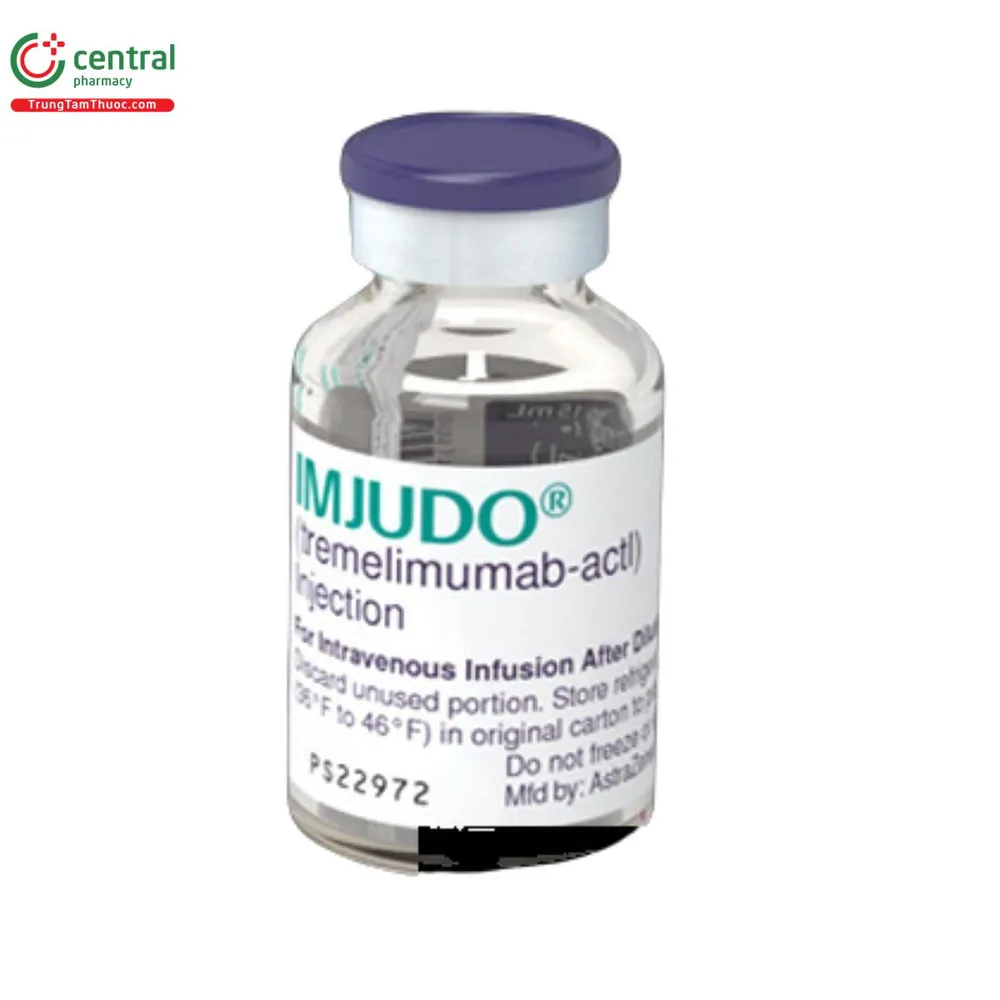
Table of Contents
- Package leaflet: Information for the patient
- IMJUDO 20 mg/mL concentrate for solution for infusion
- 1. What IMJUDO is and what it is used for
- 2. What you should know before being given IMJUDO
- 3. How IMJUDO is administered
- 4. Possible side effects
- 5. How to store IMJUDO
- 6. Package contents and other information
- The following information is intended exclusively for healthcare professionals:
Package leaflet: Information for the patient
IMJUDO 20 mg/mL concentrate for solution for infusion
tremelimumab
This medicinal product is subject to additional monitoring. This will allow rapid identification of new safety information. You can help by reporting any side effects you experience while taking this medicine. See the end of section 4 for information on how to report side effects.
Please read this leaflet carefully before using this medicine because it contains important information for you.
- Keep this leaflet. You may need to read it again.
- If you have any questions, ask your doctor.
- If you get any side effects, including those not listed in this leaflet, tell your doctor. See section 4.
Contents of this leaflet
- What IMJUDO is and what it is used for
- What you need to know before you are given IMJUDO
- How IMJUDO is administered
- Possible side effects
- How to store IMJUDO
- Contents of the pack and other information
1. What IMJUDO is and what it is used for
IMJUDO is an anticancer medicine. It contains the active substance tremelimumab, which is a type of
medicine called a monoclonal antibody. This medicine has been designed to recognize a specific
target substance present in the body. IMJUDO works by helping the immune system to fight cancer.
IMJUDO in combination with durvalumab is used to treat a type of liver cancer called advanced or
unresectable hepatocellular carcinoma (HCC). It is used when HCC:
- cannot be removed by surgery (unresectable), and
- may have spread within the liver or to other parts of the body.
IMJUDO is used to treat a type of lung cancer called advanced non-small cell lung cancer in adults. It is
given in combination with other anticancer medicines (durvalumab and chemotherapy).
Since IMJUDO is administered in combination with other anticancer medicines, it is important to also
read the package leaflet for these other medicines. If you have any questions about these medicines,
please consult your doctor.
2. What you should know before being given IMJUDO
IMJUDO must not be given to you
if you are allergic to tremelimumab or to any of the other ingredients of this medicine (listed in
section 6). If you have any doubts, consult your doctor.
Warnings and precautions
Consult your doctor before being given IMJUDO if:
- you have an autoimmune disease (a condition in which the immune system attacks your own cells)
- you have had an organ transplant
- you suffer from lung or breathing problems
- you have liver problems.
Consult your doctor before being given IMJUDO if any of these conditions apply to you.
When you are given IMJUDO, you may experience some serious side effects.
Your doctor may give you other medicines to prevent more serious complications and to help
reduce symptoms. Your doctor may delay your next dose of IMJUDO or stop your treatment with IMJUDO. Contact your doctor immediately if you experience any of the following side effects:
- cough or worsening of cough; shortness of breath; chest pain (may be signs of inflammation of the lungs)
- nausea or vomiting; loss of appetite; pain on the right side of the stomach; yellowing of the skin or whites of the eyes; drowsiness; dark urine or bleeding or bruising more easily than usual (may be signs of inflammation of the liver)
- diarrhoea or more frequent bowel movements than usual; black, tarry, or sticky stools with blood or mucus; severe pain or tenderness in the stomach (may be signs of inflammation of the intestine, or a hole in the intestine)
- fast heartbeat; extreme tiredness; weight gain or weight loss; dizziness or fainting; hair loss; feeling cold; constipation; persistent or unusual headaches (may be signs of inflamed glands, especially the thyroid, adrenal glands, pituitary gland, or pancreas)
- increased hunger or thirst; more frequent urination than normal; high blood sugar levels; deep and rapid breathing; confusion; sweet-smelling breath; sweet or metallic taste in the mouth, or a different smell to urine or sweat (may be signs of diabetes)
- decreased amount of urine (may be a sign of inflammation of the kidneys)
- skin rash; itching; blistering of the skin or mouth ulcers or ulcers on other moist surfaces (may be signs of inflammation of the skin)
- chest pain; shortness of breath; irregular heartbeat (may be signs of inflammation of the heart muscle)
- muscle pain, stiffness, or weakness, or rapid muscle fatigue (may be signs of inflammation or other problems with the muscles)
- chills or shaking, itching or rash, flushing, shortness of breath or wheezing, dizziness or fever (may be signs of infusion-related reactions)
- seizures; neck stiffness; headache; fever, chills; vomiting; sensitivity of the eyes to light; confusion and drowsiness (may be signs of inflammation of the brain or the membrane surrounding the brain and spinal cord)
- inflammation of the spinal cord (transverse myelitis): symptoms may include pain, numbness, tingling, or weakness in the arms or legs; bladder or bowel problems including needing to urinate more frequently, urinary incontinence, difficulty urinating, and constipation;
- pain, weakness, and paralysis in hands, feet, or arms (may be signs of inflammation of the nerves, Guillain-Barré syndrome)
- joint pain, swelling and/or stiffness (may be signs of inflammation of the joints, immune-mediated arthritis)
- redness of the eye, eye pain, sensitivity to light and/or changes in vision (may be signs and symptoms of inflammation of the eye, uveitis)
- bleeding (from nose or gums) and/or bruising (may be signs of low platelet levels).
Contact your doctor immediately if you experience any of the symptoms listed above.
Children and adolescents
IMJUDO must not be given to children and adolescents under 18 years of age, as it has not been studied in these patients.
Other medicines and IMJUDO
Tell your doctor if you are taking, have recently taken, or might take any other medicines. This includes herbal medicines and over-the-counter medicines.
Pregnancy and fertility
This medicine is not recommended during pregnancy. Inform your doctor if you are pregnant, suspect you may be pregnant, or are planning a pregnancy. If you are a woman of childbearing potential, you must use an effective method of contraception while being treated with IMJUDO and for at least 3 months after your last dose.
Breast-feeding
Inform your doctor if you are breast-feeding. It is not known whether IMJUDO passes into breast milk. You may be advised not to breast-feed during treatment and for at least 3 months after your last dose.
Driving and using machines
It is unlikely that IMJUDO will affect your ability to drive or operate machinery. However, if you experience side effects that impair your concentration or reaction ability, you should exercise caution when driving or operating machinery.
IMJUDO has a low sodium content
IMJUDO contains less than 1 mmol of sodium (23 mg) per dose, i.e., essentially “sodium-free”.
IMJUDO contains polysorbate
This medicine contains 0.3 mg of polysorbate 80 per 1.25 mL vial, or 3 mg of polysorbate 80 per 15 mL vial, equivalent to 0.2 mg/mL. Polysorbates may cause allergic reactions. Inform your doctor if you have known allergies.
3. How IMJUDO is administered
IMJUDO will be administered in a hospital or outpatient setting under the supervision of an experienced doctor.
Your doctor will give you IMJUDO as an intravenous infusion (a drip into a vein) lasting approximately 1 hour.
It is administered in combination with durvalumab for liver cancer.
Recommended dose
- If you weigh 40 kg or more, the dose is 300 mg as a single, single-use dose.
- If you weigh less than 40 kg, the dose will be 4 mg per kg of body weight.
When IMJUDO is administered in combination with durvalumab for your liver cancer,
IMJUDO will be given first, followed by durvalumab.
It is administered in combination with durvalumab and chemotherapy for lung cancer.
Recommended dose
- If you weigh 34 kg or more, the dose is 75 mg every 3 weeks.
- If you weigh less than 34 kg, the dose will be 1 mg per kg of body weight every 3 weeks.
Normally, you will receive a total of 5 doses of IMJUDO. The first 4 doses are administered in
weeks 1, 4, 7, and 10. The fifth dose is then usually given 6 weeks later, in week 16.
Your doctor will decide the number of treatments you will need.
When IMJUDO is administered in combination with durvalumab and chemotherapy,
IMJUDO will be given first, followed by durvalumab, and then chemotherapy.
If you miss an appointment
It is very important not to miss doses of this medicine. If you do miss an appointment,
contact your doctor immediately to schedule another one.
If you have any further questions regarding your treatment, please consult your doctor.
4. Possible side effects
Like all medicines, this medicine can cause side effects, although not everybody gets them.
When receiving IMJUDO, you may experience some serious side effects. See section 2 for a detailed list
of such effects.
Contact your doctor immediately if you experience any of the following side effects, which have been
reported in a clinical study of patients receiving IMJUDO in combination with durvalumab.
The following side effects have been reported in clinical studies of patients taking
IMJUDO in combination with durvalumab:
Very common (may affect more than 1 in 10 people)
- reduced thyroid activity which may cause tiredness or weight gain
- cough
- diarrhoea
- stomach pain
- abnormal liver function test results (increased aspartate aminotransferase; increased alanine aminotransferase)
- rash
- itching
- fever
- swelling of the legs (peripheral oedema)
Common (may affect up to 1 in 10 people)
- upper respiratory tract infections
- lung infection (pulmonary infection)
- flu-like illness
- infections of teeth and soft tissues of the mouth
- increased thyroid activity which may cause rapid heartbeat or weight loss
- inflammation of the thyroid (thyroiditis)
- decreased secretion of hormones produced by the adrenal glands which may cause tiredness
- inflammation of the lungs (pneumonitis)
- abnormal pancreatic function test results
- inflammation of the intestine or colon (colitis)
- inflammation of the pancreas (pancreatitis)
- inflammation of the liver (hepatitis)
- skin inflammation
- night sweats
- muscle pain (myalgia)
- abnormal kidney function test results (increased blood creatinine)
- painful urination (dysuria)
- infusion reaction which may cause fever or hot flushes
Uncommon (may affect up to 1 in 100 people)
- fungal infection in the mouth
- low platelet count with signs of excessive bleeding and bruising (immune thrombocytopenia)
- reduced pituitary gland activity; inflammation of the pituitary gland
- type 1 diabetes mellitus
- a condition in which muscles weaken and tire quickly (myasthenia gravis)
- inflammation of the membrane surrounding the spinal cord and brain (meningitis)
- inflammation of the heart (myocarditis)
- hoarseness (dysphonia)
- scarring of lung tissue
- blistering of the skin
- muscle inflammation (myositis)
- inflammation of muscles and blood vessels
- kidney inflammation (nephritis) which may reduce urine output
- joint inflammation (immune-mediated arthritis)
- muscle inflammation causing pain or stiffness (polymyalgia rheumatica)
Rare (may affect up to 1 in 1,000 people)
- diabetes insipidus
- eye inflammation (uveitis)
- brain inflammation (encephalitis)
- nerve inflammation (Guillain-Barré syndrome)
- hole in the intestine (intestinal perforation)
- coeliac disease (characterised by symptoms such as stomach pain, diarrhoea and abdominal swelling after consuming foods containing gluten)
- bladder inflammation (cystitis). Signs and symptoms may include frequent and/or painful urination, urgency to urinate, blood in the urine, pain or pressure in the lower abdomen.
Other side effects have been reported with unknown frequency (frequency cannot be estimated from
the available data)
- inflammation of part of the spinal cord (transverse myelitis)
- absence or reduction of digestive enzymes produced by the pancreas (pancreatic exocrine insufficiency)
The following side effects have been reported in clinical studies of patients taking
IMJUDO in combination with durvalumab and platinum-based chemotherapy:
Very common (may affect more than 1 in 10 people)
- upper respiratory tract infections
- lung infection (pulmonary infection)
- low red blood cell count
- low white blood cell count
- low platelet count
- reduced thyroid activity which may cause tiredness or weight gain
- reduced appetite
- cough
- nausea
- diarrhoea
- vomiting
- constipation
- abnormal liver function test results (increased aspartate aminotransferase; increased alanine aminotransferase)
- hair loss
- rash
- itching
- joint pain (arthralgia)
- feeling of tiredness or weakness
- fever
Common (may affect up to 1 in 10 people)
- flu-like illness
- fungal infection in the mouth
- low white blood cell count with signs of fever
- low red blood cells, white blood cells and platelets (pancytopenia)
- increased thyroid activity which may cause rapid heartbeat or weight loss
- reduced levels of hormones produced by the adrenal glands which may cause tiredness
- reduced pituitary gland activity; inflammation of the pituitary gland
- inflammation of the thyroid (thyroiditis)
- nerve inflammation causing numbness, weakness, tingling or burning pain in arms and legs (peripheral neuropathy)
- inflammation of the lungs (pneumonitis)
- hoarseness (dysphonia)
- inflammation of the mouth or lips
- abnormal pancreatic function test results
- stomach pain
- inflammation of the intestine or colon (colitis)
- inflammation of the pancreas (pancreatitis)
- inflammation of the liver which may cause nausea or loss of appetite (hepatitis)
- muscle pain (myalgia)
- abnormal kidney function test results (increased blood creatinine)
- painful urination (dysuria)
- swelling of the legs (peripheral oedema)
- infusion reaction which may cause fever or hot flushes
Uncommon (may affect up to 1 in 100 people)
- infections of teeth and soft tissues of the mouth
- low platelet count with signs of excessive bleeding and bruising (immune thrombocytopenia)
- diabetes insipidus
- type 1 diabetes mellitus
- brain inflammation (encephalitis)
- heart inflammation (myocarditis)
- scarring of lung tissue
- blistering of the skin
- night sweats
- skin inflammation
- muscle inflammation (myositis)
- inflammation of muscles and blood vessels
- kidney inflammation (nephritis) which may reduce urine output
- bladder inflammation (cystitis). Signs and symptoms may include frequent and/or painful urination, urgency to urinate, blood in the urine, pain or pressure in the lower abdomen
- eye inflammation (uveitis)
- joint inflammation (immune-mediated arthritis)
Rare (may affect up to 1 in 1,000 people)
- a condition in which muscles weaken and tire quickly (myasthenia gravis)
- nerve inflammation (Guillain-Barré syndrome)
- inflammation of the membrane surrounding the spinal cord and brain (meningitis)
- hole in the intestine (intestinal perforation)
- coeliac disease (characterised by symptoms such as stomach pain, diarrhoea and abdominal swelling after consuming foods containing gluten)
Other side effects have been reported with unknown frequency (frequency cannot be estimated from
the available data)
- inflammation of part of the spinal cord (transverse myelitis)
- absence or reduction of digestive enzymes produced by the pancreas (pancreatic exocrine insufficiency)
- muscle inflammation causing pain or stiffness (polymyalgia rheumatica)
Contact your doctor immediately if you experience any of the side effects listed above.
Reporting of side effects
If you get any side effects, including those not listed in this leaflet, contact your doctor. You can also report side effects directly via the national reporting system listed in Annex V. Reporting side effects can help provide more information on the safety of this medicine.
5. How to store IMJUDO
IMJUDO will be administered in a hospital or clinic, and the healthcare professional will be responsible for the storage of this medicine.
Keep this medicine out of the sight and reach of children.
Do not use this medicine after the expiry date which is stated on the carton after “Exp.” and on the vial label after “EXP”. The expiry date refers to the last day of that month.
Store in a refrigerator (2 °C–8 °C).
Do not freeze.
Keep the vial in the original outer packaging to protect it from light.
Do not use this medicine if you notice that the solution is cloudy, has changed colour, or contains visible particles.
Do not store any unused portion of the infusion solution for reuse.
Any unused medicine or waste material must be disposed of in accordance with local regulations.
6. Package contents and other information
What IMJUDO contains
The active substance is tremelimumab.
Each mL of concentrate for infusion solution contains 20 mg of tremelimumab.
One vial contains 300 mg of tremelimumab in 15 mL of concentrate or 25 mg of tremelimumab in
1.25 mL of concentrate.
The other components are: histidine, monohydrochloride monohydrate histidine, trehalose dihydrate,
disodium edetate dihydrate (see section 2 “IMJUDO has a low sodium content”), polysorbate 80, water for
injection.
Description of the appearance of IMJUDO and contents of the pack
IMJUDO concentrate for infusion solution (sterile concentrate) is a sterile, preservative-free solution, from clear to slightly opalescent, from colourless to slightly yellow, free from visible particles.
It is available in packs containing either one 1.25 mL glass vial of concentrate or one 15 mL glass vial of concentrate.
Not all pack sizes may be marketed.
Marketing Authorisation Holder
AstraZeneca AB
SE-151 85 Södertälje
Sweden
Manufacturer
AstraZeneca AB
Gärtunavägen
SE-152 57 Södertälje
Sweden
For further information about this medicinal product, please contact the local representative of the Marketing Authorisation Holder:
België/Belgique/Belgien
AstraZeneca S.A./N.V.
Tel: +32 2 370 48 11
България
АстраЗенека България ЕООД
Тел.: +359 24455000
Česká republika
AstraZeneca Czech Republic s.r.o.
Tel: +420 222 807 111
Danmark
AstraZeneca A/S
Tlf.: +45 43 66 64 62
Deutschland
AstraZeneca GmbH
Tel: +49 40 809034100
Eesti
AstraZeneca
Tel: +372 6549 600
Ελλάδα
AstraZeneca A.E.
Τηλ: +30 210 6871500
España
AstraZeneca Farmacéutica Spain, S.A.
Tel: +34 91 301 91 00
France
AstraZeneca
Tél: +33 1 41 29 40 00
Hrvatska
AstraZeneca d.o.o.
Tel: +385 1 4628 000
Ireland
AstraZeneca Pharmaceuticals (Ireland) DAC
Tel: +353 1609 7100
Ísland
Vistor hf.
Sími: +354 535 7000
Italia
AstraZeneca S.p.A.
Tel: +39 02 00704500
Κύπρος
Αλέκτωρ Φαρµακευτική Λτδ
Τηλ: +357 22490305
Latvija
SIA AstraZeneca Latvija
Tel: +371 67377100
Lietuva
UAB AstraZeneca Lietuva
Tel: +370 5 2660550
Luxembourg/Luxemburg
AstraZeneca S.A./N.V.
Tél/Tel: +32 2 370 48 11
Magyarország
AstraZeneca Kft.
Tel: +36 1 883 6500
Malta
Associated Drug Co. Ltd
Tel: +356 2277 8000
Nederland
AstraZeneca BV
Tel: +31 85 808 9900
Norge
AstraZeneca AS
Tlf: +47 21 00 64 00
Österreich
AstraZeneca Österreich GmbH
Tel: +43 1 711 31 0
Polska
AstraZeneca Pharma Poland Sp. z o.o.
Tel: +48 22 245 73 00
Portugal
AstraZeneca Produtos Farmacêuticos, Lda.
Tel: +351 21 434 61 00
România
AstraZeneca Pharma SRL
Tel: +40 21 317 60 41
Slovenija
AstraZeneca UK Limited
Tel: +386 1 51 35 600
Slovenská republika
AstraZeneca AB, o.z.
Tel: +421 2 5737 7777
Suomi/Finland
AstraZeneca Oy
Puh/Tel: +358 10 23 010
Sverige
AstraZeneca AB
Tel: +46 8 553 26 000
Other sources of information
More detailed information on this medicinal product is available on the website of the European Medicines Agency: https://www.ema.europa.eu.
The following information is intended exclusively for healthcare professionals:
Preparation and administration of the infusion:
-
Parenteral medicinal products should be inspected visually prior to administration in order to detect any particulate matter or discoloration. The concentrate is a solution ranging from clear to opalescent, from colorless to slightly yellow, and free from visible particles. Discard the vial if the solution is cloudy, if there is any discoloration, or if visible particles are present.
-
Do not shake the vial.
-
Withdraw the required volume of concentrate from the vial(s) and transfer it into an intravenous bag containing either a 9 mg/mL (0.9%) sodium chloride injection solution or a 50 mg/mL (5%) glucose injection solution to prepare a diluted solution with a final concentration between 0.1 and 10 mg/mL. Mix the diluted solution by gentle inversion.
-
Use the medicinal product immediately after dilution. The diluted solution must not be frozen. If not used immediately, the total time from vial puncture to the start of administration must not exceed 24 hours at a temperature between 2 °C and 8 °C, or 12 hours at room temperature (up to 25 °C). If stored under refrigeration, intravenous bags should be allowed to reach room temperature before use. Administer the infusion solution intravenously over 1 hour using a low-protein-binding sterile in-line filter of 0.2 or 0.22 micron.
-
Do not co-administer other medicinal products through the same infusion line.
-
IMJUDO is for single use only. Discard any unused portion remaining in the vial.
Any unused medicinal product and waste material derived from this medicinal product must be disposed of in accordance with local regulations.
ANNEX IV
SCIENTIFIC CONCLUSIONS AND REASONS FOR THE VARIATION OF THE TERMS OF
THE MARKETING AUTHORISATION(S)
Scientific conclusions
Taking into account the assessment by the Pharmacovigilance Risk Assessment Committee (PRAC) of the Periodic Safety Update Report(s) (PSUR) for tremelimumab, the PRAC's scientific conclusions are as follows:
In light of the available data on polymyalgia rheumatica, the PRAC considers that a causal relationship between tremelimumab in combination with durvalumab and polymyalgia rheumatica is at least a reasonable possibility. The PRAC concluded that the product information for medicinal products containing tremelimumab should therefore be amended accordingly.
Having reviewed the PRAC recommendation, the Committee for Human Medicinal Products (CHMP) agrees with the general conclusions and the rationale of the recommendation.
Reasons for the variation of the terms of the marketing authorisation(s)
Based on the scientific conclusions regarding tremelimumab, the CHMP considers that the benefit-risk balance of the medicinal product(s) containing tremelimumab remains unchanged, subject to the proposed amendments to the product information.
The CHMP recommends a variation to the terms of the marketing authorisation.