Imigran
Italy
Table of Contents
- Package leaflet: Information for the user
- IMIGRAN 50 mg Film-coated tablets, 100 mg Film-coated tablets
- 1. What Imigran is and what it is used for
- 2. What you should know before taking Imigran
- 3. How to take Imigran
- 4. Possible side effects
- 5. How to store Imigran
- 6. Package contents and other information
- Package leaflet: Information for the user
- IMIGRAN 6 mg/0.5 ml Solution for Injection for Subcutaneous Use
- 1. What Imigran is and what it is used for
- 2. What you need to know before taking Imigran
- 3. How to take Imigran
- 4. Possible side effects
- 5. How to store Imigran
- 6. Package contents and other information
- INSTRUCTIONS FOR USE OF IMIGRAN INJECTION SOLUTION WITH
- Package leaflet: information for the user
- Imigran 25 mg Suppositories
- 1. What Imigran Suppositories is and what it is used for
- 2. What you need to know before using Imigran Suppositories
- 3. How to use Imigran Suppositories
- 4. Possible side effects
- 5. How to store Imigran Suppositories
- 6. Package contents and other information
- Package leaflet: information for the user
- Imigran 10 mg and 20 mg Nasal Spray
- 1. What Imigran Nasal Spray is and what it is used for
- 2. What you need to know before using Imigran Nasal Spray
- 3. How to use Imigran Nasal Spray
- 4. Possible side effects
- 5. How to store Imigran Nasal Spray
- 6. Package contents and other information
- 7. Begin to gently inhale through your nose
Package leaflet: Information for the user
IMIGRAN 50 mg Film-coated tablets, 100 mg Film-coated tablets
sumatriptan
Please read this leaflet carefully before taking this medicine because it contains
important information for you.
- Keep this leaflet. You may need to read it again.
- If you have any questions, ask your doctor or pharmacist.
- This medicine has been prescribed for you only. Do not give it to other people, even if their symptoms are the same as yours, as it may be harmful.
- If you experience any side effects, including those not listed in this leaflet, talk to your doctor or pharmacist. See section 4.
Contents of this leaflet:
- What Imigran is and what it is used for
- What you need to know before taking Imigran
- How to take Imigran
- Possible side effects
- How to store Imigran
- Contents of the pack and other information
1. What Imigran is and what it is used for
Each Imigran tablet contains a single dose of sumatriptan, which belongs to a group of
medicines known as triptans (also known as 5-HT receptor agonists).
Imigran is used to treat migraine.
The symptoms of migraine may be caused by a temporary dilation of the blood vessels in the
head. Imigran is believed to reduce this dilation of blood vessels. This in turn helps relieve headache and alleviates other symptoms of a migraine attack, such as nausea, vomiting, and sensitivity to light and sound.
2. What you should know before taking Imigran
Do not take Imigran
- if you are allergic to sumatriptan or to any of the other ingredients of this medicine (listed in section 6)
- if you have heart problems such as narrowing of the arteries ( ischaemic heart disease ) or chest pain ( angina ), or if you have previously had a heart attack
- if you have circulation problems in your legs causing cramp-like pain when walking ( peripheral vascular disease )
- if you have had a stroke or a transient ischaemic attack ( also called a TIA )
- if you have high blood pressure. You may use Imigran if your blood pressure is slightly elevated and is being treated.
- if you have severe liver disease
- together with other migraine treatments, including those containing ergotamine, or similar medicines such as methysergide maleate, or any triptans/5HT receptor agonists (medicines also used to treat migraine) (such as naratriptan or zolmitriptan)
- together with antidepressants called
- MAOIs ( monoamine oxidase inhibitors ) or if you have taken an MAOI within the last two weeks
If any of these apply to you
Tell your doctor and do not use Imigran.
Warnings and precautions
Sumatriptan should only be used after a definite diagnosis of migraine has been made.
Talk to your doctor or pharmacist before using Imigran:
If you have additional risk factors
- if you are a heavy smoker or are using nicotine replacement therapy, and particularly
- if you are a man over 40 years of age, or
- if you are a postmenopausal woman
Very rarely, some people have developed serious heart conditions after using Imigran,
even though they had never previously shown signs of heart disease. If any of the
above points apply to you, this may mean you have a higher risk of developing
heart disease – therefore:
Tell your doctor so that they can check your heart function before prescribing
Imigran
If you have had high blood pressure, Imigran may not be suitable for you
Tell your doctor or pharmacist before using Imigran
If you suffer from epilepsy or have previously had seizures ( epileptic fits )
or if you have other conditions that may make seizures more likely – for
example, head injury or alcoholism
Tell your doctor so that they can monitor you more closely
If you have liver or kidney disease
If any of these apply to you
Tell your doctor so that they can monitor you more closely
If you are allergic to antibiotics called sulphonamides
If so, you may also be allergic to Imigran. If you know you are allergic to an antibiotic but are not
sure whether it is a sulphonamide:
Tell your doctor or pharmacist before using Imigran
If you are taking antidepressants called SSRIs
(selective serotonin reuptake inhibitors) or SNRIs (serotonin and noradrenaline reuptake
inhibitors)
Tell your doctor or pharmacist before using Imigran. See also below: Other medicines and Imigran
If you use Imigran frequently
Using Imigran too often may worsen your headaches
Tell your doctor if this applies to you. They may advise you to stop using Imigran
If you experience pain or tightness in your chest after using Imigran
These effects may be intense but usually pass quickly. If they do not pass quickly, or
if they worsen:
seek immediate medical help. Section 4 (below) contains further
information about these possible side effects.
Other medicines and Imigran
Tell your doctor or pharmacist if you are taking, have recently taken, or might take
any other medicines, including those not requiring a prescription.
Some medicines must not be taken with Imigran and others may cause side effects if
taken with Imigran. You must tell your doctor if you are taking:
- ergotamine, also used to treat migraine, or similar medicines such as methysergide (see section 2 Do not take Imigran). Do not use Imigran at the same time as these medicines. Stop taking these medicines at least 24 hours before taking Imigran. Do not take any medicine containing ergotamine or ergotamine-like compounds for at least 6 hours after using Imigran.
- other triptans/5-HT receptor agonists (such as naratriptan, rizatriptan, zolmitriptan), also used to treat migraine (see section 2 Do not take Imigran). Do not use Imigran at the same time as these medicines. Stop taking these medicines at least 24 hours before using Imigran. Do not take any other triptan/5-HT receptor agonist for at least 24 hours after using Imigran.
- MAOIs ( monoamine oxidase inhibitors ) used to treat depression. If you have taken them within the last 2 weeks, do not use Imigran.
- SSRIs (selective serotonin reuptake inhibitors) and SNRIs (serotonin and noradrenaline reuptake inhibitors) used to treat depression. Taking Imigran with these medicines may cause serotonin syndrome (a group of symptoms which may include agitation, confusion, sweating, hallucinations, increased reflexes, muscle spasms, shivering, increased heart rate and tremors). Inform your doctor immediately if you experience these symptoms.
- St John’s Wort or Hypericum ( Hypericum perforatum ). Taking herbal remedies containing hypericum together with Imigran may increase the likelihood of side effects.
Pregnancy and breastfeeding
- If you are pregnant, think you may be pregnant, or are planning to become pregnant, ask your doctor for advice before taking this medicine. There is only limited data on the safety of Imigran in pregnant women, although to date there is no evidence of an increased risk of birth defects. Your doctor will decide with you whether or not to use Imigran during pregnancy.
- Do not breastfeed your baby for at least 12 hours after taking Imigran. If you express breast milk during this time, discard the milk and do not give it to your baby.
Driving and using machines
Both migraine symptoms and this medicine may cause drowsiness. If affected, do not drive
or operate machinery.
Imigran contains sodium
This medicine contains less than 1 mmol (23 mg) of sodium per tablet, i.e. essentially
“sodium-free”.
3. How to take Imigran
Take this medicine exactly as your doctor has told you. If you are unsure, consult your doctor or pharmacist.
When to take Imigran
- It is best to take Imigran as soon as you feel a migraine coming on, although you may take it at any time during the attack.
- Do not use Imigran to try to prevent an attack – use it only after migraine symptoms have started.
How much Imigran to take
Adults aged 18 to 65
- The recommended dose for adults aged 18 to 65 is one 50 mg Imigran tablet, swallowed whole with water (do not break or chew it). Some patients may require a 25 mg or 100 mg dose – follow your doctor’s advice.
- If you have difficulty swallowing tablets, you may disperse one tablet in a small amount of water before taking it; however, it may have a bitter taste.
Children and adolescents under 18 years
- Imigran is not recommended for children and adolescents under 18 years of age.
Elderly patients (over 65 years)
- Imigran is not recommended for people over 65 years of age.
If your symptoms return
You may take a second tablet of Imigran if at least 2 hours have passed since the first tablet.
Do not take more than 300 mg in total within 24 hours.
If the first tablet has no effect
- Do not take a second tablet or any other Imigran preparation for the same attack. Imigran may be used for your next attack.
If Imigran does not relieve your symptoms:
Ask your doctor or pharmacist for advice.
If you take more Imigran than you should
- Do not take more than 6 tablets of 50 mg or three tablets of 100 mg (equivalent to a total of 300 mg) within 24 hours.
If you take too much Imigran, you may feel unwell. If you have taken more than 300 mg within 24 hours:
Seek advice from your doctor.
If you have any further questions about the use of this medicine, consult your doctor or pharmacist.
4. Possible side effects
Like all medicines, this medicine can cause side effects, although not everyone experiences them.
Some symptoms may be caused by migraine itself.
Allergic reactions: seek immediate medical help
The following side effects have occurred, but their exact frequency is unknown.
- Signs of allergy include skin rash, hives (itchy rash); wheezing; swelling of the eyelids, face or lips; complete collapse. If any of these symptoms occur immediately after using Imigran:
Do not use it again.
Contact a doctor immediately.
Common side effects
(occur in up to 1 in 10 people)
- Pain, sensation of heaviness, pressure or tightness in the chest, throat or other parts of the body, or unusual sensations including numbness, tingling, warmth or coldness, decreased sensitivity. These effects may be intense but generally pass quickly.
If these effects continue or worsen (especially chest pain):
Seek urgent medical help. In a very small number of people,
these symptoms may be caused by a heart attack.
Other common side effects:
- Nausea or vomiting, although these may also be due to the migraine itself
- Fatigue or drowsiness
- Dizziness, feeling of weakness or hot flushes
- Temporary increase in blood pressure
- Shortness of breath
- Muscle pain
Very rare side effects
(occur in up to 1 in 10,000 people)
- Changes in liver function. If you need a blood test to check liver function, inform your doctor or nurse that you are taking Imigran.
Some patients may experience the following side effects, but it is not known how often they occur:
- Seizures/epileptic fits, tremors, muscle spasms, involuntary eye movements ( nystagmus ), neck stiffness
- Vision disturbances such as flickering, reduced vision, double vision, loss of vision, and in some cases even permanent defects (although these may occur due to the migraine attack itself)
- Heart problems, such as rapid, slow or irregular heartbeat, chest pain ( angina ) or heart attacks ( myocardial infarction )
- Pale or bluish skin and/or pain in the fingers, toes, ears, nose or jaw in response to cold or stress ( Raynaud's phenomenon )
- Feeling faint (blood pressure may drop)
- Pain in the lower left part of the stomach and bloody diarrhoea ( ischaemic colitis )
- Diarrhoea
- Joint pain
- Feeling anxious
- Excessive sweating
Reporting of side effects
If you experience any side effect, including those not listed in this leaflet, talk to your doctor or pharmacist. You can also report side effects directly via the national reporting system at www.agenziafarmaco.gov.it/content/come-segnalare-una-sospetta-reazione-avversa. By reporting side effects, you can help provide more information on the safety of this medicine.
5. How to store Imigran
Keep this medicine out of the sight and reach of children.
Do not use this medicine after the expiry date which is stated on the carton. The expiry date refers to the last day of that month.
Do not store above 30°C.
Do not dispose of any medicine via wastewater or household waste. Ask your pharmacist how to dispose of medicines you no longer use. This will help protect the environment.
6. Package contents and other information
What Imigran 50 mg film-coated tablets contain
- The active substance is sumatriptan 50 mg.
- The other ingredients of the tablet are: calcium hydrogen phosphate anhydrous, microcrystalline cellulose, sodium bicarbonate, sodium croscarmellose, magnesium stearate, hypromellose, titanium dioxide (E 171), glyceryl triacetate, and red iron oxide (E172).
What Imigran 100 mg film-coated tablets contain
- The active substance is sumatriptan 100 mg.
- The other ingredients of the tablet are: calcium hydrogen phosphate anhydrous, microcrystalline cellulose, sodium bicarbonate, sodium croscarmellose, magnesium stearate, hypromellose, titanium dioxide (E 171), and glyceryl triacetate.
Description of the appearance of Imigran and pack contents
Imigran 50 mg tablets are pink, marked with ‘GS 1YM’ on one side and ‘50’ on the other.
Imigran 100 mg tablets are white, marked with ‘GS YE7’ on one side and ‘100’ on the other.
Imigran 50 mg and 100 mg tablets are supplied in blisters.
Marketing Authorisation Holder and Manufacturer
Marketing Authorisation Holder:
GlaxoSmithKline S.p.A. - Via A. Fleming, 2 - Verona, Italy.
Manufacturer:
GlaxoSmithKline Pharmaceuticals S.A., ul. Grunwaldzka 189, 60-322 Poznań, Poland
The information provided refers only to Imigran film-coated tablets.
Package leaflet: Information for the user
IMIGRAN 6 mg/0.5 ml Solution for Injection for Subcutaneous Use
sumatriptan
Please read this leaflet carefully before using this medicine, as it contains
important information for you.
- Keep this leaflet. You may need to read it again.
- If you have any questions, ask your doctor or pharmacist.
- This medicine has been prescribed for you only. Do not give it to others, even if their symptoms are the same as yours, as it could be harmful.
- If you experience any side effects, including those not listed in this leaflet, contact your doctor or pharmacist. See section 4.
Contents of this leaflet:
- What Imigran is and what it is used for
- What you need to know before using Imigran
- How to use Imigran
- Possible side effects
- How to store Imigran
- Contents of the pack and other information
1. What Imigran is and what it is used for
Each pre-filled Imigran syringe contains a single dose of sumatriptan, which belongs to a
group of medicines called triptans (also known as 5-HT receptor agonists).
Imigran is used to treat migraine and a rare condition called cluster headache.
The symptoms of migraine and cluster headache may be caused by a temporary
dilation of blood vessels in the head. Imigran is believed to reduce this dilation of blood vessels.
This in turn helps to relieve headache and other symptoms such as nausea,
vomiting, and sensitivity to light and sound.
2. What you need to know before taking Imigran
Do not take Imigran
- if you are allergic to sumatriptan or to any of the other ingredients of this medicine (listed in section 6)
- if you have heart problems such as narrowing of the arteries ( ischaemic heart disease ) or chest pain ( angina ), or if you have already had a heart attack
- if you have circulation problems in your legs causing cramp-like pain when walking ( peripheral vascular disease )
- if you have had a stroke or a minor stroke ( also called a transient ischaemic attack or TIA )
- if you have high blood pressure. You may use Imigran if your blood pressure is slightly elevated and is being treated.
- if you have severe liver disease
- together with other medicines for migraine , including those containing ergotamine, or similar medicines such as methysergide maleate, or any triptan/5HT receptor agonist (medicines also used to treat migraine) (such as naratriptan or zolmitriptan)
- together with antidepressants called
- MAOIs ( monoamine oxidase inhibitors ) or if you have taken such medicines within the last two weeks. If any of these apply to you, tell your doctor and do not use Imigran.
Warnings and precautions
Sumatriptan should only be used after a definite diagnosis of migraine or cluster headache has been made.
Sumatriptan injection solution must not be administered intravenously.
Talk to your doctor or pharmacist before using Imigran:
If you have additional risk factors
- if you are a heavy smoker or are using nicotine replacement therapy, and particularly
- if you are a man over 40 years of age, or
- if you are a postmenopausal woman
Very rarely, some people have developed serious heart conditions after using Imigran, even though they had no previous signs of heart disease. If any of the above points apply to you, this may mean you have an increased risk of developing heart disease – therefore:
Tell your doctor so that they can check your heart function before prescribing Imigran.
If you have epilepsy or have previously had seizures ( epileptic fits )
or if you have other conditions that may make seizures more likely – for example, head injury or alcoholism
Tell your doctor so that they can monitor you more closely
If you have had high blood pressure, Imigran may not be suitable for you
Tell your doctor or pharmacist before using Imigran
If you have liver or kidney disease
If any of these apply to you
Tell your doctor so that they can monitor you more closely
If you are allergic to antibiotics called sulphonamides
If so, you may also be allergic to Imigran. If you know you are allergic to an antibiotic but are unsure whether it is a sulphonamide:
Tell your doctor or pharmacist before using Imigran
If you are taking antidepressants called SSRIs (selective serotonin reuptake inhibitors) or SNRIs (serotonin and noradrenaline reuptake inhibitors)
Tell your doctor or pharmacist before using Imigran. See also below: Other medicines and Imigran
The Imigran syringe may contain latex
The needle cover of the syringe may contain latex. It may cause severe allergic reactions.
Tell your doctor if you are allergic to latex
If you use Imigran frequently
Using Imigran too often may worsen your headaches
Tell your doctor if this applies to you. They may advise you to stop using Imigran
If you experience chest pain or tightness after using Imigran
These effects may be intense but usually pass quickly. If they do not pass quickly or worsen:
seek immediate medical help. Section 4 (below) contains further information about these possible side effects.
Other medicines and Imigran
Tell your doctor or pharmacist if you are taking, have recently taken, or might take any other medicines, including those not requiring a prescription.
Some medicines should not be taken with Imigran, and others may cause side effects when taken with Imigran. You must tell your doctor if you are taking:
- ergotamine , also used to treat migraine , or similar medicines such as methysergide (see section 2 Do not take Imigran). Do not use Imigran at the same time as these medicines. Stop taking these medicines at least 24 hours before using Imigran. Do not take any medicine containing ergotamine or ergotamine-like compounds for at least 6 hours after using Imigran.
- other triptans/5-HT receptor agonists (such as naratriptan, rizatriptan, zolmitriptan), also used to treat migraine (see section 2 Do not take Imigran). Do not use Imigran at the same time as these medicines. Stop taking these medicines at least 24 hours before using Imigran. Do not take any other triptan/5-HT receptor agonist for at least 24 hours after using Imigran.
- MAOIs ( monoamine oxidase inhibitors ) used to treat depression. Do not use Imigran if you have taken MAOIs within the last 2 weeks.
- SSRIs (selective serotonin reuptake inhibitors) and SNRIs (serotonin and noradrenaline reuptake inhibitors) used to treat depression. Taking Imigran with these medicines may cause serotonin syndrome (a group of symptoms which may include agitation, confusion, sweating, hallucinations, increased reflexes, muscle spasms, shivering, increased heart rate, and tremors). Inform your doctor immediately if you experience these symptoms.
- St John’s Wort or Hypericum ( Hypericum perforatum ). Taking herbal remedies containing hypericum together with Imigran may increase the likelihood of side effects.
Pregnancy and breastfeeding
- If you are pregnant, think you may be pregnant, or are planning to become pregnant, ask your doctor for advice before taking this medicine. There are only limited data on the safety of Imigran in pregnant women, although to date there is no evidence of an increased risk of birth defects. Your doctor will decide with you whether or not to use Imigran during pregnancy.
- Do not breastfeed your baby for at least 12 hours after using Imigran. If you express breast milk during this time, discard the milk and do not give it to your baby.
Driving and using machines
Both the symptoms of migraine and this medicine may cause drowsiness. If you are affected, do not drive
or operate machinery.
Imigran contains sodium
This medicine contains less than 1 mmol (23 mg) of sodium per dose, i.e. essentially “sodium-free”.
3. How to take Imigran
Take this medicine exactly as directed by your doctor. If you have any doubts, consult your
doctor or pharmacist.
Injectable sumatriptan must be administered subcutaneously using the auto-injector.
Imigran is usually injected into the thigh.
Detailed instructions for using the syringe are described at the end of this leaflet (see section 7 below).
When to take Imigran
- It is best to use Imigran as soon as you feel a migraine or cluster headache starting, although you may use it at any time during an attack.
- Do not use Imigran to try to prevent an attack – use it only after symptoms have begun. Administration during the aura phase, before other symptoms appear, may not prevent the onset of headache.
How much Imigran to take
Adults aged 18 to 65
- The recommended dose for adults aged 18 to 65 with migraine or cluster headache is one 6 mg injection.
Children and adolescents under 18 years
- Imigran is not recommended for children and adolescents under 18 years of age.
Elderly people (over 65 years)
- Imigran is not recommended for people over 65 years of age.
If your symptoms return
You may use a second injection of Imigran if at least 1 hour has passed since the first injection, but do not
use more than two injections in 24 hours.
If the first injection has no effect
- Do not use an additional injection or any other formulation of Imigran for the same attack. Imigran may be used for your next attack. If Imigran does not relieve your symptoms: Consult your doctor or pharmacist.
If you take more Imigran than you should
- Do not use more than two 6 mg injections (totaling 12 mg) in 24 hours.
If you take too much Imigran, you may feel unwell. If you have used more than two injections in 24 hours:
Consult your doctor.
If you have any further questions about the use of this medicine, ask your doctor or pharmacist.
4. Possible side effects
Like all medicines, this medicine can cause side effects, although not everyone experiences them.
Some symptoms may be caused by migraine itself.
Allergic reactions: seek medical help immediately
The following side effects have occurred, but the exact frequency is unknown.
- Signs of allergy include skin rash, hives (itchy rash); wheezing; swelling of the eyelids, face or lips; complete collapse.
If any of these symptoms occur immediately after using Imigran:
Stop using it. Contact a doctor immediately.
Very common side effects
(affect more than 1 in 10 people)
- Transient pain at the injection site
- Burning, redness, swelling, bruising, and bleeding at the injection site
Common side effects
(affect up to 1 in 10 people)
- Pain, sensation of heaviness, pressure, or tightness in the chest, throat, or other parts of the body, or unusual sensations (paraesthesia and hypoesthesia), including numbness, tingling, warmth or cold, decreased sensitivity. These effects may be intense but generally pass quickly.
If these effects continue or worsen (especially chest pain):
Seek urgent medical help. In a very small number of people,
these symptoms may be caused by a heart attack.
Other common side effects:
- Nausea or vomiting, although these may also be due to migraine itself
- Fatigue or drowsiness
- Dizziness, feeling of weakness, or hot flushes
- Temporary increase in blood pressure
- Shortness of breath
- Muscle pain
Very rare side effects
(affect up to 1 in 10,000 people)
- Changes in liver function. If you need a blood test to check liver function, inform your doctor or nurse that you are taking Imigran.
Some patients may experience the following side effects, but it is not known how often they occur
- Seizures/epileptic attacks, tremors, muscle spasms, involuntary eye movements ( nystagmus ), neck stiffness
- Vision disturbances such as flickering vision, reduced vision, double vision, loss of vision, and in some cases even permanent defects (although these may occur due to the migraine attack itself)
- Heart problems; heartbeats may be fast, slow, or irregular, chest pain ( angina ), or heart attacks ( myocardial infarction )
- Pale or bluish skin and/or pain in the fingers, toes, ears, nose, or jaw in response to cold or stress ( Raynaud's phenomenon )
- Feeling faint (blood pressure may drop)
- Pain in the lower left part of the stomach and bloody diarrhoea ( ischaemic colitis )
- Diarrhoea
- Joint pain
- Feeling anxious
- Excessive sweating
Although no direct comparative data are available, flushing, paraesthesia, warmth, sensation of pressure and heaviness may be more common after administration of injectable sumatriptan.
Conversely, nausea, vomiting, and fatigue appear to be less frequent after
injectable sumatriptan administration compared to tablets.
Reporting of side effects
If you experience any side effect, including those not listed in this leaflet, talk to your doctor or pharmacist. You can also report side effects directly via the national reporting system at www.agenziafarmaco.gov.it/content/come-segnalare-una-sospetta-reazione-avversa. By reporting side effects, you can help provide more information on the safety of this medicine.
5. How to store Imigran
Keep this medicine out of the sight and reach of children.
Do not use this medicine after the expiry date stated on the carton. The expiry date refers to the last day of that month.
Store in the original packaging to protect the product from light.
Do not dispose of medicines via wastewater or household waste. Ask your pharmacist how to dispose of medicines no longer required. This will help protect the environment.
6. Package contents and other information
What Imigran contains
- The active substance is sumatriptan (6 mg).
- The other component is a sterile solution of sodium chloride (0.5 ml).
The pre-filled syringes contain 6 mg of sumatriptan base as the succinate salt in an isotonic solution (total volume: 0.5 ml). The pre-filled syringes are available with the auto-injector PENKIT.
Description of the appearance of Imigran and contents of the pack
Each pack of Imigran injection solution includes an injection device (auto-injector Penkit) and a container with two pre-filled syringes.
Marketing Authorisation Holder and Manufacturer
Marketing Authorisation Holder:
GlaxoSmithKline S.p.A. - Via A. Fleming, 2 - Verona, Italy.
Manufacturers:
- Glaxo Operations UK Ltd - Barnard Castle - United Kingdom.
- Vetter Pharma-Fertigung & Co KG - Ravensburg - Germany.
- GlaxoSmithKline Manufacturing S.p.A. - Strada Provinciale Asolana, n. 90 - San Polo di Torrile - Parma, Italy.
IMIGRAN
Sumatriptan
INSTRUCTIONS FOR USE OF IMIGRAN INJECTION SOLUTION WITH
THE PENKIT AUTO-INJECTOR
These instructions show how to load the Penkit auto-injector and how to use it to deliver one dose of
Imigran.
Read the instructions carefully before using the auto-injector.
The Penkit auto-injector is designed to be used with a medicine called Imigran.
The PENKIT auto-injector contains the spring mechanism that automatically injects the drug and
must only be used after being loaded with a syringe.
Each Penkit auto-injector is supplied with a pack containing two pre-filled syringes.
Keep out of the sight and reach of children.
Description of parts
1 - PENKIT auto-injector
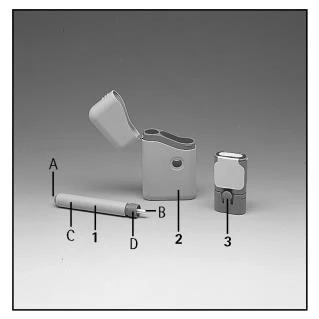
2 - Carrying case
3 - Two-syringe loader
A - Blue button
B - White plunger
C - Grey section
D - Blue section
How to use the PENKIT auto-injector
Read carefully and follow exactly the instructions before using the Penkit auto-injector.
Each Penkit auto-injector is supplied with a two-syringe loader pre-filled with Imigran.
Use the pictures to help identify the different parts of the auto-injector.
Do not load the Penkit auto-injector until you are ready to administer the injection.
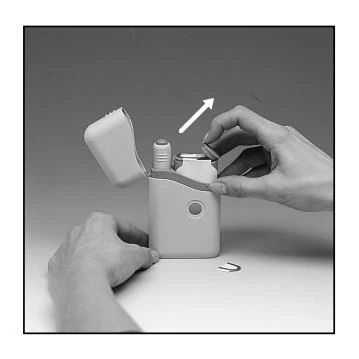
Open the carrying case. Remove the seal from one of the two
syringe containers.
Note: the removed seal indicates that this dose has been used.
Open the syringe container lid by lifting it off from beneath the
seal.
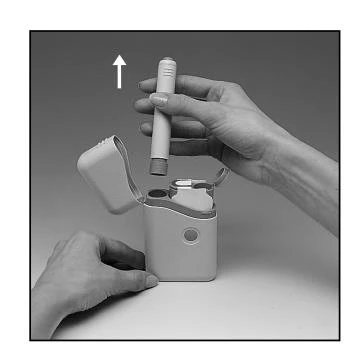
Remove the PENKIT auto-injector from the case, taking care not
to press the blue button.
Note: the spring mechanism inside the PENKIT auto-injector is
pre-loaded and ready for use as soon as it is removed from the
case. The white plunger should not protrude from the bottom
edge of the PENKIT auto-injector. If it does, reinsert the Penkit
auto-injector into the case and press down firmly. The plunger
should click into place. The auto-injector is now ready for use.
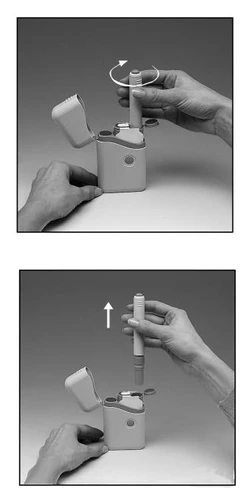
To load the PENKIT auto-injector, insert it into the syringe
container and gently screw clockwise (approximately half a
turn).
Note: be careful not to press the blue button, which would
discharge the spring mechanism inside the PENKIT auto-injector.
Remove the loaded PENKIT auto-injector in a straight line. You
may need to pull firmly, so take care not to press the blue
button.
To administer the injection, press the loaded PENKIT
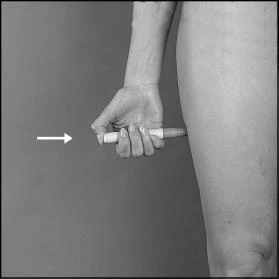
auto-injector firmly against a clean area of skin, preferably on
the outer thigh (see illustration), until the grey section slides
over the blue section.
Firmly hold the PENKIT auto-injector in place and press the
blue button firmly until you hear a click, keeping the device
steady and the release button pressed for at least 5 seconds.
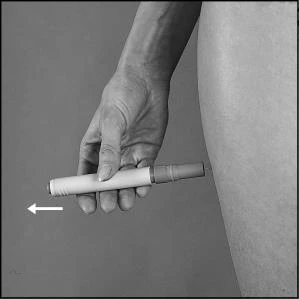
After 5 seconds, carefully remove the PENKIT auto-injector
without bending it, taking care not to touch the exposed needle
tip.
Immediately place the used syringe back into its empty
container by firmly pushing the PENKIT auto-injector into the
container.
Then unscrew the PENKIT auto-injector counterclockwise
(approximately half a turn) until the used syringe is left inside
the container.
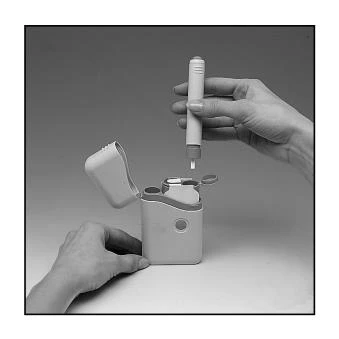
Remove the empty PENKIT auto-injector. Close the container
lid over the used syringe.
Note: after the device has been used, the white plunger will
protrude from the bottom edge of the PENKIT auto-injector.
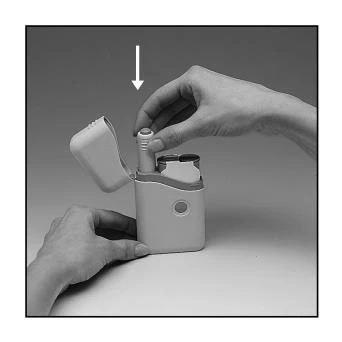
Return the PENKIT auto-injector to the carrying case and push
it down until it clicks firmly into the correct position (take care
once again not to press the blue button).
Note: this action re-loads the spring mechanism inside the
PENKIT auto-injector for the next injection. (The white plunger
will return inside the PENKIT auto-injector.)
After use, do not dispose of empty containers in the environment.
Needles and syringes can be hazardous and should be disposed of correctly and safely.
Package leaflet: information for the user
Imigran 25 mg Suppositories
Sumatriptan
Please read this leaflet carefully before using this medicine, as it contains important information for you.
- Keep this leaflet. You may need to read it again.
- If you have any questions, consult your doctor or pharmacist.
- This medicine has been prescribed for you only. Do not give it to others, even if their symptoms are the same as yours, as it may be harmful, even if their symptoms resemble your own.
- If you experience any side effects, including those not listed in this leaflet, talk to your doctor or pharmacist. See section 4.
Contents of this leaflet
- What Imigran Suppositories are and what they are used for
- What you need to know before using Imigran Suppositories
- How to use Imigran Suppositories
- Possible side effects
- How to store Imigran Suppositories
- Contents of the pack and other information
1. What Imigran Suppositories is and what it is used for
Imigran Suppositories is for rectal use and contains sumatriptan, which belongs to a group of medicines known as triptans (also known as 5-HT receptor agonists).
Imigran Suppositories is used to treat migraine.
The symptoms of migraine may be caused by a temporary dilation of the blood vessels in the head.
Imigran Suppositories is thought to reduce this dilation of blood vessels, thereby helping to relieve headache and other symptoms of a migraine attack, such as nausea, vomiting, and sensitivity to light and sound.
2. What you need to know before using Imigran Suppositories
Do not use IMIGRAN:
- If you are allergic to sumatriptan or to any of the other ingredients of this medicine (listed in section 6).
- If you have heart problems, such as narrowing of the arteries (ischaemic heart disease) or chest pain (angina) or a history of heart attack.
- If you have circulation problems in your legs causing cramp-like pain when walking (peripheral vascular disease).
- If you have had a stroke or a minor stroke (also called transient ischaemic attack or TIA).
- If you have high blood pressure. You may use Imigran if your blood pressure is slightly elevated and is being treated.
- If you have severe liver disease.
- Together with other migraine treatments, including those containing ergotamine, or similar medicines such as methysergide, or any triptan/5-HT receptor agonist (medicines also used to treat migraine).
- Together with antidepressants called MAOIs (monoamine oxidase inhibitors), or if you have taken these medicines within the last 2 weeks.
If any of these apply to you:
Tell your doctor, and do not use Imigran Suppositories.
Take special care with Imigran
Talk to your doctor before using Imigran:
If you have additional risk factors
- If you are a heavy smoker, or if you are using nicotine replacement therapy, and especially
- If you are a man over 40 years of age, or
- If you are a postmenopausal woman. In very rare cases, some patients have developed serious heart conditions after taking Imigran, even though they had never previously shown signs of heart disease. If any of the above points apply to you, it means you have a higher risk of developing heart disease – therefore: Inform your doctor so that they can check your heart function before prescribing Imigran.
If you suffer from epilepsy or have a history of seizures (epileptic fits)
Or if you have other conditions that may increase the likelihood of seizures – for example,
head trauma or alcoholism.
Inform your doctor so they can monitor you more closely.
If you have kidney or liver disease
Inform your doctor so they can monitor you more closely.
If you are allergic to antibiotics called sulphonamides
In this case, you may also be allergic to Imigran. If you know you are allergic to an antibiotic but are not
sure whether it is a sulphonamide:
Inform your doctor or pharmacist before using Imigran.
If you are taking antidepressants called SSRIs (Selective Serotonin Reuptake Inhibitors) or
SNRIs (Serotonin and Noradrenaline Reuptake Inhibitors)
Inform your doctor or pharmacist before using Imigran. See also Taking Imigran with
other medicines below.
If you use Imigran frequently
Using Imigran too often may worsen your headache.
Inform your doctor if this happens to you. Your doctor may advise you to stop using Imigran.
If you experience chest pain or tightness after using Imigran
These effects can be intense but usually resolve quickly. If they do not resolve quickly, or if they
worsen:
Seek immediate medical help. Section 4 of this leaflet provides further information about these possible side effects.
Other medicines and Imigran
Tell your doctor or pharmacist if you are taking, have recently taken, or might take any other medicine. This includes any herbal products or medicines purchased without a prescription.
Some medicines must not be taken with Imigran, and others may cause side effects when taken together with Imigran. You must discuss with your doctor if you are taking:
- Ergotamine, also used to treat migraine, or similar medicines such as methysergide (see section 2 Do not use Imigran). Do not use Imigran at the same time as these medicines. Stop taking these medicines at least 24 hours before using Imigran. Do not restart any medicine containing ergotamine or ergotamine-like compounds for at least 6 hours after taking Imigran.
- Other triptans/5-HT receptor agonists (such as naratriptan, rizatriptan, zolmitriptan), also used to treat migraine (see section 2 Do not use Imigran). Do not use Imigran at the same time as these medicines. Stop taking these medicines at least 24 hours before taking Imigran. Do not restart another triptan/5-HT receptor agonist for at least 24 hours after taking Imigran.
- SSRIs (Selective Serotonin Reuptake Inhibitors) or SNRIs (Serotonin and Noradrenaline Reuptake Inhibitors) used to treat depression. Taking Imigran together with these medicines may cause serotonin syndrome (a group of symptoms that may include agitation, confusion, sweating, hallucinations, increased reflexes, muscle spasms, shivering, increased heart rate, and tremors). Inform your doctor immediately if you experience any of these symptoms.
- MAOIs (monoamine oxidase inhibitors) used to treat depression. Do not use Imigran if you have taken any of these within the last 2 weeks.
- St. John’s wort (Hypericum perforatum). Taking herbal products containing St. John’s wort while taking Imigran may increase the likelihood of experiencing side effects.
Pregnancy and breast-feeding
- If you are pregnant, think you may be pregnant, or are planning to become pregnant, consult your doctor before taking this medicine. There are only limited data on the safety of Imigran in pregnant women, although to date there is no evidence of an increased risk of birth defects. Your doctor will decide together with you whether or not to take Imigran during pregnancy.
- You must not breast-feed your baby for at least 12 hours after taking Imigran. Breast milk expressed during this time must not be given to the baby and should be discarded.
Driving and using machines
Both the symptoms of migraine and this medicine may cause drowsiness. If you experience this, you must not drive or
operate machinery.
3. How to use Imigran Suppositories
Use Imigran only after migraine attack has started.
Do not use Imigran to try to prevent the attack.
Always use this medicine exactly as instructed by your doctor. If you have any doubts, you must consult your doctor or pharmacist.
How much to use
- The usual dose for adults aged 18 to 65 is one 25 mg Imigran suppository. Do not use more than two suppositories within 24 hours. Imigran Suppositories are not recommended for children and adolescents under 18 years of age or for adults over 65 years of age.
When to use Imigran
- The best way to use Imigran is to take it as soon as you feel a migraine attack starting, although it may be used at any time during the attack.
If your symptoms start to return
- You may use a second suppository after 2 hours, but do not use more than two suppositories within 24 hours.
How to insert Imigran Suppositories
- Empty your bowel if necessary.
- Wash your hands.
- Remove the suppository from its wrapper.
- Inserting the suppository may be easier if you adopt a crouching position or bend forward.
- Insert the suppository into the anus (rectum).
- Wash your hands.
- Try not to empty your bowel within one hour of inserting the suppository.
If the first dose has no effect
- Do not use a second suppository or any other Imigran preparation for the same attack. If Imigran does not provide you with any relief:
⇒ Consult your doctor or pharmacist.
If you use more Imigran than you should
- If you use too much Imigran, you may feel unwell. If you have used more than two suppositories within 24 hours:
⇒ Consult your doctor.
If you have any doubts about how to use this medicine, ask your doctor or pharmacist.
4. Possible side effects
Like all medicines, Imigran Suppositories can cause side effects, although not everyone experiences them. Some symptoms may be caused by migraine itself.
Allergic reactions: seek immediate medical help
The following side effects have occurred, but their exact frequency is unknown:
- Signs of allergy include skin rash, urticaria (itchy rash); wheezing; swelling of the eyelids, face or lips; complete collapse. If any of these symptoms occur immediately after using Imigran: Stop using it immediately and contact a doctor without delay.
Common side effects
(may affect up to 1 in 10 people)
- Pain, sensation of heaviness, pressure, tightness or pain in the chest, throat or other parts of the body, or unusual sensations including numbness, tingling, warmth or cold. These effects may be intense but usually pass quickly. If these effects persist or worsen (especially chest pain): Seek urgent medical help. In a very small number of people, these symptoms may be caused by a heart attack.
Other common side effects include:
- Nausea or vomiting, although these may also be due to migraine itself.
- Fatigue or drowsiness.
- Dizziness, feeling weak or hot flushes.
- Temporary increase in blood pressure.
- Shortness of breath.
- Muscle pain.
Very rare side effects
(may affect up to 1 in 10,000 people)
- Changes in liver function. If you are due to have a blood test to check liver function, inform your doctor or nurse that you are taking Imigran.
Some patients may experience the following side effects, but it is not known how often they occur:
- Seizures/epileptic fits, tremors, muscle spasms, neck stiffness.
- Vision disturbances such as tremors, reduced vision, double vision, loss of vision, and in some cases even permanent defects (although these may occur due to the migraine attack itself).
- Heart problems, such as rapid, slow or irregular heartbeat, chest pain ( angina ) or heart attacks.
- Pale or bluish skin and/or pain in the fingers, toes, ears, nose or jaw in response to cold or stress ( Raynaud's phenomenon ).
- Feeling faint (blood pressure may drop).
- Pain in the lower left side of the stomach and bloody diarrhoea ( ischaemic colitis ).
- Diarrhoea
- Joint pain
- Feeling anxious
- Excessive sweating
Reporting of side effects
If you experience any side effect, including those not listed in this leaflet, talk to your doctor or pharmacist. You can also report side effects directly via the national reporting system at www.agenziafarmaco.gov.it/it/responsabili. By reporting side effects, you can help provide more information on the safety of this medicine.
5. How to store Imigran Suppositories
Keep this medicine out of the sight and reach of children.
Do not store above 25°C.
Do not use this medicine after the expiry date stated on the pack. The expiry date refers to the last day of the month.
Do not dispose of any medicine via wastewater or household waste. Ask your pharmacist how to dispose of medicines you no longer use. This will help protect the environment.
6. Package contents and other information
What Imigran Suppositories contain
The active substance is sumatriptan (25 mg).
The other component is Witepsol W32 (solid semisynthetic glycerides).
Description of the appearance of Imigran Suppositories and pack contents
Imigran suppositories are white, torpedo-shaped, smooth and homogeneous.
Imigran suppositories are packaged in sealed blisters. They are available in packs containing 2, 4, 6, 12, 18 or 30 suppositories, although not all pack sizes may be marketed.
Marketing Authorisation Holder and Manufacturer
Marketing Authorisation Holder: GlaxoSmithKline S.p.A.
Via A. Fleming, 2
Verona
Italy
Manufacturer: Farmaclair
440 Avenue du Général de Gaulle
Hérouville Saint Clair - France
This medicinal product is authorised in the European Economic Area Member States under the following names:
- Imigran Suppositories: Austria, Denmark, Finland, Germany, Greece, Italy, the Netherlands and Sweden
This patient information leaflet was last approved on
Package leaflet: information for the user
Imigran 10 mg and 20 mg Nasal Spray
Sumatriptan
Please read this leaflet carefully before using this medicine, as it contains important information for you.
- Keep this leaflet. You may need to read it again.
- If you have any questions, ask your doctor or pharmacist.
- This medicine has been prescribed for you only. Do not give it to others, even if their symptoms are the same as yours, as it could be harmful.
- If you experience any adverse reactions, including those not listed in this leaflet, consult your doctor or pharmacist. See section 4.
Contents of this leaflet:
- What Imigran Nasal Spray is and what it is used for
- What you need to know before using Imigran Nasal Spray
- How to use Imigran Nasal Spray
- Possible side effects
- How to store Imigran Nasal Spray
- Contents of the pack and other information
1. What Imigran Nasal Spray is and what it is used for
Each Imigran Nasal Spray contains a single dose of sumatriptan, which belongs to a group of
medicines called triptans (also known as 5-HT receptor agonists).
Imigran Nasal Spray is used to treat migraine.
The symptoms of migraine may be caused by a temporary dilation of blood vessels in the head.
Imigran is thought to reduce this dilation of blood vessels, helping to relieve headache and
other symptoms of a migraine attack, such as nausea, vomiting, and sensitivity to light and sound.
2. What you need to know before using Imigran Nasal Spray
Do not use Imigran:
- If you are allergic to sumatriptan or to any of the other ingredients of this medicine (listed in section 6).
- If you have heart problems, such as narrowing of the arteries (ischaemic heart disease) or chest pain (angina) or a history of heart attack.
- If you have circulation problems in your legs causing cramp-like pain when walking (peripheral vascular disease).
- If you have had a stroke or a mini-stroke (also called transient ischaemic attack or TIA).
- If you have high blood pressure. You may use Imigran if your blood pressure is slightly elevated and under treatment.
- If you have severe liver disease.
- Together with other migraine medications, including those containing ergotamine or similar medicines such as methysergide, or any triptans/5-HT receptor agonists (medicines also used to treat migraine).
- Together with antidepressants called MAOIs (monoamine oxidase inhibitors) or if you have taken these medicines within the last 2 weeks.
If any of these apply to you:
Inform your doctor and do not use Imigran Nasal Spray.
Take special care with Imigran
Talk to your doctor before using Imigran:
If you have additional risk factors
- If you are a heavy smoker, or if you are using nicotine replacement therapy, and especially
- If you are a man over 40 years of age, or
- If you are a post-menopausal woman. In very rare cases, some patients have developed serious heart conditions after taking Imigran, even though they had never previously shown signs of heart disease. If any of the above points apply to you, it means you have a higher risk of heart disease – therefore: Inform your doctor so that cardiac function can be checked before Imigran is prescribed.
If you suffer from epilepsy or have previously had seizures (epileptic fits)
Or if you have other conditions that may increase the likelihood of seizures – for example, head trauma
or alcoholism:
Inform your doctor so that you can be monitored more closely.
If you have liver or kidney disease
Inform your doctor so that you can be monitored more closely.
If you are allergic to antibiotics called sulphonamides
In this case, you may also be allergic to Imigran. If you know you are allergic to an antibiotic but are not
sure whether it is a sulphonamide:
Inform your doctor or pharmacist before using Imigran.
If you are taking antidepressants called SSRIs (Selective Serotonin Reuptake Inhibitors) or
SNRIs (Serotonin and Noradrenaline Reuptake Inhibitors)
Inform your doctor or pharmacist before using Imigran. See also below Taking Imigran with other medicines.
If you use Imigran frequently
Using Imigran too often may worsen your headache.
Inform your doctor if this applies to you. Your doctor may advise you to stop using Imigran.
If you experience chest pain or tightness after using Imigran
These effects may be intense but usually resolve quickly. If they do not resolve quickly or worsen:
Seek immediate medical help. Section 4 of this leaflet provides further information about these possible side effects.
Other medicines and Imigran
Inform your doctor or pharmacist if you are taking, have recently taken, or might take any other medicine. This includes any herbal products or over-the-counter medicines.
Some medicines must not be taken with Imigran, and others may cause side effects when taken together with Imigran. You should discuss with your doctor if you are taking:
- Ergotamine, also used to treat migraine, or similar medicines such as methysergide (see Section 2 Do not use Imigran). Do not use Imigran at the same time as these medicines. You must stop taking these medicines at least 24 hours before using Imigran. Do not take any medicine containing ergotamine or ergotamine-like compounds again for at least 6 hours after taking Imigran.
- Other triptans/5-HT receptor agonists (such as naratriptan, rizatriptan, zolmitriptan), also used to treat migraine (see Section 2 Do not use Imigran). Do not use Imigran at the same time as these medicines. You must stop taking these medicines at least 24 hours before using Imigran. Do not restart another triptan/5-HT receptor agonist for at least 24 hours after taking Imigran.
- SSRIs (Selective Serotonin Reuptake Inhibitors) or SNRIs (Serotonin and Noradrenaline Reuptake Inhibitors) used to treat depression. Taking Imigran together with these medicines may cause serotonin syndrome (a group of symptoms which may include agitation, confusion, sweating, hallucinations, increased reflexes, muscle spasms, shivering, increased heart rate, and tremors). Inform your doctor immediately if you experience any of these symptoms.
- MAOIs (monoamine oxidase inhibitors) used to treat depression. Do not use Imigran if you have taken any of these within the last 2 weeks.
- St. John’s wort (Hypericum perforatum). Taking herbal products containing St. John’s wort while taking Imigran may increase the likelihood of side effects.
Pregnancy and breastfeeding
- If you are pregnant, think you may be pregnant, or are planning to become pregnant, consult your doctor before taking this medicine. There is only limited data available on the safety of Imigran during pregnancy, although so far there is no evidence of an increased risk of birth defects. Your doctor will decide together with you whether or not to take Imigran during pregnancy.
- You must not breastfeed your baby for 12 hours after taking Imigran. Breast milk collected during this 12-hour period must not be given to the baby and should be discarded.
Driving and using machines
Both the symptoms of migraine and this medicine can cause drowsiness. If you experience this, you must not drive or operate machinery.
3. How to use Imigran Nasal Spray
Imigran should only be used after a migraine attack has started.
Do not use Imigran to try to prevent an attack.
Always use this medicine exactly as instructed by your doctor. If you have any doubts, you should
consult your doctor or pharmacist.
At the end of this leaflet you will find step-by-step instructions on how to use the spray.
(see section 6)
Dosage
Adults aged 18 to 65
- The usual dose for adults aged 18 to 65 is one spray of Imigran 20 mg into one nostril. However, in some individuals, one spray of Imigran 10 mg into one nostril may be effective. Do not use the spray more than twice within 24 hours.
Adolescents aged 12 to 17
- The usual dose for adolescents aged 12 to 17 is one spray of Imigran 10 mg into one nostril.
Children under 12 years of age
- Imigran Nasal Spray is not recommended in children under 12 years of age.
Elderly (over 65 years of age)
- Imigran Nasal Spray is not recommended in individuals over 65 years of age.
When to use Imigran
- The best time to use Imigran is as soon as you feel a migraine attack starting, although it may be used at any time during the attack.
If symptoms return
- You may use a second spray of Imigran after 2 hours, but do not use more than two sprays within 24 hours.
If the first spray has no effect
- Do not use a second spray, or any other formulation of Imigran, for the same attack. If Imigran does not provide you with relief:
→ Consult your doctor or pharmacist for advice.
If you use more Imigran than you should
- Do not use more than two sprays of Imigran Nasal Spray within 24 hours.
If you take too much Imigran, you may feel unwell. If you have used more than two sprays within 24 hours:
→ Contact your doctor for advice.
If you have any doubts about how to use this medicine, consult your doctor or pharmacist.
4. Possible side effects
Like all medicines, this medicine can cause side effects, although not everybody gets them. Some symptoms may be caused by migraine itself.
The side effects reported in adults have also been observed in adolescents. These include very rare reports of heart attacks.
Allergic reactions: seek immediate medical help
The following side effects have occurred, but their exact frequency is unknown.
- Signs of allergy include skin rash, urticaria (itchy rash); wheezing, swelling of the eyelids, face or lips, and even complete collapse. If any of these symptoms occur immediately after using Imigran:
Stop using it immediately and contact a doctor without delay.
Very common side effects
(may affect more than 1 in 10 people)
- Unpleasant taste.
Common side effects
(may affect up to 1 in 10 people)
- Pain, sensation of heaviness, pressure, tightness or pain in the chest, throat or other parts of the body, or unusual sensations including numbness, tingling, and hot or cold feelings. These effects may be intense but usually pass quickly.
If these effects persist or worsen (especially chest pain):
Seek urgent medical help. In a small number of people, these symptoms may be caused by a heart attack.
Other common side effects include:
- Nasal or throat irritation or burning sensation; nosebleeds.
- Nausea or vomiting, although these effects may also be due to migraine itself.
- Tiredness or drowsiness.
- Dizziness, feeling of weakness or hot flushes.
- Temporary increase in blood pressure.
- Shortness of breath.
- Muscle pain.
Very rare side effects
(may affect up to 1 in 10,000 people)
- Changes in liver function. If you are due to have a blood test to check your liver function, tell your doctor or nurse that you are taking Imigran.
Some patients may experience the following side effects, but it is not known how often they occur
- Seizures/epileptic fits, tremors, muscle spasms, neck stiffness.
- Vision disturbances such as tremulousness, reduced vision, double vision, vision loss, sometimes even with permanent defects (although these may also occur due to the migraine attack itself).
- Heart problems, such as rapid, slow or irregular heartbeat, chest pain (angina), or heart attacks.
- Pale or bluish skin and/or pain in fingers, toes, ears, nose or jaw in response to cold or stress (Raynaud's phenomenon).
- Feeling faint (blood pressure may drop).
- Pain in the lower left side of the stomach and bloody diarrhoea (ischaemic colitis).
- Diarrhoea
- Joint pain
- Feeling anxious
- Excessive sweating
Reporting of side effects
If you experience any side effect, including those not listed in this leaflet, talk to your doctor or pharmacist. You can also report side effects directly via the national reporting system at www.agenziafarmaco.gov.it/it/responsabili. By reporting side effects, you can help provide more information on the safety of this medicine.
5. How to store Imigran Nasal Spray
Keep this medicine out of the sight and reach of children.
Keep this medicine in the sealed blister inside the outer carton to protect it from light.
Do not store above 30°C and do not freeze.
Do not use this medicine after the expiry date stated on the carton. The expiry date refers to the last day of the month.
Do not dispose of medicines via wastewater or household waste. Ask your pharmacist how to dispose of medicines no longer required. This will help protect the environment.
6. Package contents and other information
What Imigran Nasal Spray contains
The active substance is sumatriptan (10 mg or 20 mg).
The excipients are monobasic potassium phosphate, anhydrous dibasic sodium phosphate, sulfuric acid, sodium hydroxide and purified water.
Description of the appearance of Imigran Nasal Spray and contents of the pack
This medicine is supplied as a pre-filled nasal spray device and contains sumatriptan in 0.1 ml of yellow solution.
Imigran Nasal Spray is packaged in a box containing individually sealed nasal sprays in blisters. Packs containing 1, 2, 4, 6, 12 or 18 pre-filled nasal spray devices are available, although not all pack sizes may be marketed in your country. Each nasal spray spray delivers one dose of Imigran.
Marketing Authorization Holder and Manufacturer
Marketing Authorization Holder: GlaxoSmithKline S.p.A.
Via A. Fleming, 2
Verona
Manufacturer: GlaxoSmithKline Manufacturing S.p.A.
Strada Provinciale Asolana n. 90
San Polo di Torrile (Parma)
This medicine is authorised in the European Economic Area Member States under the following names:
- Imigran nasal spray: Austria, Denmark, Finland, Germany, Greece, Italy, Netherlands, Portugal, Spain, Sweden and United Kingdom.
- Imitrex nasal spray: Belgium and Luxembourg
This Patient Information Leaflet was last approved on
Instructions to guide you step by step in the use of Imigran Nasal Spray
Do not open the blister until you are ready to use the spray. Each spray is sealed in a blister to help keep it clean and safe. If you carry a spray outside its blister or with an open blister, the spray may not work properly when you need it.
Each spray contains only one dose of Imigran.
Do not press the plunger too early, otherwise the dose will be lost.
Imigran Nasal Spray has three parts:
The nozzle

This is the part you insert into your nostril.
The spray comes out through a very small hole on the top.
The handle
Hold this part when using the spray.
The blue plunger
Press it to release the entire dose into the nostril in a single action. The plunger works only once – do not
press the blue plunger until you have inserted the
nozzle into your nostril, otherwise the dose will be
lost.
How to use the nasal spray
- Remove the nasal spray from its blister packaging immediately before use.
- Get into a comfortable position. You may prefer to sit down.
- Blow your nose if it feels blocked, or if you have a cold.
- Hold the nasal spray gently with your fingers and thumb as shown in figure A.
Do not press the blue plunger yet.

- Close one nostril by firmly pressing a finger against one side of your nose. It does not matter which nostril you use.

- Insert the nasal spray nozzle into the other nostril, until you feel it is far enough (approximately 1 cm) (figure B). Breathe out gently through your mouth. Keep your head upright as shown in the figure and keep your mouth closed.
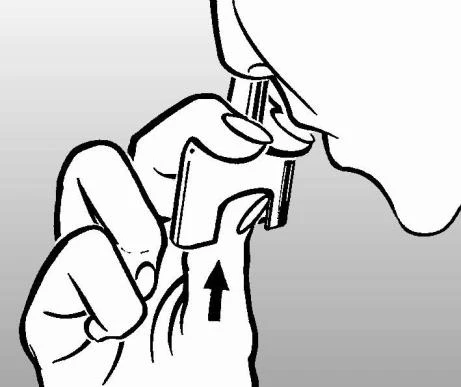
7. Begin to gently inhale through your nose
And while inhaling:
Firmly press the blue plunger with your thumb.
The plunger may require some force and you may hear a "click". Continue inhaling gently while pressing the plunger (figure C).
-
Remove the spray from your nose and your finger from the other side of the nose. Keep your head upright for about 10–20 seconds and continue to gently inhale through your nose and exhale through your mouth. This helps the medicine remain in the nose. You may feel a sensation of moisture inside the nose and notice a slight taste after using the spray – this is normal and will pass quickly.
-
The nasal spray is now empty. It must be safely and hygienically disposed of.