Ilmodec for fever and nasal congestion
Italy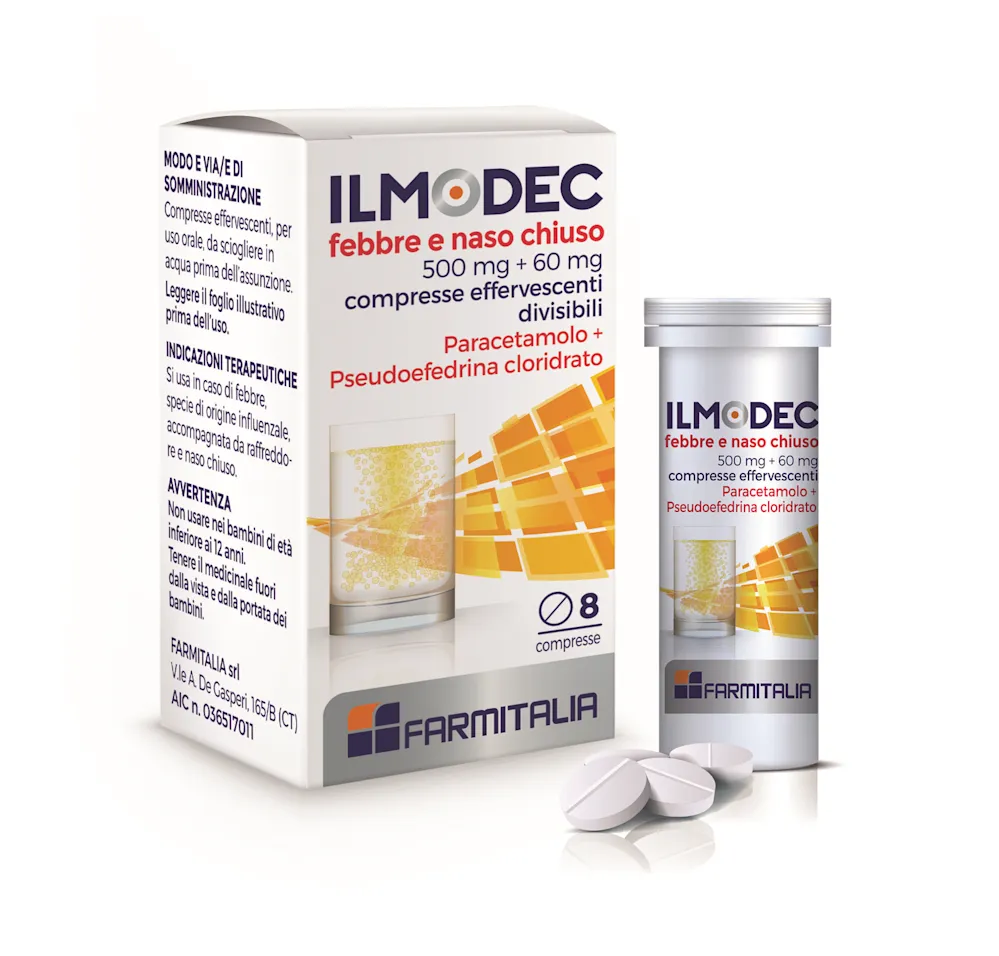
Table of Contents
- Patient Information Leaflet
- Ilmodec Fever and Congested Nose
- 1. What Ilmodec Fever and Nasal Congestion is and what it is used for
- 2. What you need to know before taking Ilmodec fever and nasal congestion
- 3. How to take Ilmodec fever and nasal congestion
- 4. Possible side effects
- 5. How to store Ilmodec fever and nasal congestion
- 6. Pack contents and other information
Patient Information Leaflet
Ilmodec Fever and Congested Nose
500 mg + 60 mg effervescent tablets
paracetamol and pseudoephedrine hydrochloride
Please read all of this leaflet carefully before taking this medicine because it contains
important information for you.
Always take this medicine exactly as described in this leaflet or as your doctor or
pharmacist has instructed.
- Keep this leaflet. You may need to read it again.
- If you need more information or advice, consult your pharmacist.
- If you experience any side effects, including those not listed in this leaflet, contact your doctor or pharmacist. See section 4.
- Consult your doctor if you do not notice improvement or if your symptoms worsen after three days.
Contents of this leaflet:
- What Ilmodec Fever and Congested Nose is and what it is used for
- What you need to know before taking Ilmodec Fever and Congested Nose
- How to take Ilmodec Fever and Congested Nose
- Possible side effects
- How to store Ilmodec Fever and Congested Nose
- Contents of the pack and other information
1. What Ilmodec Fever and Nasal Congestion is and what it is used for
Ilmodec Fever and Nasal Congestion contains paracetamol, a pain reliever and antipyretic, and pseudoephedrine hydrochloride, a decongestant that clears nasal passages and facilitates breathing.
Ilmodec Fever and Nasal Congestion is used for fever, particularly of influenza origin, accompanied by cold symptoms and nasal congestion.
Consult your doctor if you do not feel better or if you feel worse after three days.
2. What you need to know before taking Ilmodec fever and nasal congestion
Do not take Ilmodec fever and nasal congestion
- if you are allergic to paracetamol, hydrochloride pseudoephedrine, or any of the other ingredients of this medicine (listed in section 6);
- if you are pregnant or breastfeeding (see "Pregnancy and breastfeeding");
- if you are under 12 years of age (see "Children and adolescents");
- if you have very high blood pressure (severe hypertension) or uncontrolled hypertension due to medication;
- if you suffer from severe acute (sudden) or chronic (long-term) kidney disease or renal failure;
- if you have any of the following conditions:
- serious cardiovascular diseases (serious diseases affecting the heart and/or blood vessels);
- hypertension (high blood pressure);
- hyperthyroidism (a thyroid disorder);
- glaucoma (an eye disease caused by increased eye pressure);
- benign prostatic hyperplasia (enlargement of the prostate);
- if you are being treated with:
- monoamine oxidase inhibitor medicines (medicines used for mood disorders, anxiety, depression) or tricyclic antidepressants, or if you have stopped such treatment less than two weeks ago;
- anti-inflammatory medicines (see "Other medicines and Ilmodec fever and nasal congestion");
- if you have glucose-6-phosphate dehydrogenase deficiency (an enzyme deficiency);
- if you have phenylketonuria (the medicine contains aspartame).
One of the active ingredients in Ilmodec fever and nasal congestion, pseudoephedrine, may cause abuse, and high doses of pseudoephedrine may be toxic. Continuous use may lead to taking more Ilmodec fever and nasal congestion than the recommended dose to achieve the desired effect, thereby increasing the risk of overdose. The maximum recommended dose and duration of treatment must not be exceeded (see section 3).
Warnings and precautions
Talk to your doctor or pharmacist before taking Ilmodec fever and nasal congestion:
- if you have renal failure;
- if you have hepatic failure;
- if you are elderly, as the medicine may occasionally cause spasm (involuntary contraction) of the bladder sphincter, leading to difficulty in passing urine (urinary retention).
During treatment with Ilmodec fever and nasal congestion, inform your doctor immediately if:
You suffer from serious conditions, including severe renal impairment or sepsis (when bacteria and their toxins circulate in the blood causing organ damage), malnutrition, chronic alcoholism, or if you are also taking flucloxacillin (an antibiotic). In patients with these conditions, a serious condition called metabolic acidosis (an abnormality in blood and body fluids) has been reported when paracetamol is used regularly over a prolonged period or when paracetamol is taken in combination with flucloxacillin. Symptoms of metabolic acidosis may include: severe breathing difficulties with deep, rapid breathing, drowsiness, nausea, and vomiting.
Very rare cases of serious skin reactions have been reported. If you develop skin manifestations such as redness, rash, blisters, or peeling, stop using the medicine and consult a doctor immediately (see "Possible side effects").
With products containing pseudoephedrine, a severe form of skin reaction called Generalized Acute Exanthematous Pustulosis (AGEP) may occur in isolated cases. If symptoms such as fever, erythema, or small pustules (generalized) appear, patients should discontinue treatment and consult a doctor.
High or prolonged doses of the product may cause blood disorders, even severe ones (see section "Possible side effects").
Cases of reversible posterior encephalopathy syndrome (PRES) and reversible cerebral vasoconstriction syndrome (RCVS) have been reported following the use of medicines containing pseudoephedrine. PRES and RCVS are rare conditions that may result in reduced blood flow to the brain. Stop using Ilmodec fever and nasal congestion immediately and seek immediate medical assistance if you develop symptoms that could be signs of PRES or RCVS (see section 4 "Possible side effects" for symptoms).
With Ilmodec fever and nasal congestion, a reduction in blood flow to the optic nerve may occur.
If sudden vision loss occurs, stop taking Ilmodec fever and nasal congestion and contact your doctor or a healthcare facility immediately. See section 4.
With Ilmodec fever and nasal congestion, sudden abdominal pain or rectal bleeding may occur due to inflammation of the colon (ischemic colitis). If these gastrointestinal symptoms occur, stop treatment with Ilmodec fever and nasal congestion immediately and contact your doctor or seek medical advice. See section 4.
During treatment with paracetamol, before taking any other medicine, check that it does not contain the same active ingredient, as serious adverse reactions may occur if paracetamol is taken in high doses.
In addition, before combining with any other medicine, consult your doctor.
Children and adolescents
This medicine must not be taken by children under 12 years of age.
Other medicines and Ilmodec fever and nasal congestion
Inform your doctor or pharmacist if you are taking, have recently taken, or might take any other medicines.
Before taking this medicine, inform your doctor if you are using:
- Medicines that slow gastric emptying (e.g., propantheline): may reduce the rate of absorption of paracetamol, delaying its effect;
- Medicines that increase the rate of gastric emptying (e.g., metoclopramide, domperidone): may increase the rate of absorption of paracetamol;
- AZT (zidovudine – antiretroviral, against certain viral attacks): concomitant use of paracetamol and AZT increases the tendency for a reduction in white blood cell count (neutropenia);
- Oral anticoagulants (medicines that thin the blood);
- Tropisetron and granisetron (antiemetics, medicines against nausea and vomiting): may completely inhibit the analgesic effect of paracetamol;
- Chloramphenicol (antibiotic): paracetamol may increase its half-life (time required to reduce by half the amount of a medicine in plasma or blood), and thus potentially increase its toxicity;
- Lamotrigine (antiepileptic): paracetamol may reduce the effectiveness of lamotrigine;
- Rifampicin (antibiotic), cimetidine (medicine for gastric acidity), or antiepileptic medicines (glutethimide, phenobarbital, carbamazepine): paracetamol should be used with extreme caution and only under strict medical supervision;
- Decongestants (medicines that relieve nasal congestion), anorexiants, and amphetamine-like medicines (medicines that reduce appetite): the use of Ilmodec fever and nasal congestion together with these medicines should be avoided, as it may cause increases in blood pressure;
- Monoamine oxidase inhibitors: concomitant use of pseudoephedrine and monoamine oxidase inhibitors (medicines used for mood disorders, anxiety, depression) may cause increased blood pressure. Do not use medicines containing pseudoephedrine if you have stopped treatment with monoamine oxidase inhibitors less than two weeks ago (see "Do not take Ilmodec fever and nasal congestion");
- Furazolidone (antibiotic): may cause progressive inhibition of monoamine oxidase;
- Certain antihypertensive medicines (e.g., methyldopa, beta-blockers, bretylium, guanethidine, betanidine, and bretylium tosylate): the effect may be partially counteracted by Ilmodec fever and nasal congestion;
- Flucloxacillin (antibiotic), due to a serious risk of blood and fluid abnormalities (called metabolic acidosis) that requires urgent treatment (see section 2).
Anti-inflammatory medicines (NSAIDs) and painkillers (opioids): simultaneous administration with Ilmodec fever and nasal congestion results in mutual enhancement of analgesic effect.
When taking Ilmodec fever and nasal congestion, test results for uric acid (performed, for example, in cases of gout) and blood sugar (performed, for example, in cases of diabetes) may be affected.
If you take Ilmodec fever and nasal congestion, levels of a liver enzyme (serum alanine aminotransferase – ALT) may be elevated.
Ilmodec fever and nasal congestion with alcohol
Avoid alcohol consumption while taking this medicine.
Pregnancy and breastfeeding
If you are pregnant, suspect you are pregnant, planning a pregnancy, or breastfeeding with breast milk, do not take this medicine.
Ask your doctor or pharmacist for advice before taking any medicine.
Driving and using machines
Be careful when driving or operating machinery, due to the possible occurrence of dizziness or drowsiness.
For those engaged in sports
Using the medicine without therapeutic need constitutes doping and may result in a positive anti-doping test.
Ilmodec fever and nasal congestion contains aspartame, sorbitol, and sodium
- This medicine contains 20.0 mg of aspartame. Aspartame is a source of phenylalanine. It may be harmful if you have phenylketonuria, a rare genetic disorder causing phenylalanine accumulation because the body cannot properly eliminate it.
- This medicine contains 260 mg of sodium (the main component of table salt) per tablet. This corresponds to 13% of the maximum daily recommended dietary intake for an adult.
- This medicine contains 296 mg of sorbitol per tablet. Sorbitol is a source of fructose. If your doctor has told you that you (or the child) are intolerant to certain sugars, or if you have a diagnosis of hereditary fructose intolerance, a rare genetic disorder in which patients cannot metabolize fructose, speak with your doctor before you (or the child) take this medicine.
3. How to take Ilmodec fever and nasal congestion
Take this medicine exactly as stated in this leaflet or as instructed by your doctor or pharmacist. If you have any doubts, consult your doctor or pharmacist.
Recommended dose:
Adults: 1 effervescent tablet up to three times daily. The medicine should be taken for a maximum of 5 days of treatment.
Children over 12 years: 1 effervescent tablet up to three times daily. The medicine should be taken for a maximum of 3 days of treatment (paediatric population 12–18 years).
Dissolve the tablet in a glass of water and drink the resulting solution immediately.
Take the medicine with food.
Consult your doctor if symptoms recur repeatedly or if you have noticed any recent changes in the nature of your symptoms.
Use in children and adolescents
This medicine is not indicated for children under 12 years of age.
Warning: Do not exceed the recommended doses without medical advice. This recommendation is particularly important if you are elderly.
If you suffer from kidney disease
Consult your doctor before taking this medicine, as a dose adjustment may be necessary. If you have severe renal impairment (creatinine clearance <10 ml/min), your doctor will assess whether the benefits of using paracetamol outweigh the risks.
Your doctor will determine your dose and monitor you during treatment.
If you suffer from liver disease
Consult your doctor before taking this medicine if you have liver disease (mild to moderate hepatocellular insufficiency, including Gilbert's syndrome; severe hepatic insufficiency Child-Pugh >9; acute hepatitis, concomitant treatment with medicines affecting liver function; glucose-6-phosphate dehydrogenase deficiency; haemolytic anaemia), as a dose adjustment may be necessary.
If you take more Ilmodec fever and nasal congestion than you should
If you accidentally take an excessive dose of Ilmodec fever and nasal congestion, inform your doctor immediately or go to the nearest hospital.
If you forget to take Ilmodec fever and nasal congestion
Do not take a double dose to make up for a forgotten tablet.
If you have any doubts about how to use Ilmodec fever and nasal congestion, consult your doctor or pharmacist.
4. Possible side effects
Like all medicines, this medicine can cause side effects, although not everyone gets them.
Frequency "not known" (cannot be estimated from the available data):
- severe condition that may make the blood more acidic (called metabolic acidosis), in patients with a serious illness using paracetamol (see section 2);
- serious conditions affecting the brain's blood vessels known as posterior reversible encephalopathy syndrome (PRES) and reversible cerebral vasoconstriction syndrome (RCVS). Immediately stop treatment with Ilmodec fever and nasal congestion and urgently consult a doctor if you develop symptoms that could be signs of posterior reversible encephalopathy syndrome (PRES) or reversible cerebral vasoconstriction syndrome (RCVS). These include:
- sudden, severe headache
- nausea
- vomiting
- confusion
- seizures
- changes in vision
Adverse reactions reported with the use of paracetamol and/or pseudoephedrine are listed below.
The adverse reactions listed below are derived from spontaneous reports, and therefore cannot be categorized by frequency.
Blood disorders:
alterations in blood cell counts, such as:
- thrombocytopenia: reduced number of circulating platelets (blood components),
- thrombocytopenic purpura (an autoimmune disease),
- leucopenia: reduced number of circulating white blood cells (blood components),
- anaemia,
- agranulocytosis: reduced number of circulating granulocytes (a type of white blood cell),
- pancytopenia: reduction in all blood cells.
Immune system disorders:
hypersensitivity reactions have been reported very rarely, such as:
- allergic oedema and angioedema, laryngeal oedema (swelling of the throat),
- allergic reactions (anaphylactic reaction, anaphylactic shock),
- asthma,
- sweating,
- nausea,
- hypotension,
- dyspnoea (difficulty breathing).
Psychiatric disorders:
- hallucinations.
Nervous system disorders:
- dizziness,
- drowsiness,
- hyperactivity,
- hyperexcitability (increased reaction to physical or psychological stimuli),
- insomnia,
- anxiety,
- muscle tremors,
- headache,
- dysgeusia (altered taste).
Cardiac disorders:
- arrhythmias, palpitations,
- tachycardia (rapid heartbeat).
Vascular disorders:
- hypertension (high blood pressure),
- hypotension (low blood pressure).
Respiratory disorders:
- breathing difficulties,
- dryness of the nose and throat.
Gastrointestinal disorders:
- nausea,
- vomiting,
- stomach discomfort,
- diarrhoea,
- abdominal pain,
- anorexia (loss of appetite).
Hepatic disorders:
- liver function problems,
- hepatitis,
- dose-dependent liver failure,
- hepatic necrosis (death of liver tissue) potentially fatal.
Skin disorders:
skin reactions of various types and severity, including:
- skin rash,
- pruritus, urticaria,
- generalized acute exanthematous pustulosis (appearance of pustules all over the body),
- fixed erythema,
- erythema multiforme,
- Stevens-Johnson syndrome (acute hypersensitivity reaction involving skin and mucous membranes) and toxic epidermal necrolysis (severe toxic skin reaction) which may lead to death,
- very rare cases of severe skin reactions have been reported.
Renal disorders:
- acute renal failure,
- interstitial nephritis (inflammation within the kidney),
- haematuria (blood in urine),
- anuria (absence of urine).
Frequency "not known"
Reduction in blood flow to the optic nerve (ischaemic optic neuropathy).
Inflammation of the colon due to insufficient blood supply (ischaemic colitis).
Following the instructions in this leaflet reduces the risk of side effects. These side effects are generally temporary.
Reporting of side effects
If you experience any side effect, including those not listed in this leaflet, talk to your doctor or pharmacist. You can also report side effects directly via the national reporting system at "www.aifa.gov.it/content/segnalazioni-reazioni-avverse".
By reporting side effects, you can help provide more information on the safety of this medicine.
5. How to store Ilmodec fever and nasal congestion
Keep this medicine out of the sight and reach of children.
Do not use this medicine after the expiry date stated on the packaging. The expiry date refers to the product in its original packaging, correctly stored. The expiry date refers to the last day of that month.
Do not store above 25°C.
Keep the tube tightly closed to protect the medicine from moisture.
Do not use this medicine if you notice any visible signs of deterioration.
Do not dispose of any medicine via wastewater or household waste. Ask your pharmacist how to dispose of medicines you no longer use. This will help protect the environment.
6. Pack contents and other information
What Ilmodec fever and nasal congestion contains
- The active substances are paracetamol and pseudoephedrine hydrochloride. One tablet contains 500 mg of paracetamol and 60 mg of pseudoephedrine hydrochloride.
- The other components are citric acid, sodium bicarbonate, anhydrous sodium carbonate, sorbitol, lemon flavour, aspartame, sodium saccharin, simethicone, leucine, sodium docusate.
Description of the appearance of Ilmodec fever and nasal congestion and pack contents
Ilmodec fever and nasal congestion is available as effervescent tablets.
Pack contents: 8 effervescent tablets, divisible.
It is possible that not all pack sizes are marketed.
Marketing Authorization Holder
Farmitalia s.r.l.
Via Pinciana 25
00198 Rome
Manufacturer
E-Pharma Trento S.p.A.
Frazione Ravina
Via Provina, 2
38123 Trento (TN)