Igroton
Italy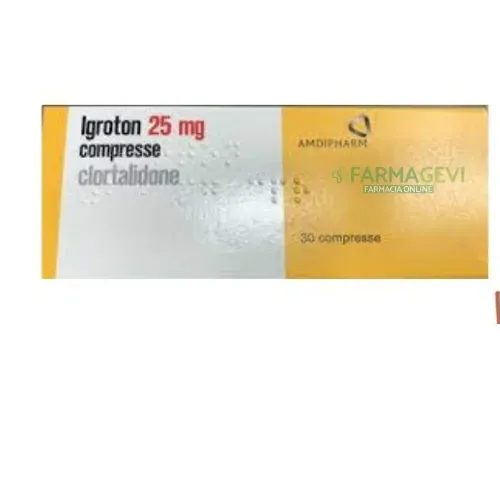
Table of Contents
Package leaflet: Information for the patient
Igroton 25 mg tablets
Chlorthalidone
Please read this leaflet carefully before using this medicine because it contains important information for you.
- Keep this leaflet. You may need to read it again.
- If you have any questions, ask your doctor or pharmacist.
- This medicine has been prescribed for you only. Do not give it to other people, even if their symptoms are the same as yours, as it may be harmful.
- If you experience any adverse reactions, including those not listed in this leaflet, contact your doctor or pharmacist. See section 4.
Contents of this leaflet:
- What Igroton is and what it is used for
- What you need to know before taking Igroton
- How to take Igroton
- Possible side effects
- How to store Igroton
- Contents of the pack and other information
1. What Igroton is and what it is used for
Igroton contains the active substance clortalidone, which is a diuretic that reduces the amount of salt and water in the body by increasing urine elimination.
Igroton is used for:
- reducing high blood pressure;
- reducing fluid retention occurring in certain heart, kidney or liver diseases and in other clinical conditions (premenstrual swelling and swelling of undefined origin).
Consult your doctor if you do not feel better or if you feel worse.
2. What you should know before taking IGROTON
Do not take Igroton
- If you are allergic to chlorthalidone or to other medicines similar to it, or to any of the other ingredients of this medicine (listed in section 6);
- if you have severe liver or kidney disease;
- if you have urinary retention (difficulty passing urine);
- if your blood potassium or sodium levels are very low, or if your blood calcium level is very high;
- if you suffer from (or have suffered from) gout or kidney stones due to uric acid;
- if you are pregnant (see section "Pregnancy and breastfeeding").
Warnings and precautions
Talk to your doctor or pharmacist before taking Igroton:
- if you have kidney or liver problems;
- if you have circulatory disorders or heart disease;
- if you have diabetes;
- if your blood levels of potassium, sodium, or magnesium are too low, or if your blood calcium level is too high, because:
- low blood potassium levels may cause muscle weakness, muscle cramps, or irregular heartbeat;
- low blood sodium levels may cause fatigue, confusion, muscle spasms, seizures, or coma;
- high blood calcium levels may cause loss of appetite, fatigue, or muscle weakness;
- if your blood cholesterol level is too high;
- if you have elevated blood levels of uric acid;
- if you are taking other medicines (see section "Other medicines and Igroton");
- if you experience vision disturbances or eye pain. These could be symptoms of fluid accumulation in the vascular layer of the eye (choroidal effusion) or increased intraocular pressure, which may occur from a few hours to several weeks after taking Igroton. If untreated, this may lead to permanent vision loss. If you have previously had an allergy to penicillin or sulfonamides, you may be at higher risk of developing this symptom;
- if you have systemic lupus erythematosus.
It is important that your doctor regularly monitors your condition to ensure the medicine is working properly. You may need regular blood tests, especially if you are over 65 years of age, if you have heart, liver, or kidney problems, or if you are taking potassium supplements. Regular monitoring of electrolytes is necessary, as hyponatremia, hypokalemia, hypomagnesemia, or hypercalcemia may occur.
For athletes: using this medicine without a therapeutic need constitutes doping and may lead to a positive anti-doping test.
Other medicines and Igroton
Inform your doctor or pharmacist if you are currently taking, have recently taken, or might take any other medicine.
Your doctor may need to adjust the dose or, in some cases, discontinue one of the medicines. This is particularly important for the following medicines:
- Medicines that lower blood pressure or are used to treat heart conditions, such as ACE inhibitors (e.g., lisinopril), angiotensin II receptor antagonists (e.g., candesartan, losartan), beta-blockers (e.g., propranolol hydrochloride), methyldopa, guanethidine, vasodilators (e.g., bosentan), diazoxide, or calcium antagonists (e.g., amlodipine);
- Adrenocorticotropic hormone (ACTH) – used to treat various conditions, including certain autoimmune diseases;
- Corticosteroids such as prednisolone or betamethasone – used to treat allergic and inflammatory diseases and immune reactions;
- Cytotoxic agents such as cyclophosphamide or methotrexate – used in cancer treatment;
- Beta-agonists (medicines for asthma, such as salbutamol or formoterol);
- Medicines used to treat infections (amphotericin);
- Medicines used to treat ulcers (carbenoxolone);
- Medicines used to treat certain mental disorders (lithium, barbiturates, narcotics, antidepressants);
- Anticholinergics such as atropine sulfate or butylscopolamine bromide – used for abdominal or stomach spasms or cramps;
- Medicines used to lower cholesterol levels and prevent heart disease (cholestyramine);
- Medicines used to treat Parkinson’s disease or viral infections (amantadine);
- Medicines used to treat gout (allopurinol);
- Painkillers or anti-inflammatory medicines such as aspirin or indomethacin;
- Medicines used to treat irregular heartbeat (digoxin);
- Medicines used for diabetes (insulin and other diabetes treatments such as chlorpropamide or glibenclamide – dose adjustments may be needed);
- Medicines used to treat skin diseases, rheumatic disorders, or after organ transplantation (cyclosporine);
- Vitamin D and calcium salts used in replacement therapy;
- Curare derivatives (used in anesthesia);
- Medicines used to treat certain cancers (such as cyclophosphamide and methotrexate).
Igroton and alcohol
Avoid consuming alcohol before discussing it with your doctor. Alcohol may further lower blood pressure and/or increase the risk of dizziness or fainting.
Pregnancy and breastfeeding
If you are pregnant, suspect you may be pregnant, planning pregnancy, or breastfeeding, consult your doctor or pharmacist before taking this medicine.
Pregnancy
Do not use Igroton if you are pregnant or planning to become pregnant (see section "Do not take Igroton").
Inform your doctor immediately if you become pregnant while being treated with Igroton.
Breastfeeding
Do not use Igroton while breastfeeding, as chlorthalidone passes into breast milk and may harm your baby.
Driving and using machines
Like many other medicines used to treat high blood pressure, Igroton may cause dizziness and affect concentration. Therefore, before driving, operating machinery, or performing other activities requiring quick reactions, make sure you know how Igroton affects you.
This medicine contains less than 1 mmol (23 mg) of sodium per tablet, i.e., essentially "sodium-free".
3. How to take Igroton
Take this medicine exactly as directed by your doctor or pharmacist. If you have any doubts, consult your doctor or pharmacist.
Recommended dose
Blood pressure
Your doctor will prescribe the lowest possible dose that meets your needs. Follow your doctor's instructions.
Treatment starts with the lowest dose (half a tablet), and the dosage is then gradually increased.
The usual recommended starting dose is 12.5 mg/day or 25 mg/day.
Normally, the tablets should be taken with liquid during meals, preferably in the morning.
If this dose does not yet produce satisfactory results, your doctor may add another medicine for treatment.
Your doctor will prescribe the lowest possible dose that meets your needs. It is recommended not to exceed a dose of 50 mg/day.
Use in the elderly
The recommended dose is the lowest effective standard dose of Igroton. In elderly patients, elimination of clortalidone is slower compared to healthy young adults. Therefore, if you are an elderly patient being treated with clortalidone, you should be closely monitored and a reduction of the indicated dose may be necessary. Elderly patients are more sensitive to disturbances in electrolyte balance.
In case of impaired renal function
The lowest effective standard dose of Igroton is recommended if you are a patient with mild renal impairment.
Igroton and thiazide diuretics reduce their diuretic effect when creatinine clearance is <30 ml/min.
If you take more Igroton than you should
If you take more Igroton than you should, contact your doctor, pharmacist, or poison control center immediately.
In case of overdose, the following symptoms may occur:
- dizziness
- drowsiness
- lowering of blood pressure
- nausea
- irregular heartbeat
- unusual tiredness, weakness, or muscle cramps
If you forget to take Igroton
If you forget to take a dose, take it as soon as possible, unless it is almost time for your next dose. Do not take a double dose.
If you stop taking Igroton
There are no predictable symptoms when treatment with Igroton is discontinued.
4. Possible side effects
Like all medicines, this medicine can cause side effects, although not everybody gets them.
If you experience any of the following side effects, stop using Igroton. Contact your doctor immediately or go to the nearest hospital emergency department:
Allergic reactions: skin rash, swelling of the face, lips, tongue and/or throat which may cause difficulty breathing or swallowing.
Contact your doctor as soon as possible if you experience any of the following side effects:
Very common (may affect more than 1 in 10 people)
- low blood potassium levels, which may cause muscle weakness, muscle cramps or irregular heartbeat;
- increased levels of uric acid;
- increased levels of blood lipids (fats).
Common (may affect up to 1 in 10 people)
- skin rash or itching;
- low sodium levels, which may cause tiredness, confusion, muscle spasms, seizures or coma;
- low magnesium levels;
- high blood sugar levels, which may cause tiredness, weakness or increased thirst;
- dizziness;
- low blood pressure;
- abdominal discomfort;
- loss of appetite;
- hives and skin eruptions;
- impotence.
Rare (may affect up to 1 in 1,000 people)
- changes in blood cells (reduced platelets, increased or decreased white blood cells);
- liver disorders and yellowing of the eyes and skin (jaundice);
- numbness or tingling sensation in the hands, feet or lips;
- blurred vision;
- irregular heartbeat;
- sugar in the urine (detected when your doctor or nurse performs a urine test);
- worsening of diabetes;
- increased calcium levels in the blood, which may cause restlessness, painful eyes, abdominal pain;
- gout;
- headache;
- nausea, vomiting, abdominal pain, diarrhoea or constipation;
- skin reaction following exposure to sunlight.
Very rare (may affect up to 1 in 10,000 people)
- low chloride levels in the blood;
- inflammation of the pancreas (pancreatitis);
- breathing problems (signs of pneumonia and pulmonary oedema);
- kidney inflammation;
- inflammation of blood vessels, often with skin rash.
Not known (frequency cannot be estimated from the available data)
- Visual impairment or eye pain due to increased pressure (possible signs of fluid accumulation in the vascular layer of the eye (choroidal effusion) or acute angle-closure glaucoma).
Reporting of side effects
If you get any side effects, including ones not listed in this leaflet, talk to your doctor, pharmacist or nurse. You can also report side effects directly via the national reporting system at: https://www.aifa.gov.it/content/segnalazioni-reazioni-avverse .
By reporting side effects, you can help provide more information on the safety of this medicine.
5. How to store Igroton
Keep this medicine out of the sight and reach of children.
Do not use this medicine after the expiry date stated on the carton. The expiry date refers to the last day of that month.
This medicine does not require any special storage conditions.
Do not dispose of any medicine via wastewater or household waste. Ask your pharmacist how to dispose of medicines you no longer use. This will help protect the environment.
6. Package contents and other information
What Igroton contains
- The active substance is chlorthalidone. Each tablet contains 25 mg of chlorthalidone.
- The other components are: microcrystalline cellulose; magnesium stearate; anhydrous colloidal silica; sodium carmellose; red iron oxide; yellow iron oxide (E 172)
Description of the appearance of Igroton and contents of the pack
Igroton tablets have a score line on one side. Igroton is available in a carton containing 30
tablets of 25 mg.
Marketing Authorization Holder
Amdipharm Limited
Unit 17
Northwood House
Northwood Crescent
Northwood
Dublin 9
D09 V504
Ireland
Manufacturer
Cenexi SAS
52 Rue Marcel et Jacques Gaucher
94120 Fontenay-sous-Bois, France