Ibustrin
Italy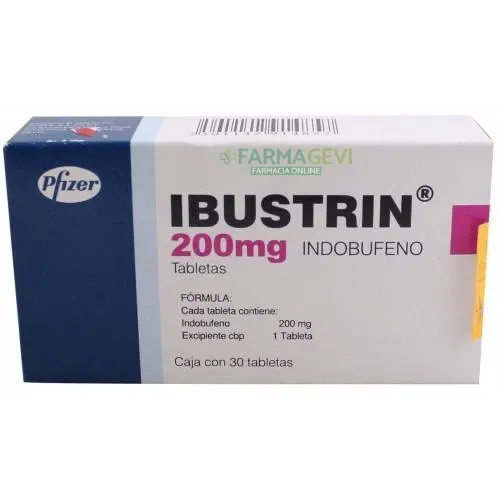
Table of Contents
Package leaflet: Information for the user
IBUSTRIN 200 mg tablets
Indobufen
Please read this leaflet carefully before taking this medicine because it contains important information for you.
- Keep this leaflet. You may need to read it again.
- If you have any questions, ask your doctor or pharmacist.
- This medicine has been prescribed for you only. Do not give it to other people, even if their symptoms are the same as yours, because it could be harmful.
- If you experience any adverse reactions, including those not listed in this leaflet, contact your doctor or pharmacist. See section 4.
Contents of this leaflet:
- What Ibustrin is and what it is used for
- What you need to know before taking Ibustrin
- How to take Ibustrin
- Possible side effects
- How to store Ibustrin
- Contents of the pack and other information
1. What Ibustrin is and what it is used for
Ibustrin contains the active substance indobufen. Indobufen belongs to a group of medicines called "antiplatelet agents" and works by preventing platelet aggregation (blood cells) thereby inhibiting the formation of blood clots. This helps prevent blockages in blood vessels and improves blood flow.
Ibustrin is used to prevent:
- blockage of blood vessels following certain types of heart surgery (aorto-coronary bypass).
Ibustrin is used to treat:
- intermittent claudication, a condition characterized by difficulty in walking due to reduced blood flow through the blood vessels of the legs.
2. What you need to know before taking Ibustrin
Do not take Ibustrin:
- if you are allergic to indobufen or to any of the other ingredients of this medicine (listed in section 6);
- if you have suffered from asthma, rhinitis, or urticaria after treatment with acetylsalicylic acid or with other similar medicines called non-steroidal anti-inflammatory drugs (medicines used against inflammation, pain, and fever);
- if you suffer from stomach ulcer (gastric ulcer) or intestinal ulcer (duodenal ulcer);
- if you suffer from gastrointestinal bleeding (hemorrhagic gastritis);
- if you suffer from severe liver problems (severe hepatic insufficiency) or severe kidney problems (severe renal insufficiency);
- if you suffer from diseases that cause easy and severe bleeding.
Warnings and precautions
Talk to your doctor or pharmacist before taking Ibustrin:
- if you have previously suffered from stomach or intestinal damage (e.g. bleeding, ulcers, inflammation). Take Ibustrin with caution, as your stomach and intestinal problems may recur;
- if you are taking other medicines that inhibit platelet aggregation (antiplatelet agents) or other medicines called non-steroidal anti-inflammatory drugs (for inflammation, pain, and fever). Take Ibustrin with caution when used together with these medicines, as stomach and intestinal problems may occur;
- if you suffer from kidney problems (renal insufficiency). Your doctor will prescribe a reduced dose of Ibustrin depending on the severity of your kidney problems;
- if you are over 65 years of age, as your doctor will advise you to take a lower dose of this medicine.
Inform your doctor if any of the following conditions appear or worsen during treatment with
Ibustrin (see also section 4 “Possible side effects”):
- stomach problems such as burning, persistent discomfort, feeling of fullness, pain or others. If you experience these symptoms, you must reduce the dose or temporarily stop treatment with Ibustrin;
- allergic reactions (e.g. urticaria). If you experience allergic reactions, you must stop treatment with Ibustrin.
Other medicines and Ibustrin
Inform your doctor or pharmacist if you are taking, have recently taken, or might take any other
medicines.
Inform your doctor if you are taking any of the following medicines:
- sulfonylureas (medicines used to treat diabetes). If taken together with Ibustrin, your doctor will need to monitor your blood glucose levels frequently;
- oral anticoagulants and heparin (medicines that slow down or stop blood clotting), because Ibustrin increases the effect of these medicines, and conversely, the effect of Ibustrin is also increased by these medicines.
Pregnancy and breastfeeding
If you are pregnant, think you may be pregnant, planning to become pregnant, or breastfeeding, consult your doctor or pharmacist before taking this medicine.
Currently, no negative effects are known following the use of this medicine during pregnancy.
However, the use of Ibustrin during pregnancy or breastfeeding is not recommended.
Driving and using machines
Ibustrin does not affect the ability to drive or use machinery.
Ibustrin contains lactose
Ibustrin contains lactose, a type of sugar. If your doctor has diagnosed you with an intolerance to certain sugars, contact him or her before taking this medicine.
Ibustrin contains sodium
This medicine contains less than 1 mmol (23 mg) of sodium per tablet, i.e. essentially ‘sodium-free’.
3. How to take Ibustrin
Take this medicine exactly as directed by your doctor or pharmacist. If you have
any doubts, consult your doctor or pharmacist.
The recommended dose is 2 tablets per day. Take 1 tablet in the morning (after breakfast) and 1
tablet in the evening (after dinner).
If you are elderly and/or have kidney problems
If you are over 65 years of age and/or have kidney problems, your doctor will advise you to take a reduced dose of this medicine.
If you take more Ibustrin than you should
If you think you have taken more Ibustrin than you should, inform your doctor or pharmacist immediately. If detoxification treatment is required, the doctor will take the necessary measures to eliminate the excess medicine by increasing your urine production. If you experience stomach or intestinal disturbances, your doctor will recommend medicines to counteract the symptoms.
If you have any doubts about how to use this medicine, consult your doctor or pharmacist.
4. Possible side effects
Like all medicines, this medicine can cause side effects, although not everyone experiences them.
STOP taking Ibustrin and contact your doctor immediately if you experience any of the following side effects, as some of them may be serious:
- bleeding in the brain (cerebral haemorrhage)
- stomach bleeding (haemorrhagic gastritis)
- vomiting blood (haematemesis)
- passing dark, digested blood in stools (melena)
- loss of bright red blood from the rectum (rectal bleeding)
- feeling of discomfort and fullness in the stomach (dyspepsia)
- development of red spots or patches on the skin accompanied by a simultaneous reduction in the number of platelets in the blood (thrombocytopenic purpura)
- headache
- bright red patch appearing on the white part of the eye (conjunctival haemorrhage)
- coughing up blood (haemoptysis)
- nosebleed (epistaxis)
- inflammation of the stomach (erosive gastritis)
- stomach ulcer (gastric ulcer)
- abdominal pain
- stomach pain (epigastric pain)
- constipation
- diarrhoea
- abdominal swelling
- nausea
- vomiting
- bleeding of the gums and lips
- allergic skin inflammation (allergic dermatitis), itching
- passing bright red blood in urine (bladder haemorrhage)
- increased levels of nitrogen in the blood
- increased blood levels of creatinine, a substance produced by the muscles (elevated creatininemia)
- increased blood levels of substances normally produced by the liver (transaminases).
Reporting of side effects
If you experience any side effect, including those not listed in this leaflet, talk to your doctor or pharmacist.
You may also report side effects directly via the national reporting system at https://www.aifa.gov.it/content/segnalazioni-reazioni-avverse.
By reporting side effects, you can help provide more information on the safety of this medicine.
5. How to store Ibustrin
Keep this medicine out of the sight and reach of children.
Do not use this medicine after the expiry date stated on the carton and blister after “Exp.”.
The expiry date refers to the last day of that month.
This medicine does not require any special storage conditions.
Do not dispose of medicines via wastewater or household waste. Ask your pharmacist how to dispose of medicines you no longer use. This will help protect the environment.
6. Package contents and other information
What Ibustrin contains
The active substance is indobufen.
Each 200 mg Ibustrin tablet contains 200 mg of indobufen.
The other components are: lactose monohydrate (see section 2 "Ibustrin contains lactose"), microcrystalline cellulose, sodium carboxymethylamide, magnesium lauryl sulfate, magnesium stearate.
Description of the appearance of Ibustrin and pack contents
Ibustrin 200 mg tablets are convex, circular, white tablets, with a break line on one side and the imprint "I" on the other side. The tablets are available in PVC/aluminum blisters in packs of 30 and 48 tablets.
Not all pack sizes may be marketed.
Marketing Authorization Holder and Manufacturer
Marketing Authorization Holder
Pfizer Italia S.r.l.
Via Isonzo, 71
04100 Latina
Manufacturer
Pfizer Italia S.r.l.
Località Marino del Tronto
63100 Ascoli Piceno (AP)