Ibuprofen Zentiva Lab
Italy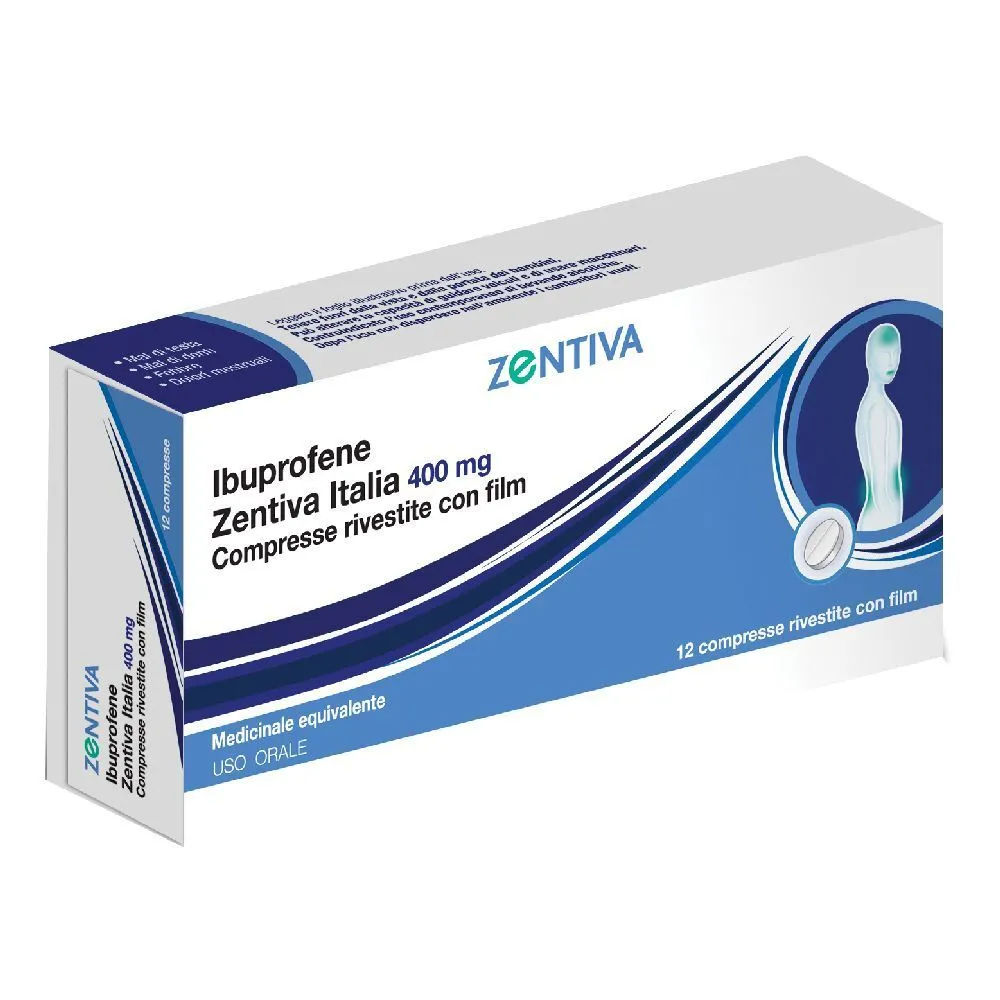
Table of Contents
- Package leaflet: Information for the patient
- Ibuprofene Zentiva Lab 200 mg film-coated tablets, 400 mg film-coated tablets
- 1. What Ibuprofene Zentiva Lab is and what it is used for
- 2. What you need to know before taking Ibuprofen Zentiva Lab
- 3. How to take Ibuprofen Zentiva Lab
- 4. Possible side effects
- 5. How to store Ibuprofene Zentiva Lab
- 6. Package contents and other information
Package leaflet: Information for the patient
Ibuprofene Zentiva Lab 200 mg film-coated tablets, 400 mg film-coated tablets
Equivalent medicine
Please read this leaflet carefully before taking this medicine because it contains
important information for you.
Always take this medicine exactly as described in this leaflet or as your doctor or
pharmacist has instructed you.
- Keep this leaflet. You may need to read it again.
- If you need more information or advice, contact your pharmacist.
- If you experience any side effects, including those not listed in this leaflet, contact your doctor or pharmacist. See section 4.
- Contact your doctor if you do not notice any improvement or if your symptoms worsen after 3 days in the case of children and adolescents, or, in the case of adults, after 4 days for pain or 3 days for migraine or fever.
Contents of this leaflet:
- What Ibuprofene Zentiva Lab is and what it is used for
- What you need to know before taking Ibuprofene Zentiva Lab
- How to take Ibuprofene Zentiva Lab
- Possible side effects
- How to store Ibuprofene Zentiva Lab
- Contents of the pack and other information
1. What Ibuprofene Zentiva Lab is and what it is used for
Ibuprofene Zentiva Lab contains ibuprofen, a medicine that belongs to a class of medicines called non-steroidal anti-inflammatory drugs (NSAIDs), which work by reducing pain and fever.
Ibuprofene Zentiva Lab is used for the short-term symptomatic treatment of mild to moderate pain such as headache, including migraine, dental pain, menstrual pain, and/or fever.
Ibuprofene Zentiva Lab is indicated for adults and adolescents weighing 40 kg or more (12 years of age and older).
2. What you need to know before taking Ibuprofen Zentiva Lab
Do not take Ibuprofen Zentiva Lab
- If you are allergic to ibuprofen or to any of the other ingredients of this medicine (listed in section 6).
- If you have experienced allergic reactions such as asthma, excessive nasal discharge, itchy skin rashes, or swelling of the lips, face, tongue, or throat after taking medicines containing acetylsalicylic acid (such as aspirin) or other painkillers or anti-inflammatory medicines (NSAIDs).
- If you currently have or have previously had a stomach or small intestine (duodenum) ulcer or gastrointestinal bleeding, or if you have had two or more such episodes in the past.
- If you have ever had gastrointestinal bleeding or perforation related to previous treatment with NSAIDs.
- If you suffer from unexplained blood disorders.
- If you have severe heart, liver, or kidney failure.
- If you are severely dehydrated (caused by vomiting, diarrhoea, or insufficient fluid intake).
- If you have active bleeding (including in the brain).
- If you are a woman in the last 3 months of pregnancy.
Do not use Ibuprofen Zentiva Lab in adolescents weighing less than 40 kg or in children under 12 years of age.
Warnings and precautions
You should discuss your treatment with your doctor or pharmacist before taking Ibuprofen Zentiva Lab:
- If you have kidney, liver, or heart problems.
- If you suffer from bronchial asthma.
- If you have allergies, hay fever, nasal polyps, or chronic obstructive respiratory disorders due to an increased risk of allergic reactions.
- If you have inherited a disorder of the red pigment in the blood (porphyria).
- If you have systemic lupus erythematosus (an immune system disorder) or mixed connective tissue disease (risk of aseptic meningitis).
- If you have an inflammatory ulcerative disease of the digestive tract such as Crohn's disease or ulcerative colitis.
- If you have disorders in blood cell formation.
- If you have problems with normal blood clotting mechanisms.
- If you have recently undergone major surgery.
- If you are in the first six months of pregnancy.
- If you are breastfeeding.
- In case of infection, see the section "Infections" below.
- Allergic reactions to this medicine, including breathing difficulties, facial and neck swelling (angioedema), and chest pain, have been reported with ibuprofen. Stop treatment with Ibuprofen Zentiva Lab immediately and contact your doctor or emergency medical services immediately if you notice any of these symptoms.
Infections
Ibuprofen Zentiva Lab may mask symptoms of infections such as fever and pain. Therefore, Ibuprofen Zentiva Lab could delay appropriate treatment of the infection, potentially increasing the risk of complications. This has been observed in bacterial pneumonia and bacterial skin infections associated with chickenpox. If you take this medicine while having an infection and infection symptoms persist or worsen, consult your doctor immediately.
Elderly
If you are elderly, you are more likely to experience side effects, particularly gastrointestinal bleeding and perforation, which can be fatal.
Effects on the heart and brain
Anti-inflammatory/pain-relieving medicines such as ibuprofen may be associated with a slight increase in the risk of heart attack or stroke, especially when used at high doses. Do not exceed the recommended dose or duration of treatment.
You should discuss treatment with your doctor or pharmacist before taking Ibuprofen Zentiva Lab if:
- you have heart problems including heart failure, angina (chest pain), or have had a heart attack, bypass surgery, peripheral artery disease (poor circulation in the legs or feet due to narrowed or blocked arteries), or a type of stroke (including 'mini-stroke' or transient ischemic attack “TIA”).
- you have high blood pressure, diabetes, high cholesterol, a family history of heart disease or stroke, or if you are a smoker.
Ulcers, perforation, and bleeding in the stomach or intestine
If you have previously had a stomach or intestinal ulcer, especially if it was complicated by perforation or accompanied by bleeding, you should be alert to any unusual abdominal symptoms and report them immediately to your doctor, particularly if these symptoms occur at the beginning of treatment. In such cases, the risk of gastrointestinal bleeding or ulceration is higher, especially in elderly patients. If gastrointestinal bleeding or ulceration occurs, treatment must be stopped.
Bleeding, ulceration, or perforation of the stomach or intestine may occur without warning signs, even in patients who have never had such problems before. This may also be fatal.
The risk of ulcers, perforation, or bleeding in the stomach or intestine generally increases with higher doses of ibuprofen. The risk also increases if certain other medicines are taken concurrently with ibuprofen (see Other medicines and Ibuprofen Zentiva Lab below).
Adverse effects can be minimized by using the lowest effective dose for the shortest duration necessary to control symptoms.
Skin reactions
Serious skin reactions have been reported in association with treatment with Ibuprofen Zentiva Lab, including exfoliative dermatitis, erythema multiforme, Stevens-Johnson syndrome, toxic epidermal necrolysis, drug reaction with eosinophilia and systemic symptoms (DRESS), and generalized acute exanthematous pustulosis (GEP). Stop using Ibuprofen Zentiva Lab and contact your doctor immediately if you notice any symptoms related to these serious skin reactions described in section 4.
During chickenpox, it is advisable to avoid using this medicine.
Effects on the kidneys
Ibuprofen may cause kidney function problems even in patients who have not previously had kidney issues. This may cause swelling of the legs and may also lead to heart failure or hypertension in predisposed individuals.
Ibuprofen may cause kidney damage especially in patients who already have kidney, heart, or liver problems, or who are taking diuretics or ACE inhibitors, as well as in the elderly. However, discontinuation of ibuprofen usually leads to recovery.
Other precautions
Very rarely, severe acute hypersensitivity reactions (e.g., anaphylactic shock) have been observed. Stop treatment immediately at the first signs of hypersensitivity after taking Ibuprofen Zentiva Lab and inform your doctor immediately.
Ibuprofen may temporarily inhibit platelet function (platelet aggregation) and prolong bleeding time. Patients with blood clotting disorders should therefore be closely monitored.
Prolonged use of any type of painkiller for headaches may worsen them. If this occurs or is suspected, stop taking ibuprofen and consult your doctor. Medication-overuse headache (MOH) should be suspected in patients who have frequent or daily headaches despite (or because of) regular use of headache medications.
Ibuprofen Zentiva Lab may reduce the chances of becoming pregnant. You should inform your doctor if you are planning a pregnancy or if you have difficulty becoming pregnant.
Children and adolescents
Do not administer this medicine to adolescents weighing less than 40 kg or to children under 12 years of age.
There is a risk of kidney failure in dehydrated adolescents.
Other medicines and Ibuprofen Zentiva Lab
Inform your doctor or pharmacist if you are taking, have recently taken, or might take any other medicines.
Ibuprofen Zentiva Lab may affect or be affected by certain drugs. For example:
- other NSAIDs including COX-2 inhibitors, as this may increase the risk of gastrointestinal ulcers and bleeding
- medicines that are anticoagulants (i.e., thin the blood/prevent clotting, e.g., acetylsalicylic acid, warfarin, ticlopidine)
- methotrexate (used for the treatment of cancer and autoimmune diseases)
- digoxin (for the treatment of various heart conditions), as the effect of digoxin may be enhanced
- phenytoin (used to prevent epileptic seizures), as the effect of phenytoin may be enhanced
- lithium (used to treat depression and mania), as the effect of lithium may be enhanced
- diuretics (medicines to increase urination), as the effect of diuretics may be weakened
- potassium-sparing diuretics, as they may cause hyperkalemia
- medicines that reduce blood pressure (ACE inhibitors, e.g., captopril, beta-blockers such as atenolol, angiotensin II receptor antagonists such as losartan)
- cholestyramine (used in the treatment of high cholesterol)
- aminoglycosides (medicines against certain types of bacteria), as NSAIDs may reduce aminoglycoside excretion
- SSRIs (medicines for depression) such as paroxetine, sertraline, citalopram, as they may increase the risk of gastrointestinal bleeding
- cyclosporine, tacrolimus (for immunosuppression after organ transplantation), as kidney damage may occur
- zidovudine or ritonavir (used for the treatment of HIV patients)
- mifepristone, as NSAIDs may reduce the effect of mifepristone
- probenecid or sulfinpyrazone (for the treatment of gout), as ibuprofen excretion may be delayed
- quinolone antibiotics, as the risk of seizures may be increased
- sulfonylureas (for the treatment of type 2 diabetes), as blood sugar levels may be altered
- glucocorticoids (used against inflammation), as they may increase the risk of gastrointestinal ulcers or bleeding
- bisphosphonates (used in osteoporosis, Paget's disease, and to reduce high blood calcium levels)
- oxpentifilline (pentoxifylline) used in the treatment of circulatory diseases of the arteries in the legs or arms
- baclofen (a muscle relaxant), due to the high toxicity of baclofen
- the herbal medicine Ginkgo biloba (there is a possibility of bleeding more easily if taken together with ibuprofen)
- voriconazole and fluconazole (CYP2C9 inhibitors) (used for fungal infections), as the effect of ibuprofen may be increased. A reduction in the dose of ibuprofen should be considered, particularly when using high doses of ibuprofen with voriconazole or fluconazole.
Other medicines may also affect or be affected by treatment with Ibuprofen Zentiva Lab. Therefore, always consult your doctor or pharmacist before using Ibuprofen Zentiva Lab with other medicines.
Ibuprofen Zentiva Lab and alcohol
Avoid alcohol, as it may increase the side effects of Ibuprofen Zentiva Lab, particularly those affecting the stomach, intestine, or central nervous system.
Pregnancy, breastfeeding, and fertility
If you are pregnant, suspect you may be pregnant, planning a pregnancy, or breastfeeding, consult your doctor or pharmacist before taking this medicine.
Pregnancy and breastfeeding
Do not take Ibuprofen Zentiva Lab if you are in the last 3 months of pregnancy, as it may harm the unborn baby or cause problems during delivery. It may cause kidney and heart problems in the unborn child. It may affect your and your baby's tendency to bleed and may cause delayed or prolonged labour. You should not take Ibuprofen Zentiva Lab during the first 6 months of pregnancy unless absolutely necessary and advised by your doctor. If treatment is needed during this period or while trying to conceive, the lowest possible dose for the shortest possible time should be used. If taken for more than a few days from week 20 of pregnancy onwards, Ibuprofen Zentiva Lab may cause kidney problems in the unborn child, leading to low levels of amniotic fluid surrounding the baby (oligohydramnios) or narrowing of a blood vessel (ductus arteriosus) in the baby's heart. If treatment for more than a few days is required, your doctor may recommend additional monitoring.
If you have taken this medicine during pregnancy, discuss it immediately with your doctor/midwife so that appropriate monitoring can be considered.
Ibuprofen passes into breast milk in very small amounts and usually it is not necessary to stop breastfeeding during short-term treatment. However, if longer-term treatment is prescribed, early weaning should be considered.
Fertility
This product belongs to a group of medicines (NSAIDs) that may impair fertility in women. This effect is reversible after stopping treatment with the medicine.
Driving and using machines
Since undesirable effects on the central nervous system such as fatigue and dizziness may occur with higher doses of ibuprofen, reaction ability and the ability to actively participate in road traffic and operate machinery may be impaired in isolated cases. This is particularly true when combined with alcohol.
Ibuprofen Zentiva Lab contains sodium
This medicine contains less than 1 mmol of sodium (23 mg) per tablet, i.e., essentially “sodium-free”.
3. How to take Ibuprofen Zentiva Lab
Take this medicine exactly as described in this leaflet or as instructed by your doctor or pharmacist. If you have any doubts, consult your doctor or pharmacist.
The lowest effective dose should be used for the shortest duration necessary to relieve symptoms. If you have an infection, consult a doctor immediately if symptoms (such as fever and pain) persist or worsen (see section 2).
For short-term use only.
The dose of ibuprofen depends on the patient's age and body weight. The recommended dose is:
Mild to moderate pain and fever
Adults and adolescents with body weight ≥ 40 kg (12 years and older):
Ibuprofen Zentiva Lab 200 mg
1-2 tablets taken as a single dose or 3-4 times daily, with an interval of at least 6 hours, as needed.
The maximum daily dose must not exceed 6 tablets (1,200 mg).
Ibuprofen Zentiva Lab 400 mg
1 tablet taken as a single dose or 3 times daily, with an interval of at least 6 hours, as needed.
The maximum daily dose must not exceed 3 tablets (1,200 mg).
Migraine
Adults and adolescents with body weight ≥ 40 kg (aged 12 years and older):
Ibuprofen Zentiva Lab 200 mg
2 tablets taken as a single dose; if needed, 2 tablets at intervals of at least 6 hours.
The maximum daily dose must not exceed 6 tablets (1,200 mg).
Ibuprofen Zentiva Lab 400 mg
1 tablet taken as a single dose; if needed, 1 tablet at intervals of at least 6 hours.
The maximum daily dose must not exceed 3 tablets (1,200 mg).
Menstrual pain
Adults and adolescents ≥ 40 kg body weight (aged 12 years and older):
Ibuprofen Zentiva Lab 200 mg
1-2 tablets 1-3 times daily, with an interval of at least 6 hours, as needed.
The maximum daily dose must not exceed 6 tablets (1,200 mg).
Ibuprofen Zentiva Lab 400 mg
1 tablet 1-3 times daily, with an interval of at least 6 hours, as needed.
The maximum daily dose must not exceed 3 tablets (1,200 mg).
Elderly
If you are elderly, you are more likely to experience side effects, particularly gastrointestinal bleeding and perforation, which can be fatal. Your doctor will advise you accordingly.
Hepatic or renal impairment
If you suffer from reduced kidney or liver function, always consult your doctor before using Ibuprofen Zentiva Lab. Your doctor will advise you accordingly.
Use in children and adolescents
Ibuprofen Zentiva Lab must not be used in adolescents with body weight below 40 kg or in children under 12 years of age. For this age group, other dosage forms of ibuprofen suitable for children should be used.
If you are an adult and your symptoms worsen or do not improve after 4 days for pain, or after 3 days for migraine or fever, or if new symptoms occur, consult your doctor or pharmacist.
If a child or adolescent requires this medicine for more than 3 days, or if symptoms worsen, a doctor must be consulted.
Method of administration
Swallow the tablet with a glass of water, preferably after food. If you have a sensitive stomach, it is recommended to take this medicine with food.
If you take more Ibuprofen Zentiva Lab than you should
If you have taken more Ibuprofen Zentiva Lab than you should have, or if children have taken this medicine by mistake, contact your doctor or the nearest hospital immediately for advice on the risk and necessary actions.
Symptoms of overdose may include nausea, stomach ache, vomiting (which may be blood-streaked), gastrointestinal bleeding (see also section 4 below), diarrhoea, headache, tinnitus, confusion, and tremulous eye movements. Agitation, drowsiness, disorientation, or coma may also occur. Occasionally, patients may experience seizures. At high doses, drowsiness, chest pain, palpitations, loss of consciousness, seizures (especially in children), weakness, dizziness, blood in the urine, low blood potassium levels, feeling cold, and breathing difficulties may occur.
In addition, prothrombin time/INR may be prolonged, likely due to interference with circulating coagulation factors. Acute renal failure and liver damage may occur. Asthma may be exacerbated in asthmatic patients. In addition, low blood pressure and reduced breathing may occur.
If you forget to take Ibuprofen Zentiva Lab
Do not take a double dose to make up for a missed dose.
If you have any further questions about the use of this medicine, consult your doctor or pharmacist.
4. Possible side effects
Like all medicines, this medicine can cause side effects, although not everyone will experience them.
The following adverse reactions largely depend on the dose and may vary from patient to patient.
The most commonly observed side effects are gastrointestinal in nature. Peptic ulcers, gastrointestinal perforation, or gastrointestinal bleeding, sometimes fatal, may occur, particularly in the elderly. After administration, nausea, vomiting, diarrhoea, flatulence, constipation, indigestion, abdominal pain, melena, haematemesis, ulcerative stomatitis, exacerbation of colitis, and Crohn's disease have been reported. Less frequently, inflammation of the stomach lining (gastritis) has been observed.
Medicines such as Ibuprofene Zentiva Lab may be associated with a slight increase in the risk of heart attack (myocardial infarction) or stroke. Fluid retention (oedema), hypertension, and heart failure have been reported in association with NSAIDs.
The following side effects are important and, if they occur, require immediate action. You must stop taking Ibuprofene Zentiva Lab and consult your doctor immediately if you experience any of the following symptoms:
Common (may affect up to 1 in 10 people):
- Black, tar-like stools or blood-stained vomit (peptic ulcer with bleeding)
Uncommon (may affect up to 1 in 100 people):
- Visual disturbances.
- Hypersensitivity reactions such as skin rashes, itching, purpura, exanthema, asthma attacks (sometimes with low blood pressure).
Rare (may affect up to 1 in 1,000 people):
- Loss of vision.
Very rare (may affect up to 1 in 10,000 people):
- Swelling of the face, tongue, or throat (larynx) causing severe breathing difficulties (angioedema), rapid heartbeat, severe drop in blood pressure, or potentially life-threatening shock.
- Sudden accumulation of fluid in the lungs leading to breathing difficulties.
- Sudden allergic reaction with shortness of breath, wheezing, and drop in blood pressure.
- Red, non-elevated, target-shaped or circular patches on the trunk, often with central blisters, skin peeling, and ulcers in the mouth, throat, nose, genitals, and eyes. These serious skin reactions may be preceded by fever and flu-like symptoms (exfoliative dermatitis, erythema multiforme, Stevens-Johnson syndrome, toxic epidermal necrolysis). This may worsen further, with blisters enlarging and spreading, and parts of the skin detaching (Lyell's syndrome). Severe infections with destruction (necrosis) of the skin, subcutaneous tissue, and muscles may also occur.
Not known (frequency cannot be estimated from available data):
- A widespread red, scaly rash with subcutaneous nodules and blisters, mainly affecting skin folds, trunk, and upper limbs, accompanied by fever at the beginning of treatment (generalized exanthematous pustulosis). Discontinue use of Ibuprofene Zentiva Lab if these symptoms develop and seek immediate medical advice. See also section 2.
- Chest pain, which may be a sign of a potentially serious allergic reaction called Kounis syndrome.
Other possible side effects with Ibuprofene Zentiva Lab include:
Common (may affect up to 1 in 10 people):
- Gastrointestinal disorders such as heartburn, indigestion, feeling unwell, vomiting, flatulence, diarrhoea, constipation.
Uncommon (may affect up to 1 in 100 people):
- Peptic ulcer with or without perforation.
- Intestinal inflammation and worsening of colon inflammation (colitis) and gastrointestinal tract inflammation (Crohn's disease), and complications of colonic diverticula (perforation or fistula).
- Microscopic intestinal bleeding which may lead to anaemia.
- Ulcers and inflammation of the mouth (ulcerative stomatitis).
- Headache, drowsiness, dizziness, vertigo, fatigue, restlessness, insomnia, and irritability.
- Inflammation of the stomach lining.
- Rhinorrhoea.
- Breathing difficulties (bronchospasm).
- Various skin rashes.
Rare (may affect up to 1 in 1,000 people):
- Depression, confusion, hallucinations.
- Lupus erythematosus syndrome.
- Increased blood urea nitrogen, serum transaminases, and alkaline phosphatase.
- Decreased haemoglobin and haematocrit levels, inhibition of platelet aggregation and prolonged bleeding time, decreased serum calcium, and increased serum uric acid levels.
Very rare (may affect up to 1 in 10,000 people):
- Palpitations, heart failure, myocardial infarction, or hypertension.
- Blood cell formation disorders (anaemia, leucopenia, thrombocytopenia, pancytopenia, agranulocytosis, neutropenia). Early signs or symptoms may include fever, sore throat, superficial mouth ulcers, flu-like symptoms, severe fatigue, nosebleeds, and skin bleeding.
- Ringing or buzzing in the ears.
- Inflammation of the oesophagus or pancreas.
- Intestinal narrowing.
- Acute liver inflammation, yellowing of the skin or whites of the eyes (jaundice), liver dysfunction, liver damage (especially with long-term use), or liver failure.
- Inflammation of the meninges without bacterial infection (aseptic meningitis).
- Kidney tissue damage.
- Kidney problems including development of oedema, kidney inflammation, and kidney failure.
- Hair loss.
- Psychotic reactions.
- Inflammation of blood vessels.
Not known (frequency cannot be estimated from available data):
- Tingling in hands and feet.
- Anxiety.
- Hearing impairment.
- General feeling of being unwell.
- Optic nerve inflammation which may cause vision problems.
- Skin becomes sensitive to light.
- A severe skin reaction known as DRESS syndrome may occur. Symptoms of DRESS include: skin rash, fever, swollen lymph nodes, and increased eosinophils (a type of white blood cell).
Ibuprofene Zentiva Lab may cause a reduction in the number of white blood cells, reducing your resistance to infections. Seek immediate medical advice if you develop an infection with symptoms such as fever and severe worsening of general condition, or fever with signs of local infection such as sore throat/pharynx/mouth or urinary problems. A blood test will be performed to check for possible reduction in white blood cells (agranulocytosis). It is important to inform your doctor about the type of medicine you are taking.
During treatment with ibuprofen, cases of aseptic meningitis (characterised by neck stiffness, headache, nausea, vomiting, fever, or confusion) have been observed in patients with pre-existing autoimmune diseases such as systemic lupus erythematosus or mixed connective tissue disease.
Reporting of side effects
If you experience any side effect, including those not listed in this leaflet, talk to your doctor or pharmacist. You can also report side effects directly via the national reporting system at https://www.aifa.gov.it/content/segnalazioni-reazioni-avverse.
By reporting side effects, you can help provide more information on the safety of this medicine.
5. How to store Ibuprofene Zentiva Lab
Keep this medicine out of the sight and reach of children.
Store below 25°C. Keep in the original packaging to protect the medicine from moisture.
Do not use this medicine after the expiry date stated on the pack after EXP. The expiry date refers to the last day of that month.
Do not dispose of any medicine via wastewater or household waste. Ask your pharmacist how to dispose of medicines you no longer use. This will help protect the environment.
6. Package contents and other information
What Ibuprofene Zentiva Lab contains
The active substance is ibuprofen.
Each tablet contains 200 mg or 400 mg of ibuprofen.
The other components are:
Granular fraction: microcrystalline cellulose; sodium croscarmellose; hypromellose; stearic acid; anhydrous colloidal silica; magnesium stearate;
Coating for Ibuprofene Zentiva Lab 200 mg film-coated tablet: hypromellose;
macrogol; talc; titanium dioxide (E171); yellow iron oxide (E172);
Coating for Ibuprofene Zentiva Lab 400 mg film-coated tablet: hypromellose;
macrogol; talc; titanium dioxide (E171).
Description of the appearance of Ibuprofene Zentiva Lab and the contents of the package
Ibuprofene Zentiva Lab 200 mg film-coated tablet: round film-coated tablets, light yellow to beige in colour, with a diameter of 9 mm ± 1.0 mm.
Ibuprofene Zentiva Lab 400 mg film-coated tablet: round film-coated tablets, white to off-white in colour, with a diameter of 12 mm ± 1.0 mm.
Pack sizes:
Ibuprofene Zentiva Lab 200 mg: Film-coated tablets in PVC/Al blisters are packaged in packs of 10, 12, 20, 24 and 30.
Film-coated tablets in PVC/Glassin blisters are packaged in packs of 10, 20 and 50.
Ibuprofene Zentiva Lab 400 mg: Film-coated tablets in PVC/Al blisters are packaged in packs of 10, 12, 15 and 20.
Film-coated tablets in PVC/Glassin blisters are packaged in packs of 10, 20 and 50.
The secondary packaging is a cardboard box.
Not all pack sizes may be marketed.
Marketing Authorization Holder and Manufacturer
Zentiva Italia S.r.l.
Via P. Paleocapa, 7
20121 Milano, Italy
Manufacturer
S.C. Zentiva S.A.
B-dul Theodor Pallady nr.50, sector 3
Bucurest
032266 – Romania
Zentiva, k.s.
U kabelovny 130, Dolní Měcholupy
102 37 Praha 10
Czech Republic
This medicinal product is authorized in the European Economic Area countries under the following names:
Portugal: Ibuprofeno Zentiva
Italy: Ibuprofene Zentiva Lab
France: Ibuprofene Zentiva conseil
Germany: Ibuprofen ADGC