Ibrance
Italy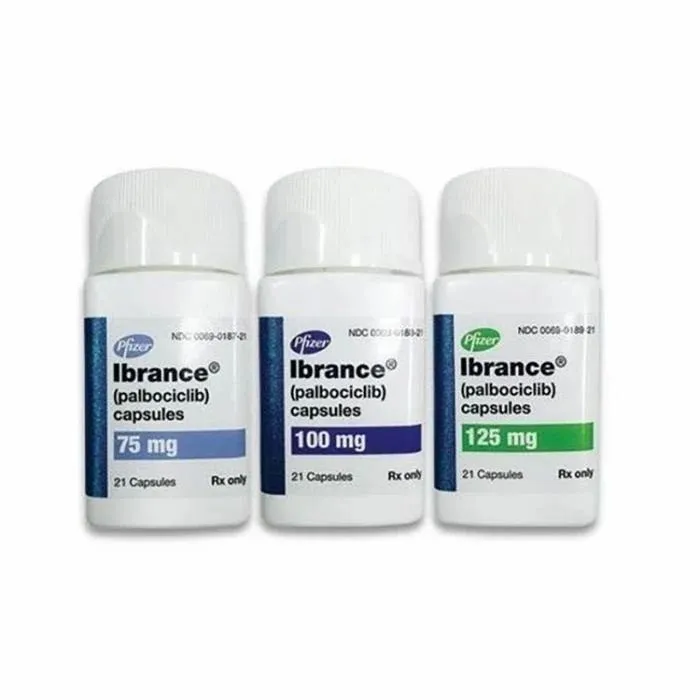
Table of Contents
- Package leaflet: Information for the patient
- IBRANCE 75 mg hard capsules, 100 mg hard capsules, 125 mg hard capsules
- 1. What IBRANCE is and what it is used for
- 2. What you should know before taking IBRANCE
- 3. How to take IBRANCE
- 4. Possible side effects
- 5. How to store IBRANCE
- 6. Package contents and other information
- Patient information leaflet
- IBRANCE 75 mg film-coated tablets, 100 mg film-coated tablets, 125 mg film-coated tablets
- 1. What IBRANCE is and what it is used for
- 2. What you need to know before taking IBRANCE
- 3. How to take IBRANCE
- 4. Possible side effects
- 5. How to store IBRANCE
- 6. Package contents and other information
Package leaflet: Information for the patient
IBRANCE 75 mg hard capsules, 100 mg hard capsules, 125 mg hard capsules
palbociclib
Read all of this leaflet carefully before you start taking this medicine because it contains important information for you.
- Keep this leaflet. You may need to read it again.
- If you have any questions, ask your doctor, pharmacist, or nurse.
- This medicine has been prescribed for you only. Do not give it to other people, even if they have the same symptoms as you, because it may be harmful.
- If you experience any side effect, including those not listed in this leaflet, tell your doctor, pharmacist, or nurse. See section 4.
What is in this leaflet
- What IBRANCE is and what it is used for
- What you need to know before taking IBRANCE
- How to take IBRANCE
- Possible side effects
- How to store IBRANCE
- Contents of the pack and other information
1. What IBRANCE is and what it is used for
IBRANCE is an anticancer medicine that contains the active substance palbociclib.
Palbociclib works by blocking proteins called cyclin-dependent kinases 4 and 6, which regulate
cell growth and division. By inhibiting these proteins, palbociclib can slow down the growth of
cancer cells and delay tumour progression.
IBRANCE is used to treat patients with certain types of breast cancer (hormone receptor-positive,
human epidermal growth factor receptor 2-negative) that has spread beyond the original tumour and/or to other organs. It is administered in combination with aromatase inhibitors or fulvestrant, which are used as hormonal anticancer therapies.
2. What you should know before taking IBRANCE
Do not take IBRANCE
- if you are allergic to palbociclib or to any of the other ingredients of this medicine (listed in section 6);
- the use of St. John’s wort (Hypericum perforatum) preparations, a herbal product used for the treatment of mild depression and anxiety, must be avoided while you are taking IBRANCE.
Warnings and precautions
Talk to your doctor, pharmacist, or nurse before taking IBRANCE.
IBRANCE can reduce the number of white blood cells and weaken the immune system. Therefore, you may be at increased risk of developing an infection while taking IBRANCE.
Inform your doctor, pharmacist, or nurse if you experience signs or symptoms of infection such as chills or fever.
You will undergo regular blood tests during treatment to monitor any effects of IBRANCE on blood cells (white blood cells, red blood cells, and platelets).
IBRANCE may cause blood clots in the veins. Inform your doctor, pharmacist, or nurse if you experience signs or symptoms of blood clots in the veins such as pain or stiffness, swelling and redness in the affected leg (or arm), chest pain, shortness of breath, or feeling faint.
IBRANCE may cause severe or potentially life-threatening inflammation of the lungs during treatment, which may lead to death. Immediately inform your healthcare provider if you develop or experience worsening symptoms, including:
- difficulty breathing or shortness of breath
- dry cough
- chest pain
Children and adolescents
IBRANCE must not be used in children and adolescents (under 18 years of age).
Other medicines and IBRANCE
Inform your doctor or pharmacist if you are taking, have recently taken, or might take any other medicines. IBRANCE may affect how some other medicines work.
In particular, the following medicines may increase the risk of side effects when taken with IBRANCE:
- Lopinavir, indinavir, nelfinavir, ritonavir, telaprevir, and saquinavir used to treat HIV/AIDS infection.
- Clarithromycin and telithromycin, antibiotics used to treat bacterial infections.
- Voriconazole, itraconazole, ketoconazole, and posaconazole used to treat fungal infections.
- Nefazodone used to treat depression.
The following medicines may have an increased risk of side effects when administered with IBRANCE:
- Quinidine, generally used to treat heart rhythm problems.
- Colchicine used to treat gout.
- Pravastatin, simvastatin, atorvastatin, fluvastatin, and rosuvastatin used to treat high cholesterol levels.
- Sulfasalazine used to treat rheumatoid arthritis.
- Alfentanil used for anesthesia during surgery; fentanyl used before surgery both as an analgesic and anesthetic.
- Cyclosporine, everolimus, tacrolimus, and sirolimus used in organ transplantation to prevent rejection.
- Dihydroergotamine and ergotamine used to treat migraine.
- Pimozide used to treat schizophrenia and chronic psychosis.
The following medicines may reduce the effectiveness of IBRANCE:
- Carbamazepine and phenytoin used to prevent epileptic seizures.
- Enzalutamide used for the treatment of prostate cancer.
- Rifampicin used in the treatment of tuberculosis (TB).
- St. John’s wort, a herbal product used for the treatment of mild depression and anxiety.
IBRANCE with food and drinks
Grapefruit and grapefruit juice should be avoided during treatment with IBRANCE, as they may increase the risk of side effects.
Pregnancy, breastfeeding, and fertility
You must not use IBRANCE if you are pregnant.
You must avoid becoming pregnant during treatment with IBRANCE.
Ask your doctor for advice regarding contraception if you or your partner may become pregnant.
If you are pregnant, suspect you may be pregnant, plan to become pregnant, or are breastfeeding, consult your doctor or pharmacist before taking this medicine.
Women of childbearing potential who take this medicine, or their male partners, should use effective contraceptive methods (e.g., double barrier contraception such as condom together with diaphragm). These methods should be used during treatment and for at least 3 weeks after completion of treatment for women, and for at least 14 weeks for men.
Breastfeeding
You must not breastfeed during treatment with IBRANCE. It is not known whether IBRANCE is excreted in human milk.
Fertility
Palbociclib may reduce fertility in men.
Therefore, men may consider sperm preservation before taking IBRANCE.
Driving and use of machines
Fatigue is a very common side effect of IBRANCE. If you feel unusually tired, take particular care when driving or operating machinery.
IBRANCE contains lactose and sodium
This medicine contains lactose (a sugar found in milk and dairy products). If your doctor has informed you that you have an intolerance to certain sugars, contact your doctor before taking this medicine.
This medicine contains less than 1 mmol (23 mg) of sodium per capsule, i.e., essentially “sodium-free”.
3. How to take IBRANCE
Take this medicine exactly as directed by your doctor or pharmacist. If you have any doubts, consult your doctor or pharmacist.
The recommended dose of IBRANCE is 125 mg once daily for 3 weeks, followed by 1 week off treatment with IBRANCE. Your doctor will tell you how many IBRANCE capsules to take.
If certain side effects occur during treatment with IBRANCE (see section 4, "Possible side effects"), your doctor may reduce the dose or temporarily or permanently discontinue treatment. The dose may be reduced to one of the other available doses of 100 mg or 75 mg.
Take IBRANCE once daily at approximately the same time each day, with food, preferably with a meal.
Swallow the capsule whole with a glass of water. Do not chew or crush the capsules. Do not open the capsules.
If you take more IBRANCE than you should
If you have taken too much IBRANCE, consult a doctor or go to hospital immediately. Urgent treatment may be necessary.
Take the medicine pack and this leaflet with you so that the doctor knows what you have taken.
If you forget to take IBRANCE
If you miss a dose or vomit, take the next dose as scheduled. Do not take a double dose to make up for forgotten capsules.
If you stop taking IBRANCE
Do not stop treatment with IBRANCE unless instructed by your doctor.
If you have any questions about the use of this medicine, consult your doctor or pharmacist.
4. Possible side effects
Like all medicines, this medicine can cause side effects, although not everybody gets them.
Contact your doctor immediately if you experience any of the following symptoms:
- fever, chills, weakness, shortness of breath, bleeding, or easy bruising, which may be signs of a serious blood problem.
- difficulty breathing, dry cough, or chest pain, which could be signs of lung inflammation.
- swollen and painful leg, chest pain, shortness of breath, rapid breathing, or fast heartbeat, as these may be signs of blood clots in the veins (which may affect up to 1 in 10 people).
Other side effects with IBRANCE may include:
Very common side effects (may affect more than 1 in 10 people):
Infections
Reduced white blood cells, red blood cells, and platelets
Feeling tired
Reduced appetite
Inflammation of the mouth and lips (stomatitis), nausea, vomiting, diarrhoea
Rash
Hair loss
Weakness
Fever
Abnormal liver blood tests
Dry skin
Common side effects (may affect up to 1 in 10 people):
Fever with low white blood cell count (febrile neutropenia)
Blurred vision, increased tearing, dry eyes
Altered taste (dysgeusia)
Nosebleeds
Redness, pain, peeling, swelling, and blistering rash on the palms of the hands and/or soles of the feet (palmar-plantar erythrodysesthesia syndrome [PPES])
Abnormal kidney test results in blood tests (elevated blood creatinine levels)
Uncommon side effects (may affect up to 1 in 100 people):
Skin inflammation causing scaly red patches, which may occur together with joint pain and fever (cutaneous lupus erythematosus [CLE]).
Skin reaction causing red spots or patches on the skin, which may look like a "target" or "iris" lesion, with a dark red center surrounded by lighter red rings (erythema multiforme).
Reporting of side effects
If you experience any side effects, including those not listed in this leaflet, please contact your doctor, pharmacist, or nurse. You can also report side effects directly through the national reporting system listed in Annex V. By reporting side effects, you can help provide more information on the safety of this medicine.
5. How to store IBRANCE
Keep this medicine out of the sight and reach of children.
Do not use this medicine after the expiry date stated on the bottle or blister pack and on the
carton after "EXP". The expiry date refers to the last day of that month.
This medicine does not require any special storage conditions.
Do not use this medicine if you notice that the packaging is damaged or shows signs of tampering.
Do not dispose of any medicine via wastewater or household waste. Ask your pharmacist how
to dispose of medicines no longer required. This will help protect the environment.
6. Package contents and other information
What IBRANCE contains
- The active substance is palbociclib. IBRANCE hard capsules are available in different strengths:
- IBRANCE 75 mg hard capsules: each capsule contains 75 mg of palbociclib.
- IBRANCE 100 mg hard capsules: each capsule contains 100 mg of palbociclib.
- IBRANCE 125 mg hard capsules: each capsule contains 125 mg of palbociclib.
- The other components are: Capsule contents: microcrystalline cellulose, lactose monohydrate, sodium starch glycolate type A, anhydrous colloidal silica, magnesium stearate. Capsule shell: gelatin, iron oxide red (E172), iron oxide yellow (E172), titanium dioxide (E171).
Printing ink: shellac, titanium dioxide (E171), ammonium hydroxide (28% solution), propylene glycol, simethicone (see section 2 “IBRANCE contains lactose and sodium”).
Description of the appearance of IBRANCE and contents of the pack
- IBRANCE 75 mg is supplied as opaque hard capsules with a light orange body (marked with “PBC 75” in white) and a light orange cap (marked with “Pfizer” in white).
- IBRANCE 100 mg is supplied as opaque hard capsules with a light orange body (marked with “PBC 100” in white) and a caramel-coloured cap (marked with “Pfizer” in white).
- IBRANCE 125 mg is supplied as opaque hard capsules with a caramel-coloured body (marked with “PBC 125” in white) and a caramel-coloured cap (marked with “Pfizer” in white).
IBRANCE 75 mg, 100 mg and 125 mg are available in blister packs of 21 or 63 hard capsules and in plastic bottles containing 21 hard capsules.
Not all pack sizes may be marketed.
Marketing Authorisation Holder
Pfizer Europe MA EEIG
Boulevard de la Plaine 17
1050 Brussels
Belgium
Manufacturer
Pfizer Manufacturing Deutschland GmbH
Mooswaldallee 1
79108 Freiburg im Breisgau
Germany
For further information on this medicinal product, please contact the local representative of the Marketing Authorisation Holder:
België/Belgique/Belgien Lietuva
Luxembourg/Luxemburg Pfizer Luxembourg SARL filialas Lietuvoje
Pfizer NV/SA Tel: +370 5 251 4000
Tél/Tel: +32 (0)2 554 62 11
България Magyarország
Пфайзер Люксембург САРЛ, Клон България Pfizer Kft.
Тел.: +359 2 970 4333 Tel.: +36 1 488 37 00
Česká republika Malta
Pfizer, spol. s r.o. Vivian Corporation Ltd.
Tel: +420 283 004 111 Tel: +356 21344610
Danmark Nederland
Pfizer ApS Pfizer bv
Tlf.: +45 44 20 11 00 Tel: +31 (0)800 63 34 636
Deutschland Norge
PFIZER PHARMA GmbH Pfizer AS
Tel: +49 (0)30 550055-51000 Tlf: +47 67 52 61 00
Eesti Österreich
Pfizer Luxembourg SARL Eesti filiaal Pfizer Corporation Austria Ges.m.b.H.
Tel: +372 666 7500 Tel: +43 (0)1 521 15-0
Ελλάδα Polska
Pfizer Ελλάς A.E. Pfizer Polska Sp. z o.o.
Τηλ: +30 210 6785800 Tel.: +48 22 335 61 00
España Portugal
Pfizer, S.L. Laboratórios Pfizer, Lda.
Tel: +34 91 490 99 00 Tel: +351 21 423 5500
France România
Pfizer Pfizer Romania S.R.L.
Tél: +33 (0)1 58 07 34 40 Tel: +40 (0) 21 207 28 00
Hrvatska Slovenija
Pfizer Croatia d.o.o. Pfizer Luxembourg SARL
Tel: +385 1 3908 777 Pfizer, podružnica za svetovanje s področja farmacevtske dejavnosti, Ljubljana
Tel: +386 (0)1 52 11 400
Ireland Slovenská republika
Pfizer Healthcare Ireland Unlimited Company Pfizer Luxembourg SARL, organizačná zložka
Tel: 1800 633 363 (toll free) Tel: +421 2 3355 5500
+44 (0)1304 616161
Ísland Suomi/Finland
Icepharma hf. Pfizer Oy
Sími: +354 540 8000 Puh/Tel: +358 (0)9 430 040
Italia Sverige
Pfizer S.r.l. Pfizer AB
Tel: +39 06 33 18 21 Tel: +46 (0)8 550 520 00
Kύπρος
Pfizer Ελλάς Α.Ε. (Cyprus Branch)
Tηλ: +357 22817690
Latvija
Pfizer Luxembourg SARL filiāle Latvijā
Tel: +371 670 35 775
More detailed information on this medicinal product is available on the website of the European Medicines Agency: https://www.ema.europa.eu.
Patient information leaflet
IBRANCE 75 mg film-coated tablets, 100 mg film-coated tablets, 125 mg film-coated tablets
palbociclib
Please read this leaflet carefully before taking this medicine because it contains
important information for you.
- Keep this leaflet. You may need to read it again.
- If you have any questions, ask your doctor, pharmacist, or nurse.
- This medicine has been prescribed for you only. Do not give it to other people, even if they have the same symptoms as yours, because it could be harmful.
- If you experience any side effects, including those not listed in this leaflet, contact your doctor, pharmacist, or nurse. See section 4.
Contents of this leaflet
- What IBRANCE is and what it is used for
- What you need to know before taking IBRANCE
- How to take IBRANCE
- Possible side effects
- How to store IBRANCE
- Contents of the pack and other information
1. What IBRANCE is and what it is used for
IBRANCE is an anticancer medicinal product that contains the active substance palbociclib.
Palbociclib works by inhibiting certain proteins called cyclin-dependent kinases 4 and 6, which regulate
cell growth and division. By blocking these proteins, palbociclib can slow down the growth of tumour
cells and delay tumour progression.
IBRANCE is used to treat patients with certain types of breast cancer (hormone receptor-positive,
human epidermal growth factor receptor 2-negative) that have spread beyond the original tumour and/or to other organs. It is administered in combination with aromatase inhibitors or fulvestrant, which are used as hormonal anticancer therapies.
2. What you need to know before taking IBRANCE
Do not take IBRANCE
- if you are allergic to palbociclib or to any of the other ingredients of this medicine (listed in section 6);
- the use of St. John’s wort (hypericum), a herbal product used for the treatment of mild depression and anxiety, must be avoided while taking IBRANCE.
Warnings and precautions
Talk to your doctor, pharmacist, or nurse before taking IBRANCE.
IBRANCE can reduce the number of white blood cells and weaken the immune system. Therefore, you may be at increased risk of developing an infection while taking IBRANCE.
Inform your doctor, pharmacist, or nurse if you experience signs or symptoms of infection, such as chills or fever.
You will undergo regular blood tests during treatment to monitor any effects of IBRANCE on blood cells (white blood cells, red blood cells, and platelets).
IBRANCE may cause blood clots in the veins. Inform your doctor, pharmacist, or nurse if you experience signs or symptoms of blood clots in the veins, such as pain or stiffness, swelling and redness in the affected leg (or arm), chest pain, shortness of breath, or a feeling of lightheadedness.
IBRANCE may cause severe or potentially fatal inflammation of the lungs during treatment, which may lead to death. Inform your healthcare provider immediately if you develop or worsening symptoms, including:
- difficulty breathing or shortness of breath
- dry cough
- chest pain
Children and adolescents
IBRANCE must not be used in children and adolescents (under 18 years of age).
Other medicines and IBRANCE
Inform your doctor or pharmacist if you are taking, have recently taken, or might take any other medicines. IBRANCE may affect how some other medicines work.
In particular, the following medicines may increase the risk of side effects when taken with IBRANCE:
- Lopinavir, indinavir, nelfinavir, ritonavir, telaprevir, and saquinavir used to treat HIV/AIDS infection.
- Clarithromycin and telithromycin, antibiotics used to treat bacterial infections.
- Voriconazole, itraconazole, ketoconazole, and posaconazole used to treat fungal infections.
- Nefazodone used to treat depression.
The following medicines may have an increased risk of side effects when administered with IBRANCE:
- Quinidine, generally used to treat heart rhythm problems.
- Colchicine used to treat gout.
- Pravastatin, simvastatin, atorvastatin, fluvastatin, and rosuvastatin used to treat high cholesterol levels.
- Sulfasalazine used to treat rheumatoid arthritis.
- Alfentanil used for anesthesia during surgery; fentanyl used before surgery both as an analgesic and anesthetic.
- Cyclosporine, everolimus, tacrolimus, and sirolimus used in organ transplantation to prevent rejection.
- Dihydroergotamine and ergotamine used to treat migraine.
- Pimozide used to treat schizophrenia and chronic psychosis.
The following medicines may reduce the effectiveness of IBRANCE:
- Carbamazepine and phenytoin used to prevent epileptic seizures.
- Enzalutamide used for the treatment of prostate cancer.
- Rifampicin used in the treatment of tuberculosis (TB).
- St. John’s wort, a herbal product used for the treatment of mild depression and anxiety.
IBRANCE with food and drink
IBRANCE tablets may be taken with or without food.
Grapefruit and grapefruit juice should be avoided during treatment with IBRANCE, as they may increase the side effects of IBRANCE.
Pregnancy, breastfeeding, and fertility
Do not take IBRANCE if you are pregnant.
You must avoid becoming pregnant during treatment with IBRANCE.
Ask your doctor for advice regarding contraception if you or your partner may become pregnant.
If you are pregnant, suspect you may be pregnant, plan to become pregnant, or are breastfeeding, consult your doctor or pharmacist before taking this medicine.
Women of childbearing potential who are taking this medicine, or their male partners, should use adequate contraceptive methods (e.g., double barrier contraception such as condom together with diaphragm). These methods should be used during treatment and for at least 3 weeks after completion of therapy for women, and for at least 14 weeks for men.
Breastfeeding
Do not breastfeed during treatment with IBRANCE. It is not known whether IBRANCE is excreted in human breast milk.
Fertility
Palbociclib may reduce fertility in men.
Therefore, men may consider sperm preservation before taking IBRANCE.
Driving and using machines
Fatigue is a very common side effect of IBRANCE. If you feel unusually tired, take particular care when driving or using machines.
3. How to take IBRANCE
Take this medicine exactly as instructed by your doctor or pharmacist. If you have any doubts, consult your doctor or pharmacist.
The recommended dose of IBRANCE is 125 mg once daily for 3 weeks, followed by 1 week off treatment with IBRANCE. Your doctor will tell you how many IBRANCE tablets you should take.
If certain side effects occur while taking IBRANCE (see section 4, "Possible side effects"), your doctor may reduce the dose or interrupt treatment, either temporarily or permanently. The dose may be reduced to one of the other available strengths of 100 mg or 75 mg.
Take IBRANCE once daily at approximately the same time each day, with or without food.
Swallow the tablet whole with a glass of water. Do not chew or crush the tablets. Do not split the tablets before swallowing. Do not ingest any tablet that is broken, damaged or otherwise not intact.
If you take more IBRANCE than you should
If you have taken too much IBRANCE, consult a doctor or go to hospital immediately. Urgent treatment may be necessary.
Take the medicine package and this leaflet with you so that the doctor knows what you have taken.
If you forget to take IBRANCE
If you miss a dose or vomit, take the next dose as scheduled. Do not take a double dose to make up for forgotten tablets.
If you stop taking IBRANCE
Do not stop treatment with IBRANCE unless instructed by your doctor.
If you have any questions about using this medicine, ask your doctor or pharmacist.
4. Possible side effects
Like all medicines, this medicine can cause side effects, although not everybody gets them.
Contact your doctor immediately if you experience any of the following symptoms:
- fever, chills, weakness, shortness of breath, bleeding, or easy bruising, which may be signs of a serious blood problem.
- difficulty breathing, dry cough, or chest pain, which could be signs of lung inflammation.
- swollen and painful leg, chest pain, shortness of breath, rapid breathing, or fast heartbeat, as these may be signs of blood clots in the veins (which may affect up to 1 in 10 people).
Other side effects with IBRANCE may include:
Very common side effects (may affect more than 1 in 10 people):
Infections
Reduced white blood cells, red blood cells, and platelets
Feeling tired
Decreased appetite
Inflammation of the mouth and lips (stomatitis), nausea, vomiting, diarrhoea
Rash
Hair loss
Weakness
Fever
Abnormal liver blood tests
Dry skin
Common side effects (may affect up to 1 in 10 people):
Fever with low white blood cell count (febrile neutropenia)
Blurred vision, increased tear production, dry eyes
Change in taste (dysgeusia)
Nosebleeds
Redness, pain, peeling, swelling, and blistering rash on the palms of the hands and/or soles of the feet (palmar-plantar erythrodysesthesia [ Palmar Plantar Erythrodysaesthesia Syndrome, PPES])
Abnormal kidney test results in blood tests (elevated blood creatinine levels)
Uncommon side effects (may affect up to 1 in 100 people):
Skin inflammation causing scaly red patches, which may occur together with joint pain and fever (cutaneous lupus erythematosus [CLE]).
Skin reaction causing red spots or patches on the skin, which may look like a "target" or "bull's eye", with a dark red center surrounded by lighter red rings (erythema multiforme).
Reporting of side effects
If you experience any side effect, including those not listed in this leaflet, talk to your doctor, pharmacist, or nurse. You can also report side effects directly via the national reporting system listed in Annex V. By reporting side effects, you can help provide more information on the safety of this medicine.
5. How to store IBRANCE
Keep this medicine out of the sight and reach of children.
Do not use this medicine after the expiry date stated on the blister and the carton after "EXP". The expiry date refers to the last day of that month.
This medicine does not require any special storage temperature. Store in the original blister to protect the medicine from moisture.
Do not use this medicine if you notice that the packaging is damaged or shows signs of tampering.
Do not dispose of medicines via wastewater or household waste. Ask your pharmacist how to dispose of medicines no longer required. This will help protect the environment.
6. Package contents and other information
What IBRANCE contains
- The active substance is palbociclib. IBRANCE film-coated tablets are available in different strengths:
- IBRANCE 75 mg film-coated tablets: each tablet contains 75 mg of palbociclib.
- IBRANCE 100 mg film-coated tablets: each tablet contains 100 mg of palbociclib.
- IBRANCE 125 mg film-coated tablets: each tablet contains 125 mg of palbociclib.
- The other components are: Tablet core: microcrystalline cellulose, colloidal silicon dioxide, crospovidone, magnesium stearate, succinic acid. Film coating: hypromellose (E464), titanium dioxide (E171), triacetin, indigo carmine aluminium lake (E132), iron oxide red (E172) (only 75 mg and 125 mg tablets), iron oxide yellow (E172) (only 100 mg tablets).
Description of the appearance of IBRANCE and contents of the pack
- IBRANCE 75 mg tablets are supplied as round, film-coated, light purple tablets, marked “Pfizer” on one side and “PBC 75” on the other.
- IBRANCE 100 mg tablets are supplied as oval, film-coated, green tablets, marked “Pfizer” on one side and “PBC 100” on the other.
- IBRANCE 125 mg tablets are supplied as oval, film-coated, light purple tablets, marked “Pfizer” on one side and “PBC 125” on the other.
IBRANCE 75 mg, 100 mg and 125 mg is available in blisters of 21 tablets or 63 tablets per box.
IBRANCE 75 mg, 100 mg and 125 mg is also available in blisters of 7 tablets (1 tablet per cavity) in a wallet pack. Each box contains 21 tablets (3 wallet packs per box).
Not all pack sizes may be marketed.
Marketing Authorisation Holder
Pfizer Europe MA EEIG
Boulevard de la Plaine 17
1050 Brussels
Belgium
Manufacturer
Pfizer Manufacturing Deutschland GmbH
Mooswaldallee 1
79108 Freiburg im Breisgau
Germany
For further information about this medicinal product, please contact the local representative of the Marketing Authorisation Holder:
België/Belgique/Belgien Lietuva
Luxembourg/Luxemburg Pfizer Luxembourg SARL filialas Lietuvoje
Pfizer NV/SA Tel: +370 5 251 4000
Tél/Tel: +32 (0)2 554 62 11
България Magyarország
Пфайзер Люксембург САРЛ, Клон България Pfizer Kft.
Тел.: +359 2 970 4333 Tel.: +36 1 488 37 00
Česká republika Malta
Pfizer, spol. s r.o. Vivian Corporation Ltd.
Tel: +420 283 004 111 Tel: +356 21344610
Danmark Nederland
Pfizer ApS Pfizer bv
Tlf.: +45 44 20 11 00 Tel: +31 (0)800 63 34 636
Deutschland Norge
PFIZER PHARMA GmbH Pfizer AS
Tel: +49 (0)30 550055-51000 Tlf: +47 67 52 61 00
Eesti Österreich
Pfizer Luxembourg SARL Eesti filiaal Pfizer Corporation Austria Ges.m.b.H.
Tel: +372 666 7500 Tel: +43 (0)1 521 15-0
Ελλάδα Polska
Pfizer Ελλάς A.E. Pfizer Polska Sp. z o.o.
Τηλ: +30 210 6785800 Tel.: +48 22 335 61 00
España Portugal
Pfizer, S.L. Laboratórios Pfizer, Lda.
Tel: +34 91 490 99 00 Tel: +351 21 423 5500
France România
Pfizer Pfizer Romania S.R.L.
Tél: +33 (0)1 58 07 34 40 Tel: +40 (0) 21 207 28 00
Hrvatska Slovenija
Pfizer Croatia d.o.o. Pfizer Luxembourg SARL
Tel: +385 1 3908 777 Pfizer, podružnica za svetovanje s področja farmacevtske dejavnosti, Ljubljana
Tel: +386 (0)1 52 11 400
Ireland Slovenská republika
Pfizer Healthcare Ireland Unlimited Company Pfizer Luxembourg SARL, organizačná zložka
Tel: 1800 633 363 (toll free) Tel: +421 2 3355 5500
+44 (0)1304 616161
Ísland Suomi/Finland
Icepharma hf. Pfizer Oy
Sími: +354 540 8000 Puh/Tel: +358 (0)9 430 040
Italia Sverige
Pfizer S.r.l. Pfizer AB
Tel: +39 06 33 18 21 Tel: +46 (0)8 550 520 00
Kύπρος
Pfizer Ελλάς Α.Ε. (Cyprus Branch)
Tηλ: +357 22817690
Latvija
Pfizer Luxembourg SARL filiāle Latvijā
Tel: +371 670 35 775
More detailed information on this medicinal product is available on the European Medicines Agency website: https://www.ema.europa.eu.