Ibet
ItalyTable of Contents
- Package leaflet: Information for the patient
- IBET 1.5 mg/2 ml injectable solution, 4 mg/2 ml injectable solution
- 1. What IBET is and what it is used for
- 2. What you need to know before taking IBET
- 3. How to take IBET
- 4. Possible side effects
- 5. How to store IBET
- 6. Package contents and other information
Package leaflet: Information for the patient
IBET 1.5 mg/2 ml injectable solution, 4 mg/2 ml injectable solution
Betamethasone sodium phosphate
Please read all of this leaflet carefully before taking this medicine because it contains
important information for you.
- Keep this leaflet. You may need to read it again.
- If you have any questions, ask your doctor or pharmacist.
- This medicine has been prescribed for you only. Do not give it to others, even if their symptoms are the same as yours, as it could be harmful.
- If you experience any side effects, including those not listed in this leaflet, talk to your doctor or pharmacist. See section 4.
Contents of this leaflet:
- What IBET is and what it is used for
- What you need to know before taking IBET
- How to take IBET
- Possible side effects
- How to store IBET
- Contents of the pack and other information
1. What IBET is and what it is used for
IBET contains the active substance betamethasone disodium phosphate, a synthetic hormone belonging to the group of corticosteroids.
Corticosteroids are hormones produced by the adrenal glands which, by acting against inflammation, reduce pain, swelling, heat, and redness.
This medicine is a solution contained in a vial. Treatment with IBET must be initiated and carried out under strict medical supervision.
IBET is used:
- to treat severe allergic reactions, such as anaphylaxis (characterized by skin rashes, itching, swelling of the face and throat with breathing difficulties, and sudden drop in blood pressure), which may occur after taking medicines or following a blood transfusion;
- to treat severe breathing difficulties due to asthma (status asthmaticus);
- if you have reduced adrenal function (adrenal insufficiency), for example, if you have a disease called Waterhouse-Friderichsen syndrome, Addison's disease or Simmonds' disease, if you have undergone surgery to remove the adrenal glands (adrenalectomized), or if you have taken cortisone-containing medicines for long periods;
- in shock due to burns, trauma, or surgery;
- for the treatment of joint diseases, such as tennis elbow and periarthritis of the shoulder joint;
- in cases of cerebral edema, a serious condition caused by rapid swelling of brain tissue;
- in heart attack;
- to treat blood disorders (hemopathies in acute relapse);
2. What you need to know before taking IBET
Do not take IBET if:
- you are allergic to the active substance, to other corticosteroid medicines, or to any of the other ingredients of this medicine (listed in section 6);
- you have generalized infections;
- you are pregnant or breastfeeding, unless specifically instructed by your doctor (see section "Pregnancy and breastfeeding").
Vaccinations with live attenuated vaccines should be avoided during treatment with IBET.
Warnings and precautions
Inform your doctor if you currently have or have previously had any of the following conditions, or if you have undergone any of the following treatments:
- intestinal diseases, such as ulcerative colitis or diverticulitis;
- intestinal surgery (intestinal anastomoses);
- stomach or duodenal ulcer (peptic ulcer);
- steroid-induced myopathy;
- congestive heart failure;
- kidney diseases;
- high blood pressure (hypertension);
- severe muscle weakness (severe myasthenia) or muscle problems after taking other corticosteroids;
- weakening of the bones (osteoporosis);
- eye infection caused by virus (herpes simplex), as it may lead to corneal perforation;
- blurred vision or other visual disturbances;
- collection of pus (abscess) or infection causing abscesses;
- emotional instability or psychotic tendencies, such as feelings of unjustified happiness (euphoria), mood or personality changes, insomnia, severe depression (feeling of sadness), as these conditions may worsen;
- tuberculosis (active or latent) or positive tuberculin skin test;
- reduced function of the thyroid gland (hypothyroidism);
- severe liver diseases (e.g. cirrhosis);
- reduced heart function (congestive heart failure);
- diabetes;
- increased eye pressure with possible worsening of vision (glaucoma);
- you suffer from epilepsy;
- you have reduced blood clotting (hypoprothrombinemia) and are taking acetylsalicylic acid (e.g. aspirin);
- during prolonged therapy and with high doses, if an electrolyte imbalance occurs, it is advisable to adjust sodium and potassium intake.
Other important information about IBET
IBET may affect the immune system. This impairs your ability to fight infections. If your immune system is compromised:
- protection from disease-causing agents is required;
- there may be an increased risk of infection. If an infection develops, it may be more difficult to detect during treatment with IBET.
Treatment with IBET may negatively affect calcium metabolism in your bones, as it increases calcium excretion in urine. For this reason, you should discuss with your doctor the risk of osteoporosis (loss of bone mass with increased risk of fractures), especially if there are family members with a history of bone fractures, if you do not exercise regularly, if you are a woman in or post-menopause, or if you are elderly.
During treatment with IBET:
- you should avoid contact with people who have measles or chickenpox if you are taking high doses of this medicine. If this occurs, contact your doctor;
- you may develop adrenal insufficiency. This occurs when the adrenal glands do not produce enough cortisol (a hormone). In such cases, therapy must be appropriately adjusted;
- you may experience an imbalance of electrolytes in the blood, particularly sodium and potassium. In these cases, your doctor may add other therapeutic measures to your treatment, such as mineral salts (e.g. sodium chloride) or hormones called mineralocorticoids.
It may be necessary to adjust the dose of IBET during stressful events (e.g. hospitalization, after an accident, or if you experience increased physical strain).
Children and adolescents
Children undergoing long-term therapy must be closely monitored for growth and development.
Children are particularly at risk of increased intracranial pressure.
For those engaged in sports: using this medicine without therapeutic need constitutes doping and may result in a positive anti-doping test.
Other medicines and IBET
Tell your doctor if you are taking, have recently taken, or might take any other medicines, including those obtained without a prescription, as some medicines may interact with your treatment.
Some medicines may increase the effects of IBET, and your doctor may wish to monitor you closely if you are taking these medicines (including certain HIV treatments: ritonavir, cobicistat).
IBET:
- reduces the effect of non-steroidal anti-inflammatory drugs (NSAIDs) and/or increases the risk of stomach or intestinal ulcers and bleeding;
- reduces the effect of medicines containing salicylates;
- reduces the effect of medicines for diabetes, e.g. insulin;
- increases or decreases, depending on the individual, the blood-thinning effects of anticoagulant medicines;
- reduces the effect of anticholinesterase medicines, used for example in the treatment of Alzheimer's disease (a condition characterized by progressive loss of intellectual abilities, starting with memory) or myasthenia gravis (a disease characterized by severe muscle weakness);
- may have an increased effect if administered together with cyclosporine (an immunosuppressant) and/or may increase the effect of cyclosporine;
- reduces the effect of contrast agents used in X-ray examinations to visualize the bile ducts (cholecystography);
- may have a reduced effect if administered together with: phenytoin and phenobarbital (medicines used for epilepsy), ephedrine (a medicine used, for example, in asthma), and rifampicin (a type of antibiotic);
- may cause excessive loss of potassium in the blood if administered together with:
- medicines that increase urine production (diuretics), particularly furosemide and thiazide diuretics;
- amphotericin (an antifungal);
- xanthines, e.g. theophylline;
- may have an increased effect if administered together with:
- ritonavir (a medicine used against HIV virus);
- ketoconazole (a medicine to treat fungal infections).
If you are taking any of the medicines listed above, your doctor may prescribe you an alternative medicine or adjust the dose of IBET or the other medicine.
Pregnancy, breastfeeding and fertility
Do not take IBET if you are pregnant or breastfeeding, unless specifically instructed by your doctor. If you suspect you are pregnant or are planning a pregnancy, consult your doctor or pharmacist before taking this medicine.
Driving and using machines
It is unlikely that IBET will affect your ability to drive or use machines. However, if you experience side effects such as dizziness, visual disturbances, or mental status changes, you should avoid performing such activities.
IBET contains:
- sodium: this medicine contains less than 1 mmol (23 mg) of sodium per dose, i.e. essentially 'sodium-free';
- sodium metabisulfite (E223). Rarely, it may cause severe hypersensitivity reactions and bronchospasm.
3. How to take IBET
Take this medicine exactly as directed by your doctor, who will decide the dose and frequency of administration based on your condition. If you have any doubts, consult your doctor or pharmacist.
The usual dose ranges from 1.5 to 4 mg per single administration. If necessary, this dose may be repeated until clinical improvement is achieved.
Depending on the severity of your condition, the usual dose may be increased up to 10–15 mg or more, given as a single injection, and repeated up to 3–4 times a day.
Method of administration
IBET may be administered by intravenous injection (IV bolus), either alone or added to the standard infusion fluids, or by intramuscular injection.
Intravenous administration of IBET is reserved for medical personnel only.
To administer IBET intramuscularly, carefully read and follow the instructions at the end of this leaflet titled “Instructions for intramuscular administration of IBET”.
If you are using IBET to treat joint-related conditions such as tennis elbow or periarthritis of the shoulder joint, the injection should be given near the site of pain (local injection). Take care: do not inject IBET directly into tendons. If there has been an infection in the joint where the injection is to be administered, IBET should not be used.
Use IBET exactly as directed by your doctor. Your doctor will discuss with you the necessary duration of treatment.
If you take more IBET than you should, contact your doctor immediately or go to the nearest hospital.
IF YOU HAVE ANY DOUBTS ABOUT THE USE OF IBET, CONTACT YOUR DOCTOR OR PHARMACIST.
4. Possible side effects
Like all medicines, this medicine can cause side effects, although not everybody gets them.
Side effects with unknown frequency (frequency cannot be estimated from the available data)
- severe heart failure (congestive heart failure)
- adrenal insufficiency
- reduction in adrenal gland size (adrenal atrophy)
- disorders of the adrenal glands such as Cushing's syndrome
- hyperadrenocorticism
- diabetes mellitus
- increased blood sugar levels
- excessive hair growth or beard growth
- increased eye pressure (glaucoma)
- opacity of the posterior lens capsule (posterior subcapsular cataract)
- increased ocular tension
- perforation of a pre-existing gastric or intestinal ulcer prior to starting IBET treatment
- gastric and duodenal ulcers
- acute inflammation of the pancreas
- inflammation of the oesophagus
- nausea
- incomplete healing
- severe allergic reaction
- urticaria
- skin inflammation due to allergy
- reactivation of tuberculosis
- fungal or viral infections
- decreased potassium levels
- decreased blood nitrogen levels
- decreased protein levels
- decreased lymphocyte (white blood cell) count in the blood
- reduced glucose tolerance
- weight gain or weight loss
- hiccups
- loss of bone tissue (osteoporosis)
- death of bone tissue (osteonecrosis)
- fluid retention with swelling (oedema)
- increased appetite
- growth retardation
- muscle disorders
- collagen disorders
- fracture
- tendon rupture
- increased intracranial pressure
- swelling of the optic nerve head due to increased intracranial pressure (papilloedema)
- blurred vision
- dizziness
- headache
- psychiatric disturbances
- anxiety
- irritability
- menstrual cycle disturbances
- thinning of the skin
- acne
- bruising
- skin erythema
- skin disorders such as delayed wound healing
- excessive sweating
- high blood pressure
Reporting of side effects
If you experience any side effect, including those not listed in this leaflet, talk to your doctor or pharmacist. You may also report side effects directly via the national reporting system at www.aifa.gov.it/content/segnalazioni-reazioni-avverse. By reporting side effects, you can help provide more information on the safety of this medicine.
5. How to store IBET
Keep this medicine out of the sight and reach of children.
This medicine does not require any special temperature conditions for storage. Store the medicine in the original packaging to protect it from light.
Do not use this medicine after the expiry date stated on the packaging. The expiry date refers to the last day of that month.
Do not dispose of any medicine via wastewater or household waste. Ask your pharmacist how to dispose of medicines you no longer use. This will help protect the environment.
6. Package contents and other information
What IBET contains
The active substance is betamethasone disodium phosphate.
One vial of 1.5 mg contains: 1.975 mg betamethasone disodium phosphate equivalent to 1.5 mg betamethasone.
One vial of 4 mg contains: 5.263 mg betamethasone disodium phosphate equivalent to 4 mg betamethasone.
The excipients are: phenol, sodium chloride, sodium metabisulfite (E223), sodium edetate, sodium hydroxide (pH adjuster), water for injections.
Description of the appearance of IBET and contents of the pack
IBET 1.5 mg/2 ml solution for injection is available in packs of 6 glass vials, each containing 2 ml.
IBET 4 mg/2 ml solution for injection is available in packs of 3 glass vials, each containing 2 ml.
Marketing Authorization Holder
Biopharma S.r.l., Via Paolo Mercuri n. 8, Roma, Italy
Manufacturer
ESSETI FARMACEUTICI srl, Via Campobello, 15 – 00071 Pomezia (Roma)
INSTRUCTIONS FOR INTRAMUSCULAR ADMINISTRATION OF IBET
Wash your hands thoroughly. Ensure that the accessories are clean and placed on a clean surface.
Place the following items on the surface:
- 1 alcohol swab (not included in the package);
- 1 vial of IBET;
- 1 empty syringe (not included in the package).
- 1. Preparation
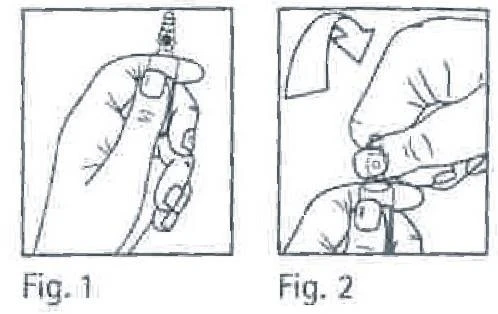
To open the vial, gently tap the top of the vial to remove any liquid residue in the tip. Position the vial as shown in Figure 1 and apply pressure with your thumb on the COLORED DOT as indicated in Figure 2. Using the syringe, draw up the solution from the vial. Place the syringe on the surface, taking care not to touch the needle.
- 2. Administration
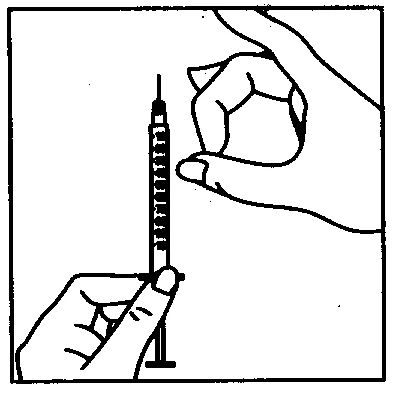
Safety check: Before administration, remove any air bubbles by holding the syringe vertically with the needle pointing upwards. Gently tap the syringe until the air bubbles rise to the top, then gently push the plunger to expel the air until solution appears at the tip of the needle.
Inject the solution immediately after preparation.
To minimize skin irritation, choose a different injection site each day.
Clean the injection site with an alcohol swab. Firmly hold the skin at the injection site and insert the needle at an angle between 45° and 90° with a quick, dart-like motion.
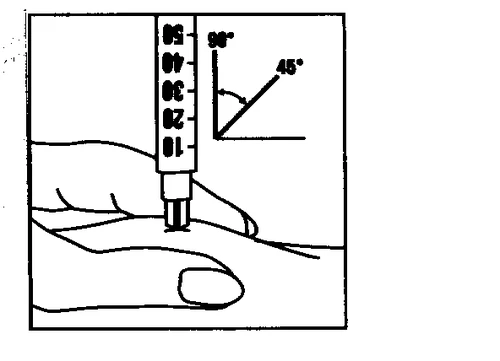
Inject the entire solution by slowly pushing the plunger.
Immediately remove the needle and clean the injection site with an alcohol swab using a circular motion.
After completing the injection, immediately dispose of the used needle and empty glass vials safely, preferably in a sharps container.