Holoclar
ItalyTable of Contents
- Patient Information Leaflet
- Holoclar 79,000 – 316,000 cells/cm of living cultured tissue.
- 1. What Holoclar is and what it is used for
- 2. What you need to know before you are given Holoclar
- 3. How Holoclar is administered
- 4. Possible side effects
- 5. How Holoclar is stored
- 6. Package contents and other information
Patient Information Leaflet
Holoclar 79,000 – 316,000 cells/cm of living cultured tissue.
Expanded human autologous corneal epithelial cells containing stem cells.
This medicinal product is subject to additional monitoring. This will allow for the rapid identification of new safety information. You can help by reporting any side effects you experience while receiving this medicine. See the end of section 4 for information on how to report side effects.
Please read this leaflet carefully before you are given this medicine as it contains important information for you.
- Keep this leaflet. You may need to read it again.
- If you have any questions, ask your surgeon.
- If you experience any side effect, including those not listed in this leaflet, contact your surgeon. See section 4.
Contents of this leaflet
- What Holoclar is and what it is used for
- What you need to know before you are given Holoclar
- How Holoclar is administered
- Possible side effects
- How Holoclar is stored
- Contents of the pack and other information
1. What Holoclar is and what it is used for
Holoclar is a medicine used to replace damaged corneal cells (the transparent layer covering the coloured iris at the front of the eye), including limbal cells which normally help maintain eye health.
Holoclar consists of a layer of your own cells that have been grown (expanded ex vivo) from a sample of limbal cells taken from your eye during a minor surgical procedure called a biopsy. Each Holoclar preparation is individually manufactured and intended for a single treatment, although treatments may be repeated. The cells used to prepare Holoclar are called autologous limbal cells.
- Autologous means the cells are your own.
- The limbus is a part of the eye. It is the border surrounding the coloured centre (iris) of the eye. The image shows the location of the limbus in the eye.
- The limbus contains limbal cells, which normally help maintain eye health, and some of these are stem cells capable of generating new cells. These new cells can replace damaged cells in your eye.
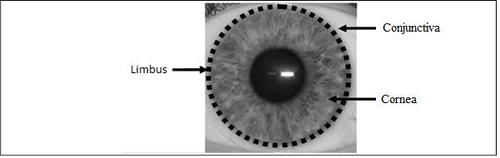
Conjunctiva
Limbus
Holoclar is implanted to repair the damaged surface of the eye in adults. When the eye is severely damaged by physical or chemical burns, extensive scarring may develop and the limbus can be injured. Damage to the limbus interrupts normal healing, meaning the eye injury is never properly repaired.
By taking a small sample of healthy limbal cells, these cells are grown in the laboratory to form a new layer of healthy tissue on a fibrin carrier, a protein scaffold. This tissue layer is then implanted by a surgeon onto the damaged cornea, helping the eye to heal normally.
2. What you need to know before you are given Holoclar
Do not be given Holoclar:
- if you are allergic to any of the ingredients of this medicine (listed in section 6) or to bovine serum and mouse cells.
Warnings and precautions
Talk to your surgeon before you are given Holoclar.
Holoclar is individually prepared from your own cells and must not be used for anyone other than you.
If you have an acute eye infection or swollen, red (inflamed) eyes, treatment should be delayed until you have recovered.
During the production of Holoclar, two components of animal origin are used. One is fetal bovine serum derived from cows, which is used to support cell growth. The other component is a special type of inactivated mouse cell used to grow limbal cells. If you are allergic to either of these components, you must not receive this medicine (see above section “Do not be given Holoclar”).
If you have any of the following eye conditions, they must be treated before using this product:
- Uneven eyelids
- Scarring of the conjunctiva (the protective layer over the white of the eye) with lesions at the point where it joins the inside of the eyelids (fornix shortening)
- Inability of your eye to feel pain (corneal or conjunctival anaesthesia or hypoesthesia)
- Growth of the conjunctiva over the cornea (pterygium)
- Severely dry eye.
Other situations where Holoclar cannot be used
Even if your surgeon has already taken a small sample of your limbal cells (a biopsy) required to produce the medicine, it may still not be possible to treat you with Holoclar. This may happen if the biopsy sample is not sufficient to produce Holoclar, if the cells cannot be grown in the laboratory, or if the grown cells do not meet all quality requirements. Your surgeon will inform you about this.
Children and adolescents
Only a very limited number of children have been treated so far, therefore available data on safety and effectiveness of the treatment in children are limited.
Kidney and liver problems
Talk to your surgeon before starting treatment if you have liver or kidney disease.
Other medicines and Holoclar
Some eye drops contain a preservative called "benzalkonium chloride". This ingredient can damage the cells that make up Holoclar. Do not use eye drops containing benzalkonium chloride and/or other preservatives. Ask your doctor or pharmacist for advice.
Pregnancy and breastfeeding
If you are pregnant, suspect you may be pregnant, or are breastfeeding, treatment with this medicine should be postponed.
Driving and using machines
Holoclar is implanted into your eye by a surgeon, which will affect your ability to drive and use machinery. Therefore, do not drive or operate machinery after Holoclar has been implanted into your eye, and continue to refrain until your surgeon tells you it is safe to do so. Follow your surgeon’s advice carefully.
3. How Holoclar is administered
Holoclar may only be prescribed and administered by an ophthalmic surgeon in a hospital setting.
Treatment with Holoclar consists of two stages.
Visit 1: Biopsy collection
At the first visit, the surgeon will perform a biopsy, i.e. remove a very small amount of tissue
containing limbal cells (from your eye). Prior to the biopsy, the surgeon will give you eye drops to
anaesthetize the eye and surgically collect the biopsy. This biopsy will then be used to produce Holoclar.
After the biopsy collection, the surgeon will prescribe you a course of antibiotics to reduce the risk of infection.
It will take several weeks to produce Holoclar.
Visit 2: Implantation of Holoclar
At the second visit, the surgeon will:
- Anaesthetize your eye
- Remove the scarred surface of the cornea
- Replace it with Holoclar
On the day of the procedure, the surgeon will anaesthetize your eye and then secure the edge of your new cornea with sutures to ensure that Holoclar remains in place. The eyelid will be kept closed for three days and the eye will be bandaged for 10–15 days after implantation.
After the procedure, you will be prescribed a course of medications to ensure complete healing:
antibiotics to reduce the risk of infection and corticosteroids to reduce swelling and
irritation. It is very important that you take all medications prescribed by your surgeon,
otherwise Holoclar may not work.
Please read the package leaflet of each individual medication prescribed to you for further information
about these medicines.
Contact your surgeon if you have any doubts about treatment with Holoclar.
4. Possible side effects
Like all medicines, this medicine can cause side effects, although not everyone experiences them.
Most side effects affect the eye and some may be caused by the surgical procedure or associated with pharmacological treatment. Most side effects are mild in intensity and resolve within weeks after the procedure.
The most serious side effects include a problem with the cornea (erosion) and corneal perforation, caused by treatment failure, which may occur within 3 months after Holoclar implantation. In such cases, contact your surgeon.
Common: may affect up to 1 in 10 people
- Bleeding around the site where Holoclar was implanted
- Problems with the cornea (erosion)
- Increased pressure in the eye (glaucoma)
- Eye pain
- Inflammation of the cornea
- Inflammation of the eyelid (blepharitis)
- Eye complications caused by the surgical procedure
Uncommon: may affect up to 1 in 100 people
- Eye disorders: sticky eyelids, bloodshot eyes, swollen and inflamed eye, perforation, thinning and clouding of the cornea, eye irritation, eyelid rotation, inward growth of eyelashes, dilated pupil, and tearing
- Light sensitivity
- Excessive growth around the implant (metaplasia)
- Sensation of a foreign body in the eye
- Corneal infection
- Conjunctivitis
- Suture rupture
- Fainting
- Headache
- Nausea
- Vomiting
- Bleeding from the skin of the eyelid
- Allergic dermatitis
Reporting of side effects
If you experience any side effect, including those not listed in this leaflet, please inform your surgeon. You can also report side effects directly via the national reporting system listed in Annex V. By reporting side effects, you can help provide more information on the safety of this medicine.
5. How Holoclar is stored
The following information is intended for healthcare professionals only.
Keep this medicine out of the sight and reach of children.
Do not use this medicine after the expiry date stated on the label after "Exp".
Do not store at temperatures above 25°C or below 15°C.
Do not refrigerate or freeze.
Store Holoclar inside the aluminium container within the plastic bag until the time of
administration to protect it from bacterial contamination.
Do not irradiate or sterilize Holoclar.
Since this medicine will be used during surgery, hospital staff are responsible for its proper
storage before and during use, as well as for its proper disposal.
6. Package contents and other information
What Holoclar contains
- The active substance consists of 300,000 - 1,200,000 living cells from your eye, of which approximately 3.5% are stem cells. Each square centimetre of Holoclar contains 79,000 - 316,000 cells.
- The other components are two: one is fibrin, a transparent support layer used to keep Holoclar intact; the other is a liquid containing amino acids, vitamins, salts and carbohydrates to preserve the cells in the vial, known as Dulbecco’s modified Eagle’s medium supplemented with L-glutamine.
Description of the appearance of Holoclar and package contents
Holoclar is a layer of cells intended for implantation into the eye. The cells are kept alive in a
sterile, small container. The medicine is packed in multiple packaging to protect it from
bacteria and to ensure that Holoclar is maintained at a stable temperature for 36 hours, if
stored at room temperature (15-25°C).
Each package contains a single dose of treatment, which is sufficiently large to cover the cornea.
Marketing Authorisation Holder and Manufacturer
Holostem s.r.l.
Via Glauco Gottardi 100
41125 Modena, Italy
Telephone: +39 059 2058070
Fax: +39 059 2058115
Other sources of information
More detailed information on this medicine is available on the website of the European Medicines Agency: http://www.ema.europa.eu .
The following information is intended exclusively for healthcare professionals
Precautions to be taken before handling or administering the
medicine
Holoclar must be transported within the facility in closed, unbreakable and leak-proof containers.
This medicine contains human corneal epithelial cells. Healthcare professionals handling
Holoclar must take appropriate precautions (wear gloves, protective clothing and protective eyewear) to avoid potential transmission of infectious diseases.
Preparation prior to administration
Holoclar is an advanced therapy medicinal product ready for implantation.
Holoclar must be administered by a suitably trained and qualified surgeon.
Administration
Implantation
Holoclar is intended for autologous use only and must in no case be administered to other patients. Holoclar must not be administered if the information on product labels and batch number does not match the patient's identity.
Holoclar must be administered under aseptic conditions, concomitantly with limbal peritomy, conjunctival undermining and excision of corneal fibrovascular tissue to prepare the lesion bed. Subsequently, the cultivated tissue is inserted beneath the undermined conjunctiva.
Excess of the graft is trimmed and the edge is covered with conjunctiva by placing 2 or 3 sutures (stitches) of vicryl or 8/0 silk to form a physical seal of the lesion and secure the implant. Eyelids are kept closed over the graft using a sterile steri-strip tape.
Holoclar is generally implanted under retrobulbar or parabulbar topical anaesthesia. Other anaesthetic procedures may be used at the surgeon’s discretion, except for local anaesthesia with lidocaine or anaesthetics containing adrenaline.
Concomitant use of Holoclar with eye drops containing benzalkonium chloride and/or other preservatives is not recommended.
The administration procedure for Holoclar involves the use of antibiotics and corticosteroids.
After implantation, an appropriate regimen of topical and systemic anti-inflammatory treatment and prophylactic antibiotics must be administered.
Implantation must be followed by an adequate monitoring programme.
Measures to be taken in case of accidental exposure
In case of accidental exposure, follow local guidelines for handling human-derived material. Work surfaces and materials that may have come into contact with Holoclar must be decontaminated with an appropriate disinfectant.
Precautions for disposal of the medicine
Unused medicine and all materials that have been in contact with Holoclar (solid and liquid waste) must be handled and disposed of as potentially infectious waste in accordance with local guidelines for handling human-derived material.