Hemgenix
Italy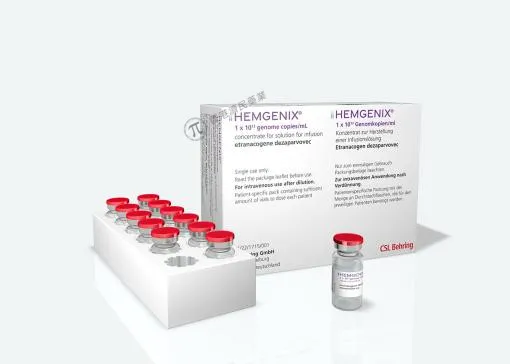
Table of Contents
- Package leaflet: Information for the user
- Hemgenix 1 x 10 genome copies/mL concentrate for solution for infusion
- 1. What Hemgenix is and what it is used for
- 2. What you should know before receiving Hemgenix
- 3. How Hemgenix is administered
- 4. Possible side effects
- 5. How to store Hemgenix
- 6. Contents of the pack and other information
Package leaflet: Information for the user
Hemgenix 1 x 10 genome copies/mL concentrate for solution for infusion
etranacogene dezaparvovec
This medicinal product is subject to additional monitoring. This will allow for rapid
identification of new safety information. You can help by reporting any side effects you experience while taking this medicine. See the end of section 4 for information on how to report side effects.
Please read this leaflet carefully before taking this medicine because it contains
important information for you.
- Keep this leaflet. You may need to read it again.
- If you have any questions, ask your doctor or nurse.
- If you experience any side effect, including those not listed in this leaflet, contact your doctor or pharmacist. See section 4.
- Your doctor will give you a patient card. Read it carefully and follow the instructions provided.
Contents of this leaflet
- What Hemgenix is and what it is used for
- What you need to know before receiving Hemgenix
- How Hemgenix is administered
- Possible side effects
- How to store Hemgenix
- Contents of the pack and other information
1. What Hemgenix is and what it is used for
What Hemgenix is and what it is used for
Hemgenix is a gene therapy medicine containing the active substance etranacogene dezaparvovec. A gene therapy medicine works by delivering a gene into the body to correct a genetic defect (present at birth).
Hemgenix is used for the treatment of severe and moderately severe haemophilia B (congenital factor IX deficiency) in adults who have not developed, at the time of therapy or previously, inhibitors (neutralising antibodies) against factor IX.
People with haemophilia B are born with a defective form of the gene required to produce factor IX, a crucial protein that enables blood clotting and stops bleeding. People with haemophilia B have insufficient levels of factor IX and are prone to episodes of internal or external bleeding.
How Hemgenix works
The active substance in Hemgenix is based on a virus that does not cause disease in humans. This virus has been modified so that it cannot spread within the body, but can carry (act as a vector for) a copy of the factor IX gene into liver cells. This enables the liver to produce the factor IX protein and increase levels of functional factor IX in the blood. This helps blood to clot more effectively and prevents or reduces bleeding episodes.
2. What you should know before receiving Hemgenix
Hemgenix must not be administered to you if:
- You are allergic to etranacogene dezaparvovec or to any of the other ingredients of this medicine (listed in section 6).
- You have an active infection, either acute (recent onset) or chronic (long-standing), that is not controlled by medication.
- Your liver is not functioning properly due to advanced liver fibrosis (scarring and thickening) or cirrhosis (scarring due to long-term damage).
If any of the above conditions apply to you, or if you are unsure, speak with your doctor before receiving Hemgenix.
Warnings and precautions
Before treatment with Hemgenix
Your doctor will perform several tests before administering Hemgenix.
Blood antibody tests
Your doctor will perform blood tests to check for certain antibodies before treatment with Hemgenix, including:
- Blood tests to detect antibodies against human factor IX (factor IX inhibitors). If this test is positive, another test will be performed approximately 2 weeks later. If both the first and second tests are positive, you will not be able to receive Hemgenix.
- Blood tests to measure the amount of antibodies against the type of virus used to produce Hemgenix.
Liver health status
To determine whether this medicine is suitable for you, your doctor will assess your liver health before starting treatment with Hemgenix and will perform:
- Blood tests to monitor liver enzyme levels
- A liver ultrasound
- Elastography to check for possible liver scarring or thickening.
During or immediately after Hemgenix infusion
Your doctor will monitor you during or immediately after the Hemgenix infusion.
Infusion-related reactions
Adverse reactions related to the infusion may occur during or immediately after Hemgenix infusion (intravenous infusion). Your doctor will monitor you during the infusion and for at least 3 hours after Hemgenix administration.
- Symptoms of such adverse reactions are listed in section 4 “Possible side effects”. Inform your doctor or nurse immediately if you experience these or any other symptoms during or immediately after the infusion.
- Depending on the symptoms, the infusion may be slowed or stopped. If the infusion is stopped, it may be restarted at a slower rate once the infusion reaction resolves. Your doctor may also consider administering corticosteroid medicines (e.g., prednisolone or prednisone) to manage the infusion reaction.
After treatment with Hemgenix
After treatment with Hemgenix, your doctor will continue to monitor your health. It is important that you discuss the schedule of these blood tests with your doctor so they can be performed as needed.
Liver enzymes
Hemgenix will trigger a response from your immune system that could lead to increased levels of certain liver enzymes in the blood, known as transaminases (hypertransaminasemia). Your doctor will regularly monitor liver enzyme levels to ensure the medicine is working properly:
- For at least the first 3 months after Hemgenix infusion, you will need weekly blood tests to monitor liver enzyme levels.
o If an increase in liver enzymes occurs, you may require more frequent blood tests to monitor these enzyme levels until they return to normal. You may also need to take another medicine (e.g., corticosteroids) to manage these side effects.
o Your doctor may also perform additional tests to rule out other causes of elevated liver enzymes, if necessary, in consultation with a physician experienced in liver diseases.
Your doctor will repeat liver enzyme tests according to the following schedule:
- 4 months after Hemgenix infusion, every 3 months up to 1 year;
- In the second year after Hemgenix infusion, every 6 months;
- Afterwards, annually for at least 5 years.
Factor IX levels
Your doctor will regularly monitor your factor IX levels to assess whether Hemgenix treatment has been successful.
- For at least the first 3 months after Hemgenix administration, you will need weekly blood tests to monitor factor IX levels.
- Your doctor will repeat these tests:
- 4 months after Hemgenix infusion, every 3 months up to 1 year;
- In the second year after Hemgenix infusion, every 6 months;
- Afterwards, annually for at least 5 years.
- If liver enzymes increase or if you need to take another medicine (e.g., corticosteroids), you may require more frequent blood tests to monitor factor IX levels until liver enzymes return to normal or until you stop taking the additional medicine.
Use of other treatments for hemophilia
After receiving Hemgenix, speak with your doctor about whether and when to discontinue other hemophilia treatments, and establish a treatment plan for managing surgery, trauma, bleeding, or any procedure that may increase bleeding risk. It is very important to continue regular monitoring and follow-up visits with your doctor to determine whether additional therapies for managing hemophilia are needed.
Abnormal blood coagulation (thromboembolic events)
After treatment with Hemgenix, levels of factor IX protein may increase. In some patients, these levels may rise above normal for a period of time.
- Unusually high factor IX levels may cause abnormal blood clotting, increasing the risk of clot formation, e.g., in the lung (pulmonary embolism) or in a blood vessel of the leg (venous or arterial thrombosis). This theoretical risk is low due to the underlying genetic (congenital) condition you have.
- However, you may be at increased risk of abnormal blood clotting if you have pre-existing heart or blood vessel conditions (e.g., if you have had cardiovascular disease in the past, if you have thickened and stiff arteries (arteriosclerosis), high blood pressure (hypertension), or if you are diabetic or over 50 years of age).
- Your doctor will perform regular blood tests to detect any abnormalities in factor IX levels, especially if you continue standard prophylactic factor IX therapy (factor IX replacement therapy) after Hemgenix administration (see also section 3 “How to use Hemgenix”).
- Contact your doctor immediately if you notice signs of abnormal clotting, such as sudden chest pain, difficulty breathing, sudden onset of muscle weakness, loss of sensation and/or balance, reduced reflexes, difficulty speaking, or swelling in one or both legs.
Avoid blood donation and organ/tissue/cell donation
The active substance in Hemgenix may be temporarily excreted (detected) in blood, semen, breast milk, or feces through a process called shedding (see also section 2 “Pregnancy, breastfeeding, and fertility”).
To ensure that individuals without hemophilia B are not exposed to Hemgenix through shedding from your body and/or your semen, you must not donate blood, semen, or organs, tissues, and cells for transplantation after receiving Hemgenix.
Immunocompromised patients or patients with human immunodeficiency virus (HIV) infection or other infections
If you have immune system problems (are immunocompromised), are currently receiving or will receive treatment that reduces the effectiveness of your immune system, or have HIV infection or other new or recent infections, your doctor will decide whether you can receive Hemgenix.
Neutralizing antibodies against factor IX (factor IX inhibitors)
Neutralizing antibodies against factor IX may prevent Hemgenix from working properly. Your doctor may perform blood tests to check for these antibodies if your bleeding episodes become difficult to control or recur after Hemgenix administration (see also section 3 “How Hemgenix is administered”).
Possibility of repeating gene therapy in the future
After treatment with Hemgenix, your immune system will produce antibodies against the viral vector. It is currently unknown whether or under what conditions Hemgenix therapy could be repeated. It is also unknown whether or under what conditions another gene therapy could be performed in the future.
Risk of developing tumors potentially associated with Hemgenix
- Hemgenix will enter your liver cells and may potentially integrate into the DNA of liver cells or other body cells. As a result, Hemgenix could contribute to the risk of developing tumors, such as liver cancer (hepatocellular carcinoma). Although there is no evidence of this from clinical studies conducted so far, it remains a possibility due to the nature of the medicine. Therefore, discuss this with your doctor.
- If you have pre-existing risk factors for hepatocellular carcinoma (e.g., liver fibrosis (scarring and thickening of the liver), hepatitis B, hepatitis C, fatty liver (non-alcoholic fatty liver disease (NAFLD)), or excessive alcohol consumption), your doctor will regularly monitor (e.g., annually) your liver health for a prolonged period, i.e., for at least 5 years after Hemgenix administration, and will perform the following tests:
- Annual liver ultrasound and
- Annual blood tests to monitor increases in so-called alpha-fetoprotein.
- After treatment with Hemgenix, you are expected to participate in a 15-year monitoring study to evaluate the long-term efficacy and potential side effects of Hemgenix. If you develop a tumor, your doctor may take a sample of the tumor (biopsy) to check whether Hemgenix has integrated into the DNA of your cells.
Children and adolescents
Hemgenix has not been studied in children or adolescents under 18 years of age.
Other medicines and Hemgenix
Inform your doctor or nurse if you are taking, have recently taken, or might take any other medicines.
If you are taking medicines known to damage the liver, your doctor may decide that you may need to discontinue such medicine in order to receive Hemgenix.
Pregnancy, breastfeeding, and fertility
There are no data on the use of Hemgenix in women with hemophilia B.
If you are pregnant, suspect you may be pregnant, plan to become pregnant, or are breastfeeding, consult your doctor before taking Hemgenix.
- Treatment with Hemgenix is not recommended in women of childbearing potential. It is not yet known whether Hemgenix can be used safely in these patients, as effects on pregnancy and the fetus are unknown.
- Hemgenix must not be used during pregnancy. It is not known whether this medicine may cause harm to the fetus when administered to a pregnant woman.
- Hemgenix must not be used during breastfeeding. It is not known whether this medicine passes into breast milk. A risk to newborns/infants cannot be excluded.
Use of contraception to prevent partner’s pregnancy for a certain period of time
If you are a male patient treated with Hemgenix, you and your female partner(s) must avoid pregnancy for 12 months. You and your female partner(s) must use an effective contraceptive method (e.g., barrier contraception such as condoms or diaphragms) to prevent the theoretical risk that the factor IX gene from Hemgenix treatment in the father could be transmitted to a child, with unknown consequences.
For the same reason, if you are a male patient, you must not donate semen (see also section 2 “Warnings and precautions”).
Talk to your doctor about suitable contraceptive methods.
Driving and using machines
Hemgenix does not affect or has a negligible effect on the ability to drive vehicles or operate machinery.
Shortly after Hemgenix infusion, patients have experienced transient dizziness, fatigue, and headache.
If you experience any of these effects, exercise caution until you are certain that Hemgenix does not negatively affect your ability to drive or operate machinery. Discuss this with your doctor.
Hemgenix contains sodium and potassium
- The medicine contains 35.2 mg of sodium (a main component of table/cooking salt) per vial, equivalent to 1.8% of the maximum daily recommended sodium intake for an adult.
- This medicine contains less than 1 mmol (39 mg) of potassium per vial and is therefore essentially potassium-free.
3. How Hemgenix is administered
Hemgenix will be administered to you in a hospital setting under the supervision of a physician experienced and trained in the treatment of haemophilia B.
Hemgenix will be given only once, as a single slow intravenous infusion. The infusion usually lasts between 1 and 2 hours.
Your doctor will determine the correct dose for you based on your body weight.
Discontinuation of exogenous factor IX treatment (replacement therapy)
- After Hemgenix infusion, it may take several weeks before improvement in bleeding control becomes evident, and you may need to continue replacement therapy with exogenous factor IX during the first few weeks following Hemgenix infusion.
- Your doctor will perform regular blood tests to monitor factor IX activity levels; these tests will be carried out weekly for at least the first 3 months and then at regular intervals thereafter. Based on these results, your doctor will decide whether and when you should stop, reduce or continue exogenous factor IX therapy (see section 2).
If you have any questions about the use of this medicine, consult your doctor.
4. Possible side effects
Like all medicines, this medicine can cause side effects, although not everyone will experience them.
The following side effects have been observed in clinical studies with Hemgenix.
Very common (may affect more than 1 in 10 people):
- Headache
- Increased levels of liver enzymes in the blood (increased alanine aminotransferase, increased aspartate aminotransferase)
- Influenza-like syndrome
- Increased levels of C-reactive protein, a marker of inflammation
- Infusion-related reaction (allergic reactions (hypersensitivity), infusion site reaction, dizziness, itchy eyes, skin redness (flushing), upper abdominal pain, itchy skin rash (urticaria), chest discomfort, and fever)
Common (may affect up to 1 in 10 people):
- Dizziness
- Nausea
- Tiredness (fatigue)
- Feeling generally unwell
- Increased levels of bilirubin in the blood, a yellow substance produced by the breakdown of red blood cells
- Increased levels of creatine phosphokinase in the blood, an enzyme (protein) found mainly in the heart, brain, and skeletal muscle tissue
Reporting of side effects
If you experience any side effect, including those not listed in this leaflet, please inform your doctor or pharmacist.
You can also report side effects directly via the national reporting system at: https://www.aifa.gov.it/content/segnalazioni-reazioni-avverse .
By reporting side effects, you can help provide more information on the safety of this medicine.
5. How to store Hemgenix
The following information is intended for healthcare professionals only.
Keep this medicine out of the sight and reach of children.
Do not use this medicine after the expiry date stated on the vial and carton following the
words “EXP.”.
Store in a refrigerator (2 °C - 8 °C). Do not freeze.
Keep the vials in the original packaging to protect the medicine from light.
Dilute before use.
After dilution with a 9 mg/mL (0.9%) sodium chloride injection solution, Hemgenix may
be stored at 15 °C - 25 °C in the infusion bag protected from light for up to 24 hours after dose preparation.
Do not use this medicine if you notice particles, cloudiness, or discoloration.
6. Contents of the pack and other information
What Hemgenix contains
- The active substance is etranacogene dezaparvovec. Each mL of etranacogene dezaparvovec contains 1 x 10\textsuperscript{13} vector genomes (vg)/mL.
- The other components (excipients) are: sucrose, polysorbate-20, potassium chloride, potassium dihydrogen phosphate, sodium chloride, sodium hydrogen phosphate, hydrochloric acid (for pH adjustment), water for injections (see also section 2 “Hemgenix contains sodium and potassium”).
This medicinal product contains genetically modified organisms.
Description of the appearance of Hemgenix and contents of the pack
Hemgenix is a concentrate for solution for infusion (sterile concentrate).
Hemgenix is a clear, colourless solution.
Hemgenix is supplied in a vial containing 10 mL of etranacogene dezaparvovec.
The total number of vials in a pack corresponds to the dosage required for an individual patient based on body weight and is indicated on the packaging.
Marketing Authorisation Holder and Manufacturer
CSL Behring GmbH
Emil-von-Behring-Strasse 76
D-35041 Marburg
Germany
For further information on this medicinal product, please contact the local representative of the Marketing Authorisation Holder:
België/Belgique/Belgien Luxembourg/Luxemburg
CSL Behring NV CSL Behring NV
Tél/Tel: +32 15 28 89 20 Tél/Tel: +32 15 28 89 20
България Magyarország
МагнаФарм България ЕАД CSL Behring Kft.
Тел: +359 2 810 3949 Tel: +36 1 213 4290
Česká republika Malta
CSL Behring s.r.o. AM Mangion Ltd.
Tel: +420 702 137 233 Tel: +356 2397 6333
Danmark Nederland
CSL Behring AB CSL Behring BV
Tlf: +46 8 544 966 70 Tel: +31 85 111 96 00
Deutschland Norge
CSL Behring GmbH CSL Behring AB
Tel: +49 6190 75 84810 Tlf: +46 8 544 966 70
Eesti Österreich
CentralPharma Communications OÜ CSL Behring GmbH
Tel: +372 6015540 Tel: +43 1 80101 1040
Ελλάδα Polska
CSL Behring ΕΠΕ CSL Behring Sp. z o.o.
Τηλ: +30 210 7255 660 Tel.: +48 22 213 22 65
España Portugal
CSL Behring S.A. CSL Behring Lda
Tel: +34 933 67 1870 Tel: +351 21 782 62 30
France România
CSL Behring SA Prisum Healthcare S.R.L.
Tél: +33 1 53 58 54 00 Tel: +40 21 322 01 71
Hrvatska Slovenija
Marti Farm d.o.o. EMMES BIOPHARMA GLOBAL s.r.o -
Tel: +385 1 5588297 podružnica v Sloveniji
Tel: +386 41 42 0002
Ireland Slovenská republika
CSL Behring GmbH CSL Behring Slovakia s.r.o.
Tel: +49 69 305 17254 Tel: +421 911 653 862
Ísland Suomi/Finland
CSL Behring AB CSL Behring AB
Sími: +46 8 544 966 70 Puh/Tel: +46 8 544 966 70
Italia Sverige
CSL Behring S.p.A. CSL Behring AB
Tel: +39 02 34964 200 Tel: +46 8 544 966 70
Κύπρος
CSL Behring ΕΠΕ
Τηλ: +30 210 7255 660
Latvija
CentralPharma Communications SIA
Tel: +371 6 7450497
Lietuva
CentralPharma Communications UAB
Tel: +370 5 243 0444
This medicinal product has been authorised under a “conditional approval”. This means that further data on this medicinal product are required.
The European Medicines Agency will review new information on this medicinal product at least annually, and this package leaflet will be updated as necessary.
Other sources of information
More detailed information on this medicinal product is available on the website of the European Medicines Agency:
http://www.ema.europa.eu
This leaflet is available in all EU/EEA languages on the European Medicines Agency website.
The following information is intended exclusively for healthcare professionals:
Important: Before use, read the Summary of Product Characteristics (SmPC).
Precautions to be taken before handling or administering the medicinal product
This medicinal product contains genetically modified organisms (GMOs).
Personal protective equipment, including gloves, protective eyewear, protective clothing, and masks, must be worn during preparation and administration of etranacogene dezaparvovec.
Preparation of etranacogene dezaparvovec before administration
- Use aseptic techniques for the preparation and administration of etranacogene dezaparvovec.
- Use etranacogene dezaparvovec only once (single-use vial[s]).
- Verify the required dose of etranacogene dezaparvovec based on the patient’s body weight. The total number of vials in each finished pack corresponds to the dosage required for each individual patient based on body weight.
- Etranacogene dezaparvovec must be diluted with 9 mg/mL (0.9%) sodium chloride injection solution before administration.
- Withdraw the calculated dose volume of Hemgenix (in mL) from the 500 mL infusion bag(s) containing 9 mg/mL (0.9%) sodium chloride injection solution. The volume to be withdrawn varies according to the patient’s body weight.
- For patients with body weight below 120 kg, withdraw the volume of 9 mg/mL (0.9%) sodium chloride injection solution corresponding to the total dose of Hemgenix (in mL) from a single 500 mL infusion bag.
- For patients with body weight equal to or greater than 120 kg, withdraw the volume of 9 mg/mL (0.9%) sodium chloride injection solution corresponding to the total dose of Hemgenix (in mL) from two 500 mL infusion bags, withdrawing half the volume from each of the two 500 mL infusion bags.
- Subsequently, add the required dose of Hemgenix to the infusion bags to restore the total volume in each bag to 500 mL.
- Withdraw the calculated dose volume of Hemgenix (in mL) from the 500 mL infusion bag(s) containing 9 mg/mL (0.9%) sodium chloride injection solution. The volume to be withdrawn varies according to the patient’s body weight.
- Add the dose of Hemgenix directly into the 9 mg/mL (0.9%) sodium chloride injection solution. Do not inject the dose of Hemgenix into the air space within the infusion bag during dilution.
- Gently invert the infusion bag(s) at least three times to mix the solution and ensure uniform distribution of the diluted product.
- To avoid foam formation:
- Do not shake the vial(s) of etranacogene dezaparvovec or the prepared infusion bags;
- Do not use filter needles during the preparation of etranacogene dezaparvovec.
- To reduce the risk of leakage and/or aerosol formation, the infusion bag(s) should be connected to an infusion line pre-filled with sterile 9 mg/mL (0.9%) sodium chloride injection solution.
- Before use, connect the infusion line pre-filled with sterile 9 mg/mL (0.9%) sodium chloride injection solution to the main intravenous infusion line, which has also been primed with sterile 9 mg/mL (0.9%) sodium chloride injection solution.
- Use only 9 mg/mL (0.9%) sodium chloride injection solution, as the stability of etranacogene dezaparvovec has not been established with other solutions or diluents.
- Do not administer the diluted etranacogene dezaparvovec solution through the same intravenous line as other products.
- Do not use a central line or port.
Administration
- The diluted etranacogene dezaparvovec should be visually inspected before administration. Once diluted, etranacogene dezaparvovec appears as a clear, colourless solution. If particles, cloudiness, or discoloration are visible in the infusion bag, do not use etranacogene dezaparvovec.
- Use the product as soon as possible after dilution. Do not exceed the storage time of the diluted product beyond the time specified in section 6.3 of the Summary of Product Characteristics.
- Use an in-line integrated filter of 0.2 µm made of polyethersulfone (PES).
- The diluted solution of etranacogene dezaparvovec must be administered into a peripheral vein via a dedicated intravenous infusion line through a peripheral venous catheter.
- The solution of etranacogene dezaparvovec must be infused strictly following the infusion rates specified in section 4.2 of the Summary of Product Characteristics. Administration must be completed within (≤24) hours of dose preparation (see section 4.2 of the Summary of Product Characteristics).
- After infusing the entire contents of the bag (or bags), the infusion line must be flushed at the same rate as the infusion with 9 mg/mL (0.9%) sodium chloride injection solution to ensure complete administration of etranacogene dezaparvovec.
Measures to be taken in case of accidental exposure
In case of accidental exposure, follow local guidelines for pharmaceutical waste.
- In case of accidental eye exposure, immediately rinse eyes with water for at least 15 minutes. Do not use alcoholic solutions.
- In case of accidental needlestick exposure, encourage bleeding from the wound and thoroughly wash the injection site with water and soap.
- In case of accidental skin exposure, thoroughly clean the affected area with water and soap for at least 15 minutes. Do not use alcoholic solutions.
- In case of accidental inhalation, move the person to fresh air.
- In case of accidental oral exposure, rinse mouth thoroughly with water.
- In all cases, seek medical advice afterwards.
Work surfaces and materials that may have come into contact with etranacogene dezaparvovec must be decontaminated after use with an appropriate virucidal disinfectant (e.g., a chlorine-releasing disinfectant containing 0.1% available chlorine (1000 ppm)).
Precautions for disposal of the medicinal product
Unused medicinal product and single-use materials that may have come into contact with Hemgenix (solid and liquid waste) must be disposed of in accordance with local guidelines for pharmaceutical waste. However, the risk of adverse effects on human health in case of accidental exposure to Hemgenix and environmental risks are considered negligible.
Healthcare professionals must be informed about the proper handling of waste generated from ancillary devices contaminated during the use of Hemgenix.
Work surfaces and materials potentially in contact with etranacogene dezaparvovec must be decontaminated after use with an appropriate virucidal disinfectant (e.g., a chlorine-releasing disinfectant containing 0.1% available chlorine (1000 ppm)) and, if possible, autoclaved.