Haldol
Italy
Table of Contents
- Package insert: information for the patient
- Haldol 2 mg/ml oral solution
- 1. What Haldol is and what it is used for
- 2. What you should know before taking Haldol
- 3. How to take Haldol
- 4. Possible side effects
- 5. How to store Haldol
- 6. Pack contents and other information
- Patient Information Leaflet
- Haldol 5 mg/ml injectable solution
- 1. What Haldol is and what it is used for
- 2. What you need to know before receiving Haldol
- 3. How to use Haldol
- 4. Possible side effects
- 5. How to store Haldol
- 6. Package contents and other information
- Patient Information Leaflet
- Haldol 1 mg tablets, 5 mg tablets
- 1. What Haldol is and what it is used for
- 2. What you should know before taking Haldol
- 3. How to take Haldol
- 4. Possible side effects
- 5. How to store Haldol
- 6. Package contents and other information
PACKAGE INSERT
Package insert: information for the patient
Haldol 2 mg/ml oral solution
haloperidol
Please read this leaflet carefully before using this medicine because it contains important information for you.
- Keep this leaflet. You may need to read it again.
- If you have any questions, ask your doctor or pharmacist.
- This medicine has been prescribed for you only. Do not give it to other people, even if their symptoms are the same as yours, as it may be harmful.
- If you experience any side effects, including those not listed in this leaflet, consult your doctor or pharmacist. See section 4. Contents of this leaflet
- What Haldol is and what it is used for
- What you need to know before taking Haldol
- How to take Haldol
- Possible side effects
- How to store Haldol
- Contents of the pack and other information
1. What Haldol is and what it is used for
The name of the medicine is Haldol.
Haldol contains the active substance haloperidol. This belongs to a group of medicines called "antipsychotics".
Haldol is used in adults, adolescents and children for illnesses affecting the way a person thinks, feels and behaves. These include mental health disorders (such as schizophrenia and bipolar disorder) and behavioural disorders.
These illnesses may cause:
-
- confusion (delusions)
-
- seeing, hearing or smelling things that are not there (hallucinations)
-
- believing things that are not true (delusions)
-
- feeling unusually suspicious (paranoia)
-
- feeling extremely excited, restless, enthusiastic, impulsive or hyperactive
-
- feeling very aggressive, hostile or violent.
In adolescents and children, Haldol is used to treat schizophrenia in patients aged 13 to 17 years and to treat behavioural disorders in patients aged 6 to 17 years.
Haldol is also used:
- in adults, adolescents and children aged 10 to 17 years, and in adults, for movements or sounds that cannot be controlled (tics), for example in severe Tourette's syndrome
- in adults to help control movements in Huntington's disease. Haldol is sometimes used when other medicines or treatments have not worked or have caused unacceptable side effects.
2. What you should know before taking Haldol
Do not take Haldol:
-
- if you are allergic to haloperidol or to any of the other ingredients of this medicine (listed in section 6)
-
- if you are less aware of things around you or your reactions become unusually slow after drinking alcohol or after taking other medicines
-
- if you have Parkinson's disease
-
- if you suffer from a type of dementia called “dementia with Lewy bodies”
-
- if you have progressive supranuclear palsy (PSP)
-
- if you have a heart condition called “prolonged QT interval”, or any other problem with your heart rhythm that shows as an abnormal trace on an ECG (electrocardiogram)
-
- if you have heart failure or have recently had a heart attack
-
- if you have low levels of potassium in your blood that have not been treated
-
- if you are taking any of the medicines listed under “Other medicines and Haldol - Do not use Haldol if you are taking certain medicines for”. The medicine must not be used if you have any of the following conditions. If in doubt, consult your doctor or pharmacist before taking Haldol.
Warnings and precautions
Serious side effects
Haldol can cause heart problems, problems with body control or limb movements, and a serious side effect called "neuroleptic malignant syndrome". It may also cause severe allergic reactions and blood clots. You should be aware of these serious side effects while taking Haldol, as urgent medical treatment may be required. See “Carefully read the serious side effects” in section 4.
Elderly people and those with dementia
A slight increase in death and stroke events has been reported in elderly patients with dementia who are taking antipsychotic medicines. Talk to your doctor or pharmacist before using Haldol if you are elderly, especially if you have dementia.
Talk to your doctor or pharmacist if you have:
- a slow heartbeat, heart disease, or if someone in your family has died suddenly from heart problems
- low blood pressure, or feel confused when standing up or sitting down
- low levels of potassium or magnesium (or another “electrolyte”) in your blood. Your doctor will decide how to treat you
- ever had bleeding in the brain, or if your doctor has told you that you are more likely than others to have a stroke
- epilepsy or have ever had seizures (fits)
- kidney, liver or thyroid problems
- high levels of the hormone “prolactin” in your blood, or have cancer that may be caused by high prolactin levels (such as breast cancer)
- a history of blood clots, or if someone else in your family has a history of blood clots
- depression, or if you have bipolar disorder and start feeling depressed. You may need closer monitoring, and your Haldol dose may need to be adjusted.
If you are unsure whether any of the above conditions apply to you, consult your doctor or pharmacist before taking Haldol.
Medical checks
Your doctor may prescribe an electrocardiogram (ECG) before or during treatment with Haldol.
The ECG measures the electrical activity of the heart.
Blood tests
Your doctor may decide to check your levels of potassium or magnesium (or another “electrolyte”) in your blood before or during treatment with Haldol.
Children under 6 years of age
Haldol must not be used in children under 6 years of age. This is because it has not been adequately studied in this age group.
Other medicines and Haldol
Tell your doctor or pharmacist if you are taking, have recently taken, or might take any other medicines.
Do not use Haldol if you are taking certain medicines for
- heart rhythm problems (such as amiodarone, dofetilide, disopyramide, dronedarone, ibutilide, quinidine and sotalol)
- depression (such as citalopram and escitalopram)
- psychosis (such as fluphenazine, levomepromazine, perphenazine, pimozide, prochlorperazine, promazine, sertindole, thioridazine, trifluoperazine, triflupromazine and ziprasidone)
- bacterial infections (such as azithromycin, clarithromycin, erythromycin, levofloxacin, moxifloxacin and telithromycin)
- fungal infections (such as pentamidine)
- malaria (such as halofantrine)
- nausea and vomiting (such as dolasetron)
- cancer (such as toremifene and vandetanib). Also inform your doctor if you are taking bepridil (for chest pain or to lower blood pressure) or methadone (a painkiller or for treatment of drug addiction). These medicines can increase the risk of heart problems, so inform your doctor if you are taking any of these medicines and do not take Haldol (see “Do not take Haldol if”).
Special monitoring may be needed if you are using lithium and Haldol at the same time.
Tell your doctor immediately and stop taking both medicines if:
- you have unexplained fever or uncontrollable movements
- you are confused, disoriented, have headache, problems with balance and drowsiness. These are signs of a serious condition.
Some medicines can affect how Haldol works or may cause heart problems or similar issues
Tell your doctor if you are taking:
- alprazolam or buspirone (for anxiety)
- duloxetine, fluoxetine, fluvoxamine, nefazodone, paroxetine, sertraline, St. John’s wort (Hypericum perforatum) or venlafaxine (for depression)
- bupropion (for depression or to help stop smoking)
- carbamazepine, phenobarbital or phenytoin (for epilepsy)
- rifampicin (for bacterial infections)
- itraconazole, posaconazole or voriconazole (for fungal infections)
- ketoconazole tablets (for treatment of Cushing's syndrome)
- indinavir, ritonavir or saquinavir (for human immunodeficiency virus or HIV)
- chlorpromazine and promethazine (for nausea and vomiting)
- verapamil (for blood pressure or heart problems). Also inform your doctor if you are taking other medicines to lower blood pressure, such as medicines for urination (diuretics).
Your doctor may adjust your Haldol dose if you are taking any of these medicines.
Haldol may affect how the following types of medicines work
Tell your doctor if you are taking medicines for:
- calming or sleeping (tranquilizers)
- pain (strong painkillers)
- depression (“tricyclic antidepressants”)
- lowering blood pressure (such as guanethidine and methyldopa)
- severe allergic reactions (adrenaline)
- attention deficit hyperactivity disorder (ADHD) or narcolepsy (known as "stimulants")
- Parkinson’s disease (such as levodopa)
- thinning the blood (phenindione). Inform your doctor before taking Haldol if you are taking any of these medicines.
Haldol and alcohol
Drinking alcohol while taking Haldol may make you feel drowsy and less alert. This means you should be cautious about how much alcohol you drink. Discuss alcohol use with your doctor while taking Haldol and inform your doctor about the amount of alcohol you consume.
Pregnancy, breastfeeding and fertility
Pregnancy – if you are pregnant, think you may be pregnant, or are planning to become pregnant, ask your doctor for advice. Your doctor may advise you not to use Haldol during pregnancy.
The following problems may occur in newborns of mothers who used Haldol during the last three months of pregnancy (the third trimester):
- muscle tremors, weakness or muscle stiffness
- being drowsy or agitated
- breathing or feeding problems. The exact frequency of these problems is unknown. If Haldol was used during pregnancy and the baby develops any of these side effects, consult your doctor.
Breastfeeding – inform your doctor if you are breastfeeding or planning to breastfeed. This is because small amounts of the medicine may pass into breast milk and to the baby. Your doctor will discuss the risks and benefits of breastfeeding while taking Haldol.
Fertility – Haldol may increase levels of a hormone called “prolactin”, which may affect fertility in both men and women. Inform your doctor if you have any questions about this.
Driving and using machines
Haldol may affect your ability to drive and use tools or machinery. Side effects such as drowsiness may affect your attention, especially when you first start taking it or after a dose increase. This medicine may impair your ability to drive. Do not drive or operate tools or machinery without first discussing this with your doctor.
Haldol oral solution contains methyl parahydroxybenzoate
Methyl parahydroxybenzoate may cause allergic reactions (including delayed reactions).
HALDOL oral drops contain parahydroxybenzoates. They may cause allergic reactions (including delayed reactions).
3. How to take Haldol
Always take this medicine exactly as your doctor or pharmacist has told you. Check with your
doctor or pharmacist if you are not sure.
How much medicine you should take
Your doctor will tell you how many tablets to take and for how long. Your doctor will also tell you whether to take
Haldol once or several times a day. It may take some time before you feel the full effect of the
medicine. Usually, your doctor will start you on a low dose and then adjust the dose to suit you.
It is very important to take the correct amount.
The dose of haloperidol will depend on:
- your age
- what you are being treated for
- whether you have kidney or liver problems
- other medicines you are taking
Adults
- The dose will normally be between 0.5 and 10 mg per day.
-
- Your doctor may adjust it to find the dose that suits you.
-
- The maximum dose adults should take depends on the condition being treated and ranges from 5 to 20 mg per day.
Elderly
- Elderly patients usually start with 0.5 mg per day or half the lowest adult dose.
- The amount of Haldol to take will be adjusted until your doctor finds the dose that suits you.
- The maximum dose elderly patients should take is 5 mg per day, unless your doctor decides a higher dose is necessary.
Children and adolescents aged 6 to 17 years
-
- The dose will normally be between 0.5 mg and 3 mg per day.
-
- Adolescents up to 17 years of age treated for schizophrenia or behavioural disorders may require a higher dose, up to 5 mg per day. Taking Haldol
-
- Haldol is for oral use.
-
- You may mix Haldol drops with a small amount of water before taking it, but do not mix it with other liquids. Dropper bottle:
- Remove the cap from the bottle by pressing down on the cap while turning it counterclockwise.
- Turn the bottle upside down over a spoon.
- Gently squeeze the sides of the bottle and count the number of drops you need to take.
- Drink the solution immediately.
- Close the bottle.
Bottle with oral syringe
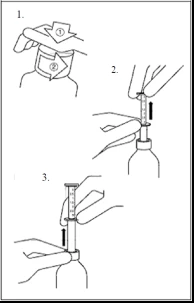
You must take the solution using the oral syringe.
-
- Place the bottle on a flat surface.
-
- Remove the cap from the bottle by pressing it down and then turning it counterclockwise (Figure 1).
-
- One end of the syringe has a plunger. Insert the opposite end into the bottle. While holding the lower ring on the syringe, pull the upper ring upwards. Continue until the mark corresponding to the number of millilitres (ml) or milligrams (mg) is just visible (Figure 2).
-
- While holding the lower ring, completely remove the syringe from the bottle (Figure 3).
-
- Empty the contents of the syringe into a spoon or cup. Do this by sliding the upper ring downwards while continuing to hold the lower ring.
-
- Drink the solution immediately.
-
- Close the bottle and then rinse the syringe with water.
If you take more Haldol than you should
If you take more Haldol than prescribed, or if someone else has taken Haldol, consult your doctor or
go to the nearest hospital emergency department.
If you forget to take Haldol
-
- If you forget to take a dose, take the next dose as usual. Then continue taking the medicine as your doctor has instructed.
-
- Do not take a double dose.
If you stop taking Haldol
Unless your doctor decides otherwise, you should stop taking Haldol gradually. Stopping
treatment suddenly may cause effects such as:
-
- nausea and vomiting
-
- sleep disturbances. Always follow your doctor's instructions carefully.
If you have any doubts about how to use this medicine, consult your doctor or pharmacist.
4. Possible side effects
Like all medicines, this medicine can cause side effects, although not everybody gets them.
Read carefully about the serious side effects
Tell your doctor if you notice or suspect any of the following serious side effects. You may need urgent medical treatment.
Problems with the heart
- Abnormal heart rhythm – this stops the heart working normally and may cause loss of consciousness
- Heartbeat that is too fast
- Extra heartbeats
Heart problems are uncommon in people taking Haldol (may affect up to 1 in 100 people). Sudden deaths have occurred in patients taking this medicine, but the exact frequency of these deaths is unknown. Cardiac arrest (the heart stops beating) has also occurred in people taking antipsychotic medicines.
A serious condition called "neuroleptic malignant syndrome"
This causes high fever, severe muscle stiffness, confusion and loss of consciousness. It is rare in people using Haldol (may affect up to 1 in 1,000 people).
Problems controlling body or limb movements (extrapyramidal disorders), such as:
- Movements of the mouth, tongue, jaw and sometimes limbs (tardive dyskinesia)
- Feeling restless or unable to sit still, increased body movements
- Slow or reduced body movements, spasms or twisting movements
- Muscle tremors or stiffness, shuffling gait
- Inability to move
- Lack of normal facial expression, sometimes appearing like a mask
These are very common in people taking Haldol (may affect more than 1 in 10 people). If you experience any of these side effects, you may be given an additional medicine.
Severe allergic reaction which may include:
- Swelling of the face, lips, mouth, tongue or throat
- Difficulty swallowing or breathing
- Skin rash (urticaria)
A severe allergic reaction is uncommon in people taking Haldol (may affect up to 1 in 100 people).
Blood clots in the veins, usually in the legs (deep vein thrombosis or DVT). These have been reported in people taking antipsychotic medicines. Signs of DVT in the leg include swelling, pain and redness in the leg, but the clot may travel to the lungs causing chest pain and difficulty breathing. Blood clots can be very serious, so inform your doctor immediately if you notice any of these problems.
Tell your doctor immediately if you notice any of the serious side effects listed above.
Other side effects
Tell your doctor if you notice or suspect any of the following side effects.
Very common (may affect more than 1 in 10 people)
- Feeling agitated
- Difficulty sleeping
- Headache
Common (may affect up to 1 in 10 people)
- Serious mental health problems, such as believing things that are not true (delusions) or seeing, hearing or smelling things that are not there (hallucinations)
- Depression
- Abnormal muscle tension
- Dizziness, even when standing up or sitting down
- Drowsiness
- Upward movement of the eyes or rapid eye movements that cannot be controlled
- Vision problems, such as blurred vision
- Low blood pressure
- Nausea, vomiting
- Constipation
- Dry mouth or increased salivation
- Skin rash
- Inability to urinate or empty the bladder completely
- Difficulty achieving or maintaining an erection (impotence)
- Weight gain or weight loss
- Changes seen in liver blood tests
Uncommon (may affect up to 1 in 100 people)
- Effects on blood cells – low number of all types of blood cells, including severe reduction in white blood cells and low platelet count (cells that help blood to clot)
- Feeling confused
- Loss of sexual desire or decreased libido
- Seizures (fits)
- Stiff muscles and joints
- Muscle spasms, spasms or contractions that cannot be controlled, including neck spasms causing the head to twist to one side
- Walking difficulties
- Shortness of breath
- Inflammation of the liver or liver problems causing yellowing of the skin or eyes (jaundice)
- Increased sensitivity to sunlight
- Itching
- Excessive sweating
- Changes in menstrual cycle (periods), such as absence of periods, or long, heavy, painful periods
- Unexpected production of milk from the breast
- Breast pain or discomfort
- High body temperature
- Swelling due to fluid retention
Rare (may affect up to 1 in 1,000 people)
- High level of the hormone "prolactin" in the blood
- Narrowing of the airways in the lungs, causing breathing difficulties
- Difficulty or inability to open the mouth
- Problems with sexual intercourse
The following side effects have also been reported, but their exact frequency is unknown
- High level of "antidiuretic hormone" in the blood (syndrome of inappropriate antidiuretic hormone secretion)
- Low blood sugar
- Swelling around the larynx, or brief spasm of the vocal cords causing difficulty speaking or breathing
- Sudden liver failure
- Decreased bile flow in the bile duct
- Skin peeling or shedding
- Inflammation of small blood vessels, leading to a skin rash with small red or purple raised spots
- Breakdown of muscle tissue (rhabdomyolysis)
- Prolonged and painful erection of the penis
- Breast enlargement in men
- Low body temperature
Reporting of side effects
If you experience any side effect, including those not listed in this leaflet, talk to your doctor or pharmacist. You can also report side effects directly via the national reporting system at http://www.agenziafarmaco.gov.it/content/come-segnalare-una-sospetta-reazione-avversa.
Reporting side effects can help provide more information on the safety of this medicine.
5. How to store Haldol
Keep this medicine out of the sight and reach of children.
Do not use this medicine after the expiry date stated on the blister or carton after Exp. The expiry date refers to the last day of that month. Once the bottle has been opened, use within 3 months.
This medicine does not require any special storage conditions.
Do not dispose of medicines via wastewater or household waste. Ask your pharmacist how to dispose of medicines you no longer use. This will help protect the environment.
6. Pack contents and other information
What Haldol contains
Dropper container:
The active substance is haloperidol. Each drop of oral solution contains 0.1 mg of haloperidol (each ml
contains 2 mg of haloperidol).
The other components are: methyl parahydroxybenzoate (E218), lactic acid and purified water.
Bottle with oral syringe:
The active substance is haloperidol. Each drop of oral solution contains 2 mg of haloperidol.
The other components are: methyl parahydroxybenzoate (E218), lactic acid and purified water.
Description of the appearance of Haldol and pack contents
Dropper container:
Haldol is a clear, colourless solution. It is supplied in a dropper container with a child-resistant, tamper-evident cap, containing 15 ml or 30 ml of solution.
Not all pack sizes may be marketed.
Bottle with oral syringe:
Haldol is a clear, colourless solution. It is supplied in an amber glass bottle with a child-resistant, tamper-evident cap, containing 100 ml of solution. The pack contains an oral syringe calibrated in millimetres, milligrams, or both.
Marketing Authorisation Holder
Essential Pharma Limited,
Vision Exchange Building
Triq it-Territorjals, Zone 1,
Central Business District,
Birkirkara, CBD 1070,
Malta
Manufacturer
Janssen Pharmaceutica NV, Turnhoutseweg, 30 B-2340 Beerse, (Belgium)
Baixo, 2730-055 Barcarena, Portugal.>
This medicinal product is authorised in the Member States of the European Union under the following names:
| Austria, Belgium, Cyprus, France, Italy, Luxembourg, Netherlands, Portugal, Sweden, United Kingdom: | Haldol |
| Denmark, Finland: | Serenase |
| Germany: | Haldol-Janssen |
| Greece: | Aloperidin |
More detailed information on this medicine is available on the website of the European Medicines Agency, http://www.ema.europa.eu/
<------------------------------------------------------------------------------------------------------------------------>
The following information is intended for healthcare professionals only.
Dropper container.
Haldol oral solution in a dropper container is intended to be used for doses up to 2 mg of haloperidol (equivalent to 20 drops).
The number of drops required to achieve a given dose using Haldol oral solution is shown below.
Conversion table for Haldol oral solution (2 mg/ml)
mg of haloperidol Number of drops of Haldol
(dropper container)
0.1 mg 1 drop
0.2 mg 2 drops
0.3 mg 3 drops
0.4 mg 4 drops
0.5 mg 5 drops
1 mg 10 drops
2 mg 20 drops
Bottle with oral syringe:
HALDOL oral solution supplied in a bottle with oral syringe is intended to be used for single doses of 0.5 mg of haloperidol and higher (equivalent to 0.25 ml and above).
The volume (ml) required to achieve a given dose using HALDOL oral solution is shown below.
Conversion table for HALDOL oral solution (2 mg/ml)
mg of haloperidol ml of HALDOL
(bottle with oral syringe)
0.5 mg 0.25 ml
1 mg 0.5 ml
2 mg 1 ml
5 mg 2.5 ml
Patient Information Leaflet
Haldol 5 mg/ml injectable solution
haloperidol
Please read this leaflet carefully before using this medicine because it contains important information for you.
- Keep this leaflet. You may need to read it again.
- If you have any questions, ask your doctor, pharmacist or nurse.
- This medicine has been prescribed for you only. Do not give it to other people, even if their symptoms are the same as yours, because it could be harmful.
- If you experience any side effect, including those not listed in this leaflet, talk to your doctor, pharmacist or nurse. See section 4.
Contents of this leaflet
- What Haldol is and what it is used for
- What you need to know before taking Haldol
- How to use Haldol
- Possible side effects
- How to store Haldol
- Contents of the pack and other information
1. What Haldol is and what it is used for
The name of the medicine is Haldol.
Haldol contains the active substance haloperidol. This belongs to a group of medicines called
"antipsychotics".
Haldol is used in adults for illnesses affecting the way a person thinks, feels, and behaves. These
include mental health disorders (such as schizophrenia and bipolar disorder) and behavioural
disorders.
These illnesses may cause:
-
- feeling confused (delirium)
-
- seeing, hearing or smelling things that are not there (hallucinations)
-
- believing things that are not true (delusions)
-
- feeling unusually suspicious (paranoia)
-
- feeling extremely excited, agitated, enthusiastic, impulsive or hyperactive
-
- feeling very aggressive, hostile or violent.
Haldol is also used in adults:
-
- to help control movements in Huntington's disease
-
- to prevent or treat nausea and vomiting (feeling sick or being sick) after surgery.
Haldol may be used alone or with other medicines, and sometimes it is used when other medicines or treatments
have not worked, have caused unacceptable side effects, or cannot be taken by mouth.
2. What you need to know before receiving Haldol
Do not use Haldol:
-
- if you are allergic to haloperidol or to any of the other ingredients of this medicine (listed in section 6)
-
- if you are less aware of things around you or your reactions become unusually slow
-
- if you have Parkinson's disease
-
- if you suffer from a type of dementia called "dementia with Lewy bodies"
-
- if you have progressive supranuclear palsy (PSP)
-
- if you have a heart condition called "prolonged QT interval", or any other problem with your heart rhythm that shows as an abnormal trace on an ECG (electrocardiogram)
-
- if you suffer from heart failure or have recently had a heart attack
-
- if you have low levels of potassium in your blood that have not been treated
-
- if you are taking any of the medicines listed in the section “Other medicines and Haldol - Do not use Haldol if you are taking certain medicines for”. The medicine must not be used if you have any of the conditions listed above. If you are unsure, consult your doctor, pharmacist, or nurse before receiving Haldol.
Warnings and precautions
Serious side effects
Haldol can cause heart problems, problems with body control or limb movements, and a serious side effect called "neuroleptic malignant syndrome". It may also cause severe allergic reactions and blood clots. You should be aware of these serious side effects while using Haldol, as urgent medical treatment may be required. See “Read carefully about serious side effects” in section 4.
Elderly people and those with dementia
A slight increase in deaths and strokes has been reported in elderly patients with dementia who are taking antipsychotic medicines. Talk to your doctor before using Haldol if you are elderly, especially if you have dementia.
Talk to your doctor if you have:
-
- a slow heartbeat, heart disease, or if someone in your family has died suddenly from heart problems
-
- low blood pressure, or feel confused when standing up or sitting down
-
- low levels of potassium or magnesium (or another "electrolyte") in your blood. Your doctor will decide how to treat you
-
- ever had bleeding in the brain, or if your doctor has told you that you are more likely than others to have a stroke
-
- epilepsy or have ever had seizures (fits)
-
- problems with your kidneys, liver, or thyroid
-
- high levels of the hormone 'prolactin' in your blood, or have a cancer that may be caused by high prolactin levels (such as breast cancer)
-
- a history of blood clots, or if someone else in your family has a history of blood clots
-
- depression, or if you have bipolar disorder and start feeling depressed.
You may need to be monitored more closely, and your Haldol dose may need to be adjusted.
If you are unsure whether any of the conditions listed above apply to you, consult your doctor or nurse before Haldol is administered to you.
Medical checks
Your doctor may prescribe an electrocardiogram (ECG) before or during treatment with Haldol.
The ECG measures the electrical activity of the heart.
Blood tests
Your doctor may decide to check the levels of potassium or magnesium (or another "electrolyte") in your blood before or during treatment with Haldol.
Children and adolescents
Haldol must not be used in children and adolescents under 18 years of age. This is because it has not been studied in these age groups.
Other medicines and Haldol
Tell your doctor, pharmacist, or nurse if you are taking, have recently taken, or might take any other medicines.
Do not use Haldol if you are taking certain medicines for:
- heart rhythm problems (such as amiodarone, dofetilide, disopyramide, dronedarone, ibutilide, quinidine, and sotalol)
- depression (such as citalopram and escitalopram)
- psychosis (such as fluphenazine, levomepromazine, perphenazine, pimozide, prochlorperazine, promazine, sertindole, thioridazine, trifluoperazine, triflupromazine, and ziprasidone)
- bacterial infections (such as azithromycin, clarithromycin, erythromycin, levofloxacin, moxifloxacin, and telithromycin)
- fungal infections (such as pentamidine)
- malaria (such as halofantrine)
- nausea and vomiting (such as dolasetron)
- cancer (such as toremifene and vandetanib). Also inform your doctor if you are taking bepridil (for chest pain or to lower blood pressure) or methadone (a painkiller or for treating drug addiction). These medicines can increase the risk of heart problems, so inform your doctor if you are taking any of these medicines and do not use Haldol (see section “Do not use Haldol if”).
Special monitoring may be needed if you are using lithium and Haldol at the same time.
Tell your doctor immediately and stop taking both medicines if:
- you have unexplained fever or uncontrollable movements
- you are confused, disoriented, have headaches, problems with balance, or drowsiness. These are signs of a serious condition.
Some medicines can affect how Haldol works or cause heart or similar problems
Tell your doctor if you are taking:
- alprazolam or buspirone (for anxiety)
- duloxetine, fluoxetine, fluvoxamine, nefazodone, paroxetine, sertraline, St. John’s wort (Hypericum perforatum), or venlafaxine (for depression)
- bupropion (for depression or to help stop smoking)
- carbamazepine, phenobarbital, or phenytoin (for epilepsy)
- rifampicin (for bacterial infections)
- itraconazole, posaconazole, or voriconazole (for fungal infections)
- ketoconazole tablets (to treat Cushing's syndrome)
- indinavir, ritonavir, or saquinavir (for human immunodeficiency virus or HIV)
- chlorpromazine or promethazine (for nausea and vomiting)
- verapamil (for blood pressure or heart problems).
Also inform your doctor if you are taking other medicines to lower blood pressure, such as medicines that make you urinate (diuretics).
Your doctor may adjust your Haldol dose if you are taking any of these medicines.
Haldol may affect how the following types of medicines work:
Tell your doctor if you are taking medicines for:
- calming or sleeping (tranquilizers)
- pain (strong painkillers)
- depression (tricyclic antidepressants)
- lowering blood pressure (such as guanethidine and methyldopa)
- severe allergic reactions (adrenaline)
- attention deficit hyperactivity disorder (ADHD) or narcolepsy (known as "stimulants")
- Parkinson’s disease (such as levodopa)
- thinning the blood (phenindione). Inform your doctor or nurse before Haldol is administered if you are taking any of these medicines.
Haldol and alcohol
Drinking alcohol while taking Haldol may make you feel drowsy and less alert. This means you should be careful about how much alcohol you drink. Discuss alcohol use with your doctor while taking Haldol and inform your doctor about how much alcohol you consume.
Pregnancy, breastfeeding, and fertility
Pregnancy – If you are pregnant, think you may be pregnant, or are planning to become pregnant, ask your doctor for advice. Your doctor may advise you not to use Haldol during pregnancy.
The following problems may occur in newborns of mothers who have used Haldol during the last 3 months of pregnancy (the third trimester):
-
- muscle tremors, muscle weakness or stiffness
-
- drowsiness or restlessness
-
- breathing or feeding problems. The exact frequency of these problems is unknown. If Haldol has been used during pregnancy and the baby develops any of these side effects, contact your doctor.
Breastfeeding – inform your doctor if you are breastfeeding or planning to breastfeed.
This is because small amounts of the medicine may pass into breast milk and reach the baby. Your doctor will assess the risks and benefits of breastfeeding while using Haldol.
Fertility – Haldol may increase levels of a hormone called 'prolactin', which may affect fertility in both men and women. Inform your doctor if you have any questions about this.
Driving and using machines
Haldol may affect your ability to drive and to use tools or machinery. Side effects such as drowsiness may affect your attention, especially when you first start taking it or after a high dose. This medicine may impair your ability to drive. Do not drive or operate tools or machinery without first discussing this with your doctor.
3. How to use Haldol
How much medicine will be given to you
Your doctor will decide how much Haldol you need and for how long. It may take some time before you feel the full effect of the medicine. Normally, your doctor will start with a low dose and then adjust it to the right level for you. The dose of haloperidol will depend on:
- your age
- the conditions being treated
- whether you have kidney or liver problems
- other medicines you are taking.
Adults
- The initial dose will normally be between 1 and 5 mg. Additional doses may be given, usually at intervals of 1 to 4 hours.
- You will not be given more than 20 mg in total per day.
Elderly
- Elderly patients normally start with half the lowest adult dose.
- The dose will be adjusted until your doctor finds the right dose for you.
- You will not be given more than 5 mg in total per day, unless your doctor decides a higher dose is necessary.
How Haldol will be administered
Haldol will be administered by a doctor or nurse. It is for intramuscular use and will be given as an injection into a muscle.
If you miss a dose or receive too much Haldol
Since a doctor or nurse will administer the medicine, it is unlikely that you will miss a dose or receive too much. If you are concerned, inform your doctor or nurse.
If you stop using Haldol
Unless your doctor decides otherwise, Haldol will be stopped gradually. Stopping treatment suddenly may cause effects such as:
-
- nausea and vomiting
-
- sleep disturbances. Always follow your doctor's instructions carefully.
If you have any questions about using this medicine, consult your doctor, pharmacist, or nurse.
4. Possible side effects
Like all medicines, this medicine can cause side effects, although not everybody gets them.
Read carefully the serious side effects
Tell your doctor or nurse if you notice or suspect any of the following serious side effects. Urgent medical treatment may be needed.
Heart problems
- Abnormal heart rhythm – this stops the heart working normally and may cause loss of consciousness.
- Heart beating too fast.
- Extra heartbeats. Heart problems are uncommon in people taking Haldol (may affect up to 1 in 100 people). Sudden deaths have occurred in patients taking this medicine, but the exact frequency of these deaths is unknown. Cardiac arrest (the heart stops beating) has also occurred in people taking antipsychotic medicines.
A serious condition called “neuroleptic malignant syndrome”. This causes high fever, severe muscle stiffness, confusion and loss of consciousness. It is rare in people taking Haldol (may affect up to 1 in 1,000 people).
Problems controlling body or limb movements (extrapyramidal disorders), such as:
- Movements of the mouth, tongue, jaw and sometimes limbs (tardive dyskinesia)
- Feeling restless or unable to stay still, increased body movements
- Slowed or reduced body movements, spasms or twisting movements
- Muscle tremors or stiffness, shuffling gait
- Inability to move
- Lack of normal facial expression, sometimes appearing like a mask. These are very common in people taking Haldol (may affect more than 1 in 10 people). If you experience any of these effects, you may be given an additional medicine.
Severe allergic reaction which may include:
- Swelling of the face, lips, mouth, tongue or throat
- Difficulty swallowing or breathing
- Skin rash (urticaria). Allergic reaction is uncommon in people taking Haldol (may affect up to 1 in 100 people).
Blood clots in the veins, usually in the legs (deep vein thrombosis or DVT). These have been reported in people taking antipsychotic medicines. Signs of deep vein thrombosis in the leg include swelling, pain and redness in the leg, but the clot can travel to the lungs causing chest pain and difficulty breathing. Blood clots can be very serious, so tell your doctor immediately if you notice any of these problems. Tell your doctor immediately if you notice any of the serious side effects listed above.
Other side effects
Tell your doctor if you notice or suspect any of the following side effects.
Very common (may affect more than 1 in 10 people)
- Feeling agitated
- Difficulty sleeping
- Headache
Common (may affect up to 1 in 10 people)
- Severe mental health problem, such as believing things that are not true (delusions) or seeing, hearing or smelling things that are not there (hallucinations)
- Depression
- Abnormal muscle tension
- Dizziness, even when standing up or sitting down
- Drowsiness
- Upward movement of the eyes and rapid eye movements that cannot be controlled
- Vision problems, such as blurred vision
- Low blood pressure
- Nausea, vomiting
- Constipation
- Dry mouth or increased salivation
- Skin rash
- Inability to urinate or empty the bladder completely
- Difficulty achieving or maintaining an erection (impotence)
- Weight gain or weight loss
- Changes seen in liver blood tests
Uncommon (may affect up to 1 in 100 people)
- Effects on blood cells – low number of all types of blood cells, including severe decreases in white blood cells and low number of "platelets" (cells that help blood clotting)
- Feeling confused
- Loss of sexual desire or decreased sexual desire
- Seizures (fits)
- Stiff muscles and joints
- Muscle spasms, spasms or contractions that cannot be controlled, including neck spasms causing the head to twist to one side
- Walking difficulties
- Shortness of breath
- Inflammation of the liver or liver problem causing yellowing of the skin or eyes (jaundice)
- Increased sensitivity to sunlight
- Itching
- Excessive sweating
- Changes in menstrual cycle (periods), such as no periods, or long, heavy, painful periods
- Unexpected production of breast milk
- Breast pain or discomfort
- High body temperature
- Swelling due to fluid accumulation in the body
Rare (may affect up to 1 in 1,000 people)
- High level of the hormone "prolactin" in the blood
- Narrowing of the airways in the lungs, causing breathing difficulties
- Difficulty or inability to open the mouth
- Problems with sexual function
The following side effects have also been reported, but their exact frequency is unknown
- High level of antidiuretic hormone in the blood (syndrome of inappropriate antidiuretic hormone secretion)
- Low blood sugar level
- Swelling around the larynx, or brief spasm of the vocal cords affecting speech
- Sudden liver failure
- Decreased bile flow in the bile duct
- Skin peeling or shedding
- Inflammation of small blood vessels, leading to a skin rash with small red or purple raised spots
- Breakdown of muscle tissue (rhabdomyolysis)
- Persistent and painful erection of the penis
- Breast enlargement in males
- Low body temperature
Reporting of side effects
If you experience any side effect, including those not listed in this leaflet, tell your doctor, pharmacist or nurse. You can also report side effects directly via the national reporting system at www.agenziafarmaco.gov.it/it/responsabili.
By reporting side effects, you can help provide more information on the safety of this medicine.
5. How to store Haldol
Keep this medicine out of the sight and reach of children.
Haldol must not be used after the expiry date stated on the label and carton following
Exp >. The expiry date refers to the last day of that month.
Store in the original packaging to protect the medicine from light.
6. Package contents and other information
What Haldol contains
The active substance is haloperidol. Each ml of injectable solution contains 5 mg of haloperidol. The other
components are lactic acid and water for injectable preparations.
Description of the appearance of Haldol and contents of the pack
Haldol is a clear, colourless solution free from visible particles. It is supplied in an amber glass vial
containing 1 ml of solution in packs of 1, 5, 30 (3 packs of 10) or
50 (10 packs of 5) vials.
Not all pack sizes may be marketed.
Marketing Authorization Holder
Essential Pharma Limited,
Vision Exchange Building
Triq it-Territorjals, Zone 1,
Central Business District,
Birkirkara, CBD 1070,
Malta
Manufacturer
GlaxoSmithKline Manufacturing S.p.A., Strada Provinciale Asolana N. 90 (loc. San Polo)
43056 Torrile (PR)
Italy.
Janssen Pharmaceutica NV,
Turnhoutseweg 30,
2340 Beerse,
Belgium
This medicinal product is authorized in the Member States of the European Union under the following names:
| Austria, Belgium, Cyprus, France, Ireland, Italy, Luxembourg, Netherlands, Norway, Sweden, United Kingdom: | Haldol |
| Denmark, Finland: | Serenase |
| Germany: | Haldol-Janssen |
| Greece: | Aloperidin |
More detailed information on this medicinal product is available on the website of the European Medicines Agency, http://www.ema.eu游戏副本.europa.eu/
Patient Information Leaflet
Haldol 1 mg tablets, 5 mg tablets
haloperidol
Please read this leaflet carefully before taking this medicine because it contains important information for you.
- Keep this leaflet. You may need to read it again.
- If you have any questions, ask your doctor or pharmacist.
- This medicine has been prescribed for you only. Do not give it to others, even if they have the same symptoms as yours, because it could be harmful.
- If you experience any side effects, including those not listed in this leaflet, contact your doctor or pharmacist. See section 4.
Contents of this leaflet
- What Haldol is and what it is used for
- What you need to know before taking Haldol
- How to take Haldol
- Possible side effects
- How to store Haldol
- Contents of the pack and other information
1. What Haldol is and what it is used for
The name of the medicine is Haldol.
Haldol contains the active substance haloperidol. This belongs to a group of medicines called
"antipsychotics".
Haldol is used in adults, adolescents, and children for illnesses affecting the way a person
thinks, feels, and behaves. These include mental health disorders (such as schizophrenia and bipolar disorder) and behavioral disorders.
These illnesses may cause:
- feeling confused (delirium)
- seeing, hearing, or smelling things that are not there (hallucinations)
- believing things that are not true (delusions)
- feeling unusually suspicious (paranoia)
- feeling extremely excited, agitated, enthusiastic, impulsive, or hyperactive
- feeling very aggressive, hostile, or violent.
In adolescents and children, Haldol is used to treat schizophrenia in patients aged 13 to 17 years and to treat behavioral disorders in patients aged 6 to 17 years.
Haldol is also used:
- in adolescents and children aged 10 to 17 years and in adults, for movements or sounds that you cannot control (tics), for example in severe Tourette's syndrome
- in adults to help control movements in Huntington's disease.
Haldol is sometimes used when other medicines or treatments have not worked or have caused unacceptable side effects.
2. What you should know before taking Haldol
Do not take Haldol
- if you are allergic to haloperidol or to any of the other ingredients of this medicine (listed in section 6)
- if you are less aware of things around you or your reactions become unusually slow
- if you have Parkinson’s disease
- if you suffer from a type of dementia called “dementia with Lewy bodies”
- if you have progressive supranuclear palsy (PSP)
- if you have a heart condition called “prolonged QT interval”, or any other problem with your heart rhythm that shows as an abnormal trace on an ECG (electrocardiogram)
- if you suffer from heart failure or have recently had a heart attack
- if you have low levels of potassium in your blood that have not been treated
- if you are taking any of the medicines listed under “Other medicines and Haldol – Do not use Haldol if you are taking medicines for” Do not take the medicine if you experience any of the following conditions. If in doubt, consult your doctor or pharmacist before taking Haldol.
Warnings and precautions
Serious side effects
Haldol can cause heart problems, problems with body control or limb movements, and a serious side effect called “neuroleptic malignant syndrome”. It may also cause severe allergic reactions and blood clots. You should be aware of these serious side effects while using Haldol, as urgent medical treatment may be required. See “Carefully read the serious side effects” in section 4.
Elderly people and those with dementia
A slight increase in deaths and strokes has been reported in elderly patients with dementia who are taking antipsychotic medicines. Speak to your doctor or pharmacist before using Haldol if you are elderly, especially if you have dementia.
Talk to your doctor or pharmacist if you have:
- a slow heartbeat, heart disease, or if someone in your family has died suddenly from heart problems
- low blood pressure, or feel confused when standing up or sitting down
- low levels of potassium or magnesium (or another “electrolyte”) in your blood. Your doctor will decide how to treat this
- ever had a brain haemorrhage, or if your doctor has told you that you are more likely than others to have a stroke
- epilepsy or have ever had seizures (fits)
- kidney, liver or thyroid problems
- high levels of the hormone “prolactin” in your blood, or have a cancer that may be caused by high prolactin levels (such as breast cancer)
- a history of blood clots, or if someone else in your family has a history of blood clots
- depression or bipolar disorder and start to feel depressed.
You may need to be monitored more closely, and the amount of Haldol you take may need to be adjusted.
If you are not sure whether any of the above conditions apply to you, consult your doctor or pharmacist before taking Haldol.
Medical checks
Your doctor may prescribe an electrocardiogram (ECG) before or during treatment with Haldol.
The ECG measures the electrical activity of the heart.
Blood tests
Your doctor may decide to check levels of potassium or magnesium (or another “electrolyte”) in your blood before or during treatment with Haldol.
Children under 6 years of age
Haldol must not be used in children under 6 years of age. This is because it has not been adequately studied in this age group.
Other medicines and Haldol
Tell your doctor or pharmacist if you are taking, have recently taken, or might take any other medicines.
Do not use Haldol if you are taking certain medicines for:
- heart rhythm problems (such as amiodarone, dofetilide, disopyramide, dronedarone, ibutilide, quinidine and sotalol)
- depression (such as citalopram and escitalopram)
- psychosis (such as fluphenazine, levomepromazine, perphenazine, pimozide, prochlorperazine, promazine, sertindole, thioridazine, trifluoperazine, triflupromazine and ziprasidone)
- bacterial infections (such as azithromycin, clarithromycin, erythromycin, levofloxacin, moxifloxacin and telithromycin)
- fungal infections (such as pentamidine)
- malaria (such as halofantrine)
- nausea and vomiting (such as dolasetron)
- cancer (such as toremifene and vandetanib). Additionally, inform your doctor if you are taking bepridil (for chest pain or to lower blood pressure) or methadone (a painkiller or for treatment of drug addiction). These medicines may increase the risk of heart problems, so inform your doctor if you are taking any of these medicines and do not take Haldol (see “Do not take Haldol if”).
Special monitoring may be needed if you are taking lithium and Haldol at the same time.
Inform your doctor immediately and stop taking both medicines if:
- you have unexplained fever or uncontrollable movements
- you are confused, disoriented, have headaches, problems with balance and drowsiness. These are signs of a serious condition.
Some medicines may affect how Haldol works or may cause heart or similar problems
Inform your doctor if you are taking:
- alprazolam or buspirone (for anxiety)
- duloxetine, fluoxetine, fluvoxamine, nefazodone, paroxetine, sertraline, St. John’s wort (Hypericum perforatum) or venlafaxine (for depression)
- bupropion (for depression or to help stop smoking)
- carbamazepine, phenobarbital or phenytoin (for epilepsy)
- rifampicin (for bacterial infections)
- itraconazole, posaconazole or voriconazole (for fungal infections)
- ketoconazole tablets (for treatment of Cushing’s syndrome)
- indinavir, ritonavir or saquinavir (for human immunodeficiency virus or HIV)
- chlorpromazine or promethazine (for nausea and vomiting)
- verapamil (for blood pressure or heart problems). Also inform your doctor if you are taking other medicines to lower blood pressure, such as medicines for urination (diuretics).
Your doctor may adjust the dose of Haldol if you are taking any of these medicines.
Haldol may affect how the following types of medicines work
Inform your doctor if you are taking medicines for:
- calming or sleeping (tranquillisers)
- pain (strong painkillers)
- depression (“tricyclic antidepressants”)
- lowering blood pressure (such as guanethidine and methyldopa)
- severe allergic reactions (adrenaline)
- attention deficit hyperactivity disorder (ADHD) or narcolepsy (known as “stimulants”)
- Parkinson’s disease (such as levodopa)
- thinning the blood (phenindione). Inform your doctor before taking Haldol if you are taking any of these medicines.
Haldol and alcohol
Drinking alcohol while taking Haldol may make you feel drowsy and less alert. This means you should be careful about how much alcohol you drink. Discuss alcohol use with your doctor while taking Haldol and inform your doctor about how much alcohol you consume.
Pregnancy, breastfeeding and fertility
Pregnancy – if you are pregnant, think you may be pregnant, or are planning to become pregnant, ask your doctor for advice. Your doctor may advise you not to take Haldol during pregnancy.
The following problems may occur in newborns of mothers who have taken Haldol during the last three months of pregnancy (the third trimester):
- muscle tremors, weakness or muscle stiffness
- being drowsy or agitated
- breathing or feeding problems. The exact frequency of these problems is unknown. If Haldol has been taken during pregnancy and the baby develops any of these side effects, consult your doctor.
Breastfeeding – inform your doctor if you are breastfeeding or planning to breastfeed. This is because small amounts of the medicine may pass into breast milk and reach the baby. Your doctor will advise you on the risks and benefits of breastfeeding while taking Haldol.
Fertility – Haldol may increase levels of a hormone called “prolactin”, which may affect fertility in both men and women. Inform your doctor if you have any questions about this.
Driving and using machines
Haldol may affect your ability to drive and use tools or machinery. Side effects such as drowsiness may affect your attention, especially when you first start taking it or after a higher dose. Do not drive or operate tools or machinery without first discussing this with your doctor.
1 mg tablets:
Haldol 1 mg tablets contain lactose and sucrose
If your doctor has diagnosed you with an intolerance to certain sugars, contact him or her before taking this medicine.
5 mg tablets:
Haldol 5 mg tablets contain lactose
If your doctor has diagnosed you with an intolerance to certain sugars, contact him or her before taking this medicine.
Haldol 5 mg tablets contain sodium
This medicine contains less than 1 mmol (23 mg) of sodium per 4 tablets (equivalent to the maximum daily dose of HALDOL), i.e. essentially “sodium-free”.
3. How to take Haldol
Always take this medicine exactly as your doctor or pharmacist has told you. Check with your
doctor or pharmacist if you are unsure.
How much medicine to take
Your doctor will tell you how many tablets to take and for how long. Your doctor will also tell you whether to take
Haldol once or several times a day. It may take some time before you feel the full effect of the
medicine. Usually your doctor will start you on a low dose and then adjust the dose to suit you.
It is very important to take the correct amount.
The dose of haloperidol will depend on:
- your age
- what you are being treated for
- whether you have kidney or liver problems
- other medicines you are taking
Adults
- The dose will normally be between 0.5 and 10 mg daily.
- Your doctor may adjust it to find the dose that suits you.
- The maximum dose adults should take depends on the condition being treated and ranges from 5 to 20 mg daily.
Elderly
- Elderly patients usually start with 0.5 mg daily or half the lowest adult dose.
- The number of tablets to take will be adjusted until your doctor finds the dose that suits you.
- The maximum dose elderly patients should take is 5 mg daily, unless your doctor decides a higher dose is necessary.
Children and adolescents aged 6 to 17 years
- The dose will normally be between 0.5 mg and 3 mg daily.
- Adolescents up to 17 years treated for schizophrenia or behavioural disorders may receive a higher dose, up to 5 mg daily.
Taking Haldol
- Haldol is for oral use.
- Swallow the tablets with a little water.
If you take more Haldol than you should
If you take more Haldol than prescribed or if someone else has taken Haldol, consult your doctor or
go to the nearest hospital emergency department.
If you forget to take Haldol
- If you forget to take a dose, take the next dose as usual. Then continue taking the medicine as your doctor has instructed.
- Do not take a double dose.
If you stop taking Haldol
Unless your doctor decides otherwise, you must stop taking Haldol gradually. Stopping
treatment suddenly may cause effects such as:
- nausea and vomiting
- sleep disturbances.
Always follow your doctor's instructions carefully.
If you have any doubts about how to use this medicine, consult your doctor or pharmacist.
4. Possible side effects
Like all medicines, this medicine can cause side effects, although not everyone will experience them.
Please read carefully the following serious side effects
Inform your doctor if you notice or suspect any of the following serious side effects. You may require urgent medical treatment.
Heart problems
- Abnormal heart rhythm – this prevents the heart from working properly and may cause loss of consciousness.
- Excessively fast heartbeat.
- Extra heartbeats. Heart problems are uncommon in people taking Haldol (may affect up to 1 in 100 people). Sudden deaths have occurred in patients taking this medicine, but the exact frequency of such deaths is unknown. Cardiac arrest (heart stops beating) has also occurred in patients taking antipsychotic medicines.
A serious condition called "neuroleptic malignant syndrome". This causes high fever, severe muscle stiffness, confusion, and loss of consciousness. It is rare in people taking Haldol (may affect up to 1 in 1,000 people).
Problems controlling body or limb movements (extrapyramidal disorders), such as:
- Movements of the mouth, tongue, jaw, and sometimes limbs (tardive dyskinesia)
- Feeling restless or unable to stay still, increased body movements
- Slow or reduced body movements, spasms, or twisting movements
- Muscle tremors or stiffness, shuffling gait
- Inability to move
- Lack of normal facial expression, sometimes appearing as a mask-like face. These are very common in people taking Haldol (may affect more than 1 in 10 people). If you experience any of these effects, you may be given an additional medicine.
Severe allergic reaction which may include:
- Swelling of the face, lips, mouth, tongue, or throat
- Difficulty swallowing or breathing
- Skin rash (urticaria). Allergic reactions are uncommon in people taking Haldol (may affect up to 1 in 100 people).
Blood clots in the veins, usually in the legs (deep vein thrombosis or DVT). These have been reported in people taking antipsychotic medicines. Signs of DVT in the leg include swelling, pain, and redness in the leg, but the clot may travel to the lungs causing chest pain and difficulty breathing. Blood clots can be very serious, so inform your doctor immediately if you notice any of these symptoms.
Inform your doctor immediately if you notice any of the serious side effects listed above.
Other side effects
Inform your doctor if you notice or suspect any of the following adverse effects.
Very common (may affect more than 1 in 10 people)
- Feeling agitated
- Difficulty sleeping
- Headache
Common (may affect up to 1 in 10 people)
- Severe mental health problems, such as believing things that are not true (delusions) or seeing, hearing, or smelling things that are not there (hallucinations)
- Depression
- Abnormal muscle tension
- Dizziness, even when standing up or sitting down
- Drowsiness
- Upward movement of the eyes or uncontrollable rapid eye movements
- Vision problems, such as blurred vision
- Low blood pressure
- Nausea, vomiting
- Constipation
- Dry mouth or increased salivation
- Skin rash
- Inability to urinate or empty the bladder completely
- Difficulty achieving or maintaining an erection (impotence)
- Weight gain or weight loss
- Changes seen in liver blood tests
Uncommon (may affect up to 1 in 100 people)
- Effects on blood cells – low number of all types of blood cells, including severe reduction in white blood cells and low platelet count (cells that help blood clotting)
- Feeling confused
- Loss of sexual desire or decreased libido
- Seizures (convulsions)
- Stiff muscles and joints
- Muscle spasms, spasms, or contractions that you cannot control, including neck spasms causing the head to twist to one side
- Walking difficulties
- Shortness of breath
- Inflammation of the liver or liver problems causing yellowing of the skin or eyes (jaundice)
- Increased sensitivity of the skin to sunlight
- Itching
- Excessive sweating
- Changes in menstrual cycle (periods), such as absence of periods, or long, heavy, painful periods
- Unexpected production of milk from the breast
- Breast pain or discomfort
- High body temperature
- Swelling due to fluid accumulation in the body
Rare (may affect up to 1 in 1,000 people)
- High level of the hormone "prolactin" in the blood
- Narrowing of the airways in the lungs, causing breathing difficulties
- Difficulty or inability to open the mouth
- Problems with sexual intercourse
The following adverse effects have also been reported, but their exact frequency is unknown
- High level of "antidiuretic hormone" in the blood (syndrome of inappropriate antidiuretic hormone secretion)
- Low blood sugar level
- Swelling around the larynx, or brief spasms of the vocal cords that may cause difficulty speaking or breathing
- Sudden liver failure
- Decreased bile flow in the bile duct
- Skin peeling or desquamation
- Inflammation of small blood vessels, leading to a skin rash with small red or purple raised spots
- Muscle tissue breakdown (rhabdomyolysis)
- Prolonged and painful penile erection
- Breast enlargement in males
- Low body temperature
Reporting of side effects
If you experience any side effect, including those not listed in this leaflet, talk to your doctor, pharmacist, or nurse. You can also report side effects directly via the national reporting system at the website: http://www.agenziafarmaco.gov.it/content/come-segnalare-una-sospetta-reazione-avversa. By reporting side effects, you can help provide more information on the safety of this medicine.
5. How to store Haldol
Keep this medicine out of the sight and reach of children.
Do not use this medicine after the expiry date stated on the blister or carton.
The expiry date refers to the last day of that month.
This medicine does not require any special storage conditions.
Store at a temperature not exceeding 25°C. Do not dispose of any medicine via wastewater or household waste. Ask your pharmacist how to dispose of medicines no longer required. This will help protect the environment.
6. Package contents and other information
What Haldol contains
1 mg tablets:
The active substance is haloperidol. Each tablet contains 1 mg of haloperidol.
The other components are: monohydrate lactose, maize starch, sucrose, talc and hydrogenated cottonseed oil.
5 mg tablets:
The active substance is haloperidol. Each tablet contains 5 mg of haloperidol.
The other components are: monohydrate lactose, maize starch, talc, hydrogenated cottonseed oil and
indigo carmine (E132).
Description of the appearance of Haldol and package contents
1 mg tablets:
Haldol 1 mg tablets are white, round tablets with a cross inscribed on one side and “JANSSEN” on the other. The tablets are available in blisters containing 20, 30, 40, 50, 60, 100, 400 or 500 tablets and in bottles containing 500 tablets.
5 mg tablets:
Haldol 5 mg tablets are blue, round tablets with a cross inscribed on one side and “JANSSEN” on the other. The tablets are available in blisters containing 20, 25, 30, 50, 60, 100, 150, 250 or 300 tablets.
Not all pack sizes may be marketed.
Marketing Authorization Holder
Essential Pharma Limited,
Vision Exchange Building
Triq it-Territorjals, Zone 1,
Central Business District,
Birkirkara, CBD 1070,
Malta
Manufacturer
Lusomedicamenta Sociedade Técnica Farmacêutica, S.A., Estrada Consiglieri Pedroso, 69 – B Queluz de Baixo, 2730-055 Barcarena, Portugal
This medicinal product is authorized in the European Union Member States under the following names:
| Austria, Belgium, Cyprus, France, Ireland, Italy, Luxembourg, Malta, Netherlands, Norway, Portugal, Romania, Sweden: | Haldol |
| Denmark, Finland: | Serenase |
| Germany: | Haldol-Janssen |
| Greece: | Aloperidin |
More detailed information on this medicinal product is available on the website of the European Medicines Agency, http://www.ema.europa.eu/