Halcion
Italy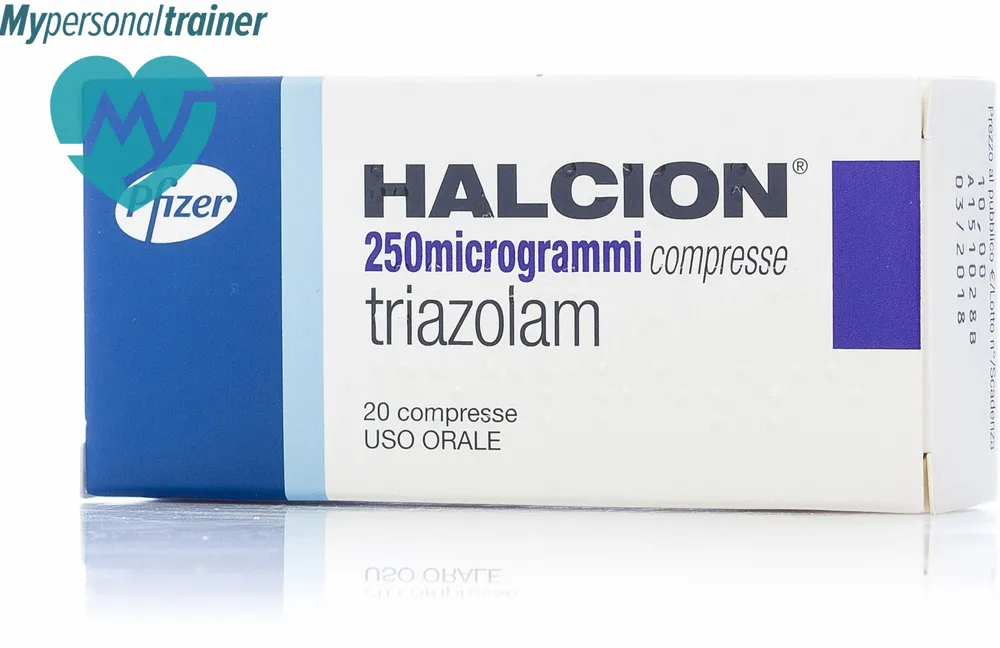
Table of Contents
Package leaflet: Information for the user
HALCION 125 microgram tablets, 250 microgram tablets
Triazolam
Please read all of this leaflet carefully before you take this medicine because it contains important information for you.
- Keep this leaflet. You may need to read it again.
- If you have any questions, ask your doctor or pharmacist.
- This medicine has been prescribed for you only. Do not give it to others, even if their symptoms are the same as yours, as it may be harmful.
- If any side effect occurs, including those not listed in this leaflet, talk to your doctor or pharmacist. See section 4.
Contents of this leaflet:
- What Halcion is and what it is used for
- What you need to know before taking Halcion
- How to take Halcion
- Possible side effects
- How to store Halcion
- Contents of the pack and other information
1. What Halcion is and what it is used for
Halcion contains the active substance triazolam. Triazolam belongs to a group of medicines called benzodiazepines, which are used to treat sleep disorders (insomnia) only when they are severe, disabling or cause severe distress.
Halcion is used for the short-term treatment of insomnia when the condition is severe and causes distress in normal daily life.
2. What you need to know before taking Halcion
Do not take Halcion:
- if you are allergic to triazolam, to benzodiazepines, or to any of the other ingredients of this medicine (listed in section 6);
- if you suffer from myasthenia gravis, a disease causing severe muscle weakness;
- if you have severe breathing problems;
- if you suffer from sleep apnoea, that is, breathing pauses during sleep;
- if you have severe liver problems;
- if you are simultaneously taking:
- antifungal medicines containing ketoconazole or itraconazole,
- antidepressant medicines containing nefazodone,
- medicines for HIV infection containing efavirenz or HIV protease inhibitors (e.g. ritonavir),
- or other medicines that strongly reduce the activity of certain liver enzymes (see section “Other medicines and Halcion”).
Warnings and precautions
Talk to your doctor or pharmacist before taking Halcion.
Take this medicine with caution if:
- you are elderly and/or debilitated. Your doctor will prescribe a reduced dose of this medicine;
- you have mild or moderate liver problems;
- you have breathing difficulties, as this medicine may worsen your condition;
- you have or have previously had problems with alcohol or drug abuse and dependence, because there is an increased risk of developing dependence on Halcion (see “Development of dependence”);
- you are taking other medicines that cause drowsiness or act on the brain and mind (see section “Other medicines and Halcion”);
- you suffer from depression. Halcion, like other benzodiazepines, should not be used alone to treat depression or anxiety associated with depression, as it may worsen suicidal tendencies;
- you suffer from psychosis, a mental illness that alters behaviour and causes difficulties in relating to others. Halcion is not recommended as the main treatment for this condition.
Since triazolam may cause sedation (drowsiness, sleepiness, dizziness, loss of coordination, and/or difficulty coordinating movements), patients, especially the elderly, are at increased risk of falls.
Memory disturbances
You may have difficulty remembering events that occurred after taking Halcion, particularly if you have not slept long enough (approximately 7–8 hours).
Paradoxical reactions
Halcion may cause effects opposite to those expected ( paradoxical effects ) (see section 4 “Possible side effects”). These effects are more common in children and elderly people.
If you experience these effects, consult your doctor, as treatment with Halcion should be discontinued.
Development of tolerance and dependence, withdrawal reactions, and drug abuse
A reduction in effectiveness (tolerance) of this medicine may occur after prolonged use.
This medicine is recommended for short-term treatment only.
Treatment with this medicine may also increase sensitivity to the effects of alcohol and other medicines affecting brain function. Therefore, talk to your doctor if you are using alcohol or such medicines.
The use of benzodiazepines, including Halcion, may lead to dependence. The risk of dependence increases with higher doses and prolonged use. The risk of dependence is also higher if you have a history of alcohol or drug abuse, or if you have significant personality disorders.
Talk to your doctor if:
- you have taken or are currently taking illegal substances;
- you regularly consume alcohol or have previously frequently consumed large amounts of alcohol;
- you have previously or currently have a desire to take large quantities of medicines.
In principle, benzodiazepines should only be used for short periods and discontinued gradually. Before starting treatment, you and your doctor should agree on how long you will take the medicine.
If you stop taking the medicine abruptly or rapidly reduce the dosage, withdrawal reactions may occur. Do not stop taking this medicine suddenly. Consult your doctor on how to discontinue treatment.
Some withdrawal reactions may be life-threatening.
Withdrawal reactions may range from mild depression, insomnia, and headache to a more severe syndrome including muscle pain, muscle and abdominal cramps, vomiting, sweating, tremors, seizures, anxiety, tension, restlessness, confusion, and irritability. More severe withdrawal symptoms, including life-threatening reactions, may include: feelings of detachment or alienation from oneself and the external world, heightened perception of noise, numbness and tingling in the extremities, increased sensitivity to light, sound, and physical contact, hallucinations, delirium tremens, depression, mania, psychosis, epileptic seizures, and suicidal ideation.
The symptoms for which this medicine was prescribed may also temporarily reappear (rebound phenomena). Do not give Halcion to family members or friends. Store this medicine securely so that it cannot harm others.
Children and adolescents
The efficacy and safety of Halcion in children and adolescents under 18 years of age are unknown.
Your doctor will decide whether Halcion can be administered to children and adolescents based on their individual condition.
Other medicines and Halcion
Inform your doctor or pharmacist if you are taking, have recently taken, or might take any other medicines.
Concomitant use of Halcion and opioids (strong painkillers, medicines for substitution therapy, and some cough medicines) increases the risk of drowsiness, breathing difficulties (respiratory depression), coma, and may be life-threatening.
For this reason, concomitant use should only be considered when no other treatment options are available.
However, if your doctor prescribes Halcion together with opioids, the dose and duration of concomitant therapy must be limited by your doctor.
Inform your doctor about all opioid medicines you are taking and carefully follow your doctor’s recommendations regarding dosage. It may be helpful to inform friends or relatives so they are aware of the symptoms listed above. Contact your doctor if such symptoms occur.
Halcion may alter the effect of other medicines, and other medicines may alter the effect of Halcion.
The following medicines must not be taken together with Halcion (see also section “Do not take Halcion”):
- ketoconazole, itraconazolo (antifungal medicines);
- nefazodone (antidepressant medicine);
- efavirenz and other medicines used to treat HIV infection (e.g. ritonavir);
- other medicines that strongly reduce the activity of certain liver enzymes.
Inform your doctor if you are taking any of the following medicines together with Halcion, as caution is required:
- other antifungal medicines. Their concomitant use with Halcion is not recommended;
- cimetidine, a medicine used to reduce stomach acidity;
- erythromycin, clarithromycin, troleandomycin, isoniazid, and rifampicin (antibiotics);
- diltiazem and verapamil (medicines for high blood pressure);
- oral contraceptives;
- imatinib, a medicine for certain types of cancer;
- aprepitant, a medicine for nausea and vomiting;
- medicines acting on the brain and mind, such as:
- antipsychotics, medicines for treating certain mental illnesses;
- hypnotics, sedatives, tranquilizers, and sleep-promoting agents;
- anxiolytics, medicines for treating anxiety;
- antidepressants (e.g. fluvoxamine, sertraline, paroxetine), medicines for treating depression;
- narcotic analgesics, medicines for treating severe pain, which, when taken with Halcion, may cause euphoria, increasing the risk of dependence;
- antiepileptics (e.g. carbamazepine), medicines for treating epileptic seizures;
- anaesthetics, medicines that induce anaesthesia, i.e. reversible loss of sensation;
- sedating antihistamines, medicines for treating allergic symptoms.
Halcion with food and alcohol
It is not recommended to drink alcohol or grapefruit juice while taking Halcion, as the effects of this medicine may be increased.
Pregnancy and breastfeeding
If you are pregnant, think you may be pregnant, are planning to become pregnant, or are breastfeeding, consult your doctor or pharmacist before taking this medicine.
Pregnancy
Using Halcion during pregnancy may harm the unborn baby.
If you take this medicine during the last 3 months of pregnancy or during labour, the newborn baby may have low muscle tone (floppy infant syndrome) and withdrawal symptoms (see section 3 “If you stop taking Halcion”).
Breastfeeding
Halcion must not be used by breastfeeding mothers, as this medicine may pass into breast milk.
Driving and using machines
Halcion may significantly impair your ability to drive vehicles or operate machinery.
Do not drive or operate machinery if, during treatment with Halcion, you experience drowsiness or dizziness.
Halcion may also cause a condition called “ sleep-driving ”, meaning you may not be fully alert while driving and may not remember having driven. These effects may be increased if you have not slept enough or if you have consumed alcoholic beverages.
Halcion contains lactose, sodium, and sodium benzoate (E211)
This medicine contains lactose. If your doctor has diagnosed you with an intolerance to certain sugars, contact them before taking this medicine.
This medicine contains less than 1 mmol (23 mg) of sodium per tablet, i.e. essentially ‘sodium-free’.
This medicine contains 0.15 mg of sodium benzoate (E 211) per tablet. Sodium benzoate may increase jaundice (yellowing of the skin and eyes) in newborns (up to 4 weeks of age).
3. How to take Halcion
Take this medicine exactly as directed by your doctor or pharmacist. If you have
any doubts, consult your doctor or pharmacist.
The dose and duration of treatment must be adjusted according to your individual condition. Your doctor
will advise you on the appropriate dose, the number of daily doses, and the duration of treatment with Halcion,
ensuring that you take the lowest possible dose for the shortest possible time. Do not alter or exceed the
prescribed dose. To discontinue treatment, the dose should be gradually reduced under medical supervision.
This reduces the risk of withdrawal reactions, which in some cases may be life-threatening (see section 2).
Adults
The recommended dose is 1 tablet (125 micrograms or 250 micrograms) taken once daily immediately before
going to bed.
Your doctor will recommend the lowest possible dose.
It is advised not to exceed the maximum daily dose.
If you are elderly and/or have liver or kidney problems
The recommended dose is 1 tablet of 125 micrograms taken once daily immediately before going to bed.
Duration of treatment
Halcion should be taken for short periods only. The maximum recommended duration of treatment should not
exceed 4 weeks. This period includes the time needed to gradually reduce the dose of Halcion before stopping.
Your doctor will decide, based on your individual condition, whether you may take this medicine for a longer period.
If you take more Halcion than you should
If you have taken an excessive dose of Halcion, contact your doctor immediately or go to the nearest emergency room.
Symptoms may include:
- difficulty speaking;
- drowsiness;
- loss of coordination;
- breathing difficulties;
- coma.
If you forget to take Halcion
If you forget to take a dose, take it as soon as you remember, but only if you are able to rest immediately afterwards for a sufficient length of time. Do not take a double dose to make up for a missed dose.
If you stop taking Halcion
Do not stop taking Halcion abruptly, unless you experience severe allergic reactions (see section 4 “Possible side effects”). Always consult your doctor before stopping Halcion. You must gradually reduce the dose to avoid experiencing:
- withdrawal symptoms such as:
- severe symptoms: feeling detached from yourself or the external world, numbness and tingling in arms or legs, increased sensitivity to light, sounds and physical touch, hallucinations, epileptic seizures;
- other symptoms: headache, muscle pain, anxiety, tension, restlessness, confusion, irritability;
- rebound insomnia. You may temporarily develop insomnia that is worse than that which you had before starting treatment with this medicine.
If you have any questions about the use of this medicine, consult your doctor or pharmacist.
4. Possible side effects
Like all medicines, this medicine can cause side effects, although not everybody gets them.
STOP taking this medicine immediately and contact your doctor if you experience any of the following side effects, as they are serious:
- severe allergic reaction (anaphylactic shock, anaphylactoid reactions)
- swelling of the face, tongue, and throat, leading to difficulty swallowing and breathing ( angioedema )
Contact your doctor immediately if you experience any of the following side effects, as treatment with Halcion must be discontinued:
- effects opposite to those expected ( paradoxical effects ) (see section 2 “Paradoxical disorders”), such as:
- aggression
- hallucinations
- restlessness
- agitation
- irritability
- delusion
- anger
- nightmares
- disturbances in thinking
- behavioural disturbances
Contact your doctor immediately if you experience any of the following side effects, as they may be serious:
- depression or worsening of pre-existing depression
- drug abuse, drug dependence (see section 2 “Development of tolerance and dependence, withdrawal reactions, and drug abuse”)
- withdrawal symptoms (withdrawal syndrome) and rebound symptoms (see section 2 “Development of tolerance and dependence, withdrawal reactions, and drug abuse”)
- “ drowsy driving ”, a sleep-related behavioural disorder (see section 2 “Driving and use of machines”)
- difficulty remembering events occurring after taking the medicine (see section 2 “Memory disturbances”)
- reduced breathing
Contact your doctor if you experience any of the following side effects:
Common side effects (may affect up to 1 in 10 people):
- drowsiness
- dizziness
- headache
- loss of ability to coordinate movements
Uncommon side effects (may affect up to 1 in 100 people):
- confusion
- insomnia
- memory loss
- visual disturbances
Rare side effects (may affect up to 1 in 1,000 people):
- rash
- severe muscle weakness
Not known (frequency cannot be estimated from the available data):
- allergic reactions, swelling due to allergy, hypersensitivity
- sleepwalking
- fainting
- sedation, reduced level of consciousness
- difficulty speaking
- loss of attention
- taste alterations
- changes in sexual desire
- falling down
Reporting of side effects
If you experience any side effect, including those not listed in this leaflet, contact your doctor or pharmacist. You can also report side effects directly via the national reporting system at: https://www.aifa.gov.it/content/segnalazioni-reazioni-avverse.
By reporting side effects, you can help provide more information on the safety of this medicine.
5. How to store Halcion
Keep this medicine out of the sight and reach of children.
Do not use this medicine after the expiry date stated on the carton and blister after "Exp.".
The expiry date refers to the last day of that month.
This medicine does not require any special storage conditions.
Do not dispose of medicines via wastewater or household waste. Ask your pharmacist how to dispose of medicines you no longer use. This will help protect the environment.
6. Package contents and other information
What Halcion contains
The active substance is triazolam.
Each 125 microgram tablet of Halcion contains 125 micrograms of triazolam.
The other components are: lactose, microcrystalline cellulose, colloidal silicon dioxide, sodium dioctyl sulfosuccinate,
sodium benzoate (E 211), maize starch, magnesium stearate, indigotine (E132) aluminium lake, erythrosine
(E127) aluminium lake.
(see section 2 “Halcion contains lactose, sodium and sodium benzoate (E211)”)
Each 250 microgram tablet of Halcion contains 250 micrograms of triazolam.
The other components are: lactose, microcrystalline cellulose, colloidal silicon dioxide, sodium dioctyl sulfosuccinate,
sodium benzoate (E 211), maize starch, magnesium stearate, indigotine (E132) aluminium lake.
(see section 2 “Halcion contains lactose, sodium and sodium benzoate (E211)”)
Description of the appearance of Halcion and contents of the pack
Halcion 125 microgram tablets are lavender-coloured tablets. The tablets are available in PVC/aluminium blisters in packs of 10 and 20 tablets.
Halcion 250 microgram tablets are blue-coloured tablets. The tablets are available in PVC/aluminium blisters in packs of 10 and 20 tablets.
Not all pack sizes may be marketed.
Marketing Authorisation Holder and Manufacturer
Marketing Authorisation Holder
Pfizer Italia S.r.l.
Via Isonzo, 71
04100 Latina
Manufacturer
Pfizer Italia S.r.l.
Località Marino del Tronto
63100 Ascoli Piceno (AP)