Granisetron Hikma
Italy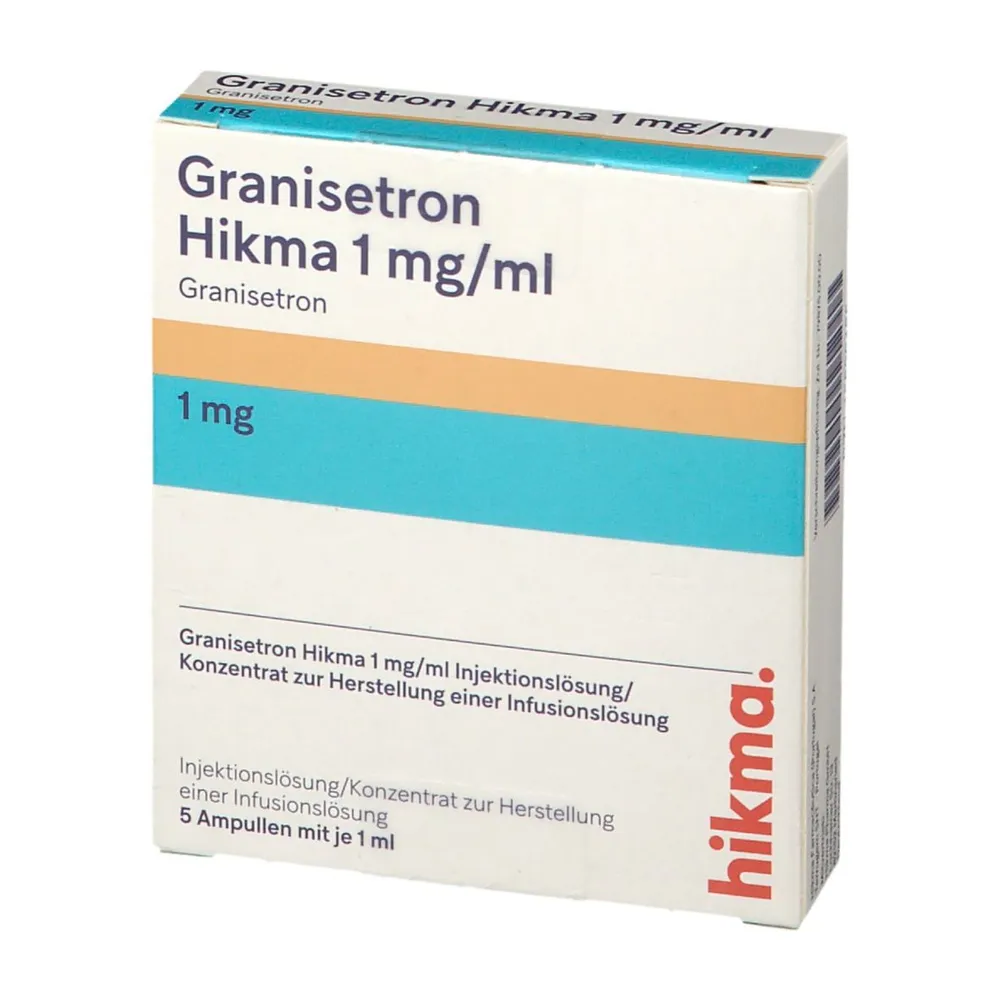
Table of Contents
- PATIENT INFORMATION LEAFLET: INFORMATION FOR THE USER
- Granisetron Hikma, injectable solution, 1 mg/ml, concentrate for infusion solution, 1 mg/ml
- 1. What Granisetron Hikma is and what it is used for
- 2. What you need to know before using Granisetron Hikma
- 3. How to use Granisetron Hikma
- 4. Possible side effects
- 5. How to store Granisetron Hikma
- 6. Package Contents and Other Information
PATIENT INFORMATION LEAFLET: INFORMATION FOR THE USER
Granisetron Hikma, injectable solution, 1 mg/ml, concentrate for infusion solution, 1 mg/ml
Generic medicinal product
Granisetron
Please read this leaflet carefully before you use this medicine because it contains important information for you.
- Keep this leaflet. You may need to read it again.
- If you have any questions, ask your doctor or pharmacist.
- This medicine has been prescribed for you only. Never give it to other people, even if their symptoms are the same as yours, as it may be harmful.
- If you experience any side effect, including those not listed in this leaflet, contact your doctor or pharmacist. See section 4.
Contents of this leaflet:
- What Granisetron Hikma is and what it is used for
- What you need to know before using Granisetron Hikma
- How to use Granisetron Hikma
- Possible side effects
- How to store Granisetron Hikma
- Contents of the pack and other information
1. What Granisetron Hikma is and what it is used for
Granisetron Hikma contains a medicine called Granisetron. It belongs to a group of
medicines known as “5-HT receptor antagonists” or anti-emetics.
Granisetron Hikma is used to prevent or treat nausea and vomiting (feeling sick or being
sick) caused by treatment with other medicines, such as chemotherapy or radiotherapy for
cancer, and by surgical procedures.
The injectable solution is intended for use in adults and children from 2 years of age.
2. What you need to know before using Granisetron Hikma
Do not use Granisetron Hikma
- if you are allergic (hypersensitive) to granisetron or to any of the excipients in Granisetron Hikma (listed in section 6)
Warnings and precautions
Consult your doctor or pharmacist before using Granisetron Hikma if:
- you have intestinal motility problems due to intestinal obstruction
- you have heart conditions, are being treated for cancer with a medicine known to damage the heart, or if you have problems with electrolyte levels such as potassium, sodium, or calcium in your body (electrolyte abnormalities)
- you are taking other "5-HT__ receptor antagonist" medicines, including dolasetron and ondansetron, which, like Granisetron Hikma, are used to treat and prevent nausea and vomiting
Inform your doctor if any of the conditions described above apply to you or have applied in the past.
Serotonin syndrome is an uncommon but potentially life-threatening reaction that may occur with granisetron (see section 4). This reaction may occur when taking granisetron alone, but is more likely when granisetron is taken together with certain other medicines (particularly fluoxetine, paroxetine, sertraline, fluvoxamine, citalopram, escitalopram, venlafaxine, and duloxetine).
Other medicines and Granisetron Hikma
Inform your doctor or nurse if you are taking, have recently taken, or might take any other medicines, including those not requiring a prescription. This is because Granisetron Hikma may affect how some medicines work. Other medicines may also affect how the injection works.
In particular, inform your doctor, nurse, or pharmacist if you are taking the following medicines:
- medicines used to treat irregular heartbeat, other than "5-HT__ receptor antagonists" such as dolasetron or ondansetron (see "Warnings and precautions" above)
- phenobarbital, a medicine used to treat epilepsy
- ketoconazole, a medicine used to treat fungal infections
- the antibiotic erythromycin, used to treat bacterial infections
- SSRIs (selective serotonin reuptake inhibitors) used to treat depression and/or anxiety, including fluoxetine, paroxetine, sertraline, fluvoxamine, citalopram, and escitalopram
- SNRIs (serotonin and noradrenaline reuptake inhibitors) used to treat depression and/or anxiety, including venlafaxine and duloxetine
Granisetron may be used in combination with other medicines, including benzodiazepines, neuroleptics, anaesthetics, and analgesics.
Granisetron Hikma with food and drink
Food and drink do not affect the action of Granisetron Hikma, as it is not administered orally.
Pregnancy and breastfeeding
You must not receive this injection if you are pregnant, trying to become pregnant, or breastfeeding, unless your doctor has specifically prescribed it.
Ask your doctor or pharmacist for advice before taking any medicine.
Driving and using machines
It is unlikely that Granisetron Hikma will affect your ability to drive or use machinery.
Granisetron Hikma contains sodium chloride, monohydrate citric acid, water for injections, hydrochloric acid, and sodium hydroxide.
3. How to use Granisetron Hikma
The injection will be administered by a doctor or nurse. The dose of Granisetron Hikma varies from patient to patient depending on age, weight, and whether the medicine has been prescribed to prevent or treat nausea and vomiting. The doctor will calculate the dose you should receive.
Granisetron Hikma may be administered as an intravenous injection.
Prevention of nausea or vomiting following radiotherapy or chemotherapy
The injection will be given before radiotherapy or chemotherapy begins. The intravenous injection will take from 30 seconds to 5 minutes, and the dose will normally be between 1 and 3 mg. The medicine may be diluted before being injected.
Treatment of nausea or vomiting following radiotherapy or chemotherapy
The injection will take from 30 seconds to 5 minutes, and the dose will normally be between 1 and 3 mg. The medicine may be diluted before intravenous injection. You may receive additional injections to control nausea after the first dose. At least 10 minutes must elapse between one injection and the next. The maximum daily dose of Granisetron Hikma administered will be 9 mg.
Combination with corticosteroids
The effect of the injection may be enhanced by using medicines called adrenocorticosteroids. The corticosteroid will be administered at a dose between 8 and 20 mg of dexamethasone before radiotherapy or chemotherapy, or as 250 mg of methylprednisolone, which will be administered before and after radiotherapy or chemotherapy.
Use in children for the prevention or treatment of nausea or vomiting following radiotherapy or chemotherapy
In children, Granisetron Hikma will be administered by intravenous injection as described above, and the dose will depend on the child's weight. The injections will be diluted and administered over 5 minutes before radiotherapy or chemotherapy. Children may receive up to 2 doses per day, with at least 10 minutes between doses.
Treatment of nausea or vomiting following surgery
The intravenous injection will take from 30 seconds to 5 minutes, and the dose will usually be 1 mg. The maximum daily dose of Granisetron Hikma administered will be 3 mg.
Use in children for the prevention or treatment of nausea or vomiting following surgery
This injection should not be administered to children to treat nausea or vomiting following surgery.
If you use more Granisetron Hikma than you should
Since the injection is administered by a doctor or nurse, it is unlikely you will receive too much. However, if you are concerned, speak to your doctor or nurse. Symptoms of overdose include mild headache. Treatment will be provided according to symptoms.
If you have any doubts about how to use this medicine, consult your doctor, nurse, or pharmacist.
4. Possible side effects
Like all medicines, Granisetron Hikma can cause side effects, although not everybody gets them. If you notice the following problem, contact your doctor immediately:
- allergic reactions (anaphylaxis). Symptoms may include swelling of the throat, face, lips and mouth, difficulty breathing or swallowing.
Other side effects that may occur during treatment with this medicine are:
Very common: affects more than 1 in 10 people
- headache
- constipation. Your doctor will monitor your health status.
Common: affects from 1 to 10 in 100 people
- difficulty sleeping (insomnia)
- changes in liver function as indicated by blood tests
- diarrhoea
Uncommon: affects from 1 to 10 in 1,000 people
- skin rashes or allergic skin reactions or hives (urticaria). Signs may include red, raised, itchy blisters.
- Changes in heart rhythm (pulse) and changes observed on ECG (electrical recording of the heart).
- Abnormal involuntary movements such as tremor, muscle rigidity and muscle contractions.
- Serotonin syndrome. Signs may include diarrhoea, nausea, vomiting, high body temperature and blood pressure, excessive sweating, rapid heartbeat, agitation, confusion, hallucinations, shivering, tremors/spasms or muscle stiffness, loss of coordination and restlessness.
Reporting of side effects
If you experience any side effect, including those not listed in this leaflet, talk to your doctor or pharmacist. You can also report side effects directly via the national reporting system at
www.agenziafarmaco.gov.it/it/responsabili. By reporting side effects, you can help provide more information on the safety of this medicine.
5. How to store Granisetron Hikma
Keep this medicine out of the sight and reach of children.
Do not store in the refrigerator and do not freeze.
Store in the original packaging to protect from light.
Diluted solutions are chemically stable for 24 hours when stored at a temperature below 25 °C.
From a microbiological standpoint, the medicine should be used immediately. If not used immediately, storage times and conditions prior to use are the responsibility of the user and should normally not exceed 24 hours at 2–8 °C, unless dilution has been carried out under controlled and validated aseptic conditions.
Do not use this medicine after the expiry date stated on the label and outer packaging following the wording “Exp”. (month) / (year). The expiry date refers to the last day of the month.
6. Package Contents and Other Information
What Granisetron Hikma Contains
- The active substance is: granisetron (hydrochloride). Each ml of solution contains 1 mg of granisetron. Each 1 ml vial contains 1 mg of granisetron and each 3 ml vial contains 3 mg of granisetron.
- The excipients are: sodium chloride, monohydrate citric acid, water for injections, hydrochloric acid, sodium hydroxide.
Description of the Appearance of Granisetron Hikma and Contents of the Package
Granisetron Hikma is a clear, colourless injectable solution supplied in colourless glass vials.
Granisetron Hikma, injectable solution:
Each vial contains 1 ml of solution.
- Pack sizes of 1 and 5 vials
Granisetron Hikma, concentrate for solution for infusion:
Each vial contains 3 ml of solution.
- Pack size of 5 vials
Marketing Authorisation Holder and Manufacturer
Hikma Farmacêutica (Portugal), S.A.
Estrada do Rio da Mó n.º 8, 8A and 8B – Fervença
2705-906 Terrugem SNT
Portugal
Tel.: +351 219 608 410
Fax: +351 219 615 102
[email protected]
Marketing Authorisation Holder in Italy
Hikma Italia SpA
Viale Certosa 10
27100 Pavia
This medicinal product is authorised in the European Economic Community Member States under the following names:
Germany: Ribosetron 1 mg/ml Injektionslösung / Konzentrat zur Herstellung einer Infusionslösung
Italy: Granisetron Hikma 1 mg/ml Soluzione iniettabile / Concentrato per soluzione per infusione
Netherlands: Granisetron Hikma 1 mg/ml Oplossing voor injectie / Concentraat voor oplossing voor infusie
Portugal: Granissetrom Hikma 1 mg/ml Solução injectável / Concentrado para solução para perfusão
The following information is intended exclusively for physicians or healthcare professionals:
Granisetron Hikma, injectable solution, 1 mg/ml
Granisetron Hikma, concentrate for solution for infusion, 1 mg/ml
Dosage and Method of Administration
Dosage
Nausea and vomiting induced by chemotherapy and radiotherapy (CINV and RINV)
Prevention (acute and delayed nausea and vomiting)
A dose of 1–3 mg (10–40 µg/kg) of Granisetron Hikma should be administered either as a slow intravenous injection or as a diluted intravenous infusion given over 5 minutes before the start of chemotherapy.
The solution should be diluted with 5 ml per mg.
Treatment (acute nausea and vomiting)
A dose of 1–3 mg (10–40 µg/kg) of Granisetron Hikma should be administered either as a slow intravenous injection or as a diluted intravenous infusion administered over 5 minutes.
The solution should be diluted with 5 ml per mg. Additional maintenance doses of Granisetron Hikma may be administered after 10 minutes.
The maximum dose that may be administered within 24 hours must not exceed 9 mg.
Combination with adrenocortical steroids
The efficacy of parenteral granisetron may be enhanced by the addition of an intravenous adrenocortical steroid such as 8–20 mg of dexamethasone administered before the start of cytotoxic therapy, or 250 mg of methylprednisolone administered before the start and shortly after the end of chemotherapy.
Paediatric population
The safety and efficacy of Granisetron Hikma in children aged 2 years and older have been established for the prevention and treatment (control) of acute nausea and vomiting associated with chemotherapy, and for the prevention of delayed nausea and vomiting associated with chemotherapy. A dose of 10–40 µg/kg body weight (up to 3 mg) should be administered as an intravenous infusion, diluted in 10–30 ml of infusion fluid and administered over 5 minutes before the start of chemotherapy. An additional dose may be administered within 24 hours if needed. This additional dose must not be administered earlier than 10 minutes after the initial infusion.
Postoperative nausea and vomiting (PONV)
A dose of 1 mg (10 µg/kg) of Granisetron Hikma should be administered via slow intravenous injection. The maximum dose of Granisetron Hikma that may be administered within 24 hours must not exceed 3 mg.
For the prevention of PONV, administration should be completed before induction of anaesthesia.
Paediatric population
Available data are described in section 5.1, but no dosage recommendations can be made. There is insufficient clinical evidence to recommend administration of the injectable solution to children for the prevention and treatment of postoperative nausea and vomiting (PONV).
Special populations
Elderly and renal impairment
No special precautions are required for elderly patients or for patients with renal or hepatic impairment.
Hepatic impairment
There is no evidence of an increased incidence of adverse reactions in patients with hepatic disorders. Based on pharmacokinetics, although dosage adjustment is not necessary, granisetron should be used with caution in this patient group (see section 5.2).
Method of Administration
Administration may be performed either as a slow intravenous injection (over 30 seconds) or as a diluted intravenous infusion in 20 or 50 ml of infusion fluid administered over 5 minutes.
Overdose
There is no specific antidote. In case of overdose, symptomatic treatment should be initiated. One patient received a dose of Granisetron Hikma 10 times higher than the recommended dose. Mild headache was reported. No other symptoms were observed.
Incompatibilities
As a general precaution, Granisetron Hikma must not be mixed in the same syringe, infusion bag, or bottle with drugs other than sodium phosphate dexamethasone. In prophylactic treatment, the infusion fluid or injection solution prepared with Granisetron Hikma should be administered before the start of chemotherapy or radiotherapy or before the patient is anaesthetised.
Special Precautions for Disposal and Handling
For single use only. Any unused solution must be discarded.
The solution should be inspected visually before use. Only clear, essentially particle-free solutions should be used.
Intravenous infusions of Granisetron Hikma should be prepared immediately before administration.
Preparation of infusion solution for adults: To prepare an infusion fluid containing a 3 mg dose, dilute 3 ml of concentrate for solution for infusion to a final volume between 20 and 50 ml with one of the following infusion fluids: 0.9% sodium chloride, 0.18% sodium chloride + 4% glucose, 5% glucose, Hartmann’s solution, 1.87% sodium lactate, 10% mannitol.
Preparation of infusion fluid for children:
To prepare an infusion fluid containing a dose of 40 µg/kg body weight, dilute an appropriate amount of the concentrate for solution for infusion to a volume of 10–30 ml with one of the above-mentioned infusion solutions.