Gliclazide EG
Italy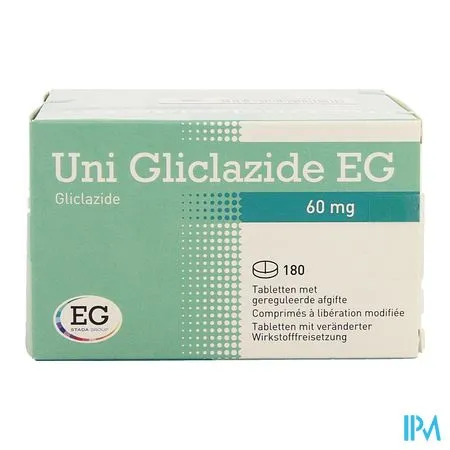
Table of Contents
Package leaflet: Information for the user
GLICLAZIDE EG 80 mg tablets
Generic medicine
Please read all of this leaflet carefully before you start taking this medicine, because it contains important information for you.
- Keep this leaflet. You may need to read it again.
- If you have any questions, ask your doctor or pharmacist.
- This medicine has been prescribed for you only. Do not give it to others, even if their symptoms are the same as yours, as it could be harmful.
- If you experience any adverse reactions, including those not listed in this leaflet, inform your doctor or pharmacist. See section 4.
Contents of this leaflet:
- What GLICLAZIDE EG is and what it is used for
- What you need to know before taking GLICLAZIDE EG
- How to take GLICLAZIDE EG
- Possible side effects
- How to store GLICLAZIDE EG
- Contents of the pack and other information
1. WHAT GLICLAZIDE EG IS AND WHAT IT IS USED FOR
GLICLAZIDE EG contains the active substance gliclazide, which belongs to a group of medicines
called sulfonylureas, used to lower blood sugar levels (oral hypoglycemic agents).
This medicine is used in adults for the treatment of a certain type of diabetes that cannot be controlled by diet alone and for which insulin administration is not indicated (non-insulin-dependent diabetes mellitus), even when associated with blood vessel complications.
2. WHAT YOU SHOULD KNOW BEFORE TAKING GLICLAZIDE EG
Do not take GLICLAZIDE EG
- If you are allergic to the active substance gliclazide, to sulfonylureas in general, or to any of the other ingredients of this medicine (listed in section 6).
- If you have severe hepatic insufficiency (significant reduction in liver function).
- If you have severe renal insufficiency (significant reduction in kidney function).
- If you have juvenile or childhood diabetes (a specific form of the disease in which the pancreas is no longer able to produce insulin, the substance that regulates blood sugar levels).
- If you have severe diabetes with malnutrition and acidosis (increased acidity of the blood).
- If you are in a state of diabetic coma or pre-coma (a diabetes complication causing loss of consciousness).
- If you have suffered severe trauma.
- If you have an infection.
- If you have severe ketosis (high levels of ketone bodies in the blood causing a drop in pH to highly acidic values).
- If you are pregnant or breastfeeding (see "Pregnancy and breastfeeding").
Warnings and precautions
Talk to your doctor or pharmacist before taking GLICLAZIDE EG.
During treatment with gliclazide, you must be aware of the importance of following an appropriate
diet and of avoiding sources of infection.
You must follow your doctor's instructions regarding laboratory tests to be performed, in order to
detect any abnormal results promptly.
In particular situations (hospitalization after an accident, illness while on holiday, etc.), always inform
your doctor that you have diabetes.
In case of surgical procedures, metabolic decompensation, infectious or febrile diseases, it may be
necessary to temporarily initiate insulin therapy (a hormone produced by the pancreas that lowers
blood sugar levels).
If you have Glucose-6-phosphate dehydrogenase (G6PD) deficiency (also known as favism), a
condition caused by deficiency of the enzyme glucose-6-phosphate dehydrogenase (G6PD) (a red
blood cell abnormality), you may experience a reduction in hemoglobin in the blood due to
destruction of red blood cells (hemolytic anemia). Consult your doctor before taking this medicine.
Inform your doctor before taking Gliclazide EG if:
- Your kidney or adrenal function is reduced.
- You have serious liver disease.
- You are malnourished.
- You are elderly.
Your doctor will assess whether a dose reduction is necessary.
Other medicines and GLICLAZIDE EG
Inform your doctor or pharmacist if you are taking, have recently taken, or might take any other
medicines.
Discontinue any ongoing treatment with miconazole (an antifungal drug) before starting treatment
with a sulfonylurea (such as gliclazide), as hypoglycemia (low blood sugar causing symptoms such
as irritability, headache, tremor, and profuse sweating), sometimes severe, has been observed when
miconazole is combined with sulfonylurea drugs.
Combination of gliclazide with biguanides (other blood glucose-lowering drugs used in type 2
diabetes) or with insulin is possible.
The blood glucose-lowering effect (hypoglycemic action) of gliclazide may be increased by:
- Alcohol (see "GLICLAZIDE EG with alcohol").
- Sulfonamides (antibacterial drugs).
- Pyrazoles (anti-inflammatory, analgesic, antipyretic drugs).
- Non-Steroidal Anti-Inflammatory Drugs (NSAIDs).
- Salicylates (drugs used as anti-inflammatory and analgesic agents).
- Diazepam (a drug with anxiolytic, sedative, and anticonvulsant effects).
- Tetracyclines (antibiotic drugs).
- Piregiline maleate (a drug used in cardiac conditions).
- Chloramphenicol (an antibiotic drug).
- Clofibrate (a drug that reduces blood lipid levels).
- Monoamine oxidase inhibitors (MAOIs) (drugs used as antidepressants).
- Beta-blockers (drugs used for various conditions including angina, high blood pressure, heart attack, cardiac arrhythmias, and heart failure).
- Dicumarol and coumarin derivatives (drugs used to reduce blood coagulation).
Conversely, the blood glucose-lowering effect of gliclazide may be reduced, resulting in increased
blood sugar levels, when any of the following medicines are taken:
- Thiazide diuretics (drugs used to treat high blood pressure, increasing fluid elimination through urine).
- Adrenaline (a substance used as an emergency drug, e.g., for anaphylactic reactions, edema, bronchospasm, and in some cases of low blood pressure).
- Corticosteroids (drugs used as anti-inflammatory agents and in some allergic reactions).
- Oral contraceptives (birth control pills).
GLICLAZIDE EG with alcohol
During treatment with GLICLAZIDE EG, avoid consuming alcohol, as it may enhance the
hypoglycemic effect of gliclazide (see "Other medicines and GLICLAZIDE EG").
Be aware of the possibility of developing photosensitivity and disulfiram-like reactions after
consuming alcoholic beverages (see section 4 "Possible side effects").
Pregnancy and breastfeeding
If you are pregnant, suspect you may be pregnant, are planning a pregnancy, or are breastfeeding,
consult your doctor or pharmacist before taking this medicine.
The use of GLICLAZIDE EG is contraindicated during pregnancy and breastfeeding (see "Do not
take GLICLAZIDE EG").
Driving and using machines
GLICLAZIDE EG does not impair the ability to drive or operate machinery.
GLICLAZIDE EG contains lactose. If your doctor has diagnosed you with an intolerance to certain
sugars, contact him before taking this medicine.
3. HOW TO TAKE GLICLAZIDE EG
Take this medicine exactly as directed by your doctor or pharmacist.
If you have any doubts, consult your doctor or pharmacist.
The recommended dose is 2 tablets daily, taken in one or two doses.
Your doctor will determine the appropriate dose of Gliclazide EG based on the severity of your diabetes.
Swallow the tablet with water, without chewing, preferably 30 minutes before a meal.
If you take more GLICLAZIDE EG than you should
Taking an excessive dose of this medicine may lead to symptoms of hypoglycaemia (reduced blood sugar levels), the early signs of which may include headache, irritability, nervous depression, sleep disturbances, and excessive sweating (see "Warnings and precautions").
In severe cases, disturbances of consciousness (i.e. a confused state) may occur; if this happens, go immediately to the nearest hospital emergency department.
If you forget to take GLICLAZIDE EG
If you forget to take a dose, take it as soon as you remember, unless it is almost time for your next dose. Do not take a double dose to make up for the forgotten dose.
If you stop taking GLICLAZIDE EG
Do not stop treatment with GLICLAZIDE EG suddenly or without first consulting your doctor.
If you have any questions about the use of this medicine, consult your doctor or pharmacist.
4. POSSIBLE ADVERSE REACTIONS
Like all medicines, this medicine can cause adverse reactions, although not everyone experiences them.
A serious adverse reaction that may rarely occur following the use of GLICLAZIDE EG is hypoglycaemia.
This effect is more likely to occur if you are debilitated, elderly, undergoing unusual physical exertion, have irregular eating habits or consume alcoholic beverages, or if you have impaired kidney and/or liver function.
Other adverse reactions that may occur with the use of GLICLAZIDE EG are:
- Photosensitisation (exaggerated reaction to light) and disulfiram-like effects (generalised malaise, breathing difficulties, palpitations, headache, nausea and vomiting) after ingestion of alcoholic beverages.
- Transient gastrointestinal disturbances.
- Transient allergic skin reactions (rash).
- Generally, in subjects sensitive to sulfonamides, changes in blood cell counts may occur, such as leucopenia and agranulocytosis (conditions characterised by a decrease in white blood cells and granulocytes in the blood), thrombocytopenia (reduction in the number of platelets in the blood), anaemia (reduction in haemoglobin levels in the blood), which are generally reversible.
The following skin reactions have also been reported:
- Skin rash
- Pruritus (itching)
- Urticaria (hives)
- Swelling of the face, lips, mouth, tongue or throat, which may cause difficulty in swallowing and breathing (angioedema)
- Skin redness (erythema)
- Reaction causing skin rashes with macules (flat, pale-coloured spots) and papules (small raised bumps)
- Formation of blisters, bullae, skin peeling or mucosal detachment (toxic epidermal necrolysis and Stevens-Johnson syndrome)
Following the instructions provided in this leaflet reduces the risk of adverse reactions.
Reporting of adverse reactions
If you experience any adverse reaction, including those not listed in this leaflet, talk to your doctor or pharmacist. You may also report adverse reactions directly via the national reporting system at the website
www.agenziafarmaco.gov.it/it/responsabili.
By reporting adverse reactions, you can help provide more information on the safety of this medicine.
5. HOW TO STORE GLICLAZIDE EG
Keep this medicine out of the sight and reach of children.
Do not use this medicine after the expiry date stated on the packaging after "Exp.". The expiry date refers to the last day of that month and to the product in its original packaging, stored correctly.
This medicine does not require any special storage conditions.
Do not dispose of any medicine via wastewater or household waste. Ask your pharmacist how to dispose of medicines you no longer use. This will help protect the environment.
6. PACK CONTENTS AND OTHER INFORMATION
What GLICLAZIDE EG contains
The active substance is gliclazide. Each tablet contains 80 mg of gliclazide.
The other components are: Lactose, polyvinylpyrrolidone, glyceryl behenate, colloidal silicon dioxide,
magnesium stearate.
Description of the appearance of GLICLAZIDE EG and pack contents
Tablets.
Blister pack containing 40 divisible tablets, inserted in a cardboard carton.
Marketing Authorization Holder
EG S.p.A., Via Pavia 6, 20136 MILAN
Manufacturer
DOPPEL Farmaceutici Srl - Via Volturno, 48 - 20089 Rozzano (MI)