Giotrif
Italy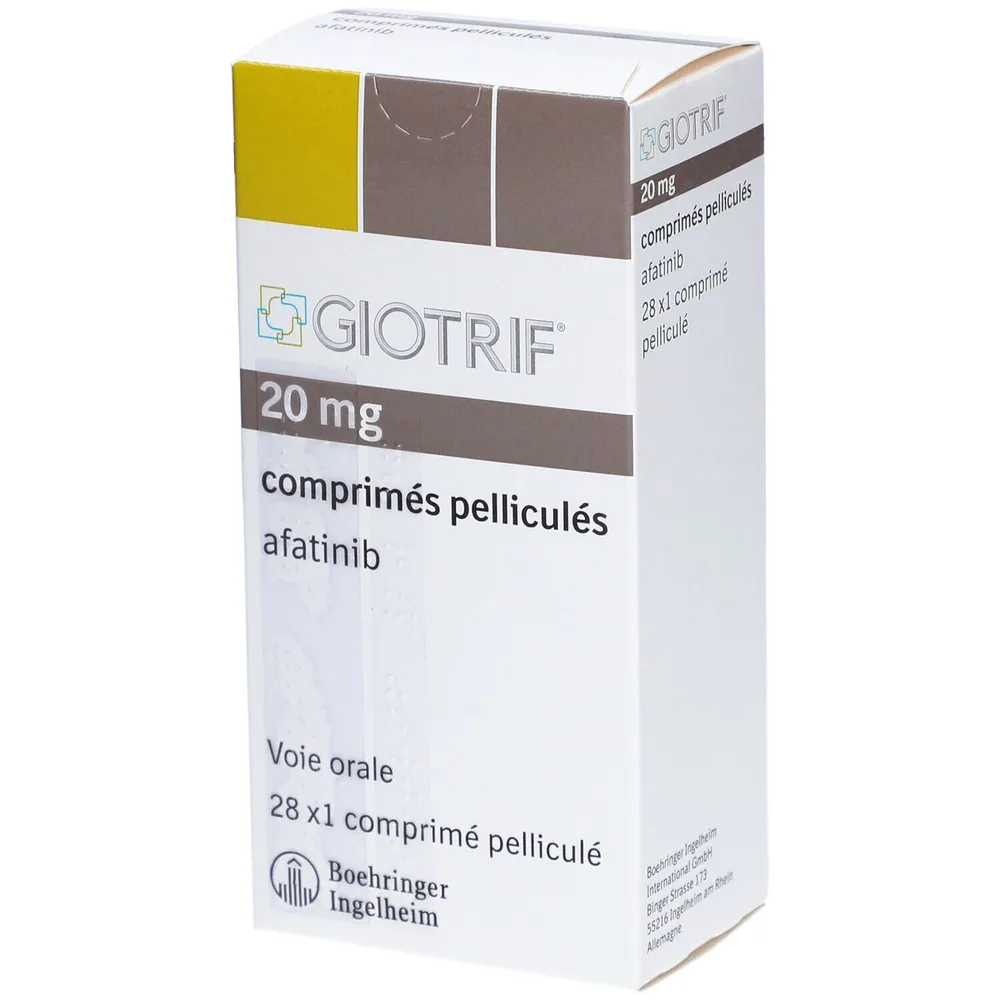
Table of Contents
- Patient Information Leaflet
- GIOTRIF 20 mg film-coated tablets
- 1. What GIOTRIF is and what it is used for
- 2. What you should know before taking GIOTRIF
- 3. How to take GIOTRIF
- 4. Possible side effects
- 5. How to store GIOTRIF
- 6. Package Contents and Other Information
- Patient Information Leaflet
- GIOTRIF 30 mg film-coated tablets
- 1. What GIOTRIF is and what it is used for
- 2. What you should know before taking GIOTRIF
- 3. How to take GIOTRIF
- 4. Possible side effects
- 5. How to store GIOTRIF
- 6. Package Contents and Other Information
- Patient information leaflet: information for the patient
- GIOTRIF 40 mg film-coated tablets
- 1. What GIOTRIF is and what it is used for
- 2. What you should know before taking GIOTRIF
- 3. How to take GIOTRIF
- 4. Possible side effects
- 5. How to store GIOTRIF
- 6. Package Contents and Other Information
- Patient information leaflet
- GIOTRIF 50 mg film-coated tablets
- 1. What GIOTRIF is and what it is used for
- 2. What you should know before taking GIOTRIF
- 3. How to take GIOTRIF
- 4. Possible side effects
- 5. How to store GIOTRIF
- 6. Package contents and other information
Patient Information Leaflet
GIOTRIF 20 mg film-coated tablets
afatinib
Please read all of this leaflet carefully before you start taking this medicine, as it contains
important information for you.
- Keep this leaflet. You may need to read it again.
- If you have any questions, ask your doctor or pharmacist.
- This medicine has been prescribed for you only. Do not give it to other people, even if their symptoms are the same as yours, as it may be harmful.
- If you experience any side effect, including those not listed in this leaflet, talk to your doctor or pharmacist. See section 4.
Contents of this leaflet
- What GIOTRIF is and what it is used for
- What you need to know before taking GIOTRIF
- How to take GIOTRIF
- Possible side effects
- How to store GIOTRIF
- Contents of the pack and other information
1. What GIOTRIF is and what it is used for
GIOTRIF is a medicine that contains the active substance afatinib. It works by blocking the activity of a group of proteins called the ErbB family (including EGFR [epidermal growth factor receptor or ErbB1], HER2 [ErbB2], ErbB3, and ErbB4). These proteins are involved in the growth and spread of cancer cells and may be altered due to changes (mutations) in the genes that produce them. By blocking the activity of these proteins, this medicine can inhibit the growth and spread of cancer cells.
This medicine is used alone to treat adult patients with a specific type of lung carcinoma (non-small cell lung cancer):
- identified by an alteration (mutation) in the EGFR gene. GIOTRIF may be prescribed to you as first-line treatment or when previous chemotherapy treatment has proven insufficient.
- of squamous type when previous chemotherapy treatment has proven insufficient.
2. What you should know before taking GIOTRIF
Do not take GIOTRIF
- if you are allergic to afatinib or to any of the other ingredients of this medicine (listed in section 6).
Warnings and precautions
Talk to your doctor or pharmacist before taking GIOTRIF:
- if you are a woman, have a low body weight (less than 50 kg), or have kidney problems. If any of these apply to you, your doctor may monitor you more closely, as side effects may be more pronounced.
- if you have a history of lung inflammation (interstitial lung disease).
- if you have liver problems. Your doctor may perform some liver tests. Treatment with this medicine is not recommended if you have severe liver disease.
- if you have a history of eye problems, such as severe dry eyes, inflammation of the transparent membrane at the front of the eye (cornea), or ulcers on the outer part
of the eye, or if you wear contact lenses.
- if you have a history of heart problems. Your doctor may decide to monitor you more closely.
Inform your doctor immediately while taking this medicine:
- if you develop diarrhoea. Treating diarrhoea at the first sign is important.
- if you develop a skin rash. Early treatment of skin rash is important.
- if you develop new or suddenly worsening shortness of breath, even with cough or fever. These may be symptoms of lung inflammation (interstitial lung disease), which can be life-threatening.
- if you have severe stomach or intestinal pain, fever, chills, nausea, vomiting, or abdominal stiffness or swelling, as these may be symptoms of a tear in the stomach or intestinal wall (“gastrointestinal perforation”). Also, inform your doctor if you have previously had gastrointestinal ulcers or diverticular disease, or if you are currently receiving treatment with anti-inflammatory medicines (NSAIDs) (used to reduce pain and swelling) or steroids (used for inflammation and allergies), as your risk may be higher in these cases.
- if you develop acute or worsening eye redness and pain, increased tearing, blurred vision, and/or sensitivity to light. You may need urgent treatment.
See also section 4 “Possible side effects”.
Children and adolescents
GIOTRIF is not recommended for use in children or adolescents. Do not administer this
medicine to children or adolescents under 18 years of age.
Other medicines and GIOTRIF
Inform your doctor or pharmacist if you are taking, have recently taken, or might take
any other medicines, including herbal medicines and over-the-counter products.
In particular, the following medicines, if taken before GIOTRIF, may increase levels of
GIOTRIF in the blood and thus the risk of side effects. An interval as long as possible should be maintained between taking these medicines and GIOTRIF. This means preferably 6 hours (for medicines taken twice daily) or 12 hours (for medicines taken once daily) apart from GIOTRIF:
- Ritonavir, ketoconazole (except shampoo), itraconazole, erythromycin, nelfinavir, saquinavir – used to treat various types of infections.
- Verapamil, quinidine, amiodarone – used to treat heart conditions.
- Cyclosporine A, tacrolimus – medicines that affect the immune system.
The following medicines may reduce the effectiveness of GIOTRIF:
- Carbamazepine, phenytoin, phenobarbital – used to treat epilepsy.
- St John’s wort (Hypericum perforatum), a herbal medicine used to treat depression.
- Rifampicin, an antibiotic used to treat tuberculosis. Ask your doctor if you have any doubts about when to take these medicines.
GIOTRIF may increase blood levels of other medicines, including, but not limited to:
- Sulfasalazine, used to treat inflammation/infection
- Rosuvastatin, used to lower cholesterol.
Inform your doctor before taking these medicines with GIOTRIF.
Pregnancy and breastfeeding
If you are pregnant, suspect you may be pregnant, are planning a pregnancy, or are breastfeeding,
ask your doctor or pharmacist for advice before taking this medicine.
Pregnancy
You must avoid becoming pregnant during treatment with this medicine. If you are of childbearing age, use an effective method of contraception during treatment and for at least 1 month after taking the last dose of this medicine. This is because there is a risk of harm to the unborn baby.
If you become pregnant while taking this medicine, inform your doctor immediately. Your doctor will decide with you whether treatment should continue.
If you are planning a pregnancy after taking the last dose of this medicine, consult your doctor, as your body may not have completely eliminated the medicine yet.
Breastfeeding
Do not breastfeed while taking this medicine, as there is a potential risk to the baby.
Driving and using machines
If you experience treatment-related symptoms such as vision disturbances (e.g. eye redness and/or irritation, dry eyes, tearing, light sensitivity) or impaired ability to concentrate and react, you are advised not to drive or operate machinery until the side effect has resolved (see section 4 Possible side effects).
GIOTRIF contains lactose
This medicine contains a sugar called lactose. If your doctor has diagnosed you with an intolerance to certain sugars, contact him or her before taking this medicine.
3. How to take GIOTRIF
Take this medicine exactly as directed by your doctor. If you have any doubts, consult your doctor or pharmacist.
Dosage
The recommended dose is 40 mg once daily.
Your doctor may adjust (increase or decrease) the dose depending on your tolerance to this medicine.
When to take GIOTRIF
- It is important to take this medicine on an empty stomach.
- Take this medicine at least 1 hour before a meal, or
- If you have already eaten, wait at least 3 hours before taking this medicine.
- Take this medicine once daily at approximately the same time each day. This will help you remember to take it more easily.
- Do not break, chew, or crush the tablet.
- Swallow the tablet whole with a glass of non-carbonated water.
GIOTRIF should be taken by mouth. If you have difficulty swallowing the tablet, dissolve it in a glass of non-carbonated water. Do not use any other liquid. Place the tablet in the water without crushing it and stir occasionally for up to 15 minutes, until the tablet breaks into very small particles. Drink the liquid immediately. Then refill the glass with water and drink it to ensure you have taken the entire dose.
If you are unable to swallow and are connected to a gastric tube, your doctor may recommend administering the medicine through the tube.
If you take more GIOTRIF than you should
Contact your doctor or pharmacist immediately. Side effects may increase and your doctor may stop your treatment and provide supportive care.
If you forget to take GIOTRIF
- If your next dose is due more than 8 hours later, take the missed dose as soon as you remember.
- If your next dose is due within 8 hours, skip the missed dose and take the next dose at the usual time. Then continue taking the tablets at your regular times. Do not take a double dose (two tablets at once instead of one) to make up for a forgotten dose.
If you stop taking GIOTRIF
Do not stop treatment with this medicine without first consulting your doctor. It is important to take this medicine every day for the entire duration prescribed by your doctor. If you do not take this medicine as prescribed, the tumor may start to grow again.
If you have any questions about how to use this medicine, consult your doctor or pharmacist.
4. Possible side effects
Like all medicines, this medicine can cause side effects, although not everybody gets them.
Contact your doctor as soon as possible if you experience any of the serious side effects listed below. In some cases, your doctor may consider it necessary to stop treatment, reduce your dose, or discontinue treatment:
- Diarrhoea (very common, may affect more than 1 in 10 people) Diarrhoea lasting more than 2 days or more severe diarrhoea may lead to fluid loss (common, may affect up to 1 in 10 people), low potassium levels in the blood (common), and worsening of kidney function (common). Diarrhoea can be treated. At the first sign of diarrhoea, drink plenty of fluids. Contact your doctor immediately and start appropriate anti-diarrhoeal treatment as soon as possible. Before starting treatment with GIOTRIF, you must have an anti-diarrhoeal medicine available.
- Skin rash (very common) It is important to treat skin rash promptly. Inform your doctor if a rash appears. If treatment for skin rash is not effective and the rash worsens (for example, skin cracking or blisters appear), inform your doctor immediately, as your doctor may decide to discontinue your treatment with GIOTRIF. Skin rash may occur or worsen in areas exposed to sunlight. It is recommended to protect yourself from sunlight by wearing protective clothing and using sunscreen.
- Lung inflammation (uncommon, may affect up to 1 in 100 people), called "interstitial lung disease". Inform your doctor immediately if you develop new or suddenly worsening shortness of breath, even with cough or fever.
- Eye irritation or inflammation Eye irritation or inflammation may occur (conjunctivitis/dry eye occurs commonly and keratitis uncommonly). Inform your doctor if you develop sudden or worsening eye symptoms such as pain, redness, or dryness.
If you experience any of the symptoms described above, contact your doctor as soon as possible.
The following additional side effects have also been reported:
Very common side effects (may affect more than 1 in 10 people):
- Mouth ulcers and inflammation
- Nail infection
- Reduced appetite
- Nosebleed
- Nausea
- Vomiting
- Itching
- Dry skin
Common side effects (may affect up to 1 in 10 people):
- Pain, redness, swelling, or cracking of the skin on hands and feet
- Increased levels of liver enzymes (aspartate aminotransferase and alanine aminotransferase) in blood tests
- Inflammation of the inner wall of the bladder causing a burning sensation during urination and urgent and frequent need to urinate (cystitis)
- Altered sense of taste (dysgeusia)
- Stomach pain, indigestion, heartburn
- Inflammation of the lips
- Weight loss
- Runny nose
- Muscle spasms
- Fever
- Nail problems
Uncommon side effects (may affect up to 1 in 100 people):
- Inflammation of the pancreas (pancreatitis)
- Development of a tear in the stomach or intestinal wall (gastrointestinal perforation)
Rare side effects (may affect up to 1 in 1,000 people):
- Severe blistering or skin cracking (indicative of Stevens-Johnson syndrome and toxic epidermal necrolysis)
Reporting of side effects
If you experience any side effect, including those not listed in this leaflet, talk to your doctor or pharmacist. You can also report side effects directly via the national reporting system detailed in Annex V. By reporting side effects, you can help provide more information on the safety of this medicine.
5. How to store GIOTRIF
Keep this medicine out of the sight and reach of children.
Do not use this medicine after the expiry date stated on the carton, sachet, and blister after Exp. or EXP. The expiry date refers to the last day of that month.
Store in the original packaging to protect the medicine from moisture and light.
Do not dispose of any medicine via wastewater or household waste. Ask your pharmacist how to dispose of medicines you no longer use. This will help protect the environment.
6. Package Contents and Other Information
What GIOTRIF Contains
- The active substance is afatinib. Each film-coated tablet contains 20 mg of afatinib (as dimaleate).
- The other ingredients are lactose monohydrate, microcrystalline cellulose (E460), anhydrous colloidal silica (E551), crospovidone type A, magnesium stearate (E470b), hypromellose (E464), macrogol 400, titanium dioxide (E171), talc (E553b), polysorbate 80 (E433).
Description of the Appearance of GIOTRIF and Contents of the Package
GIOTRIF 20 mg film-coated tablets are white to yellowish and round in shape.
They are marked with the code “T20” on one side and the Boehringer Ingelheim logo on the other.
GIOTRIF film-coated tablets are available in packages containing 1, 2, or 4 unit-dose divisible blisters.
Each blister contains 7 × 1 film-coated tablets and is packaged in an aluminum pouch with a desiccant sachet which must not be ingested.
Not all pack sizes may be marketed.
Marketing Authorization Holder
Boehringer Ingelheim International GmbH
Binger Strasse 173
55216 Ingelheim am Rhein
Germany
Manufacturer
Boehringer Ingelheim Pharma GmbH & Co. KG
Binger Strasse 173
55216 Ingelheim am Rhein
Germany
Boehringer Ingelheim France
100-104 Avenue de France
75013 Paris
France
For further information about this medicinal product, please contact the local representative of the marketing authorization holder:
België/Belgique/Belgien Lietuva
Boehringer Ingelheim SComm Boehringer Ingelheim RCV GmbH & Co KG
Tél/Tel: +32 2 773 33 11 Lietuvos filialas
Tel: +370 5 2595942
България Luxembourg/Luxemburg
Бьорингер Ингелхайм РЦВ ГмбХ и Ко. Boehringer Ingelheim SComm
КГ - клон България Tél/Tel: +32 2 773 33 11
Тел: +359 2 958 79 98
Česká republika Magyarország
Boehringer Ingelheim spol. s r.o. Boehringer Ingelheim RCV GmbH & Co KG
Tel: +420 234 655 111 Magyarországi Fióktelepe
Tel: +36 1 299 89 00
Danmark Malta
Boehringer Ingelheim Danmark A/S Boehringer Ingelheim Ireland Ltd.
Tlf.: +45 39 15 88 88 Tel: +353 1 295 9620
Deutschland Nederland
Boehringer Ingelheim Pharma GmbH & Co. KG Boehringer Ingelheim B.V.
Tel: +49 (0) 800 77 90 900 Tel: +31 (0) 800 22 55 889
Eesti Norge
Boehringer Ingelheim RCV GmbH & Co KG Boehringer Ingelheim Danmark
Eesti filiaal Norwegian branch
Tel: +372 612 8000 Tlf: +47 66 76 13 00
Ελλάδα Österreich
Boehringer Ingelheim Ελλάς Μονοπρόσωπη Boehringer Ingelheim RCV GmbH & Co KG
A.E. Tel: +43 1 80 105‑7870
Tηλ: +30 2 10 89 06 300
España Polska
Boehringer Ingelheim España, S.A. Boehringer Ingelheim Sp. z o.o.
Tel: +34 93 404 51 00 Tel: +48 22 699 0 699
France Portugal
Boehringer Ingelheim France S.A.S. Boehringer Ingelheim Portugal, Lda.
Tél: +33 3 26 50 45 33 Tel: +351 21 313 53 00
Hrvatska România
Boehringer Ingelheim Zagreb d.o.o. Boehringer Ingelheim RCV GmbH & Co KG
Tel: +385 1 2444 600 Viena ‑ Sucursala Bucureşti
Tel: +40 21 302 28 00
Ireland Slovenija
Boehringer Ingelheim Ireland Ltd. Boehringer Ingelheim RCV GmbH & Co KG
Tel: +353 1 295 9620 Podružnica Ljubljana
Tel: +386 1 586 40 00
Ísland Slovenská republika
Vistor ehf. Boehringer Ingelheim RCV GmbH & Co KG
Sími: +354 535 7000 organizačná zložka
Tel: +421 2 5810 1211
Italia Suomi/Finland
Boehringer Ingelheim Italia S.p.A. Boehringer Ingelheim Finland Ky
Tel: +39 02 5355 1 Puh/Tel: +358 10 3102 800
Κύπρος Sverige
Boehringer Ingelheim Ελλάς Μονοπρόσωπη Boehringer Ingelheim AB
A.E. Tel: +46 8 721 21 00
Tηλ: +30 2 10 89 06 300
Latvija
Boehringer Ingelheim RCV GmbH & Co KG
Latvijas filiāle
Tel: +371 67 240 011
Other Sources of Information
More detailed information on this medicinal product is available on the website of the European Medicines Agency: https://www.ema.europa.eu.
Patient Information Leaflet
GIOTRIF 30 mg film-coated tablets
afatinib
Please read this leaflet carefully before taking this medicine because it contains
important information for you.
- Keep this leaflet. You may need to read it again.
- If you have any questions, ask your doctor or pharmacist.
- This medicine has been prescribed for you only. Do not give it to other people, even if their symptoms are the same as yours, as it may be harmful.
- If you experience any side effect, including those not listed in this leaflet, contact your doctor or pharmacist. See section 4.
Contents of this leaflet
- What GIOTRIF is and what it is used for
- What you need to know before taking GIOTRIF
- How to take GIOTRIF
- Possible side effects
- How to store GIOTRIF
- Contents of the pack and other information
1. What GIOTRIF is and what it is used for
GIOTRIF is a medicine that contains the active substance afatinib. It works by blocking the activity of a group of proteins called the ErbB family (including EGFR [epidermal growth factor receptor or ErbB1], HER2 [ErbB2], ErbB3 and ErbB4). These proteins are involved in the growth and spread of cancer cells and may be altered due to changes (mutations) in the genes that produce them. By blocking the activity of these proteins, this medicine can inhibit the growth and spread of cancer cells.
This medicine is used alone to treat adult patients with a specific type of lung cancer (non-small cell lung cancer):
- which is identified by an alteration (mutation) in the EGFR gene. GIOTRIF may be prescribed to you as first-line treatment or when previous chemotherapy treatment has proven insufficient.
- of squamous type when previous chemotherapy treatment has proven insufficient.
2. What you should know before taking GIOTRIF
Do not take GIOTRIF
- if you are allergic to afatinib or to any of the other ingredients of this medicine (listed in section 6).
Warnings and precautions
Talk to your doctor or pharmacist before taking GIOTRIF:
- if you are a woman, have a low body weight below 50 kg, or have kidney problems. If any of these apply to you, your doctor may monitor you more closely, as side effects may be more pronounced.
- if you have a history of lung inflammation (interstitial lung disease).
- if you have liver problems. Your doctor may carry out some liver function tests. Treatment with this medicine is not recommended if you have severe liver disease.
- if you have a history of eye problems, such as severe dry eyes, inflammation of the transparent membrane at the front of the eye (cornea), or ulcers on the outer part
of the eye, or if you wear contact lenses.
- if you have a history of heart problems. Your doctor may decide to monitor you more closely.
Inform your doctor immediately while taking this medicine:
- if you develop diarrhoea. Treating diarrhoea at the first sign is important.
- if you develop a skin rash. Early treatment of skin rash is important.
- if you develop new or suddenly worsening shortness of breath, even with cough or fever. These may be symptoms of lung inflammation (interstitial lung disease), which can be life-threatening.
- if you have severe stomach or intestinal pain, fever, chills, nausea, vomiting, or abdominal stiffness or swelling, as these may be symptoms of a tear in the stomach or intestinal wall (“gastrointestinal perforation”). Also, inform your doctor if you have previously had gastrointestinal ulcers or diverticular disease, or if you are currently receiving treatment with anti-inflammatory medicines (NSAIDs) (used to reduce pain and swelling) or steroids (used for inflammation and allergies), as your risk may be higher in these cases.
- if you develop acute or worsening eye redness and pain, increased tearing, blurred vision, and/or sensitivity to light. You may need urgent treatment.
See also section 4 “Possible side effects”.
Children and adolescents
GIOTRIF is not recommended for use in children or adolescents. Do not administer this
medicine to children or adolescents under 18 years of age.
Other medicines and GIOTRIF
Tell your doctor or pharmacist if you are taking, have recently taken, or might take
any other medicines, including herbal medicines and over-the-counter products.
In particular, the following medicines, if taken before GIOTRIF, may increase GIOTRIF levels in the blood and consequently the risk of side effects. An interval as long as possible should be maintained between taking these medicines and GIOTRIF. This means preferably 6 hours (for medicines taken twice daily) or 12 hours (for medicines taken once daily) apart from GIOTRIF:
- Ritonavir, ketoconazole (except shampoo), itraconazole, erythromycin, nelfinavir, saquinavir – used to treat various types of infections.
- Verapamil, quinidine, amiodarone – used to treat heart conditions.
- Cyclosporine A, tacrolimus – medicines that affect the immune system.
The following medicines may reduce the effectiveness of GIOTRIF:
- Carbamazepine, phenytoin, phenobarbital – used to treat epilepsy.
- St. John’s wort (Hypericum perforatum), a herbal medicine used to treat depression.
- Rifampicin, an antibiotic used to treat tuberculosis. Ask your doctor if you have any doubts about when to take these medicines.
GIOTRIF may increase blood levels of other medicines, including but not limited to:
- Sulfasalazine, used to treat inflammation/infection
- Rosuvastatin, used to lower cholesterol.
Inform your doctor before taking these medicines with GIOTRIF.
Pregnancy and breastfeeding
If you are pregnant, suspect you may be pregnant, planning a pregnancy, or breastfeeding,
consult your doctor or pharmacist before taking this medicine.
Pregnancy
You must avoid becoming pregnant during treatment with this medicine. If you are of childbearing age, use an effective method of contraception during treatment and for at least 1 month after taking the last dose of this medicine. This is because there is a risk of harm to the unborn baby.
If you become pregnant while being treated with this medicine, inform your doctor immediately. Your doctor will decide with you whether treatment should continue.
If you are planning a pregnancy after taking the last dose of this medicine, consult your doctor, as your body may not have completely eliminated the medicine yet.
Breastfeeding
Do not breastfeed while taking this medicine, as a risk to the infant cannot be excluded.
Driving and using machines
If you experience treatment-related symptoms such as vision disturbances (e.g. eye redness and/or irritation, dry eyes, tearing, light sensitivity) or impaired concentration and reaction ability, you are advised not to drive or operate machinery until the side effect has resolved (see section 4 Possible side effects).
GIOTRIF contains lactose
This medicine contains a sugar called lactose. If your doctor has diagnosed you with an intolerance to certain sugars, contact your doctor before taking this medicine.
3. How to take GIOTRIF
Take this medicine exactly as your doctor has told you. If you are unsure, consult your doctor or pharmacist.
Dosage
The recommended dose is 40 mg once daily.
Your doctor may adjust (increase or decrease) the dose depending on your tolerance to this medicine.
When to take GIOTRIF
- It is important to take this medicine without food.
- Take this medicine at least 1 hour before a meal, or
- If you have already eaten, wait at least 3 hours before taking this medicine.
- Take this medicine once daily at approximately the same time each day. This will help you remember to take it more easily.
- Do not break, chew, or crush the tablet.
- Swallow the tablet whole with a glass of non-carbonated water.
GIOTRIF should be taken by mouth. If you have difficulty swallowing the tablet, you may dissolve it in a glass of non-carbonated water. No other liquids should be used. Place the tablet in the water without crushing it and stir occasionally for up to 15 minutes, until the tablet breaks into very small particles. Drink the liquid immediately. Then refill the glass with water and drink it to ensure that you have taken the entire dose.
If you are unable to swallow and are connected to a gastric tube, your doctor may recommend administering the medicine through the tube.
If you take more GIOTRIF than you should
Contact your doctor or pharmacist immediately. Adverse effects may increase, and your doctor may interrupt your treatment and provide supportive care.
If you forget to take GIOTRIF
- If your next dose is due more than 8 hours later, take the missed dose as soon as you remember.
- If your next dose is due within 8 hours, skip the missed dose and take the next dose at the usual time. Continue taking the tablets at your regular times. Do not take a double dose (two tablets at once instead of one) to make up for a forgotten dose.
If you stop taking GIOTRIF
Do not stop treatment with this medicine without first consulting your doctor. It is important to take this medicine every day for the entire duration prescribed by your doctor. If you do not take this medicine as directed, the tumour may start growing again.
If you have any doubts about how to use this medicine, consult your doctor or pharmacist.
4. Possible side effects
Like all medicines, this medicine can cause side effects, although not everybody gets them.
Contact your doctor as soon as possible if you experience any of the serious side effects listed below. In some cases, your doctor may decide it is necessary to stop treatment, reduce your dose, or discontinue treatment:
- Diarrhoea (very common, may affect more than 1 in 10 people). Diarrhoea lasting more than 2 days or more severe diarrhoea may lead to fluid loss (common, may affect up to 1 in 10 people), low potassium levels in the blood (common), and worsening of kidney function (common). Diarrhoea can be treated. At the first sign of diarrhoea, drink plenty of fluids. Contact your doctor immediately and start an appropriate anti-diarrhoeal treatment as soon as possible. Before starting treatment with GIOTRIF, you should have an anti-diarrhoeal medicine available.
- Skin rash (very common). It is important to treat skin rash promptly. Inform your doctor if a rash develops. If treatment for the rash is not effective and the rash worsens (for example, skin cracking or blistering occurs), inform your doctor immediately, as your doctor may decide to discontinue your treatment with GIOTRIF. Skin rash may occur or worsen in areas exposed to sunlight. It is recommended to protect yourself from sunlight by wearing protective clothing and using sunscreen.
- Lung inflammation (uncommon, may affect up to 1 in 100 people), called "interstitial lung disease". Inform your doctor immediately if you develop new or worsening shortness of breath, even with cough or fever.
- Eye irritation or inflammation Eye irritation or inflammation may occur (conjunctivitis/dry eye occurs commonly and keratitis occurs uncommonly). Inform your doctor if you develop sudden or worsening eye symptoms such as pain, redness, or dryness.
If you experience any of the symptoms described above, contact your doctor as soon as possible.
The following additional side effects have also been reported:
Very common side effects (may affect more than 1 in 10 people):
- Mouth ulcers and inflammation
- Nail infections
- Reduced appetite
- Nosebleeds
- Nausea
- Vomiting
- Itching
- Dry skin
Common side effects (may affect up to 1 in 10 people):
- Pain, redness, swelling, or cracking of the skin on hands and feet
- Increased levels of liver enzymes (aspartate aminotransferase and alanine aminotransferase) in blood tests
- Inflammation of the inner wall of the bladder causing a burning sensation during urination and urgent and frequent need to urinate (cystitis)
- Altered sense of taste (dysgeusia)
- Stomach pain, indigestion, heartburn
- Inflammation of the lips
- Decreased weight
- Runny nose
- Muscle spasms
- Fever
- Nail problems
Uncommon side effects (may affect up to 1 in 100 people):
- Inflammation of the pancreas (pancreatitis)
- Development of a tear in the wall of the stomach or intestine (gastrointestinal perforation)
Rare side effects (may affect up to 1 in 1,000 people):
- Severe blistering or skin cracking (indicative of Stevens-Johnson syndrome and toxic epidermal necrolysis)
Reporting of side effects
If you experience any side effect, including those not listed in this leaflet, talk to your doctor or pharmacist. You can also report side effects directly via the national reporting system listed in Annex V. By reporting side effects, you can help provide more information on the safety of this medicine.
5. How to store GIOTRIF
Keep this medicine out of the sight and reach of children.
Do not use this medicine after the expiry date stated on the carton, pouch, and blister after Exp. or EXP. The expiry date refers to the last day of that month.
Store in the original packaging to protect the medicine from moisture and light.
Do not dispose of any medicine via wastewater or household waste. Ask your pharmacist how to dispose of medicines no longer in use. This will help protect the environment.
6. Package Contents and Other Information
What GIOTRIF contains
- The active substance is afatinib. Each film-coated tablet contains 30 mg of afatinib (as dimaleate).
- The other ingredients are monohydrate lactose, microcrystalline cellulose (E460), anhydrous colloidal silica (E551), crospovidone type A, magnesium stearate (E470b), hypromellose (E464), macrogol 400, titanium dioxide (E171), talc (E553b), polysorbate 80 (E433), indigo carmine aluminium lake (E132).
Description of the appearance of GIOTRIF and the contents of the pack
GIOTRIF 30 mg film-coated tablets are dark blue and round in shape. They have the code
“T30” engraved on one side and the Boehringer Ingelheim logo on the other.
GIOTRIF film-coated tablets are available in packs containing 1, 2, or 4 divisible blisters
for single doses. Each blister contains 7 × 1 film-coated tablets and is packaged in an
aluminum pouch with a desiccant sachet which must not be ingested.
Not all pack sizes may be marketed.
Marketing Authorization Holder
Boehringer Ingelheim International GmbH
Binger Strasse 173
55216 Ingelheim am Rhein
Germany
Manufacturer
Boehringer Ingelheim Pharma GmbH & Co. KG
Binger Strasse 173
55216 Ingelheim am Rhein
Germany
Boehringer Ingelheim France
100-104 Avenue de France
75013 Paris
France
For further information on this medicinal product, please contact the local representative of the marketing authorization holder:
België/Belgique/Belgien Lietuva
Boehringer Ingelheim SComm Boehringer Ingelheim RCV GmbH & Co KG
Tél/Tel: +32 2 773 33 11 Lietuvos filialas
Tel: +370 5 2595942
България Luxembourg/Luxemburg
Бьорингер Ингелхайм РЦВ ГмбХ и Ко. Boehringer Ingelheim SComm
КГ - клон България Tél/Tel: +32 2 773 33 11
Тел: +359 2 958 79 98
Česká republika Magyarország
Boehringer Ingelheim spol. s r.o. Boehringer Ingelheim RCV GmbH & Co KG
Tel: +420 234 655 111 Magyarországi Fióktelepe
Tel: +36 1 299 89 00
Danmark Malta
Boehringer Ingelheim Danmark A/S Boehringer Ingelheim Ireland Ltd.
Tlf.: +45 39 15 88 88 Tel: +353 1 295 9620
Deutschland Nederland
Boehringer Ingelheim Pharma GmbH & Co. KG Boehringer Ingelheim B.V.
Tel: +49 (0) 800 77 90 900 Tel: +31 (0) 800 22 55 889
Eesti Norge
Boehringer Ingelheim RCV GmbH & Co KG Boehringer Ingelheim Danmark
Eesti filiaal Norwegian branch
Tel: +372 612 8000 Tlf: +47 66 76 13 00
Ελλάδα Österreich
Boehringer Ingelheim Ελλάς Μονοπρόσωπη Boehringer Ingelheim RCV GmbH & Co KG
A.E. Tel: +43 1 80 105‑7870
Tηλ: +30 2 10 89 06 300
España Polska
Boehringer Ingelheim España, S.A. Boehringer Ingelheim Sp. z o.o.
Tel: +34 93 404 51 00 Tel: +48 22 699 0 699
France Portugal
Boehringer Ingelheim France S.A.S. Boehringer Ingelheim Portugal, Lda.
Tél: +33 3 26 50 45 33 Tel: +351 21 313 53 00
Hrvatska România
Boehringer Ingelheim Zagreb d.o.o. Boehringer Ingelheim RCV GmbH & Co KG
Tel: +385 1 2444 600 Viena ‑ Sucursala Bucureşti
Tel: +40 21 302 28 00
Ireland Slovenija
Boehringer Ingelheim Ireland Ltd. Boehringer Ingelheim RCV GmbH & Co KG
Tel: +353 1 295 9620 Podružnica Ljubljana
Tel: +386 1 586 40 00
Ísland Slovenská republika
Vistor ehf. Boehringer Ingelheim RCV GmbH & Co KG
Sími: +354 535 7000 organizačná zložka
Tel: +421 2 5810 1211
Italia Suomi/Finland
Boehringer Ingelheim Italia S.p.A. Boehringer Ingelheim Finland Ky
Tel: +39 02 5355 1 Puh/Tel: +358 10 3102 800
Κύπρος Sverige
Boehringer Ingelheim Ελλάς Μονοπρόσωπη Boehringer Ingelheim AB
A.E. Tel: +46 8 721 21 00
Tηλ: +30 2 10 89 06 300
Latvija
Boehringer Ingelheim RCV GmbH & Co KG
Latvijas filiāle
Tel: +371 67 240 011
Further sources of information
More detailed information on this medicinal product is available on the website of the European Medicines Agency: https://www.ema.europa.eu .
Patient information leaflet: information for the patient
GIOTRIF 40 mg film-coated tablets
afatinib
Please read this entire leaflet carefully before taking this medicine, as it contains
important information for you.
- Keep this leaflet. You may need to read it again.
- If you have any questions, ask your doctor or pharmacist.
- This medicine has been prescribed for you only. Do not give it to other people, even if their symptoms are the same as yours, as it may be harmful.
- If you experience any adverse reactions, including those not listed in this leaflet, contact your doctor or pharmacist. See section 4.
Contents of this leaflet
- What GIOTRIF is and what it is used for
- What you need to know before taking GIOTRIF
- How to take GIOTRIF
- Possible side effects
- How to store GIOTRIF
- Contents of the pack and other information
1. What GIOTRIF is and what it is used for
GIOTRIF is a medicine that contains the active substance afatinib. It works by blocking the activity of a group of proteins known as the ErbB family (including EGFR [epidermal growth factor receptor or ErbB1], HER2 [ErbB2], ErbB3, and ErbB4). These proteins are involved in the growth and spread of cancer cells and may be altered due to changes (mutations) in the genes that produce them. By blocking the activity of these proteins, this medicine can inhibit the growth and spread of cancer cells.
This medicine is used alone to treat adult patients with a specific type of lung cancer (non-small cell lung cancer):
- that is identified by a genetic alteration (mutation) in the EGFR gene. GIOTRIF may be prescribed to you as first-line treatment or when previous chemotherapy treatment has proven insufficient.
- of squamous type when previous chemotherapy treatment has proven insufficient.
2. What you should know before taking GIOTRIF
Do not take GIOTRIF
- if you are allergic to afatinib or to any of the other ingredients of this medicine (listed in section 6).
Warnings and precautions
Talk to your doctor or pharmacist before taking GIOTRIF:
-
if you are a woman, have a low body weight below 50 kg, or have kidney problems. If any of these apply to you, your doctor may monitor you more closely, as side effects may be more pronounced.
-
if you have a history of lung inflammation (interstitial lung disease).
-
if you have liver problems. Your doctor may carry out some liver function tests. Treatment with this medicine is not recommended if you have severe liver disease.
-
if you have a history of eye problems, such as severe dry eyes, inflammation of the transparent membrane at the front of the eye (cornea), or ulcers on the outer part of the eye, or if you wear contact lenses.
-
if you have a history of heart problems. Your doctor may decide to monitor you more closely.
Inform your doctor immediately while taking this medicine:
- if you develop diarrhoea. Treating diarrhoea at the first sign is important.
- if you develop a skin rash. Early treatment of skin rash is important.
- if you develop new or suddenly worsening shortness of breath, even with cough or fever. These may be symptoms of lung inflammation (interstitial lung disease), which can be life-threatening.
- if you have severe stomach or intestinal pain, fever, chills, nausea, vomiting, or abdominal rigidity or swelling, as these may be symptoms of a tear in the stomach or intestinal wall (“gastrointestinal perforation”). Also, inform your doctor if you have previously had gastrointestinal ulcers or diverticular disease, or if you are currently receiving treatment with anti-inflammatory medicines (NSAIDs) (used to reduce pain and swelling) or steroids (used for inflammation and allergies), as your risk may be higher in these cases.
- if you develop acute or worsening eye redness and pain, increased tearing, blurred vision, and/or sensitivity to light. You may need urgent treatment.
See also section 4 “Possible side effects”.
Children and adolescents
GIOTRIF is not recommended for use in children or adolescents. Do not administer this medicine to children or adolescents under 18 years of age.
Other medicines and GIOTRIF
Tell your doctor or pharmacist if you are taking, have recently taken, or might take any other medicines, including herbal medicines and over-the-counter products.
In particular, the following medicines, if taken before GIOTRIF, may increase GIOTRIF levels in the blood and consequently the risk of side effects. An interval as long as possible should be maintained between taking these medicines and GIOTRIF. This means preferably 6 hours (for medicines taken twice daily) or 12 hours (for medicines taken once daily) apart from GIOTRIF:
- Ritonavir, ketoconazole (except shampoo), itraconazole, erythromycin, nelfinavir, saquinavir – used to treat various types of infections.
- Verapamil, quinidine, amiodarone – used to treat heart conditions.
- Cyclosporine A, tacrolimus – medicines that affect the immune system.
The following medicines may reduce the effectiveness of GIOTRIF:
- Carbamazepine, phenytoin, phenobarbital – used to treat epilepsy.
- St. John’s wort (Hypericum perforatum), a herbal medicine used to treat depression.
- Rifampicin, an antibiotic used to treat tuberculosis. Ask your doctor if you have any doubts about when to take these medicines.
GIOTRIF may increase blood levels of other medicines, including but not limited to:
- Sulfasalazine, used to treat inflammation/infection
- Rosuvastatin, used to lower cholesterol.
Inform your doctor before taking these medicines with GIOTRIF.
Pregnancy and breastfeeding
If you are pregnant, suspect you may be pregnant, planning a pregnancy, or breastfeeding, consult your doctor or pharmacist before taking this medicine.
Pregnancy
You must avoid becoming pregnant during treatment with this medicine. If you are of childbearing age, use an effective method of contraception during treatment and for at least 1 month after taking the last dose of this medicine. This is because there is a risk of harm to the unborn baby.
If you become pregnant while taking this medicine, inform your doctor immediately. Your doctor will decide with you whether treatment should continue.
If you are planning a pregnancy after taking the last dose of this medicine, consult your doctor, as your body may not have completely eliminated this medicine.
Breastfeeding
Do not breastfeed while taking this medicine, as a risk to the infant cannot be excluded.
Driving and using machines
If you experience treatment-related symptoms such as vision disturbances (e.g. eye redness and/or irritation, dry eyes, tearing, light sensitivity) or impaired ability to concentrate and react, you are advised not to drive or operate machinery until the side effect has resolved (see section 4 Possible side effects).
GIOTRIF contains lactose
This medicine contains a sugar called lactose. If your doctor has diagnosed you with an intolerance to certain sugars, contact them before taking this medicine.
3. How to take GIOTRIF
Take this medicine exactly as your doctor has told you. If you are not sure, ask your doctor or pharmacist.
Dosage
The recommended dose is 40 mg daily.
Your doctor may adjust the dose (increase or decrease) depending on your tolerance to this medicine.
When to take GIOTRIF
- It is important to take this medicine on an empty stomach.
- Take this medicine at least 1 hour before a meal, or
- If you have already eaten, wait at least 3 hours before taking this medicine.
- Take this medicine once daily at approximately the same time each day. This will help you remember to take your medicine more easily.
- Do not break, chew, or crush the tablet.
- Swallow the tablet whole with a glass of non-carbonated water.
GIOTRIF should be taken by mouth. If you have difficulty swallowing the tablet, dissolve it in a glass of non-carbonated water. Do not use any other liquids. Place the tablet in the water without crushing it and stir occasionally for up to 15 minutes, until the tablet breaks into very small particles. Drink the liquid immediately. Then refill the glass with water and drink it to ensure you have taken the entire dose.
If you are unable to swallow and are using a gastric tube, your doctor may recommend that the medicine be administered through the tube.
If you take more GIOTRIF than you should
Contact your doctor or pharmacist immediately. Side effects may increase, and your doctor may stop your treatment and provide supportive care.
If you forget to take GIOTRIF
- If your next dose is due more than 8 hours later, take the missed dose as soon as you remember.
- If your next dose is due within 8 hours, skip the missed dose and take the next dose at the usual time. Continue taking the tablets at your regular times. Do not take a double dose (two tablets at once instead of one) to make up for a forgotten dose.
If you stop taking GIOTRIF
Do not stop taking this medicine without first consulting your doctor. It is important to take this medicine every day for the entire duration prescribed by your doctor. If you do not take this medicine as prescribed, the tumour may start growing again.
If you have any doubts about how to use this medicine, ask your doctor or pharmacist.
4. Possible side effects
Like all medicines, this medicine can cause side effects, although not everyone gets them.
Contact your doctor as soon as possible if you experience any of the serious side effects listed below. In some cases, your doctor may consider it necessary to stop treatment, reduce your dose, or discontinue treatment:
- Diarrhoea (very common, may affect more than 1 in 10 people). Diarrhoea lasting more than 2 days or more severe diarrhoea may lead to fluid loss (common, may affect up to 1 in 10 people), low potassium levels in the blood (common), and worsening kidney function (common). Diarrhoea can be treated. At the first sign of diarrhoea, drink plenty of fluids. Contact your doctor immediately and start appropriate anti-diarrhoeal treatment as soon as possible. Before starting treatment with GIOTRIF, you must have an anti-diarrhoeal medicine available.
- Skin rash (very common). It is important to treat skin rash promptly. Inform your doctor if a skin rash develops. If treatment for skin rash is not effective and the rash worsens (for example, if skin cracking or blisters appear), inform your doctor immediately, as your doctor may decide to discontinue your treatment with GIOTRIF. Skin rash may occur or worsen in areas exposed to sunlight. Protection from sunlight with protective clothing and sunscreen is recommended.
- Lung inflammation (uncommon, may affect up to 1 in 100 people), called "interstitial lung disease". Inform your doctor immediately if you develop new or worsening shortness of breath, even with cough or fever.
- Eye irritation or inflammation Eye irritation or inflammation may occur (conjunctivitis/dry eye occurs commonly and keratitis occurs uncommonly). Inform your doctor if you develop sudden or worsening eye symptoms, such as pain, redness, or dryness.
If you experience any of the symptoms described above, contact your doctor as soon as possible.
The following additional side effects have also been reported:
Very common side effects (may affect more than 1 in 10 people):
- Mouth ulcers and inflammation
- Nail infections
- Reduced appetite
- Nosebleeds
- Nausea
- Vomiting
- Itching
- Dry skin
Common side effects (may affect up to 1 in 10 people):
- Pain, redness, swelling, or cracking of the skin on hands and feet
- Increased levels of liver enzymes (aspartate aminotransferase and alanine aminotransferase) in blood tests
- Inflammation of the inner wall of the bladder with a burning sensation during urination and urgent and frequent need to urinate (cystitis)
- Altered sense of taste (dysgeusia)
- Stomach pain, indigestion, heartburn
- Inflammation of the lips
- Weight loss
- Runny nose
- Muscle spasms
- Fever
- Nail problems
Uncommon side effects (may affect up to 1 in 100 people):
- Inflammation of the pancreas (pancreatitis)
- Development of a tear in the stomach or intestinal wall (gastrointestinal perforation)
Rare side effects (may affect up to 1 in 1,000 people):
- Severe blistering or skin cracking (indicative of Stevens-Johnson syndrome and toxic epidermal necrolysis)
Reporting of side effects
If you experience any side effect, including those not listed in this leaflet, talk to your doctor or pharmacist. You can also report side effects directly through the national reporting system listed in Annex V. By reporting side effects, you can help provide more information on the safety of this medicine.
5. How to store GIOTRIF
Keep this medicine out of the sight and reach of children.
Do not use this medicine after the expiry date which is stated on the carton, on the bag, and on the
blister after Exp. or EXP. The expiry date refers to the last day of that month.
Store in the original packaging to protect the medicine from moisture and light.
Do not dispose of any medicine via wastewater or household waste. Ask your pharmacist how to
dispose of medicines no longer in use. This will help protect the environment.
6. Package Contents and Other Information
What GIOTRIF contains
- The active substance is afatinib. Each film-coated tablet contains 40 mg of afatinib (as dimaleate).
- The other components are monohydrate lactose, microcrystalline cellulose (E460), anhydrous colloidal silica (E551), crospovidone type A, magnesium stearate (E470b), hypromellose (E464), macrogol 400, titanium dioxide (E171), talc (E553b), polysorbate 80 (E433), indigo carmine aluminium lake (E132).
Description of the appearance of GIOTRIF and the contents of the pack
GIOTRIF 40 mg film-coated tablets are blue and round in shape. They have the code “T40”
imprinted on one side and the Boehringer Ingelheim logo on the other.
GIOTRIF film-coated tablets are available in packs containing 1, 2 or 4 unit-dose divisible blisters. Each blister contains 7 × 1 film-coated tablets and is packaged in an aluminum pouch with a desiccant sachet which must not be ingested.
Not all pack sizes may be marketed.
Marketing Authorization Holder
Boehringer Ingelheim International GmbH
Binger Strasse 173
55216 Ingelheim am Rhein
Germany
Manufacturer
Boehringer Ingelheim Pharma GmbH & Co. KG
Binger Strasse 173
55216 Ingelheim am Rhein
Germany
Boehringer Ingelheim France
100-104 Avenue de France
75013 Paris
France
For further information about this medicinal product, please contact the local representative of the Marketing Authorization Holder:
België/Belgique/Belgien Lietuva
Boehringer Ingelheim SComm Boehringer Ingelheim RCV GmbH & Co KG
Tél/Tel: +32 2 773 33 11 Lietuvos filialas
Tel: +370 5 2595942
България Luxembourg/Luxemburg
Бьорингер Ингелхайм РЦВ ГмбХ и Ко. Boehringer Ingelheim SComm
КГ ‑ клон България Tél/Tel: +32 2 773 33 11
Тел: +359 2 958 79 98
Česká republika Magyarország
Boehringer Ingelheim spol. s r.o. Boehringer Ingelheim RCV GmbH & Co KG
Tel: +420 234 655 111 Magyarországi Fióktelepe
Tel: +36 1 299 89 00
Danmark Malta
Boehringer Ingelheim Danmark A/S Boehringer Ingelheim Ireland Ltd.
Tlf.: +45 39 15 88 88 Tel: +353 1 295 9620
Deutschland Nederland
Boehringer Ingelheim Pharma GmbH & Co. KG Boehringer Ingelheim B.V.
Tel: +49 (0) 800 77 90 900 Tel: +31 (0) 800 22 55 889
Eesti Norge
Boehringer Ingelheim RCV GmbH & Co KG Boehringer Ingelheim Danmark
Eesti filiaal Norwegian branch
Tel: +372 612 8000 Tlf: +47 66 76 13 00
Ελλάδα Österreich
Boehringer Ingelheim Ελλάς Μονοπρόσωπη Boehringer Ingelheim RCV GmbH & Co KG
A.E. Tel: +43 1 80 105‑7870
Tηλ: +30 2 10 89 06 300
España Polska
Boehringer Ingelheim España, S.A. Boehringer Ingelheim Sp. z o.o.
Tel: +34 93 404 51 00 Tel: +48 22 699 0 699
France Portugal
Boehringer Ingelheim France S.A.S. Boehringer Ingelheim Portugal, Lda.
Tél: +33 3 26 50 45 33 Tel: +351 21 313 53 00
Hrvatska România
Boehringer Ingelheim Zagreb d.o.o. Boehringer Ingelheim RCV GmbH & Co KG
Tel: +385 1 2444 600 Viena ‑ Sucursala Bucureşti
Tel: +40 21 302 28 00
Ireland Slovenija
Boehringer Ingelheim Ireland Ltd. Boehringer Ingelheim RCV GmbH & Co KG
Tel: +353 1 295 9620 Podružnica Ljubljana
Tel: +386 1 586 40 00
Ísland Slovenská republika
Vistor ehf. Boehringer Ingelheim RCV GmbH & Co KG
Sími: +354 535 7000 organizačná zložka
Tel: +421 2 5810 1211
Italia Suomi/Finland
Boehringer Ingelheim Italia S.p.A. Boehringer Ingelheim Finland Ky
Tel: +39 02 5355 1 Puh/Tel: +358 10 3102 800
Κύπρος Sverige
Boehringer Ingelheim Ελλάς Μονοπρόσωπη Boehringer Ingelheim AB
A.E. Tel: +46 8 721 21 00
Tηλ: +30 2 10 89 06 300
Latvija
Boehringer Ingelheim RCV GmbH & Co KG
Latvijas filiāle
Tel: +371 67 240 011
Other sources of information
More detailed information on this medicinal product is available on the website of the European Medicines Agency: https://www.ema.europa.eu .
Patient information leaflet
GIOTRIF 50 mg film-coated tablets
afatinib
Please read this leaflet carefully before taking this medicine because it contains
important information for you.
‑ Keep this leaflet. You may need to read it again.
‑ If you have any questions, ask your doctor or pharmacist.
‑ This medicine has been prescribed for you only. Do not give it to other people, even if their symptoms are the same as yours, as it may be harmful.
‑ If you experience any side effects, including those not listed in this leaflet, contact your doctor or pharmacist. See section 4.
Contents of this leaflet
- What GIOTRIF is and what it is used for
- What you need to know before taking GIOTRIF
- How to take GIOTRIF
- Possible side effects
- How to store GIOTRIF
- Contents of the pack and other information
1. What GIOTRIF is and what it is used for
GIOTRIF is a medicine that contains the active substance afatinib. It works by blocking the activity of a group of proteins called the ErbB family (including EGFR [epidermal growth factor receptor or ErbB1], HER2 [ErbB2], ErbB3 and ErbB4). These proteins are involved in the growth and spread of cancer cells and may be altered due to changes (mutations) in the genes that produce them. By blocking the activity of these proteins, this medicine can inhibit the growth and spread of cancer cells.
This medicine is used alone to treat adult patients with a specific type of lung cancer (non-small cell lung cancer):
- identified by an alteration (mutation) in the EGFR gene. GIOTRIF may be prescribed to you as first-line treatment or when previous chemotherapy treatment has proven insufficient.
- of squamous type when previous chemotherapy treatment has proven insufficient.
2. What you should know before taking GIOTRIF
Do not take GIOTRIF
- if you are allergic to afatinib or to any of the other ingredients of this medicine (listed in section 6).
Warnings and precautions
Talk to your doctor or pharmacist before taking GIOTRIF:
- if you are a woman, have a low body weight below 50 kg, or have kidney problems. If any of these apply to you, your doctor may monitor you more closely, as side effects may be more pronounced.
- if you have a history of lung inflammation (interstitial lung disease).
- if you have liver problems. Your doctor may perform some liver tests. Treatment with this medicine is not recommended if you have severe liver disease.
- if you have a history of eye problems, such as severe dry eyes, inflammation of the transparent membrane at the front of the eye (cornea), or ulcers on the outer part
of the eye, or if you wear contact lenses.
- if you have a history of heart problems. Your doctor may decide to monitor you more closely.
Inform your doctor immediately while taking this medicine:
- if you develop diarrhoea. Treatment at the first signs of diarrhoea is important.
- if you develop a skin rash. Early treatment of skin rash is important.
- if you develop new or suddenly worsening shortness of breath, even with cough or fever. These may be symptoms of lung inflammation (interstitial lung disease), which can be life-threatening.
- if you have severe stomach or intestinal pain, fever, chills, nausea, vomiting, or abdominal stiffness or swelling, as these may be symptoms of a tear in the stomach or intestinal wall (“gastrointestinal perforation”). Also, inform your doctor if you have previously suffered from gastrointestinal ulcers or diverticular disease, or if you are simultaneously receiving treatment with anti-inflammatory drugs (NSAIDs) (used to reduce pain and swelling) or steroids (used for inflammation and allergies), as your risk may be higher in these cases.
- if you develop acute or worsening eye redness and pain, increased tearing, blurred vision, and/or sensitivity to light. You may need urgent treatment.
See also section 4 “Possible side effects”.
Children and adolescents
GIOTRIF is not recommended for use in children or adolescents. Do not administer this
medicine to children or adolescents under 18 years of age.
Other medicines and GIOTRIF
Inform your doctor or pharmacist if you are taking, have recently taken, or might take
any other medicines, including herbal medicines and over-the-counter products.
In particular, the following medicines, if taken before GIOTRIF, can increase the levels of
GIOTRIF in the blood and consequently the risk of side effects. An interval as long as possible should elapse between taking these medicines and GIOTRIF. This means preferably 6 hours (for medicines taken twice daily) or 12 hours (for medicines taken once daily) apart from GIOTRIF:
- Ritonavir, ketoconazole (except shampoo), itraconazole, erythromycin, nelfinavir, saquinavir – used to treat various types of infections.
- Verapamil, quinidine, amiodarone – used to treat heart conditions.
- Cyclosporine A, tacrolimus – medicines that affect the immune system.
The following medicines may reduce the effectiveness of GIOTRIF:
- Carbamazepine, phenytoin, phenobarbital – used to treat epilepsy.
- St John’s wort (Hypericum perforatum), a herbal medicine used to treat depression.
- Rifampicin, an antibiotic used to treat tuberculosis. Ask your doctor if you have any doubts about when to take these medicines.
GIOTRIF may increase blood levels of other medicines, including but not limited to:
- Sulfasalazine, used to treat inflammation/infections
- Rosuvastatin, used to lower cholesterol.
Inform your doctor before taking these medicines with GIOTRIF.
Pregnancy and breastfeeding
If you are pregnant, suspect you may be pregnant, planning a pregnancy, or breastfeeding, consult your doctor or pharmacist before taking this medicine.
Pregnancy
You must avoid becoming pregnant during treatment with this medicine. If you are of childbearing age, use an effective method of contraception during treatment and for at least 1 month after taking the last dose of this medicine. This is because there is a risk of harm to the unborn baby.
If you become pregnant while being treated with this medicine, you must inform your doctor immediately. Your doctor will decide with you whether treatment should continue.
If you are planning a pregnancy after taking the last dose of this medicine, consult your doctor, as your body may not have completely eliminated this medicine.
Breastfeeding
Do not breastfeed while taking this medicine, as there is a potential risk to the infant.
Driving and using machines
If you experience treatment-related symptoms such as vision disturbances (e.g. eye redness and/or irritation, dry eyes, tearing, sensitivity to light) or impaired ability to concentrate and react, you are advised not to drive or operate machinery until the side effect has resolved (see section 4 Possible side effects).
GIOTRIF contains lactose
This medicine contains a sugar called lactose. If your doctor has diagnosed you with an intolerance to certain sugars, contact your doctor before taking this medicine.
3. How to take GIOTRIF
Take this medicine exactly as your doctor has told you. If you are unsure, consult your doctor or pharmacist.
Dosage
The recommended dose is 40 mg once daily.
Your doctor may adjust (increase or decrease) the dose depending on your tolerance to this medicine.
When to take GIOTRIF
- It is important to take this medicine on an empty stomach.
- Take this medicine at least 1 hour before a meal, or
- If you have already eaten, wait at least 3 hours before taking this medicine.
- Take this medicine once daily at approximately the same time each day. This will help you remember to take it.
- Do not break, chew, or crush the tablet.
- Swallow the tablet whole with a glass of non-carbonated water.
GIOTRIF is for oral use. If you have difficulty swallowing the tablet, dissolve it in a glass of non-carbonated water. Do not use any other liquid. Place the tablet in the water without crushing it and stir occasionally for up to 15 minutes, until the tablet breaks into very small particles. Drink the liquid immediately. Then refill the glass with water and drink it to ensure you have taken the entire dose.
If you are unable to swallow and are receiving medication through a gastric tube, your doctor may advise that the medicine be administered through the tube.
If you take more GIOTRIF than you should
Contact your doctor or pharmacist immediately. Side effects may increase, and your doctor may stop your treatment and provide supportive care.
If you forget to take GIOTRIF
- If your next dose is due more than 8 hours later, take the missed dose as soon as you remember.
- If your next dose is due within 8 hours, skip the missed dose and take the next dose at the usual time. Then continue taking the tablets at your regular times. Do not take a double dose (two tablets at once instead of one) to make up for a forgotten tablet.
If you stop taking GIOTRIF
Do not stop taking this medicine without first consulting your doctor. It is important to take this medicine every day for the entire duration prescribed by your doctor. If you do not take this medicine as prescribed, the tumor may start to grow again.
If you have any doubts about how to use this medicine, ask your doctor or pharmacist.
4. Possible side effects
Like all medicines, this medicine can cause side effects, although not everybody gets them.
Contact your doctor as soon as possible if you experience any of the serious side effects listed below.
In some cases, your doctor may decide it is necessary to stop treatment, reduce your dose, or discontinue treatment:
- Diarrhoea (very common, may affect more than 1 in 10 people). Diarrhoea lasting more than 2 days or more severe diarrhoea may lead to fluid loss (common, may affect up to 1 in 10 people), low potassium levels in the blood (common), and worsening kidney function (common). Diarrhoea can be treated. At the first sign of diarrhoea, drink plenty of fluids. Contact your doctor immediately and start appropriate anti-diarrhoeal treatment as soon as possible. Before starting treatment with GIOTRIF, you must have an anti-diarrhoeal medicine available.
- Skin rash (very common). It is important to treat skin rash promptly. Inform your doctor if you develop a skin rash. If treatment for skin rash is not effective and the rash worsens (for example, skin cracking or blisters appear), inform your doctor immediately, as your doctor may decide to discontinue your treatment with GIOTRIF. Skin rash may occur or worsen in areas exposed to sunlight. It is recommended to protect yourself from sunlight by wearing protective clothing and using sunscreen.
- Lung inflammation (uncommon, may affect up to 1 in 100 people), called "interstitial lung disease". Inform your doctor immediately if you develop new or worsening shortness of breath, even with cough or fever.
- Eye irritation or inflammation Eye irritation or inflammation may occur (conjunctivitis/dry eye is common and keratitis is uncommon). Inform your doctor if you develop sudden or worsening eye symptoms such as pain, redness, or dryness.
If you experience any of the symptoms described above, contact your doctor as soon as possible.
The following additional side effects have also been reported:
Very common side effects (may affect more than 1 in 10 people):
- Mouth ulcers and inflammation
- Nail infections
- Reduced appetite
- Nosebleeds
- Nausea
- Vomiting
- Itching
- Dry skin
Common side effects (may affect up to 1 in 10 people):
- Pain, redness, swelling, or cracking of the skin on hands and feet
- Increased liver enzyme levels (aspartate aminotransferase and alanine aminotransferase) in blood tests
- Inflammation of the inner wall of the bladder causing a burning sensation during urination and urgent and frequent need to urinate (cystitis)
- Altered sense of taste (dysgeusia)
- Stomach pain, indigestion, heartburn
- Inflammation of the lips
- Weight loss
- Runny nose
- Muscle spasms
- Fever
- Nail problems
Uncommon side effects (may affect up to 1 in 100 people):
- Inflammation of the pancreas (pancreatitis)
- Development of a tear in the stomach or intestinal wall (gastrointestinal perforation)
Rare side effects (may affect up to 1 in 1,000 people):
- Severe blistering or skin cracking (indicative of Stevens-Johnson syndrome and toxic epidermal necrolysis)
Reporting of side effects
If you get any side effects, including those not listed in this leaflet, talk to your doctor or pharmacist.
You can also report side effects directly via the national reporting system listed in Annex V. By reporting side effects, you can help provide more information on the safety of this medicine.
5. How to store GIOTRIF
Keep this medicine out of the sight and reach of children.
Do not use this medicine after the expiry date which is stated on the carton, sachet, and blister after "Scad." or "EXP.". The expiry date refers to the last day of that month.
Store in the original packaging to protect the medicine from moisture and light.
Do not dispose of any medicine via wastewater or household waste. Ask your pharmacist how to dispose of medicines you no longer use. This will help protect the environment.
6. Package contents and other information
What GIOTRIF contains
- The active substance is afatinib. Each film-coated tablet contains 50 mg of afatinib (as dimaleate).
- The other ingredients are lactose monohydrate, microcrystalline cellulose (E460), anhydrous colloidal silica (E551), crospovidone type A, magnesium stearate (E470b), hypromellose (E464), macrogol 400, titanium dioxide (E171), talc (E553b), polysorbate 80 (E433), indigo carmine aluminium lake (E132).
Description of the appearance of GIOTRIF and contents of the pack
GIOTRIF 50 mg film-coated tablets are dark blue and oval-shaped. They are marked with the code “T50”
on one side and the Boehringer Ingelheim logo on the other.
GIOTRIF film-coated tablets are available in packs containing 1, 2 or 4 unit-dose divisible blisters.
Each blister contains 7 × 1 film-coated tablets and is packaged in an aluminium pouch with a desiccant sachet which must not be ingested.
Not all pack sizes may be marketed.
Marketing Authorization Holder
Boehringer Ingelheim International GmbH
Binger Strasse 173
55216 Ingelheim am Rhein
Germany
Manufacturer
Boehringer Ingelheim Pharma GmbH & Co. KG
Binger Strasse 173
55216 Ingelheim am Rhein
Germany
Boehringer Ingelheim France
100-104 Avenue de France
75013 Paris
France
For further information about this medicinal product, please contact the local representative of the Marketing Authorization Holder:
België/Belgique/Belgien Lietuva
Boehringer Ingelheim SComm Boehringer Ingelheim RCV GmbH & Co KG
Tél/Tel: +32 2 773 33 11 Lietuvos filialas
Tel: +370 5 2595942
България Luxembourg/Luxemburg
Бьорингер Ингелхайм РЦВ ГмбХ и Ко. Boehringer Ingelheim SComm
КГ ‑ клон България Tél/Tel: +32 2 773 33 11
Тел: +359 2 958 79 98
Česká republika Magyarország
Boehringer Ingelheim spol. s r.o. Boehringer Ingelheim RCV GmbH & Co KG
Tel: +420 234 655 111 Magyarországi Fióktelepe
Tel: +36 1 299 89 00
Danmark Malta
Boehringer Ingelheim Danmark A/S Boehringer Ingelheim Ireland Ltd.
Tlf.: +45 39 15 88 88 Tel: +353 1 295 9620
Deutschland Nederland
Boehringer Ingelheim Pharma GmbH & Co. KG Boehringer Ingelheim B.V.
Tel: +49 (0) 800 77 90 900 Tel: +31 (0) 800 22 55 889
Eesti Norge
Boehringer Ingelheim RCV GmbH & Co KG Boehringer Ingelheim Danmark
Eesti filiaal Norwegian branch
Tel: +372 612 8000 Tlf: +47 66 76 13 00
Ελλάδα Österreich
Boehringer Ingelheim Ελλάς Μονοπρόσωπη Boehringer Ingelheim RCV GmbH & Co KG
A.E. Tel: +43 1 80 105‑7870
Tηλ: +30 2 10 89 06 300
España Polska
Boehringer Ingelheim España, S.A. Boehringer Ingelheim Sp. z o.o.
Tel: +34 93 404 51 00 Tel: +48 22 699 0 699
France Portugal
Boehringer Ingelheim France S.A.S. Boehringer Ingelheim Portugal, Lda.
Tél: +33 3 26 50 45 33 Tel: +351 21 313 53 00
Hrvatska România
Boehringer Ingelheim Zagreb d.o.o. Boehringer Ingelheim RCV GmbH & Co KG
Tel: +385 1 2444 600 Viena ‑ Sucursala Bucureşti
Tel: +40 21 302 28 00
Ireland Slovenija
Boehringer Ingelheim Ireland Ltd. Boehringer Ingelheim RCV GmbH & Co KG
Tel: +353 1 295 9620 Podružnica Ljubljana
Tel: +386 1 586 40 00
Ísland Slovenská republika
Vistor ehf. Boehringer Ingelheim RCV GmbH & Co KG
Sími: +354 535 7000 organizačná zložka
Tel: +421 2 5810 1211
Italia Suomi/Finland
Boehringer Ingelheim Italia S.p.A. Boehringer Ingelheim Finland Ky
Tel: +39 02 5355 1 Puh/Tel: +358 10 3102 800
Κύπρος Sverige
Boehringer Ingelheim Ελλάς Μονοπρόσωπη Boehringer Ingelheim AB
A.E. Tel: +358 8 721 21 00
Tηλ: +30 2 10 89 06 300
Latvija
Boehringer Ingelheim RCV GmbH & Co KG
Latvijas filiāle
Tel: +371 67 240 011
Other sources of information
More detailed information on this medicinal product is available on the website of the European Medicines Agency: https://www.ema.europa.eu.