Ginetantum
Italy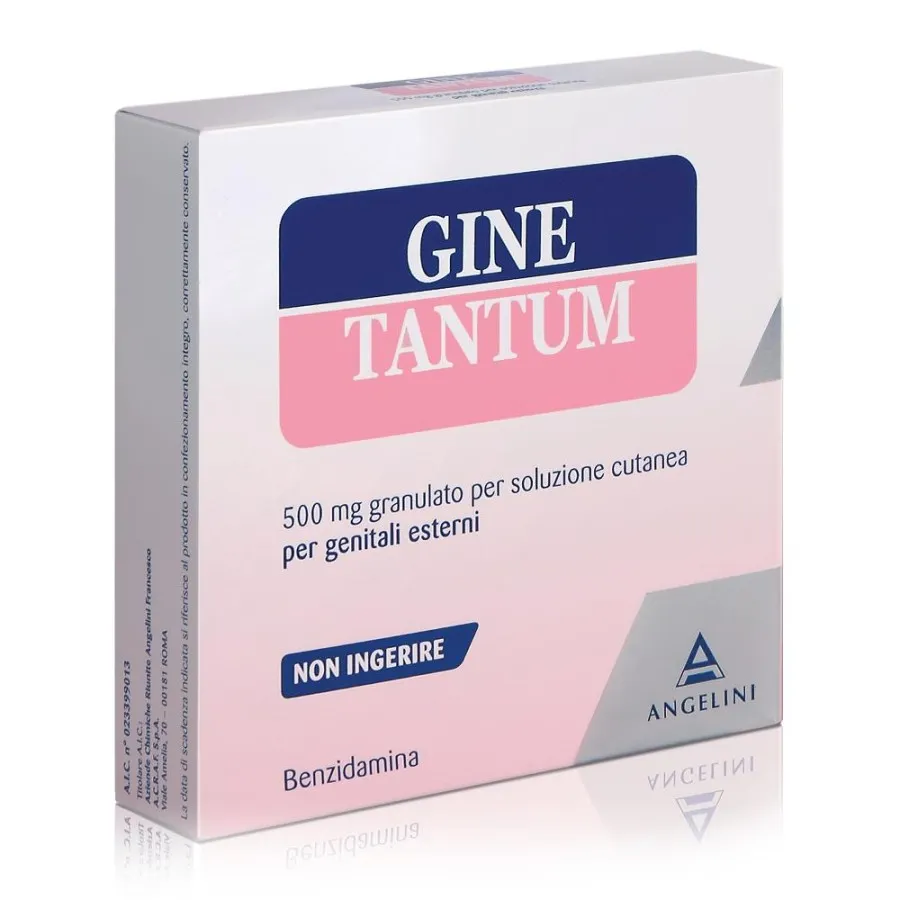
Table of Contents
- Package leaflet: Information for the user
- GINETANTUM 500 mg granules for cutaneous solution for external genitals
- 1. What Ginetantum is and what it is used for
- 2. What you need to know before taking Ginetantum
- 3. How to take Ginetantum
- 4. Possible adverse reactions
- 5. How to store Ginetantum
- 6. Package contents and other information
- Package leaflet: information for the user
- GINETANTUM 0.1% vaginal solution
- 1. What Ginetantum is and what it is used for
- 2. What you need to know before taking Ginetantum
- 3. How to take Ginetantum
- 4. Possible side effects
- 5. How to store Ginetantum
- 6. Package contents and other information
Package leaflet: Information for the user
GINETANTUM 500 mg granules for cutaneous solution for external genitals
Benzidamine hydrochloride
Read this entire leaflet carefully before using this medicine because it contains important information for you.
Always use this medicine exactly as described in this leaflet or as your doctor or pharmacist has instructed you.
- Keep this leaflet. You may need to read it again.
- If you need more information or advice, consult your pharmacist.
- If any side effects occur, including those not listed in this leaflet, inform your doctor or pharmacist. See section 4.
- Consult your doctor if you do not notice improvement or if your symptoms worsen after 7 days of treatment.
Contents of this leaflet:
- What GINETANTUM is and what it is used for
- What you need to know before using GINETANTUM
- How to use GINETANTUM
- Possible side effects
- How to store GINETANTUM
- Contents of the pack and other information
1. What Ginetantum is and what it is used for
Ginetantum contains the active substance benzidamine hydrochloride, a non-steroidal anti-inflammatory.
Ginetantum is used for:
- local treatment of the external genitalia in case of inflammation of the vulva and vagina (e.g. vulvovaginitis) of any origin and nature, characterized by slight vaginal discharge, itching, irritation, burning, and pain;
- intimate hygiene during the postpartum period (puerperium).
If you do not observe noticeable improvement after 7 days of treatment, consult your doctor.
2. What you need to know before taking Ginetantum
Do not take Ginetantum
- if you are allergic to benzidamine or to any of the other ingredients of this medicine (listed in section 6).
Warnings and precautions
Talk to your doctor or pharmacist before using Ginetantum.
If you experience vaginal bleeding and/or white vaginal discharge (leucorrhoea), do not use Ginetantum
without first consulting your doctor.
Ginetantum is intended for local use only, for washing the external genital area. DO NOT INGEST (see
section “If you take more Ginetantum than you should”).
Prolonged use of Ginetantum, especially if prolonged, may lead to sensitization phenomena (allergic
reactions). In such case, discontinue treatment and consult your doctor to start appropriate therapy (see
section 4 “Possible side effects”).
Other medicines and Ginetantum
Inform your doctor or pharmacist if you are taking, have recently taken, or might take any other
medicines.
No interactions with other medicines are known.
Pregnancy and breastfeeding
If you are pregnant, think you may be pregnant, planning to become pregnant, or are breastfeeding,
consult your doctor or pharmacist before taking any medicine.
Do not use Ginetantum during pregnancy unless clearly necessary and as directed by your doctor. If
treatment is required, the lowest possible dose for the shortest possible duration should be used.
Ginetantum may be used during breastfeeding.
Driving and using machines
The use of Ginetantum does not affect the ability to drive or operate machinery.
3. How to take Ginetantum
Use this medicine exactly as stated in this leaflet or as directed by your doctor or pharmacist. If you have any doubts, consult your doctor or pharmacist.
The recommended dose is 1-2 washes of the external genital area per day, for 7 consecutive days.
Do not exceed the indicated doses without consulting your doctor.
Dissolve the contents of 1-2 sachets in 1 liter of water to be used for washing the external genital area.
Do not use Ginetantum for more than 7 days.
Consult your doctor if the condition persists beyond 7 days, if it recurs repeatedly, or if you notice any recent changes in its characteristics.
If you use more Ginetantum than you should
Ginetantum is intended for external genital washing only. When used correctly, cases of overdose have not been reported.
Ginetantum must not be ingested. If you accidentally swallow the medicine, contact your doctor or pharmacist immediately.
If you forget to use Ginetantum
Do not use a double dose to make up for the missed dose.
If you stop using Ginetantum
If you have any doubts about the use of this medicine, consult your doctor or pharmacist.
4. Possible adverse reactions
Like all medicines, this medicine can cause adverse reactions, although not everybody gets them.
During treatment with Ginetantum, skin irritation may occasionally occur, especially with prolonged use. If this happens, consult your doctor immediately.
Reporting of adverse reactions
If you experience any adverse reaction, including those not listed in this leaflet, talk to your doctor or pharmacist. You may also report adverse reactions directly via the national reporting system at https://www.aifa.gov.it/content/segnalazioni-reazioni-avverse.
By reporting adverse reactions, you can help provide more information on the safety of this medicine.
5. How to store Ginetantum
Keep this medicine out of the sight and reach of children.
Do not use this medicine after the expiry date stated on the carton. The expiry date refers to the last day of that month.
Do not dispose of medicines via wastewater or household waste. Ask your pharmacist how to dispose of medicines you no longer use. This will help protect the environment.
6. Package contents and other information
What Ginetantum Granular for cutaneous solution for external genitalia contains
- The active substance is: benzidamine hydrochloride (each sachet contains 500 mg of benzidamine hydrochloride, equivalent to 447.3 mg of benzidamine).
- The other components are: trimethylammonium-p-toluenesulfonate, sodium chloride, povidone.
Description of the appearance of Ginetantum Granular for cutaneous solution for external genitalia and contents of the package
It is presented as a granular powder to be dissolved in water for topical use on the external genitalia.
The granular powder is contained in sachets. Each package contains 10 sachets.
Marketing Authorization Holder
Aziende Chimiche Riunite Angelini Francesco - A.C.R.A.F. S.p.A.
Viale Amelia, 70 - 00181 Rome
Manufacturer
A.C.R.A.F. S.p.A., Via Vecchia del Pinocchio, 22 - 60131 Ancona
FINE FOODS & PHARMACEUTICALS NTM S.p.A., Via Grignano, 43 – 24041 Brembate (BG)
N D E S
Inflammations affecting the lower parts of the female genital tract are generally referred to as vulvitis (inflammation of the vulva) or vulvovaginitis (inflammation of both the vulva and the vagina).
Vulvitis may be caused by various conditions: sexually transmitted infections or, more frequently, poor hygiene. To prevent the onset of vulvitis, it is important to maintain consistently adequate hygiene of the external genitalia.
Vulvitis associated with abundant whitish and/or malodorous vaginal discharge, or the frequent recurrence of episodes of vulvitis, requires medical evaluation.
Package leaflet: information for the user
GINETANTUM 0.1% vaginal solution
Benzidamine hydrochloride
Please read this leaflet carefully before using this medicine, as it contains important information for you.
Always take this medicine exactly as described in this leaflet or as your doctor or pharmacist has instructed you to do.
- Keep this leaflet. You may need to read it again.
- If you need more information or advice, consult your pharmacist.
- If you experience any side effects, including those not listed in this leaflet, contact your doctor or pharmacist. See section 4.
- Contact your doctor if you do not notice improvement or if your symptoms worsen after 7 days of treatment.
Contents of this leaflet:
- What Ginetantum is and what it is used for
- What you need to know before using Ginetantum
- How to use Ginetantum
- Possible side effects
- How to store Ginetantum
- Package contents and other information
1. What Ginetantum is and what it is used for
Ginetantum contains the active substance benzidamine hydrochloride, a non-steroidal anti-inflammatory.
Ginetantum is used for:
- the local treatment of inflammation of the vulva and vagina (e.g. vulvovaginitis) of any origin and nature, characterised by minor vaginal discharge, itching, irritation, burning and pain,
- intimate hygiene during the postpartum period (puerperium).
If you do not notice significant improvement after 7 days of treatment, consult your doctor.
2. What you need to know before taking Ginetantum
Do not take Ginetantum
- if you are allergic to benzidamine or to any of the other ingredients of this medicine (listed in section 6)
- if you are allergic to substances similar to benzidamine.
Warnings and precautions
Talk to your doctor or pharmacist before taking Ginetantum.
If you have vaginal bleeding and/or white vaginal discharge (leucorrhoea), do not use Ginetantum without
first consulting your doctor.
The use of Ginetantum, especially if prolonged, may lead to sensitization phenomena (allergic reactions).
In such cases, discontinue treatment and consult your doctor to start appropriate therapy (see section 4
“Possible side effects”).
Ginetantum is intended only for vaginal irrigation and must not be ingested (see section “If you take more
Ginetantum than you should”).
Other medicines and Ginetantum
Inform your doctor or pharmacist if you are taking, have recently taken, or might take any other medicines.
No negative interactions have been observed between Ginetantum and other drugs commonly used in the
relevant therapy.
Pregnancy and breastfeeding
If you are pregnant, suspect you may be pregnant, are planning a pregnancy, or are breastfeeding, consult
your doctor or pharmacist before taking any medicine.
Do not use Ginetantum during pregnancy unless clearly necessary and as directed by your doctor. If
treatment is required, the lowest possible dose for the shortest possible duration should be used. Ginetantum
may be used during breastfeeding.
Driving and using machines
The use of Ginetantum does not affect the ability to drive or operate machinery.
Ginetantum contains benzalkonium chloride
This medicine contains 28 mg of benzalkonium chloride per vial, equivalent to 28 mg/140 ml.
Benzalkonium chloride may cause local irritation.
This medicine contains a rose fragrance based on benzyl alcohol, benzyl benzoate, benzyl cinnamate,
benzyl salicylate, citral, citronellol, eugenol, farnesol, geraniol, linalool, and D-limonene.
Benzyl alcohol, benzyl benzoate, benzyl cinnamate, benzyl salicylate, citral, citronellol, eugenol,
farnesol, geraniol, linalool, and D-limonene may cause allergic reactions.
This medicine contains 107.8 mg of alcohol (ethanol) in 140 ml, equivalent to 1.54 mg/kg.
It may cause a burning sensation on damaged skin.
3. How to take Ginetantum
Use this medicine exactly as stated in this leaflet or as directed by your doctor or pharmacist. If you have any doubts, consult your doctor or pharmacist.
The recommended dose is 1-2 vaginal irrigations per day for seven consecutive days.
Warning: Do not exceed the indicated doses without medical advice.
The solution can be used at room temperature. If you wish to warm it slightly, hold the closed bottle under warm running water for a few minutes.
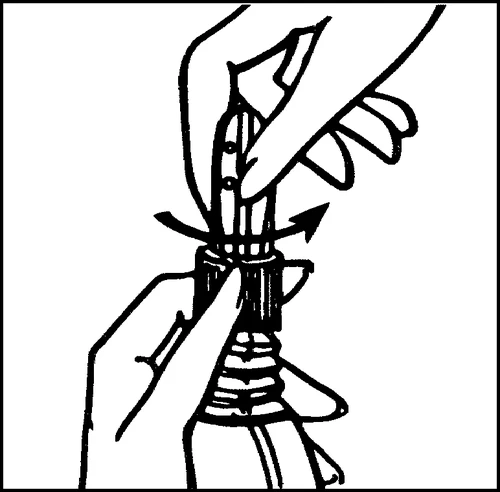
- To open the bottle, hold the ribbed ring firmly and twist the cap to break the safety seal, as illustrated in the figure below:
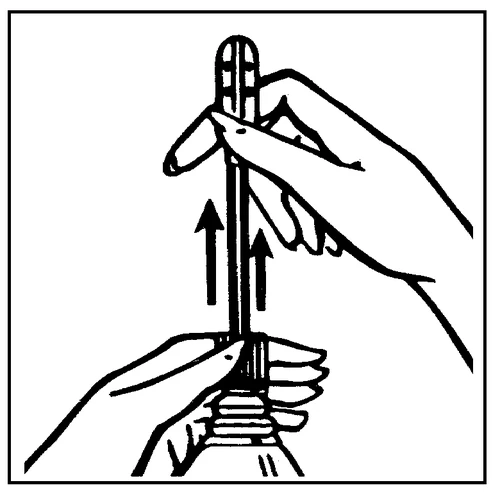
- Pull out the cannula until you feel a click, as shown in the figure below. The cannula remains attached to the bottle, so only complete extraction allows the liquid to flow out.
- Gently insert the cannula into the vagina and squeeze the bottle until it is completely emptied. Emptying can be gradual and adjusted according to need, as a special valve prevents the solution from flowing back into the bottle. Perform the irrigation preferably while lying down. The liquid should be retained in the vagina for a few minutes.
Do not use Ginetantum for more than 7 days.
Consult your doctor if symptoms persist beyond seven days, if they recur frequently, or if you notice any recent changes in their characteristics.
If you use more Ginetantum than you should
Ginetantum is intended for vaginal irrigation only. When used correctly, cases of overdose have not been reported.
Ginetantum must not be ingested. If you accidentally swallow the medicine, contact your doctor or pharmacist immediately.
If you forget to use Ginetantum
Do not use a double dose to make up for the missed dose.
If you stop treatment with Ginetantum
If you have any doubts about how to use this medicine, consult your doctor or pharmacist.
4. Possible side effects
Like all medicines, this medicine can cause side effects, although not everybody gets them.
Occasionally, especially with prolonged use, skin irritation may occur during treatment with Ginetantum. If this happens, consult your doctor immediately.
Reporting of side effects
If you experience any side effect, including those not listed in this leaflet, talk to your doctor or pharmacist. You may also report side effects directly via the national reporting system at https://www.aifa.gov.it/content/segnalazioni-reazioni-avverse.
By reporting side effects, you can help provide more information on the safety of this medicine.
5. How to store Ginetantum
Keep this medicine out of the sight and reach of children.
Store the bottle in an upright position.
Do not use this medicine after the expiry date stated on the carton. The expiry date refers to the last day of that month.
Do not dispose of any medicine via wastewater or household waste. Ask your pharmacist how to dispose of medicines you no longer use. This will help protect the environment.
6. Package contents and other information
What Ginetantum contains
- The active substance is: benzidamine hydrochloride (100 ml of solution contain 100 mg of benzidamine hydrochloride, equivalent to 89.46 mg of benzidamine).
- The other components are: benzalkonium chloride (see section “Ginetantum contains benzalkonium chloride”), disodium edetate, rose fragrance base (see section “GINETANTUM 500 mg/10 ml concentrate contains rose fragrance base”), and purified water.
Description of the appearance of Ginetantum and contents of the pack
Ginetantum is presented as a vaginal solution in 140 ml bottles equipped with an applicator.
Each pack contains either 1 or 5 bottles of 140 ml.
Not all pack sizes may be commercially available.
Marketing Authorization Holder
Aziende Chimiche Riunite Angelini Francesco - A.C.R.A.F. S.p.A.
Viale Amelia, 70
00181 Rome, Italy
Manufacturer
A.C.R.A.F. S.p.A.,
Via Vecchia del Pinocchio, 22
60131 Ancona, Italy
N D E S
Inflammations affecting the lower parts of the female genital tract are generally referred to as vulvitis (inflammation of the vulva) or vulvovaginitis (inflammation of both the vulva and the vagina).
Vulvitis may be caused by various conditions: sexually transmitted infections or, more frequently, poor hygiene. To prevent the onset of vulvitis, it is important to maintain consistently adequate hygiene of the external genitalia.
Vulvitis accompanied by abundant whitish and/or malodorous vaginal discharge, or frequent recurrence of vulvitis episodes, requires medical evaluation.