Gentamicin and betamethasone Almus
Italy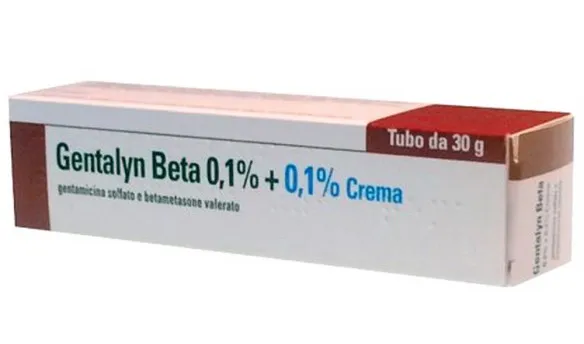
Table of Contents
PACKAGE LEAFLET
Gentamicin and Betamethasone Almus 0.1% + 0.1% cream
Generic medicine
PHARMACOTHERAPEUTIC CATEGORY
Corticosteroids, combinations with antibiotics.
THERAPEUTIC INDICATIONS
Topical treatment of allergic or inflammatory dermatoses that are secondarily infected or when there is a risk of infection. Indications include: eczema (atopic, infantile, nummular), anogenital and senile pruritus, contact dermatitis, seborrheic dermatitis, neurodermatitis, intertrigo, sunburn, exfoliative dermatitis, radiation dermatitis, stasis dermatitis, and psoriasis.
CONTRAINDICATIONS
Hypersensitivity to the active substances or to any of the excipients.
Cutaneous tuberculosis, herpes simplex, as well as in the presence of viral skin diseases.
PRECAUTIONS FOR USE
If irritation or sensitization related to the use of the product occurs, treatment must be discontinued and appropriate therapy initiated. Any of the adverse effects described for systemic corticosteroids, including adrenal suppression, may also occur with topical corticosteroids, particularly in pediatric patients (see also “Special warnings”).
Systemic absorption of topical corticosteroids increases when large skin areas are treated or when occlusive dressings are used. In such cases, or when prolonged treatment is anticipated, appropriate precautions are required, especially in pediatric patients.
Topical use of antibiotics may occasionally allow the proliferation of non-susceptible organisms, including fungi. In such cases, or if irritation, sensitization, or superinfection develops, treatment with gentamicin must be discontinued and specific therapy initiated.
INTERACTIONS
Inform your doctor or pharmacist if you have recently taken any other medicines, including those not requiring a prescription.
None known.
SPECIAL WARNINGS
Pregnancy and breastfeeding: The safety of topical corticosteroids in pregnant women has not been established; therefore, during pregnancy, use of drugs belonging to this class should be limited to cases where the expected benefit justifies the potential risk to the fetus. In pregnant patients, these drugs should not be used intensively, at high doses, or for prolonged periods.
It is not known whether topical administration of corticosteroids may result in sufficient systemic absorption to produce measurable concentrations in breast milk. Therefore, a decision must be made whether to discontinue breastfeeding or to discontinue therapy, taking into account the importance of the drug for the mother.
Use in pediatrics: Pediatric patients may be more sensitive than adults to hypothalamic-pituitary-adrenal (HPA) axis suppression and to the effects of exogenous corticosteroids due to greater absorption resulting from a higher skin surface area to body weight ratio.
In children treated with topical corticosteroids, suppression of the hypothalamic-pituitary-adrenal axis, Cushing's syndrome, growth retardation (both linear and weight), and intracranial hypertension have been reported.
Manifestations of adrenal suppression in children include low serum cortisol levels and lack of response to ACTH stimulation. Manifestations of intracranial hypertension include bulging fontanelles, headache, and bilateral papilledema.
EFFECTS ON ABILITY TO DRIVE VEHICLES AND USE MACHINES
The product does not affect the ability to drive vehicles or use machinery.
IMPORTANT INFORMATION ON SOME EXCIPIENTS
Gentamicin and Betamethasone Almus contains chlorocresol, which may cause allergic reactions.
Gentamicin and Betamethasone Almus also contains cetyl stearyl alcohol, which may cause local skin reactions (e.g., contact dermatitis).
The product must not be used for ophthalmic purposes.
DOSAGE, METHOD AND DURATION OF ADMINISTRATION
Apply a small amount of cream to the affected area 2–3 times daily.
Psoriatic lesions that are resistant and deep dermatoses that are secondarily infected may respond better to treatment with local corticosteroids and antibiotics when used with the occlusive dressing technique, described below.
Occlusive dressing technique:
- Apply a thick layer of cream over the entire lesion area under a light gauze and cover with transparent, waterproof, flexible plastic material extending beyond the treated area;
- Seal the edges to healthy skin with adhesive tape or other means;
- Leave the dressing “in situ” for 1–3 days and repeat the procedure 3–4 times as needed.
With this method, significant improvement is often observed within a few days. Rarely, miliaria or folliculitis eruptions may develop on the skin under the dressing, requiring removal of the plastic covering.
OVERDOSE
In case of accidental ingestion/overdose of Gentamicin and Betamethasone Almus, contact your doctor immediately or go to the nearest hospital.
Symptoms: Excessive or prolonged use of topical corticosteroids may suppress pituitary-adrenal function, leading to secondary adrenal insufficiency and manifestations of hypercorticism, including Cushing's syndrome.
A single episode of gentamicin overdose is unlikely to produce symptoms. Excessive and prolonged use of topical gentamicin may lead to the development of lesions caused by non-susceptible fungi and bacteria.
Treatment: Appropriate symptomatic treatment is indicated. Symptoms of acute corticosteroid excess are generally reversible. If necessary, correct electrolyte imbalances. In cases of chronic toxicity, gradual withdrawal of the corticosteroid is recommended. In cases of fungal or bacterial proliferation, appropriate antifungal or antibacterial therapy is indicated.
If you have any doubts about the use of Gentamicin and Betamethasone Almus, consult your doctor or pharmacist.
ADVERSE EFFECTS
Like all medicines, Gentamicin and Betamethasone Almus can cause adverse effects, although not everyone experiences them.
The following adverse effects related to the use of topical corticosteroids have been reported: burning, itching, irritation, dry skin, folliculitis, hypertrichosis, acneiform eruptions, hypopigmentation, perioral dermatitis, allergic contact dermatitis.
When using occlusive dressings, adverse effects such as skin maceration, secondary infection, cutaneous atrophy, striae, and miliaria may occur more frequently.
Treatment with gentamicin may cause temporary irritation (erythema and itching), which usually does not require discontinuation of treatment.
Following the instructions in this leaflet reduces the risk of side effects.
If any of the adverse effects worsen or if you notice any adverse effect not listed in this leaflet, inform your doctor or pharmacist.
EXPIRY DATE AND STORAGE
Expiry date: see the date indicated on the packaging.
The expiry date refers to the product in its original, unopened packaging stored correctly.
Warning: do not use the medicine after the expiry date stated on the packaging.
Medicines must not be disposed of via wastewater or household waste. Ask your pharmacist how to dispose of medicines no longer in use. This will help protect the environment.
KEEP THIS MEDICINE OUT OF THE SIGHT AND REACH OF CHILDREN
COMPOSITION
100 grams of cream contain:
Active substances: Gentamicin 0.1 g (as gentamicin sulfate)
Betamethasone 0.1 g (as betamethasone valerate)
Excipients: Chlorocresol, macrogol cetostearyl ether, cetyl stearyl alcohol, white soft paraffin, liquid paraffin, disodium phosphate dihydrate, disodium phosphate dodecahydrate, purified water.
PHARMACEUTICAL FORM AND CONTENT
Cream. 30-gram tube
MARKETING AUTHORISATION HOLDER
Almus S.r.l. – Via Cesarea n. 11/10 – 16121 Genoa
MANUFACTURER
Doppel Farmaceutici S.r.l. – Via Martiri delle Foibe, 1 – 29016 Cortemaggiore (PC)
ITALY: February 2010