Gealevide
Italy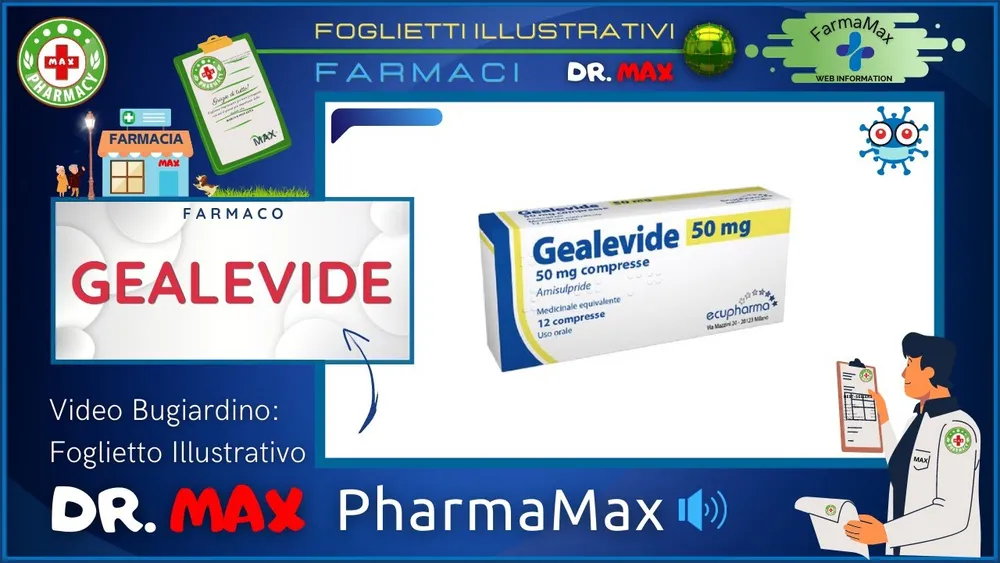
Table of Contents
- Package leaflet: Information for the patient
- GEALEVIDE 50 mg tablets, 200 mg tablets, 400 mg tablets
- 1. What GEALEVIDE is and what it is used for
- 2. What you need to know before taking GEALEVIDE
- 3. How to take GEALEVIDE
- 4. Possible side effects
- 5. How to store GEALEVIDE
- 6. Package contents and other information
Package leaflet: Information for the patient
GEALEVIDE 50 mg tablets, 200 mg tablets, 400 mg tablets
Amisulpride
Generic medicine
Please read this leaflet carefully before taking this medicine because it contains
important information for you.
- Keep this leaflet. You may need to read it again.
- If you have any questions, ask your doctor or pharmacist.
- This medicine has been prescribed for you only. Do not give it to other people, even if they have the same symptoms as you, because it could be harmful.
- If you experience any adverse reaction, including those not listed in this leaflet, contact your doctor or pharmacist. See section 4.
Contents of this leaflet:
- What GEALEVIDE is and what it is used for
- What you need to know before taking GEALEVIDE
- How to take GEALEVIDE
- Possible side effects
- How to store GEALEVIDE
- Contents of the pack and other information
1. What GEALEVIDE is and what it is used for
GEALEVIDE is a medicine used to treat mental disorders (antipsychotic). It reduces the activity of a specific region of the brain that is important for the symptoms of mental disorders.
GEALEVIDE is used to treat a condition called schizophrenia. Schizophrenia is a chronic mental illness that affects the way a person thinks, perceives, and behaves in relation to reality.
Your doctor may prescribe GEALEVIDE for other uses. Always follow your doctor's instructions.
2. What you need to know before taking GEALEVIDE
Your doctor may prescribe different uses and doses from those specified in this leaflet. Always follow your doctor's instructions and the dosage information provided in this leaflet.
Do not take GEALEVIDE
- if you are allergic to amisulpride or to any of the other ingredients of this medicine (listed in section 6);
- if you have a tumour of the pituitary gland or a breast tumour;
- if you have a tumour of the adrenal gland (phaeochromocytoma);
- if you are breastfeeding;
- if you have a rare inherited heart condition causing slow heart rate and irregular heartbeat (QT prolongation syndrome);
- if you are taking medicines that affect the heart (prolonging the QT interval);
- if you are taking medicines for Parkinson's disease (levodopa);
- if you are taking medicines that affect heart rhythm (e.g. quinidine, disopyramide, amiodarone, sotalol, bepridil, cisapride, sultopride, thioridazine, methadone, intravenous erythromycin, intravenous vincamine, halofantrine, pentamidine, sparfloxacin).
Children before puberty must not take GEALEVIDE.
Warnings and precautions
Talk to your doctor or pharmacist before taking GEALEVIDE if:
- you have heart disease or a family history of heart problems;
- anyone in your family has a rare inherited heart condition with slow heart rate and irregular heartbeat (QT prolongation syndrome);
- you have kidney failure or other kidney problems;
- you suffer from epilepsy or have a history of seizures;
- you suffer from Parkinson's disease;
- you are diabetic or have been told you are at risk of developing diabetes;
- you or someone in your family has a history of blood clots (thrombosis), as medicines like this have been associated with blood clot formation (thrombi);
- you or someone in your family has had a breast tumour;
- you have high levels of prolactin, especially if you have a pituitary tumour;
- you feel generally unwell and are prone to inflammation, especially tonsillitis and fever (infections), due to low white blood cell count (agranulocytosis);
- you have high fever, muscle stiffness, altered consciousness, and excessive sweating, which are symptoms of a very rare condition called Neuroleptic Malignant Syndrome. These symptoms can be fatal and require immediate medical attention.
Severe liver problems have been reported with amisulpride. Inform your doctor immediately if you experience fatigue, loss of appetite, nausea, vomiting, abdominal pain, or yellowing of the eyes or skin.
Please note: certain patient groups (e.g. elderly patients and patients with dementia) have a higher risk of side effects, including stroke. Elderly patients may be more likely to experience low blood pressure or drowsiness. A slightly increased number of deaths has been reported in elderly patients with dementia treated with antipsychotics compared to those not treated. Discuss this with your doctor.
Inform your doctor if you need to have blood or urine tests while taking GEALEVIDE, as it may affect test results.
Other medicines and GEALEVIDE
Inform your doctor or pharmacist if you are taking, have recently taken, or might take any other medicine.
Do not take GEALEVIDE with medicines that may affect the heart (prolonging the QT interval):
- medicines used to treat heart rhythm disorders (e.g. quinidine, disopyramide, amiodarone, sotalol);
- other medicines such as bepridil, cisapride, sultopride, thioridazine, methadone, intravenous erythromycin, intravenous vincamine, halofantrine, pentamidine, sparfloxacin;
- medicines used to treat Parkinson's disease (e.g. levodopa, bromocriptine, ropinirole).
Inform your doctor if you are taking any of the following medicines that may affect heart rhythm:
- medicines used to treat high blood pressure (diltiazem, verapamil, guanfacine, beta-blockers);
- medicines for heart rhythm disorders (digoxin);
- medicines used for migraine and hot flushes (clonidine);
- certain types of diuretics;
- medicines used for constipation (stimulant laxatives);
- medicines for arthritis or connective tissue diseases (corticosteroids, tetracosactide);
- other medicines used to treat mental disorders (e.g. pimozide, haloperidol, lithium, imipramine, antidepressants).
GEALEVIDE may also interact with the following medicines:
- medicines used to treat fear and anxiety (benzodiazepines, other anxiolytics);
- other medicines used to treat mental disorders (clozapine);
- medicines for epilepsy (barbiturates);
- painkillers (narcotics or analgesics);
- antihistamines that cause drowsiness (sedating antihistamines);
- sedatives;
- clonidine and its derivatives;
- medicines that induce sleep during surgical procedures (anaesthetics);
- antihypertensive medicines and other medicines that lower blood pressure.
Inform your doctor that you are taking GEALEVIDE if you are undergoing adrenergic function testing.
GEALEVIDE with food, drinks and alcohol
Alcohol consumption should be avoided during treatment with GEALEVIDE, as it increases the sedative effect.
Pregnancy and breastfeeding
If you are pregnant or breastfeeding, or if you suspect you may be pregnant or are planning to become pregnant, consult your doctor or pharmacist before taking this medicine.
Amisulpride is not recommended during pregnancy or in women who may become pregnant and who are not using effective contraception.
The following symptoms may occur in newborns of mothers who used amisulpride during the last trimester (last three months of pregnancy):
- tremors, muscle stiffness and/or muscle weakness;
- drowsiness, agitation, breathing difficulties;
- feeding difficulties. If your baby develops any of these symptoms, you may need to contact your doctor.
Do not use GEALEVIDE if you are breastfeeding. Talk to your doctor about the best way to feed your baby if you are taking amisulpride.
Driving and using machines
During treatment with this medicine, you may feel less alert and may experience blurred vision. If this occurs, do not drive or operate tools or machinery.
GEALEVIDE contains lactose
GEALEVIDE contains lactose, a type of sugar. If your doctor has diagnosed you with an intolerance to certain sugars, contact him or her before taking this medicine.
GEALEVIDE contains sodium
This medicine contains less than 1 mmol (23 mg) of sodium per tablet, i.e. essentially 'sodium-free'.
3. How to take GEALEVIDE
Take this medicine exactly as directed by your doctor. If you have any doubts, consult your
doctor or pharmacist.
The recommended dose is:
Adults
Your doctor will adjust the dose according to your individual response.
The usual dose may be 50–300 mg per day or 400–800 mg per day, depending on your symptoms. In
individual cases, the daily dose may be increased up to 1200 mg per day.
If you take more than 400 mg per day, the dose should be divided into two.
Use in children and adolescents
GEALEVIDE must not be administered to children before puberty.
Use in the elderly
Your doctor will monitor you closely, as you may be more likely to develop low
blood pressure or drowsiness due to this medicine.
A dose reduction may also be necessary in case of renal impairment.
Use in patients with renal problems
If you have reduced kidney function, your doctor may prescribe a lower dose. You must follow your
doctor's instructions.
Instructions for use
Swallow GEALEVIDE tablets with a full glass of water before a meal.
You may take amisulpride with food, but it is not required, as the effect of amisulpride is not
affected by food intake.
GEALEVIDE 200 mg tablets and GEALEVIDE 400 mg tablets: the score line is intended only to
facilitate breaking the tablet for easier swallowing and not for dividing the tablet into two equal doses.
If you take more GEALEVIDE than you should
If you take more tablets than you should, inform your doctor immediately or go to the nearest hospital
emergency department. Take the medicine packaging with you.
Symptoms of overdose may include: numbness, drowsiness, involuntary convulsive movements,
dizziness, fainting (due to low blood pressure), and coma.
If you forget to take GEALEVIDE
Do not take a double dose to make up for the forgotten dose. Continue with your usual dose.
If you stop taking GEALEVIDE
You may discontinue or stop treatment only upon agreement with your doctor.
If you have any doubts about how to use this medicine, consult your doctor or pharmacist.
4. Possible side effects
Like all medicines, this medicine can cause side effects, although not everybody gets them.
Serious side effects, for which you must contact a doctor immediately or go to the emergency room:
Common: may affect up to 1 in 10 people
- Drowsiness.
- Acute dystonia: altered muscle tone affecting certain neck muscles (spasmodic torticollis), involuntary and prolonged upward deviation of the eyes (oculogyric crisis), spasm of the masticatory muscles with difficulty opening the mouth (trismus).
- Heart rhythm disorder that may potentially cause rapid and irregular heartbeats, which could lead to a heart attack (QT interval prolongation).
Uncommon: may affect up to 1 in 100 people
- Seizures.
- Weak pulse.
- Liver tissue damage.
Rare: may affect up to 1 in 1,000 people
- Changes in blood cells, such as reduced white blood cell count, agranulocytosis (with symptoms such as malaise, tendency to infections, especially sore throat and fever).
- An allergic reaction called angioedema. Signs may include: itchy rash with swelling, difficulty swallowing or breathing, swelling of lips, face, throat or tongue.
- High body temperature, muscle rigidity, heavy sweating, confusion, drowsiness or agitation (neuroleptic malignant syndrome).
- Cases of venous thromboembolism, including pulmonary embolism, sometimes fatal, and cases of deep vein thrombosis (blood clots within the veins, especially in the legs, with symptoms including leg swelling, pain and redness), which may travel through blood vessels to the lungs, causing chest pain and breathing difficulties.
- Benign pituitary tumor, such as prolactinomas (with symptoms including milk secretion and cessation of menstruation).
- Irregular heartbeat (ventricular arrhythmias such as "torsades de pointes", ventricular tachycardia, ventricular fibrillation), cardiac arrest, sudden death.
- Abnormal heart rhythms that may be fatal and lead to cardiac arrest and sudden death.
Not known: frequency cannot be estimated from available data
- Withdrawal syndrome in newborns (with symptoms such as tremor, muscle rigidity and/or weakness, drowsiness, agitation, breathing difficulties, feeding problems (see section “Pregnancy and breastfeeding”).
- Increased skin sensitivity to sunlight and ultraviolet light.
Other side effects
Very common: may affect more than 1 in 10 people
- Extrapyramidal symptoms: tremor (abnormal, repetitive, shaking movements of the body), rigidity (stiffness or inflexibility), hypokinesia (reduced or slow movements), akathisia (inability to remain seated, with motor restlessness and sensation of muscle tremor), dyskinesia (impaired ability to control movements, characterized by spasmodic or repetitive movements or lack of coordination), hypersalivation (increased salivation).
Common: may affect up to 1 in 10 people
- Constipation, nausea, vomiting, dry mouth.
- Low blood pressure.
- Increased levels of prolactin in the blood, milk secretion, absence of menstruation, breast enlargement in men, breast pain, impotence, inability to achieve orgasm.
- Insomnia, anxiety, restlessness.
- Weight gain.
- Blurred vision.
Uncommon: may affect up to 1 in 100 people
- Decreased number of white blood cells (leukopenia, neutropenia).
- Tardive dyskinesia (characterized by rhythmic, involuntary movements mainly of the tongue and/or face, usually reported after long-term treatment or discontinuation).
- Elevated blood sugar (hyperglycemia). Elevated cholesterol and/or fat (triglycerides) levels in the blood.
- Allergic reactions.
- Confusion.
- High blood pressure.
- Nasal congestion.
- Aspiration pneumonia.
- Osteopenia and osteoporosis.
- Urinary retention.
- Increased liver enzymes, mainly transaminases.
Rare: may affect up to 1 in 1,000 people
- Skin rash (urticaria).
- Low sodium levels in the blood (hyponatremia).
- Malaise, confusion or weakness, feeling unwell (nausea), loss of appetite, irritability. These could be signs of a condition called syndrome of inappropriate antidiuretic hormone secretion (SIADH).
Not known: frequency cannot be estimated from available data
- Restless legs syndrome (unpleasant sensations in the legs temporarily relieved by movement, with symptoms worsening in the evening and at night).
Amisulpride may also cause side effects that are usually not noticed. These include changes in certain laboratory tests due to effects on the blood, liver, and heart rate. These test results will return to normal after stopping treatment.
In elderly patients with dementia treated with antipsychotics, a slight increase in the number of deaths has been reported compared to untreated patients.
Reporting of side effects
If you experience any side effects, including those not listed in this leaflet, talk to your doctor or pharmacist. You can also report side effects directly via the website: https://www.aifa.gov.it/content/segnalazioni-reazioni-avverse.
By reporting side effects, you can help provide more information on the safety of this medicine.
5. How to store GEALEVIDE
Keep this medicine out of the sight and reach of children.
Do not use this medicine after the expiry date stated on the packaging after "Exp.". The expiry date refers to the last day of that month.
This medicine does not require any special storage conditions.
Do not dispose of medicines via wastewater or household waste. Ask your pharmacist how to dispose of medicines you no longer use. This will help protect the environment.
6. Package contents and other information
What GEALEVIDE contains
The active substance is amisulpride. Each tablet contains 50 mg, 200 mg or 400 mg of amisulpride.
The other components are: monohydrate lactose, sodium starch glycolate type A, hypromellose 2910 E5, microcrystalline cellulose PH-101, magnesium stearate.
Description of the appearance of GEALEVIDE and package contents
GEALEVIDE 50 mg: white, round, flat tablets with a diameter of 7 mm.
GEALEVIDE 200 mg: white, round, flat tablets, scored on one side, with a diameter of 11.5 mm.
The score mark is intended only to facilitate breaking the tablet for ease of swallowing and is not intended to divide the tablet into two equal doses.
GEALEVIDE 400 mg: white, biconvex, capsule-shaped tablets, scored on both sides, measuring 19 x 10 mm. The score mark is intended only to facilitate breaking the tablet for ease of swallowing and is not intended to divide the tablet into two equal doses.
GEALEVIDE 50 mg tablets: PVC/PVDC-aluminum blisters containing 12, 30, 90 and 100 tablets.
GEALEVIDE 200 mg and 400 mg tablets: PVC/PVDC-aluminum blisters containing 30, 90 and 100 tablets.
GEALEVIDE 50 mg, 200 mg and 400 mg tablets: PP bottles containing 200 tablets.
Not all pack sizes may be marketed.
Marketing Authorization Holder:
Ecupharma S.r.l.
Via Mazzini 20
20123 Milan
Italy
Manufacturers:
Medochemie Ltd
Central Factory
1-10 Constantinoupoleos Street
3011, Limassol, Cyprus
Medochemie Ltd
Agios Athanassios Industrial Area
2 Michael Erakleous
Agios Athanassios
4101, Limassol, Cyprus
This medicinal product is authorized in the Member States of the European Economic Area under the following names:
| Denmark | Amisulprid Medochemie Romania |
| Italy | GEALEVIDE |
| Netherlands | AKTIPROL |