Gammagard
Italy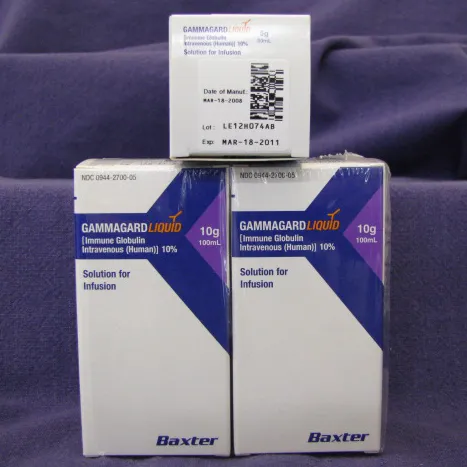
Table of Contents
- Package leaflet: Information for the user
- GAMMAGARD 50 mg/ml powder and solvent for solution for infusion
- 1. What GAMMAGARD is and what it is used for
- 2. What you should know before GAMMAGARD is administered to you
- 3. How GAMMAGARD will be administered to you
- 4. Possible side effects
- 5. How to store GAMMAGARD
- 6. Package contents and other information
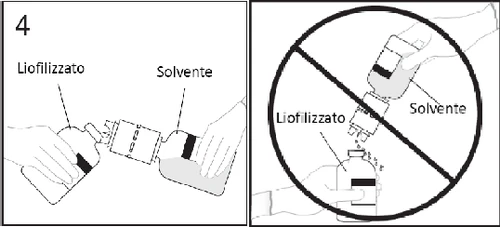
- 4. Hold the solvent vial with the transfer device attached,
Package leaflet: Information for the user
GAMMAGARD 50 mg/ml powder and solvent for solution for infusion
normal human immunoglobulins
Please read all of this leaflet carefully before you are given this medicine because it
contains important information for you.
- Keep this leaflet. You may need to read it again.
- If you have any questions, ask your doctor or nurse.
- If you get any side effects, talk to your doctor or nurse. This includes any side effects not listed in this leaflet. See section 4.
Contents of this leaflet:
- What GAMMAGARD is and what it is used for
- What you need to know before you are given GAMMAGARD
- How GAMMAGARD will be given to you
- Possible side effects
- How to store GAMMAGARD
- Contents of the pack and other information
1. What GAMMAGARD is and what it is used for
GAMMAGARD contains human normal immunoglobulins for intravenous administration.
Immunoglobulins, also known as antibodies, are proteins that circulate in the blood and are part of the
immune system, the body's defense mechanism against diseases. They are used to treat conditions in which the immune system does not function properly.
GAMMAGARD is used in patients of all ages
As replacement therapy (substitution therapy) for antibodies in patients with low levels of circulating antibodies in the blood (hypogammaglobulinaemia):
- Primary Immunodeficiency Syndrome (PID), characterized by deficient antibody production since birth (see section “Warnings and precautions”).
- Hypogammaglobulinaemia and recurrent bacterial infections in patients with chronic lymphocytic leukaemia (a cancer of blood cells) who do not respond to antibiotic therapy.
- Hypogammaglobulinaemia and recurrent bacterial infections in patients with multiple myeloma (a cancer of bone marrow cells) who do not respond to vaccination against a bacterium called pneumococcus (Streptococcus pneumoniae).
- Hypogammaglobulinaemia following allogeneic haematopoietic stem cell transplantation (transplantation of stem cells from another individual that will generate blood cells).
- Congenital Acquired Immunodeficiency Syndrome (AIDS) with recurrent bacterial infections.
As immunomodulatory therapy (immune system regulation) in patients with:
- Primary Immune Thrombocytopenia (ITP), in patients at high risk of bleeding, or prior to surgery to increase platelet count, the blood cells involved in the coagulation process (stopping bleeding).
- Guillain-Barré Syndrome, an immune system disorder that damages nerves and impairs their proper function.
- Kawasaki Disease, a childhood illness in which blood vessels (arteries) become inflamed and dilated.
Contact your doctor if you do not feel better or if you feel worse.
2. What you should know before GAMMAGARD is administered to you
GAMMAGARD will not be administered to you if:
- You are allergic to normal human immunoglobulins or to any of the other components of this medicine (listed in section 6).
- You have antibodies against immunoglobulin A (IgA), proteins of the immune system.
- You have previously had an allergic reaction following administration of GAMMAGARD.
Warnings and precautions
Please speak with your doctor or nurse before GAMMAGARD is administered to you.
In particular, inform your doctor if:
- You have previously experienced severe allergic reactions.
- You have had blood vessel blockages due to heart attack, stroke, pulmonary embolism, or venous thrombosis.
- You have diabetes.
- You have high blood pressure.
- You have acquired or congenital thrombophilia, a blood coagulation disorder that increases the risk of forming blood clots inside blood vessels, which may hinder or prevent normal blood circulation.
- You are over 65 years old.
- You are obese.
- You have previously suffered from blood vessel diseases or blood clots that increase the risk of intravascular clots, hindering or preventing normal blood circulation.
- You have previously been immobilized for prolonged periods (e.g., after surgery or other health problems).
- You know you have conditions causing increased blood viscosity.
- You have kidney disease (renal insufficiency).
- You have a severe blood infection (sepsis).
- You have paraproteinemia, a condition characterized by the presence in the blood of antibody-like proteins.
- You are taking medicines that may cause kidney damage. If you develop kidney disease, your doctor may discontinue treatment with GAMMAGARD.
Laboratory tests
The use of GAMMAGARD may cause false positive results in certain blood tests (e.g., Hepatitis A, Hepatitis B, measles and varicella, direct antiglobulin test DAT, direct Coombs test).
Administration of GAMMAGARD may lead to false positive results in fungal infection diagnostic tests that rely on detection of beta-D-glucan; this effect may persist for several weeks following infusion of the product.
Before undergoing blood tests, inform your doctor or laboratory personnel that you have been administered GAMMAGARD.
Viral safety
GAMMAGARD is a medicine derived from human plasma (the liquid component of blood).
When medicines are produced from human blood or plasma, several safety measures are applied to prevent transmission of infections to patients. These include careful selection of plasma and blood donors to ensure potential carriers of infection are excluded, and testing of each donation and plasma pool to detect the presence of viruses and infections.
Manufacturers of these medicines apply processing procedures that inactivate or remove viruses during the production of blood or plasma. Nevertheless, whenever medicines prepared from human blood or plasma are used, the possibility of transmitting infection cannot be completely ruled out. This also applies to unknown or emerging viruses or other types of infections.
The measures taken in the production of GAMMAGARD are considered effective against lipid-enveloped viruses such as human immunodeficiency virus (HIV), hepatitis B virus (HBV), and hepatitis C virus (HCV), as well as non-lipid-enveloped viruses such as hepatitis A virus (HAV) and parvovirus B19.
There is reassuring clinical experience regarding the absence of transmission of hepatitis A or parvovirus B19 with immunoglobulins, and it is believed that the high content of antibodies significantly contributes to viral safety.
Traceability
To improve traceability of biological medicines, the name and batch number of the administered medicine must be clearly recorded.
Other medicines and GAMMAGARD
Inform your doctor if you are taking, have recently taken, or might take any other medicines.
In particular, inform your doctor if:
- You plan to receive vaccination. GAMMAGARD may reduce the effectiveness of certain types of vaccines (live attenuated virus vaccines). For rubella, mumps, and varicella, wait up to 3 months after administration of GAMMAGARD before receiving vaccination. For measles, wait up to 1 year.
Paediatric population
There are no studies on the interaction of GAMMAGARD with other drugs in the paediatric population.
Pregnancy, breastfeeding, and fertility
If you are pregnant, think you might be pregnant, planning to become pregnant, or are breastfeeding, consult your doctor before this medicine is administered to you.
Pregnancy
GAMMAGARD will only be administered to you if absolutely necessary during pregnancy. The safety of GAMMAGARD in pregnancy has not been established in controlled clinical studies; therefore, it should be administered with caution to pregnant women and to breastfeeding mothers.
Breastfeeding
Immunoglobulins pass into breast milk and may help protect the newborn.
However, GAMMAGARD will only be administered to you if absolutely necessary during breastfeeding.
Fertility
Clinical experience with immunoglobulins suggests that no harmful effects on fertility are expected.
Driving and using machines
Your ability to drive vehicles or operate machinery may be impaired by certain adverse effects associated with GAMMAGARD. If you experience adverse effects during treatment with GAMMAGARD, wait until they resolve before driving or using machinery.
GAMMAGARD contains sodium and glucose
This medicine contains approximately 668 mg of sodium (a main component of table salt) per vial (10 g). This corresponds to 34% of the maximum daily dietary intake recommended for an adult.
The amount of sodium in the maximum daily dose substantially adds to the recommended daily dietary sodium intake for patients on a low-sodium diet. In these patients, the sodium content from the medicine should be measured and taken into account when determining total dietary sodium intake. A 5% solution of GAMMAGARD contains approximately 3340 mg/l of sodium. A 70 kg patient receiving a dose of GAMMAGARD of 1 g/kg (1.4 litres) receives 4676 mg of sodium.
A 5% solution of GAMMAGARD contains 20 mg of glucose per ml (400 mg/g of IgG) as excipient. A 70 kg patient receiving a dose of GAMMAGARD of 1 g/kg receives 28 g of glucose (112 calories). This should be taken into account in patients with latent diabetes (in whom transient glycosuria may occur), in diabetic patients, or in patients on a low-carbohydrate diet.
3. How GAMMAGARD will be administered to you
This medicine will be administered to you into a vein, always following your doctor's instructions exactly.
If you have any doubts, consult your doctor or nurse.
The recommended dose will be determined by your doctor and will depend on your body weight and your
overall health condition.
Use in children and adolescents
For children and adolescents (age: 0–18 years), the same indications, dosage, and infusion frequency as those used in adults apply.
4. Possible side effects
Like all medicines, this medicine can cause side effects, although not everybody gets them.
The possible side effects are listed below, grouped by the following frequency:
Common (may affect up to 1 in 10 people)
- headache
- hot flushes
- vomiting, nausea
- fatigue, chills, fever
Uncommon (may affect up to 1 in 100 people)
- influenza
- loss of appetite
- anxiety, restlessness
- drowsiness
- blurred vision
- sensation of feeling your heartbeat (palpitations)
- frequent changes in blood pressure
- difficulty breathing (dyspnoea), nosebleeds (epistaxis)
- diarrhoea, inflammation inside the mouth (stomatitis), upper abdominal pain, stomach discomfort
- red, itchy skin (urticaria), itching, cold sweats, increased sweating
- lower back pain, muscle cramps, pain in arms and legs
- chest pain, general malaise, generalized pain, chest tightness, sensory disturbances, sensation of cold or heat, flu-like illness, redness of the skin at the infusion site, leakage of the solution from the vein where it is infused, pain at the infusion site
- increased blood pressure
Not known (frequency cannot be estimated from the available data)
- inflammation of the meninges, the membranes covering the brain (aseptic meningitis)
- destruction of red blood cells (haemolysis), decreased haemoglobin, the protein that carries oxygen in the blood (anaemia), decreased platelets (thrombocytopenia), swollen lymph nodes (lymphadenopathy)
- allergic reactions, including severe ones (anaphylactic shock, anaphylactic or anaphylactoid reaction, hypersensitivity)
- restlessness
- reduced blood flow to the brain, sometimes temporary (cerebrovascular stroke, transient ischaemic attack), uncontrolled body movements (seizures), severe headache (migraine), dizziness, tingling (paraesthesia), altered sensation causing abnormal responses to stimuli (dysaesthesia), fainting (syncope), tremors
- blockage of a blood vessel in the eye due to a blood clot (retinal venous thrombosis), visual impairment, eye pain, excessive sensitivity to light (photophobia)
- heart attack (myocardial infarction), bluish skin due to lack of oxygen (cyanosis), fast or slow heartbeat (tachycardia, bradycardia)
- blockage of a blood vessel due to a blood clot (arterial thrombosis, caval vein thrombosis, deep vein thrombosis), inflammation and blockage of veins (thrombophlebitis), low or high blood pressure (hypotension, hypertension), pallor
- blockage of a blood vessel in the lungs (pulmonary embolism), fluid around the lungs (pulmonary oedema), lack of oxygen (hypoxia), difficulty breathing (bronchospasm), wheezing, increased breathing rate (hyperventilation), closure of the larynx, the organ responsible for voice production, making breathing difficult (laryngospasm), cough
- abdominal pain, difficulty digesting (dyspepsia)
- inflammation of the liver (non-infectious hepatitis)
- swelling of the skin and face (angioedema), skin inflammation (dermatitis), redness of the skin (erythema), skin rash
- bone and muscle pain (arthralgia, myalgia)
- kidney disease (renal failure)
- reaction at the infusion site, weakness (asthenia), swelling (oedema)
- abnormal blood test result (positive direct Coombs test)
Additional side effects in children and adolescents
In children, no different side effects are expected compared to those reported in adults.
Reporting of side effects
If you experience any side effect, including those not listed in this leaflet, tell your doctor or nurse. You can also report side effects directly via the website https://www.aifa.gov.it/content/segnalazioni-reazioni-avverse.
By reporting side effects, you can help provide more information on the safety of this medicine.
5. How to store GAMMAGARD
Store below 25°C.
Keep in the outer packaging to protect the medicine from light.
Do not freeze, as the solvent vial may break.
Keep this medicine out of the sight and reach of children.
Do not use this medicine after the expiry date stated on the carton after EXP. The expiry date refers to the last day of that month.
Do not use this medicine if, before reconstitution, the powder is not a white or slightly yellowish powder/compound, free from visible foreign particles.
After reconstitution, do not use this medicine if the solution is not clear or slightly opalescent, colourless or pale yellow.
Do not dispose of any medicine via wastewater or household waste. Ask your pharmacist how to dispose of medicines no longer required. This will help protect the environment.
6. Package contents and other information
What GAMMAGARD contains
- The active substance in GAMMAGARD is normal human immunoglobulin for intravenous use. One ml contains 50 mg (reconstituted solution at 5%) or 100 mg (reconstituted solution at 10%) of protein, of which at least 90% is normal human immunoglobulin G.
- The other components are:
Powder: Human albumin (reconstituted solution at 5%: 3 mg/ml; reconstituted solution at 10% : 6 mg/ml), glycine, sodium chloride, glucose monohydrate (see section 2. GAMMAGARD contains sodium and glucose), polyethylene glycol.
Solvent: Water for injections
Description of the appearance of GAMMAGARD and contents of the pack
GAMMAGARD is a white or slightly yellowish powder, essentially free from visible extraneous particles, with a solvent for infusion solution (water for injections).
The reconstituted solution is generally clear or slightly opalescent, colorless or pale yellow.
It is available in the following pack sizes:
- 5 g/100 ml powder and solvent for infusion solution – 1 vial of powder + 1 vial of 96 ml solvent + one sterile transfer device + infusion set
- 10 g/200 ml powder and solvent for infusion solution – 1 vial of powder + 1 vial of 192 ml solvent + one sterile transfer device + infusion set
Not all pack sizes may be marketed.
Marketing Authorization Holder and Manufacturer
Marketing Authorization Holder
Baxalta Innovations GmbH
Industriestrasse 67, A-1221 Vienna
Austria
Manufacturer
Baxalta Belgium Manufacturing SA
Boulevard René Branquart 80
B-7860 Lessines
Belgium
For further information on this medicinal product, please contact the local representative of the Marketing Authorization Holder:
Takeda Italia S.p.A.
Tel. +39 06 502601
The following information is intended for healthcare professionals only:
DOSAGE, METHOD AND DURATION OF ADMINISTRATION
Replacement therapy should be initiated and monitored under the supervision of a physician experienced in the treatment of immunodeficiency.
The dosage and treatment regimen depend on the therapeutic indication.
In replacement therapy, the dose should be adjusted according to the individual patient's needs, as determined by pharmacokinetics and clinical response.
The dosing regimens described below are provided as a guideline.
Replacement therapy in primary immunodeficiency syndromes:
The dosing regimen should achieve a minimum IgG concentration (measured immediately before the next infusion) of at least 5–6 g/l. Three to six months of therapy are required to reach steady-state equilibrium. The recommended initial dose is 0.4–0.8 g/kg body weight administered as a single dose, followed by maintenance doses of at least 0.2 g/kg body weight every three to four weeks.
The dose required to maintain a minimum IgG concentration of 5–6 g/l ranges from 0.2 to 0.8 g/kg body weight per month. After steady state is achieved, the dosing interval typically ranges from 3 to 4 weeks.
Minimum IgG concentrations should be monitored together with the frequency of infections. To reduce infection rates, it may be necessary to increase the dose and achieve higher trough levels.
Hypogammaglobulinemia and recurrent bacterial infections in patients with chronic lymphocytic leukemia who have not responded to prophylactic antibiotic therapy; hypogammaglobulinemia and recurrent bacterial infections in patients with multiple myeloma in the plateau phase who have not responded to pneumococcal vaccination; congenital AIDS with recurrent bacterial infections.
The recommended dose is 0.2–0.4 g/kg every three to four weeks.
Hypogammaglobulinemia in patients following allogeneic hematopoietic stem cell transplantation
The recommended dose is 0.2–0.4 g/kg every three to four weeks. Minimum IgG concentrations should be maintained above 5 g/l.
For treatment of infections and prophylaxis of graft-versus-host disease, the dose should be individualized according to the patient's clinical condition.
Primary immune thrombocytopenia
Two alternative treatment regimens are available:
- 0.8–1 g/kg administered on Day 1; this dose may be repeated once within 3 days;
- 0.4 g/kg daily for two to five days. Treatment may be repeated in case of relapse.
Guillain-Barré syndrome
0.4 g/kg/day for 5 days.
Kawasaki disease
Administer 1.6–2.0 g/kg as divided doses over two to five days, or as a single 2.0 g/kg dose. Concomitant treatment with acetylsalicylic acid is required.
The recommended dosages are summarized in the following table:
| Indication | Dose | Frequency of infusion |
|---|---|---|
| Replacement therapy in primary immunodeficiency syndromes Replacement therapy in secondary immunodeficiency syndromes Congenital AIDS |
| Every 3–4 weeks to achieve a minimum IgG concentration of at least 5–6 g/L Every 3–4 weeks to achieve a minimum IgG concentration of at least 5–6 g/L Every 3–4 weeks |
| Post-allogeneic hematopoietic stem cell transplantation hypogammaglobulinemia (< 4 g/L): - Treatment of infections and prophylaxis of graft-versus-host disease - Persistent lack of antibody production | 0.2–0.4 g/kg | Every 3–4 weeks to achieve a minimum IgG concentration above 5 g/L Weekly from day -7 for up to 3 months post-transplant Monthly until normal antibody levels are restored |
| Immunomodulation: - Primary immune thrombocytopenia (idiopathic thrombocytopenic purpura) - Guillain-Barré syndrome - Kawasaki syndrome | 0.8–1 g/kg or 0.4 g/kg/day 0.4 g/kg/day 1.6–2 g/kg or 2 g/kg | Once daily, with possible repetition once within 3 days For 2–5 days For 5 days Over 2–5 days in divided doses, in combination with acetylsalicylic acid As a single dose, in combination with acetylsalicylic acid |
Paediatric population
The dosing in children and adolescents (0–18 years) is not different from that in adults, as the
dosing for each indication is based on body weight and adjusted according to the clinical outcomes
of the conditions mentioned above.
Method of administration
For intravenous use
It is recommended to administer, whenever possible, the 10% GAMMAGARD solution into the
veins of the forearm.
This may reduce the likelihood of discomfort at the infusion site.
Before infusion, the solution should be warmed to body temperature or room temperature.
The amount of product to be administered is expressed in ml per kg of body weight per hour.
GAMMAGARD 5% (50 mg/ml) must be administered intravenously at an initial rate of 0.5 ml/kg/h.
If well tolerated, the infusion rate may be gradually increased up to a maximum of 4 ml/kg/h.
In general, it is recommended that patients starting treatment with GAMMAGARD or switching from
another IVIg product begin with the lowest infusion rate and then gradually increase it to the maximum
rate, provided they have tolerated several infusions at intermediate rates.
Patients who tolerate GAMMAGARD well in 5% solution at a rate of 4 ml/kg/h may be infused with
the reconstituted 10% solution, starting at an infusion rate of 0.5 ml/kg/h. In the absence of adverse
reactions, the rate may be gradually increased up to a maximum of 8 ml/kg/h.
ADVERSE EFFECTS
Some immediate adverse drug reactions, such as headache, flushing, abdominal pain, rhinitis,
nausea, bronchospasm, chills, myalgia, fever, may be related to the rate of infusion.
The recommended infusion rate described in the section "Dosage, method and duration of
administration" must be strictly followed. Patients must be closely monitored and carefully observed
for any symptoms throughout the infusion period.
Some adverse reactions may occur more frequently:
- with high infusion rates
- in patients receiving normal human immunoglobulin for the first time, or, rarely, when switching from another normal human immunoglobulin product, or when a long interval has elapsed since the previous infusion.
Potential complications may often be avoided by ensuring:
- that patients are not sensitive to normal human immunoglobulin by initially administering the product slowly at a rate of 0.5 ml/kg/h
- that patients are closely monitored for the appearance of any symptoms throughout the entire infusion. In particular, patients receiving normal human immunoglobulin for the first time, patients switching from another IVIg product, or those with a long interval since the last infusion, must be monitored during the first infusion and for the first hour thereafter to detect potential adverse reactions. All other patients should be observed for at least 20 minutes after administration.
In case of adverse reactions, the infusion rate must be reduced or the infusion stopped.
Slowing or interrupting the infusion usually leads to a rapid disappearance of symptoms.
The infusion may then be resumed at a rate that does not provoke recurrence of symptoms.
The required treatment depends on the nature and severity of the adverse reaction. In case of shock,
standard medical treatment for shock must be initiated.
In all patients, administration of IVIg requires:
- adequate hydration before starting the IVIg infusion
- monitoring of urine output
- monitoring of serum creatinine levels
- avoidance of concomitant use of loop diuretics.
Hypersensitivity
True hypersensitivity reactions are rare. They may occur in rare cases of IgA deficiency with anti-IgA
antibodies.
GAMMAGARD is not indicated in patients with selective IgA deficiency where IgA deficiency is the
only component of the immunodeficiency.
Rarely, normal human immunoglobulin may cause a sudden drop in blood pressure with anaphylactic
reaction, even in patients who have previously tolerated treatment with normal human immunoglobulin.
Patients with anti-IgA antibodies or with IgA deficiency as part of a primary immunodeficiency for
which IVIg treatment is indicated may be at increased risk of anaphylactic reactions.
Anaphylaxis has been reported with the use of GAMMAGARD, although this medicinal product
contains low levels of IgA.
Patients who have experienced severe hypersensitivity reactions should receive intravenous
immunoglobulins only with extreme caution and in a setting where life-supporting treatment for life-
threatening reactions is available.
Thromboembolism
Clinical evidence indicates an association between IVIg administration and thrombotic and
thromboembolic events, such as myocardial infarction, cerebrovascular accident (including stroke),
pulmonary embolism and deep vein thrombosis, presumed to be related to a relative increase in blood
viscosity due to the high immunoglobulin load in at-risk patients.
Particular caution should be exercised when prescribing and administering IVIg to obese patients or
those with pre-existing risk factors for thromboembolic events (e.g., advanced age, hypertension,
diabetes mellitus, history of vascular disease or thrombotic episodes, patients with acquired or
congenital thrombophilia, patients immobilized for prolonged periods, severely hypovolemic patients,
or patients with conditions causing increased blood viscosity).
Ensure adequate hydration of patients before administration. Monitor for signs and symptoms of
thrombosis and assess blood viscosity in patients at risk of hyperviscosity.
In patients at risk of thromboembolic adverse reactions, GAMMAGARD should be administered at the
lowest practicable infusion rate and dose.
Acute renal failure
Serious cases of acute renal failure (e.g., acute renal failure, acute tubular necrosis, proximal tubular
nephropathy, osmotic nephrosis) have been reported in patients undergoing IVIg treatment,
particularly with products containing sucrose (GAMMAGARD does not contain sucrose).
In most cases, risk factors have been identified, such as pre-existing renal insufficiency, diabetes
mellitus, hypovolemia, overweight, concomitant use of nephrotoxic drugs, age over 65 years, sepsis,
or paraproteinaemia.
In case of renal dysfunction, discontinuation of IVIg therapy should be considered.
Although these episodes of renal dysfunction and acute renal failure have been associated with the use
of many authorized IVIg products containing various excipients such as sucrose, glucose and
maltose, those containing sucrose as a stabilizer represent a very high proportion of the total number.
In at-risk patients, consideration should be given to using IVIg products that do not contain sucrose.
GAMMAGARD does not contain sucrose or maltose.
In patients at risk of acute renal failure, GAMMAGARD should be administered at the lowest
practicable infusion rate and dose.
Aseptic Meningitis Syndrome (AMS)
Aseptic Meningitis Syndrome (AMS) has been reported in association with IVIg treatment (including
GAMMAGARD). Discontinuation of IVIg treatment may lead to resolution of AMS within a few days
without sequelae. The syndrome usually begins after a period ranging from several hours to 2 days
following IVIg treatment.
Cerebrospinal fluid studies often show pleocytosis up to several thousand cells per mm³, predominantly
granulocytes, and elevated protein levels, up to several hundred mg/dl.
AMS may occur more frequently with high-dose IVIg treatment (2 g/kg).
Post-marketing data have not clearly demonstrated an association between the IVIG dose used and the
onset of AMS, while higher incidences of AMS have been observed in female patients.
Haemolytic anaemia
GAMMAGARD contains antibodies against blood group antigens that may act as haemolysins and
induce in vivo binding of immunoglobulins to red blood cells, causing a positive direct antiglobulin
reaction (Coombs test) and, rarely, haemolysis.
Haemolytic anaemia may develop following treatment with GAMMAGARD due to increased
sequestration of red blood cells (RBCs); acute haemolysis compatible with intravascular haemolysis
has been reported.
Patients receiving IVIg should be monitored for clinical signs and symptoms of haemolysis.
SPECIAL WARNINGS
Hyperproteinemia
Hyperproteinemia and increased serum viscosity may occur in patients receiving IVIg treatment.
Ensure adequate hydration before administration. Monitor for signs and symptoms of thrombosis and
assess blood viscosity in patients at risk of hyperviscosity.
Transfusion-Related Acute Lung Injury (TRALI)
There have been reports of non-cardiogenic pulmonary oedema (Transfusion-Related Acute Lung
Injury, TRALI) in patients who received IVIg.
Traceability
To improve the traceability of biological medicinal products, the name and batch number of the
administered product must be clearly documented.
OVERDOSAGE
Overdosage may cause fluid overload and hyperviscosity, particularly in at-risk patients, including
elderly patients or those with cardiac or renal insufficiency.
COMPOSITION
Normal human immunoglobulins (IVIg).
GAMMAGARD can be reconstituted with water for injections to yield a 5% (50 mg/ml) or 10% (100
mg/ml) protein solution containing at least 90% IgG. The table below indicates the volumes of solvent
to be used to obtain both concentrations.
A vial of GAMMAGARD powder contains total plasma protein quantities, of which at least 90% is
normal human immunoglobulin (IgG), equivalent to 5 g or 10 g depending on the pack size.
| Package | Active substance: Total plasma proteins, of which at least 90% normal human immunoglobulins | Concentration of total plasma proteins, of which at least 90% normal human immunoglobulins, after reconstitution with the solvent supplied in the package | Volume of solvent to be used (water for injections) |
|---|---|---|---|
| Vial containing 5 g of powder | 5 g | 50 mg/ml 100 mg/ml | 96 ml 48 ml |
| Vial containing 10 g of powder | 10 g | 50 mg/ml 100 mg/ml | 192 ml 96 ml |
Distribution of IgG subclasses: IgG1 > 56.9%
IgG2 > 16.0%
IgG3 > 3.3%
IgG4 > 0.3%
Maximum IgA content: ≤ 3 micrograms/ml in a 5% solution.
Product derived from human donor plasma.
Excipients:
Powder:
Human albumin (reconstituted solution at 5%: 3 mg/ml; reconstituted solution at 10%: 6 mg/ml),
glycine, sodium chloride, glucose monohydrate, polyethylene glycol.
Solvent:
Water for injectable preparations
INSTRUCTIONS FOR SOLUTION PREPARATION
The product must be brought to room or body temperature before use.
Whenever the container allows, parenteral medicines should be inspected visually before administration to detect any particles or abnormal coloration.
Do not use solutions with abnormal coloration and/or deposits.
GAMMAGARD must be administered exclusively by intravenous route after reconstitution with the appropriate volume of water for injectable preparations (solvent).
After reconstitution with the solvent supplied in the package, the reconstituted 5% solution may be stored for 2 hours at temperatures below 25 °C when reconstitution is performed under aseptic conditions.
Do not refrigerate the reconstituted solution.
From a microbiological standpoint, the product should be used immediately after reconstitution. If not used immediately, the conditions and duration of storage prior to use are the responsibility of the user.
Discard unused solution due to the risk of bacterial contamination. The reconstituted product must be visually inspected before administration to detect suspended particles or abnormal coloration. Do not use cloudy solutions or those containing deposits.
Reconstitution – Use an aseptic technique
5 g and 10 g packages
Bring the GAMMAGARD vials (lyophilized) and the Water for injectable preparations (solvent) to room temperature. This temperature must be maintained until dissolution is complete.
A) Reconstitution of the product as a 5% solution:
- Remove the vial stoppers and disinfect them with a germicidal solution.
- Remove the cap from one end of the transfer device. Do not touch the tip.
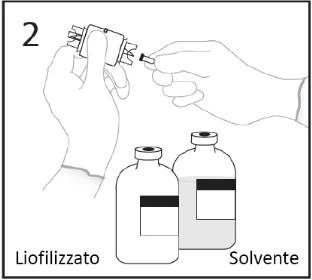
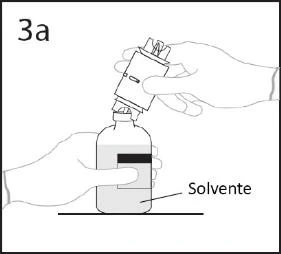
3a. Place the solvent vial on a flat surface. Insert the exposed tip of the transfer device into the center of the solvent vial stopper.
WARNING: Failure to insert the tip into the center of the stopper may cause stopper displacement and loss of vacuum.
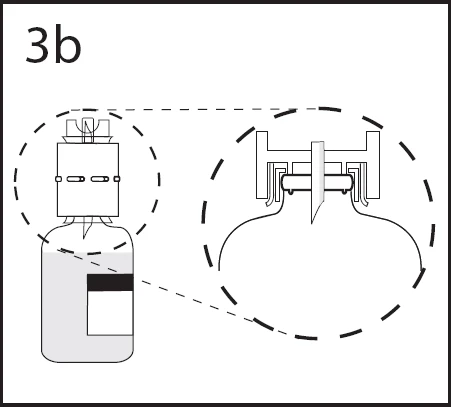
3b. Ensure that the device fully enters the vial neck by firmly pressing down the transfer device.
While holding the transfer device in place, remove the protective cap from the other tip.
Do not touch the tip.
4. Hold the solvent vial with the transfer device attached,
at an angle relative to the lyophilized powder vial to prevent leakage of the
solvent. Note: Do not hold the solvent vial upside down, as this may cause
solvent leakage.
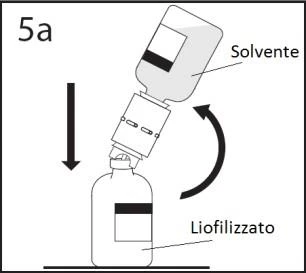
5a. Insert the free end of the transfer device into the center of the lyophilized powder vial stopper and
quickly invert the solvent vial to avoid solvent leakage.
WARNING: Failure to insert the transfer device into the center of the stopper may result in
stopper dislodgement and loss of vacuum.
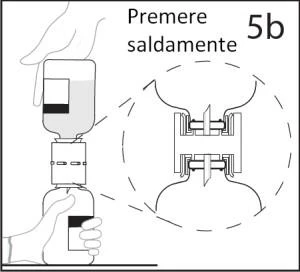
5b. Ensure that the device is fully inserted into the neck of the vial by firmly pressing down the solvent vial.
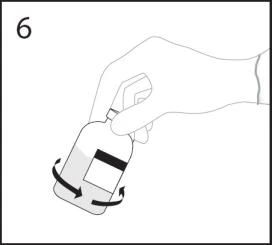
- After completion of solvent transfer, remove the transfer device and the empty solvent vial. Immediately swirl the lyophilized powder vial gently to completely mix the contents.
WARNING: Do not shake. Avoid foam formation.
Discard the transfer device after single use.
B) Reconstitution of the product as a 10% solution:
- Remove the caps from the vials and disinfect them with a germicidal solution.
- To prepare a 10% solution, half of the solvent volume must be removed. Table 2 indicates the amount of solvent that must be removed from the solvent vial before attaching the transfer device to achieve a 10% concentration. Using aseptic technique, withdraw the unnecessary amount of solvent with a sterile hypodermic syringe and needle. Dispose of the filled syringe and needle.
- Use the remaining solvent in the solvent vial, following instructions from step 2 to step 6 as previously described in section A.
TABLE 2
Amount of solvent to be removed
Concentration 5 g vial 10 g vial
5% Do not remove solvent when reconstituting as 5% solution
10% 48 mL 96 mL
Administration – Use aseptic technique
Infusion (5 g and 10 g packs)
Administer the reconstituted solution using the sterile 15 set provided in each pack.
Discard any unused portion of the solution due to the risk of bacterial contamination.
Unused medicine and waste material derived from this medicine must be disposed of in
accordance with local regulations.