Gadral
Italy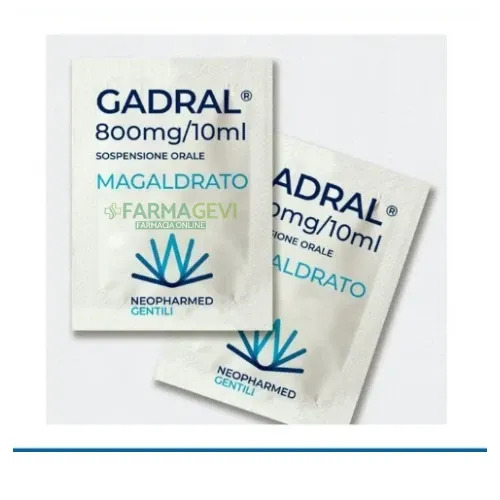
Table of Contents
- Package leaflet: Information for the patient
- GADRAL 800 mg chewable tablets
- 1. What GADRAL is and what it is used for
- 2. What you need to know before taking GADRAL
- 3. How to take GADRAL
- 4. Possible side effects
- 5. How to store GADRAL
- 6. Package contents and other information
- Package leaflet: information for the patient
- GADRAL 800 mg/10 ml oral suspension
- 1. What GADRAL is and what it is used for
- 2. What you should know before taking GADRAL
- 3. How to take GADRAL
- 4. Possible side effects
- 5. How to store GADRAL
- 6. Package contents and other information
Package leaflet: Information for the patient
GADRAL 800 mg chewable tablets
Magaldrate
Generic medicine
Read this leaflet carefully before taking this medicine because it contains
important information for you.
- Keep this leaflet. You may need to read it again.
- If you have any questions, ask your doctor or pharmacist.
- This medicine has been prescribed for you only. Do not give it to other people, even if their symptoms are the same as yours, because it could be harmful.
- If you experience any side effects, including those not listed in this leaflet, contact your doctor or pharmacist. See section 4.
Contents of this leaflet:
- What GADRAL is and what it is used for
- What you need to know before taking GADRAL
- How to take GADRAL
- Possible side effects
- How to store GADRAL
- Contents of the pack and other information
1. What GADRAL is and what it is used for
GADRAL contains magaldrate and belongs to a group of medicines called antacids, which are used to neutralize excess acid produced in the stomach.
GADRAL is indicated in adults and adolescents over 12 years of age for the treatment:
- of lesions in the stomach and intestine (duodenal and gastric ulcers),
- of inflammation of the esophagus, the tube connecting the mouth to the stomach, caused by the backflow of acid from the stomach to the mouth (reflux esophagitis),
- of inflammation of the stomach and intestine (gastritis and gastroduodenitis),
- of various conditions characterized by hyperacidity (increased acid levels in the stomach).
Consult your doctor if you do not feel better or if you feel worse.
2. What you need to know before taking GADRAL
Do not use GADRAL
- If you are allergic to magaldrate or to any of the other ingredients of this medicine (listed in section 6).
- If you suffer from a disease affecting the production of certain blood cells, red blood cells (porphyria).
- If you suffer from low phosphate levels in the blood, substances useful for the body (hypophosphatemia).
- If you suffer from severe kidney disease (severe renal insufficiency).
- If the person to be treated is under 12 years of age.
- If you are severely weakened (cachectic state).
Warnings and precautions
Talk to your doctor or pharmacist before taking GADRAL:
- If your kidneys do not function properly (creatinine clearance <30 ml/min). During treatment with GADRAL, your doctor will ask you to have regular blood tests to monitor your magnesium and aluminium levels.
- If you are undergoing dialysis, a blood filtration system, as you may develop a brain disorder caused by high levels of aluminium in the blood. Moderately increased aluminium levels in the blood have occasionally been detected even in people with normally functioning kidneys.
- If you have been using aluminium-containing antacid medicines for a long time, as you may experience reduced absorption of phosphates, substances useful for the body.
- If you suffer from high blood pressure, you may take GADRAL as the chewable tablets have a low sodium content.
Other medicines and GADRAL
Inform your doctor or pharmacist if you are taking, have recently taken, or might take any other medicines.
In particular, inform your doctor and leave an interval of 1–2 hours between taking GADRAL and other medicines such as:
- antibiotics, medicines used to treat infections (ciprofloxacin, ofloxacin and norfloxacin),
- digoxin, a medicine used to treat heart disorders,
- isoniazid, a medicine used to treat tuberculosis, a lung infection,
- iron preparations,
- chlorpromazine, a medicine used to treat mental disorders,
- coumarin derivatives, medicines used to thin the blood,
- effervescent tablets containing citric or tartaric acid,
- benzodiazepines, medicines used to treat depression,
- indomethacin, a medicine used to treat inflammation,
- chenodeoxycholic and ursodeoxycholic acid, medicines used to treat gallstones (small stones) in the gallbladder, an organ that aids digestion.
GADRAL and drinks
Do not take GADRAL with acidic drinks (fruit juice, wine, etc.), as this increases intestinal absorption of aluminium.
Pregnancy, breastfeeding and fertility
If you are pregnant, think you may be pregnant, are planning a pregnancy, or are breastfeeding, consult your doctor or pharmacist before taking this medicine.
Pregnancy
GADRAL is not recommended during pregnancy.
Your doctor will prescribe GADRAL only if clearly needed, and will prescribe a lower dose to avoid possible toxic effects on the fetus due to increased aluminium levels in the blood.
Breastfeeding
Aluminium compounds pass into breast milk. Given the low absorption rate, it is considered unlikely that there is any risk to the infant.
Fertility
No data are available.
Driving and using machines
No effects of GADRAL on the ability to drive or operate machinery are known. However, it is unlikely that this medicine affects the ability to drive and/or operate machinery.
GADRAL 800 mg chewable tablets contain sodium
One tablet of GADRAL contains less than 1 mmol (23 mg) of sodium, i.e. essentially 'sodium-free'.
GADRAL 800 mg chewable tablets contain sorbitol
One tablet of GADRAL may contain up to 147 mg of sorbitol.
Sorbitol is a source of fructose. If your doctor has told you that you are intolerant to certain sugars, or if you have been diagnosed with hereditary fructose intolerance, a rare genetic disorder in which patients cannot metabolize fructose, talk to your doctor before taking this medicine.
3. How to take GADRAL
Take this medicine exactly as directed by your doctor or pharmacist.
If you have any doubts, consult your doctor or pharmacist.
Dosage
The recommended dose for adults and adolescents over 12 years of age is one tablet
four times daily, one hour after main meals and immediately before bedtime.
Your doctor may adjust the dose according to your clinical condition.
Do not exceed the dose of 6400 mg per day (8 tablets).
Method of administration
The tablets should be chewed or sucked.
Duration of treatment
Treatment should be continued for at least 4 weeks, even after symptoms have disappeared.
If symptoms persist for more than 2 weeks during treatment, contact your doctor for clinical reassessment.
If you take more GADRAL than you should
If you have taken too many tablets, contact your doctor or go to hospital immediately.
Symptoms of overdose, especially if you suffer from severe kidney disease, may include:
- brain disease (encephalopathy),
- uncontrolled body movements (seizures),
- dementia.
In case of accidental ingestion/overdose of GADRAL, inform your doctor immediately or go to the nearest hospital.
If you forget to take GADRAL
Do not take a double dose to make up for the forgotten tablet of GADRAL.
If you stop taking GADRAL
If you have any doubts about using this medicine, consult your doctor or pharmacist.
4. Possible side effects
Like all medicines, this medicine can cause side effects, although not everybody gets them.
The possible side effects are listed below, according to the following frequency:
very common (may affect more than 1 in 10 people)
soft stools
very rare (may affect up to 1 in 10,000 people)
diarrhoea, constipation, and increased magnesium in the blood (hypermagnesaemia)
not known (frequency cannot be estimated from the available data)
allergic reactions (hypersensitivity), nausea, vomiting, indigestion, abdominal pain, nervous system toxicity (neurotoxicity), decrease in phosphate in the blood (hypophosphataemia)
Reporting of side effects
If you experience any side effect, including those not listed in this leaflet, please inform your doctor or pharmacist. You can also report side effects directly via the national reporting system at the following website:
https://www.aifa.gov.it/content/segnalazioni-reazioni-avverse.
By reporting side effects, you can help provide more information on the safety of this medicine.
5. How to store GADRAL
This medicine does not require any special storage conditions.
Keep this medicine out of the sight and reach of children.
Do not use this medicine after the expiry date stated on the packaging after "Exp."
The expiry date refers to the last day of that month.
Do not dispose of any medicine via wastewater or household waste. Ask your pharmacist how to
dispose of medicines you no longer use. This will help protect the environment.
6. Package contents and other information
What GADRAL contains
The active substance is anhydrous magaldrate 800.0 mg.
The other components are: sorbitol, mannitol, maize starch, magnesium stearate, sodium saccharin, caramel flavouring.
Description of the appearance of GADRAL and contents of the pack
Gadral 800 mg chewable tablets: box containing 40 tablets of 800 mg.
Marketing Authorization Holder and Manufacturer
Marketing Authorization Holder
NEOPHARMED GENTILI S.p.A.
Via San Giuseppe Cottolengo, 15
20143 Milan, Italy
Manufacturer
Therabel Industries S.A.S.,
La Seyne sur Mer (France)
Doppel Farmaceutici S.r.l.
Quinto de’ Stampi
Rozzano - MI, Italy
Package leaflet: information for the patient
GADRAL 800 mg/10 ml oral suspension
Magaldrate
Equivalent medicine
Please read this leaflet carefully before taking this medicine because it contains
important information for you.
- Keep this leaflet. You may need to read it again.
- If you have any questions, ask your doctor or pharmacist.
- This medicine has been prescribed for you only. Do not give it to others, even if their symptoms are the same as yours, as it could be harmful.
- If you experience any side effect, including those not listed in this leaflet, contact your doctor or pharmacist. See section 4.
Contents of this leaflet:
- What GADRAL is and what it is used for
- What you need to know before taking GADRAL
- How to take GADRAL
- Possible side effects
- How to store GADRAL
- Contents of the pack and other information
1. What GADRAL is and what it is used for
GADRAL contains magaldrate and belongs to a group of medicines called antacids, which are used to neutralize excess acid produced in the stomach.
GADRAL is indicated in adults and adolescents over 12 years of age for the treatment of:
- lesions of the stomach and intestine (duodenal and gastric ulcers),
- inflammation of the esophagus, the tube connecting the mouth to the stomach, caused by the backflow of acid from the stomach to the mouth (reflux esophagitis),
- inflammation of the stomach and intestine (gastritis and gastroduodenitis),
- various conditions characterized by hyperacidity (increased acid in the stomach).
Consult your doctor if you do not feel better or if you feel worse.
2. What you should know before taking GADRAL
Do not use GADRAL
- If you are allergic to magaldrate or to any of the other ingredients of this medicine (listed in section 6).
- If you suffer from a disease that interferes with the production of certain blood cells, red blood cells (porphyria).
- If you suffer from low phosphate levels in the blood, substances useful for the body (hypophosphatemia).
- If you suffer from severe kidney disease (severe renal insufficiency).
- If the person to be treated is under 12 years of age.
- If you are severely weakened (cachexia).
Warnings and precautions
Talk to your doctor or pharmacist before taking GADRAL:
- If your kidneys do not function properly (creatinine clearance <30 ml/min). During treatment with GADRAL, your doctor will ask you to have regular blood tests to monitor your magnesium and aluminium levels.
- If you are undergoing dialysis, a blood filtration system, as you may develop a brain disease caused by high levels of aluminium in the blood. Moderately elevated aluminium levels in the blood have occasionally been detected in people with normally functioning kidneys.
- If you have been using aluminium-containing antacid medicines for a long time, as you may experience reduced absorption of phosphates, substances useful to the body.
Other medicines and GADRAL
Tell your doctor or pharmacist if you are taking, have recently taken, or might take any other medicines.
In particular, inform your doctor and leave an interval of 1–2 hours between taking GADRAL and other medicines such as:
- antibiotics, medicines used to treat infections (ciprofloxacin, ofloxacin and norfloxacin),
- digoxin, a medicine used to treat heart disorders,
- isoniazid, a medicine used to treat tuberculosis, a lung infection,
- iron-containing preparations,
- chlorpromazine, a medicine used to treat mental disorders,
- coumarin derivatives, medicines used to thin the blood,
- effervescent tablets containing citric or tartaric acid,
- benzodiazepines, medicines used to treat depression,
- indomethacin, a medicine used to treat inflammation,
- cheno- and ursodeoxycholic acid, medicines used to treat gallstones (small stones) in the gallbladder, an organ that aids digestion.
GADRAL with drinks
Do not take GADRAL with acidic drinks (fruit juice, wine, etc.), as this increases intestinal absorption of aluminium.
Pregnancy, breastfeeding and fertility
If you are pregnant, suspect you may be pregnant, planning to become pregnant, or breastfeeding, consult your doctor or pharmacist before taking this medicine.
Pregnancy
GADRAL is not recommended during pregnancy.
Your doctor will prescribe GADRAL only if clearly needed, and will prescribe a lower dose to avoid potential toxic effects on the fetus due to increased aluminium levels in the blood.
Breastfeeding
Aluminium compounds pass into breast milk. Given the low absorption, it is considered unlikely that there is any risk to the infant.
Fertility
No data are available.
Driving and using machines
No effects of GADRAL on the ability to drive or operate machinery are known.
However, it is unlikely that this medicine will interfere with your ability to drive or use machinery.
GADRAL 800 mg/10 ml oral suspension contains sodium benzoate
10 ml of oral suspension contain 50 mg of sodium benzoate.
GADRAL 800 mg/10 ml oral suspension contains ethanol
10 ml of oral suspension contain 480 mg of alcohol (ethanol), equivalent to less than 12 ml of beer or 5 ml of wine.
The small amount of alcohol in this medicine will not produce significant effects.
GADRAL 800 mg/10 ml oral suspension contains sodium
10 ml of oral suspension contain less than 1 mmol (23 mg) of sodium, i.e., essentially ‘sodium-free’.
GADRAL 800 mg/10 ml oral suspension contains sorbitol
10 ml of oral suspension contain 840 mg of sorbitol.
Sorbitol is a source of fructose. If your doctor has told you that you are intolerant to certain sugars, or if you have been diagnosed with hereditary fructose intolerance, a rare genetic disorder in which patients cannot metabolize fructose, speak with your doctor before taking this medicine.
GADRAL 800 mg/10 ml oral suspension contains propylene glycol (contained in the maracuja flavour)
10 ml of oral suspension contain 11.15 mg of propylene glycol.
3. How to take GADRAL
Take this medicine exactly as directed by your doctor or pharmacist. If you have any doubts, consult your doctor or pharmacist.
Dosage
The recommended dose for adults and adolescents over 12 years of age is 10 ml (equivalent to two teaspoons) or the contents of one sachet, four times daily, one hour after each main meal and immediately before bedtime.
Your doctor may adjust the dose according to your clinical condition.
Do not exceed the maximum daily dose of 6400 mg (8 sachets or 80 ml).
How to take
Shake the bottle vigorously or knead the sachet to homogenize its contents before opening.
Duration of treatment
Treatment should be continued for at least 4 weeks, even after symptoms have disappeared.
If symptoms persist for more than 2 weeks during treatment, contact your doctor for clinical reassessment.
If you take more GADRAL than you should
If you have taken too many sachets or too many spoonfuls of this medicine, contact your doctor or go to hospital immediately.
Symptoms of overdose, especially if you suffer from severe kidney disease, may include:
- brain disease (encephalopathy),
- uncontrolled body movements (convulsions),
- dementia.
In case of accidental ingestion or administration of an excessive dose of GADRAL, contact your doctor immediately or go to the nearest hospital.
If you forget to take GADRAL
Do not take a double dose to make up for the missed dose.
If you stop taking GADRAL
If you have any questions about the use of this medicine, consult your doctor or pharmacist.
4. Possible side effects
Like all medicines, this medicine can cause side effects, although not everyone experiences them.
The possible side effects are listed below, classified according to the following frequency:
very common (may affect more than 1 in 10 people)
soft stools
very rare (may affect up to 1 in 10,000 people)
diarrhoea, constipation, and increased magnesium in the blood (hypermagnesaemia)
not known (frequency cannot be estimated from the available data)
allergic reactions (hypersensitivity), nausea, vomiting, indigestion, abdominal pain, nervous system toxicity (neurotoxicity), decrease in phosphate in the blood (hypophosphataemia).
Reporting of side effects
If you experience any side effect, including those not listed in this leaflet, please inform your doctor or pharmacist. You can also report side effects directly via the national reporting system at the following website:
https://www.aifa.gov.it/content/segnalazioni-reazioni-avverse.
By reporting side effects, you can help provide more information on the safety of this medicine.
5. How to store GADRAL
This medicinal product does not require any special storage conditions.
Keep this medicine out of the sight and reach of children.
Do not use this medicine after the expiry date stated on the pack after Exp.
The expiry date refers to the last day of that month.
Do not dispose of any medicine via wastewater or household waste. Ask your pharmacist
how to dispose of medicines you no longer use. This will help protect the environment.
6. Package contents and other information
What GADRAL contains
The active substance is magaldrate anhydrous 800 mg.
The other components are: sorbitol 70%, hydroxyethylcellulose, citric acid, sodium cyclamate,
sodium saccharin, simethicone, sodium benzoate, potassium sorbate, ethanol (96%), cream flavour,
passion fruit flavour, purified water.
Description of the appearance of GADRAL and package contents
GADRAL 800 mg/10 ml oral suspension, available in:
- 250 ml bottle
- carton containing 40 oral suspension sachets of 10 ml each
Marketing Authorization Holder and Manufacturer
Marketing Authorization Holder
NEOPHARMED GENTILI S.p.A.
Via San Giuseppe Cottolengo, 15
20143 Milan
Manufacturer
ZETA FARMACEUTICI S.p.A.
Via Galvani, 10
36066 Sandrigo (VI)