Fulcro
Italy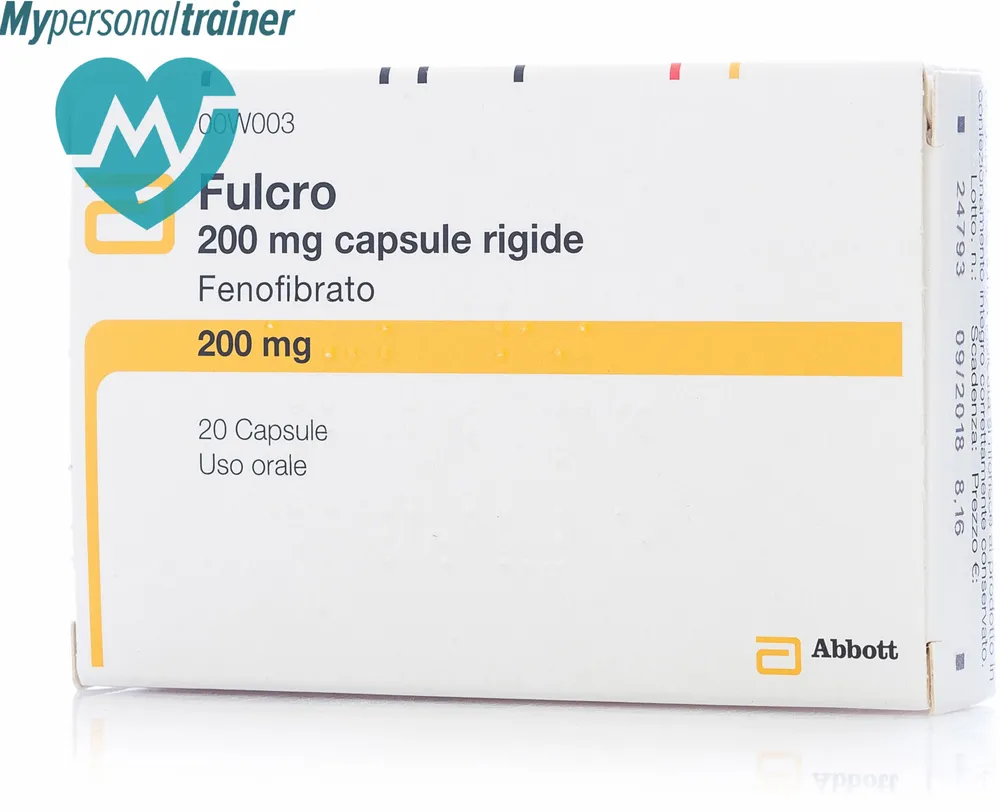
Table of Contents
Package leaflet: Information for the patient
FULCRO 200 mg hard capsules
Fenofibrate
Please read all of this leaflet carefully before taking this medicine because it contains important
information for you.
Keep this leaflet. You may need to read it again.
If you have any questions, ask your doctor or pharmacist.
This medicine has been prescribed for you only. Do not give it to other people, even if their symptoms are
the same as yours, because it could be harmful.
If you experience any adverse reaction, including those not listed in this leaflet, contact your doctor or
pharmacist. See section 4.
Contents of this leaflet:
- What FULCRO is and what it is used for
- What you need to know before taking FULCRO
- How to take FULCRO
- Possible side effects
- How to store FULCRO
- Contents of the pack and other information
1. What FULCRO is and what it is used for
FULCRO contains the active substance fenofibrate and belongs to a group of medicines commonly known as "fibrates". These medicines are used to lower the level of fats (lipids) in the blood, such as fats known as triglycerides.
FULCRO is used, together with a low-fat diet and other non-pharmacological treatments such as physical exercise and weight loss, to reduce fat levels in the blood.
Additionally, FULCRO may be used:
- in combination with other medicines called "statins", when fat levels in the blood are not controlled by statins alone;
- when treatment with statins is not possible (for example, if statins are not tolerated or if you are allergic to these medicines).
2. What you need to know before taking FULCRO
Do not take FULCRO if:
- you are allergic (hypersensitive) to the active substance or to any of the other ingredients of this medicine (listed in section 6);
- during treatment with other medicines, you have experienced an allergic reaction or skin damage caused by sunlight or UV rays (these medicines include other fibrates and an anti-inflammatory drug called "ketoprofen");
- you have severe liver or kidney problems, or gallbladder disease;
- you have pancreatitis (inflammation of the pancreas causing abdominal pain and poor digestion) not caused by high levels of fats in the blood;
- you are breastfeeding;
- you are under 18 years of age.
Warnings and precautions
Talk to your doctor or pharmacist before taking FULCRO if:
- you have liver or kidney problems;
- you have liver inflammation (hepatitis), which causes yellowing of the skin and eyes (jaundice) and increased liver enzymes in the blood. In such cases, your doctor will evaluate whether treatment with FULCRO should be discontinued;
- you have low levels of proteins in the blood (dysproteinemia);
- you drink large amounts of alcohol;
- you have diabetes;
- you have a stomach or duodenal ulcer;
- you have reduced thyroid function (hypothyroidism).
Effects on muscles
Stop taking FULCRO and consult your doctor if you experience widespread muscle pain, weakness or cramps during treatment with this medicine.
- This is because FULCRO may cause muscle problems, even serious ones.
- These problems are manifestations of muscle inflammation (myositis) and breakdown (rhabdomyolysis); rarely, they may also cause kidney damage. Your doctor may decide to perform a blood test to monitor muscle function before and after starting treatment.
The risk of muscle damage is higher in certain patients. Remember to inform your doctor if:
- you are over 70 years old;
- you have low levels of albumin in the blood;
- you have or have had muscle problems, or if a family member has had muscle problems;
- you have kidney problems;
- you have reduced thyroid function (hypothyroidism);
- you drink large amounts of alcohol;
- you are taking other medicines belonging to the class of "fibrates";
- you are taking medicines called statins, used to lower blood fat levels, such as simvastatin or atorvastatin.
Other medicines and FULCRO
Tell your doctor or pharmacist if you are taking, have recently taken or might take any other medicines, including those without a prescription.
This is particularly important if you are taking:
- other medicines used to lower blood fat levels (such as statins or other fibrates). Taking one of these medicines together with FULCRO increases the risk of muscle problems (see "Effects on muscles");
- glitazones, medicines used in diabetes;
- blood-thinning medicines (such as warfarin);
- cyclosporine, a medicine used to suppress the immune system;
- estrogens or contraceptives containing estrogens.
FULCRO and food
It is important to take the capsule with food.
Pregnancy and breastfeeding
If you are pregnant, suspect you may be pregnant, planning a pregnancy, or are breastfeeding, consult your doctor before taking any medicine.
Do not take FULCRO if you are breastfeeding.
Driving and using machines
FULCRO does not affect the ability to drive or operate machinery.
FULCRO contains lactose.
If your doctor has diagnosed you with an intolerance to certain sugars, contact him before taking this medicine.
This medicine contains less than 1 mmol of sodium (23 mg) per capsule, i.e. essentially "sodium-free".
3. How to take FULCRO
Take this medicine exactly as instructed by your doctor. If you have any doubts, consult your doctor or pharmacist.
Your doctor will determine the appropriate dose for you, depending on your condition, your current treatment, and your individual risk profile.
Dose
The usual dose is 1 capsule (200 mg) daily.
Please remember that in addition to taking FULCRO, it is important to:
- follow a low-fat diet;
- exercise regularly.
If after 3–6 months of treatment the fat levels in your blood have not decreased, your doctor will assess whether therapy should be changed.
Method of administration
Take this medicine by mouth (oral use), during meals. Swallow the capsule whole with a glass of water.
Patients with liver or kidney problems
If you have liver or kidney problems, your doctor may advise you to take a lower dose than those indicated above.
Children and adolescents
The use of FULCRO is not recommended in children and adolescents under 18 years of age.
If you take more FULCRO than you should
If you take more FULCRO than you should, inform your doctor or go to the nearest hospital immediately.
If you forget to take FULCRO
If you forget to take a dose of this medicine, take the next dose at the next meal.
Do not take a double dose to make up for the missed dose.
If you stop taking FULCRO
Do not stop taking FULCRO and follow the treatment duration prescribed by your doctor. This is important because abnormal levels of fats in the blood need to be treated over a long period of time.
If you have any doubts about how to use this medicine, consult your doctor or pharmacist.
4. Possible side effects
Like all medicines, this medicine can cause side effects, although not everyone experiences them.
Stop taking FULCRO immediately and contact your doctor if you experience any of the following serious conditions:
- allergic reactions presenting as swelling of the face, eyes, lips, tongue, or throat, possibly causing breathing difficulties, increased heart rate, and possibly a sudden drop in blood pressure;
- widespread muscle pain, weakness, or cramps. These symptoms may indicate muscle inflammation (myositis) and muscle breakdown (rhabdomyolysis); in rare cases, these may also lead to kidney damage;
- yellowing of the skin or eyes (jaundice) or elevated liver enzymes in the blood, possible signs of liver inflammation (hepatitis);
- severe skin rashes with redness, blistering, and peeling, or ulcers of the mouth, lips, and skin (e.g., erythema multiforme, Stevens-Johnson syndrome, toxic epidermal necrolysis).
Inform your doctor if, during treatment with FULCRO, you notice the following:
Common side effects (may affect up to 1 in 10 people)
- stomach or intestinal problems such as abdominal pain, nausea, vomiting, diarrhoea, or excess gas in the intestine (flatulence);
- increased transaminase levels in the blood;
- increased homocysteine (elevated levels of this amino acid in the blood have been associated with a higher risk of coronary heart disease, stroke, and peripheral vascular disease, although a causal relationship has not been established).
Uncommon side effects (may affect up to 1 in 100 people)
- headache;
- chest pain and shortness of breath, possible signs of a blood clot in the lung (pulmonary embolism);
- pain, redness, or swelling in the legs, possible signs of a blood clot in the leg (deep vein thrombosis);
- abdominal pain and indigestion, possible signs of inflammation of the pancreas (pancreatitis);
- gallstones;
- skin rashes, itching, or hives (due to allergy);
- sexual problems;
- increased creatinine (a substance used to assess kidney function) in the blood.
Rare side effects (may affect up to 1 in 1,000 people)
- blood abnormalities such as decreased haemoglobin (the substance that carries oxygen in the blood) and white blood cells, increased urea (a substance used to assess kidney function);
- hair loss (alopecia);
- increased sensitivity of the skin to sunlight or sunlamps (photosensitivity).
Other side effects (frequency cannot be estimated)
- changes in heart rhythm;
- changes in kidney function such as difficulty urinating (dysuria), reduced urine output (oliguria), presence of blood (haematuria) or protein (proteinuria) in the urine;
- increased appetite (polyphagia) and weight gain;
- lung problems (interstitial lung disease);
- complications related to gallstones, for example inflammation of the gallbladder (cholecystitis, cholangitis) or abdominal pain (biliary colic);
- feeling exhausted (fatigue).
Reporting of side effects
If you experience any side effect, including those not listed in this leaflet, please inform your doctor or pharmacist. You can also report side effects directly via the national reporting system at https://www.aifa.gov.it/content/segnalazioni-reazioni-avverse.
By reporting side effects, you can help provide more information on the safety of this medicine.
5. How to store FULCRO
Keep this medicine out of the sight and reach of children.
Do not use this medicine after the expiry date stated on the pack. The expiry date refers to the last day of that month.
Store below 30°C and in the original packaging to protect the medicine from moisture.
Do not dispose of any medicine via wastewater or household waste. Ask your pharmacist how to dispose of medicines you no longer use. This will help protect the environment.
6. Package contents and other information
What FULCRO contains
The active substance is: fenofibrate.
One FULCRO tablet contains: 200 mg of fenofibrate.
The other components are: lactose, magnesium stearate, pregelatinized starch, sodium lauryl sulfate, cross-linked povidone, titanium dioxide (E171), red iron oxide (E172), yellow iron oxide (E172), gelatin.
Description of the appearance of FULCRO and contents of the pack
FULCRO is available in packs containing 20 capsules.
Marketing Authorization Holder
Mylan Italia S.r.l.
Via Vittor Pisani 20
20124 Milan
Manufacturer
RECIPHARM FONTAINE, Rue des Près Potets - 21121 FONTAINE LES DIJON (France)
DELPHARM L’AIGLE, Zone Industrielle No. 1, Route Crulai - 61300 L’Aigle (France)