Fucithalmic
Italy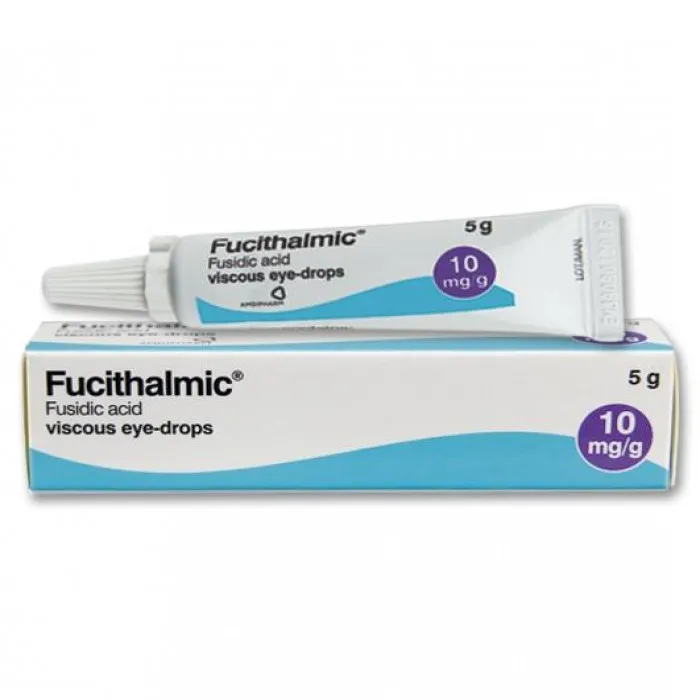
Table of Contents
Package leaflet: Information for the patient
Fucithalmic 1% eye drops, solution
Fusidic acid
Please read this leaflet carefully before using this medicine because it contains important information for you.
- Keep this leaflet. You may need to read it again.
- If you have any questions, ask your doctor or pharmacist.
- This medicine has been prescribed for you only. Do not give it to others, even if their symptoms are the same as yours, as it may be harmful.
- If any adverse reaction occurs, including those not listed in this leaflet, consult your doctor or pharmacist. See section 4.
Contents of this leaflet:
- What Fucithalmic is and what it is used for
- What you need to know before using Fucithalmic
- How to use Fucithalmic
- Possible side effects
- How to store Fucithalmic
- Contents of the pack and other information
1. What Fucithalmic is and what it is used for
Fucithalmic contains the active substance fusidic acid, which belongs to a group of medicines called ocular anti-infectives.
Fucithalmic is indicated for:
- the treatment of bacterial eye infections caused by sensitive microorganisms: conjunctivitis, blepharitis (inflammation of the eyelid), keratitis (inflammation of the cornea), dacryocystitis (inflammation of the tear sac), styes (acute inflammations of the sebaceous glands at the base of the eyelashes);
- preoperative prophylaxis in ophthalmic surgery, and in conjunction with the removal of foreign bodies from the eye.
Consult your doctor if you do not feel better or if you feel worse.
2. What you need to know before using Fucithalmic
Do not use Fucithalmic
- if you are allergic to fusidic acid or to any of the other ingredients of this medicine (listed in section 6).
Warnings and precautions
Talk to your doctor or pharmacist before using Fucithalmic.
- If bacterial resistance to fusidic acid has been observed during previous use.
- As with all antibiotics, prolonged or repeated use of fusidic acid may increase the risk of developing bacterial resistance.
- You must not wear contact lenses during treatment with Fucithalmic. Microcrystals of fusidic acid may scratch the contact lens or the cornea. Contact lenses may be worn 12 hours after completion of treatment.
Other medicines and Fucithalmic
Tell your doctor or pharmacist if you are taking, have recently taken, or might take any other medicines.
No interaction studies have been conducted.
General interactions are unlikely, as systemic exposure following topical administration of Fucithalmic eye drops is negligible.
Pregnancy and breastfeeding
If you are pregnant, think you may be pregnant, are planning to become pregnant, or are breastfeeding, consult your doctor or pharmacist before using this medicine.
Pregnancy
Fucithalmic eye drops may be used during pregnancy.
Fucithalmic eye drops are not expected to have any effects during pregnancy, as systemic exposure is negligible.
Breastfeeding
Fucithalmic eye drops may be used during breastfeeding.
Fusidic acid is not expected to affect breastfeeding, as systemic exposure in nursing women is negligible.
Driving and using machines
Fucithalmic eye drops administered topically do not affect or affect only to a negligible extent the ability to drive or use machinery.
However, you should be aware that Fucithalmic eye drops may cause blurred vision immediately after application.
Fucithalmic contains benzalkonium chloride. This medicine contains 0.11 mg of benzalkonium chloride per dose. Benzalkonium chloride may be absorbed by soft contact lenses and may cause a change in their colour. Contact lenses must not be worn during treatment with Fucithalmic – see section "Warnings and precautions". Contact lenses may be worn 12 hours after completion of treatment.
Benzalkonium chloride may also cause eye irritation, especially if you have dry eye or corneal disorders (the transparent outer layer of the eye). If you experience an unusual sensation, burning, or pain in the eye after using this medicine, speak to your doctor.
3. How to use Fucithalmic
Use this medicine exactly as instructed by your doctor or pharmacist. If you have any doubts, consult your doctor or pharmacist.
Bacterial infections
For bacterial infections, the recommended dose is one drop of Fucithalmic instilled into the conjunctival sac every 12 hours.
Treatment should continue for an additional 2 days after recovery has occurred. On the first day, Fucithalmic may be administered more frequently, for example one drop every 4 hours.
Surgical prophylaxis
For surgical prophylaxis, the recommended dose is one drop of Fucithalmic every 12 hours, administered during the 24–48 hours preceding surgery.
If you use more Fucithalmic than you should
If you accidentally swallow or absorb an excessive dose of Fucithalmic, inform your doctor immediately or go to the nearest hospital.
If you have any doubts about how to use this medicine, consult your doctor or pharmacist.
4. Possible side effects
Like all medicines, this medicine can cause side effects, although not everybody gets them.
The most frequently reported side effects during treatment are various reactions at the application site such as pain, itching, and irritation/discomfort in or around the eyes, followed by blurred vision. In some patients, angioedema (swelling of the face, lips, mouth, tongue or throat) has been reported.
The following are the side effects listed in order of frequency:
Common (may affect up to 1 in 10 people)
- Pain at the application site (including eye burning and stinging eyes)
- Itching at the application site
- Discomfort/irritation at the application site
- Blurred vision (transient)
Uncommon (may affect up to 1 in 100 people)
- Hypersensitivity
- Angioedema
- Skin rash
- Eyelid edema
- Increased lacrimation
Rare (may affect up to 1 in 1,000 people)
- Worsening of conjunctivitis
- Urticaria
The observed safety profile is similar in children and adults.
Reporting of side effects
If you experience any side effect, including those not listed in this leaflet, talk to your doctor, pharmacist or nurse. You may also report side effects directly via the national reporting system at the following website: https://www.aifa.gov.it/content/segnalazioni-reazioni-avverse .
By reporting side effects, you can help provide more information on the safety of this medicine.
5. How to store Fucithalmic
Keep this medicine out of the sight and reach of children.
Do not use this medicine after the expiry date stated on the packaging after "Exp.".
Do not store above 25°C.
Do not dispose of any medicine via wastewater or household waste. Ask your pharmacist how to dispose of medicines you no longer use. This will help protect the environment.
6. Package contents and other information
What Fucithalmic contains
- The active substance is fusidic acid. 1 g of eye drops contains 10.17 mg of fusidic acid hemihydrate (equivalent to 10 mg of anhydrous fusidic acid).
- The other components are: benzalkonium chloride, disodium edetate, mannitol, carbopolymethylene, water for injections.
Description of the appearance of Fucithalmic and package contents
Eye drops, solution.
5 g container with a concentration of 1%.
Marketing Authorization Holder
Amdipharm Limited
3 Burlington Road, Dublin 4 - Temple Chambers
Ireland
Manufacturer
LEO Laboratories Ltd., 285 Cashel Road – DUBLIN 12 (Ireland).