Fucicort
Italy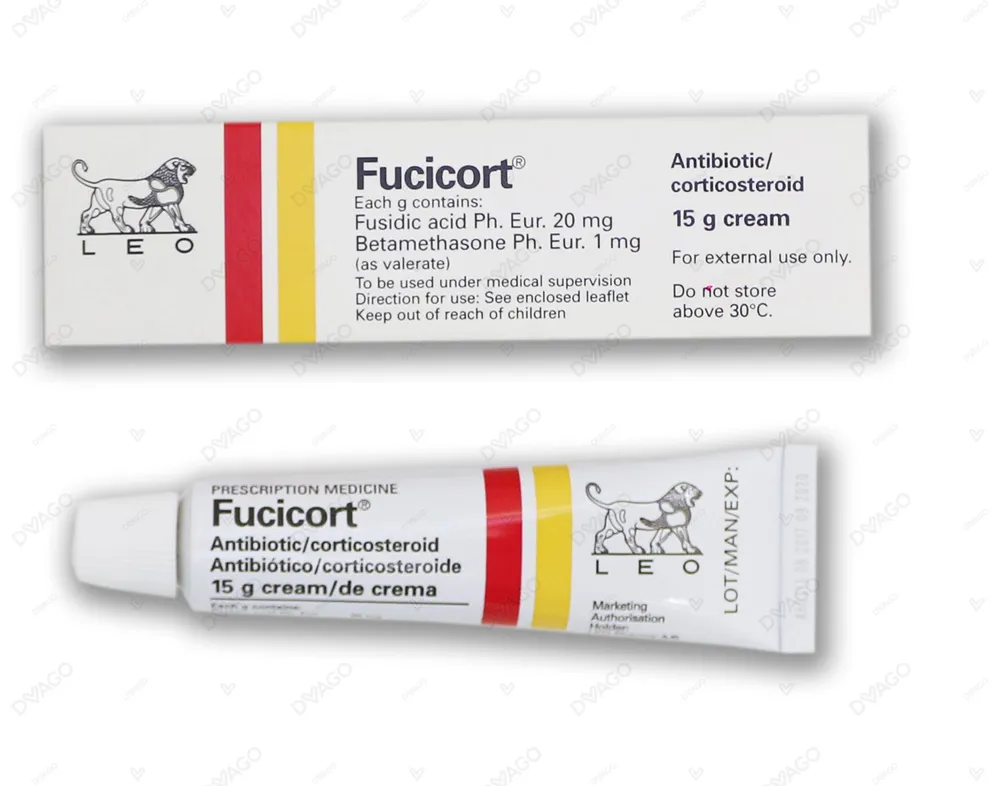
Table of Contents
Patient Information Leaflet
Fucicort 20 mg/g + 1 mg/g cream
Fusidic acid + Betamethasone
Please read this leaflet carefully before using this medicine because it contains important information for you.
- Keep this leaflet. You may need to read it again.
- If you have any questions, ask your doctor or pharmacist.
- This medicine has been prescribed for you only. Do not give it to others, even if their symptoms are the same as yours, as it could be harmful.
- If any adverse reaction occurs, including those not listed in this leaflet, contact your doctor or pharmacist. See section 4.
Contents of this leaflet:
- What Fucicort is and what it is used for
- What you need to know before using Fucicort
- How to use Fucicort
- Possible side effects
- How to store Fucicort
- Contents of the pack and other information
1. What Fucicort is and what it is used for
Fucicort contains two active substances. One is an antibiotic (fusidic acid) and the other is a corticosteroid (betamethasone valerate). Fusidic acid stops the growth of bacteria, while betamethasone reduces swelling, redness, and itching of the skin.
Fucicort is used in adults and children for the treatment of inflammatory skin conditions (eczematous dermatitis) associated with bacterial infection caused by bacteria sensitive to fusidic acid.
2. What you need to know before using Fucicort
Do not use Fucicort
- If you are allergic to fusidic acid, betamethasone, or any of the other ingredients of this medicine (listed in section 6).
- If you have a systemic fungal infection (a deep infection caused by fungi)
- If you have fungal, bacterial, or viral skin infections that are not treated with other medicines or that have been treated but not controlled
- If you have skin manifestations related to tuberculosis that are not treated with other medicines or that have been treated but not controlled
- If you suffer from rosacea (severe redness, especially in the center of the face)
- If you have perioral eczema (eczema around the mouth)
Warnings and precautions
Talk to your doctor or pharmacist before using Fucicort.
Do not use Fucicort for longer than your doctor has instructed, and in any case do not use
Fucicort for more than 14 days.
Avoid contact with the eyes, open wounds, or mucous membranes (e.g. mouth or nostrils).
Use this medicine with caution when applying near the eyes, as it may cause eye disorders (see section 4 “Possible side effects”).
Fucicort may mask the symptoms of an infection.
Fucicort may increase the risk of infectious diseases, worsen existing infections, or reactivate latent infections.
Due to the presence of betamethasone valerate, prolonged use of Fucicort may cause thinning of the skin (cutaneous atrophy).
Children and adolescents
Fucicort should be used with caution in children, as it may cause possible side effects (see “Additional possible side effects in children”).
Avoid using large amounts of this medicine, prolonged treatments, or covering the skin with clothing or bandages (occlusive dressing).
Other medicines and Fucicort
Tell your doctor or pharmacist if you are taking, have recently taken, or might take any other medicines.
Pregnancy and breastfeeding
If you are pregnant, think you may be pregnant, planning a pregnancy, or are breastfeeding, consult your doctor or pharmacist before using this medicine.
Pregnancy: Use Fucicort exactly as prescribed by your doctor.
Breastfeeding: You may use Fucicort while breastfeeding, but avoid applying it to the breast area.
Driving and using machines
Fucicort does not affect the ability to drive vehicles or operate machinery.
Fucicort contains cetostearyl alcohol and chlorocresol.
Fucicort contains cetostearyl alcohol: it may cause local skin reactions (e.g. contact dermatitis).
Fucicort contains chlorocresol: it may cause allergic reactions.
3. How to use Fucicort
Use this medicine exactly as directed by your doctor or pharmacist. If you have any doubts, consult your doctor or pharmacist.
Dosage
The recommended dose is one application 2–3 times daily.
How to use
Apply a thin layer of cream to the affected area.
Wash your hands before using Fucicort. Also wash your hands after using this medicine, even if you have not applied it to your hands.
If you use more Fucicort than you should
In case of accidental ingestion/overdose of Fucicort, contact your doctor immediately or go to the nearest hospital.
If you forget to use Fucicort
If you forget to use Fucicort, consult your doctor or pharmacist.
If you stop using Fucicort
If you have any questions about how to use this medicine, consult your doctor or pharmacist.
4. Possible side effects
Like all medicines, this medicine can cause side effects, although not everybody will experience them.
The following side effects have been observed:
Uncommon (may affect up to 1 in 100 people)
- Allergic reaction,
- Localised skin inflammation (contact dermatitis),
- Worsening of pre-existing eczema,
- Burning sensation of the skin,
- Itching,
- Dry skin,
- Pain at the application site,
- Irritation at the application site.
Rare (may affect up to 1 in 1,000 people)
- Redness of the skin (erythema),
- Hives,
- Skin rash,
- Swelling at the application site,
- Blisters at the application site.
Other side effects reported following the use of betamethasone, which therefore may also be potential side effects of Fucicort, are:
- Thinning of the skin,
- Inflammation of the skin around the mouth,
- Stretch marks,
- Small blood vessels near the skin surface becoming visible,
- Severe redness (rosacea),
- Increased hair growth,
- Excessive sweating,
- Skin discoloration,
- Bleeding into the skin (bruising) following prolonged use,
- Side effects if this medicine is applied near the eyes (e.g. increased eye pressure and glaucoma),
- Adrenal gland dysfunction, particularly after prolonged use of the medicine.
Additional side effects in children and adolescents
- Cushing's syndrome (a condition characterised by excess hormones in the blood, with symptoms including a 'moon-shaped' face, weight gain, fluid retention, reduced tolerance to sugars and increased risk of diabetes, leg swelling, headache).
Reporting of side effects
If you experience any side effect, including those not listed in this leaflet, consult your doctor or pharmacist. Side effects can also be reported directly via the national reporting system at www.agenziafarmaco.gov.it/it/responsabili. Reporting side effects helps provide more information on the safety of this medicine.
5. How to store Fucicort
Do not store above 30°C.
Validity after first opening: 3 months.
Keep this medicine out of the sight and reach of children.
Do not use this medicine after the expiry date stated on the packaging after Exp.
The expiry date refers to the last day of that month.
Do not dispose of any medicine via wastewater or household waste. Ask your pharmacist how to dispose of
medicines you no longer use. This will help protect the environment.
6. Pack contents and other information
What Fucicort contains
1 g of cream contains:
- The active substances are fusidic acid 20 mg, betamethasone valerate 1.214 mg (equivalent to betamethasone 1 mg).
- The other ingredients are macrogol cetostearyl ether, cetostearyl alcohol, chlorocresol (see section 2 “Fucicort contains cetostearyl alcohol and chlorocresol”), monobasic sodium phosphate, liquid paraffin, white vaseline, sodium hydroxide, all-rac-α-tocopherol, purified water.
Description of the appearance of Fucicort and pack contents
Fucicort is a cream supplied in a 30 g tube.
Marketing Authorization Holder
Leo Pharma A/S, Industriparken 55, 2750 – Ballerup (DK)
Licensee in Italy: LEO Pharma S.p.A., Via Amsterdam 125 – 00144 Rome
Manufacturer
LEO Laboratories Limited, 285 Cashel Road, Dublin 12, Ireland.