Froben
Italy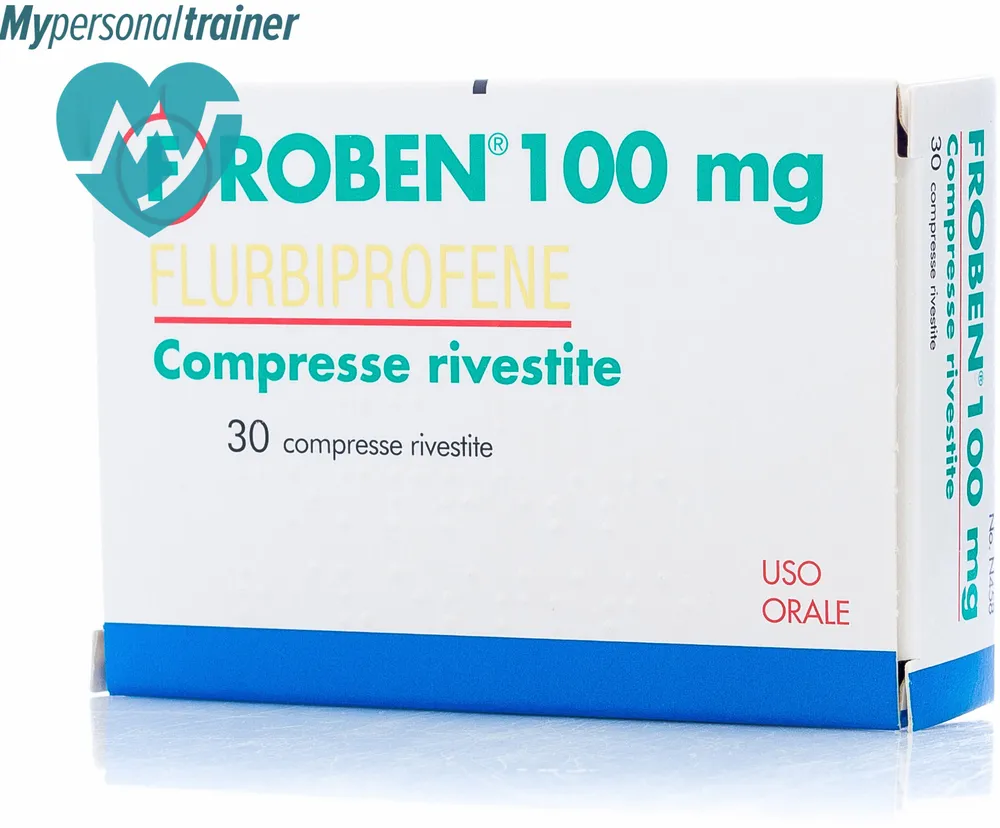
Table of Contents
Patient Information Leaflet
FROBEN 100 mg film-coated tablets, 5 mg/ml syrup
flurbiprofen
Please read this leaflet carefully before taking this medicine because it contains important information for you.
- Keep this leaflet. You may need to read it again.
- If you have any questions, ask your doctor or pharmacist.
- This medicine has been prescribed for you only. Do not give it to other people, even if their symptoms are the same as yours, as it may be harmful.
- If you experience any adverse reactions, including those not listed in this leaflet, contact your doctor or pharmacist. See section 4.
Contents of this leaflet:
- What FROBEN is and what it is used for
- What you need to know before taking FROBEN
- How to take FROBEN
- Possible side effects
- How to store FROBEN
- Contents of the pack and other information
1. What FROBEN is and what it is used for
FROBEN contains flurbiprofen and belongs to a group of medicines called non-steroidal anti-inflammatory drugs (NSAIDs), used to relieve pain, redness, heat and swelling caused by inflammation.
FROBEN is used to reduce pain and inflammation due to, for example:
- rheumatological diseases (inflammation of the joints and sometimes of the tissues);
- trauma (e.g. back pain, sprains and strains) or bone and joint diseases (e.g. osteoarthritis, bursitis, tendinitis, tenosynovitis);
- gynecological diseases.
2. What you should know before taking FROBEN
Do not take FROBEN:
- if you are allergic to any of the other components of this medicine (listed in section 6);
- if you have had asthma, urticaria, or any other allergic reaction after taking flurbiprofen, acetylsalicylic acid (known as aspirin), or other NSAIDs;
- if you have a peptic ulcer (stomach or duodenal ulcer), Crohn’s disease, or currently have or have previously had ulcerative colitis; if you have had two or more episodes of stomach or intestinal ulcers or bleeding, or even a single episode of gastrointestinal bleeding or perforation due to NSAIDs;
- if you have severe heart, kidney, or liver problems;
- during the last three months of pregnancy.
Warnings and precautions
Talk to your doctor before taking FROBEN if:
- you are elderly, as you may be more likely to experience adverse reactions to this medicine;
- you are pregnant, planning to become pregnant, or breastfeeding;
- you have liver or kidney problems;
- you have heart or blood vessel problems, as medicines like FROBEN may be associated with a small increased risk of heart attack (myocardial infarction) or stroke. The risk of adverse effects increases with higher doses and prolonged treatment. Do not exceed the recommended dose of FROBEN or take it for extended periods. Inform your doctor if you have heart problems, a history of stroke, or think you may be at risk for these conditions (for example, if you have high blood pressure, diabetes, high cholesterol, or smoke);
- you have had a peptic ulcer (stomach or duodenal ulcer) or other stomach or intestinal diseases;
- you have asthma;
- you suffer from systemic lupus erythematosus (SLE, commonly known as lupus) or mixed connective tissue disease—conditions affecting connective tissue that cause joint or muscle pain, skin changes, and problems in other organs;
- you are dehydrated, as you may be more likely to develop kidney problems;
- you have an intolerance to certain sugars. Please refer to the section “FROBEN contains”;
- you have an infection—please refer to the section “Infections” below.
BE CAREFUL, because during treatment with all pain and anti-inflammatory medicines (NSAIDs):
- at any time, with or without warning symptoms, even in patients with no prior history of serious stomach or intestinal (gastrointestinal) problems, bleeding, ulceration, or perforation of the stomach or intestine may occur, which can be fatal. The risk of ulceration or bleeding may increase if you are also taking anticoagulants, antiplatelet agents, corticosteroids, or selective serotonin reuptake inhibitors (SSRIs) (see “Other medicines and FROBEN”);
- very rarely, severe skin reactions have been reported, some of which have been fatal, presenting as redness, blistering, and skin peeling (e.g., exfoliative dermatitis, Stevens-Johnson syndrome, and toxic epidermal necrolysis). In the early stages of therapy, patients appear to be at higher risk: such reactions mostly occur within the first month of treatment;
- infections may worsen—for example, necrotizing fasciitis may develop, presenting with fever, chills, weakness, sweating, diarrhea, vomiting, redness, pain, swelling, or bruising in an area of the body due to tissue necrosis (tissue cell death);
- headaches may occur if used for prolonged periods; in such cases, do not increase the dose of FROBEN to relieve pain.
STOP treatment and contact your doctor immediately if:
- you notice any symptoms affecting the stomach or intestine (gastrointestinal), especially bleeding;
- a skin rash, mucosal lesions, or any other sign of an allergic reaction appear (e.g., redness, itching, swelling of the face or throat, sudden drop in blood pressure).
Infections
Non-steroidal anti-inflammatory drugs (NSAIDs) may mask signs of infection such as fever and pain. This could delay appropriate treatment of the infection, thereby increasing the risk of complications. If you take this medicine during an infection and infection symptoms persist or worsen, contact your doctor or pharmacist immediately.
Children
FROBEN is not recommended for use in children under 12 years of age.
Other medicines and FROBEN
Tell your doctor or pharmacist if you are taking, have recently taken, or might take any other medicines, as some drugs may interact with FROBEN or increase the risk of adverse events, including serious ones.
In particular, contact your doctor if you are taking:
- diuretics (medicines that increase urine production, e.g., furosemide and spironolactone);
- cardiac glycosides (medicines used for heart conditions, such as digoxin);
- ACE inhibitors (e.g., captopril) or angiotensin II antagonists (e.g., losartan), medicines used for high blood pressure (hypertension);
- anticoagulant medicines (e.g., warfarin), used to prevent blood clotting;
- antiplatelet medicines, used to thin the blood;
- lithium, used in the treatment of depression;
- zidovudine, an antiviral medicine;
- methotrexate, used to treat certain cancers and some immune system disorders, such as rheumatoid arthritis;
- cyclosporine and tacrolimus, immunosuppressive medicines used to reduce your immune response;
- medicines known as corticosteroids, used to treat inflammatory diseases (e.g., prednisone, dexamethasone, hydrocortisone);
- antidepressant medicines called selective serotonin reuptake inhibitors (SSRIs) (e.g., paroxetine, fluoxetine);
- antibiotics known as quinolones (e.g., ciprofloxacin);
- mifepristone, a medicine used for medical abortion (taken now or within the last 12 days);
- any other medicine used for inflammation (NSAIDs), including acetylsalicylic acid (aspirin) and medicines belonging to the COX-2 inhibitor class (e.g., celecoxib).
FROBEN and alcohol
Some adverse effects, particularly those affecting the stomach, intestine, or nervous system, may be more likely when alcohol is consumed during treatment with FROBEN.
Pregnancy, breastfeeding, and fertility
If you are pregnant or think you may be, if you plan to become pregnant, or if you are breastfeeding, consult your doctor before taking this medicine.
Oral formulations (e.g., tablets) of flurbiprofen may cause adverse effects in the unborn child. It is not known whether the same risk applies to FROBEN.
If you plan to become pregnant or have difficulty conceiving, consult your doctor, as this medicine may impair fertility.
Do not take FROBEN during the first 6 months of pregnancy or while breastfeeding, unless strictly necessary and specifically advised by your doctor. If treatment is required during this period or during attempts to conceive, the lowest effective dose for the shortest possible duration should be used.
From week 20 of pregnancy, FROBEN may cause kidney problems in the fetus if taken for more than a few days, thereby reducing amniotic fluid levels surrounding the baby (oligohydramnios), or cause narrowing of a blood vessel (ductus arteriosus) in the baby’s heart. If treatment is needed for more than a few days, your doctor may recommend additional monitoring.
Do not take FROBEN during the last three months of pregnancy, as it may harm the fetus or cause complications during childbirth. It may cause kidney and heart problems in the fetus. It may affect your or your baby’s tendency to bleed and may delay or prolong labor.
Driving and use of machines
FROBEN may cause drowsiness, visual disturbances, dizziness, fatigue, and vertigo. Make sure you do not experience these side effects before driving or operating machinery.
Other information about FROBEN
Your doctor may prescribe another medicine to take alongside FROBEN to protect your stomach, if they consider you at risk of developing stomach ulcers or bleeding.
FROBEN contains
FROBEN 100 mg film-coated tablets contain:
- glucose, lactose, and sucrose. If your doctor has diagnosed you with an intolerance to certain sugars, contact them before taking this medicine.
FROBEN 5 mg/ml syrup contains:
- methyl and propyl parahydroxybenzoates, which may cause allergic reactions (including delayed reactions);
- sucrose. If your doctor has diagnosed you with an intolerance to certain sugars, contact them before taking this medicine;
- sodium. This medicine contains 64.2 mg of sodium (a main component of table salt) per single 100 mg dose (20 ml) of flurbiprofen. This corresponds to 3.21% of the maximum daily dietary intake recommended for an adult;
- propylene glycol. This medicine contains 2657 mg of propylene glycol per single 100 mg dose (20 ml) of flurbiprofen, equivalent to 199.3 mg/kg. If you are pregnant or breastfeeding, do not take this medicine unless otherwise recommended by your doctor. Your doctor may perform additional monitoring during treatment. If you have liver or kidney disease, do not take this medicine unless otherwise recommended by your doctor. Your doctor may perform additional monitoring during treatment;
- ethanol (contained in the natural banana flavor). This medicine contains 0.004 mg of alcohol (ethanol) per single 100 mg dose (20 ml) of flurbiprofen, equivalent to 0.0001 mg/kg. The volume of alcohol in this medicine is equivalent to less than 0.00001 ml of beer or 0.0004 ml of wine. The small amount of alcohol in this medicine will not produce any significant effects.
3. How to take FROBEN
Take this medicine exactly as instructed by your doctor, who will determine the correct dose based on your condition and the duration of treatment. If you have any doubts, consult your doctor or pharmacist.
Adults
The recommended dose is 150 to 200 mg per day, divided into two, three, or four doses.
Your doctor may increase this dose up to a maximum of 300 mg per day.
For menstrual pain, the initial dose is 100 mg at the onset of symptoms, followed by 50 or 100 mg every 4–6 hours, without exceeding the maximum daily dose of 300 mg.
The lowest effective dose for the shortest necessary duration should be used to relieve symptoms.
If you have an infection, contact your doctor or pharmacist immediately if symptoms (such as fever and pain) persist or worsen (refer to section 2).
Elderly
If you are elderly, you have a higher risk of developing adverse reactions to this medicine. For this reason, your doctor may prescribe a lower dose than indicated above.
Use in children and adolescents
FROBEN is not recommended for use in children under 12 years of age.
Method of administration
Take FROBEN by mouth (oral administration).
FROBEN 100 mg tablets: with a glass of water.
FROBEN 5 mg/ml oral syrup: use the dosing syringe provided in the package to ensure the correct dose.
If you forget to take FROBEN, take it as soon as you remember, unless it is almost time for your next dose. In that case, skip the missed dose and take the next one at the regular time. Never take a double dose to make up for a forgotten one.
If you take more FROBEN than you should, contact your doctor immediately or go to the nearest hospital. Remember to bring your FROBEN package with you.
4. Possible side effects
Like all medicines, this medicine can cause side effects, although not everybody gets them.
Stop taking FROBEN immediately and contact your doctor if you experience any of the following:
- severe burning or abdominal pain due to stomach or duodenal (peptic) ulcer;
- sudden, severe pain in the upper abdomen (perforation of the ulcer);
- vomiting blood (haematemesis) or black stools (melena), associated with bleeding in the stomach or intestines; unusual tiredness with reduced urine output (due to non-visible bleeding);
- allergic reactions, even severe ones, such as swelling (angioedema) of the face, eyes, lips, throat with breathing difficulties, sudden drop in blood pressure (anaphylactic reaction);
- severe skin rashes with redness, peeling and/or blistering (e.g. erythema multiforme, Stevens-Johnson syndrome, toxic epidermal necrolysis);
- breathing problems, even severe ones such as asthma, bronchospasm and dyspnoea;
- inflammation of the pancreas (pancreatitis);
- swelling of the face, hands, legs (oedema), reduced urine output or difficulty urinating, symptoms of kidney problems;
- fatigue, shortness of breath and leg swelling, symptoms of heart failure;
- high blood pressure, blood clots in arteries (which may cause, for example, heart attack or stroke), cerebrovascular diseases (cerebrovascular events);
- inflammation of the meninges (aseptic meningitis) presenting with: high fever, sudden headache, inability to bend the neck, nausea, vomiting, confusion, drowsiness and sensitivity to light.
Other side effects:
- nausea, vomiting, diarrhoea, flatulence, difficulty evacuating (constipation), indigestion, abdominal pain, gastritis, inflammation of the mouth mucosa with ulcers (ulcerative stomatitis), worsening of colonic inflammation or Crohn's disease;
- more or less sudden appearance of skin lesions, for example discoloured spots or widespread changes (skin rashes, purpura), urticaria, itching;
- ringing, buzzing, whistling or other persistent sounds in the ears (tinnitus);
- depression, dizziness, visual disturbances, difficulty falling asleep (insomnia), headache (cephalaea), migraine, altered sensation, confusion, hallucinations, vertigo, fatigue, malaise and somnolence;
- liver problems such as yellowing of the eyes or skin (jaundice), inflammation of the liver (hepatitis);
- changes in blood parameters: reduced platelet count (thrombocytopenia), severe reduction in granulocytes (agranulocytosis), reduced red blood cells (anaemia, aplastic anaemia), reduced white blood cell count (leucopenia) or neutrophils (neutropenia), destruction of red blood cells leading to reduced numbers (haemolytic anaemia).
Reporting of side effects
If you experience any side effect, including those not listed in this leaflet, please inform your doctor or pharmacist. You can also report side effects directly via the national reporting system at https://www.aifa.gov.it/content/segnalazioni-reazioni-avverse.
By reporting side effects, you can help provide more information on the safety of this medicine.
5. How to store FROBEN
Keep this medicine out of the sight and reach of children.
Do not use this medicine after the expiry date stated on the packaging. The expiry date refers to the last day of that month.
FROBEN 100 mg film-coated tablets: store at a temperature not exceeding 25 °C.
FROBEN 5 mg/ml syrup: store at a temperature not exceeding 25 °C. Use the syrup within 6 months after first opening the bottle.
Do not dispose of medicines via wastewater or household waste. Ask your pharmacist how to dispose of medicines no longer required. This will help protect the environment.
6. Package contents and other information
What FROBEN contains
The active substance is flurbiprofen.
FROBEN 100 mg film-coated tablets
One film-coated tablet contains: 100 mg of flurbiprofen.
The other components are: stearic acid, maize starch, carnauba wax, glucose, sandarac gum,
lactose, magnesium stearate, povidone, sucrose, anhydrous colloidal silica, talc, titanium dioxide.
FROBEN 5 mg/ml syrup
100 ml of syrup contain: 0.5 g of flurbiprofen.
The other components are: purified water, propylene glycol, natural banana flavour, sodium carmellose,
glycerin, levomenthol, methyl parahydroxybenzoate, sodium citrate, propyl parahydroxybenzoate,
sucrose, sodium saccharin.
Description of the appearance of FROBEN and contents of the pack
FROBEN 100 mg film-coated tablets: available in packs containing 10 or 30 film-coated tablets.
FROBEN 5 mg/ml syrup: available in a bottle with polypropylene cap containing 160 ml of syrup, supplied with a dosing cup.
Marketing Authorization Holder
Cooper Consumer Health B.V.
Verrijn Stuartweg 60 – 1112 AX Diemen
(The Netherlands)
Manufacturer
FROBEN 100 mg film-coated tablets
Avara Liscate Pharmaceutical Services S.p.A. - Via Fosse Ardeatine 2, 20060 Liscate (MI)
Delpharm L’Aigle – Zone Industrielle No.1, Route de Crulai, 61303 L’Aigle (France)
FROBEN 5 mg/ml syrup
AbbVie S.r.l. - S.R. 148 Pontina km 52 snc - 04011 Campoverde di Aprilia (LT)