Fotivda
Italy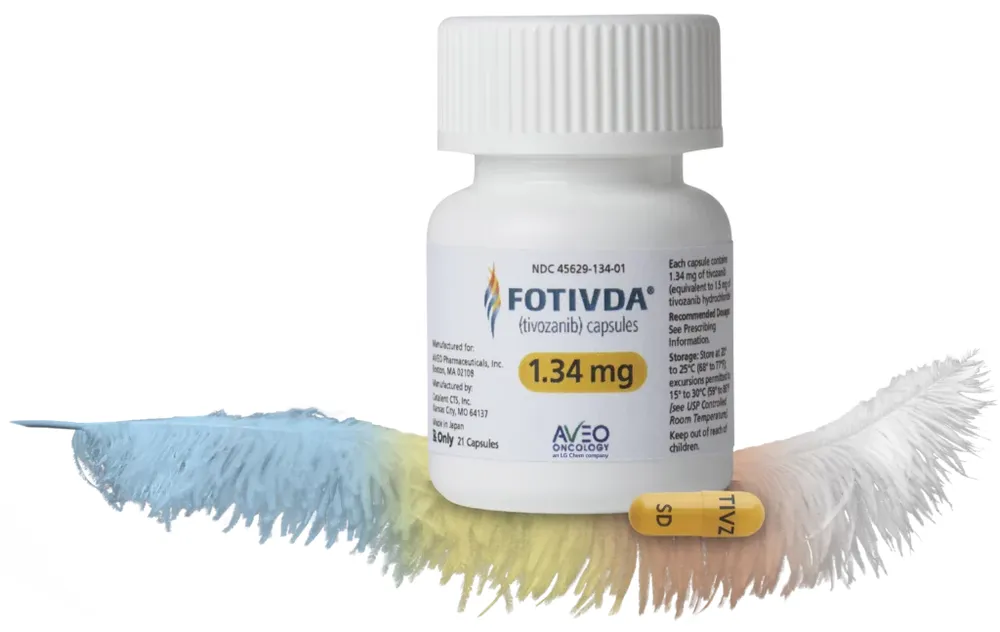
Table of Contents
- Package leaflet: Information for the patient
- Fotivda 890 microgram hard capsules, 1340 microgram hard capsules
- 1. What Fotivda is and what it is used for
- 2. What you should know before taking Fotivda
- 3. How to take Fotivda
- 4. Possible side effects
- 5. How to store Fotivda
- 6. Pack contents and other information
Package leaflet: Information for the patient
Fotivda 890 microgram hard capsules, 1340 microgram hard capsules
tivozanib
Please read all of this leaflet carefully before you take this medicine because it contains
important information for you.
- Keep this leaflet. You may need to read it again.
- If you have any questions, ask your doctor, pharmacist or nurse.
- This medicine has been prescribed for you only. Do not give it to other people, even if they have the same symptoms as yours, because it may be harmful.
- If you experience any side effect, including those not listed in this leaflet, talk to your doctor, pharmacist or nurse. See section 4.
Contents of this leaflet
- What Fotivda is and what it is used for
- What you need to know before taking Fotivda
- How to take Fotivda
- Possible side effects
- How to store Fotivda
- Contents of the pack and other information
1. What Fotivda is and what it is used for
The active substance in Fotivda is tivozanib, a protein kinase inhibitor. Tivozanib reduces the blood supply to the tumour, thereby slowing the growth and spread of cancer cells. It blocks the action of a protein called vascular endothelial growth factor (VEGF). By inhibiting VEGF activity, it prevents the formation of new blood vessels.
Fotivda is used to treat advanced renal cell carcinoma (kidney cancer) in adults. It is used in cases where other treatments, such as alpha-interferon or interleukin-2, have not yet been used or have failed to control the disease.
2. What you should know before taking Fotivda
Do not take Fotivda
- if you are allergic to tivozanib or any of the other ingredients of this medicine (listed in section 6);
- if you are taking St. John’s wort (also known as Hypericum perforatum, a herbal remedy used in the treatment of depression and anxiety).
Warnings and precautions
Talk to your doctor, pharmacist, or nurse before taking Fotivda:
- if you have high blood pressure. Fotivda may increase blood pressure. Your doctor will monitor your blood pressure regularly and, if it becomes too high, may prescribe medication to lower it or reduce your Fotivda dose. However, if your blood pressure remains too high, your doctor may decide to discontinue or interrupt treatment with Fotivda. If you are already taking medication for high blood pressure and your doctor reduces your Fotivda dose or interrupts or stops treatment, you will be regularly monitored for low blood pressure.
- if you have or have had an aneurysm (a bulge and weakening of a blood vessel wall) or a tear in the wall of a blood vessel.
- if you have had problems with blood clots. Treatment with Fotivda may increase the risk of blood clots (thrombi) forming in blood vessels, which may break loose and travel through the bloodstream, blocking another blood vessel. Inform your doctor if you have had any of the following conditions: a blood clot in the lungs (with cough, chest pain, sudden shortness of breath or coughing up blood); a blood clot in the legs or arms, eyes, or brain (with painful or swollen hands or feet, reduced vision, or changes in mental status); stroke; signs and symptoms of a “mini-stroke” (transient ischemic attack); heart attack; high blood pressure; diabetes; major surgery; multiple injuries such as bone fractures and internal organ injuries; prolonged immobility; or heart failure, which may cause shortness of breath, swollen ankles, bluish skin, fingertips or lips, restlessness, anxiety, confusion, altered consciousness or awareness, rapid breathing, shallow breathing, rapid heartbeat, or excessive sweating.
- if you suffer or have suffered from any of these symptoms or are being treated for heart failure: shortness of breath (dyspnea) during exertion or when lying down; feeling tired and weak; swelling (edema) in legs, ankles, and feet; reduced ability to perform physical activities; persistent cough or wheezing with white or pink-tinged mucus. Signs and symptoms of heart failure will be monitored during your treatment. If necessary, your doctor may reduce your Fotivda dose or interrupt or discontinue treatment.
- if you have been or are being treated for heart rhythm disorders (arrhythmia). Your doctor will monitor the effects of Fotivda on your heart by recording its electrical activity (electrocardiogram) or measuring calcium, magnesium, and potassium levels in your blood during treatment.
- if you have liver problems. Your doctor will regularly monitor your liver function before and during treatment with Fotivda (for example, by ordering blood tests), and if necessary, may reduce the frequency with which you take Fotivda.
- if you have thyroid problems or are taking medicines for thyroid diseases. Treatment with Fotivda may reduce normal thyroid gland activity. Your doctor will regularly monitor your thyroid function before and during treatment with Fotivda (for example, by ordering blood tests).
Talk to your doctor, pharmacist, or nurse while taking Fotivda:
- if you have shortness of breath or swollen ankles. Inform your doctor immediately, as these may be symptoms of heart failure. Your doctor will monitor these symptoms and, depending on severity, may reduce your Fotivda dose or interrupt or discontinue treatment.
- if you have experienced bleeding problems. Treatment with Fotivda may increase the risk of bleeding. If you experience bleeding problems (such as a swollen and painful stomach (abdomen), vomiting blood, coughing up blood, black stools, blood in urine, headache, or changes in mental status), inform your doctor immediately. Treatment with Fotivda may need to be temporarily interrupted.
- if laboratory tests show proteins in your urine. Your doctor will monitor your condition at the beginning and during treatment. Depending on the results, your doctor may reduce your Fotivda dose or interrupt or discontinue treatment.
- if you have a brain disorder known as reversible posterior encephalopathy syndrome (PRES). Inform your doctor immediately if you experience symptoms such as headache, seizures, lack of energy, confusion, blindness, or other visual or neurological disturbances such as weakness in one arm or leg. If PRES is diagnosed, your doctor will interrupt treatment with Fotivda.
- if the skin on the palms of your hands and soles of your feet becomes dry, cracked, peeling, or blistered, or if you feel tingling or stinging. These may be symptoms of a condition called hand-foot skin reaction. Your doctor will manage this condition and, depending on severity, may reduce your Fotivda dose or interrupt or discontinue treatment.
- if you experience symptoms of gastrointestinal perforation or fistula formation (development of a hole in the stomach or intestine or formation of abnormal passages between different parts of the intestine), such as severe stomach pain, chills, fever, nausea, vomiting, painful intestinal obstruction, diarrhea, or rectal bleeding. Your doctor will regularly monitor these symptoms during treatment with Fotivda.
- if you are scheduled for surgery or another surgical procedure. Your doctor may advise you to temporarily stop taking Fotivda before undergoing surgery or a surgical procedure, as Fotivda may interfere with wound healing.
Children and adolescents
Do not administer Fotivda to children and adolescents under 18 years of age. This medicine has not yet been studied in children and adolescents.
Other medicines and Fotivda
Inform your doctor or pharmacist if you are taking, have recently taken, or might take any other medicines, including herbal remedies and other medicines obtained without a prescription.
Fotivda may be less effective when taken with other medicines. Inform your doctor if you are taking any of the following medicines; your doctor may decide to change your treatment:
- dexamethasone (a corticosteroid used to reduce inflammation and treat immune system disorders);
- rosuvastatin (a medicine that helps lower cholesterol levels in the blood);
- phenobarbital, phenytoin, carbamazepine (used in the treatment of epilepsy);
- nafcillin, rifampicin, rifabutin, rifapentine (antibiotics);
- St. John’s wort (also known as Hypericum perforatum, a herbal remedy used in the treatment of depression and anxiety), as this herbal remedy must not be used concurrently with Fotivda.
Pregnancy, breastfeeding, and fertility
- Do not take Fotivda if you are pregnant. Inform your doctor, who will discuss with you the risks associated with taking Fotivda for you and your baby.
- You and your partner must both use an effective method of contraception. If you and your partner are using hormonal contraceptives (pill, implant, or contraceptive patch), you must use an additional barrier method of contraception during treatment and for one month after completing treatment.
- Do not breastfeed during treatment with Fotivda, as it is not known whether the active ingredient in Fotivda passes into breast milk. Inform your doctor if you are breastfeeding.
- Inform your doctor if you are planning a pregnancy, as Fotivda may affect fertility in both men and women.
Driving and using machines
Fotivda may cause side effects that could impair your ability to drive or operate machinery. Avoid driving or operating machinery if you feel weak, tired, or dizzy. See also section 4 “Possible side effects”.
Fotivda contains tartrazine (E102)
The printing ink used on the 890 microgram Fotivda capsule contains tartrazine (E102), which may cause allergic reactions.
3. How to take Fotivda
Take this medicine exactly as instructed by your doctor. If you have any doubts, consult your doctor or pharmacist.
Recommended dose
The recommended dose is one Fotivda capsule of 1340 micrograms once daily for 21 days (3 weeks), followed by a 7-day (1 week) period without capsules.
This schedule should be repeated in cycles of 4 weeks.
21 days (three weeks) 7 days (one week)
One Fotivda capsule No capsules taken
once daily
Your doctor will monitor you regularly, and you will continue taking Fotivda for as long as it remains effective and side effects are manageable.
Reduced dosing
If you experience severe side effects, your doctor may decide to interrupt treatment with Fotivda and/or reduce the dose to:
One Fotivda capsule of 890 micrograms once daily for 21 days (3 weeks), followed by a 7-day (1 week) period without capsules.
This schedule should be repeated in cycles of 4 weeks.
Liver problems
If you have liver problems, your doctor may reduce the dosing frequency to alternate days (i.e., one 1340 microgram capsule every other day).
Fotivda with food and drink
Fotivda should be taken with a glass of water and may be taken with or without food. The capsule must be swallowed whole. Do not chew, dissolve, or open the capsule before swallowing.
If you take more Fotivda than you should
Inform your doctor immediately if you have taken more than the prescribed dose of one capsule per day.
An overdose of Fotivda increases the risk of developing or worsening side effects, particularly high blood pressure. Seek immediate medical attention if you experience symptoms such as confusion, changes in mental status, or headache. These are all symptoms of high blood pressure.
If you forget to take Fotivda
Do not take a replacement dose to make up for the missed capsule. Continue taking your next dose at the usual time.
Do not take a double dose to make up for a forgotten capsule.
Do not take a replacement capsule if you vomited after taking Fotivda. Continue taking your next dose at the usual time.
If you stop taking Fotivda
Do not stop taking this medicine without consulting your doctor. If you stop taking the capsules, your condition may worsen.
If you have any questions about how to use this medicine, consult your doctor, pharmacist, or nurse.
4. Possible side effects
Like all medicines, this medicine can cause side effects, although not everybody gets them.
Serious side effects
High blood pressure is the most serious and most common side effect (see also section 2, "Warnings and Precautions").
Contact your doctor immediately if you think you have high blood pressure. Symptoms include severe headache, blurred vision, shortness of breath, and changes in mental status such as anxiety, confusion, or disorientation.
Your doctor will monitor your blood pressure regularly during treatment with Fotivda. If you develop high blood pressure, your doctor may prescribe a medicine to treat it, reduce your Fotivda dose, or stop your treatment with Fotivda.
Other side effects
Very common (may affect more than 1 in 10 people)
- Difficulty speaking
- Diarrhoea
- Loss of appetite, weight loss
- Headache
- Breathing difficulties: shortness of breath during physical activity, cough
- Fatigue, unusual weakness, pain (including mouth, bone, limb, hip, goitre, tumour pain)
- Mouth inflammation, mild mouth pain or discomfort, malaise, pain, discomfort and a feeling of pressure in the stomach
- Hand-foot syndrome with redness, swelling, numbness, and peeling of the skin on the palms of the hands and soles of the feet
- Back pain
- Tiredness and lack of energy
Common (may affect up to 1 in 10 people)
- Hypothyroidism, which may cause symptoms such as fatigue, lethargy, muscle weakness, slow heart rate, weight gain
- Difficulty sleeping
- Nerve damage including numbness, tingling, sensitive or numb skin, and weakness in arms and legs
- Vision problems including blurred vision
- Fast heartbeat, chest tightness, heart attack/reduced blood flow to the heart, blood clot in an artery (blood vessel)
- Blood clot in the lungs. Symptoms include cough, chest pain, sudden shortness of breath, or coughing up blood
- Blood clot in a deep vein such as in the leg
- Very high blood pressure which may cause stroke, flushed skin
- Nosebleeds, runny nose, blocked nose
- Flatulence, heartburn, difficulty swallowing and painful swallowing, sore throat, bloated stomach, swollen and painful tongue, inflamed, painful and/or bleeding gums
- Altered taste or loss of taste
- Dizziness, ringing in the ears, vertigo and sensation of dizziness (vertigo)
- Bleeding, e.g. in brain, mouth, gums, lungs, stomach, intestinal ulcer, female genitals, anus, adrenal gland
- Coughing up blood; vomiting blood
- Paleness and tiredness caused by excessive bleeding
- Vomiting, indigestion, constipation, dry mouth
- Itching, rash, body itching, peeling, dry skin, hair loss, red skin including hands and body, acne
- Fever, chest pain, swollen feet and legs, chills and low body temperature
- Joint pain, muscle aches
- Increased protein in the urine
- Abnormal blood test results for liver, pancreas, kidneys, and thyroid
- Inflammation of the pancreas causing severe stomach pain that may extend to the back
Uncommon (may affect up to 1 in 100 people)
- Pus-filled skin rashes; fungal infections
- Easy bruising, subcutaneous bleeding, hyperthyroidism (which may cause symptoms such as increased appetite, weight loss, heat intolerance, increased sweating, tremors, rapid heartbeat), enlarged thyroid
- Increased number of red blood cells
- Memory loss
- Temporary reduced blood flow to the brain
- Tearing
- Blocked ears
- Reduced blood supply in arteries
- Peptic ulcer in the small intestine
- Red, swollen, and painful throat, blisters, excessive sweating, hives
- Muscle weakness
- Swelling or irritation of mucous membranes
- Abnormal electrocardiogram (ECG), fast and/or irregular heartbeat
- Heart failure. Symptoms include shortness of breath or swollen ankles. Lung swelling caused by fluid accumulation
Rare (may affect up to 1 in 1,000 people)
- Reversible posterior encephalopathy syndrome (PRES). Symptoms include headache, seizures, lack of energy, confusion, blindness, or other visual or neurological disturbances.
Not known (frequency cannot be estimated from the available data)
- Widening and weakening of the wall of a blood vessel, or a tear in the wall of a blood vessel (aneurysms and arterial dissections).
Reporting of side effects
If you get any side effects, including ones not listed in this leaflet, talk to your doctor, pharmacist, or nurse. You can also report side effects directly through the national reporting system listed in Annex V. By reporting side effects, you can help provide more information on the safety of this medicine.
5. How to store Fotivda
Keep this medicine out of the sight and reach of children.
Do not use this medicine after the expiry date which is stated on the carton and vial after
Exp. The expiry date refers to the last day of that month.
Store the vial tightly closed to protect the medicine from moisture.
Do not dispose of any medicine via wastewater or household waste. Ask your pharmacist how to
dispose of medicines you no longer use. This will help protect the environment.
6. Pack contents and other information
What Fotivda contains
Fotivda 890 micrograms hard capsules
The active substance is tivozanib. Each capsule contains tivozanib hydrochloride monohydrate equivalent to 890 micrograms of tivozanib.
The other components are:
- Capsule contents: mannitol, magnesium stearate.
- Capsule shell: gelatin, titanium dioxide (E171), indigotine (E132), yellow iron oxide (E172).
- Printing ink, yellow: shellac, propylene glycol, strong ammonia solution, titanium dioxide (E171), aluminium tartrazine lake (E102) (see section 2 “Fotivda contains tartrazine (E102)”).
- Printing ink, blue: shellac, propylene glycol, strong ammonia solution, aluminium indigotine lake (E132).
Fotivda 1340 micrograms hard capsules
The active substance is tivozanib. Each capsule contains tivozanib hydrochloride monohydrate equivalent to 1340 micrograms of tivozanib.
The other components are:
- Capsule contents: mannitol, magnesium stearate.
- Capsule shell: gelatin, titanium dioxide (E171), yellow iron oxide (E172).
- Printing ink, blue: shellac, propylene glycol, strong ammonia solution, aluminium indigotine lake (E132).
Description of the appearance of Fotivda and pack contents
Fotivda 890 micrograms hard capsules with an opaque dark blue cap and an opaque bright yellow body, marked with “TIVZ” in yellow ink on the cap and “LD” on the body in dark blue ink.
Fotivda 1340 micrograms hard capsules with an opaque bright yellow cap and body, marked with “TIVZ” in dark blue ink on the cap and “SD” on the body in dark blue ink.
Fotivda 890 micrograms and Fotivda 1340 micrograms are available in packs of 21 capsules in HDPE bottles with child-resistant closures.
Marketing Authorization Holder
Recordati Netherlands B.V.
Beechavenue 54,
1119PW Schiphol-Rijk
The Netherlands
Manufacturer
ALMAC PHARMA SERVICES (IRELAND) LIMITED
Finnabair Industrial Estate
Dundalk
Co. Louth
A91 P9KD
Ireland
More detailed information on this medicinal product is available on the European Medicines Agency website: http://www.ema.europa.eu