Foscavir
Italy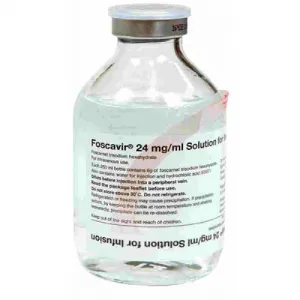
Table of Contents
Package leaflet: Information for the user
Foscavir 24 mg/ml solution for infusion
Foscarnet sodium
Please read this leaflet carefully before taking this medicine because it contains
important information for you.
- Keep this leaflet. You may need to read it again.
- If you have any questions, ask your doctor or nurse.
- This medicine has been prescribed for you only. Do not give it to other people, even if their symptoms are the same as yours, as it may be harmful.
- If you experience any side effects, including those not listed in this leaflet, inform your doctor or nurse. See section 4.
Contents of this leaflet:
- What Foscavir is and what it is used for
- What you need to know before using Foscavir
- How to use Foscavir
- Possible side effects
- How to store Foscavir
- Contents of the pack and other information
1. What Foscavir is and what it is used for
Foscavir contains a medicine called foscarnet, which belongs to a group of
medicines known as antivirals. It works by preventing viruses from multiplying.
Foscavir is used to treat the following infections caused by viruses:
- An eye infection caused by a virus in patients with AIDS. The virus is called cytomegalovirus (CMV) and the infection is known as CMV retinitis. Foscavir blocks the progression of the infection but cannot repair damage that has already occurred.
2. What you need to know before taking Foscavir
Do not take Foscavir:
- if you are allergic (hypersensitive) to foscarnet or to any of the other ingredients of this medicine (listed in section 6). If you have any doubts, consult your doctor or nurse before taking Foscavir.
Warnings and precautions
Talk to your doctor or nurse before taking Foscavir.
Check with your doctor or nurse before taking Foscavir if:
- you have kidney problems.
- you have heart problems.
Other medicines and Foscavir
Tell your doctor or nurse if you are taking, have recently taken, or might take any other medicines, including those obtained without a prescription or herbal products. Foscavir may affect how some medicines work, and some of these medicines may affect Foscavir.
In particular, inform your doctor or nurse if you are already taking any of the following medicines:
- Pentamidine (for infections).
- Amphotericin B (for fungal infections).
- Aciclovir (for viral infections).
- Antibiotics called aminoglycosides, such as gentamicin and streptomycin (for infections).
- Cyclosporine A, methotrexate, or tacrolimus (used to suppress the immune system).
- Medicines called protease inhibitors such as ritonavir and saquinavir.
- Laxatives.
- Quinidine, amiodarone, sotalol, or any other medicine that may affect heart rate or rhythm.
- Tranquillisers (neuroleptics).
Foscavir is not compatible with 30% dextrose solutions, Ringer's acetate, amphotericin B, or solutions containing calcium.
It is recommended not to use the same catheter to administer Foscavir simultaneously with other solutions.
Pregnancy and breastfeeding
If you are pregnant, suspect you may be pregnant, are planning a pregnancy, or are breastfeeding, consult your doctor before taking this medicine.
- Foscavir is not recommended during pregnancy.
- Planning a pregnancy during treatment with Foscavir is not recommended; therefore, effective contraceptive methods must be used.
- Men taking Foscavir must not plan a pregnancy during or within 6 months after treatment.
- Do not take Foscavir while breastfeeding.
Driving and using machines
Foscavir may affect your ability to drive or operate tools or machinery. Consult your doctor before performing any of these activities.
Tests before and during treatment with Foscavir
Your doctor may ask you to have blood and urine tests before and during treatment with Foscavir to monitor kidney function and blood mineral levels.
Foscavir contains sodium
This medicine contains 1.38 g of sodium (the main component of table salt) per 250 ml vial. This corresponds to 69% of the maximum recommended daily dietary intake for an adult.
3. How to take Foscavir
- Foscavir will be administered to you by a doctor or healthcare professional. It will be given by intravenous injection. It may be administered via a central venous catheter in the chest if one is already in place.
- Each dose is given over a period of 30 minutes to 1 hour. Do not interfere with the infusion during administration.
- The dose of Foscavir depends on kidney function and also on body weight.
- The initial dose is usually 20 mg of Foscavir per kg of body weight (20 mg/kg).
- Your doctor will tell you whether you need to receive higher or lower doses of Foscavir and how often, so that you receive the correct dose.
- Foscavir will be administered for 2 or 3 weeks.
- It is important to maintain adequate fluid intake during intravenous infusion. This helps to prevent kidney problems. If needed, your doctor will administer fluids at the same time as Foscavir.
Personal Hygiene
Wash the genital area carefully after urination. This will help prevent the development of
ulcerations.
In case of contact with skin and eyes
If Foscavir solution accidentally comes into contact with skin or eyes, rinse skin or eyes immediately with water.
If you take more Foscavir than you should
If you think you have been given too much Foscavir, contact your doctor immediately.
If you forget to take Foscavir
If you think you have missed a dose, contact your doctor immediately.
If you have any doubts about how to use this medicine, consult your doctor or nurse.
4. Possible side effects
Like all medicines, this medicine can cause side effects, although not everybody gets them.
Some side effects may be serious and require immediate medical attention:
- Severe allergic reactions, including low blood pressure, shock and skin swelling (angioedema). These are known as hypersensitivity, anaphylactic or anaphylactoid reactions.
- Severe skin rashes. These types of rashes may be associated with redness, swelling and blistering of the skin, mouth, throat, eyes and other internal parts of the body, and may sometimes lead to death. These conditions are known as erythema multiforme, Stevens-Johnson syndrome and toxic epidermal necrolysis. If you experience one or more of the above effects, contact your doctor immediately or go to the nearest emergency room.
Other side effects include:
Very common (affects more than 1 in 10 people)
- Decreased appetite.
- Diarrhoea.
- Nausea, vomiting.
- Weakness or fatigue.
- High fever or chills.
- Dizziness.
- Headache.
- Tingling sensations.
- Rash.
- Changes in kidney function (increased creatinine in blood tests).
- Low white blood cell count. Symptoms include infections and high fever.
- Decreased number of red blood cells (detected in blood tests). This may make you feel tired or appear pale.
- An imbalance of salts and minerals in the blood (calcium, magnesium, sodium and potassium). Symptoms include weakness, cramps, thirst, tingling or itching of the skin, and involuntary muscle contractions.
Common (affects less than 1 in 10 people)
- Abdominal pain, constipation, indigestion or gastrointestinal bleeding.
- Inflammation of the pancreas (pancreatitis) or changes in normal pancreatic function. Signs include severe stomach pain and may involve changes detectable by blood tests.
- Symptoms include severe stomach pain.
- Mood changes. These may include anxiety, nervousness, depression, agitation, aggression or confusion.
- Coordination problems.
- Seizures and epileptic fits related to disturbances in minerals and electrolytes in the blood.
- Reduced skin sensitivity.
- Itching.
- General malaise.
- Swelling of the legs and feet.
- Palpitations or changes in heart rhythm, e.g. torsade de pointes or tachycardia.
- High blood pressure.
- Low blood pressure. This may cause dizziness.
- Changes in tests showing heart activity (ECG).
- Muscle problems including changes detectable in blood tests, and muscle pain, weakness and involuntary muscle contractions.
- Tremors.
- Nerve damage which may cause changes in sensation or muscle weakness (neuropathy).
- Swelling, pain and redness along a vein or at the injection site.
- Genital discomfort and ulceration.
- Changes in liver function (increased gamma-glutamyltransferase, alanine aminotransferase and aspartate aminotransferase in blood tests).
- Low platelet count in the blood, which may make bruising easier.
- Low levels of lymphocytes and neutrophils in the blood.
- Infection of the blood, tissues, fluids or body cavities normally sterile by pathogenic or potentially pathogenic microorganisms (sepsis).
- Kidney problems. These include kidney pain (flank pain) and kidney blockage. Reduced ability of the kidneys to eliminate creatinine. Changes may be detected by blood or urine tests.
- Pain during urination.
- More frequent urination than normal. Intense thirst or dehydration.
- Chest pain.
- Increased blood levels of phosphate, alkaline phosphatase and lactate dehydrogenase.
- Decreased blood levels of phosphate and sodium.
Uncommon (affects less than 1 in 100 people)
- Itchy rash (urticaria).
- Excess acid in the blood. This may cause shortness of breath.
- Renal tubular disease.
The following side effects have also been reported (frequency not known)
- Unusual heartbeat (ventricular arrhythmia).
- Development of an ulcer in the oesophagus (the tube connecting the throat to the stomach), which may be painful.
- Severe muscle problems with breakdown of muscle tissue (rhabdomyolysis). Symptoms include abnormal urine colour and severe muscle weakness, tenderness or stiffness.
- Diabetes insipidus (a condition characterised by excessive urine output and intense thirst).
- Kidney pain, which may be a sign of kidney disease (renal tubular acidosis, renal tubular necrosis, acute tubular necrosis, crystal nephropathy).
- Blood in the urine.
Reporting of side effects
If you experience any side effect, including those not listed in this leaflet, talk to your doctor or nurse.
You can also report side effects directly via the national reporting system at
https://www.aifa.gov.it/content/segnalazioni-reazioni-avverse.
By reporting side effects, you can help provide more information on the safety of this medicine.
5. How to store Foscavir
- Keep this medicine out of the sight and reach of children.
- Do not use this medicine after the expiry date stated on the packaging after the word "Exp". The expiry date refers to the last day of that month.
- Unopened Foscavir vials should be stored at a temperature not exceeding 25°C. Do not refrigerate.
- Do not dispose of any medicine via wastewater or household waste. Ask your pharmacist how to dispose of medicines no longer in use. This will help protect the environment.
6. Package contents and other information
What Foscavir contains
- The active substance is foscarnet sodium*. There are 24 mg of foscarnet in each millilitre (ml) of solution.
- The other ingredients are water for injections and hydrochloric acid (E507).
(*) Trisodium phosphonoformate hexahydrate or trisodium hexahydrate salt of phosphonoformic acid or
foscarnet sodium (INN)
Description of the appearance of Foscavir and contents of the pack
Foscavir is a sterile infusion solution. The solution is clear and colourless.
Foscavir is contained in 250 ml vials.
Marketing Authorisation Holder and Manufacturer
The Marketing Authorisation Holder of Foscavir is Clinigen Healthcare B.V., Schiphol Boulevard 359,
WTC Schiphol Airport, D Tower 11th floor, 1118BJ Schiphol, The Netherlands.
Foscavir is manufactured by Fresenius Kabi Austria GmbH, Hafnerstrasse 36, A-8055 Graz, Austria.