Foscan
Italy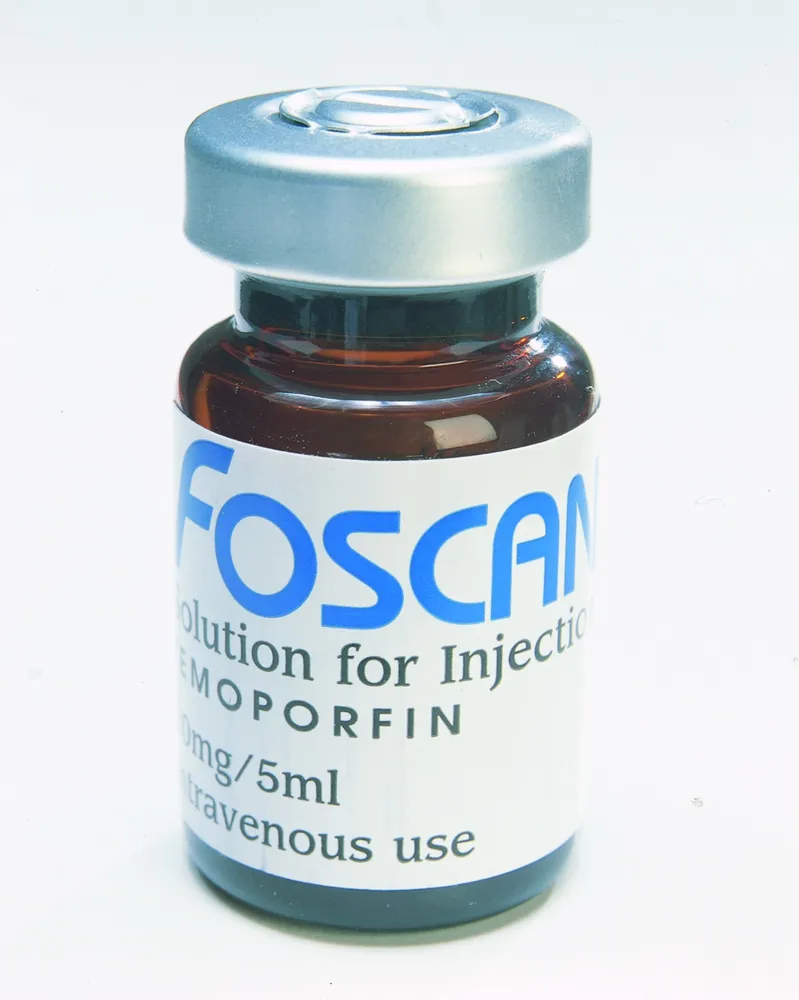
Table of Contents
- Package leaflet: Information for the patient
- Foscan 1 mg/ml injectable solution
- 1. What Foscan is and what it is used for
- 2. What you need to know before using Foscan
- 3. How to use Foscan
- 4. Possible side effects
- 5. How to store Foscan
- 6. Package contents and other information
- 1. CONTENTS OF THE PACKAGE
- 2. DOSE CALCULATION
- 3. ADMINISTRATION OF FOSCAN (96 HOURS BEFORE IRRADIATION OF THE TREATMENT SITE WITH LASER)
- 4. LASER ILLUMINATION OF THE TREATMENT SITE
- 5. SAFETY INFORMATION
Package leaflet: Information for the patient
Foscan 1 mg/ml injectable solution
Temoporfin
Please read this leaflet carefully before using this medicine because it contains important information for you.
- Keep this leaflet. You may need to read it again.
- If you have any questions, ask your doctor or nurse.
- If you experience any side effects, including those not listed in this leaflet, please tell your doctor or nurse. See section 4.
Contents of this leaflet:
- What Foscan is and what it is used for
- What you need to know before using Foscan
- How to use Foscan
- Possible side effects
- How to store Foscan
- Contents of the pack and other information
1. What Foscan is and what it is used for
The active substance in Foscan is temoporfin.
Foscan is a medicine composed of a photosensitising porphyrin, which becomes more sensitive to light and is activated by light emitted from a laser during a treatment called photodynamic therapy.
Foscan is used for the treatment of head and neck cancer in patients who cannot be treated with other therapies.
2. What you need to know before using Foscan
Do not use Foscan
- if you are allergic to temoporfin or to any of the other ingredients of this medicine (listed in section 6),
- if you are allergic (hypersensitive) to porphyrins,
- if you have porphyria or any other disease that is worsened by light,
- if the tumour being treated extends through a large blood vessel,
- if you are scheduled to undergo surgery within the next 30 days,
- if you have an eye condition requiring examination with bright light within the next 30 days,
- if you are already receiving treatment with a photosensitising agent.
Warnings and precautions
- Foscan will make you sensitive to light for approximately 15 days after the injection. This means that normal daylight or bright indoor lighting could cause skin burns. To prevent this, you must carefully follow the instructions for gradual exposure to increasing levels of indoor light during the first week and to shaded outdoor light during the second week after treatment (refer to the table at the end of this leaflet).
- Discuss this with your doctor before returning home after receiving the Foscan injection.
- Sunscreen creams do not prevent this type of sensitivity.
- You will gradually become less sensitive to light. Normally, people are able to resume normal outdoor light exposure after 15 days.
- Do not have your eyes examined with bright lights by opticians or ophthalmologists for 30 days after the Foscan injection.
- Do not use UV tanning beds or sunbathe for 3 months after the Foscan injection.
- For 6 months following Foscan treatment, avoid prolonged sun exposure to the arm used for the injection. As a precautionary measure, if prolonged outdoor activity is planned, the injection site should be protected by wearing long-sleeved, coloured clothing.
The instruction table tells you what to do to prevent skin burns. You must follow these
instructions carefully.
Ask your doctor or nurse if you are unsure about anything.
| Time after Foscan injection | What should I do to prevent burns? |
| Day 1 (0–24 hours) | Stay indoors in a darkened room. Keep curtains closed and use light bulbs of 60 W or less. Avoid exposure to direct sunlight. |
| Days 2–7 | You may gradually return to normal indoor lighting. Remember to avoid direct sunlight coming through windows or bright light from household devices such as reading lamps. You may watch television. You may go outdoors once it is dark outside. If it is absolutely necessary to go outdoors during daylight hours, you must take care to cover all your skin, including your face and hands, and wear dark sunglasses. The types of clothing you should wear are:
|
| Days 8–14 | You may now begin going outdoors during daylight hours. Stay in shaded areas or go out when it is cloudy. Continue wearing dark-colored, tightly woven clothing. Start on Day 8 with 10–15 minutes outdoors. If you notice no skin redness within the following 24 hours, you may gradually increase your time outdoors during the week. Avoid direct sunlight or intense indoor lighting. Stay in the shade. |
| From Day 15 onwards | Your light sensitivity is gradually returning to normal. You should test this carefully by exposing the back of your hand to sunlight for 5 minutes. Wait 24 hours to see if any redness appears. If redness occurs, avoid direct sunlight for another 24 hours, after which you may repeat the test. If no redness occurs, you may gradually increase your sun exposure day by day. Do not stay in direct sunlight for more than 15 minutes the first time. Most people will be able to return to their normal routine by Day 22. On the first day after passing the skin test, you may stay in direct sunlight for 15 minutes. You may increase your exposure by 15 minutes per day—i.e., 30 minutes on the second day, 45 minutes on the third day, 60 minutes on the fourth day, and so on. If at any time you feel a stinging or burning sensation or notice skin redness after sun exposure, wait until these symptoms have completely disappeared before re-exposing your skin to light for that duration. For 30 days after Foscan treatment, avoid eye examinations that use bright lights. For 3 months after Foscan treatment, avoid UV tanning beds. Do not sunbathe. For 6 months after Foscan treatment, avoid prolonged sun exposure to the arm used for injection. As a precautionary measure, if prolonged outdoor activity is planned, the injection site should be protected with colored, long-sleeved clothing. |
Other medicines and Foscan
Inform your doctor or pharmacist if you are using, have recently used, or might use any other
medicines.
Pregnancy and breastfeeding
- Pregnancy must be avoided for three months after treatment with Foscan.
- Consult your doctor or pharmacist before taking any medicine if you are pregnant.
Do not breastfeed for at least 1 month after Foscan injection.
Driving and using machines
- The amount of alcohol contained in this medicine may affect your ability to drive or use machinery for several hours after injection.
- Due to the recommended light exposure restrictions, driving vehicles or operating machinery is not recommended during the first 15 days after Foscan injection.
Foscan contains ethanol (alcohol):
- This product contains 48 vol% ethanol (alcohol), i.e. up to 4.2 g per dose, equivalent to 84 ml of beer or 35 ml of wine per dose. This medicine may be harmful even to individuals suffering from alcoholism. At-risk groups also include pregnant or breastfeeding women, children, and individuals with liver disease or epilepsy. The amount of alcohol present in this product may alter the effects of other medicines.
3. How to use Foscan
- Your doctor or nursing staff will administer Foscan by slow intravenous injection, which will take approximately 6 minutes.
- Four days after the injection, your doctor will treat the tumour with laser light. The doctor will cover the normal tissue surrounding the tumour and then irradiate the laser light directly onto the tumour for about 5 minutes. The laser light is not hot and does not burn.
If you are given more Foscan than you should
- You might not receive the laser treatment.
- You could be sensitive to light for longer than 15 days.
You must carefully follow the instructions on how to prevent skin burns.
If you have any doubts about the use of this medicine, consult your doctor or nurse.
4. Possible side effects
Like all medicines, Foscan can cause side effects.
- Everyone who receives Foscan becomes sensitive to light for approximately 15 days after injection.
- You must follow the instructions provided to you to avoid sunlight and bright indoor light.
- These instructions are written in this leaflet. Your doctor will also tell you what you need to do. If you do not follow these instructions, you may suffer severe sunburns that could result in permanent scarring.
Most of the side effects related to photodynamic therapy are local effects occurring as a result of laser activation of Foscan. You may experience pain after laser treatment. This pain will be managed with analgesics. Inform your doctor or nurse if you experience pain or if the analgesics you have been given do not relieve the pain. Additionally, you will likely notice swelling and redness around the treated area. You may be given medications to reduce swelling. After 2–4 days, the treated area will turn black. The black discoloration is caused by dead tumor cells (necrosis). Foscan may also damage tissue surrounding the tumor.
Very common side effects (may affect more than 1 in 10 people):
- You may feel pain when Foscan is injected.
- After laser treatment, you may experience pain in the treated area, e.g., facial pain or headache.
- Bleeding, ulcers, swelling in the treated area (such as swelling of the face or tongue), and scarring may also occur.
- Constipation may occur. These effects may make it difficult to drink or eat.
Common side effects (may affect more than 1 in 100 people):
- You may experience irritation, burning sensation, or skin damage at the site where Foscan is injected, although these are transient phenomena.
- You may also develop ulcers, blisters, redness, or darkening of the skin.
- Vomiting
- Fever
- Nausea
- Anaemia
- Light sensitivity
- Sunburn
- Burns
- Difficulty swallowing
- Dizziness
- Swelling or stiffness of the jaw may occur. Some people may develop infection in the treated area, e.g., inflammation of the throat or mouth.
Events with unknown frequency (frequency cannot be estimated from the available data):
- Airway obstruction due to swelling in the treated area
- Fistula formation in the treated area
- Sepsis
- Vascular rupture
Serious side effects such as inflammation of the bile ducts or gallbladder, liver abscess, or perforation in the treated area have been reported with use in cancer types other than head and neck tumors. For further information, please consult your doctor.
Reporting of side effects
If you experience any side effects, including those not listed in this leaflet, talk to your doctor or nurse. You can also report side effects directly through the national reporting system listed in Annex V.
By reporting side effects, you can help provide more information on the safety of this medicine.
5. How to store Foscan
Keep this medicine out of the sight and reach of children.
Do not use this medicine after the expiry date stated on the label and the carton. The
expiry date refers to the last day of that month.
Foscan will be stored at the hospital pharmacy.
Do not store above 25 °C.
Keep in the original packaging to protect the medicine from light. Once removed from the
packaging, this medicine should be used immediately.
Each vial contains a single dose and any unused medicine must be discarded.
6. Package contents and other information
What Foscan contains
- The active substance is temoporfin. Each ml contains 1 mg of temoporfin.
- The other ingredients are ethanol anhydrous (E1510) and propylene glycol (E1520).
Description of the appearance of Foscan and contents of the pack
Foscan injectable solution is a dark purple solution in an amber glass vial, containing 1 ml, 3 ml or 6 ml of solution.
Each pack contains 1 glass vial and a filter.
It is possible that not all pack sizes are marketed.
Marketing Authorisation Holder and Manufacturer
biolitec Pharma Ltd.
Otto-Schott-Str. 15
07745 Jena
Germany
Tel.: +49 3641 5195330
Fax: +49 3641 5195331
More detailed information on this medicinal product is available on the website of the European Medicines Agency: http://www.ema.europa.eu
The following information is intended for healthcare professionals only:
Foscan 1 mg/ml Solution for injection
Temoporfin
1. CONTENTS OF THE PACKAGE
The active substance is temoporfin. Each ml of solution contains 1 mg of temoporfin. The excipients
are anhydrous ethanol and propylene glycol. A filter with Luer lock connections for syringe and
cannula is provided.
Each package contains 1 vial with 1 ml, 3 ml or 6 ml of injectable solution.
Each vial constitutes a single dose, and any unused solution remaining must be discarded.
2. DOSE CALCULATION
Calculate the required dose of Foscan according to the patient's body weight. The dose is 0.15 mg/kg of
body weight.
3. ADMINISTRATION OF FOSCAN (96 HOURS BEFORE IRRADIATION OF THE TREATMENT SITE WITH LASER)
Foscan must be administered intravenously through a cannula placed in a large proximal vein of the limb, preferably in the antecubital fossa. The patency of the intravenous cannula must be checked before injection.
The dark purple-red color of the solution, together with the amber color of the vial, makes visual inspection for the presence of suspended particles impossible. For this reason, as a precautionary measure, a filter provided in the package must be used in the infusion line.
Aspirate the entire contents of the vial containing Foscan into a syringe and expel the air. (Figure 1).
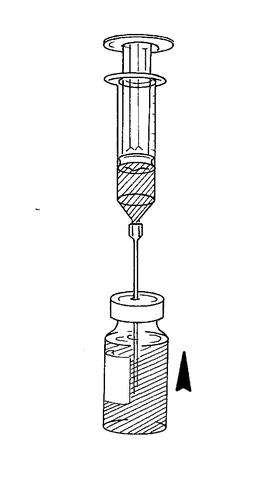
Figure 1
Attach the filter to the syringe (Figure 2).
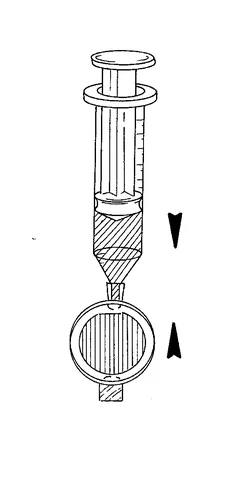
Figure 2
Push the plunger of the syringe to fill the entire dead space in the filter. Continue pushing the plunger to expel excess Foscan until the required volume remains in the syringe, ensuring sufficient volume is available to cover the dead space in the intravenous cannula (Figure 3).
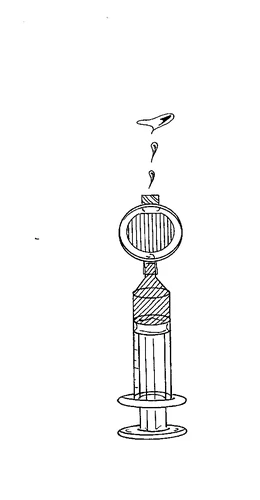
Figure 3
Connect the syringe and filter to the cannula. Administer the required dose of Foscan by slow intravenous injection over a period of not less than 6 minutes (Figure 4).
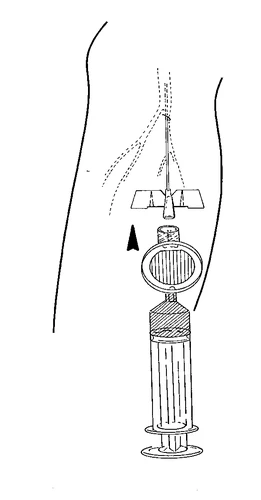
Figure 4
Immediately remove the intravenous cannula after injection. DO NOT flush with aqueous solutions such as sodium chloride 9 mg/ml (0.9%) injection solution or water for injectable preparations.
Particular care must be taken to prevent extravasation at the injection site. If extravasation occurs, the affected area must be protected from light for at least 3 months. There is no known benefit in injecting the extravasation site with other substances.
Foscan is photosensitive. Once removed from its packaging, it must be administered immediately. If a delay is unavoidable, the solution must be protected from light.
4. LASER ILLUMINATION OF THE TREATMENT SITE
Please refer to the laser user manual and the instructions for use
of the optical fibre equipment with microlens.
96 hours after administration of Foscan, the treatment site must be illuminated with light at 652 nm
generated by an approved laser source. The light must be delivered to the entire surface of the
tumour using approved optical fibre equipment with microlens. Wherever possible,
the illuminated area should extend beyond the tumour margin by a distance of 0.5 cm.
Illumination must be performed no less than 90 hours and no more than 110 hours after Foscan injection.
The incident light dose is 20 J/cm², delivered via optical fibre equipment with microlens
to a circular field on the tumour surface at an irradiance of 100 mW/cm², implying an
illumination time of 200 seconds.
Each field should be illuminated only once per treatment. It is possible to illuminate multiple fields that do not overlap.
Care must be taken to ensure that no tissue area receives a light dose exceeding the specified amount.
Tissue outside the target area must be completely shielded to prevent photoactivation by scattered or reflected light.
5. SAFETY INFORMATION
Foscan is not irritating.
Any unused medicine or waste material resulting from the use of this medicine must be disposed of in accordance with local regulations.